
Outdoor Entertaining
Backyard Party Ideas for Hosting on a Real Budget
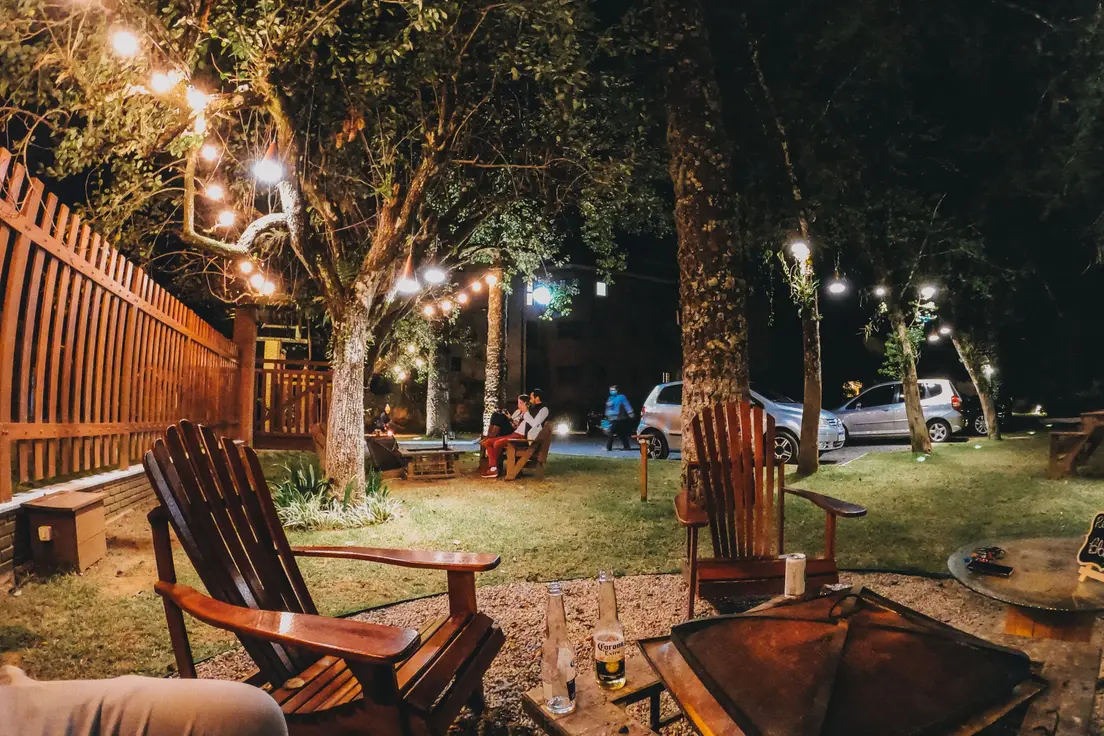
Photo by Matheus Bertelli on Pexels
Good backyard party ideas answer three questions before anything else: where does everyone sit, where does the food go, and what happens once nighttime hits. Get those three right and the same setup works for a casual cookout, a birthday, or a graduation party alike. Below are 11 real, DIY setups — some cost nothing but rearranging what you already own, a few run under $50 — plus the honest math on hosting 15 to 20 guests, added up instead of guessed at.
12 backyard party setups, zone by zone
Concept renders — visual references, not photos of a finished project.
Set Up a Self-Serve Drink Station So You’re Not the Bartender All Night
Two labeled beverage dispensers — one for a spiked cocktail, one a non-alcoholic mocktail or lemonade — beat a full bar for a backyard crowd. Nobody’s waiting in line, and you’re not the one refilling ice every twenty minutes. A folding table, a stack of cups, and two clearly marked jars do more work than a $200 bar cart that mostly ends up holding someone’s keys. Add a small bowl of add-ins so guests can customize their own cup — fresh mint, citrus, or berries — tie the bottle opener to something so it doesn’t leave with a guest, and mark the non-alcoholic option so nobody has to ask twice. Budget one gallon of each drink per 8–10 people for a 3-hour party.
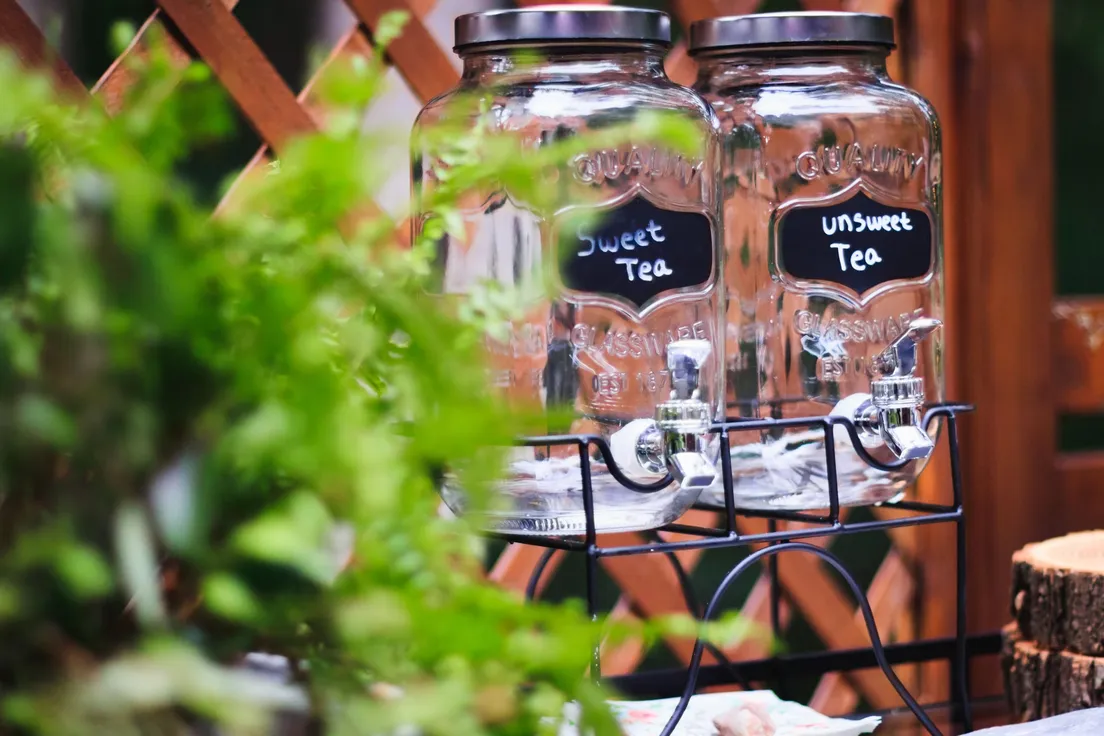
Photo by Michael Morse on Pexels
Go Buffet-Style With the Food Instead of Plating Everyone
Buffet-style service is the difference between a host who eats a warm meal and a host who’s still plating food at 8pm. Whether it’s a full backyard BBQ spread with chicken skewers or something lighter, good food and drinks flow better set up as a line than scattered across a table — plates first, mains next, sides and bread last, utensils and napkins at the very end so hands are already full and nobody’s doubling back. A taco bar or a build-your-own setup (buns, patties, toppings laid out separately) scales to any headcount without you cooking to order. Keep one tray of something that doesn’t need reheating for the stragglers who show up after the food line’s closed.
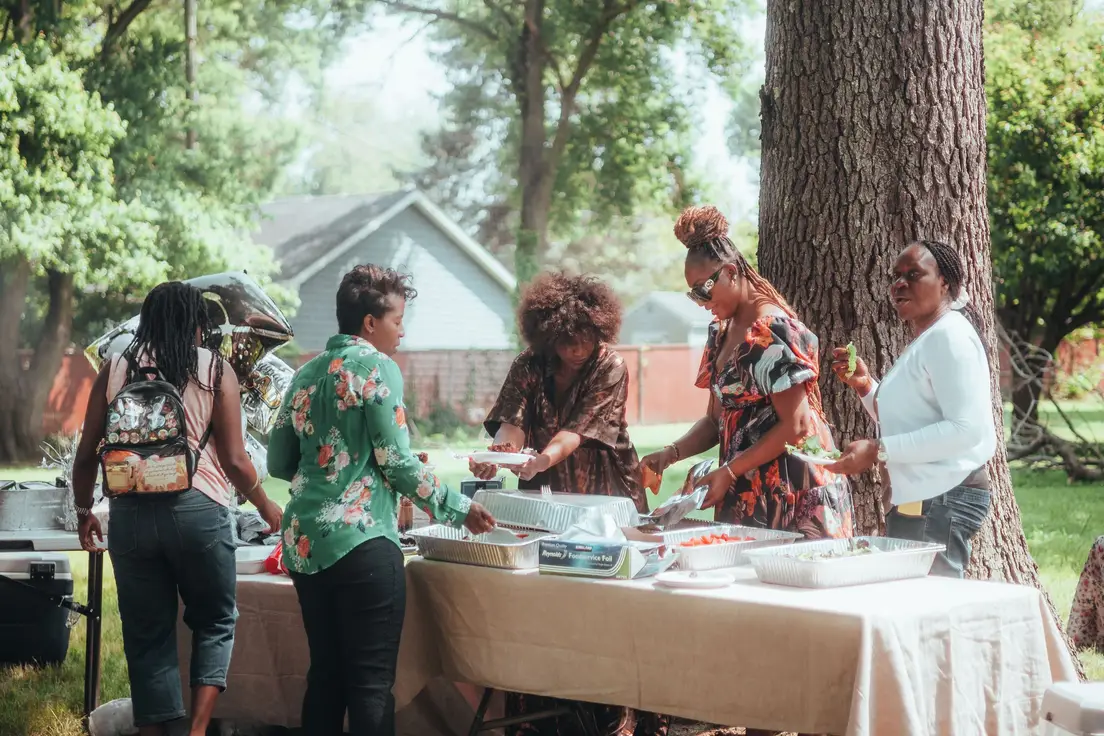
Photo by Samuel Peter on Pexels
Add Seating Without Buying a Second Patio Set
Once your guest list is set, live with what you own before you buy anything new — pull the kitchen chairs, the porch stools, folding lawn chairs, and the camping chairs from the garage into one spot, toss a cushion on anything that doesn’t already have one, and you’ve usually solved most of the seating gap for free. Mismatched chairs read as intentional at a backyard party in a way they never would in a living room; nobody’s checking whether the red one matches the blue one. Buying a full second patio set to cover six extra guests four times a year isn’t the fix — borrowing from a neighbor or renting folding chairs for a weekend is. Save the matching-set purchase for furniture you’ll actually use every week.

Photo by David Vilches on Unsplash
String Lights Over the Whole Party, Not Just One Corner
String lights are the highest joy-per-dollar item on this entire site — and also the first thing that breaks. We learned that one the cheap way: our first strand was $14 for 48 feet of glass-bulb lights, and it looked perfect for exactly one summer. By the following spring, six bulbs had cracked from the freeze-thaw cycle and the whole strand had to come down. The $34 shatterproof replacement is still up three years later. Buy the commercial-grade shatterproof bulbs if the lights are staying up more than one season — it’s a $20 difference that pays for itself the first winter. String them across the whole gathering area, not just over the table; a party with one lit corner and a dark lawn still feels like it’s half-happening in the shadows. (Check your HOA before running lights to a fence line, a privacy screen, or a freestanding post — visible outdoor structures are one of the more common things they flag.)
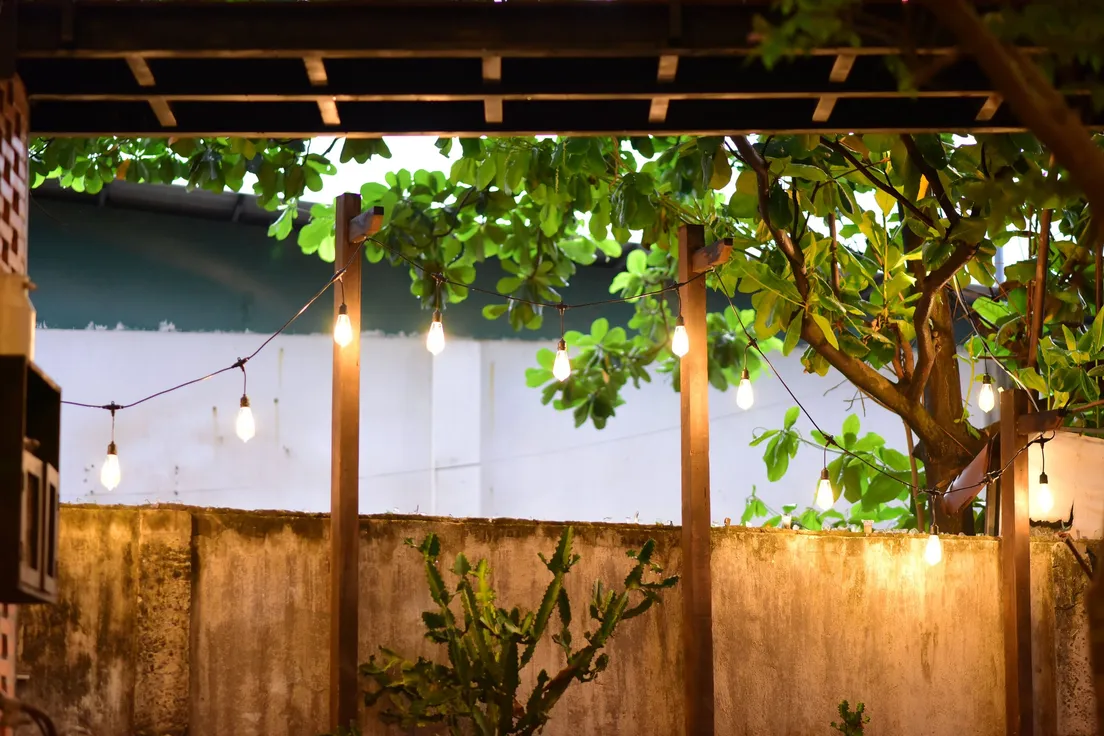
Photo by Sóc Năng Động on Pexels
Light the Walkway So Nobody’s Finding the Bathroom by Flashlight
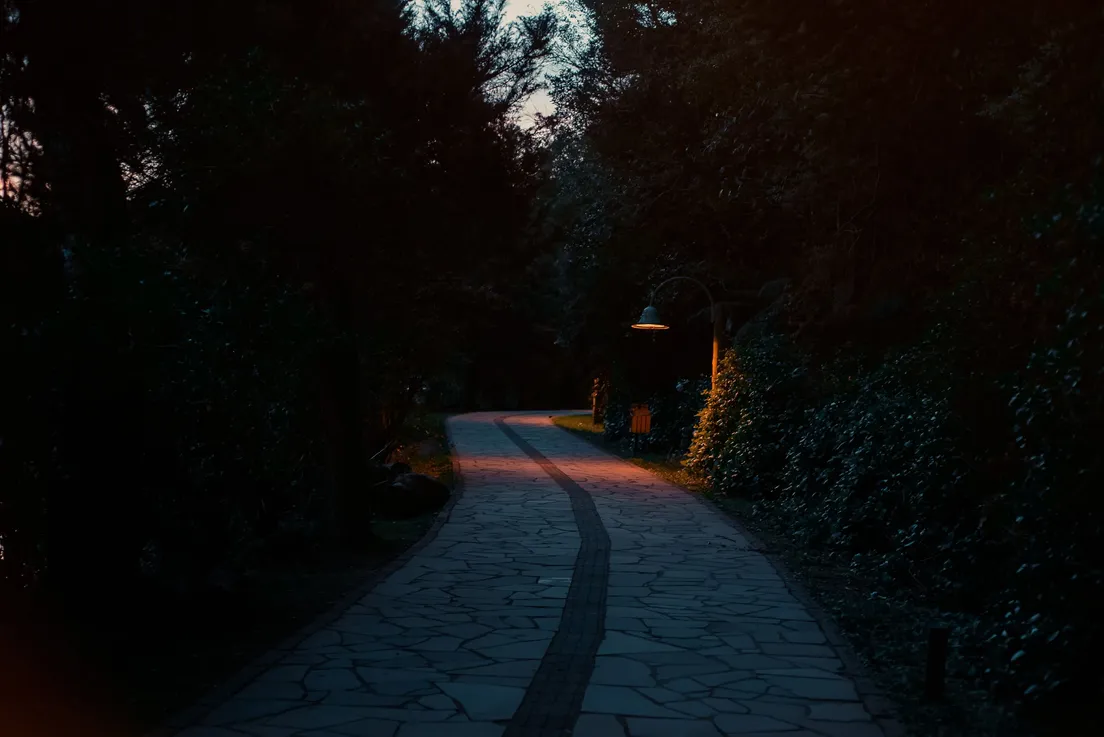
Overhead string lights handle the party zone; they don’t handle the path from the party zone to the door. A run of $15–20 solar path lights along the walkway, or a couple of battery lanterns set on the ground every few feet, keeps guests from navigating the yard by phone flashlight after dark — which is exactly how someone finds the one hole in your lawn you’d forgotten about. Warm-white bulbs (2700K) read as party lighting; cool-white or blue-tinted LEDs read as a parking lot at the same brightness, so match the temperature to the string lights above, not whatever was cheapest on the shelf.
Build a Fire Pit Corner for the S’mores Bar
Once the sun’s down and the temperature drops, a fire pit is what keeps people in the yard instead of migrating inside. Set out graham crackers, chocolate, and marshmallows on a tray next to it and it runs itself — nobody needs instructions for a s’mores bar, and it stays lit throughout the party with one bag of extra wood on hand. For a daytime party, swap the campfire glow for an ice cream sundae bar instead — a cooler of ice cream, bowls of toppings, and a stack of cookies or a tray of cupcakes covers dessert without anyone near an open flame. Keep the fire pit well clear of overhanging branches, fences, and anything flammable: HPC Fire’s published clearance guide calls for roughly 36 inches of horizontal clearance from combustibles for a standard burner, which is a number worth checking against your actual fire pit’s manual, not eyeballing. A propane model skips the open-flame rules a wood-burning pit needs entirely, which matters more on a smaller lot with neighbors close on both sides.

Photo by Shane Dawson on Unsplash
Stake Out a Lawn Games Zone That Doesn’t Block the Food Line
Cornhole, ladder toss, a game of roundnet, or a quick scavenger hunt round out a solid backyard games lineup — simple party games that need zero setup instructions. Set the zone off to one side, at least 6 feet from the buffet line — games draw a crowd of their own, and that crowd blocks foot traffic if it’s set up in the walking path. Two cornhole boards and a set of bean bags run under $60 and pack flat for storage the rest of the year. A lazy round of volleyball, a stack of card games for the group that skews older, or a bag of water balloons and a few pool toys for a hot afternoon all cover ground cornhole doesn’t. If the group skews younger or more competitive, a bracket-style tournament gives the games a natural end point instead of running the whole party.
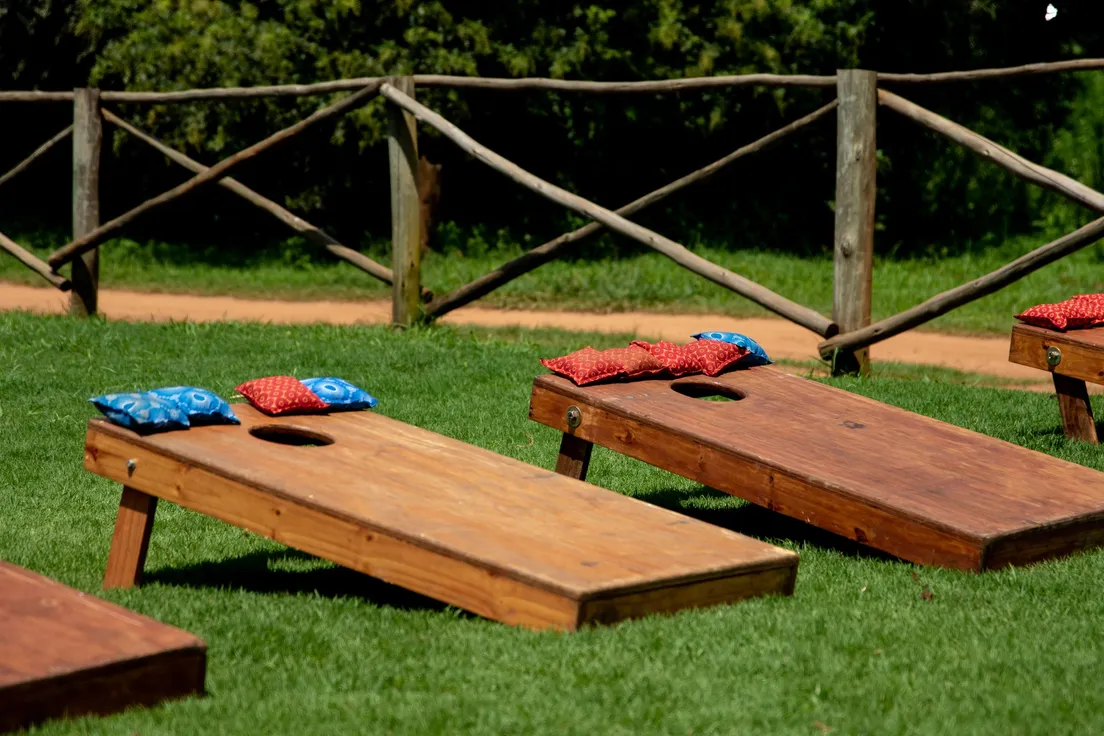
Photo by Magda Ehlers on Pexels
Dress the Table With a Runner and Real Dishes
A laid-back outdoor party doesn’t need a caterer’s table to look finished — a $12 fabric runner and the real dishes from your cabinet do more for a table than a plastic tablecloth ever will. Plastic reads as “picnic,” a runner reads as “someone planned this.” Add a low centerpiece (fresh fruit in a bowl, cut flowers in a mason jar) that doesn’t block sightlines across the table, since a tall arrangement just becomes something guests talk around instead of over, and tie a couple of balloons to the fence so the party’s visible from the street. Real plates and cutlery cost more upfront than disposables, but for a backyard party under 25 people, washing a sink of dishes the next morning is genuinely faster than hauling three bags of trash to the curb.
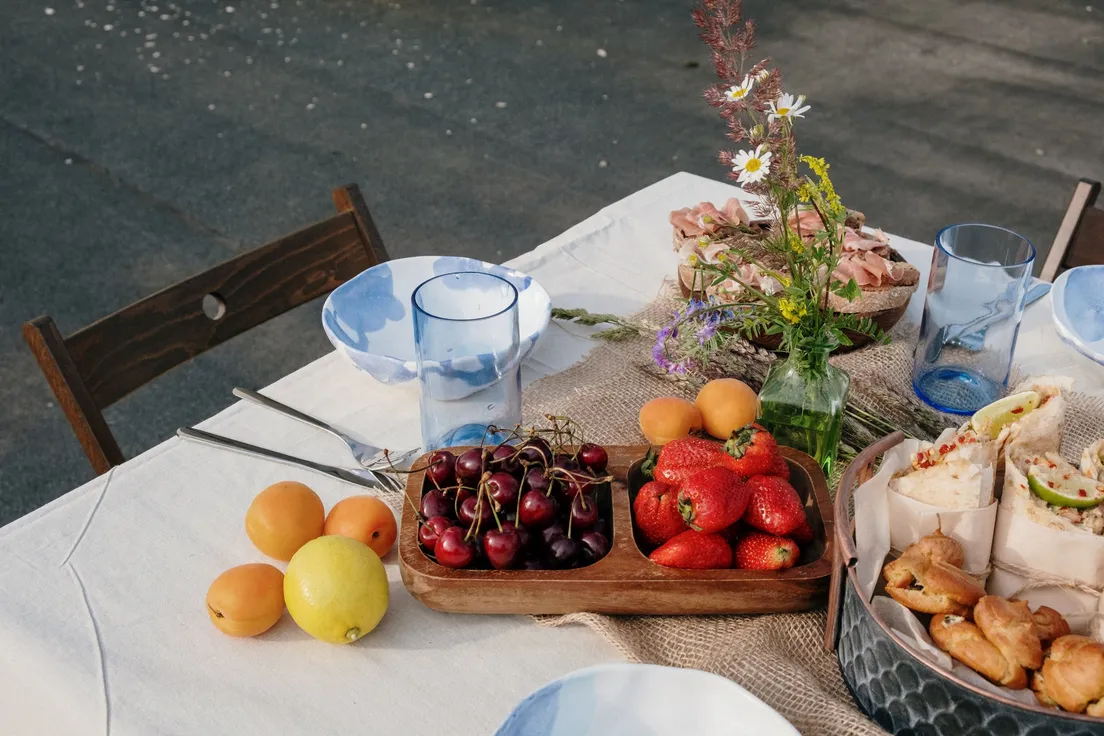
Photo by cottonbro studio on Pexels
Rent or Borrow a Tent Before the Forecast Makes the Call for You
A pop-up canopy earns its keep the one weekend it rains and the one weekend the sun is brutal enough to matter — both are more common than people plan for. A 10×10 pop-up covers a food table and a cluster of chairs for $60–100 and folds down small enough to store in a garage the rest of the year; a rented event tent for the same footprint runs closer to $150–250 for a single day and isn’t yours to keep. (Yes, that’s a bigger number than most of the other ideas on this list — it’s the one item worth renting instead of buying if you’re not hosting outdoors more than once or twice a year.) Stake it down even on a calm forecast; a gust of wind and an unstaked canopy is how a relaxed afternoon turns into a chase across the lawn.
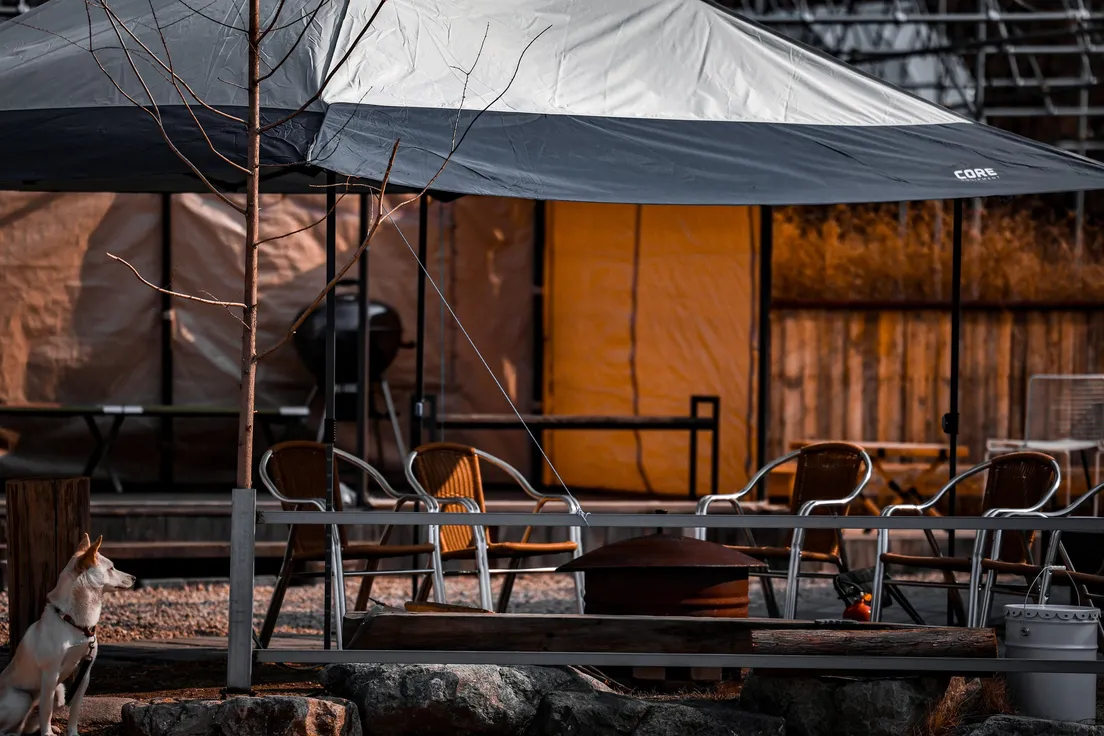
Photo by WON JONG LEE on Pexels
The Honest Math: What These Backyard Party Ideas Actually Cost for 15–20 Guests
Here’s the honest math, added up instead of estimated: a shatterproof string light set ($34), two drink dispensers ($25 for the pair), a $12 table runner, two cornhole boards with bean bags ($55), and a $15 set of path lights comes to $141 in new purchases — before food, which varies too much by menu to guess at honestly. Add a rented pop-up canopy for a rain-risk weekend and the total moves to $191–291. That’s the real range for a party that looks fully put-together, not the “starting at $50” number a product listing might lead with. If you already own seating and a table, this is close to the whole budget; if you’re buying those too, add the honest total from your own patio furniture on top.
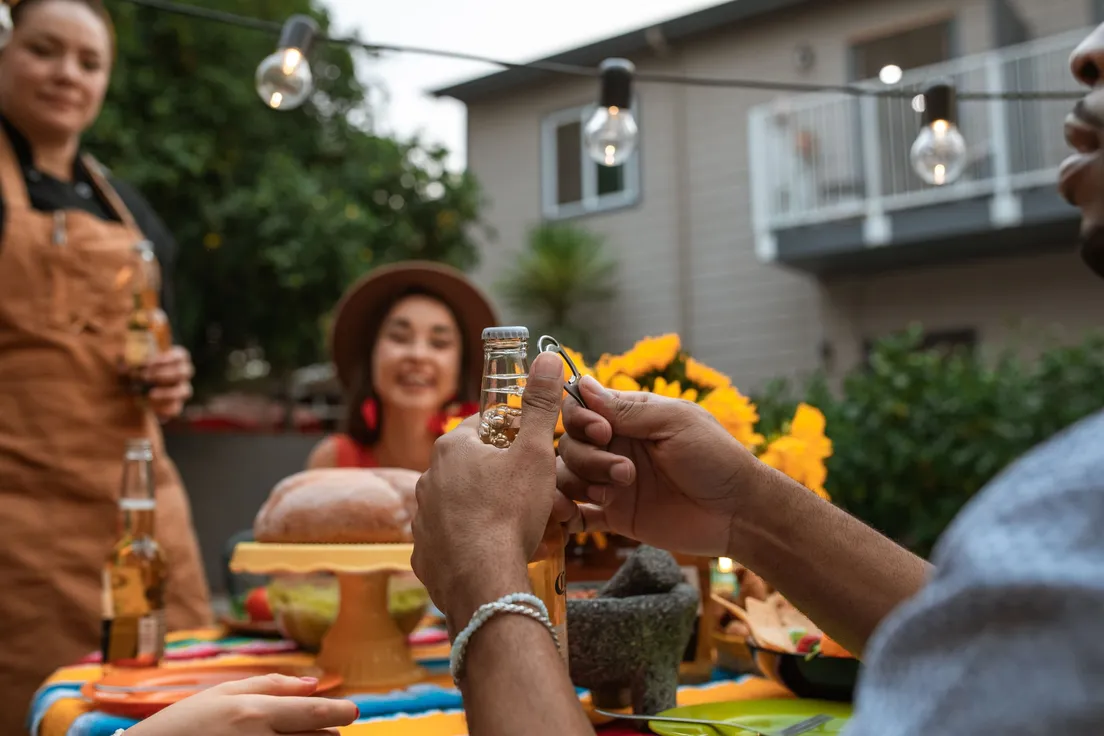
Photo by RDNE Stock project on Pexels
Rule of Thumb: How Much Seating and Table Space to Plan Per Guest
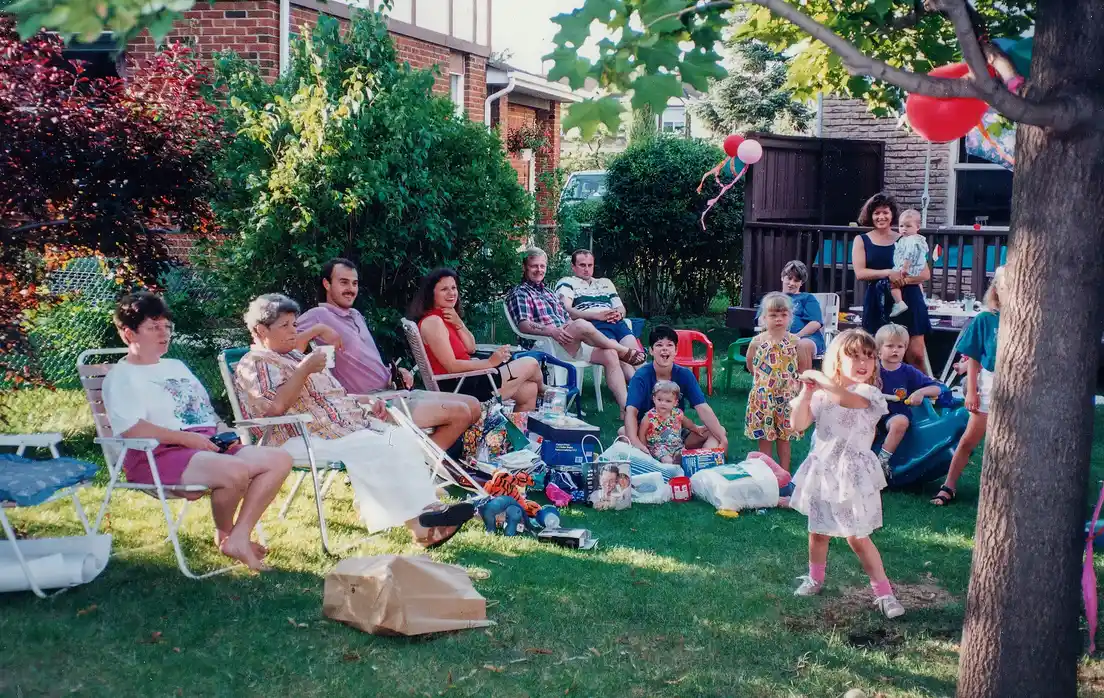
Plan real seats for roughly 60–70% of your guest count, not one-for-one — a mixed party of standers and sitters rarely fills every chair at once, and a yard with a seat for every single guest usually just means empty chairs by 9pm. For a party of 20, that’s 12–14 seats, split across at least two separate zones (one near the food, one further out) so the whole group isn’t funneled into a single conversation. Table space follows a similar rule: 24 inches of table edge per seated guest is the minimum before elbows start colliding, closer to 30 inches if plates and drinks are both staying on the table through the meal.
Start with the drink station and the lights — everything else on this list is easier to add once people have somewhere to stand and something to hold.
Frequently asked questions
What are good ideas for a backyard party?
A self-serve drink station, buffet-style food instead of plated service, string lights over the whole gathering space, and enough casual seating for everyone to sit down at once cover most of what a backyard party actually needs. Add a fire pit or lawn games once the basics are handled, not before — a party with good lighting and seating still works without either of those extras.
How do you throw a party in your backyard?
Start with the guest count, then work backward: seating and table space first, food and drink setup second, lighting and extras last. Map where people will actually stand and sit before you buy or borrow anything — most backyard party problems are layout problems, not decor problems.
What are some backyard party ideas on a budget?
Borrow or mix-and-match seating instead of buying a matching patio set, run drinks and food buffet-style to skip rental staff, and lean on string lights ($30–40 for a shatterproof 48-foot set) instead of a bigger lighting build. A backyard party for 15–20 guests can run $150–300 in new purchases if you're already working with a table and some chairs.
How much seating should I plan for a backyard party?
Plan real seats for roughly 60–70% of your guest count — a mixed party of standers and sitters rarely needs a chair for every single person. For a party of 20, that's 12–14 seats between chairs, benches, and step/ledge seating, spread across at least two separate zones so the whole crowd isn't funneled into one conversation.
What outdoor lighting is best for a party?
String lights strung high enough to clear head height do the most work per dollar, supplemented by low path lighting so nobody's walking a dark yard by phone flashlight. Warm-white (2700K) bulbs read as party lighting; cool-white or blue-tinted LEDs read as a parking lot, even at the same brightness.