
Porch & Curb Appeal
10 Curb Appeal Ideas That Skip the Landscaping
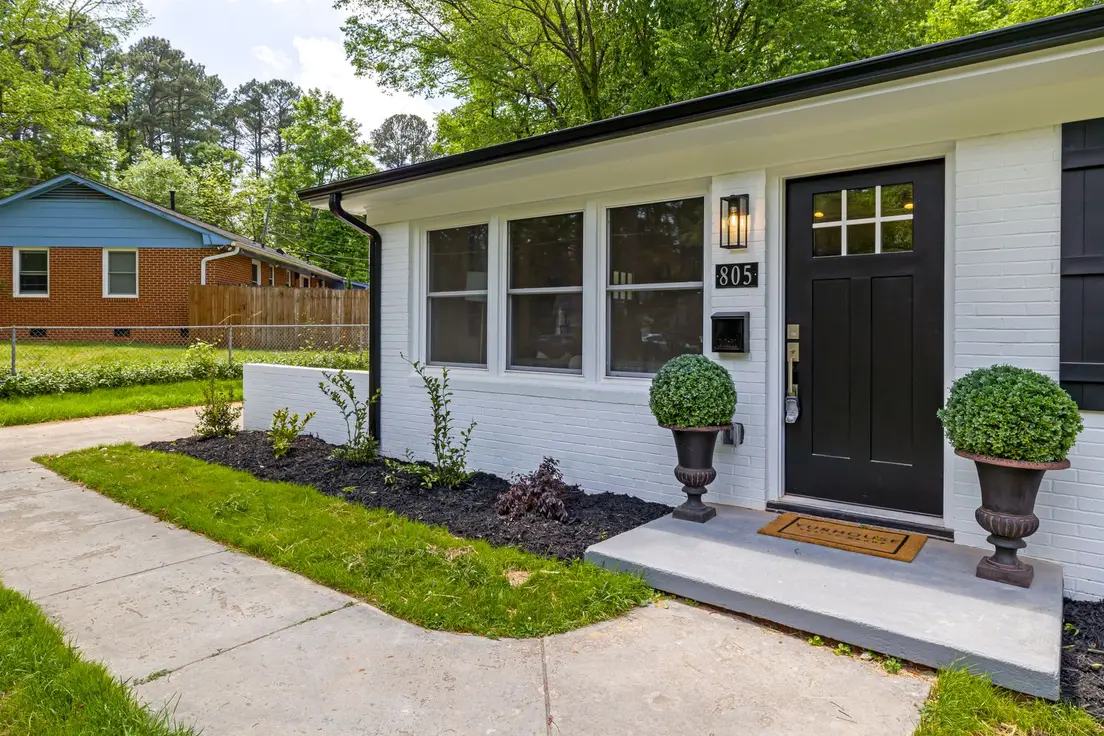
Photo by Curtis Adams on Pexels
The fastest curb appeal ideas add curb appeal without touching the front yard’s landscaping at all: a new mailbox, a repainted door, a matching pair of porch lights, and a pressure-washed driveway change how a house looks from the street more than an afternoon of mulching ever will. None of the ten DIY ideas below need a shovel, a landscaper, or a trip to the garden center — just paint, hardware, and one rented pressure washer for a weekend of do-it-yourself work. (Somewhere an HGTV producer is filing this under “the boring reveal.” We’re fine with that.)
10 no-landscaping curb appeal fixes at a glance
Concept renders — visual references, not photos of a finished project.
Paint the Front Door a Color With Actual Nerve
Paint your front door a color with actual nerve and it does more for curb appeal than almost anything else on this list — and it’s usually a $40–60 can of exterior door paint plus a Saturday. Skip anything described as “greige” or “agreeable” — those are living-room colors wearing a coat for one day a year. Black, a deep forest green, or a genuinely saturated red hold up in every climate and photograph well in every season. Two coats of exterior enamel over a cleaned, sanded door is the whole project; tape the hinges and glass first, and it dries by dinner. Our first rental door came in a color the leasing office called “Contented Almond,” a generous way of describing beige that gave up. Test the real color on a poster-board swatch taped to the door for a full day before committing — morning and evening light read a color two different ways, and the swatch is a lot cheaper to be wrong about than the whole door.

Photo by Zac Gudakov on Unsplash
Swap In House Numbers You Can Read From the Curb
House numbers are the one thing every visitor, delivery driver, and buyer’s agent actually looks for, and most builder-grade numbers are still the flat brass or black plastic set the house shipped with decades ago. New house numbers — brushed nickel, matte black, or a floating address plaque — run $15–35 for four digits, are easy to install with the screws already in the box, and make the home exterior look considered instead of overlooked. Go a size up from what’s there: 5-inch numbers read from the street in daylight, while the 3-inch set most houses come with reads from the porch and nowhere else. A number you can’t read from the sidewalk is doing the same job as a whispered address. Center them on one fascia board or beside the door, not scattered across two surfaces — one clean line reads as intentional, two reads like nobody agreed on where to put it.

Photo by Megan Lee on Unsplash
Hang a Matching Pair of Porch Lights
A single builder-grade outdoor lighting fixture over the door reads as an afterthought; a matching pair flanking the door reads cohesive, like someone designed the entry on purpose. Symmetry is doing more of the work here than the fixtures themselves — two $35–50 black or bronze sconces from a home center outperform one $150 statement fixture for exactly that reason. Swap the bulb to warm 2700K while you’re up there; the cool-white bulb most houses ship with turns a porch into a hospital hallway at dusk. If the wiring’s already there, swapping the fixture is a 20-minute project with the breaker off; if it’s not, a battery or solar sconce gets 80% of the look with zero electrician involved.
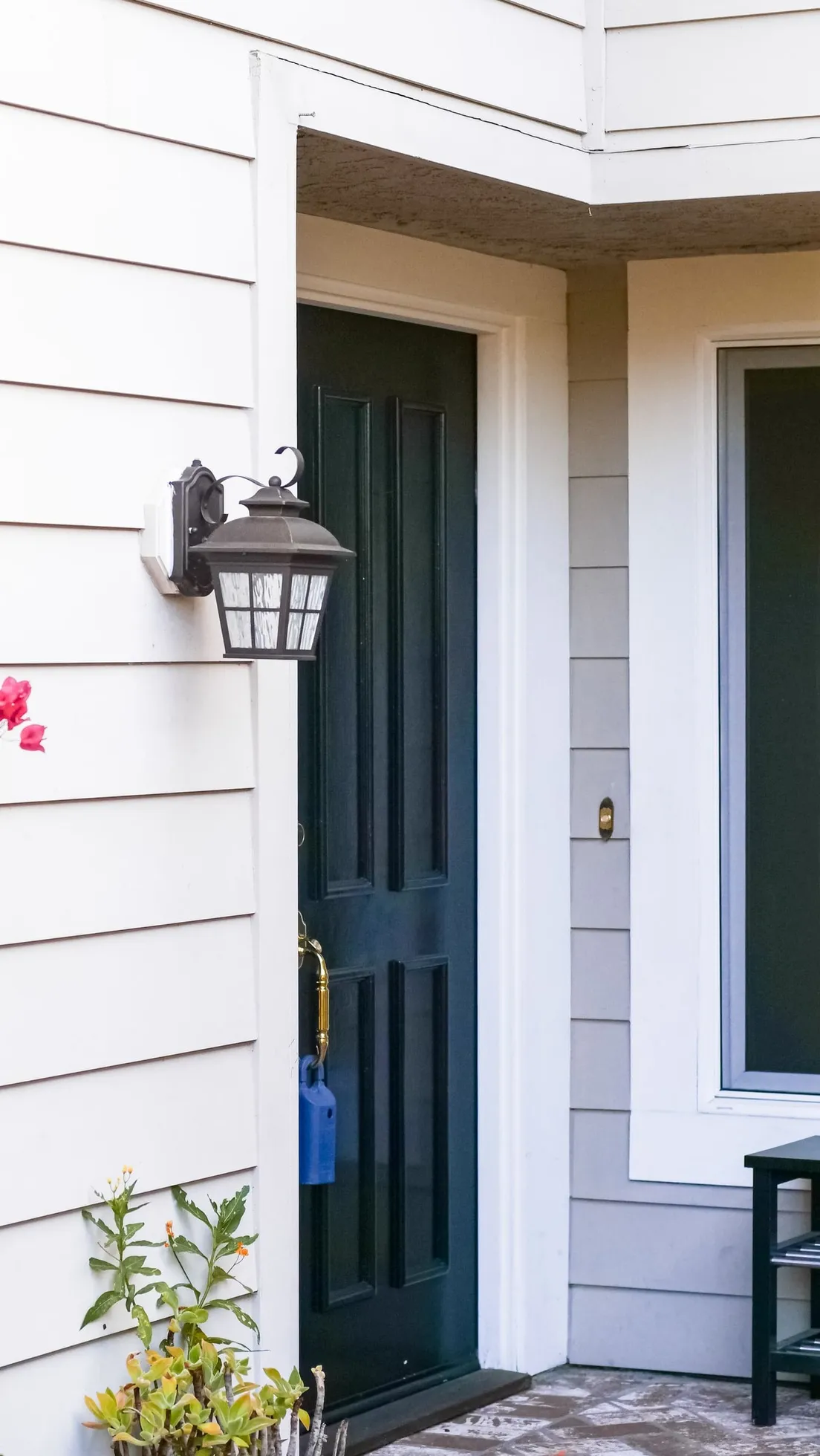
Photo by Kindel Media on Pexels
Layer Planters at the Entry Instead of Digging a New Bed
Two matching planters at the entry add color right where eyes land first, doing what a whole new flower bed would without the digging, the mulch, or the maintenance either one demands. Fill them with something that survives neglect — a trimmed boxwood, a hardy evergreen shrub, or an ornamental grass — rather than annuals that need water twice a week and a full replant every spring. Our first attempt at “low-maintenance” planters was ferns, and they died anyway: sun-scorched, overwatered, or possibly just personally offended. A pair of 16–18 inch resin planters runs $30–60 each and moves with you if you rent, which a flower bed never will. Skip the landscaping ideas that call for a whole weekend of digging new flower beds: two full planters and a swept step do more for a first impression than a redesigned bed most visitors will never stop to actually look at.
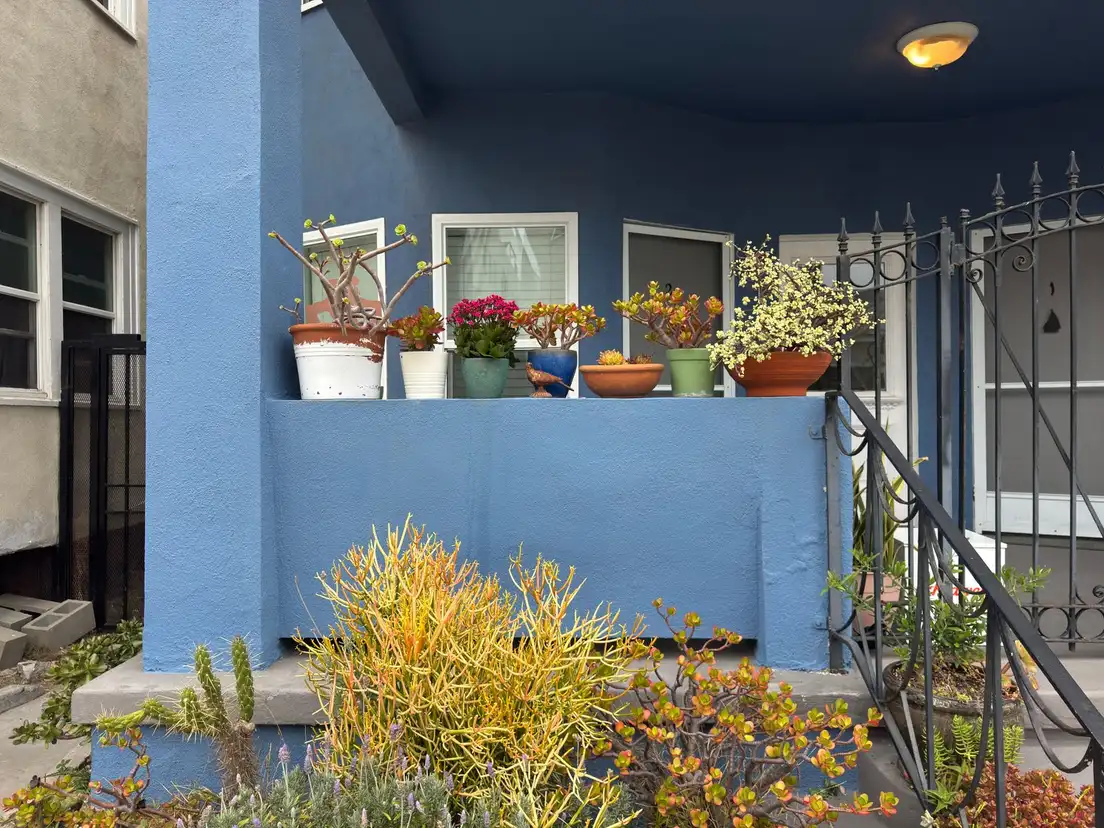
Photo by Rufina Rusakova on Pexels
Replace the Mailbox Instead of Repainting the Old One
A dented or sun-faded mailbox genuinely isn’t worth fixing — replace it instead. A new post-mount or wall-mount mailbox in black or bronze runs $40–70, installs with four screws into the existing post or exterior wall, and looks new for years longer than a repaint holds up on something opened and slammed shut daily. If the post itself is leaning or rotted at the base, a $15 bag of quick-set concrete around a straightened post solves the real problem in an afternoon. Match the finish to the house numbers and porch lights from earlier; three different metals at the front of the house reads like they were bought on three separate trips, because they usually were.
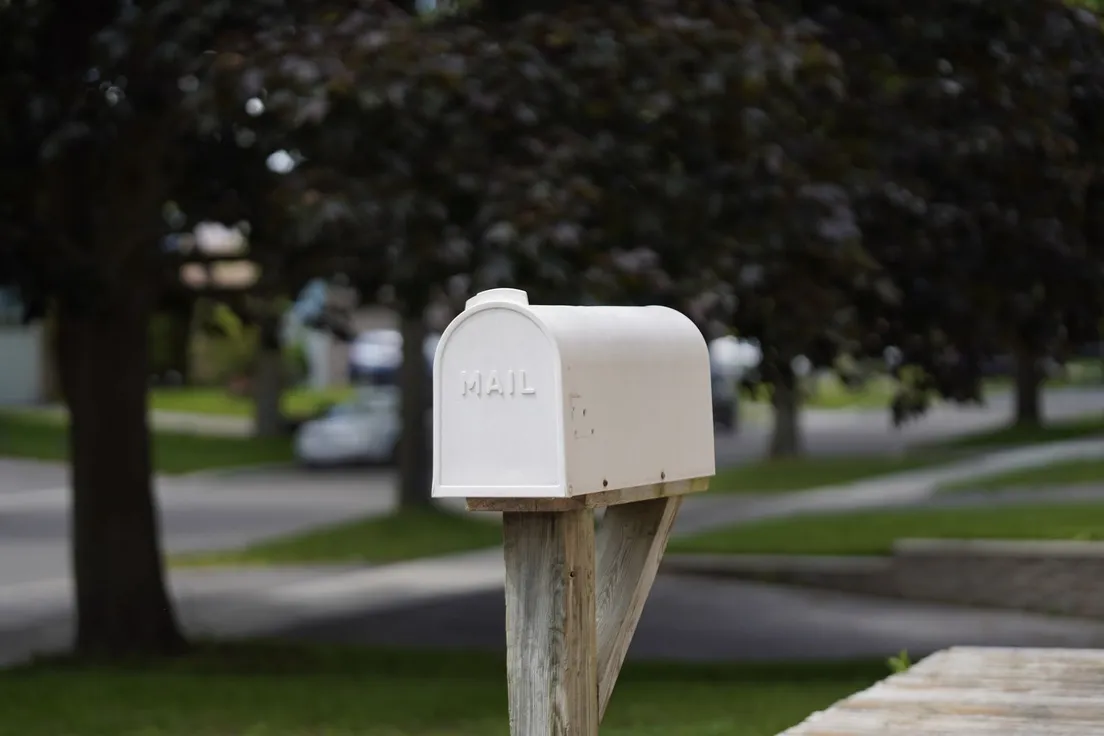
Photo by Gupta Sahil on Pexels
Give the Garage Door the Same Coat of Paint as the Front Door
On most suburban lots, the garage door is the single largest painted surface facing the street — bigger than the front door, bigger than the porch, and usually the most overlooked. A fresh coat of paint in the same color as the front door, or a deliberate contrast like white trim against a navy door, makes a big impact and ties the whole facade together for the cost of a gallon of exterior paint, about $45–65 for a standard two-car door. Check your HOA before changing the color, though — exterior paint is one of the more commonly regulated items, right up there with fence height and freestanding structures. Clean the door first with the pressure washer from the next idea; paint over chalky, weathered paint just peels again within a season, and nobody wants to repeat a $50 project because they skipped a $0 step.
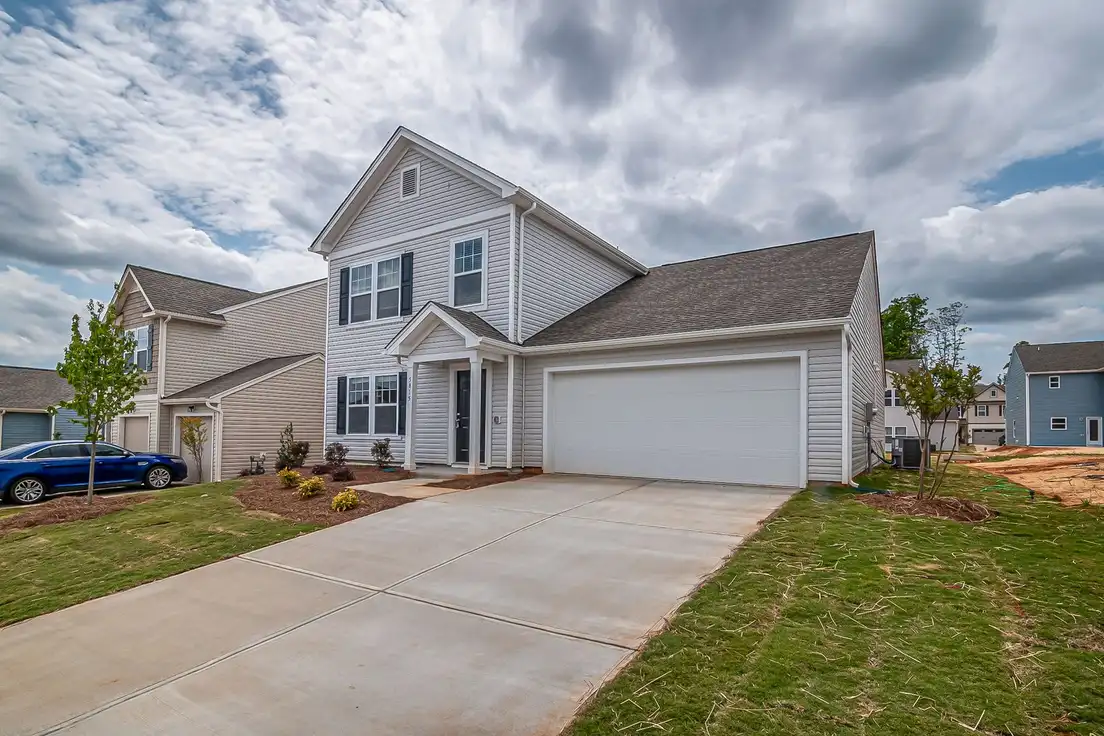
Photo by Curtis Adams on Pexels
Add Window Boxes Under the Street-Facing Windows
Window boxes under the street-facing windows do the same visual trick as the entry planters — color and life at eye level, no ground work required. A cedar or PVC box runs $25–40 per window and mounts with brackets into the siding or trim, no drilling into brick required if that’s what you’re working with. Fill with the same low-fuss plants as the entry planters, skipping anything that needs deadheading weekly, so the whole front of the house reads as one plan instead of four separate ones. Two windows is usually enough — every window gets busy fast, and busy isn’t put-together.
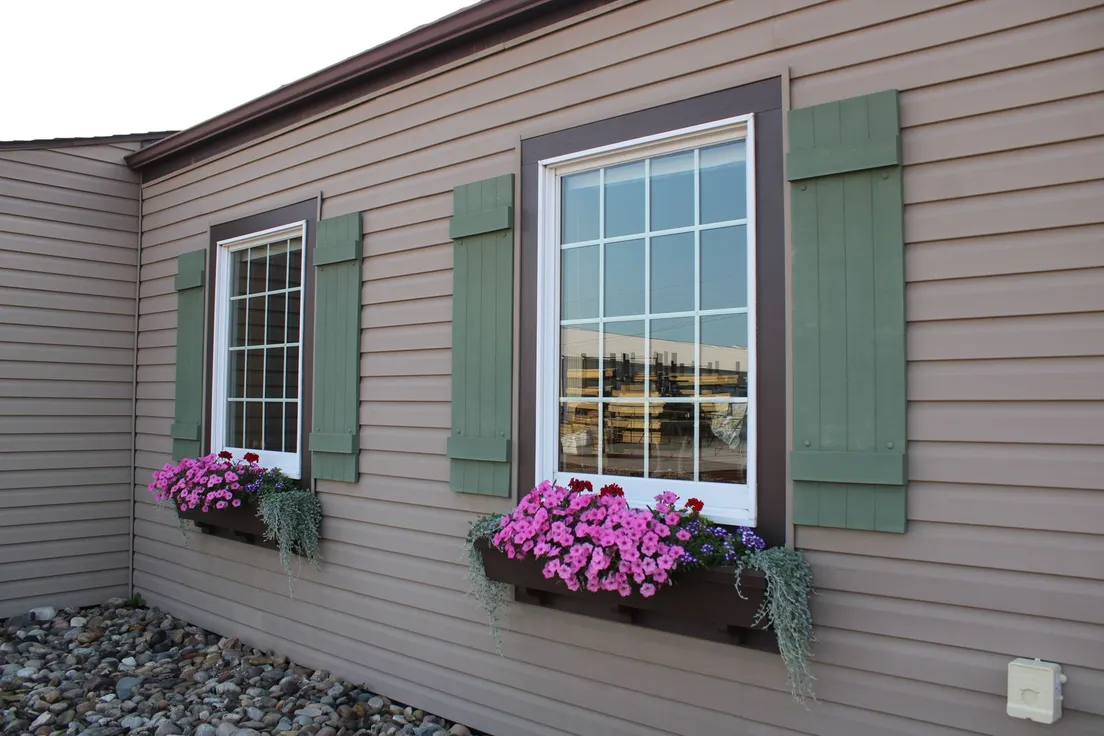
Photo by Keith Cassill on Pexels
Pressure-Wash the Siding, Walkway, and Driveway First
Before any paint or new hardware goes up, start with pressure washing the siding, walkway, and asphalt or concrete driveway — dirt and mildew buildup alone can make a five-year-old house look twice its age, and it’s the one project on this list that’s often free. Rent a pressure washer for $35–50 a day, or buy a basic electric model new for around $120; either way, one pass removes more grime than most people expect from water alone. Keep the nozzle level and a foot or two back from vinyl siding, never angled upward — the Polymeric Exteriors Association’s cleaning guidance warns that an upward spray angle can force water behind the panels, turning a two-hour cleaning project into a much longer repair. Start with the driveway and walkway if you’re short on time; they’re the surfaces every visitor actually walks across.

Photo by The ProClean Team on Unsplash
Add a Real Doormat and Swap the Door Hardware
A worn coir mat and a builder-grade doorknob are two of the cheapest fixes on this entire list, and together they cost less than one of the paint cans above. A quality outdoor mat runs $20–35 and should hold up to real weather, not just look nice for a photo; a matte black or brushed-nickel lever handle, kickplate, and knocker set runs $40–80 and swaps in with a screwdriver in under 30 minutes. (We’ve been guilty of a black mailbox, a brass doorknob, and bronze house numbers on the same porch — it read like three different projects that never met.) Match the hardware finish to the house numbers and porch lights from earlier, same rule as the mailbox. A new doormat with zero new hardware still moves the needle; it’s the single lowest-effort way to make the entry space read as welcome instead of neglected.

Photo by LeeAnn Cline on Unsplash
Refresh or Add Shutters for Instant Symmetry
Shutters read as architecture, not decoration, which is why a mismatched or missing pair throws off a whole facade more than almost anything else on this list. Composite window shutters run $30–60 per window and install with clips or screws directly into the siding, no carpentry or staining required, and they come pre-painted in standard colors that read well against nearly any roof — black, dark green, or navy. If the house already has shutters, check that every pair is sized to its window; a shutter cut for a narrower window than the one it’s mounted beside is a detail nobody names but everyone’s eye catches. Skip shutters entirely on modern or craftsman-style houses where they were never architecturally intended — bolted-on shutters that don’t match the window width read as decoration, which is a worse look than none at all.
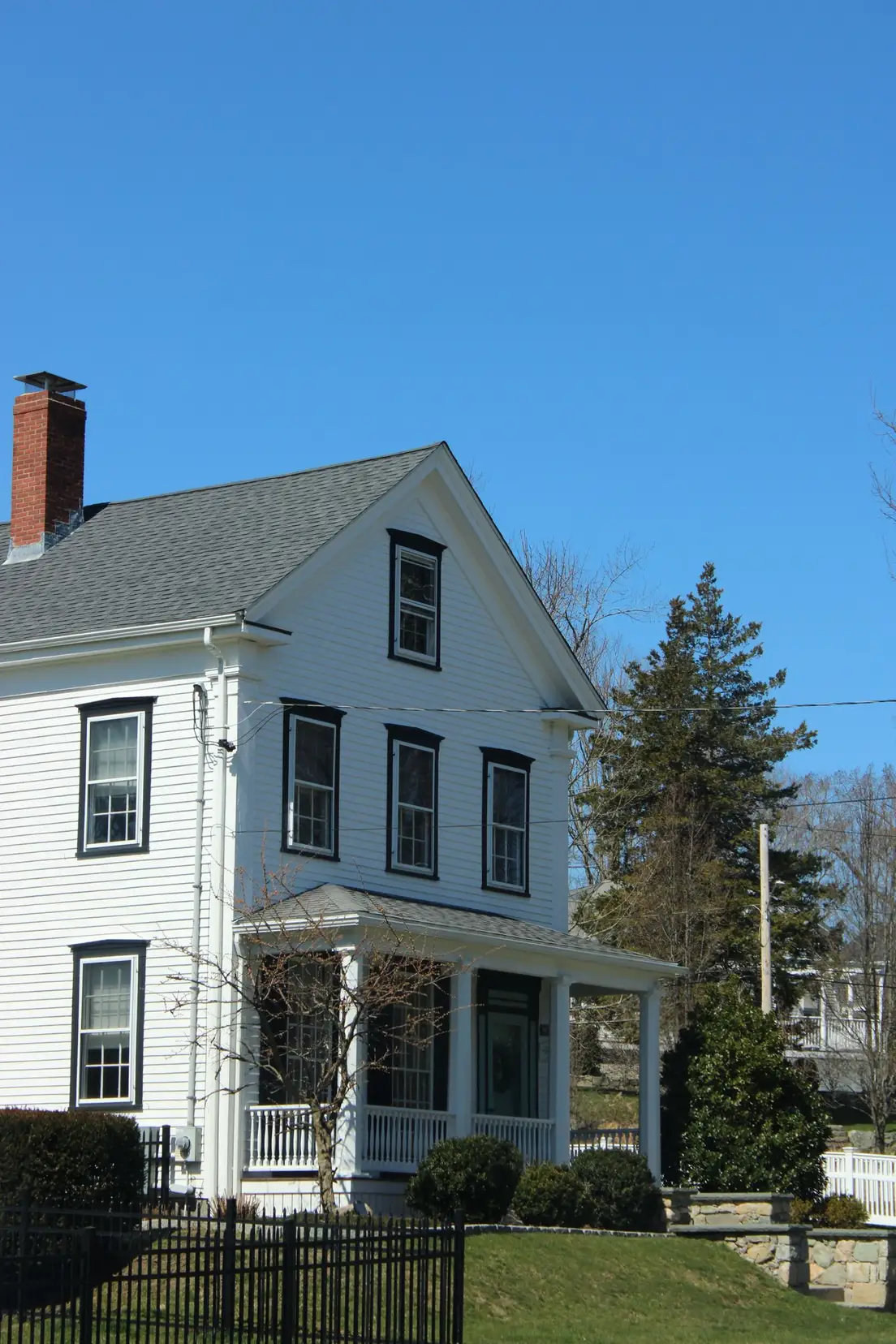
Photo by Luana Scorsoni on Pexels
The Honest Math: What a Full Curb Appeal Refresh Actually Costs
Here’s the honest math, added up instead of estimated: exterior door paint ($50), a set of house numbers ($25), two porch sconces ($80 for the pair), two entry planters ($90 for the pair with plants), and a new mailbox ($55) comes to $300 in new purchases — before a pressure washer rental ($40) or a can of garage door paint ($55), which pushes the full refresh to $395–450. That’s the real range for a curb appeal update that touches nearly every surface facing the street, not the “instant curb appeal for $100” number some roundups lead with. Pick three or four ideas instead of all ten and the number drops fast: the door, the numbers, and the lights alone add up to great curb appeal for around $155.

Rule of Thumb: Which Fix to Do First If You’re Only Doing One
The fastest way to boost curb appeal when you’re only fixing one thing is the front door — every eye goes there before anything else on the facade, and a $50 paint job outperforms almost every other item on this list per dollar spent. That holds whether you’re staying put or getting ready to sell your home. After the door, house numbers and porch lights are the next two highest-impact, lowest-cost fixes, in that order; both are finished in under an hour combined. Save the mailbox, shutters, and window boxes for a second weekend — they matter, but they’re supporting cast, not the lead. A good rule of thumb: fix whatever’s visible from the street, not whatever’s only visible standing on the porch. The whole point is the first impression, not the close-up.
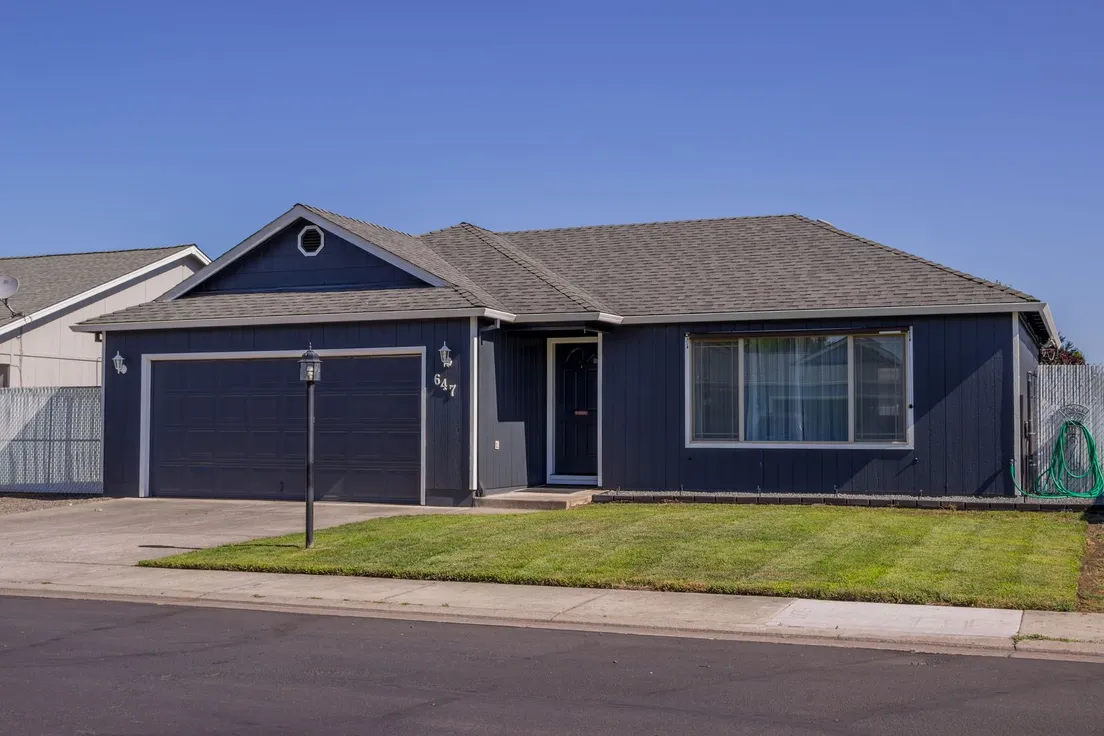
Photo by Clay Elliot on Pexels
Start with the door. Everything else on this list reads as more finished once the one thing every visitor looks at first isn’t beige.
Frequently asked questions
What counts as good curb appeal?
Good curb appeal means the front of the house reads as cared-for at a glance from the street — a clean, consistent color story, readable house numbers, working lighting, and a clear, tidy entry. It's less about any single feature and more about nothing looking neglected or mismatched when someone slows down at the curb.
What are some budget-friendly curb appeal ideas?
Painting the front door, swapping the house numbers, and adding a matching pair of porch lights are the three highest-impact, lowest-cost fixes — all three together run under $200 and take a single weekend. A pressure-washed driveway and walkway is free if you already own or can borrow the equipment.
What are the fastest ways to improve curb appeal?
Pressure-washing the siding, walkway, and driveway is the fastest single fix — it's often a same-afternoon project with no drying time for paint or shopping for parts. Swapping house numbers and a doormat both take under 30 minutes each and need no special skills beyond a screwdriver.
How can I use lighting to improve curb appeal?
Replace a single mismatched porch fixture with a matching pair flanking the door — symmetry reads as intentional design even with basic $35–50 sconces. Swap to a warm 2700K bulb instead of the cool-white bulb most houses ship with; it changes how the whole entry reads at dusk for the cost of a light bulb.
How can I enhance my front porch or entryway for better curb appeal?
A fresh doormat, a matching pair of entry planters, and hardware (doorknob, kickplate, knocker) in one consistent finish cover most of what a front porch needs. Keep the finish consistent with the house numbers and porch lights — three different metals at one entry reads as unplanned, even when each piece is nice on its own.