
Bedroom
Master Bedroom Ideas for a Real Budget (No Contractor)
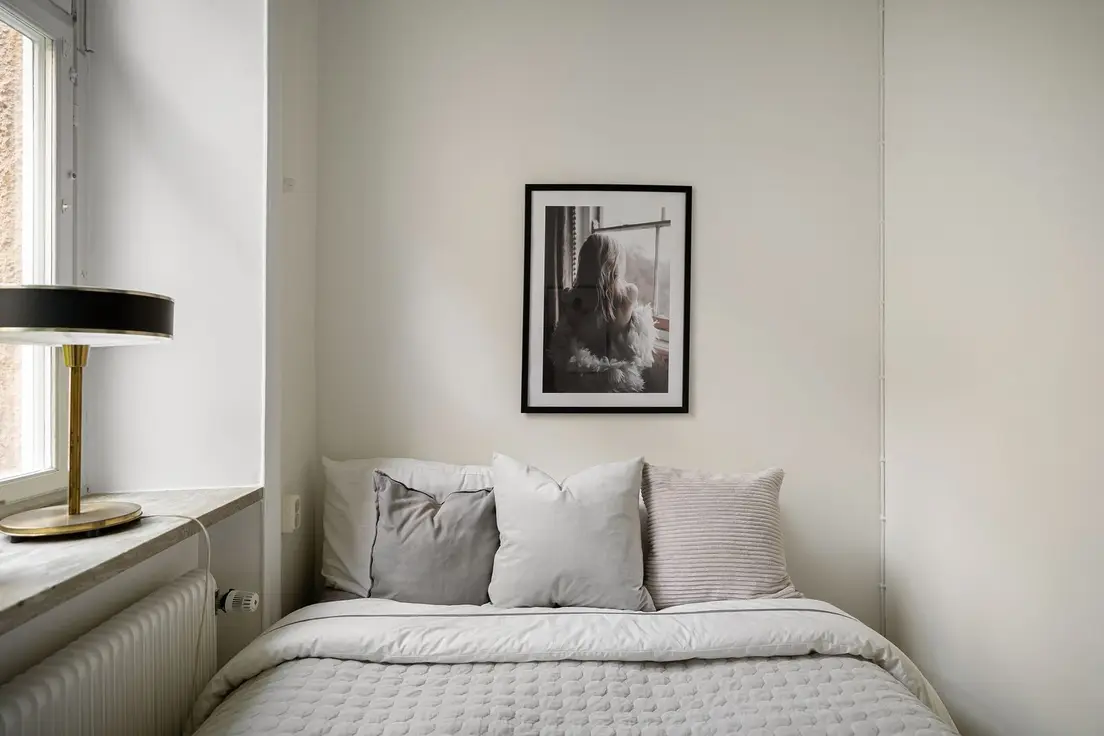
Master bedroom ideas usually start with a mood board. Yours should start with the one wall you already avoid looking at every night. This is bedroom design without the design fee — most of what separates a builder-grade primary bedroom from one that actually looks finished costs under $150 an idea, and none of the 12 below need a contractor, a permit, or your landlord’s blessing.
Repaint one wall a bold color before you commit to all four
Repainting just the wall behind the headboard, not all four, is the fastest way to change a builder-grade bedroom’s mood — one wall runs $35–50 in paint and primer and dries in an afternoon, versus a full weekend and three times the paint for the whole room. Go two shades bolder than feels reasonable; a peel-and-stick wallpaper panel works too if you’d rather commit to a pattern than a paint hue, but paint is the cheaper test run before you settle on a wall color you’re stuck with.
We painted over a rental bedroom’s stain-blocking “eggshell” three times before admitting the almond undertone wasn’t going anywhere without a real primer coat — a twenty-minute step that would’ve saved us a whole Saturday. Test a swatch before you commit to the can; the wrong color choice on a full wall is a much bigger regret than on a swatch.
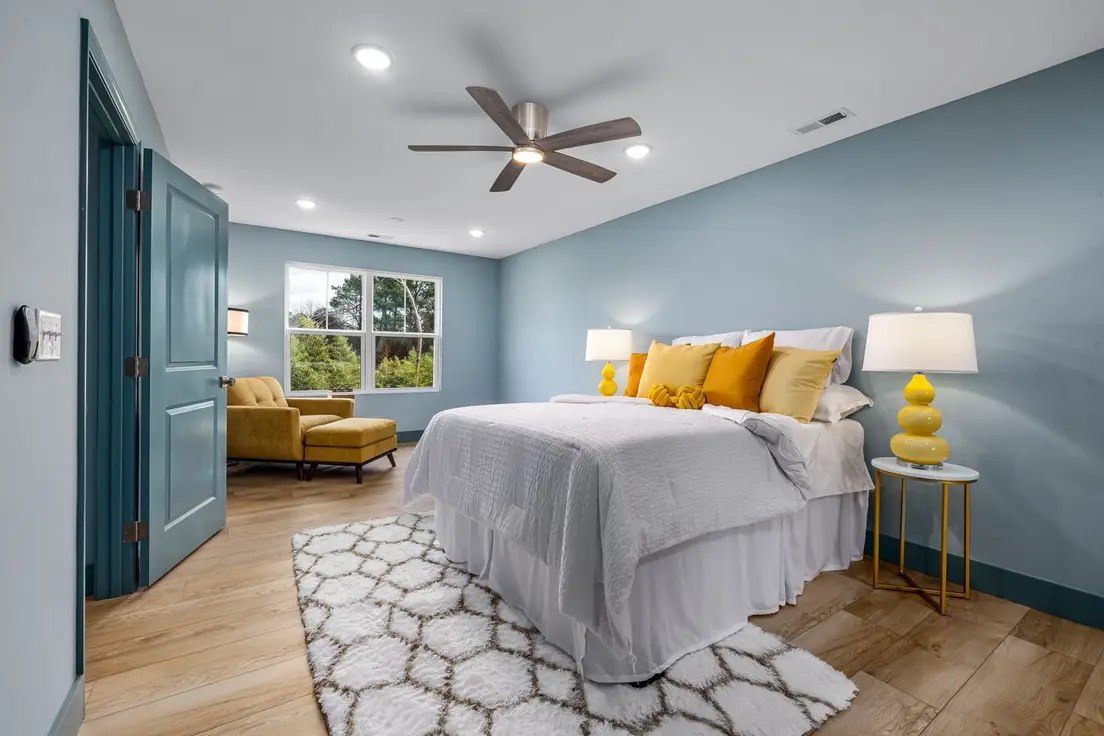
Photo by Curtis Adams on Pexels
Go bigger than feels reasonable on the rug
A rug is almost always the highest-leverage purchase in any room, master bedrooms included — it does more to make a space look finished than a new bed frame or a fresh coat of paint. For a queen bed, that means an 8×10 rug at minimum, positioned so the front two-thirds slides under the bed and the rest extends past both nightstands. A 5×7 tucked under just the foot of the bed reads like a bath mat that wandered in from the wrong room.
Polyester or wool-blend area rugs in that size run $150–250 and add real tactile warmth underfoot on a cold floor. Skip natural jute if you’re the type to eat breakfast in bed and regret it by lunch — and go ahead and spend less per square foot than you would in the living room; a bedroom rug sees far less foot traffic and none of the spilled-wine risk.
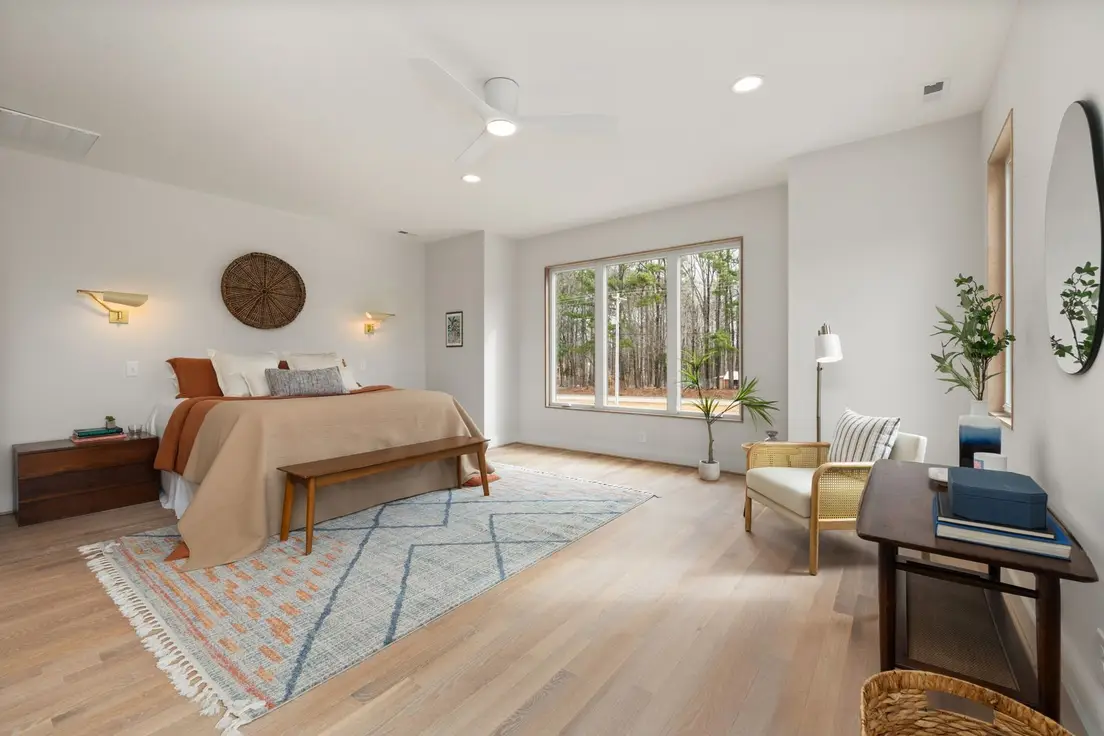
Photo by Curtis Adams on Pexels
Swap the lighting for something warmer than builder-grade
Paint and lighting solve more of a bedroom’s problems than new furniture does, and lighting is the cheaper fix of the two. Swap the builder-grade 4000K bulb in the overhead light fixture for a warm 2700K one — same socket, a few dollars’ difference, and the room stops looking like a place you’d get interrogated in. Add a lamp on each nightstand so the overhead light becomes optional most nights, not mandatory.
A pair of ceramic or glass table lamps runs $30–60 each; one statement lamp on one side and a smaller one on the other works too, as long as both throw warm light at roughly the same height. A floor lamp in the corner or a pair of plug-in wall sconces flanking the headboard does the same ambient-light job if nightstand space is tight. (Check the bulb’s Kelvin number on the box — “soft white” alone isn’t a reliable label anymore.)
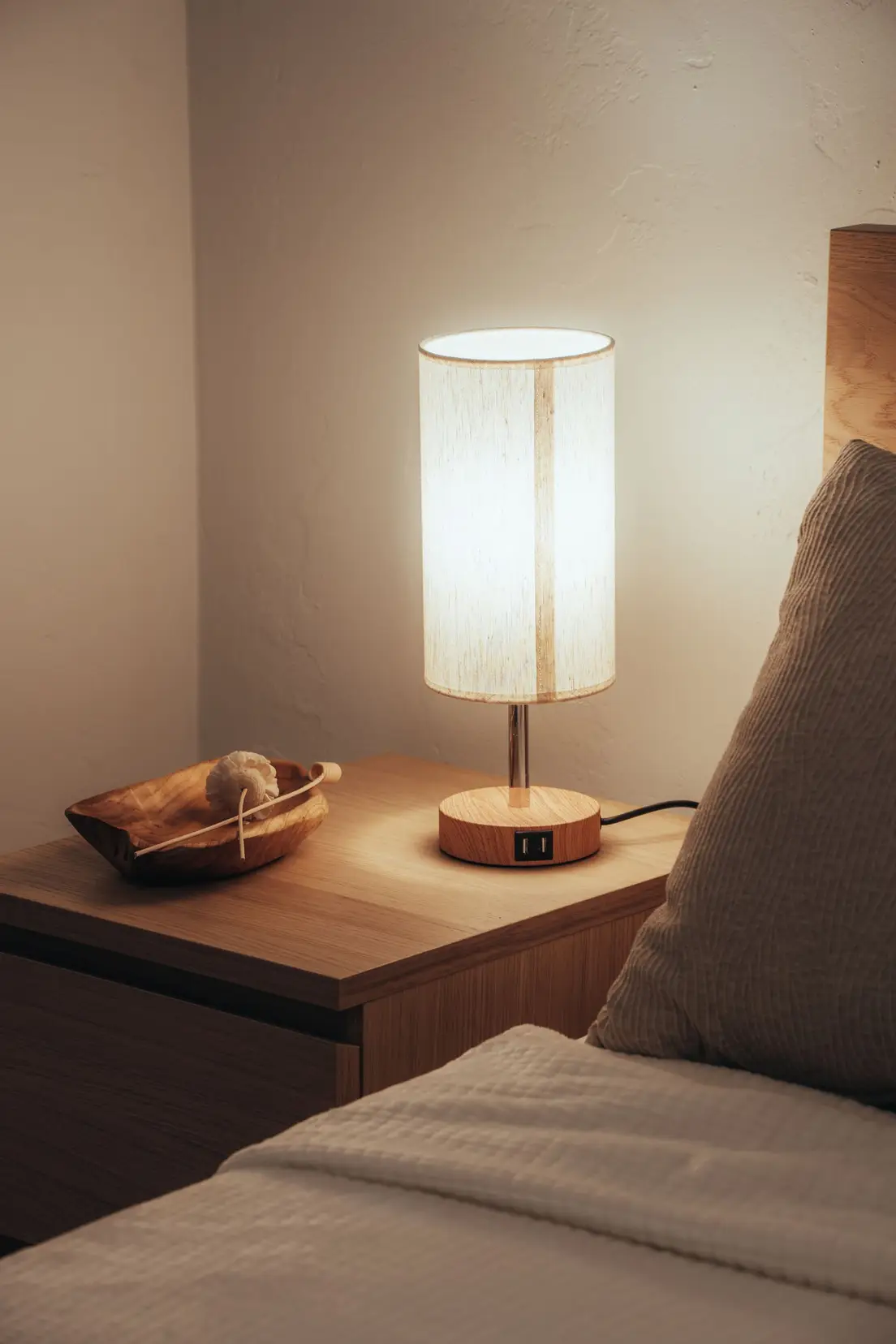
Photo by Osmany Mederos on Pexels
Build a headboard without touching the drywall
A missing headboard is the single biggest reason a bed reads unfinished, and you don’t need to drill into the wall behind it to fix that. A headboard that leans against the wall, or attaches to the bed frame itself rather than the drywall, solves the problem in a rental exactly as well as a mounted one does in a house you own.
The honest math on which version to buy:
The $60 leaning panel
A plywood panel wrapped in batting and fabric, propped behind the bed rather than mounted, runs $40–70 in materials for a queen and takes one afternoon with a staple gun. It moves when you do.
The $200+ upholstered frame
A store-bought upholstered headboard that attaches to the bed frame runs $180–350 depending on size and fabric, and looks more finished out of the box if sewing a fitted fabric panel isn’t a Saturday you’re excited about.
Start with the leaning panel. Style it with a few plush throw pillows so the headboard and bedding read as one finished layer, not two separate purchases. If it survives a year and you still like it, that’s your answer — no need to spend the difference on the frame version just because it exists.
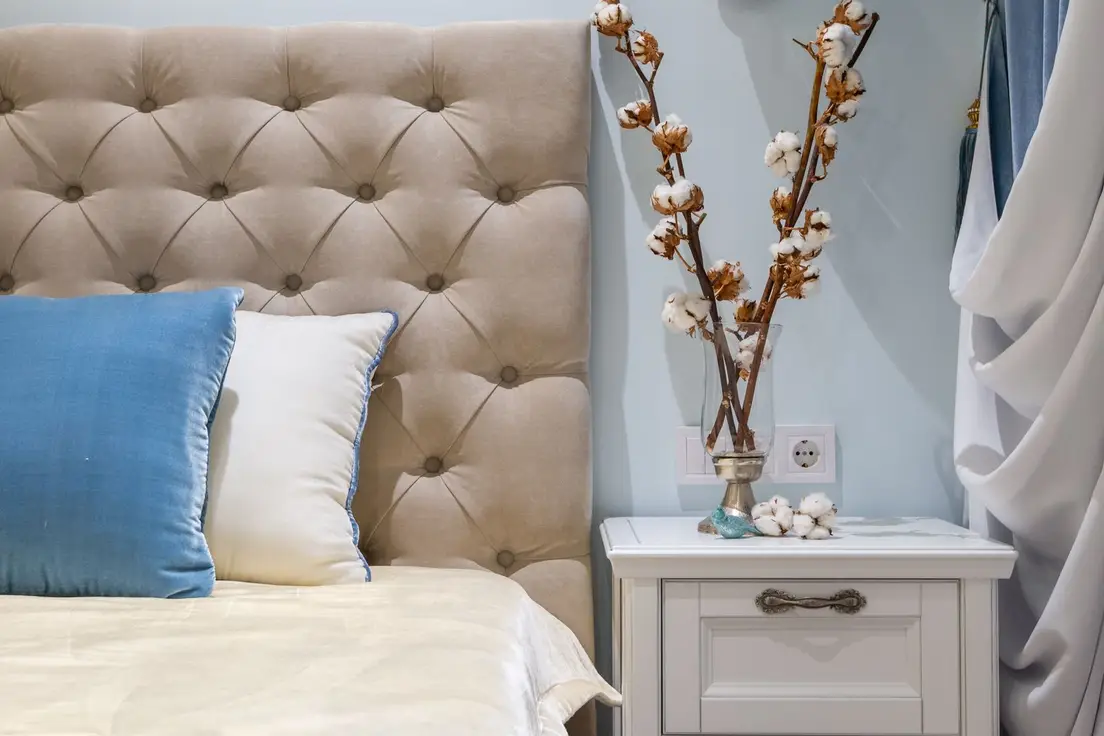
Photo by Max Vakhtbovych on Pexels
Hang the curtains at ceiling height, not window height
Curtain rods — drapery hardware, if you want the fancier term — mounted at ceiling height instead of just above the window frame make a builder-grade bedroom’s ceiling look taller — a trick that costs nothing extra beyond where you put the drill holes. These window treatments do more for a room’s proportions than almost anything else on this list. Buy panels rated for your actual window height plus the extra distance to the ceiling; a too-short panel hung high is the curtain equivalent of high-water pants — technically covering the window, not fooling anyone.
Blackout curtains matter more in a bedroom than anywhere else in the house — a $15 clip-on liner behind any panel blocks streetlight and early sun without replacing the drapery you already picked out. Ditch the stock mini blind if it’s bent or yellowed; it’ll show through sheer panels. Skip the flimsy tension rod if the curtains are heavier than sheer; it’ll bow within a month.
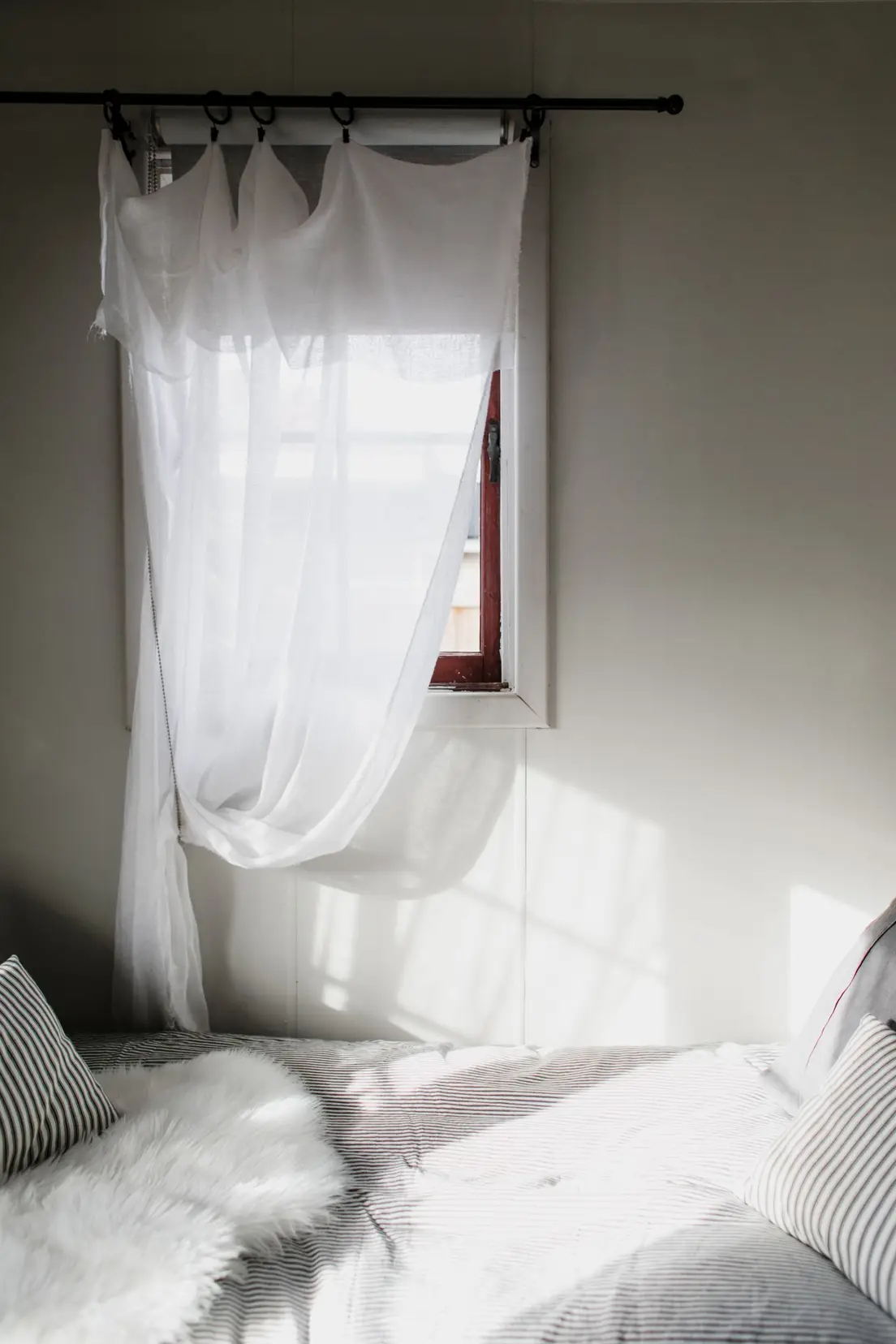
Photo by Rachel Claire on Pexels
Invest in real bedding before anything else
Bedding is the one category where the cheap version is obviously cheap, every time you get into bed. A cotton sateen or linen set in a genuinely woven fabric — not a marketing thread-count number, just real cotton or linen — runs $60–120 for a queen and changes how the whole room feels before you’ve touched anything else on this list.
A crisp white comforter with matching pillowcases and shams is the safest choice if you’re not confident picking a print — plush white bedding photographs and lives better than it sounds, and the tactile quality is what actually sells the upgrade, not the color. Wash new sheets once before the first night; most cotton softens noticeably after the first cycle and loses the slightly stiff, straight-from-the-package feel. We’ve been tempted by a 1,000-thread-count set at a price that should have been a warning label, and it was.
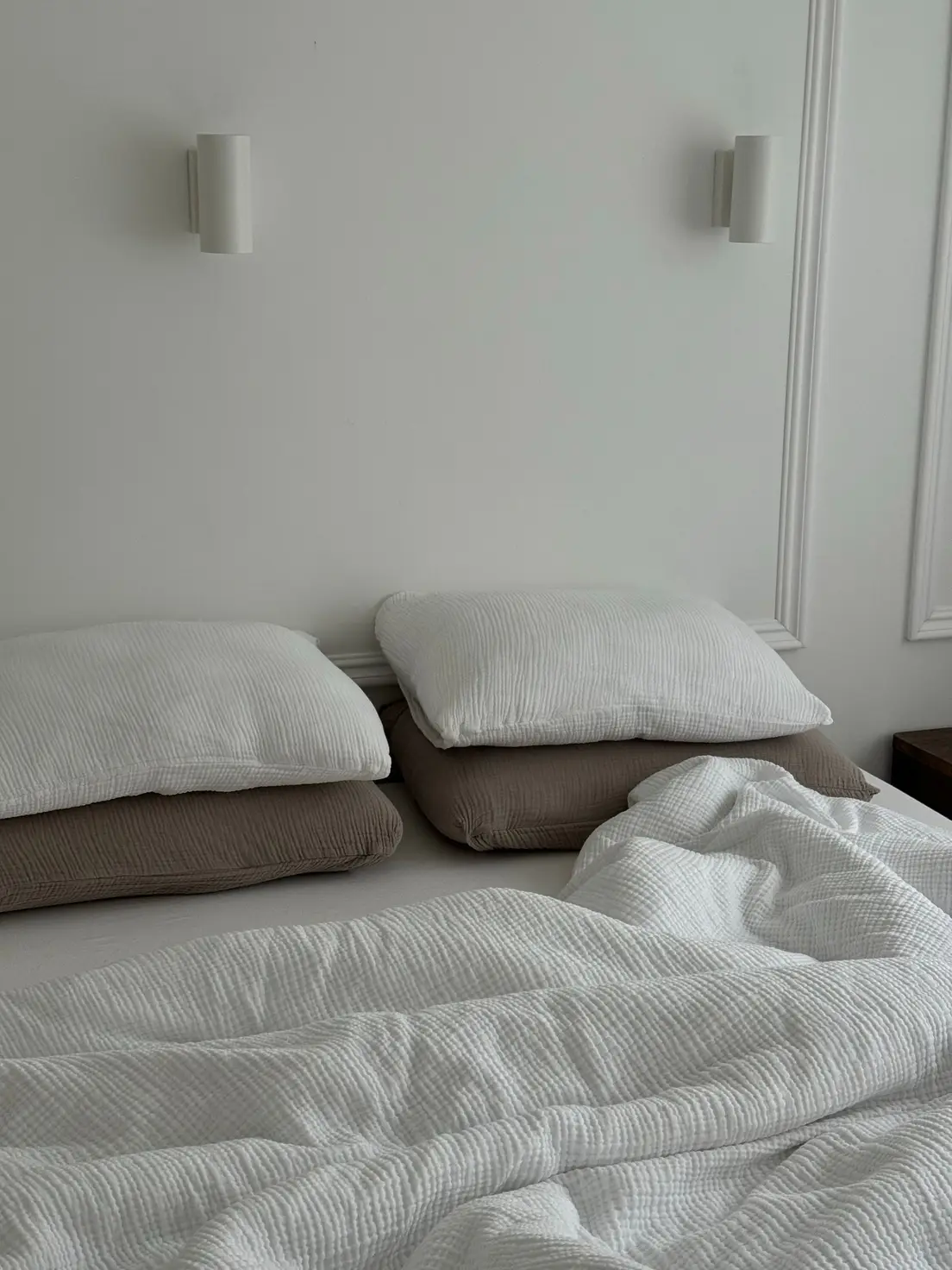
Photo by Aljona Ovtšinnikova on Pexels
Match the nightstands on either side of the bed
Mismatched bedside tables — nightstands, side tables, whatever you call them — happen to almost every rental bedroom by accident: one came with the apartment, one got left by a roommate, and neither matches the bed frame. A matching pair reads more intentional than either piece alone, even at the exact same price point, because symmetry is doing work your furniture budget isn’t.
They don’t need to be identical if a real matching pair isn’t in the cards — same height and roughly the same tone is enough for the eye to read them as a set. A $40 pair of cube-shaped nightstands from a big-box store solves this faster than refinishing two mismatched thrift-store finds, unless the thrifting is genuinely part of the fun for you.
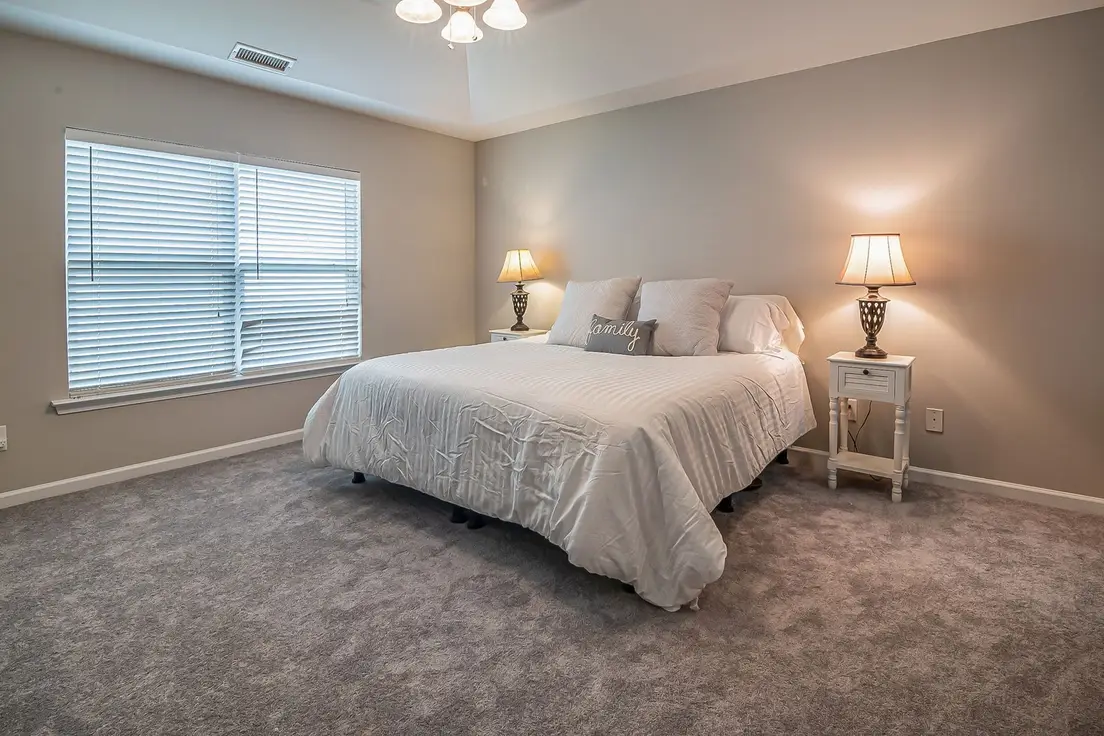
Photo by Curtis Adams on Pexels
Declutter your bedroom toward a calm, neutral palette
A nightstand is not a junk drawer with a lamp on it, however that happens by February. Clearing it down to the lamp, a coaster, and one book is the fastest, free way to make a cluttered bedroom read serene — no purchase required, just the fifteen minutes it takes to relocate the phone charger, the receipts, and the half-used lip balm to literally anywhere else in the house. The same declutter logic that works on a nightstand works on the wardrobe you’ve been avoiding, too.
Stick to two colors in the room’s textiles — a neutral and one calming accent — for cohesion, rather than a different pattern on every pillow and throw. Serenity comes from restraint, not from a bigger budget.
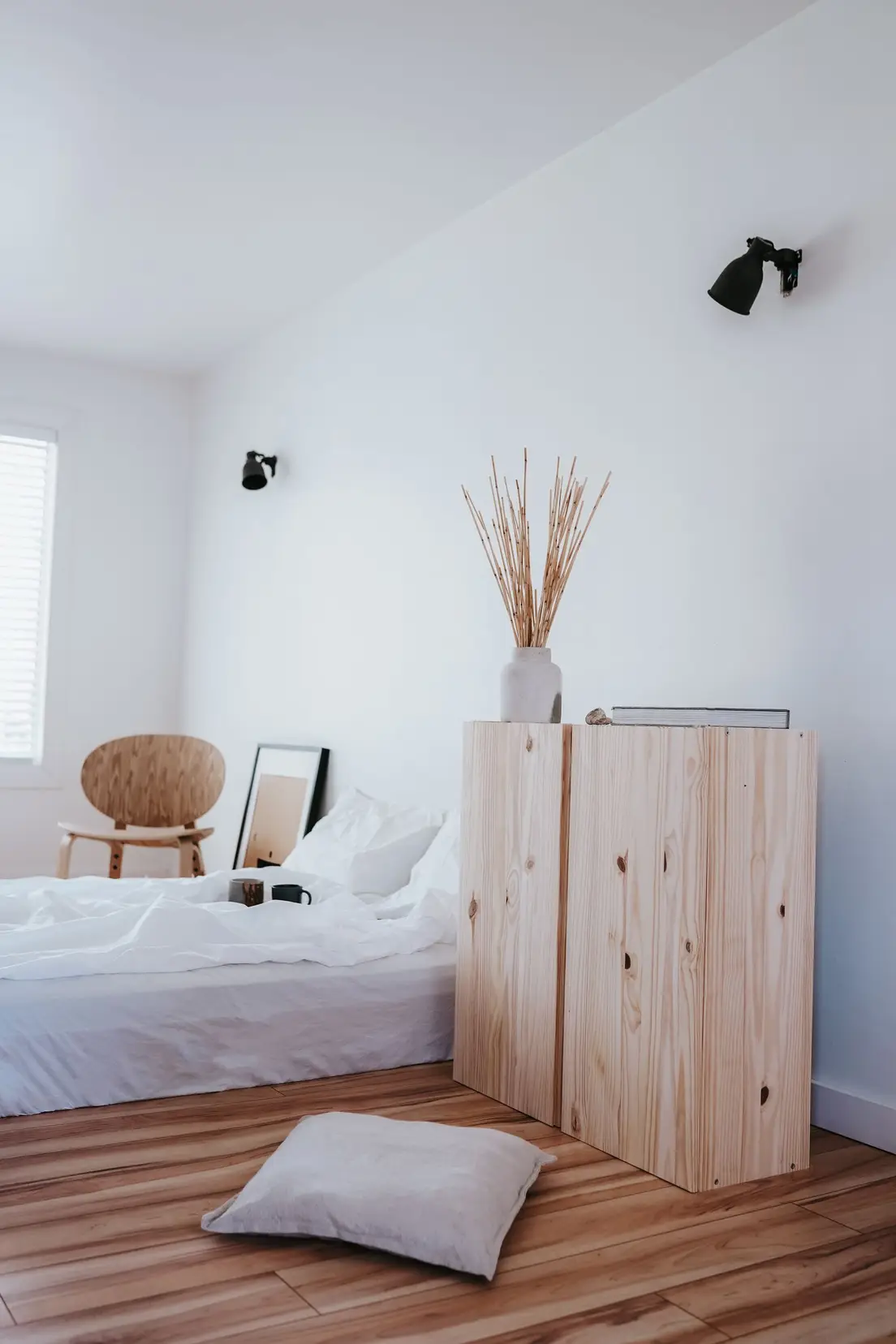
Photo by PNW Production on Pexels
Carve out a small reading nook if the room has three feet to spare
A reading nook doesn’t need its own room, just a corner with a chair, a lamp, and something to rest a mug on. Three feet of clear floor space next to a window is enough — an armchair or a slipper chair becomes a natural focal point there without competing with the bed for one, and runs $120–250. A small side table or plant stand doing double duty as a mug shelf finishes it for another $30–50.
Skip the reading nook entirely if the room’s actual floor space is under 120 square feet — a cramped one competes with the bed for the room’s only real job and loses. An empty corner beats a chair that becomes the place where clean laundry goes to be forgotten.
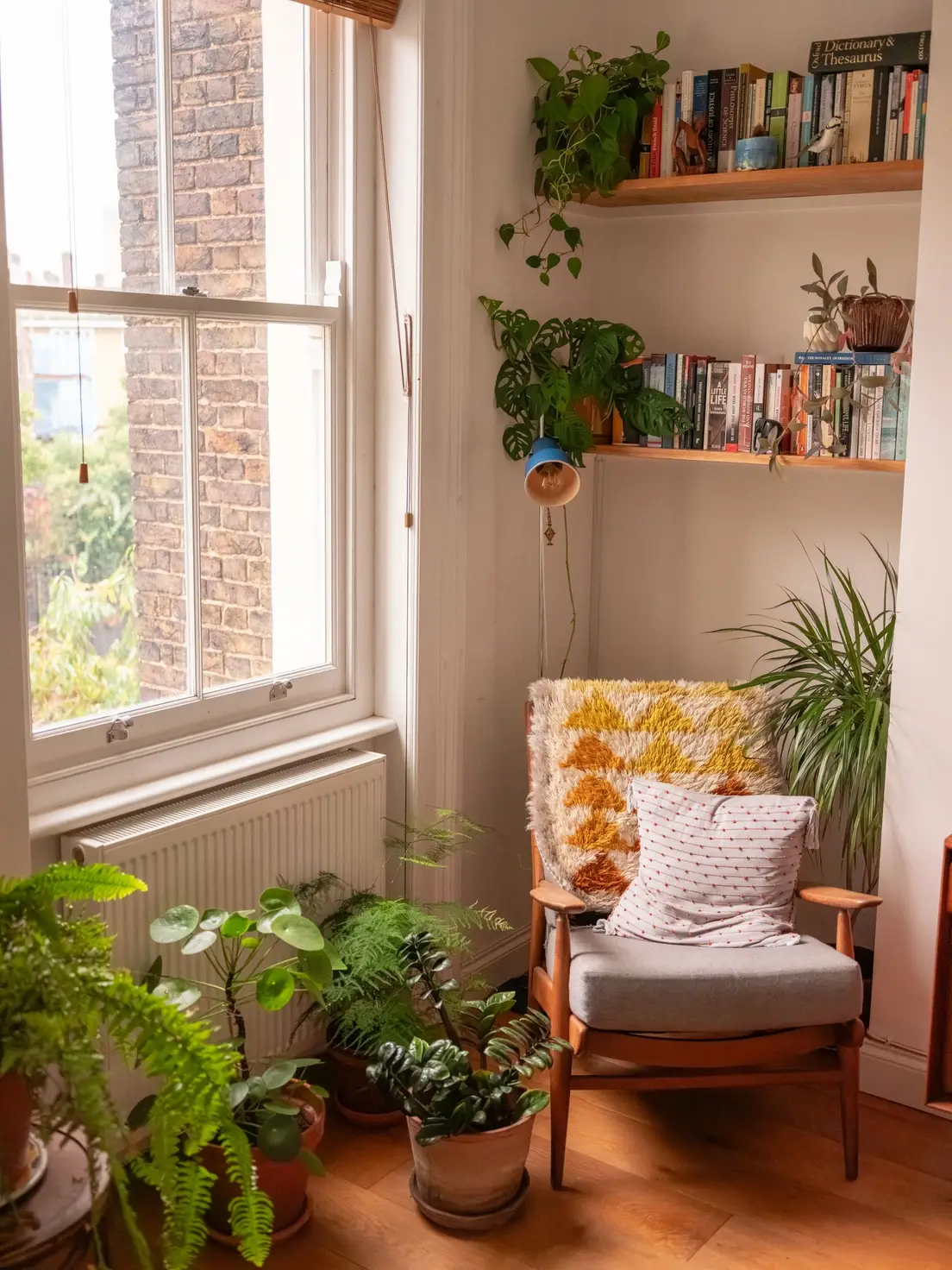
Photo by Alec Doualetas on Pexels
Add a leaning mirror to bounce the light around
A large mirror leaned against the wall, not hung, does two jobs a hung one doesn’t: it bounces natural light across the room, and it fills a stretch of empty wall space without turning into another piece of wall decor you have to hang and level. It’s also a five-minute return trip if it turns out to be the wrong size. Position it across from or beside a window — never directly opposite the bed, if you’re the type who doesn’t want to see yourself at 3am.
A floor mirror in the $60–120 range covers most bedrooms; go bigger before you go pricier, since a taller, wider mirror bounces more light than a small one with a nicer frame. (Lean it against a stud-adjacent wall if the room gets any real foot traffic — a mirror that can tip is a mirror that eventually will.)
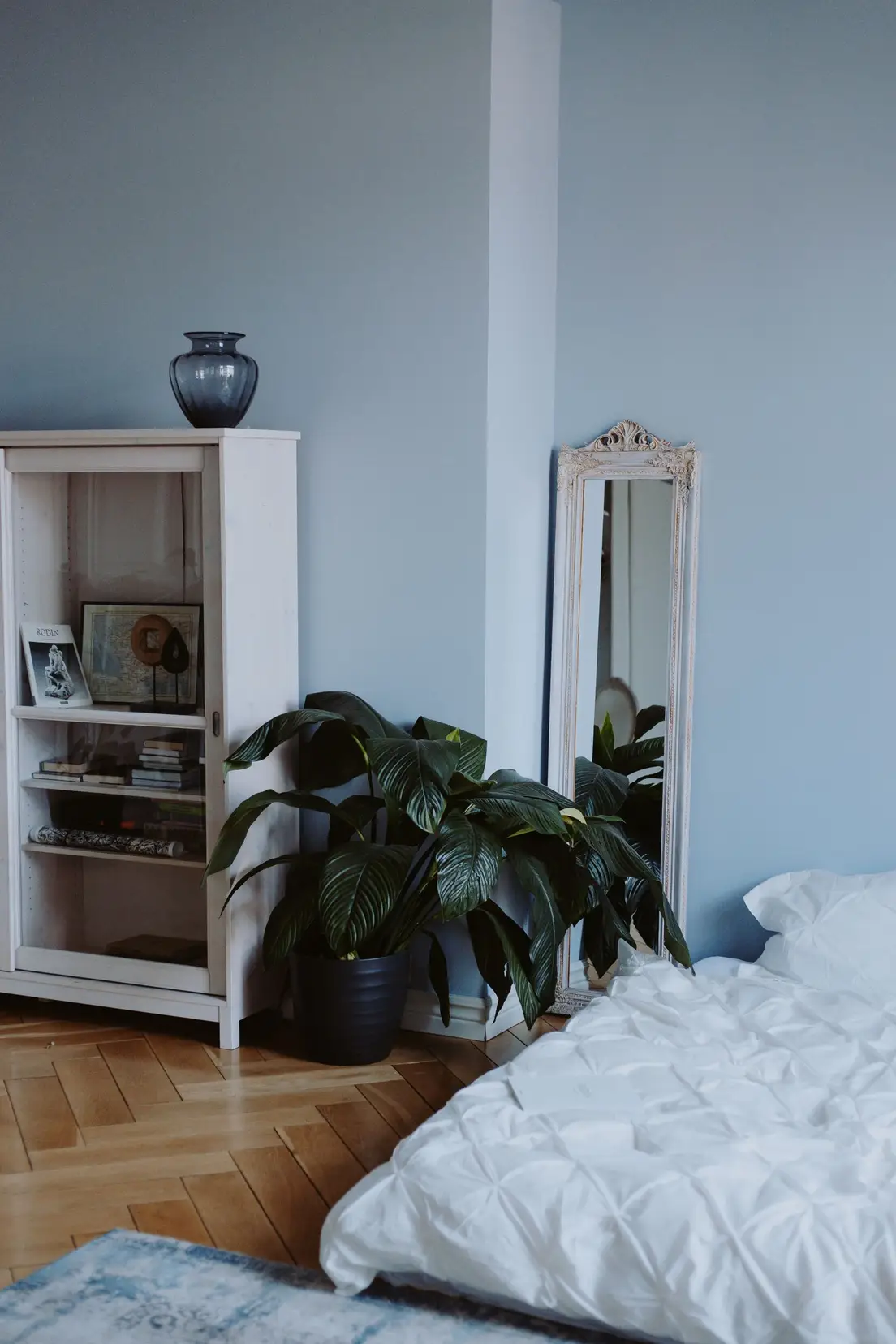
Photo by cottonbro studio on Pexels
Bring in one real plant, or a genuinely good faux one
Real plants don’t belong in every bedroom — a north-facing room with one small window is real-plant murder, not a failure of your care routine. A snake plant or a pothos tolerates low light better than almost anything else sold as a houseplant, and both survive the kind of benign neglect a bedroom actually gets.
If the room genuinely doesn’t get enough light, a good faux fiddle-leaf or olive tree ($40–70) reads as intentional now that faux foliage doesn’t look like it came from a dentist’s waiting room. One plant, repotted into a simple ceramic vase or planter instead of the black plastic grow-pot it shipped in, does more for the room than three mediocre ones.
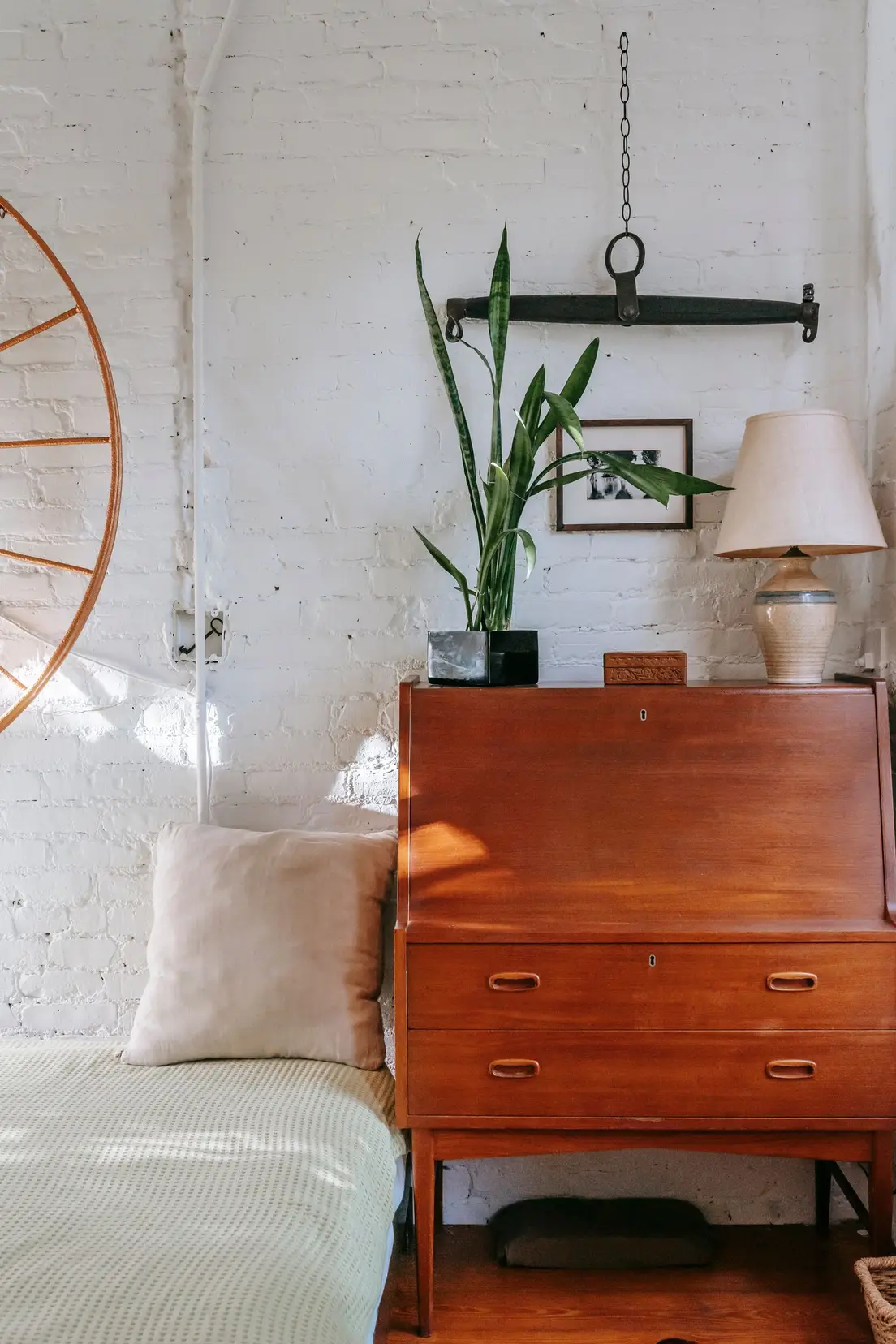
Photo by Charlotte May on Pexels
Swap the hardware on the dresser you already own
New dresser hardware is the cheapest furnishing upgrade that exists — unscrewing eight builder-grade knobs and putting on brass or matte black ones costs $2–4 a knob, takes fifteen minutes with a screwdriver you already own, and gives a dated dresser a modern look for under $30 total. It’s the furniture equivalent of the reading-glasses-were-on-your-head-the-whole-time moment: the dresser was never the problem, the hardware was.
Measure the existing screw spacing before ordering — most dressers use a standard spacing, but not all, and a mismatched hole pattern means either new holes or wood filler. Buy one extra knob in case one gets dropped down a heating vent; ask us how we know to check that spacing twice.
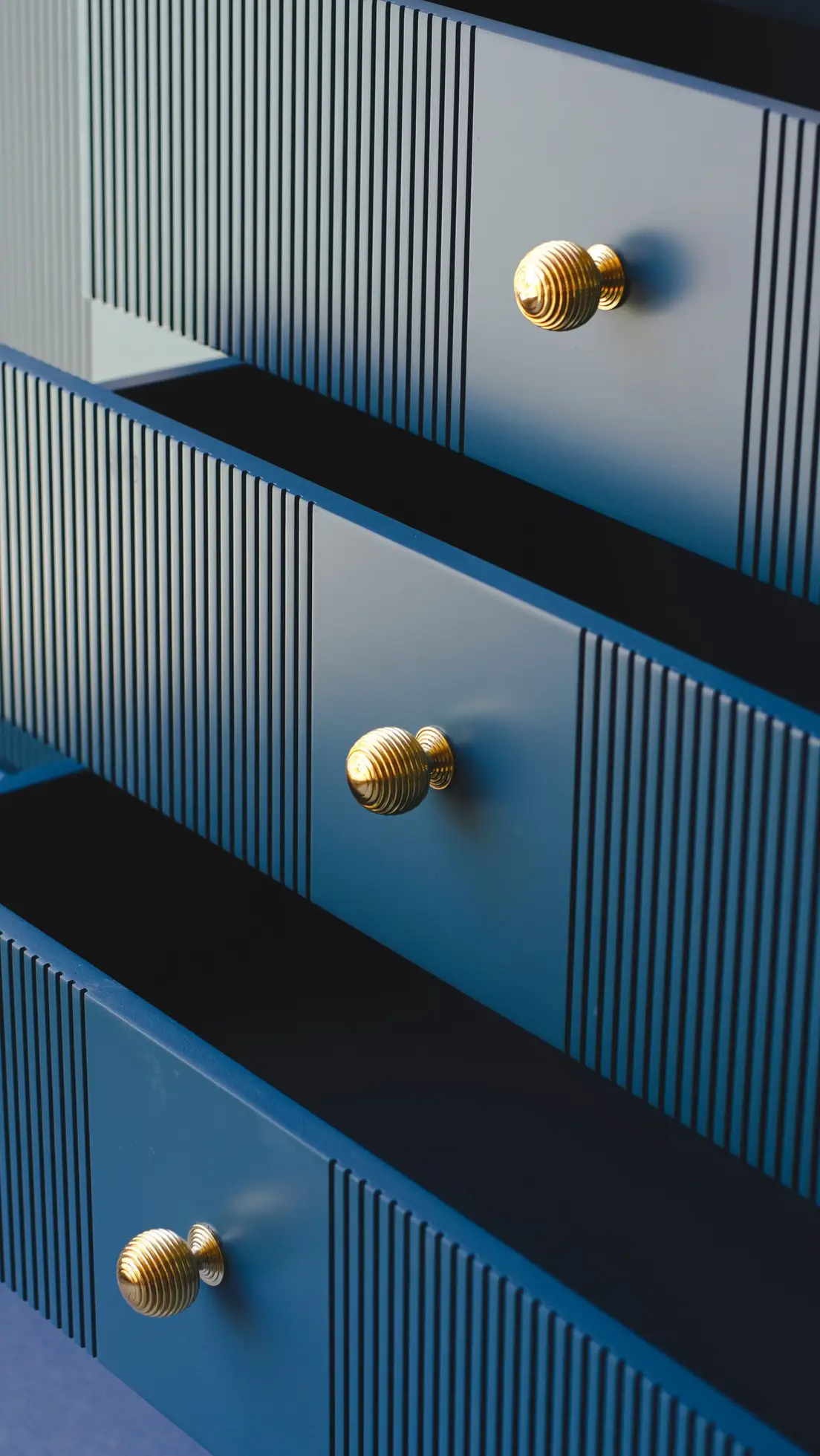
Photo by Amirho3in Tavkoli on Pexels
Start with the rug and the wall behind the bed. Everything else on this list looks like a decision once those two stop looking like the room you moved into.
Frequently asked questions
What is the best layout for a master bedroom?
Face the bed toward the room's entry point with a clear walking path on both sides, and keep the nightstands within arm's reach — that layout works in almost any master bedroom, regardless of size. If the room has a natural focal wall, like a window or a fireplace, center the headboard on it before worrying about anything else.
Why do some sites call it a 'primary bedroom' instead of 'master bedroom' now?
Many real estate and design publications shifted to 'primary bedroom' starting around 2020, moving away from a term some found had uncomfortable historical connotations. Both describe the same room — the main bedroom in a home, usually the largest, often with an en-suite bathroom — and 'master bedroom' remains the more commonly searched term.
How do you make a master bedroom look expensive without a full remodel?
Paint, lighting, and a properly sized rug do more per dollar than new furniture — a warm accent wall, warmer bulbs in place of the builder-grade overhead, and an 8×10 rug under the bed change the room's whole feel for under $250 combined. Save furniture purchases for last, after the cheaper changes prove what's actually still missing.
What are the essential elements every master bedroom needs?
A bed sized to the room rather than the biggest one that fits, two bedside surfaces for lamps and essentials, layered lighting instead of one overhead fixture, and enough floor space to walk around the bed comfortably. Everything past those four — a bench, a reading chair, a gallery wall — is a nice-to-have, not a requirement.