
Bathroom
Small Bathroom Ideas That Don't Need a Full Remodel

Photo by Phil Hearing on Unsplash
Small bathroom ideas usually start from the same room: one where the door hits the toilet if you open it more than halfway. Good news — almost nothing below touches a pipe. Repaint, re-hang the mirror, swap the vanity, and most of these run under $150 a project — small-space fixes, not a gut renovation, and no permit or plumber required.
Swap the vanity for something that gives you back floor space
A pedestal or wall-hung vanity shows floor underneath it, and in a small bathroom, visible floor reads as square footage even when the actual square footage hasn’t changed. A boxy under-sink cabinet does the opposite — it turns the one open stretch of floor in the room into storage you probably weren’t using anyway. Swapping it out is the single biggest layout change on this list that doesn’t require moving plumbing.
The $120 pedestal sink
A ceramic pedestal sink runs $90–160 and drops into an existing water-supply location with the same rough-in as most vanities — a weekend job for anyone comfortable with a wrench and a shutoff valve. You lose all under-sink storage, so plan a basket or shelf elsewhere before you commit.
The $350 floating vanity
A wall-hung vanity with a small drawer runs $250–450, needs blocking in the wall for the mounting bracket (worth confirming before you buy, not after), and keeps a sliver of storage the pedestal doesn’t. It costs more and takes longer to install, but it’s the version that still has somewhere to put the toothpaste.
Start with the pedestal if the budget’s tight. A floating vanity is bathroom furniture in the same sense a park bench is a couch — technically seating, technically not storage, and priced like it knows the difference.
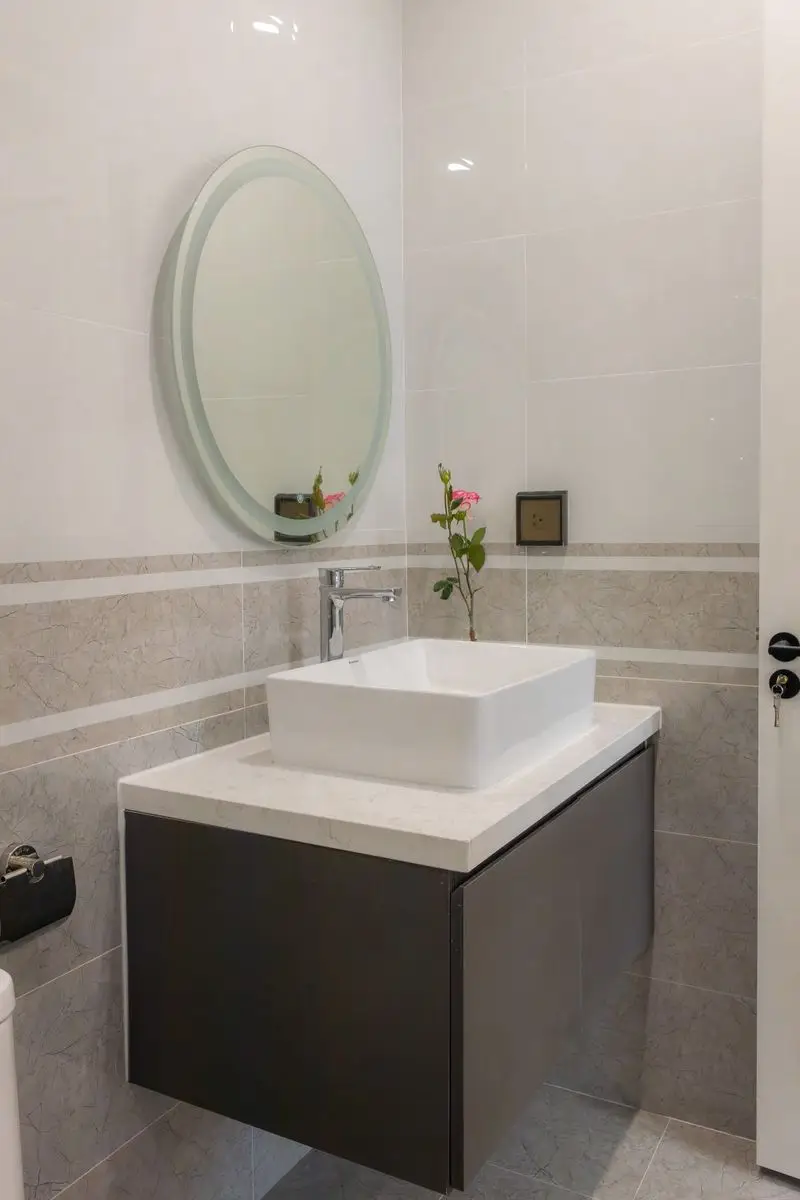
Hang the biggest mirror the wall can hold
A medicine-cabinet-sized mirror over a pedestal sink is a bathroom that photographs like a gas station restroom. Go bigger than feels reasonable — a mirror that runs close to the full width of the vanity or sink bounces light across the whole room and makes the wall behind it disappear, which does more to make a small bathroom feel bigger than almost anything else on this list.
A 24×36 to 30×40 mirror in a simple metal or wood frame runs $60–150, well under what a custom-cut mirror costs, and hangs on the same wall anchors a smaller one would’ve needed. Position it across from the window if you have one — natural light bounced across a small room reads airier than any bulb.

Photo by Clay Banks on Unsplash
Pick a shower setup that doesn’t visually shrink the room
A full opaque shower curtain is a wall you added on purpose — it chops the room in half the second it’s closed, and even open, a bunched-up curtain reads as clutter in a space with nowhere to hide it. A glass shower panel or sliding door keeps sightlines open clear across the room, which matters more in a small bathroom than in a large one where a curtain barely registers.
A retrofit glass panel or pivot door runs $150–350 depending on size and whether the existing shower surround can take it without new tile work. If a full glass swap isn’t in the budget this round, a clear or lightly frosted vinyl liner does most of the same visual job for $12–20 — better than an opaque one, worse than glass, and a genuine middle option rather than a compromise you have to apologize for.
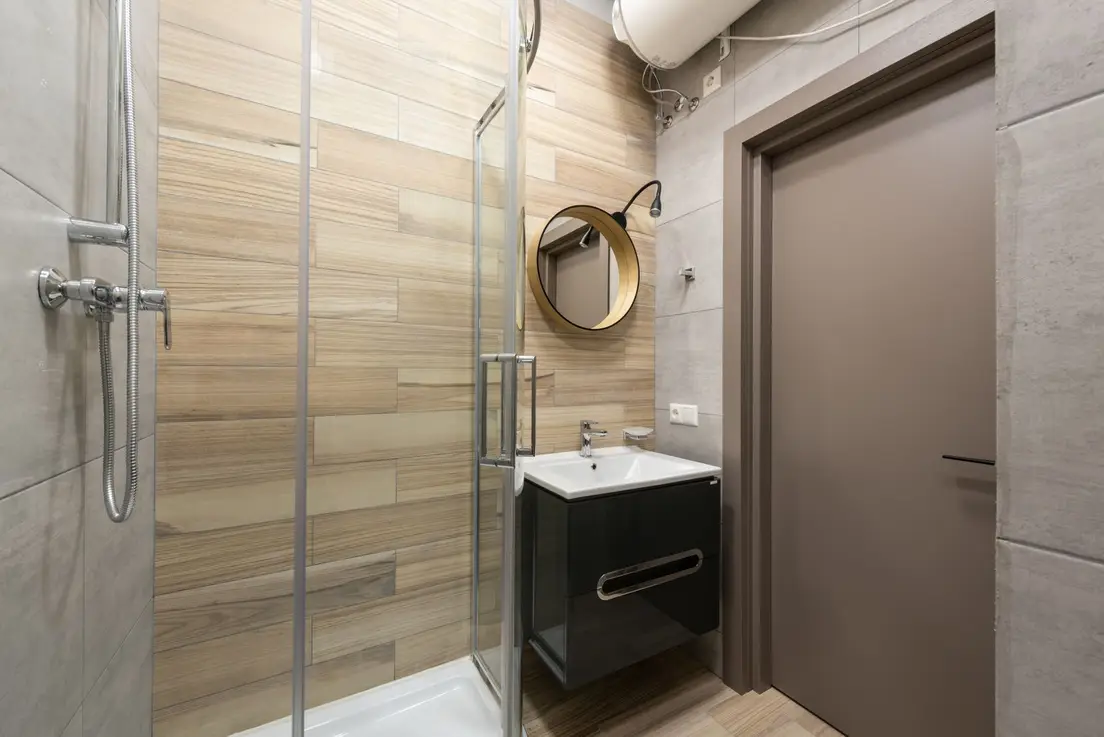
Photo by Max Vakhtbovych on Pexels
Build real storage above the toilet, not just a shelf that floats there
The wall above the toilet tank is the most-skipped storage in a small bathroom, and leaving it bare is the bathroom equivalent of a bookshelf with one book on it. A ladder-style etagere or a set of two or three floating shelves turns that dead space into towel and toiletry storage without eating any floor space at all — the one direction a cramped bathroom actually has room to grow.
A compact ladder shelf runs $40–80 and needs two wall anchors, no stud required if it’s rated for the weight of what you’re storing. Keep the bottom shelf for what you use daily and the top for backstock — the reach is the same either way, so there’s no reason to put the everyday stuff out of arm’s length. It’s the cheapest storage space this list adds without touching the floor plan at all.
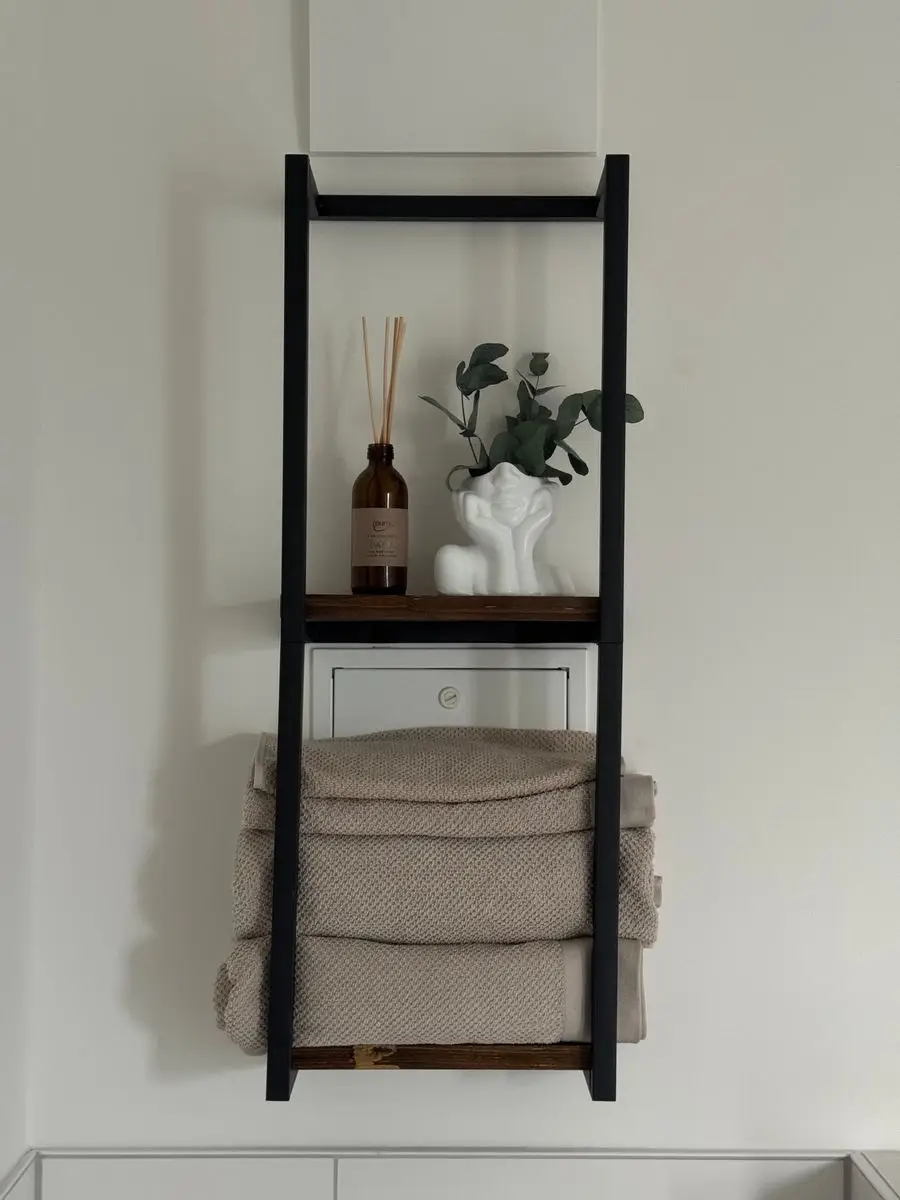
Photo by Marina Endzhirgli on Pexels
Recess a medicine cabinet into the wall instead of bolting one on
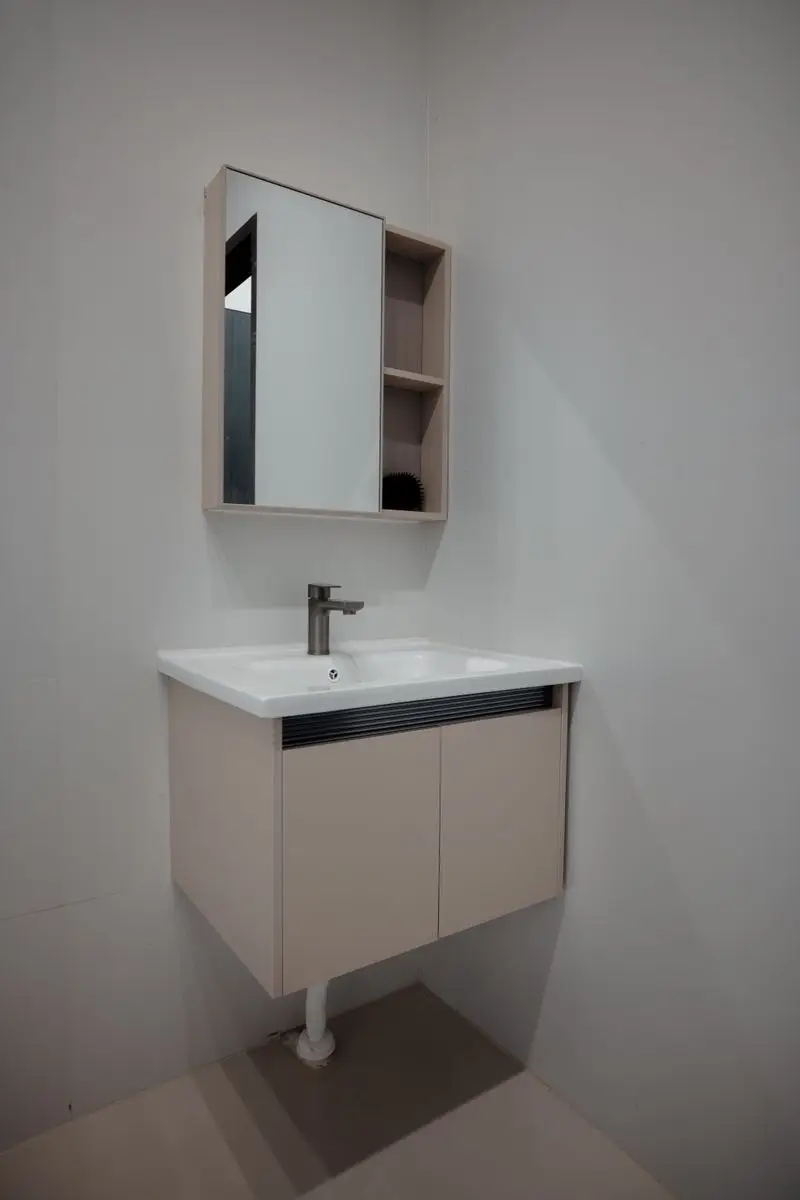
A cabinet that recesses into the wall gives you the same storage as one mounted on the surface, minus the four inches of shin-height ambush it creates jutting out in a room where every inch of clearance matters. Most exterior bathroom walls have enough depth between studs for a shallow recessed box; interior walls almost always do.
A recessed medicine cabinet with a mirrored front runs $70–150 and is a real cut-into-the-drywall project, not a weekend hang — budget an afternoon and expect some patching if the stud spacing doesn’t line up with the unit’s width. If cutting into the wall isn’t happening this round, a slim surface-mounted cabinet in the same $70–150 range gets you the storage now, brass or matte-black hardware and all; swap it for the recessed version later if the four inches ever actually bother you.
Paint it an actual color, not just safe white
A soft neutral with real warmth in it does more for a small bathroom than stark white, which can read flat and a little clinical under bathroom lighting instead of bright. A bolder, more saturated color works too — the room doesn’t get smaller, it just gets more confident about being small — as long as the trim stays light enough to keep some contrast.
We painted over a rental bathroom’s builder eggshell three coats deep before admitting the original color was a stain-blocking primer situation nobody had disclosed — a twenty-minute swatch test would’ve caught it before the first coat went on the wall. A quart covers most small bathrooms for $12–20, plus a small tester pot before you commit a whole palette change to the full can.
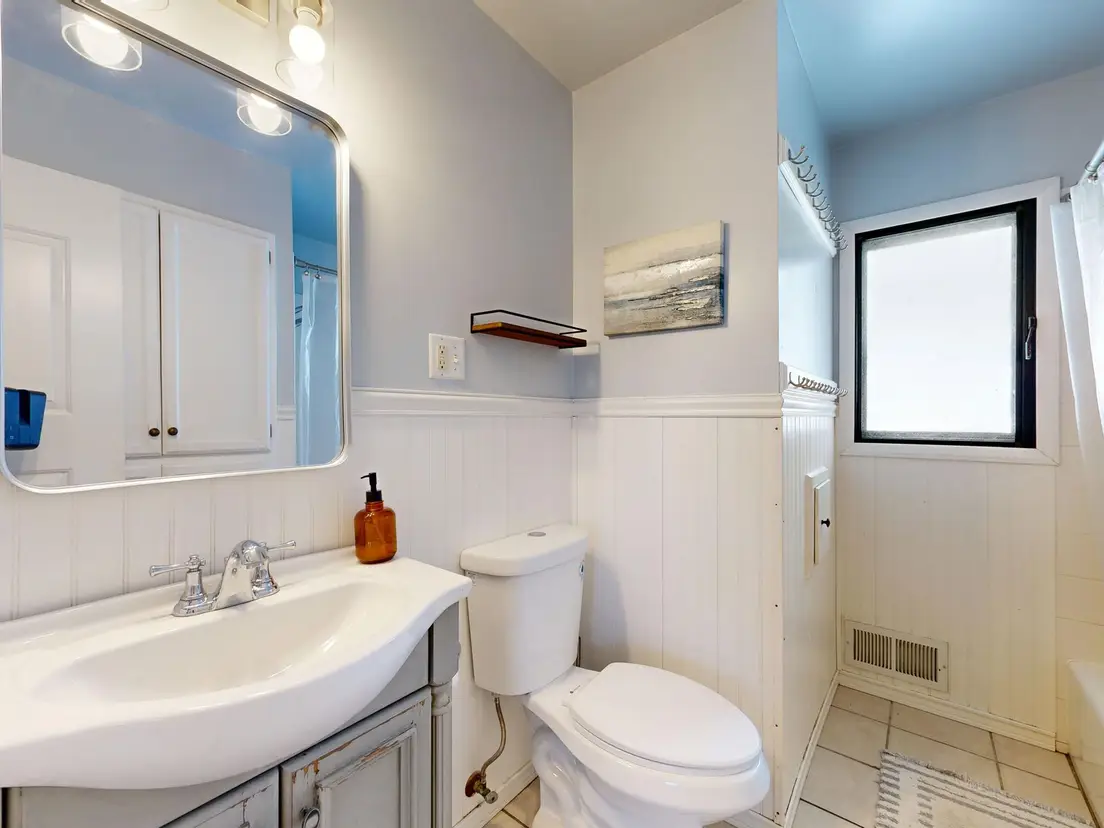
Photo by Peter Vang on Pexels
Layer the lighting instead of relying on one harsh overhead
Paint and lighting solve more of a bathroom’s problems than new fixtures do, and lighting is the cheaper half of that pair. One flush-mount ceiling light turns a bathroom mirror into an interrogation lamp — everything reads flat and shadowed from below. Add sconces or a light bar at eye level on either side of the mirror, and the overhead becomes backup instead of the only source in the room.
A pair of wall sconces runs $30–60 each; swap the bulbs for warm 2700K instead of a builder-grade 4000K, same socket, a couple dollars’ difference. (Check the Kelvin number on the box — “soft white” alone isn’t a reliable label anymore.)
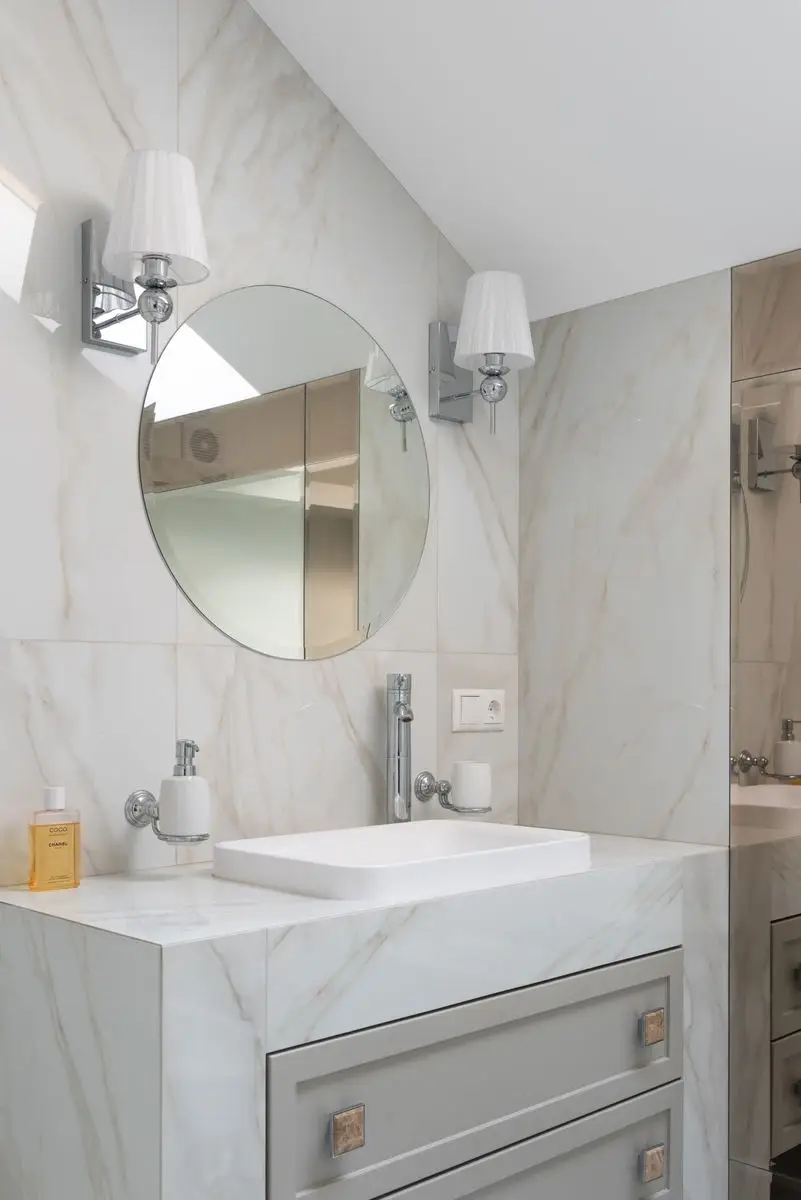
Photo by Max Vakhtbovych on Pexels
Use the wall’s full height for towels and hardware
A single towel bar for a household of more than one person is the bathroom version of one phone charger for four phones — someone’s always waiting on it. Stack a second bar or a row of hooks below the first, and the same stretch of wall does twice the work without taking up any more of it.
Renter-friendly on a label means nothing without a stated weight rating. Command’s own published spec lists small wire hooks at 8 oz, medium hooks at 3 lb, and large hooks at 5 lb — a heavy wet towel is closer to the 3 lb range than the 8 oz one, so size the hook to the job, not just the wall. A second towel bar runs $15–25; a row of rated adhesive hooks runs $3–6 each.

Photo by ASR Design Studio on Unsplash
Add wallpaper to one wall, not all four
One wallpapered accent wall in a small bathroom reads as a deliberate style choice; four of them reads like a hotel that peaked in 2014. Save the boldest pattern — the one with the busy leaves or the saturated color you’d hesitate to commit to on every wall — for the single wall behind the vanity or inside a shower niche, and let the other three stay a plain, coordinating paint color.
We’ve stood in the wallpaper aisle for twenty minutes and walked out with paint instead, more than once. A pre-pasted or peel-and-stick roll for one wall runs $25–60 depending on pattern, and a small bathroom rarely needs more than a single roll to cover it.
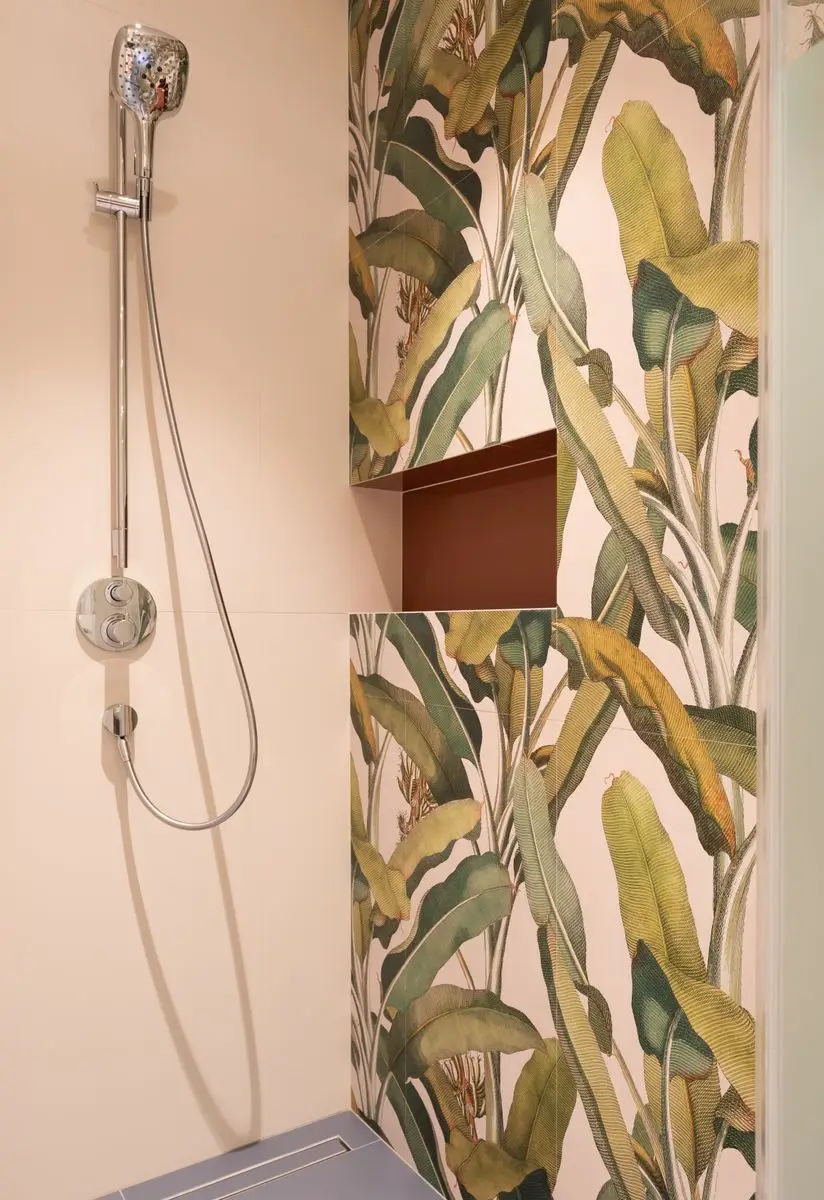
Photo by Max Vakhtbovych on Pexels
Size the bath mat like you would a rug, not an afterthought
The bath mat that came with the apartment already looked used on move-in day. A properly sized mat — long enough to run the full length of the vanity or tub, not a 17×24 scrap that only covers the spot directly in front of the sink — does the same finishing work a rug does in a living room: it gives the floor an edge instead of just a wet spot to step on.
A 2×3 or runner-length cotton or microfiber mat runs $20–40 and should be machine-washable, since a bathroom mat sees more moisture than any rug in the house. Skip anything with a rubber backing that can’t go in the wash — it’ll trap the exact moisture you’re trying to keep off the floor.

Photo by Mike Newbry on Unsplash
Keep the counter to a few things, and bring in one plant that can take the humidity
A counter with one soap pump, one tray, and nothing else reads intentional; a counter with everything you own on it reads like the drawer broke. Corral daily products into a basket or tray rather than lining them up loose — the items don’t have to disappear, they just have to look like decor someone put there on purpose.
Real plants don’t belong in every bathroom — a windowless one is real-plant murder, not a failure of your care routine. A shower or bathroom with any natural light is actually a decent home for a pothos or a fern, since both like the humidity a shower produces; the EPA’s own indoor air guidance notes showering measurably raises a room’s humidity, which is exactly what these plants are built for. No window, no real plant — a good faux version costs $15–25 and skips the guilt entirely.

Start with the mirror and the vanity. Everything else on this list looks like a decision once the room stops looking like the one you moved into.
Frequently asked questions
How do I make a small bathroom look bigger?
A larger mirror, a lighter or more saturated paint color (both work, oddly enough — it's contrast with the trim that reads as depth, not just paleness), a wall-hung vanity that shows floor, and layered lighting instead of one flush-mount overhead do the most work. Combine two or three of those rather than chasing all of them at once — the mirror and the vanity swap alone change how the room reads.
How do I maximize storage in a small bathroom?
Use the vertical wall space you're not using: a shelf above the toilet, a recessed medicine cabinet instead of one bolted to the surface, and a second towel bar stacked below the first. A pedestal or floating vanity gives up under-sink storage, so plan a basket or shelf elsewhere in the room before you commit to one.
What design elements make a small bathroom look bigger?
An oversized mirror, wall-hung (not floor-standing) fixtures, and a large-format tile or paint color that runs continuously without a lot of grout lines or trim breaks all reduce the visual clutter that makes a small room read smaller. A glass shower panel instead of a full curtain keeps sightlines open across the whole room.
What color should I paint a small bathroom to make it look bigger?
A soft, light neutral with warm undertones (not stark white, which can read cold and flat under bathroom lighting) is the safest bet, but a bolder saturated color with white or light trim for contrast also reads as intentional rather than cramped. What actually shrinks a small bathroom is patchy color — three different whites between the walls, ceiling, and trim — more than any one hue.
What are some budget-friendly ways to update a small bathroom?
Paint, a new mirror, and swapped-out lighting are the three cheapest changes with the biggest visual payoff, typically under $150 combined. Hardware swaps (faucet, cabinet pulls, towel bar) and a properly sized bath mat round out a budget refresh without touching plumbing or tile.