
Living Room
Small Living Room Ideas With TV: 9 Real Layouts
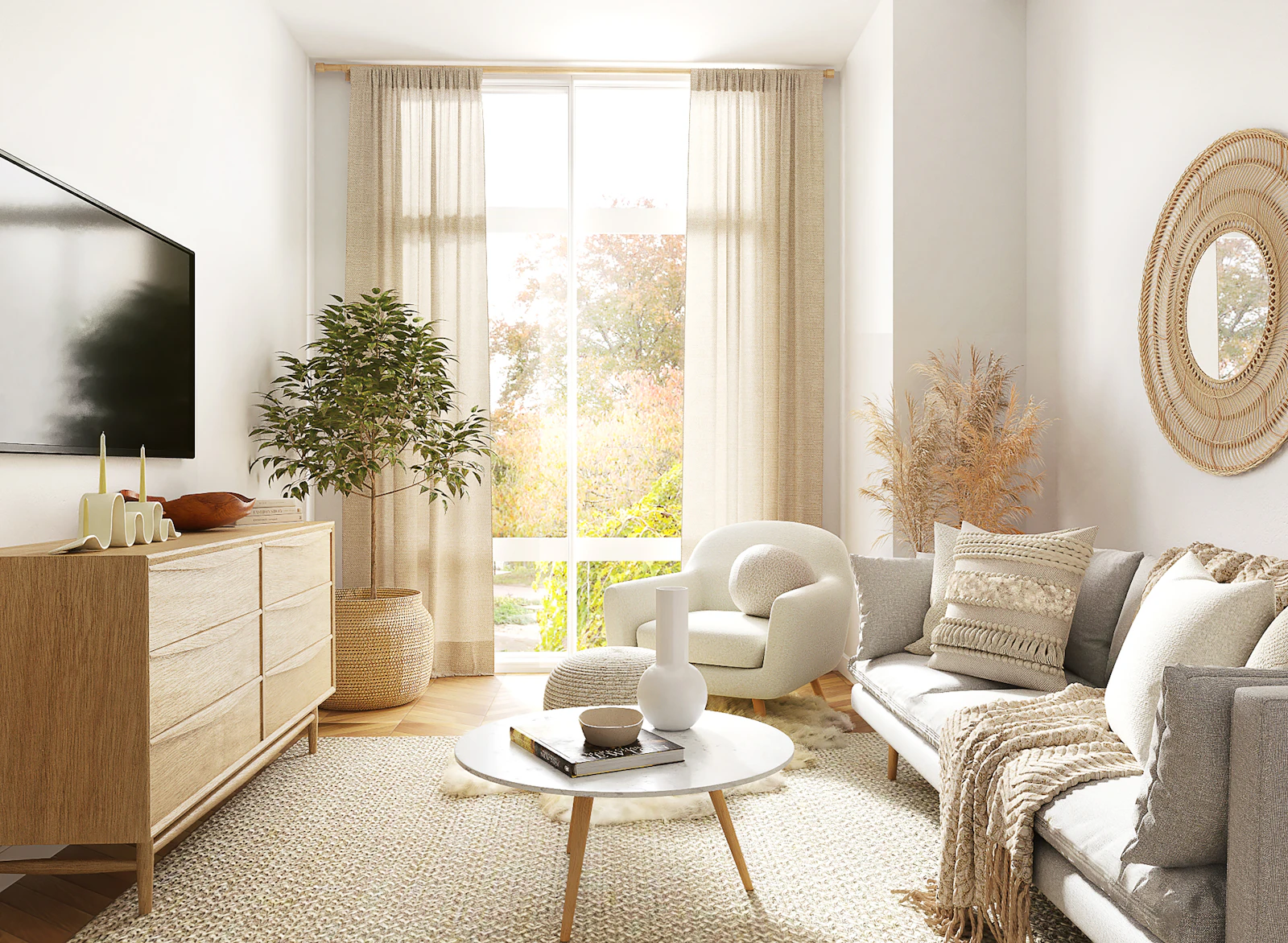
Small living room ideas with TV all come down to one decision: does the screen get the wall, or does the wall get the screen back. Most small living rooms — or the multi-purpose family room standing in for one — have exactly one logical TV wall and one logical seating wall facing it, and the ideas below are about making that single relationship work, not about cramming more furniture into a small space. None of this requires a contractor. A stud finder, an afternoon, and in most cases under $150 gets you there, and most of it changes the room feel more than the square footage ever will.
9 small living room ideas with a TV, at a glance
Concept renders — visual references, not photos of a finished project.
Anchor the sofa to the TV wall, not the doorway
Small living rooms usually have more than one wall a sofa could go against, and picking the wrong one is the single biggest small living room layout mistake we see. The sofa’s job is to face the TV wall directly, not whichever wall happens to be biggest or emptiest. Good interior design in a room this size is mostly about ruling out options, not adding more of them.
Measure the straight-line distance from where the sofa will sit to the TV wall, then work backward: everything else — the coffee table, the rug, the side table — gets placed along that one sightline instead of scattered around the room’s leftover space. A small room with one clear sightline reads bigger than a slightly larger room with three half-finished ones. Keep window treatments out of that sightline too — floor-length curtains that pool in front of the main seating area make a small room feel narrower, not cozier, and modern living tends to favor a lighter hand there anyway. Decide where you want your TV to sit before you shop for anything else; every other piece takes its cue from that one wall.
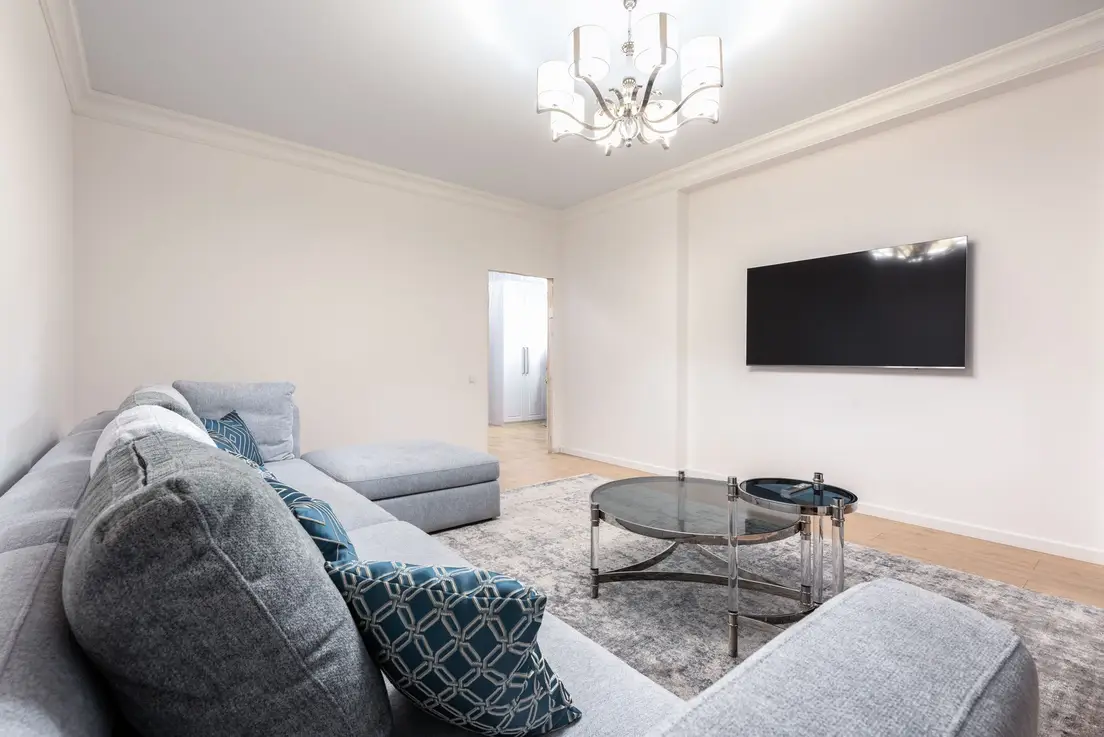
Photo by Max Vakhtbovych on Pexels
Wall-mount the TV to get the floor back
A TV stand eats 12–18 inches of floor depth a small room can’t spare. Mounting the TV directly to the wall gives that strip back to the room — enough, in a lot of layouts, to fit the coffee table you were about to talk yourself out of.
A fixed mount is the budget option, usually $20–40 in hardware; a tilting or full-motion mount runs $50–100 and lets you angle the screen if the seating isn’t dead-center. Choose a TV mount rated for your set’s actual weight, not just its screen size — wall mounting is a one-afternoon job either way, but find the studs first. (We’ve hung a TV on drywall anchors exactly once. We do not recommend it.)

Photo by Kam Idris on Unsplash
Solve the corner without a bulky corner unit
A TV in the awkward corner of a small living room usually happens by accident — it’s the only wall left once the sofa and the door are accounted for. It can work, but a chunky triangular “corner TV stand” makes the problem worse, not better — you’ve traded one awkward corner for a piece of furniture that looks like it’s guarding the room.
A slim floating shelf, mounted at an angle to face the seating area, does the same job in a fraction of the footprint. Built-in floating shelving on either side of the TV also reads intentional rather than “we ran out of wall,” and gives you real storage without a single freestanding cabinet leg to walk around.
Angling the TV itself, rather than squaring it to one wall, is the other lever worth pulling — a 15–20 degree turn toward the main seating area fixes the viewing angle without touching the furniture layout at all. It looks like a small adjustment. It’s the difference between watching a screen straight-on and watching it from the side for every movie night going forward.
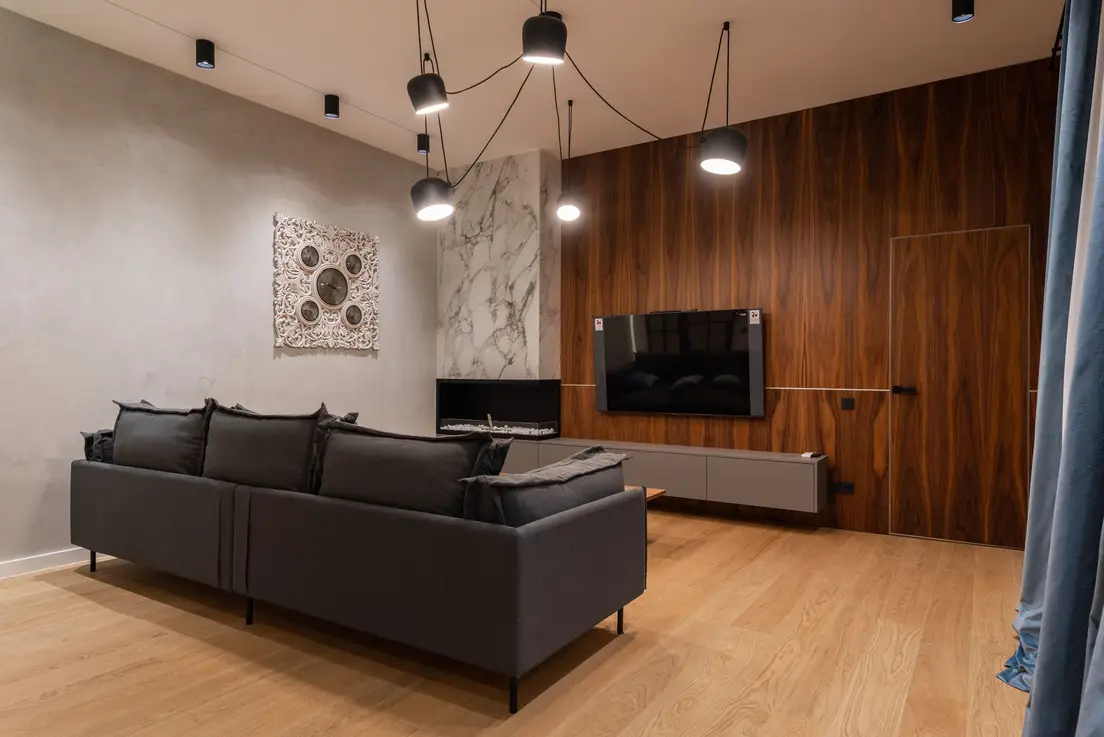
Photo by Max Vakhtbovych on Pexels
Give the fireplace and TV separate jobs, not a shared wall
Mounting the TV directly above the fireplace is the default move, and it’s not wrong — but it forces everyone into a neck angle that’s fine for a 22-minute sitcom and brutal by the second act of a movie. If your fireplace wall has room to spare, putting the TV beside the mantel instead of above it keeps both features at a comfortable eye level.
This only works if the room actually has the wall space for it, so measure before you commit to either version. Above the fireplace still wins in a genuinely tight room; it just isn’t the only option, whatever the furniture store floor plan implies. Either layout benefits from wall sconces on either side of the mantel instead of relying on one overhead fixture, or a simple table lamp on a side table if you’re not ready to touch the wiring — better lighting for reading on the nights nobody’s watching anything.

Photo by Francesca Tosolini on Unsplash
Size the couch to the sightline, not the wall
The comfortable viewing experience for most living-room TVs starts at roughly 1.5 times the screen’s diagonal — a 55-inch TV wants the couch around 7 feet away, not jammed against the opposite wall just because that’s where the wall happens to be. In a small room, that number usually decides where the sofa goes before style does, including when the same room is doing double duty as a dining room on the far end.
We measured a rug for a living room off a photo once instead of the actual floor, ordered an 8×10 for a room that was really closer to 9×12, and spent two weeks waiting on the exchange before the space finally looked finished. Measure the actual floor, not the listing photo, and size the rug to reach at least the front legs of the sofa — anything smaller reads like a bath mat in the middle of a cozy living room that deserved better.

Photo by Joao Macedo on Unsplash
Pick a console shallower than you think
If you’re skipping the wall mount, a console table under 16 inches deep is the one spec that matters most in a small room — most furniture stores default to 18–20 inch depths built for bigger living rooms, and that extra few inches is exactly the walking room you don’t have.
Open shelving, or a low bookcase or bookshelf instead of a solid console, reads lighter and sleeker than closed cabinet doors in a tight space, even at the same footprint — it’s a visual trick, not a real square-footage difference, but it works. A chaise or a small multifunctional furniture piece with hidden storage can take the place of a second armchair if the console alone doesn’t complete the look. Swap a coffee table for a smaller ottoman or a pouf if the console eats more floor than expected; either still gives you a landing spot for a drink without blocking the sightline. Save whatever hidden storage the piece does have for what you actually want out of sight: cables, controllers, the remote we’ve personally excavated from three different couch cushions in one weekend. It won’t stop the visual clutter entirely, but it beats a stack of loose gear with nowhere to be shelved.

Photo by Howard Bouchevereau on Unsplash
Build a real feature wall behind the screen, not a blank one
A TV on a plain white wall photographs fine and lives boring — the second the screen’s off, you’re looking at a black rectangle on drywall. A feature wall behind it gives the eye somewhere to land either way: peel-and-stick wood slat panels, a bold paint color, or a gallery wall built loosely around the screen so it reads as one more frame instead of the main event.
Before ordering a $300–400 slat panel kit, try the $30-can-of-paint version first — a contrasting wall color on the wall behind your TV solves 80% of the “blank wall” problem for a tenth of the cost, and it’s the move to make first if you’re not sure the room needs a bigger commitment yet. A recessed wall niche, if the room has one, does the same visual work for free — it’s the one upgrade on this list that was already finished before you moved in. A large mirror on the wall opposite, angled away from the screen’s glare, is the other free move — it bounces light back across the room and is the fastest way to keep a modern small living room feeling open even with a big TV anchoring one wall.
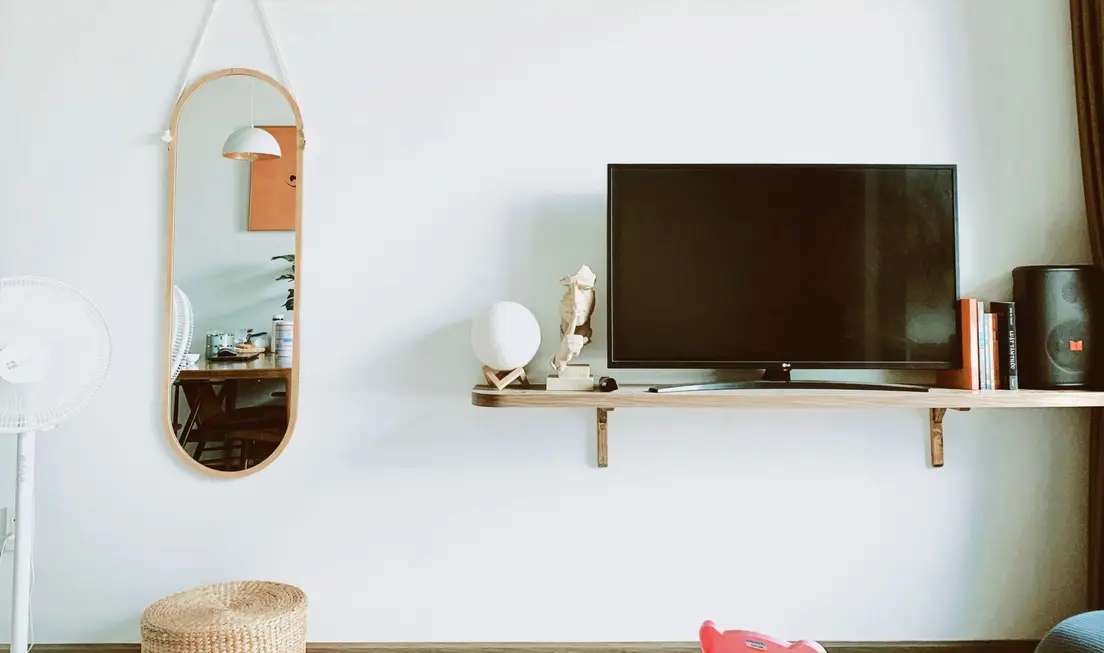
Photo by Thới Nam Cao on Pexels
Hide the cords before the first movie night
Nothing undoes a clean wall-mount faster than a visible cable running straight down to an outlet at the baseboard, right in view of the main seating area. An in-wall cord kit (a cut-in power kit with two low-voltage plates) is the real way to hide cables — routes everything inside the wall for $20–35 and about 30 minutes, no electrician required for a standard outlet relocation-free install.
If cutting into drywall isn’t happening this weekend, a paintable cord cover channel does almost the same visual job stuck directly over the wall — not invisible, but close enough that nobody’s eye catches on it from the sofa. Either beats the alternative: a cable zip-tied to nothing, swinging gently every time the ceiling fan kicks on.

Photo by Caroline Badran on Unsplash
Compare a floating shelf against a full console before you buy
The honest math: a floating shelf is the cheaper, smaller-footprint move almost every time, and the console only wins if you actually need the storage.
Floating shelf
A single floating wood shelf under a wall-mounted TV runs $40–90 and installs in under an hour. It holds a soundbar and not much else — the right call in a room too small to spare console depth at all, or as a temporary setup while you decide what the room actually needs.
Full console
A proper media console with closed storage runs $150–350 and eats real floor depth in exchange for hiding a game console, cable box, or a growing DVD collection nobody’s mentioned wanting to replace with streaming. Worth it if you have gear to store; skip it if the shelf already does the job.
Start with the shelf. You can always add the console later if the shelf turns out not to be enough — going the other direction means returning a piece of furniture, which is a much worse Saturday.
Frequently asked questions
How do you arrange a small living room with a TV?
Anchor the sofa to the wall across from the TV first, then build everything else around that sightline — coffee table centered between them, side tables within reach of the seating, not wedged into leftover corners. In a small room, one clear sightline reads more spacious than scattered furniture, even at the same square footage.
What is the best layout for a small living room?
For most small living rooms, floating the sofa a few inches off the wall and facing it toward the TV wall works better than pushing every piece against the perimeter. Perimeter-only layouts leave a dead zone in the middle; a centered sightline uses the whole room instead of just its edges.
Is it better to mount a TV or use a console in a small living room?
Wall-mounting almost always wins in a small room — it reclaims 12–18 inches of floor space a console would otherwise take, and that space matters more the smaller the room gets. A console only pulls ahead if you genuinely need the storage it provides for media gear, games, or extra shelving.
Can you mount a TV above a fireplace safely?
Yes, with a tilting or full-motion mount rated for the height and the heat-resistant clearance from the firebox specified by the manufacturer — usually several feet, more for wood-burning inserts. Check the TV's maximum comfortable viewing angle too; mounted too high, most people end up watching at an uncomfortable neck angle.
How do I hide a TV in a small living room?
A frame TV, or a smart TV set to ambient art when it's off, is the cleanest option, followed by a gallery wall built around the screen so it reads as one more frame instead of the focal point. Sliding art panels and cabinet-style TV lifts work too, at a higher cost and more install effort.