
Style Guides
Japandi Style Guide: Colors, Materials, and Furniture
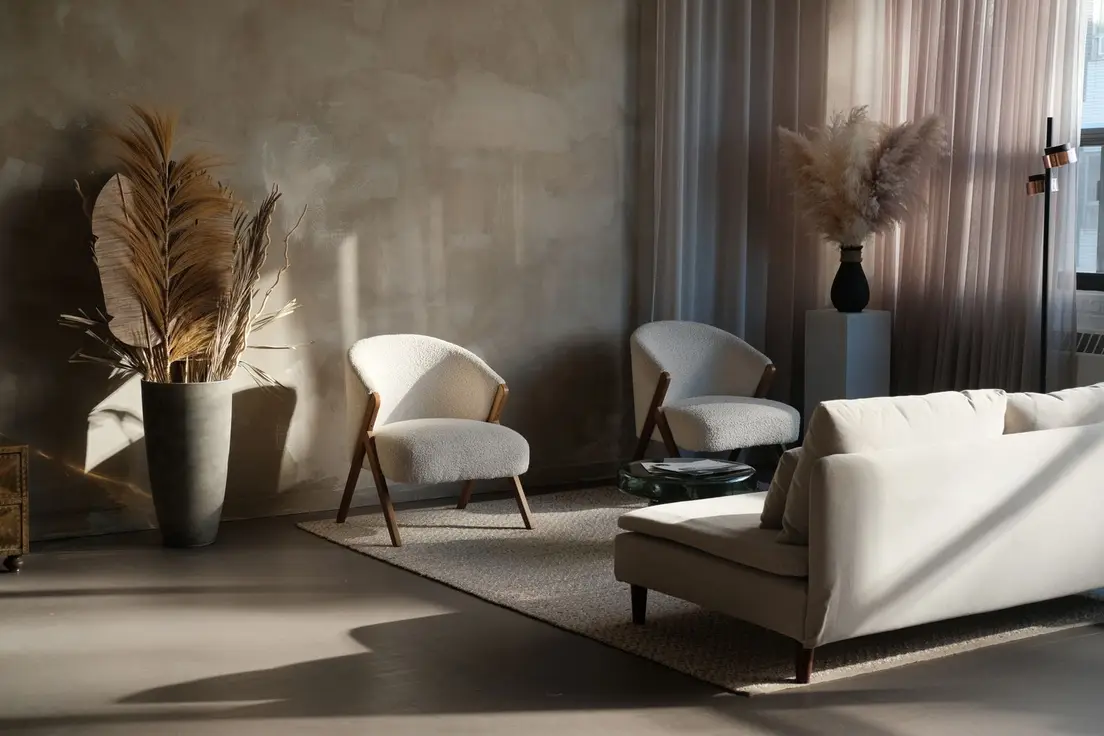
Photo by Pavel Morillo on Pexels
Japandi style is a neutral, natural-material palette paired with low-profile, purposeful furniture and a lot of empty space — the design philosophy where Japanese minimalism and Scandinavian hygge overlap. None of it requires a gut renovation: most of what separates a real japandi room from a beige apartment is paint, four material choices, and what you’re willing to take off the shelves, not what you buy.
What Japandi Style Actually Means
Japandi interior design is what happens when two design cultures that already agree on almost everything finally compare notes. Japanese minimalism brings the wabi-sabi philosophy — a Japanese aesthetic principle that finds beauty in imperfection, in a handmade, slightly uneven object over a flawless mass-produced one — and Scandinavian design brings hygge and the clean lines of Danish furniture-making, the warmth and comfort that keeps minimalism from feeling like a waiting room. Japandi takes the restraint from one and the coziness from the other, so you get a room with almost nothing in it that still feels like somebody lives there.
The style has staying power precisely because it isn’t really a single trend; it’s the overlap of two much older interior design philosophies. A stark, all-white minimalist room can feel like an open house nobody’s moved into yet, especially without much natural light doing the work. Japandi fixes that with warm wood, natural fiber, and one or two objects chosen for how they were made, not just how they look on a shelf — real japandi interiors read understated and airy, never empty.
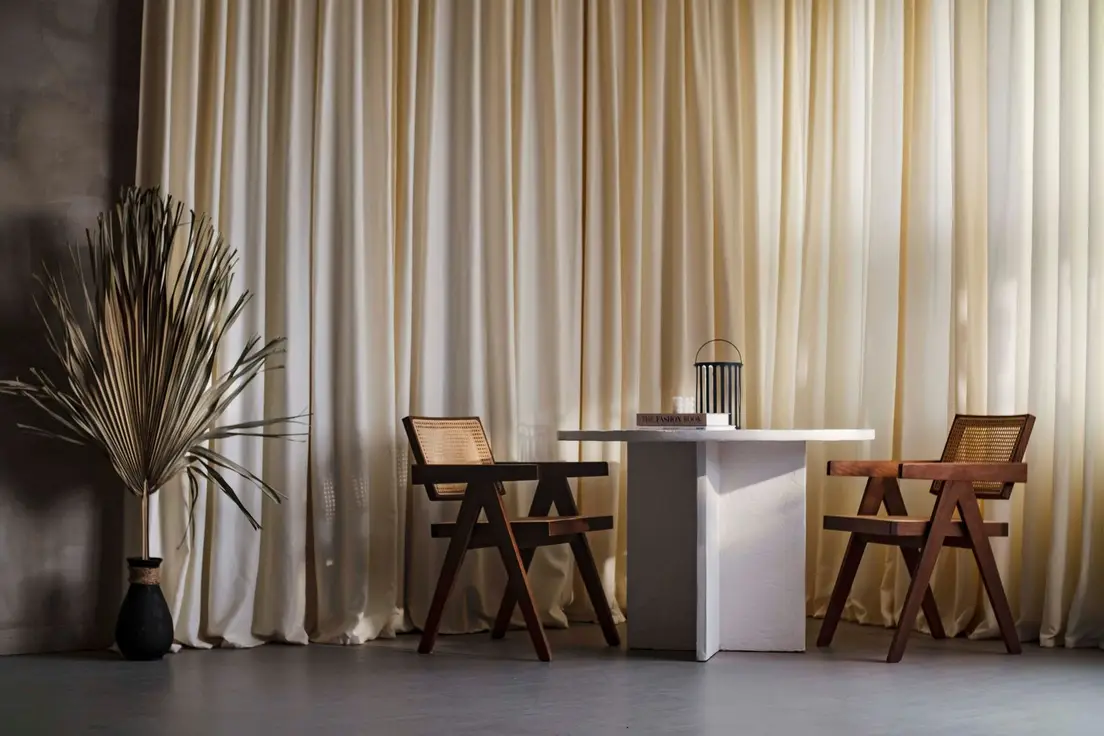
Photo by Pavel Morillo on Pexels
Build a Japandi Color Palette: Neutral Base, One Muted Accent
Start with a neutral base — oatmeal, stone grey, sand, or a warm off-white — on the walls and the biggest pieces of furniture. That’s the “no sharp contrasts” rule the whole style runs on: visual interest is supposed to come from texture and craftsmanship, not from a busy color scheme fighting for attention. A gallon of a warm, muted neutral runs $35–50 and covers most rooms with a coat to spare.
Then add exactly one grounding accent — a deep terracotta, an earthy olive green, charcoal, or a soft indigo — in a single place: a cushion, a vase, one painted wall. The neutral colors do the actual work of the room; the accent just proves someone made a choice on purpose. Two accent colors in the same room stops reading as a considered palette and starts reading as two different Pinterest boards that got merged by accident. (We’ve tried to force a teal cushion into an otherwise terracotta room exactly once. It looked like a guest who wandered in from a different party.)
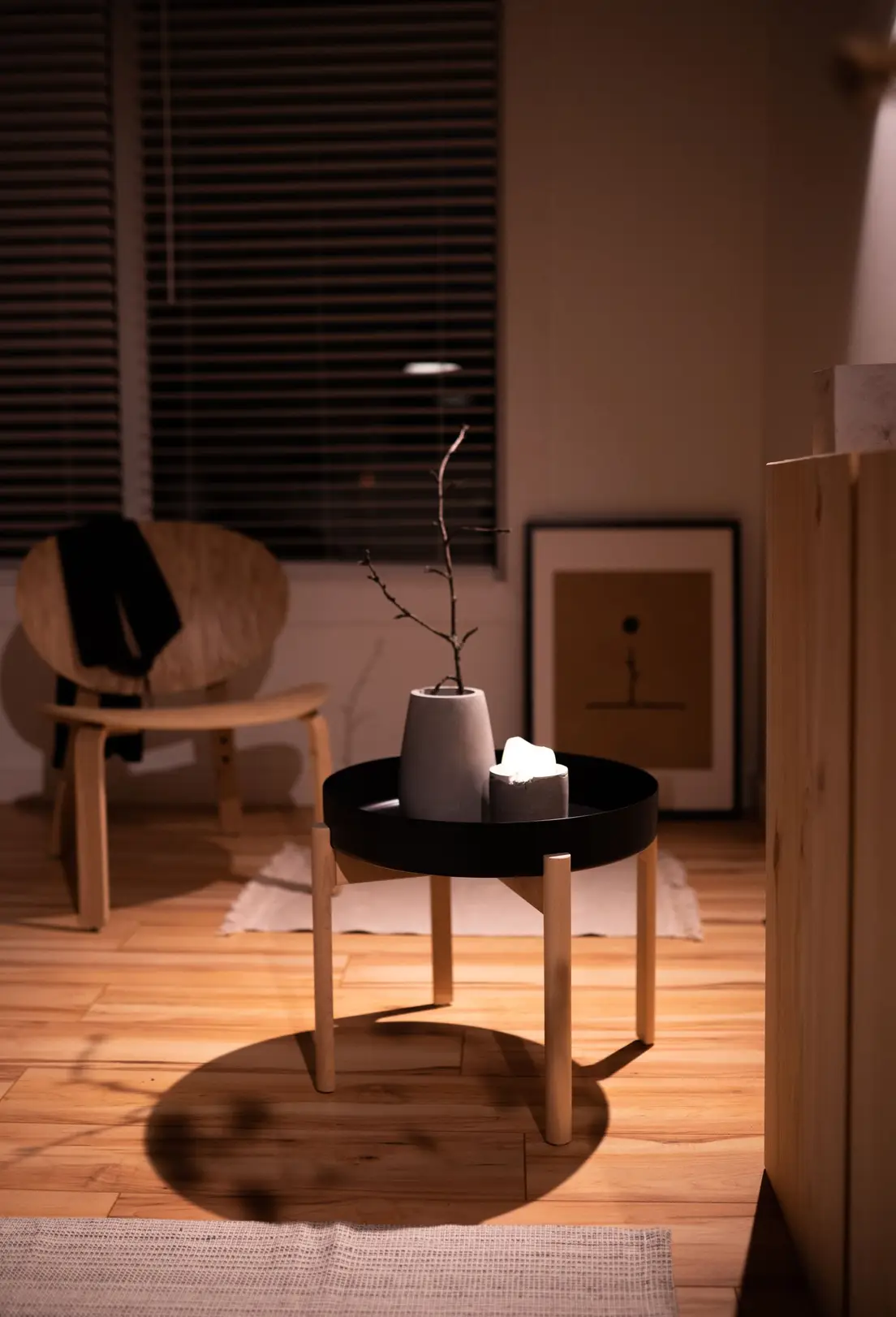
Photo by PNW Production on Pexels
Choose Materials: Wood, Rattan, Linen, and Stone Over Anything Glossy
Material is where japandi actually gets built, more than color does. Wood carries most of the weight — pair a lighter Scandinavian tone (oak, ash, birch) with one darker Japanese tone (walnut or a charred-timber finish) so the room has contrast without needing a second color. Rattan and bamboo add a genuinely tactile, sustainable natural fiber texture; linen, cotton, and wool cover textiles in the same muted family; unglazed ceramics, stone, and clay finish the accessories.
None of it needs to be expensive to read as real: a linen pillow cover runs $15–25, a small stoneware vase $20–40, a rattan tray under $20. One piece of real greenery does the same organic, natural-material job as a $40 ceramic vase, for less. The one hard rule — skip glossy laminate, chrome, and glass wherever you can. A glass coffee table in an otherwise wood-and-linen room is the one guest who got the wrong dress code and showed up anyway.
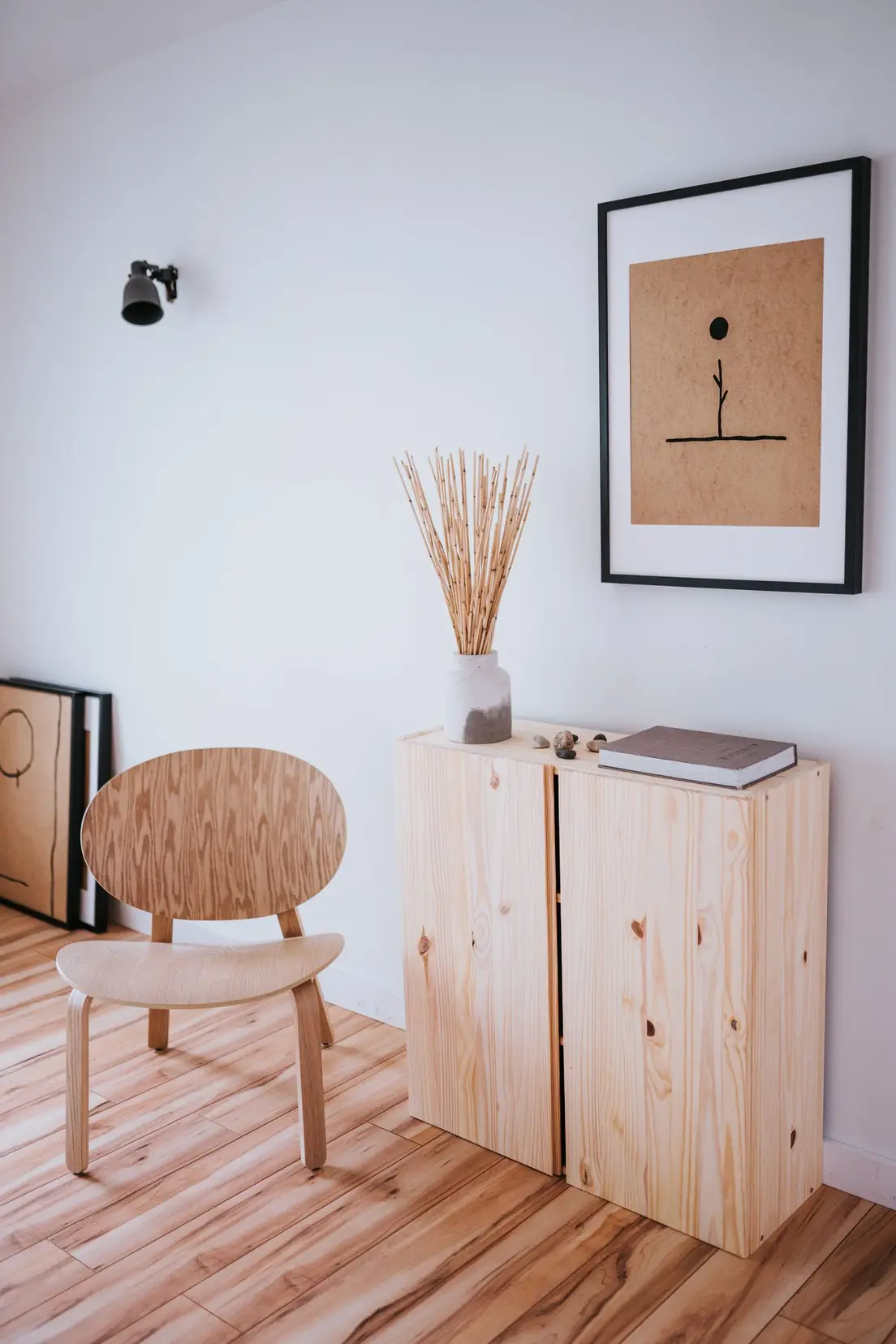
Photo by PNW Production on Pexels
Pick Low-Profile Japandi Furniture With a Clear Purpose
Japandi furniture sits low and does one job well — a platform bed close to the floor, a low shelf that works as well in an entryway as it does in a living room, a bench instead of a bulky armchair, a cabinet with hidden storage instead of open shelving stacked with objects. Function comes first: every piece is chosen thoughtfully, and the sophistication comes from restraint, not embellishment. If a piece doesn’t have a clear purpose or built-in storage, it’s probably decor pretending to be furniture, and japandi doesn’t really do that.
Measure the doorway before you order anything low and wide — a platform bed frame or a long floating cabinet is exactly the kind of piece that fits the room and not the stairwell. It’s the single most common return reason in this niche, and it has nothing to do with style. Live with what you already own for a week before replacing it, too: half of what feels like “we need japandi furniture” is really “we need to clear the surfaces we already have” — that part’s free.
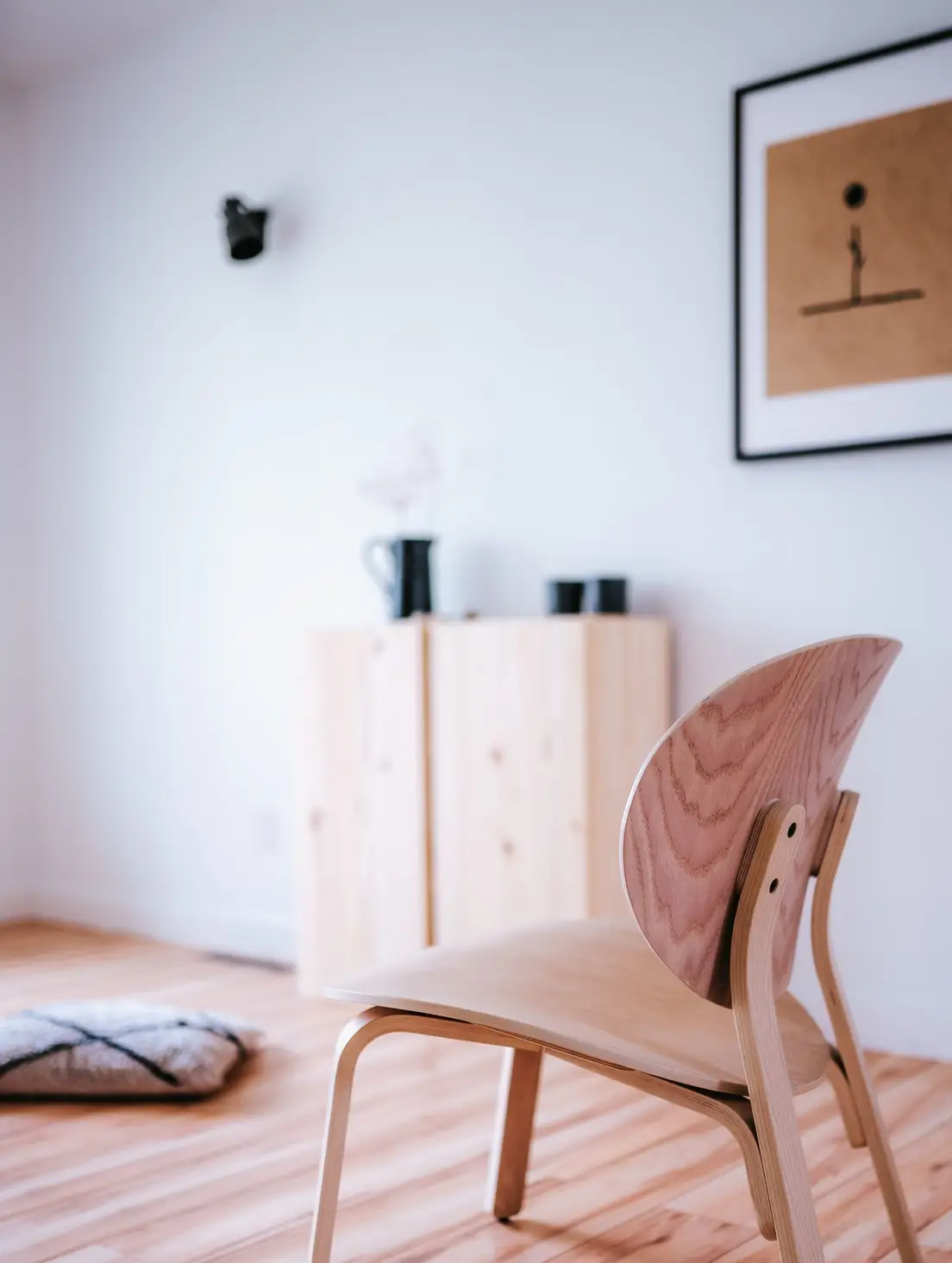
Photo by PNW Production on Pexels
Bring Japandi Into a Living Room
A living room is the easiest room to start in, since a rug and a low sofa do most of the visual work. Go bigger than feels reasonable on the rug — a low-pile neutral wool or jute rug under the front legs of every seating piece, not floating in the middle of the floor. We once ordered an 8×10 for what we measured as a 10×10 room, based on a photo instead of the actual floor — it arrived, got unrolled, and looked like a bath mat in a gymnasium once the real dimensions (11×13, once you accounted for the built-ins) caught up with us. The 9×12 replacement cost $40 more than planned and took two weeks round-trip.
Keep the sofa low-arm and neutral, add one wood coffee table, and stop there — a japandi living room has fewer pieces than a normal one, on purpose, not because the budget ran out.
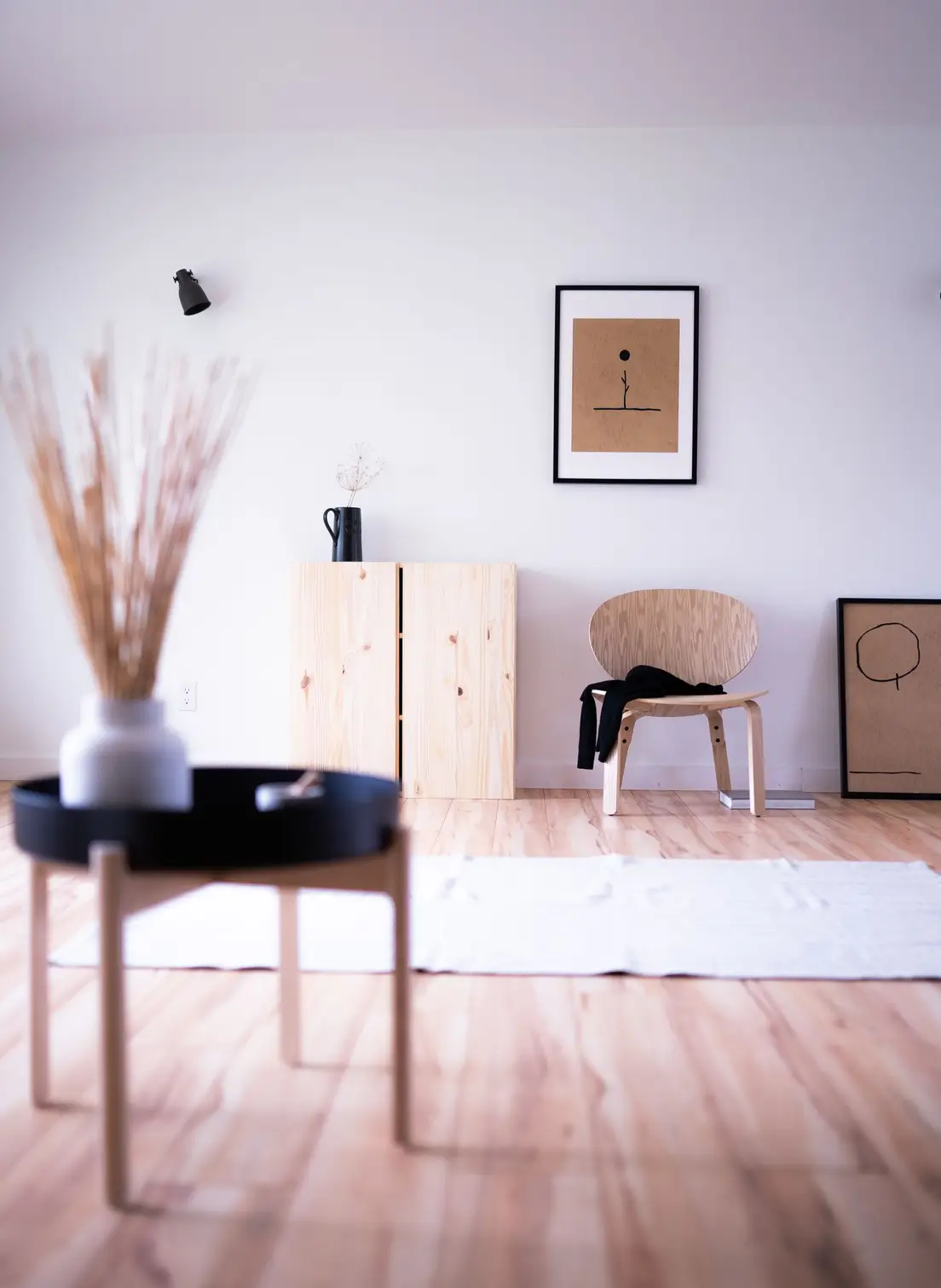
Photo by PNW Production on Pexels
Bring Japandi Into a Bedroom
A bedroom is the lowest-stakes room to commit to this style in, since nobody else has to sign off on it. A low platform bed, linen or cotton-gauze bedding in the neutral palette, and one warm wood tone repeated across the nightstand and frame cover most of the transformation — our full japandi bedroom ideas guide walks through the platform-bed and mattress side of this in more depth.
Keep the nightstand surface down to a lamp and one object — a candle, a small vase, nothing else. A cluttered nightstand undoes a $2,000 platform bed faster than the wrong duvet color ever could.
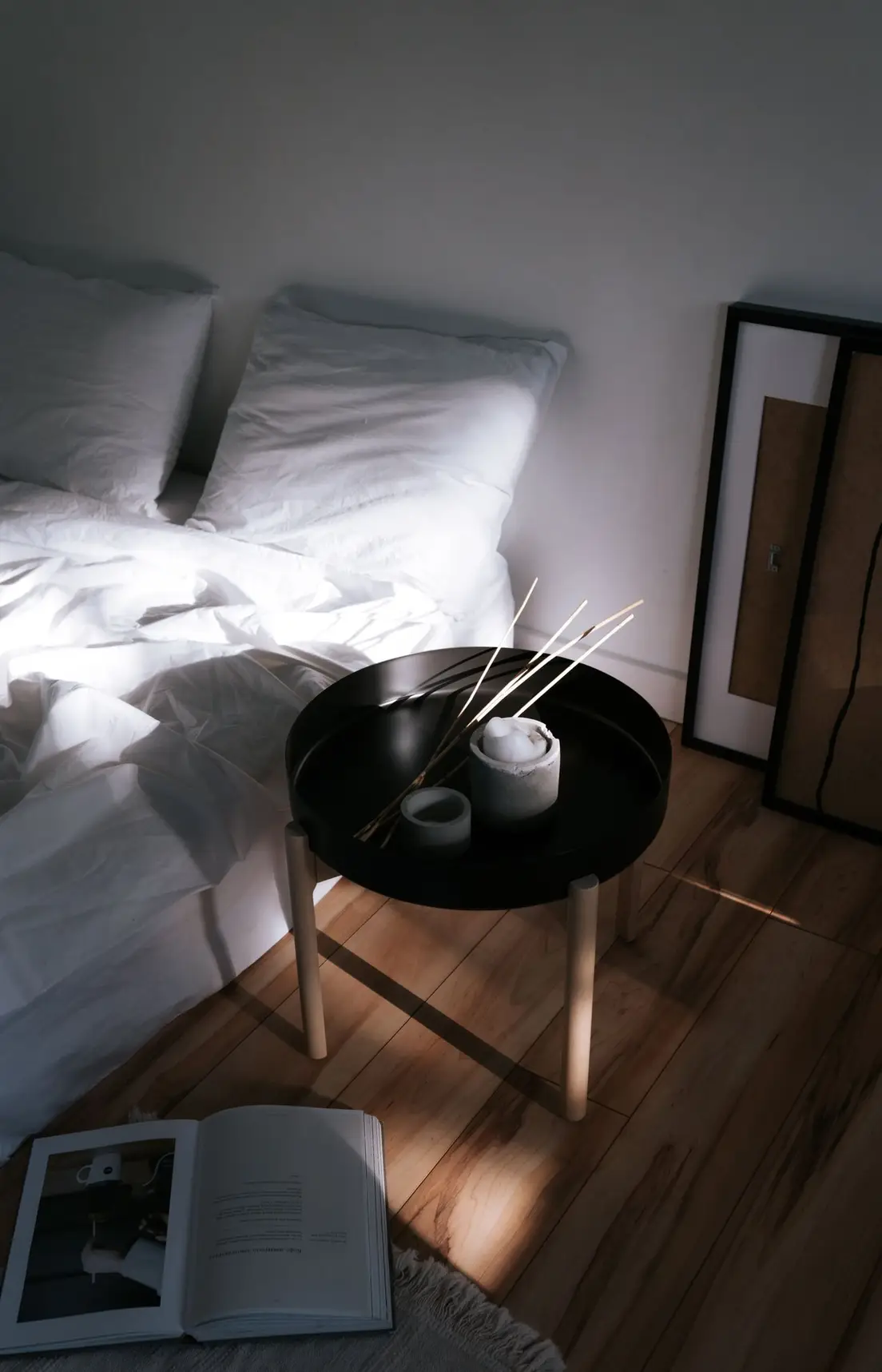
Photo by PNW Production on Pexels
Bring Japandi Into a Kitchen
A kitchen doesn’t need new cabinets to read as japandi — it needs the counters cleared and the wood back in view. Swap the appliance-store utensil crock for a stoneware jar of wooden spoons, stack the everyday dishes on open shelving instead of behind a door, and let one wood cutting board live out on the counter instead of in a drawer. That’s most of the visible transformation for under $60.
The rest is restraint, not shopping: a japandi kitchen counter has maybe four objects on it at any time, not the usual collection of mail, chargers, and one appliance nobody’s used since the holidays. The same three-material, one-wood-tone concept works in a bathroom too — wood, stone, and one ceramic piece, kept off the counter until it’s actually in use.
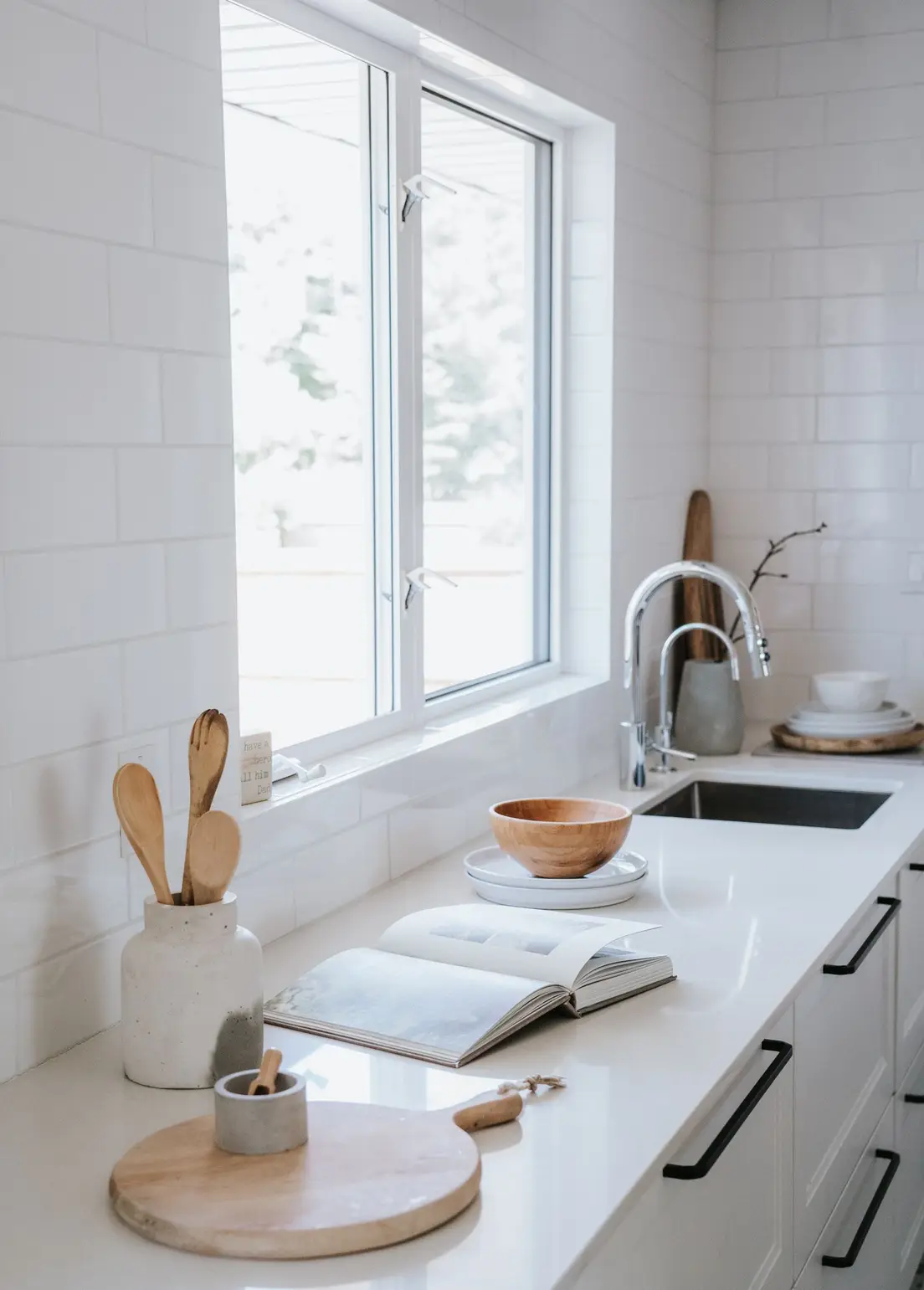
Photo by PNW Production on Pexels
Japandi vs. Scandinavian Design and Minimalism: What Actually Differs
Scandinavian and Japanese design both feed into japandi, but neither is the same thing on its own, and plain minimalism isn’t either. Scandinavian design leans blond wood, bright white, and function-first furniture — cozy, but cooler and lighter than japandi’s warmer, mixed wood-tone palette. Traditional minimalism, especially the stark-white, empty-room version, optimizes for how a space photographs; it can read like a waiting room once someone’s actually living in it, all restraint and no texture.
Japandi’s real differentiator is the wabi-sabi concept — a traditional Japanese aesthetic principle, rooted partly in Zen Buddhist thought, that finds beauty in imperfect, impermanent, handmade things, not flawless mass-produced ones, according to Britannica’s overview of wabi-sabi. That’s the piece a stark all-white room is missing: a visibly grained plank, a slightly uneven glaze, a chip in a bowl left alone instead of replaced. Scandinavian brings the warmth; wabi-sabi brings the permission to leave things a little imperfect.
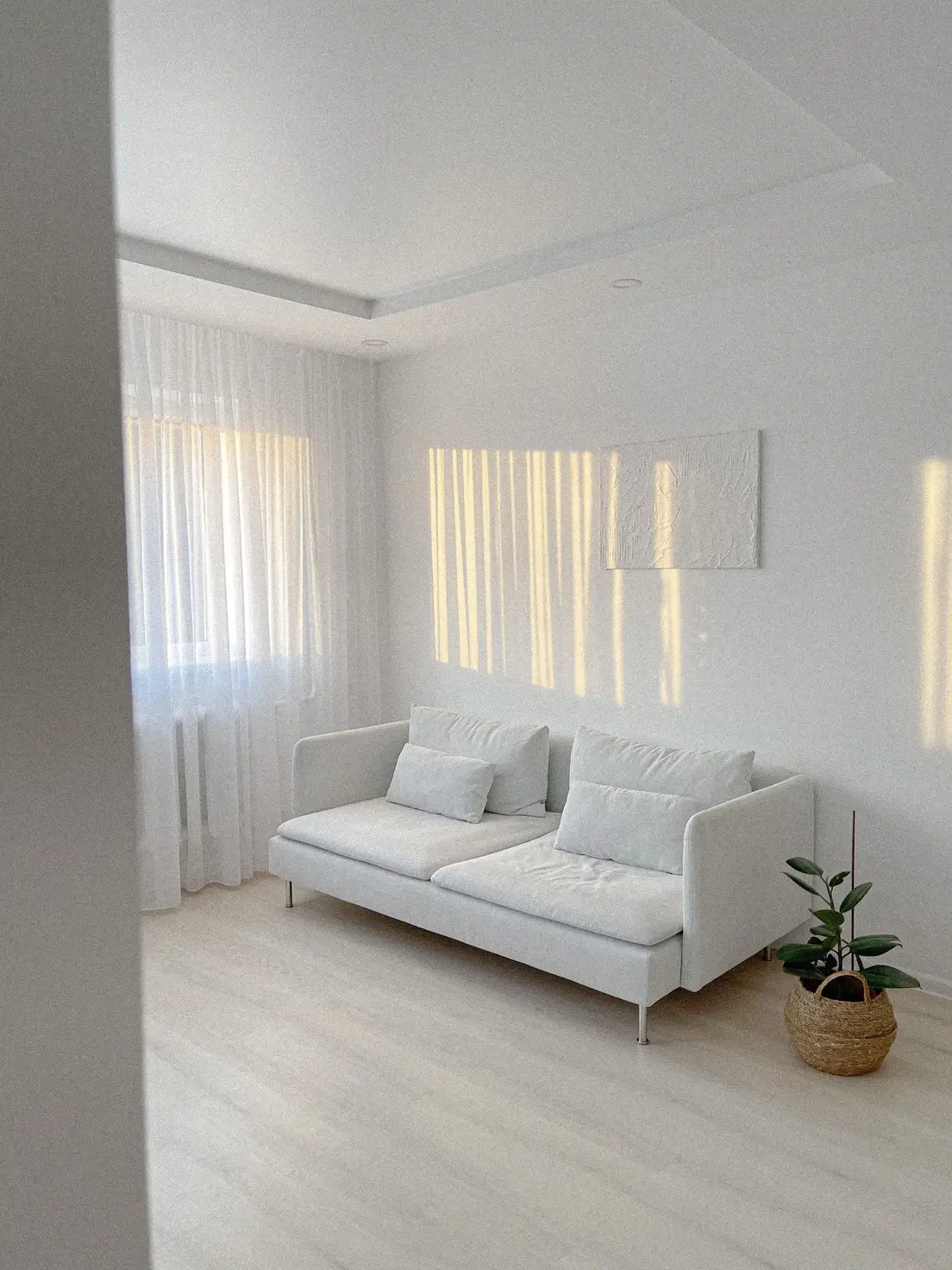
Photo by Aljona Ovtšinnikova on Pexels
Common Japandi Decor Mistakes to Avoid
The single fastest way to wreck a japandi room: one cool-white overhead lighting fixture left on at night. A 4000K builder-grade bulb undoes every warm wood tone in the room in about four seconds — swap to 2700K and turn the overhead off in favor of a lamp at seating height.
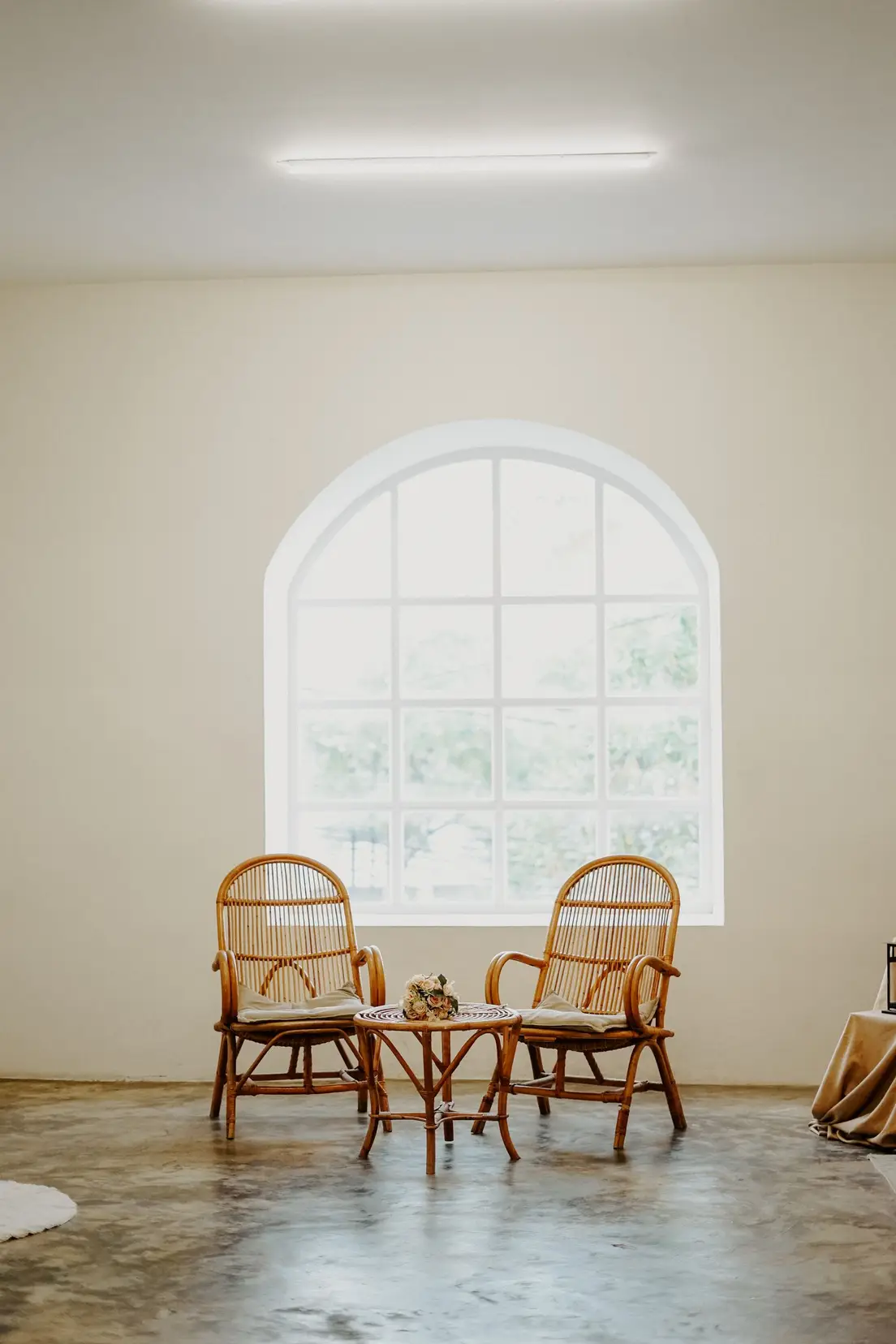
The second-fastest: buying rattan furniture as a matched set. Two rattan armchairs and a rattan side table, all from the same collection, stop reading as “natural texture” and start reading as a rental staging company’s go-to package instead of an uncluttered room someone thought through. Mix one rattan piece with a solid-wood piece instead. Third: more than two wood tones in the same room — pick your lighter Scandinavian wood and your darker Japanese wood, and stop there. A third tone is the tell that the room was furnished over three separate shopping trips, not planned as one interior design style.
The Honest Math: What a Japandi Room Actually Costs
Here’s the honest math, not the estimate: japandi is one of the cheaper style directions to do well, since the whole point is fewer purchases chosen carefully, not a fully replaced room. The trap is assuming “japandi” means an entirely new furniture set from one retailer.
The $0–150 Version
Paint one wall a warm neutral ($40), swap the bulbs to 2700K ($15), clear every surface down to one object per spot (free), and add one linen textile in the palette ($25–40). That covers the two biggest tells — cold light and visual clutter — for under $100.
The $500–900 Version
Add a low-pile neutral rug ($120–200), one solid-wood accent chair or side table ($250–500), and two or three ceramic pieces ($60–100) on top of the free fixes above. That’s a full room’s worth of the actual style, not just the palette — skip the accent piece first if the budget’s tighter and the room still holds together with one fewer object.

Photo by Karola G (kaboompics.com) on Pexels
Start with the wall color and the bulbs. Everything wood, woven, or ceramic you add after that looks like it belongs there instead of like it’s trying to.
Frequently asked questions
What is Japandi style?
Japandi style blends Japanese minimalism with Scandinavian hygge — a neutral, natural-material palette, low-profile functional furniture, and negative space instead of wall-to-wall decor. It borrows Japan's wabi-sabi respect for imperfect, handmade objects and Scandinavia's warmth, so the result reads calm and lived-in rather than stark or empty.
Is Japandi style still trending, or is it already dated?
Still trending — search interest and retailer coverage for japandi have held steady rather than spiked and crashed, unlike a lot of single-season decor trends. That's mostly because it's not really a trend at its core; it's two much older design philosophies (wabi-sabi and Scandinavian minimalism) that happen to share a name for the moment they overlap.
Are wabi-sabi and Japandi the same thing?
No. Wabi-sabi is a centuries-old Japanese philosophy about finding beauty in imperfect, impermanent, and incomplete things — a raw ceramic glaze, a visibly grained plank. Japandi is a modern interior-design style that borrows from wabi-sabi (among other Japanese and Scandinavian ideas) but is a decorating approach, not the philosophy itself.
What is the Japandi color palette?
A neutral base — oatmeal, stone grey, sand, or off-white — with one muted, nature-inspired accent color: terracotta, deep olive, charcoal, or a soft indigo. No sharp contrasts. The visual interest is supposed to come from material texture and craftsmanship, not from a busy color scheme.
What are common Japandi decor mistakes to avoid?
The big three: a single cool-white overhead fixture (undoes the whole warm palette), too much rattan or cane furniture in matching sets (reads as a themed showroom, not a considered room), and mixing more than two wood tones in the same space. All three are free or cheap to fix once you know to look for them.