
Bedroom
Japandi Bedroom Ideas for a Calm Space
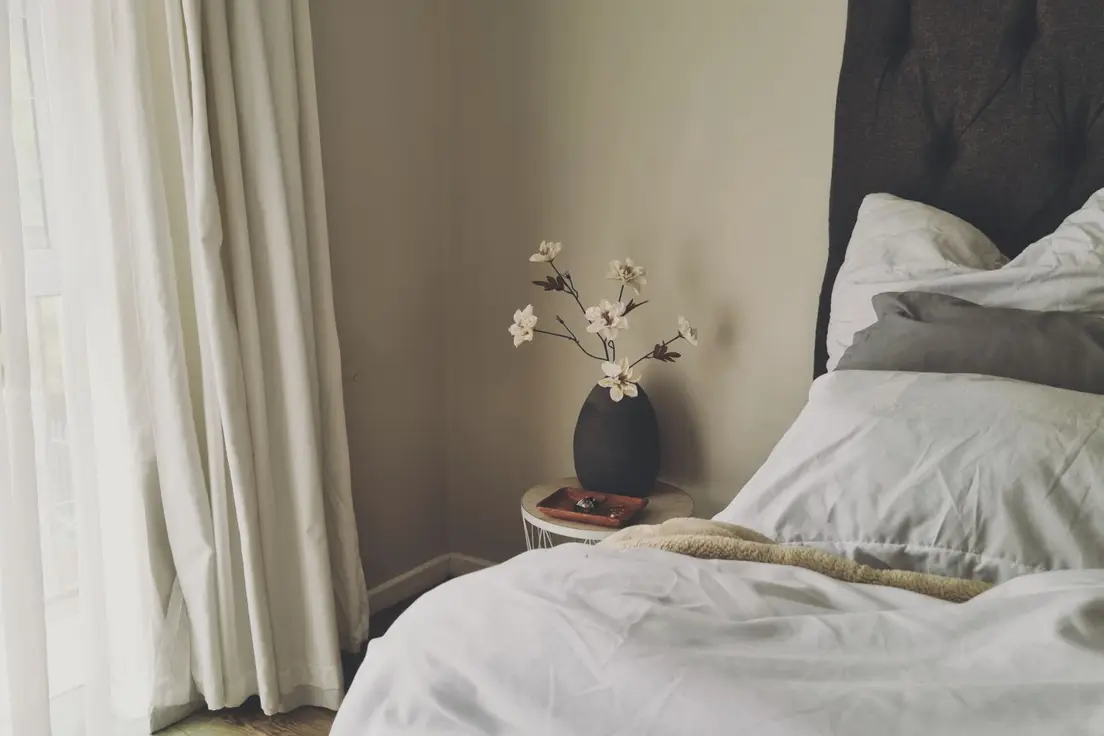
Photo by La Photography on Pexels
The fastest japandi bedroom ideas for a calm space all do the same three things: lower the bed, mute the palette, and cut the room down to one wood tone and a handful of natural materials. None of these twelve ideas need a full gut renovation — most are a swap or an add, not a rebuild, and the honest math at the end adds every real price into one number instead of leaving you to guess.
Japandi is Japanese minimalism married to Scandinavian warmth, which in practice means a room that’s spare without feeling empty. As a Japandi design approach it leans on natural materials, a muted color palette, and a few tactile pieces instead of decor for its own sake — an uncluttered, calm room reads more finished than one crammed with matching pieces, and that’s the whole idea. For more general budget-bedroom moves, our cozy bedroom makeover ideas covers the textile-and-lighting side of things, and our master bedroom ideas guide has the wider room-by-room version.
8 japandi bedroom ideas at a glance
Concept renders — visual references, not photos of a finished project.
Center the Room on a Low Platform Bed Frame
A platform bed sits low, skips the box spring, and shows its own wood frame instead of disappearing under a fabric skirt — that’s most of the Japandi look before you’ve bought a single decor item. A basic pine or engineered-wood queen frame runs $180–320, and a real solid-wood one with a slatted headboard is $350–550. Skip anything with a tall upholstered headboard or scrollwork on the legs; those read hotel-lobby, not calm bedroom. The lower the bed sits, the bigger the room looks — the same trick a staging photographer uses to make a builder-grade bedroom photograph like it has ten-foot ceilings.
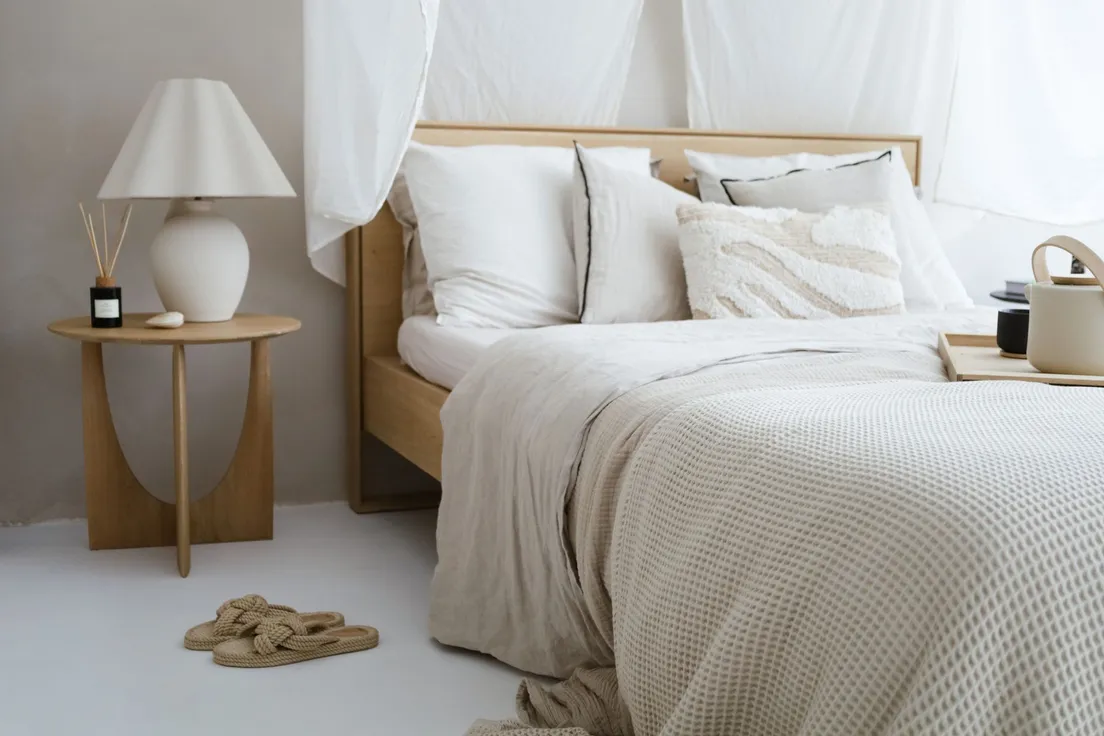
Photo by Natalia Walusiak on Pexels
Layer Linen Bedding in a Muted Palette
Linen or linen-blend bedding in oatmeal, sand, or soft sage does more for the Japandi look than any wall color — a duvet cover runs $70–130, and the wrinkled, slightly rumpled texture is the point, not a laundry failure. Layer two pillow textures (a smooth linen sham, one nubby woven cushion) instead of five matching ones; Japandi rooms read calm partly because nothing is fighting for attention. (We’ve ironed linen bedding exactly once. It looked worse pressed than it did straight off the line.)
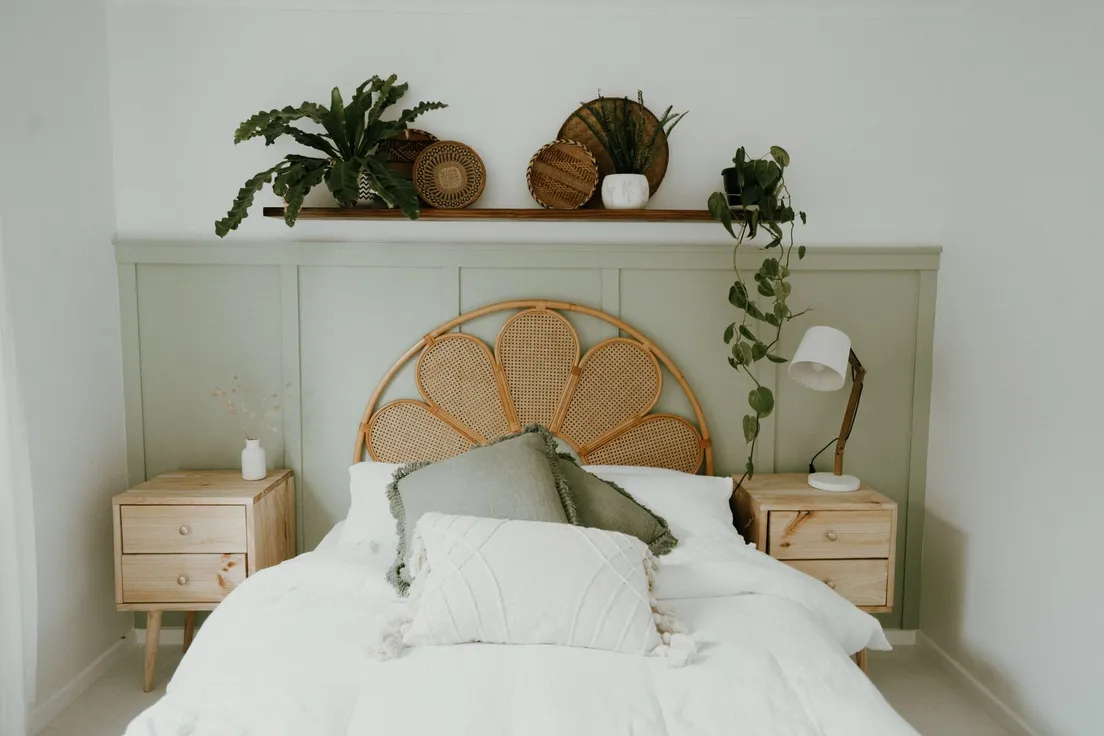
Photo by Taryn Elliott on Pexels
Repeat One Warm Wood Tone, Not Five
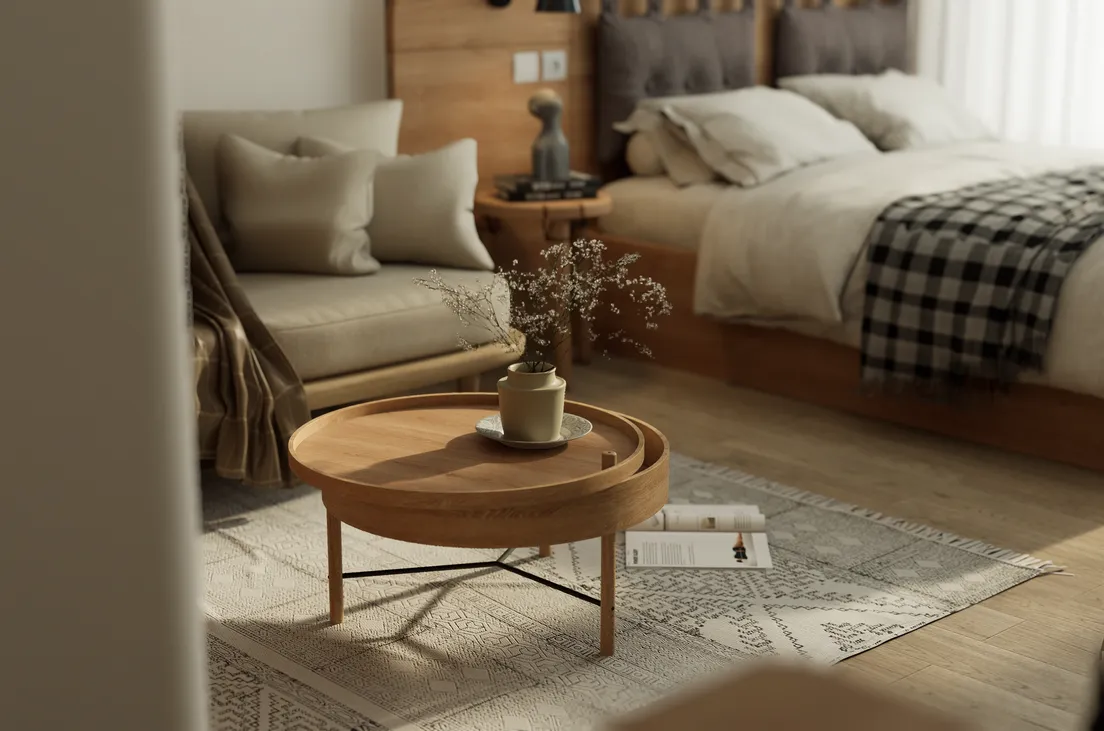
Pick one wood tone — honey oak, walnut, or light ash — and repeat it on the bed frame, one nightstand, and one accent table, then stop. Warm, earthy brown wood tones like honey oak sit naturally in a neutral color palette, and repeating just one of them keeps that palette from feeling busy. A small round wood side table runs $60–120 and does more to unify a room than three separate “wood-ish” pieces that don’t actually match. Mixing a gray-washed nightstand with an orange-oak dresser is the single fastest way to make a Japandi attempt look like leftover furniture instead of a deliberate room — worth checking before you buy the next piece, not after.
Add One Rattan or Cane Piece for Texture
Rattan and woven cane bring in an earthy, rustic texture and are the “Japandi” half doing the visible work — a rattan accent chair ($90–180) or a cane-front nightstand ($120–220) adds tactile visual interest without adding color or clutter. One piece is enough; a room with a rattan chair, a rattan mirror, and a rattan pendant all at once starts to look like a single-material showroom instead of a bedroom someone actually sleeps in. If a full chair isn’t in the budget, a small rattan basket for the nightstand ($18–28) gets the same texture in for less.
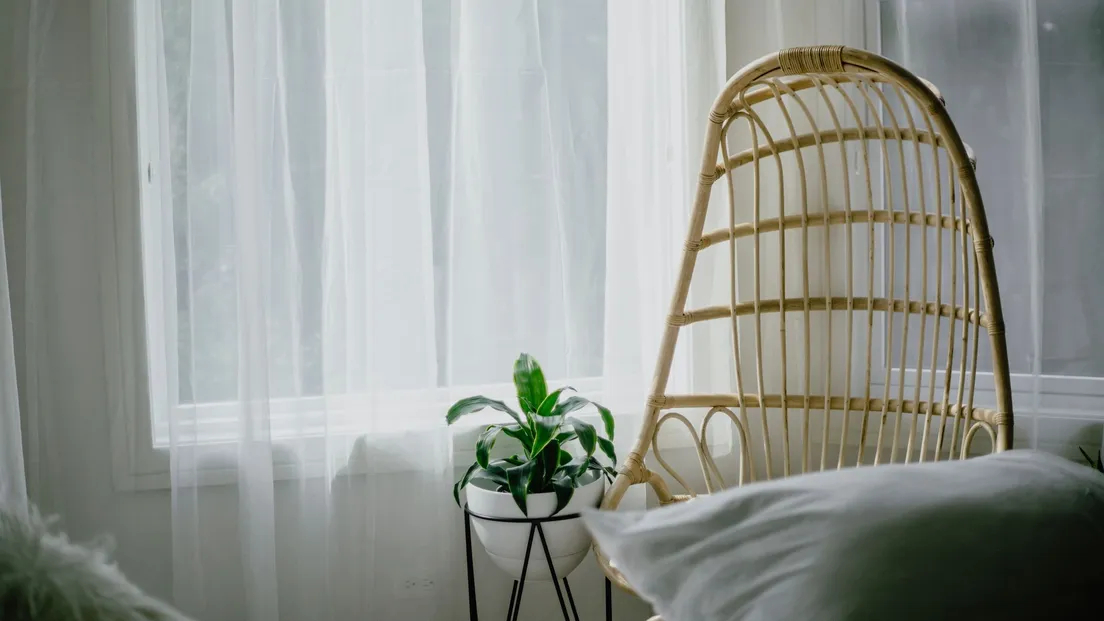
Photo by Karl Solano on Pexels
Keep the Palette Neutral, Then Add One Earthy Accent
A Japandi bedroom’s base palette is almost boring on purpose — warm white, oatmeal, stone — and that’s what makes one deliberate accent color (terracotta, rust, or deep sage) actually read as a choice instead of noise. A single accent pillow ($22–38) or one painted wall in a muted earth tone ($34 a gallon) is enough; two accent colors in the same room start competing with each other, and at that point neither one reads as the deliberate choice it’s supposed to be.
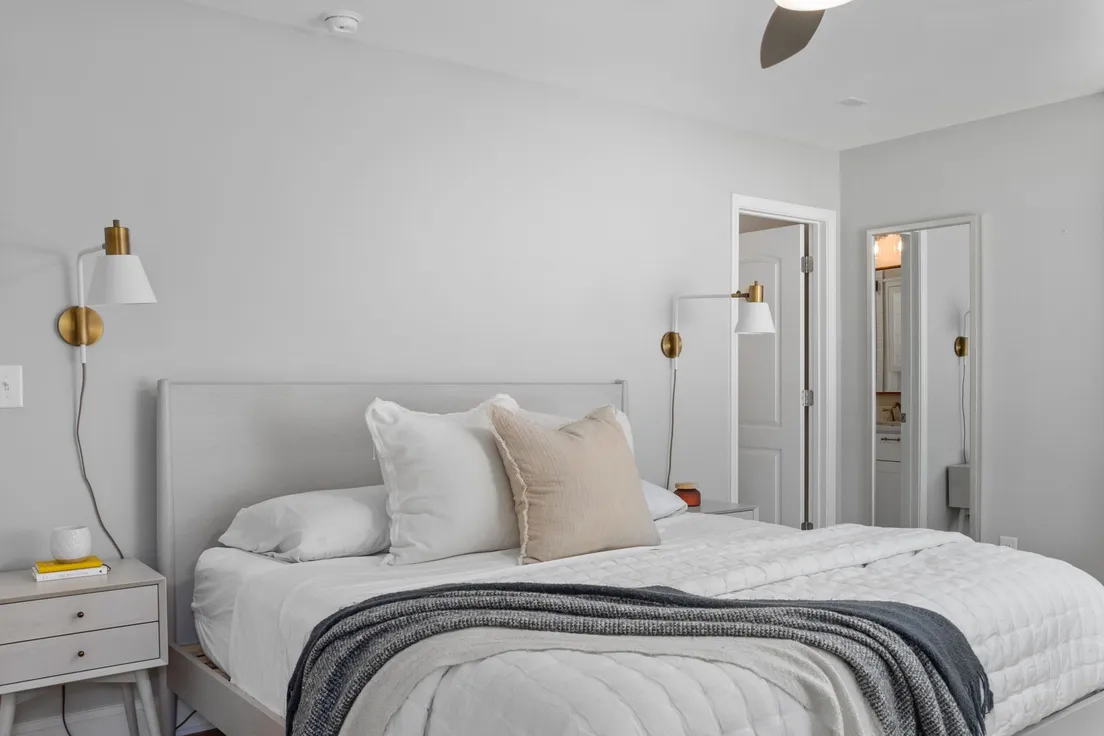
Photo by Curtis Adams on Pexels
Choose Furniture for Function, Not Just Looks
Japandi furniture is plain on purpose — a simple wood chair or a round side table with no carving, no glass top, no ornate legs. Before buying anything new, live with the room for a week; half of what reads as “needs new furniture” is actually “needs the existing furniture rearranged or edited down.” A plain chair and a low nightstand with clean lines do more for the room’s elegance than a crowd of matching decor. When a new piece is genuinely needed, a basic bent-wood accent chair runs $80–160, and it should be doing a real job — a spot to set down clothes, not decoration for its own sake.
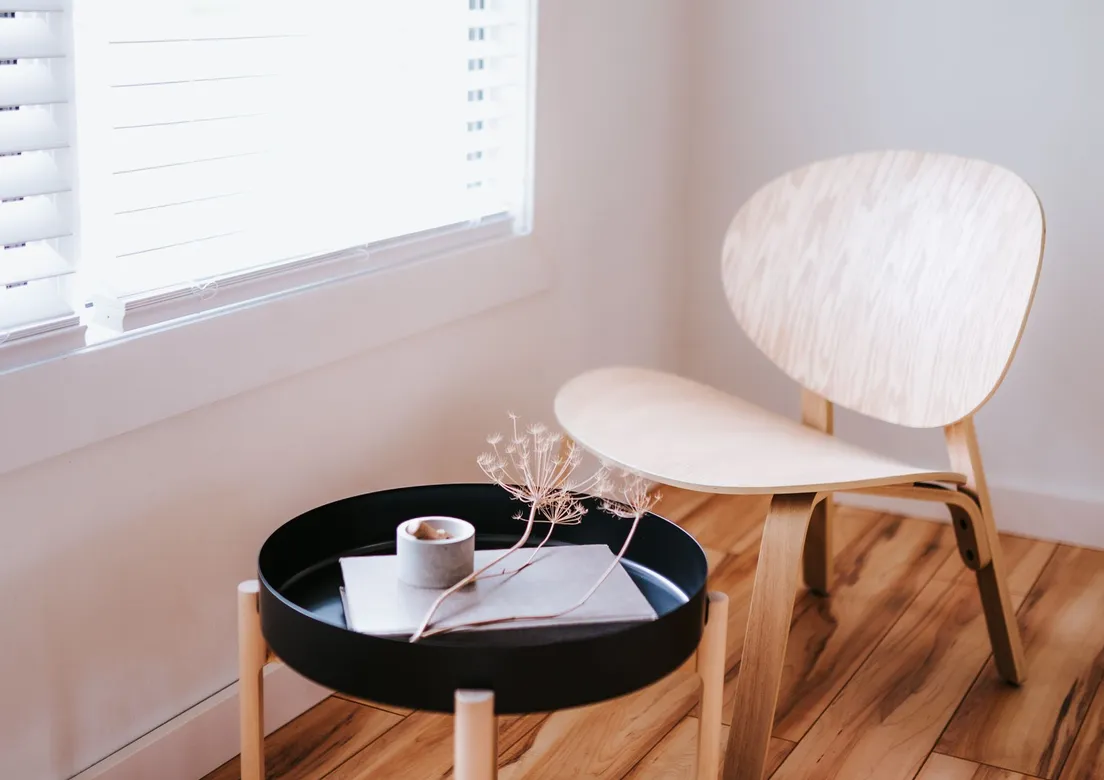
Photo by PNW Production on Pexels
Hang Linen or Cotton-Gauze Curtains
Heavy blackout drapes in a dark color fight the whole point of a Japandi room — swap them for linen or cotton-gauze panels ($22–36 each) that let light filter through softly instead of blocking it outright. If full darkness is non-negotiable for sleep, layer a plain blackout liner behind the linen panel rather than buying one heavy, opaque curtain; the linen still shows during the day, and the room keeps its texture instead of going flat and shadowed.
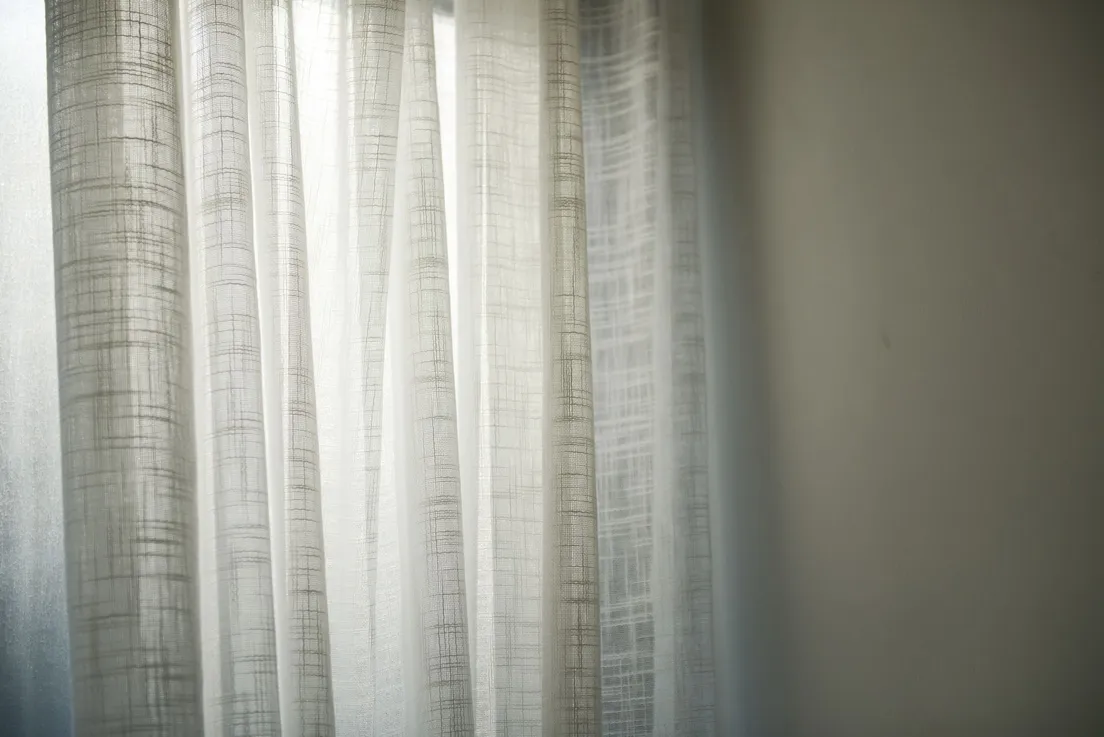
Photo by Cats Coming on Pexels
Warm Up the Room With Low, Layered Lighting
A single bright overhead fixture undoes a Japandi room faster than any wrong-color throw pillow. Swap to warm 2700K bulbs ($9 for a three-pack) and add one low ceramic or paper-shade bedside lamp ($35–65) so the room has a soft secondary light source once the overhead goes off — it’s the fastest way to make the room feel warm without touching a single wall. ENERGY STAR’s bulb-buying guide puts 2200–3000K as “Soft White, Warm White” — the range that reads calm rather than clinical — worth checking the box, since “soft white” labeling isn’t standardized the same way across brands.
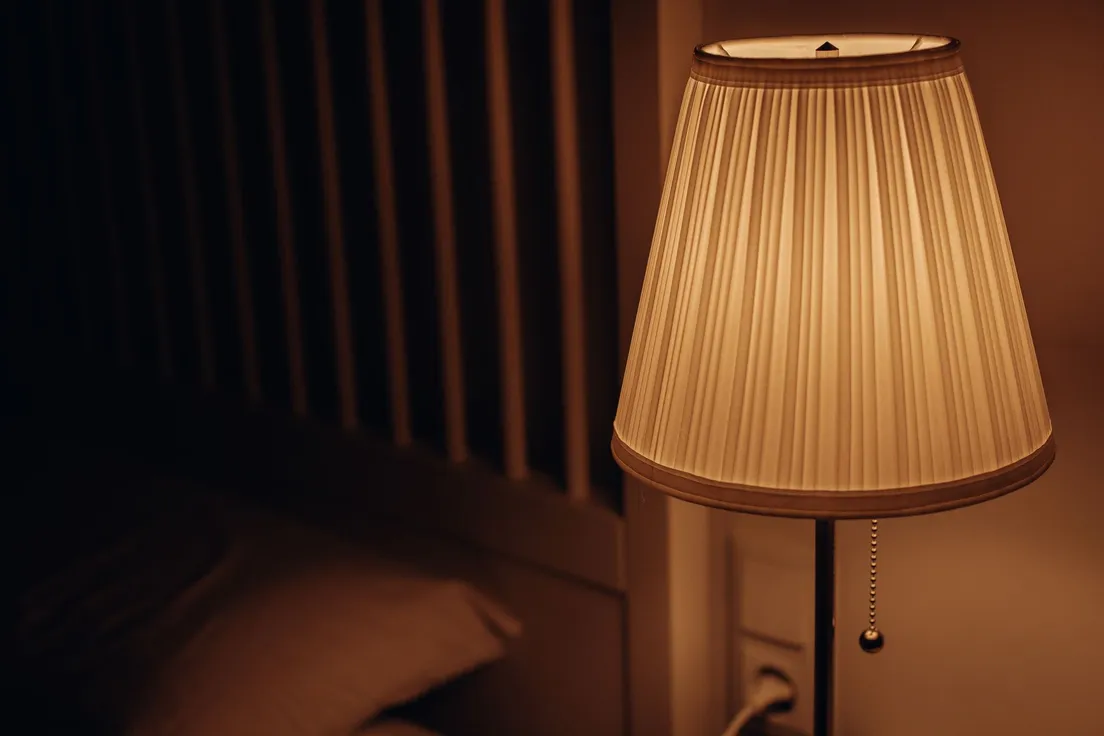
Photo by Juan Pablo Serrano on Pexels
Add One Sculptural Accent, Not Ten Small Ones
A single well-shaped ceramic vase or a small stack of books with one object on top does more for a Japandi shelf than a crowd of matching trinkets. One sculptural piece ($18–45 for a hand-thrown or hand-thrown-look vase) reads intentional; six small objects read like a garage-sale table. Never recommend the pricier option when the cheaper one solves the same problem — a $22 ceramic vase from a home-goods store does the same visual job as a $90 “designer” one on a nightstand nobody examines up close.
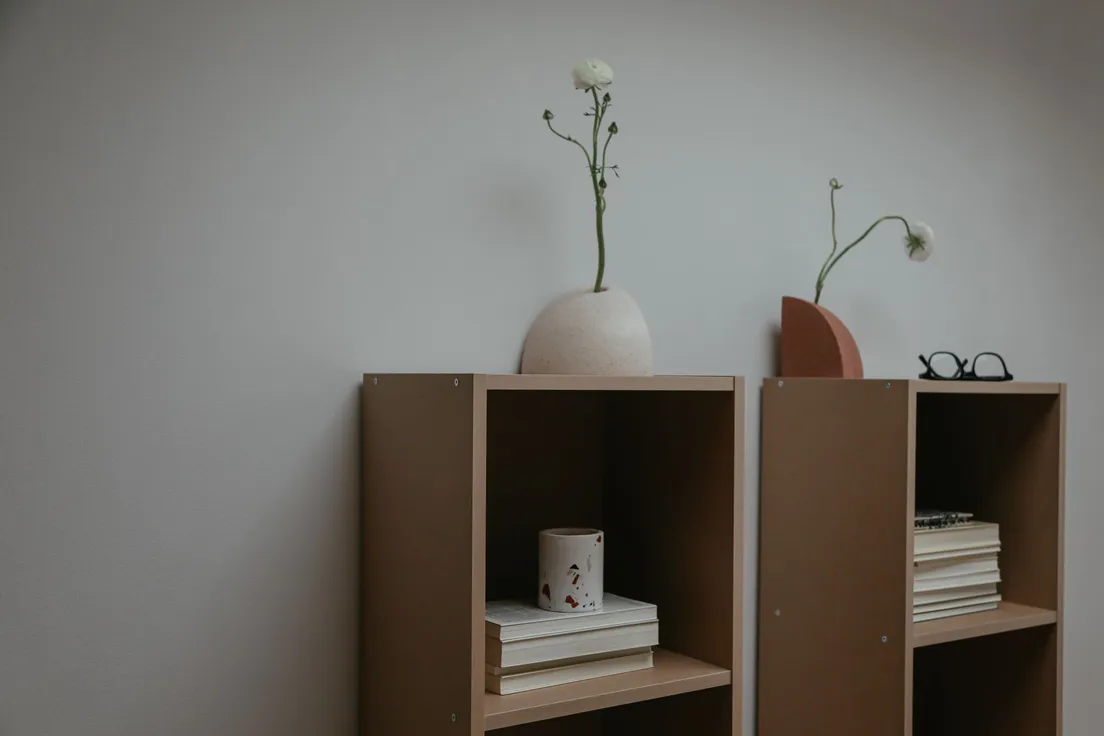
Photo by Cup of Couple on Pexels
Store Everything Behind Closed Doors
Visible clutter is the fastest way to undo a Japandi room, so anything that isn’t decor — chargers, laundry, folded clothing, the odd sock — needs a door or a drawer to disappear behind. A simple flat-front dresser ($150–280) beats an open shelving unit here; Japandi tolerates almost no visible mess. If a dresser or wardrobe over 24 inches tall is going in, anchor it to the wall — the Consumer Product Safety Commission’s tip-over guidance covers the hardware, and it’s a five-minute job that turns a genuine hazard into a piece of furniture.
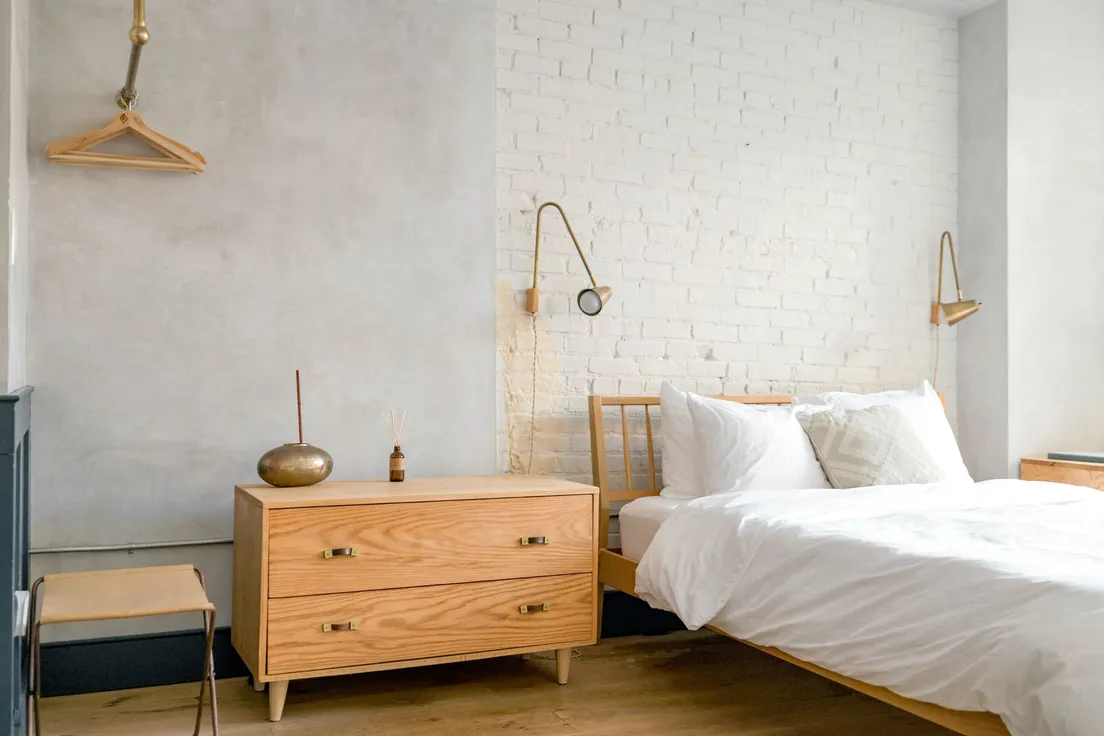
Photo by Andrea Davis on Pexels
Anchor the Floor With a Low-Pile Neutral Rug
A rug is almost always the highest-leverage first purchase in any room, bedrooms included, and a low-pile wool-blend or jute rug (carpet, if that’s the word you grew up with) in a muted pattern fits the Japandi look better than a shaggy one. An 8×10 runs $130–220; go a size bigger than feels reasonable so the front third slides under the bed instead of floating in front of it like an afterthought. We ordered an 8×10 for a room we’d measured off a photo once, and it looked like a bath mat in a gymnasium — the real room was bigger once the closet door swing was accounted for, and the 9×12 we returned for fixed it.
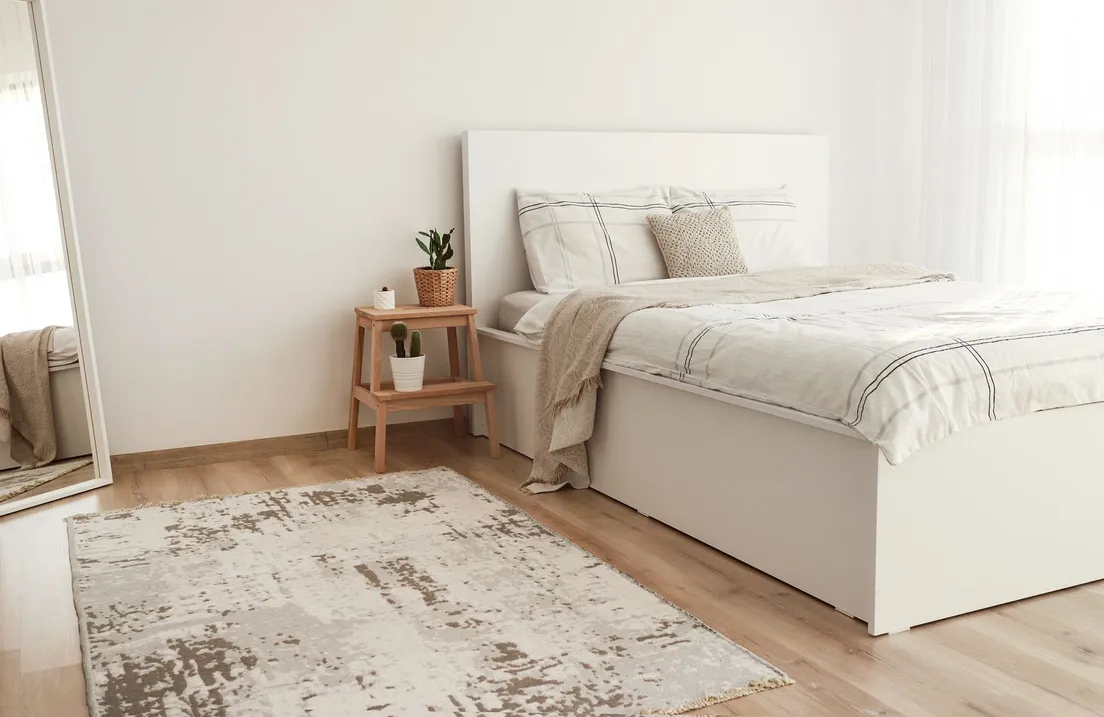
Photo by İbrahim Doğan on Pexels
Style a Low Reading Corner Instead of a Desk
Skip the desk if the room doesn’t need one — a small stack of books, a mug, and a low stool ($25–45) beside the bed reads more Japandi than a full workstation ever will. The point of the style is negative space, and a corner with three deliberate objects on the floor does more for that than a desk crowded with a laptop, charger, and a week of mail. If the room genuinely doubles as a workspace, a single small desk works, but it’s the exception here, not the default idea.

Here’s the honest math: the cheapest version of this room — bedding ($70), lighting ($44), one accent pillow ($22), and a rattan basket ($18) — comes to $154 and takes an afternoon. Add the rug ($130), curtains ($58 for two panels), and the accent chair ($90) and the number moves to $432 for a genuinely finished room. Do all twelve ideas, platform bed and dresser included, and it tops out around $1,180 — still less than most single upholstered headboards alone. Paint and lighting solve more problems than new furniture does, so if the budget only stretches to two ideas, start with the bulbs and the bedding — everything else on this list looks more deliberate once the room already feels calm instead of just empty. Start with two or three of these moves, not all twelve at once — that’s enough to get the look you want to create without buying every “Japandi-style” label in the store.
Frequently asked questions
What are the essential elements for a Japandi bedroom?
A low platform bed, linen or cotton-gauze bedding in a muted palette, one warm wood tone repeated through the furniture, and visible storage kept to a minimum. Japandi leans on natural materials and negative space more than on decor objects — the fewer things in the room, the more each one has to earn its spot.
What colors are typically used in a Japandi bedroom?
Warm neutrals — oatmeal, sand, stone, and soft white — with one earthy accent color like terracotta, sage, or charcoal used sparingly, usually on a single pillow, wall, or piece of art. Avoid bright white and cool gray together; they read clinical instead of calm.
Is Japandi style still a popular trend for bedrooms?
Yes — it's held steady for several years now rather than spiking and fading like a single-season trend, mostly because it doesn't require constant restyling. A room built around natural materials and a muted palette looks the same in five years as it does on move-in day.
What are the key furniture pieces for a Japandi bedroom?
A low wood platform bed, one or two simple nightstands without ornate hardware, a wardrobe or dresser with flat door fronts, and at most one accent chair. Skip anything with scrollwork, tufting, or a high glossy finish — those read traditional or glam, not Japandi.
How does Japandi style differ from pure minimalism or Scandinavian design?
Pure minimalism can feel cold and empty; Japandi adds warmth back in through wood tone, texture, and a few natural materials like rattan or linen. Scandinavian design leans lighter and brighter overall — Japandi pulls in more of the muted, earthy palette and quiet formality of Japanese interiors.