
Bedroom
Master Bedroom Ideas for Small Rooms That Feel Bigger
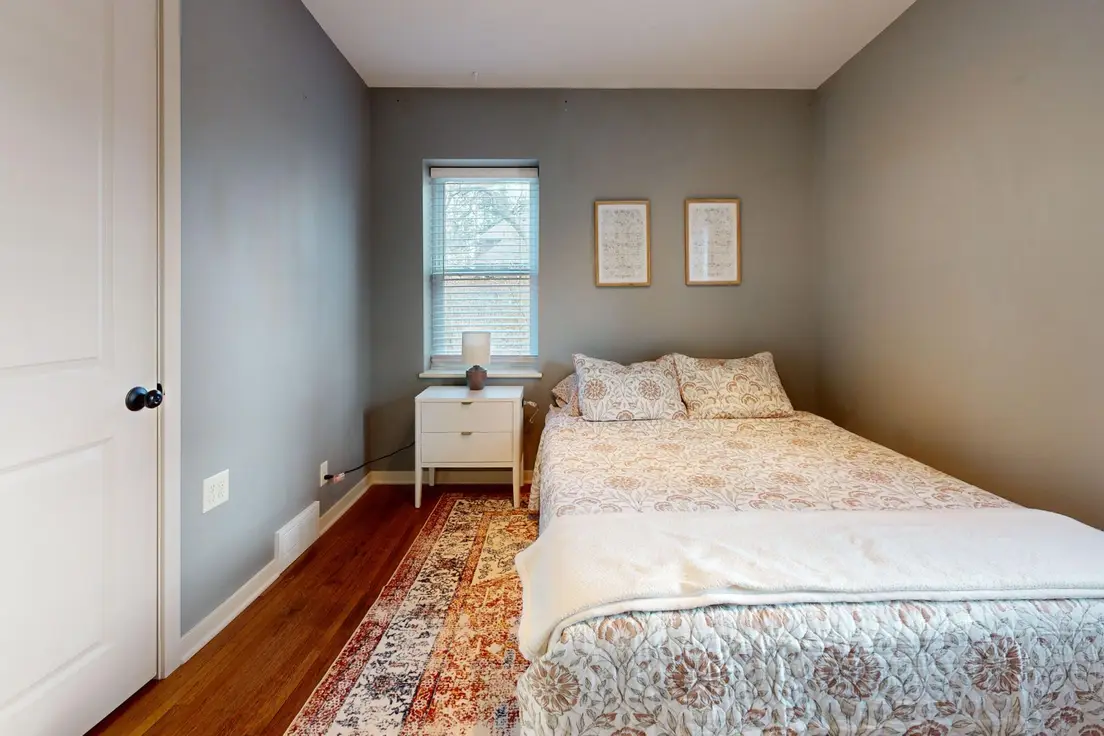
Photo by Peter Vang on Pexels
Master bedroom ideas for small rooms usually fail for one reason: they’re borrowed from a bedroom twice the size. The 12 ideas below are scaled to an actual small primary — one window, one outlet within reach of the bed, maybe 120 square feet total — and none of them need a contractor, a permit, or your landlord’s blessing. Most small bedroom ideas aimed at a “small bedroom look” just mean smaller furniture; the ones below are about making a small bedroom feel larger than its square footage, not just less crowded — the same clearance math works whether it’s your master suite or a small guest bedroom.
12 master bedroom ideas for small rooms at a glance
Concept renders — visual references, not photos of a finished project.
Nail the layout first: leave two feet of walking space around the bed
Bedroom layout is the one idea on this list that costs nothing and fixes the most. Center the bed on the room’s longest wall, ideally facing the door or a window, and measure two feet of clearance on every side you actually walk. A room that fits the bed but not a person walking around it isn’t laid out — it’s just full.
Live with the current layout for a week before buying anything new. Half of what reads as “I need new furniture” in a small bedroom is actually “I need to try the bed against the other wall.” Rearranging is free, and it’s the fastest way to find out whether the room’s real problem is size or arrangement — most of the time, in a small primary bedroom, it’s the second one.
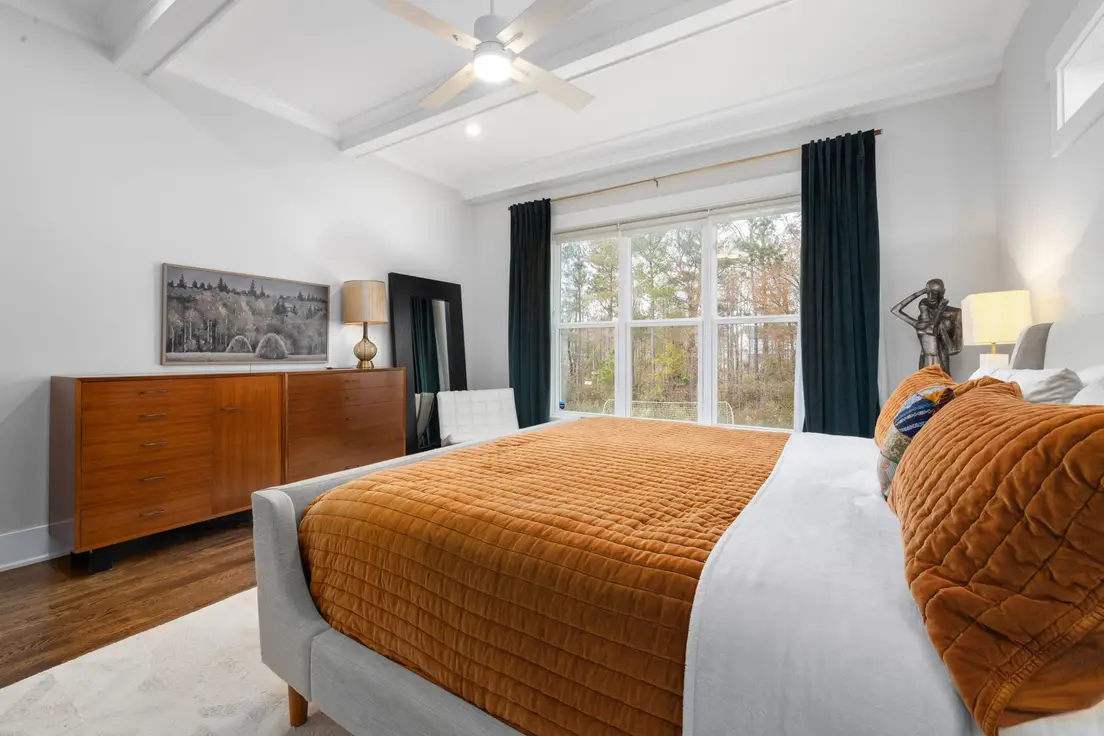
Photo by Curtis Adams on Pexels
Choose a bed frame with built-in storage instead of a separate dresser
A bed frame with built-in drawers underneath does the job of a bed and half a dresser in the exact footprint a bed frame alone would take up — no extra square footage spent on a second piece of furniture. Platform storage frames run $250–500 for a queen and typically add 4–8 inches of usable drawer depth under the mattress, enough for off-season bedding or clothes you’re not reaching for daily.
Measure the doorway, stairwell, and any hallway corner before you order — the single most common return reason in this niche isn’t “wrong style,” it’s “didn’t fit up the stairs.” We assembled a storage bed frame solo on a Sunday because “how hard can it be,” hit the instructions’ “2 persons” note on the step that mattered most, and spent forty-five minutes holding a side rail with one knee while reaching for the bolt with the other hand.
Here’s the honest math on which storage approach to buy:
The $300 platform storage frame
A queen platform frame with built-in drawers replaces the bed and the dresser in one purchase, and it’s the cleanest small-bedroom look because there’s no second piece of furniture competing for floor space. Budget $250–500 depending on finish, and expect real assembly time — this is a two-person job even though the box says otherwise.
The $20 bed risers plus under-bed bins
If a new frame isn’t in this year’s budget, bed risers ($15–25 for a set of four) raise your current frame 3–6 inches, enough to slide flat under-bed bins ($8–15 each) underneath. It’s not as tidy a design as a built-in drawer, but it turns dead space under an existing bed into real storage for under $60 total.
Start with the risers and bins if you’re not sure the room needs a whole new bed frame yet — you can always upgrade to the platform frame later, and you’ll know by then exactly how much storage you actually needed.
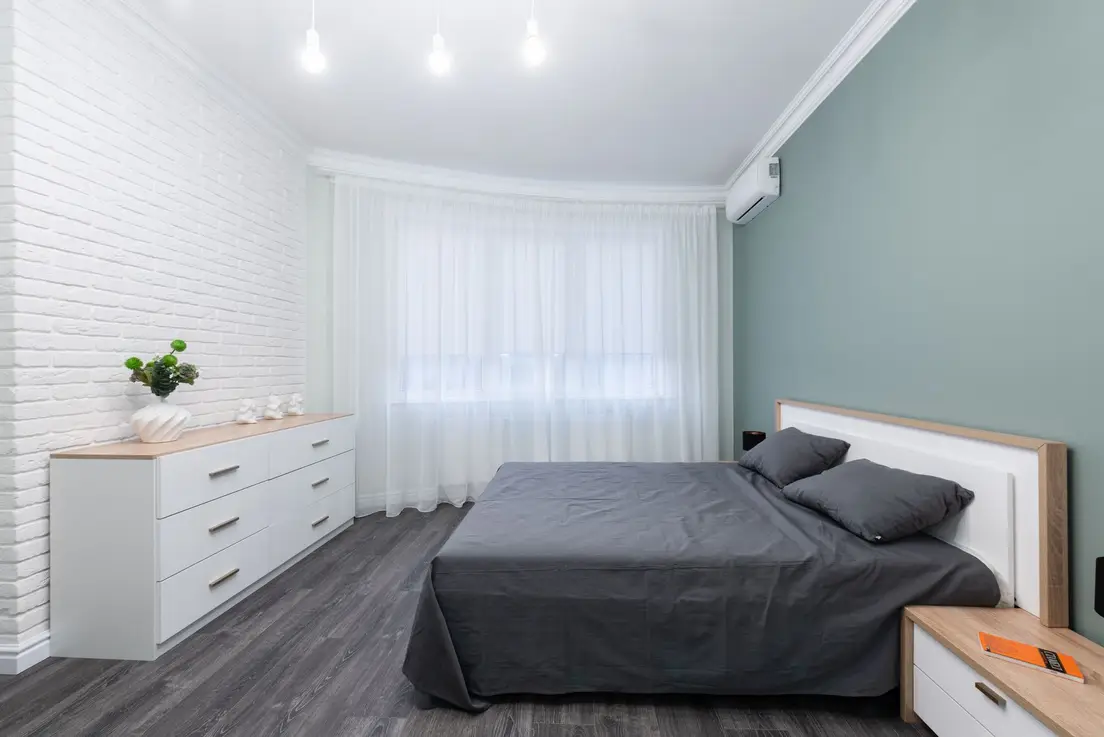
Photo by Max Vakhtbovych on Pexels
Skip the dresser for a floating shelf and a slim nightstand
A six-drawer dresser is a small bedroom’s biggest floor-space tax, and most of what lives in it could fit in half the volume. A floating shelf mounted at nightstand height, paired with a slim two-drawer nightstand — a bedside table, if that’s the term you grew up with — for $40–70, holds a lamp, a book, and a charger on each side of the bed without the footprint of a full dresser — and it visually reads as less furniture, which matters as much as the actual square footage in a small room.
Anything you’d have stored in the missing drawers goes in the closet instead, in bins, not stacked loose on a shelf where it turns decorative into cluttered within a month.
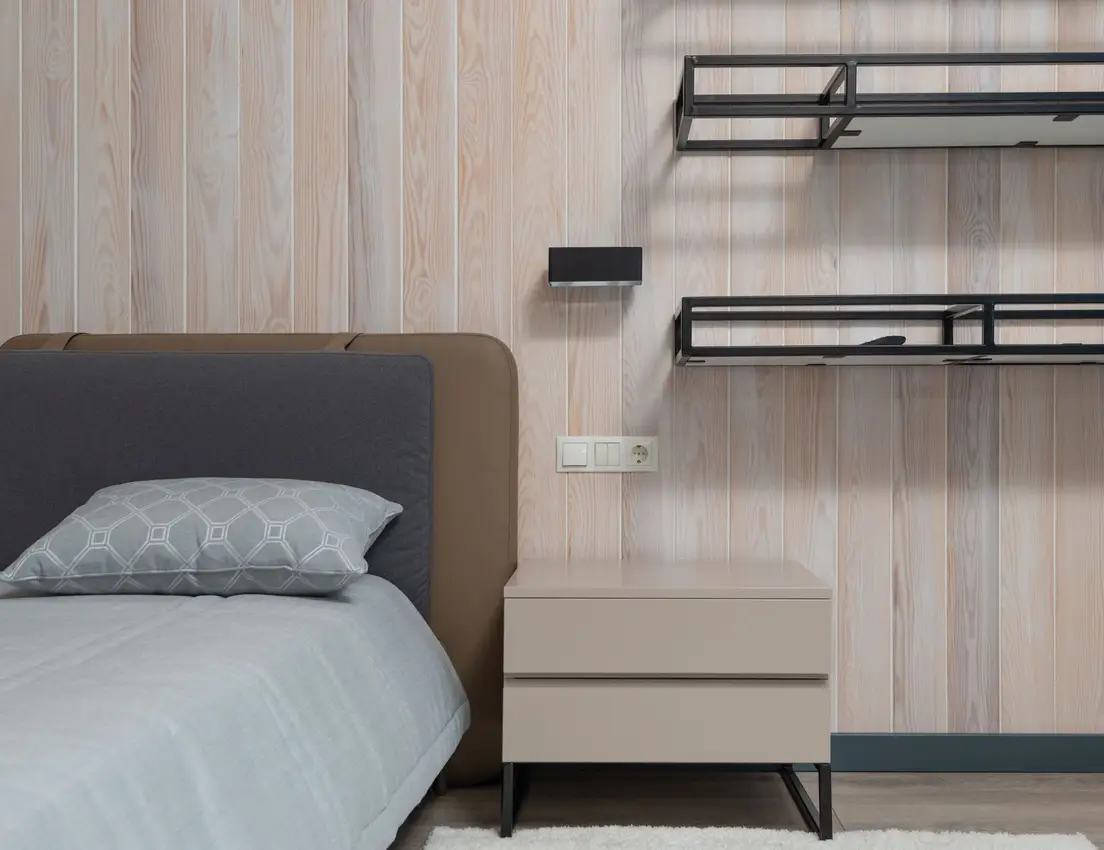
Photo by Max Vakhtbovych on Pexels
Lean the headboard instead of mounting a four-poster bed frame
A four-poster bed frame or canopy reads as a piece of furniture in its own right in a small room — it takes up visual volume even when the actual floor space underneath is identical to a platform bed. A headboard that leans against the bedroom wall behind the bed, or attaches to the bed frame rather than the studs, gets the finished look without adding a single inch to the room’s real footprint.
Match the headboard’s color close to the wall behind it if the room genuinely can’t spare the visual weight of a contrasting one — it’s the furniture version of camouflage, and it works better than it sounds. This is the cheapest way to make the space feel intentional instead of half-furnished, and it costs nothing beyond what you’d have spent on a headboard anyway.
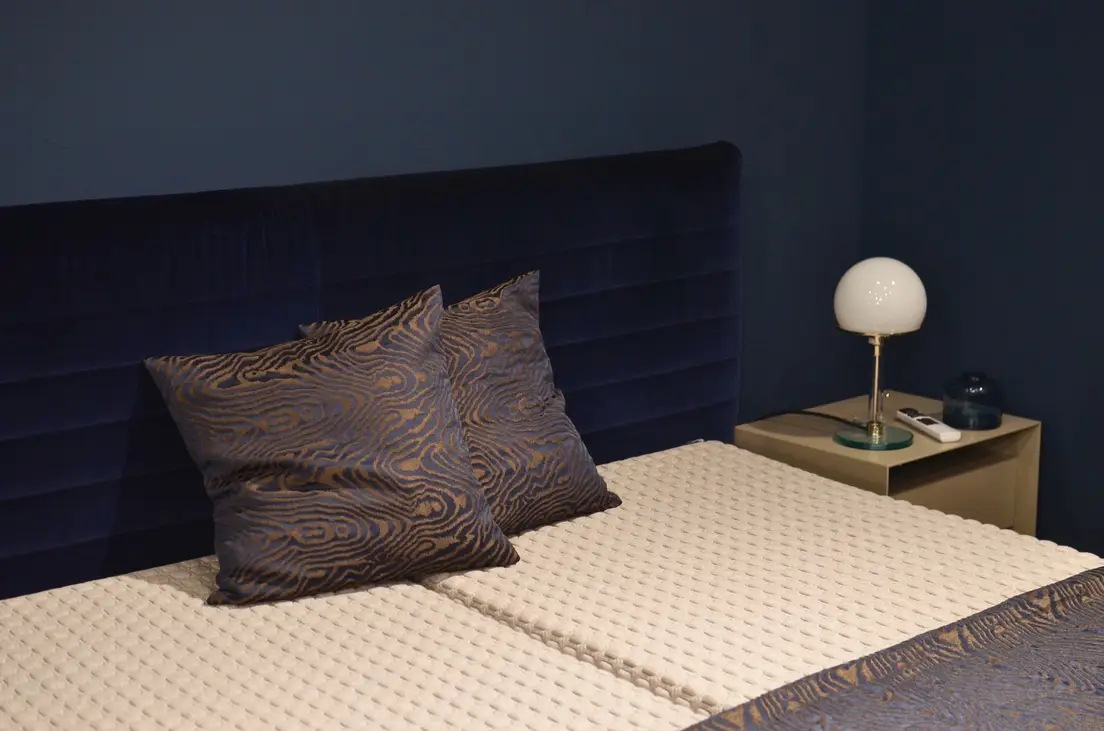
Photo by Skylar Kang on Pexels
Hang drapery from ceiling to floor to draw the eye upward
Curtain rods mounted at ceiling height instead of just above the window frame draw the eye upward, and a room that reads taller reads bigger — this trick does more per dollar than almost anything else on this list, and it costs nothing beyond where you put the drill holes. Buy panels long enough for the actual distance to the ceiling, not the window’s own height; a too-short panel hung high just looks like a curtain that lost an argument with the wall.
(Measure twice before you drill the top bracket. A crooked rod is more visible in a small room than a large one — there’s less wall around it to distract from it.)
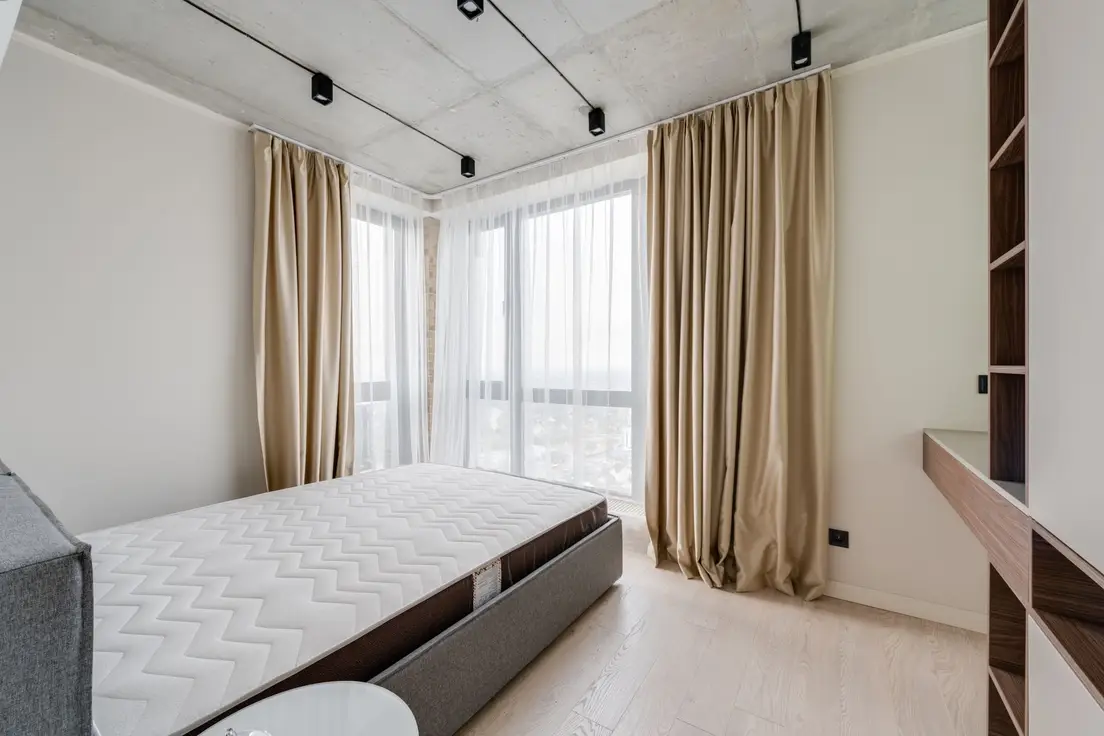
Photo by Max Vakhtbovych on Pexels
Paint a small bedroom’s walls and ceiling the same pale color
Paint and lighting solve more of a small bedroom’s problems than new furniture does, and paint is the cheaper of the two. One pale, low-contrast color carried across all four walls and the ceiling removes the visual lines where one plane stops and the next starts — a trick real estate photographers have used for decades to make a small room photograph larger than it measures.
A gallon of paint runs $35–50 and covers a small bedroom’s walls with one coat to spare for the ceiling. Skip the accent wall here specifically — it’s a genuinely good idea in a bigger room and a genuinely bad one in a small one, since it just draws a hard line across a space that needs to read as one continuous box. A subtle tone-on-tone wallpaper on one wall can do the same cohesive job as paint if you’d rather commit to texture than a hue, as long as the pattern stays quiet enough not to compete with the room’s wood floor or trim.
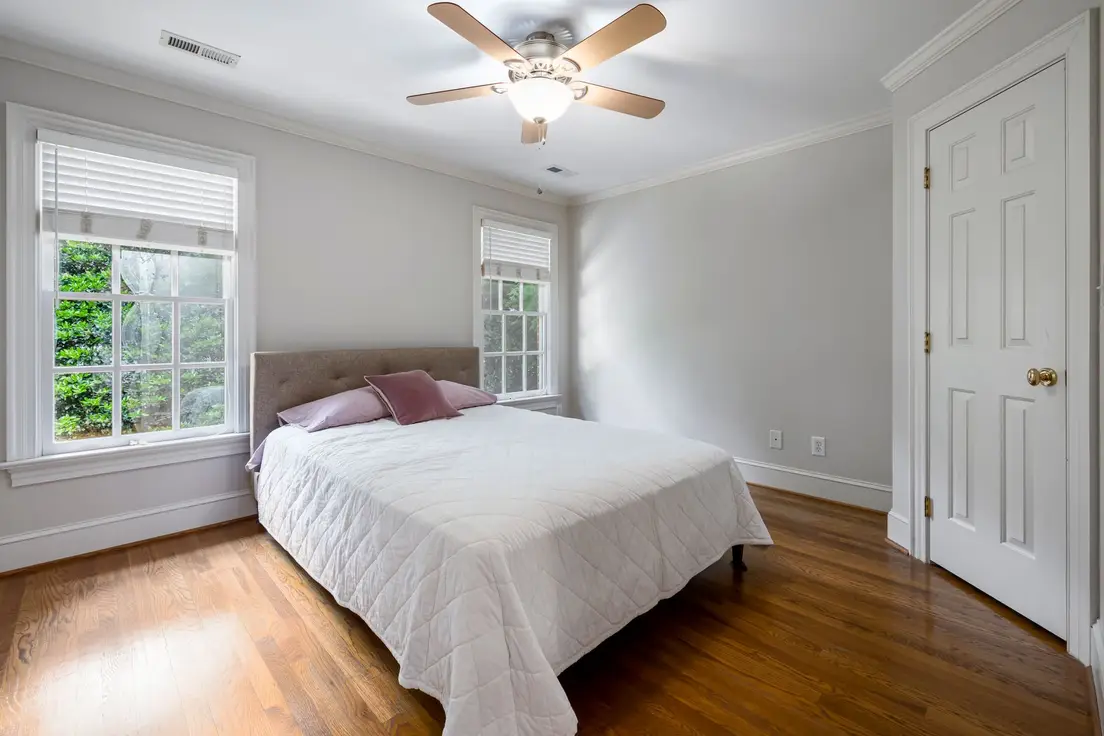
Photo by Curtis Adams on Pexels
Lean a mirror in a small bedroom to fake extra square footage
A large mirror leaned against the wall, not hung, bounces daylight across the room and reads as extra square footage the room doesn’t actually have — leaning also means it’s a five-minute return if the size turns out wrong, unlike a hung mirror with two wall anchors already committed. Position it beside or across from the window, not directly opposite the bed if you’re the type who doesn’t want to see yourself at 3am. It’s the same trick an interior designer staging a small listing photo relies on — a mirrored wall makes a room photograph noticeably more spacious than it measures.
A floor mirror in the $60–120 range covers most small bedrooms — go bigger before you go pricier, since a taller mirror bounces more light than a small one with a nicer frame.
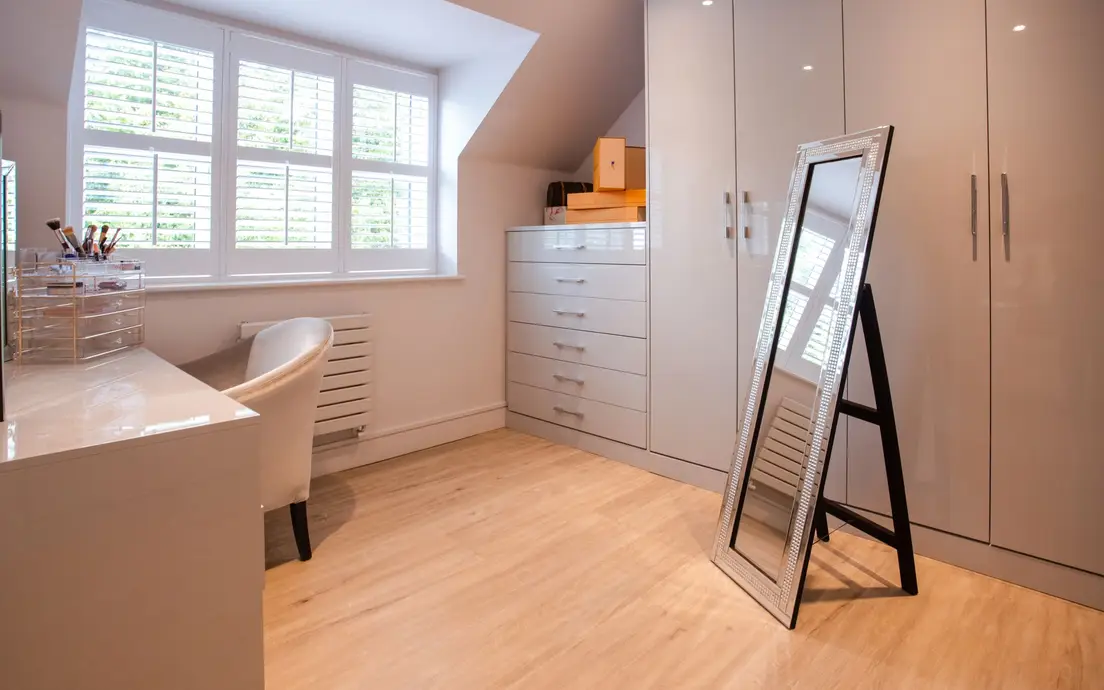
Photo by Photographer Liam Gillan on Pexels
Swap the overhead light for wall sconces
An overhead fixture is the single biggest floor-space tax on a nightstand in a small bedroom — the lamp that would otherwise sit there is the first thing to go once a nightstand shrinks to a floating shelf. Plug-in wall sconces flanking the bed do the same ambient-light job an overhead fixture and two lamps would, without needing a flat surface for either.
A pair of plug-in sconces runs $30–60 each and mounts with two screws — no electrician, no rewiring a hardwired fixture. Aim for warm 2700K bulbs; a cold 4000K bulb makes a small room feel like a waiting room, not a bedroom.
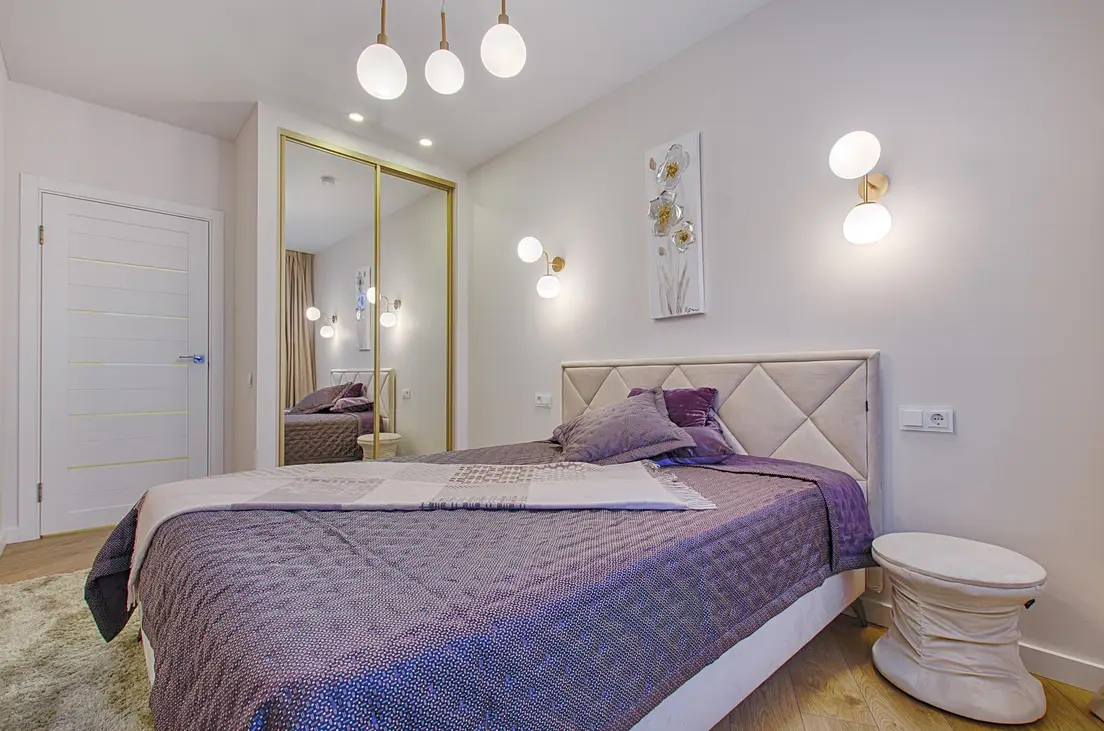
Photo by Viaceslav Kat on Pexels
Size the rug to the actual walkway, not the whole floor
A rug is almost always the highest-leverage purchase in any bedroom, small ones included — but in a small room, the mistake runs the other direction from a big one. Don’t buy the biggest rug that technically fits wall to wall; size it to the actual walkway on the sides of the bed you use, with a few inches of bare floor showing at the room’s edges. A rug that touches every wall makes a small room look like it’s wearing a rug that’s trying too hard to be the room.
A 5×7 or 6×9 handles most small primary bedrooms for $100–180 in a polyester or wool-blend weave that won’t shed on bare feet the way a cheap synthetic will.
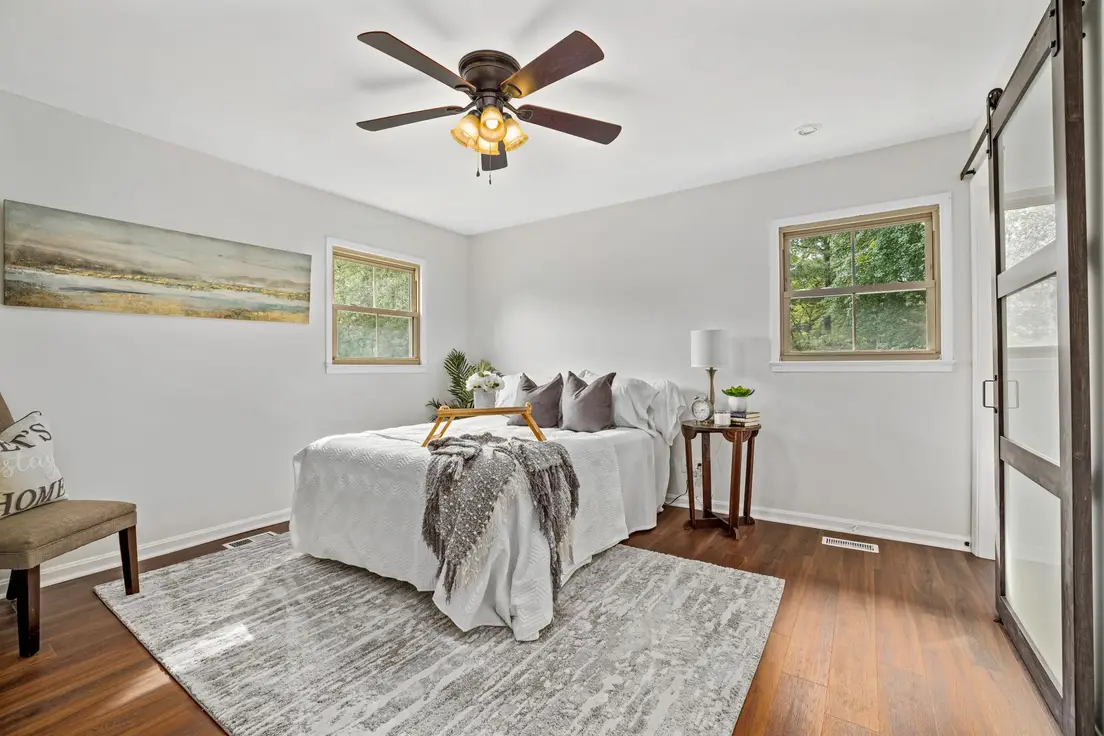
Photo by Curtis Adams on Pexels
Consider a Murphy bed if the room does double duty
If the small space also has to function as an office, a guest space, or the only spot in the apartment for a treadmill, a Murphy bed — a wall bed that folds up against a cabinet by day — gives the floor back for everything else the room needs to be. Built-in Murphy bed units with flanking shelving run $1,500–3,000 installed; simpler wall-mounted frames that hold your existing mattress start closer to $600–900.
This is the one idea on this list that’s a genuine renovation, not a weekend project — worth it if the room’s compact space is doing double duty daily, skip it if the bedroom only ever needs to be a bedroom. A Murphy bed makes the room feel bigger by literally giving the floor back for eight to ten hours a day, which is more square footage than any of the other 11 ideas can create out of thin air — but it’s also the only idea here you’d genuinely regret installing in a bedroom that already has enough space to just be a bedroom.
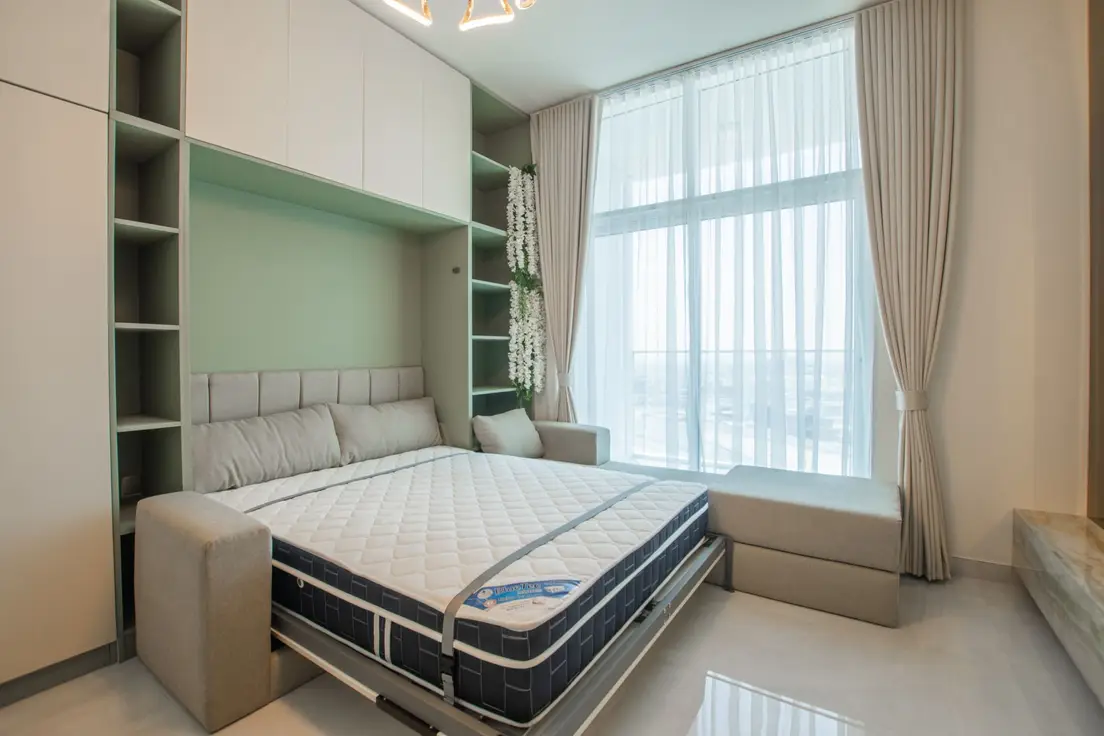
Photo by Waqas Ilyas on Pexels
Let an open closet or wardrobe double as storage and display
A closet or wardrobe with some open shelving mixed into the closed cabinets does two jobs a fully closed one can’t: it stores the bulk of what you own out of sight, and it gives you a few feet of display space for books or folded sweaters that would otherwise clutter a dresser top. Floor-to-ceiling closet cabinetry, built or off-the-shelf, uses vertical space a standalone wardrobe never reaches — the top two feet near the ceiling of most rooms sits empty otherwise.
If a full closet renovation isn’t the budget this year, even a $150–300 closet organizer kit doubles the usable storage of wire shelving and a single closet rod.
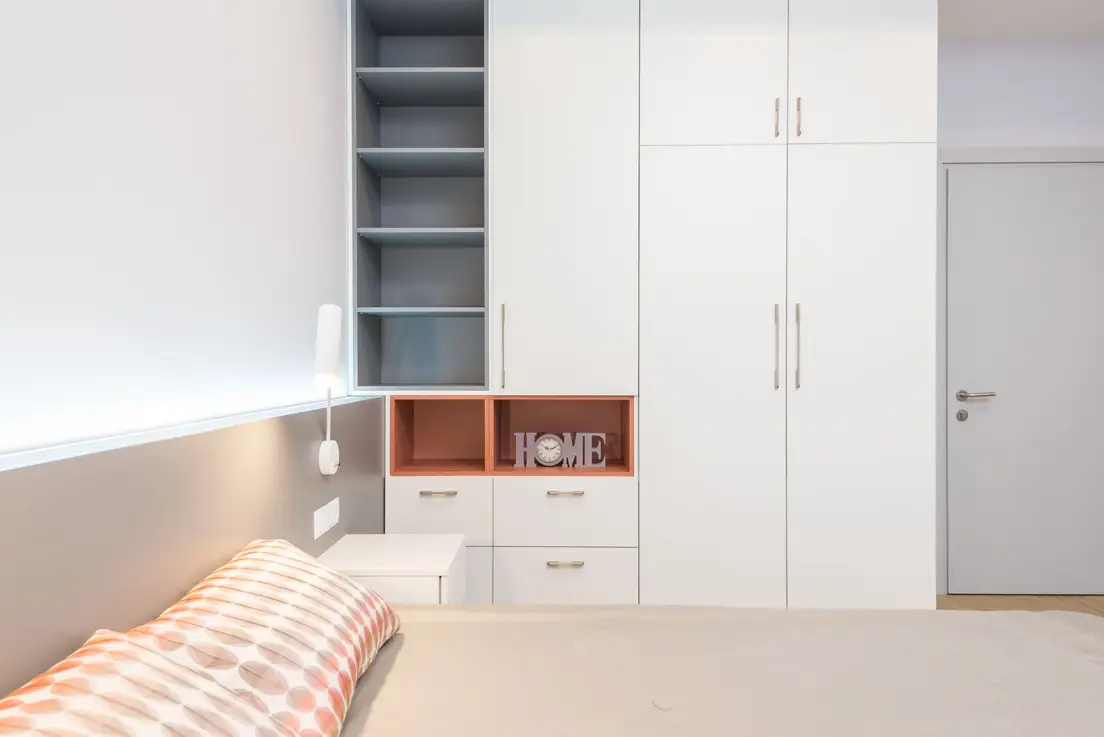
Photo by Max Vakhtbovych on Pexels
Declutter to a strict closed-storage rule before buying anything new
A nightstand, a dresser top, and a windowsill are not display shelves by default in a small bedroom — they’re the first three places clutter accumulates, and in a small room, clutter reads as roughly twice the mess it would in a bigger one because there’s nowhere for the eye to rest instead. Set one rule before buying a single new piece of furniture: nothing stays out unless it’s a lamp, one book, or something you’d actually call decorative on purpose.
This costs nothing and takes an afternoon, and it’s the idea most likely to make the room feel bigger before any of the other 11 do. A cluttered small bedroom design reads smaller than an empty one of the exact same square footage — the room isn’t the problem most weeks; what’s sitting on every flat surface is. If square footage genuinely isn’t the constraint and you just want the full furniture-and-decor picture, our master bedroom ideas roundup covers the same 12-idea format without the small-room math.
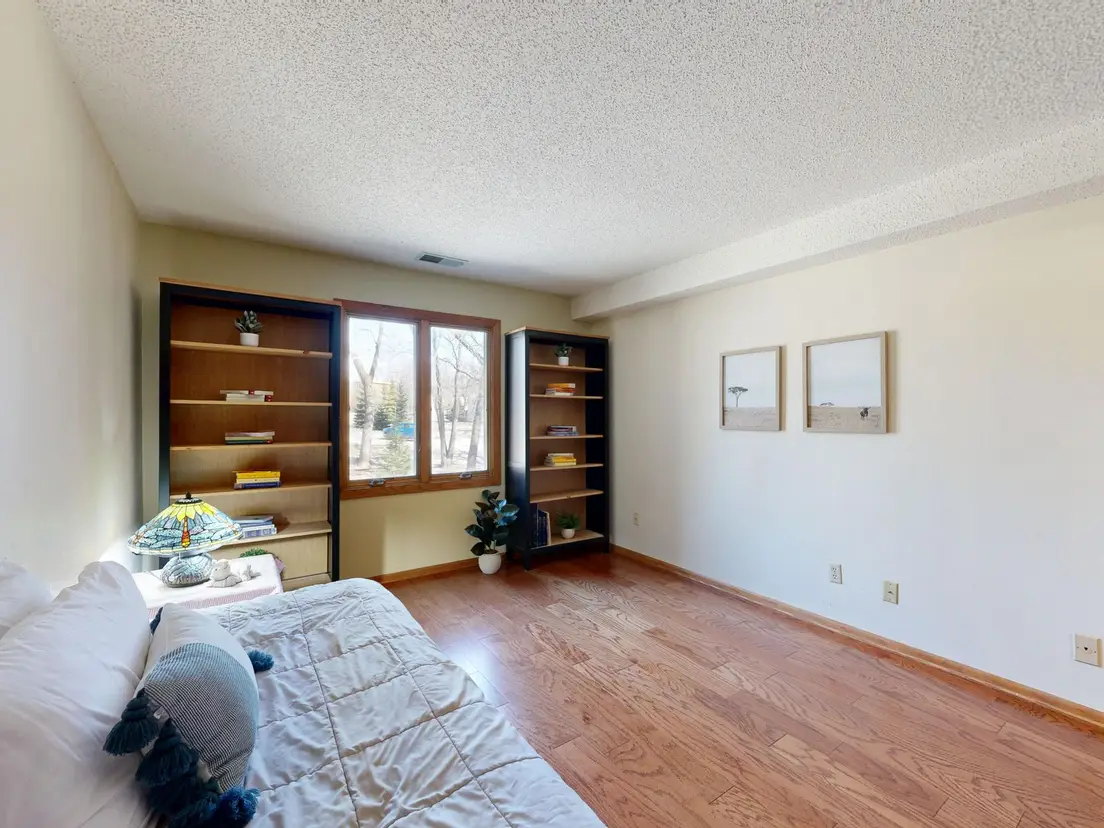
Photo by Peter Vang on Pexels
Start with the layout and the paint. Everything else on this list looks like a decision once the room stops fighting you on the two things that were always free to fix.
Frequently asked questions
How do you lay out a small master bedroom?
Push the bed against the wall farthest from the door, center it on a window if you have one, and leave at least two feet of walking space on every side you actually use. Everything else — dresser, chair, bench — only earns a spot once that clearance is real, not once the room looks full.
What colors make a small bedroom look bigger?
One pale, low-contrast color carried across the walls and ceiling reads as more square footage than the same room broken into a dark accent wall and three white ones — the eye stops registering where one plane ends and the next begins. Warm off-whites and soft grays do this more forgivingly than stark white, which can read cold and clinical in a small room.
What kind of furniture works best in a small master bedroom?
Furniture that does two jobs: a bed frame with built-in drawers, a nightstand that's really a floating shelf, a mirror that leans instead of needing wall studs. Skip anything sized for a showroom floor — a full-size armoire or a six-drawer dresser eats floor space a small room doesn't have to give.
How can I use vertical space in a small bedroom?
Hang curtains and art higher than feels natural — rod at the ceiling, art at eye level from a standing position, not centered on the wall. Floor-to-ceiling storage (a tall, narrow bookshelf or wardrobe) also uses vertical inches a low dresser wastes, without adding to the room's footprint.
Can you use dark colors in a small bedroom?
Yes, in small doses — a dark headboard or a single wall works if the rest of the room stays pale enough to keep the space feeling open. A full box of dark walls, dark bedding, and heavy curtains in a genuinely small room usually reads as cramped rather than cozy, so treat dark as an accent here, not the whole palette.