
Porch & Curb Appeal
10 Ranch House Curb Appeal Ideas on a Budget
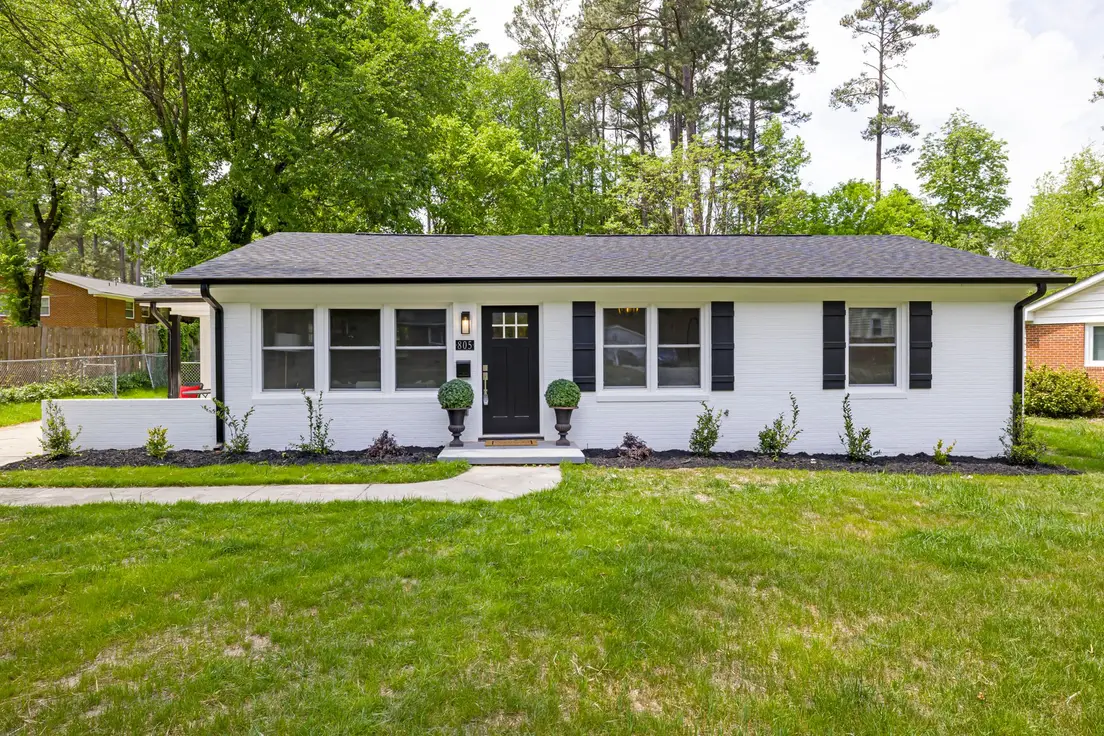
Photo by Curtis Adams on Pexels
The fastest ranch house curb appeal ideas on a budget target the three things that actually make a low-slung ranch home read as a ranch from the street: a low, flat roofline, a wide horizontal facade, and a garage door that’s usually the single largest thing a passerby sees. Whether yours is a traditional ranch or a more modern ranch house, most ranch homes are midcentury modern builds, and none of the ten ideas below need a full remodel to fix that dated trim and hardware — they’re paint, hardware, and one weekend of trim work, most of them under $200 each. (A two-story colonial can hide a bad decision behind a second floor. A ranch has nowhere to hide it.)
For the general mailbox-numbers-lights version of curb appeal that applies to any house style, our curb appeal ideas guide covers that ground in more product-by-product detail.
10 ranch house curb appeal ideas at a glance
Concept renders — visual references, not photos of a finished project.
Paint the Garage Door to Match (or Boldly Contrast) the Siding
On most ranch houses, the garage door is the single largest surface facing the street — bigger than the front door, bigger than any one window, and usually the one thing nobody’s repainted since the house was built. A chalky white two-car door next to freshly painted siding reads like a fridge nobody’s wiped down in years. A gallon of exterior door paint runs $45–65 and covers a standard two-car door with a roller in an afternoon; matching it to the siding blends the door into the facade, while painting it the same saturated color as the front door turns two features into one deliberate statement instead of two separate decisions. Either reads as “chosen” — leaving it the original builder white is the only version that reads as “forgotten,” and a fresh coat is the fastest way off that list.
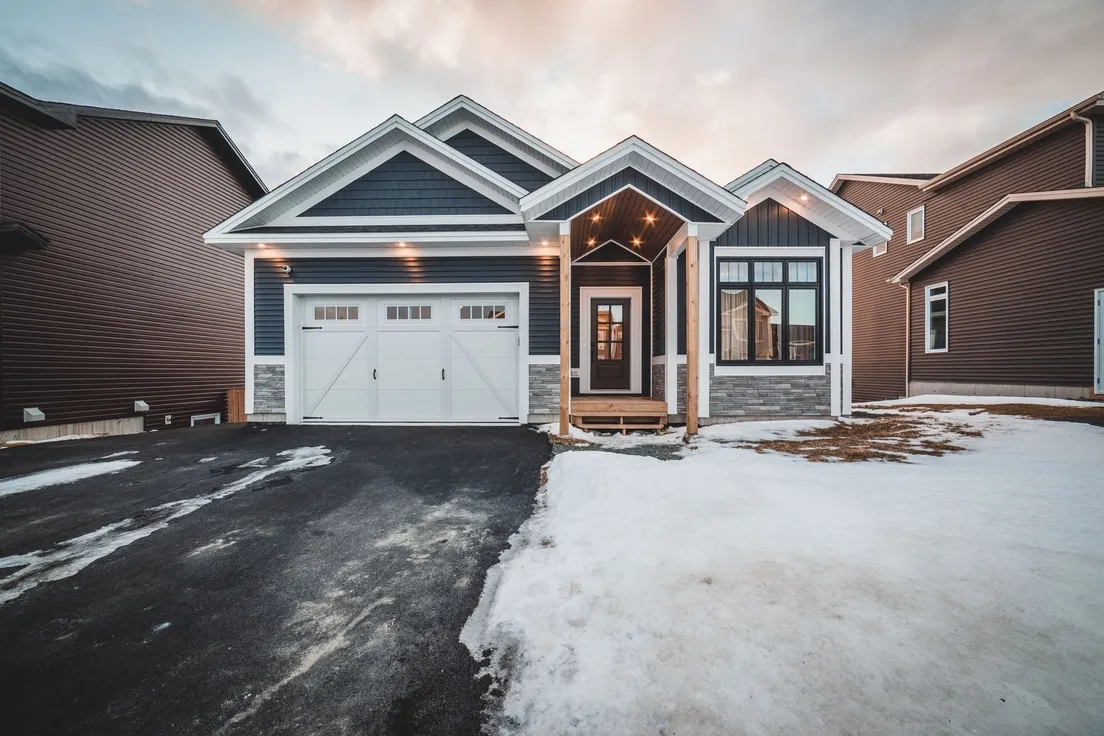
Photo by Erik Mclean on Pexels
Break Up the Roofline With a Vertical Accent Near the Entry
A ranch’s roofline runs low and horizontal for the entire width of the house, and one vertical element near the entry — a strip of board-and-batten on the gable or a small panel flanking the door — is the cheapest way to interrupt that line without touching the roof itself. Board-and-batten reads as farmhouse on most houses, but confined to one narrow strip near a ranch entry, it reads as a deliberate accent instead of a style mashup. James Hardie’s board-and-batten guide recommends treating it as an accent on a single gable, dormer, or entry rather than the whole facade, which is also the budget version: a DIY panel kit for one entry section runs $300–500 in materials, versus $8–14 per square foot to wrap a whole wall professionally. We’d rather see cellular PVC or engineered-wood board-and-batten here than the real cedar version — it doesn’t rot, doesn’t need repainting every few years, and nobody two houses down can tell the difference from the sidewalk.
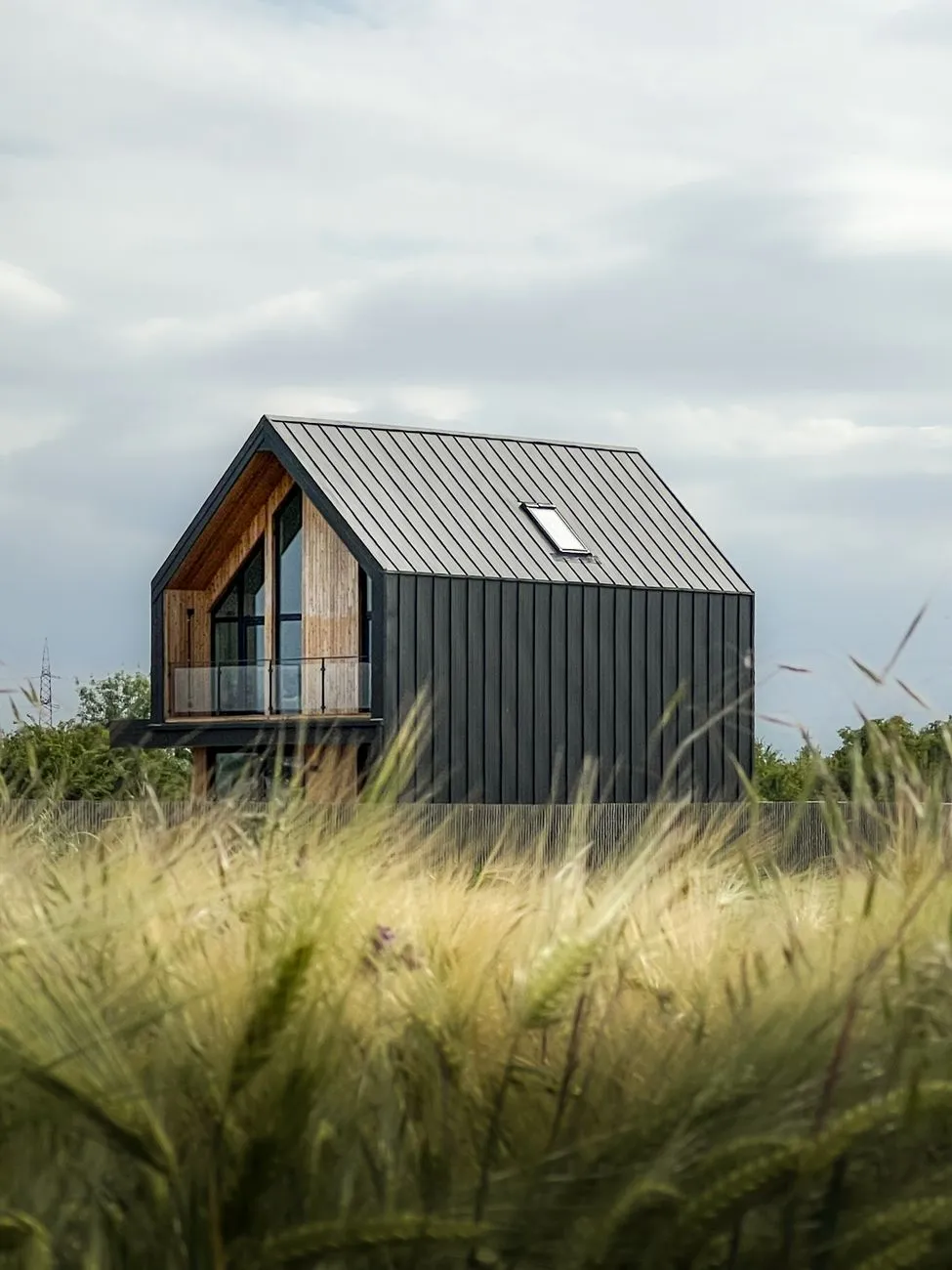
Photo by Iulian Sandu on Pexels
Swap the Window Trim to a Dark Color Against Light Siding
Most ranch style houses shipped with the large windows the style is known for, framed in plain white trim that’s since faded to a slightly different white than the siding around it — a mismatch that’s invisible up close and obvious from the sidewalk. Repainting the existing trim in a dark charcoal or black (a quart of exterior trim paint runs $20–30 and covers most ranches’ window count in a weekend) gets most of the visual impact of true black window frames on energy-efficient replacement windows, which run $400–1,200 per window installed. Save full window replacement for windows that are actually failing — drafty, fogged between the panes, painted shut — not for double-hung or casement windows that just look dated; the trim color is doing more of the “modern” work than the glass ever will.
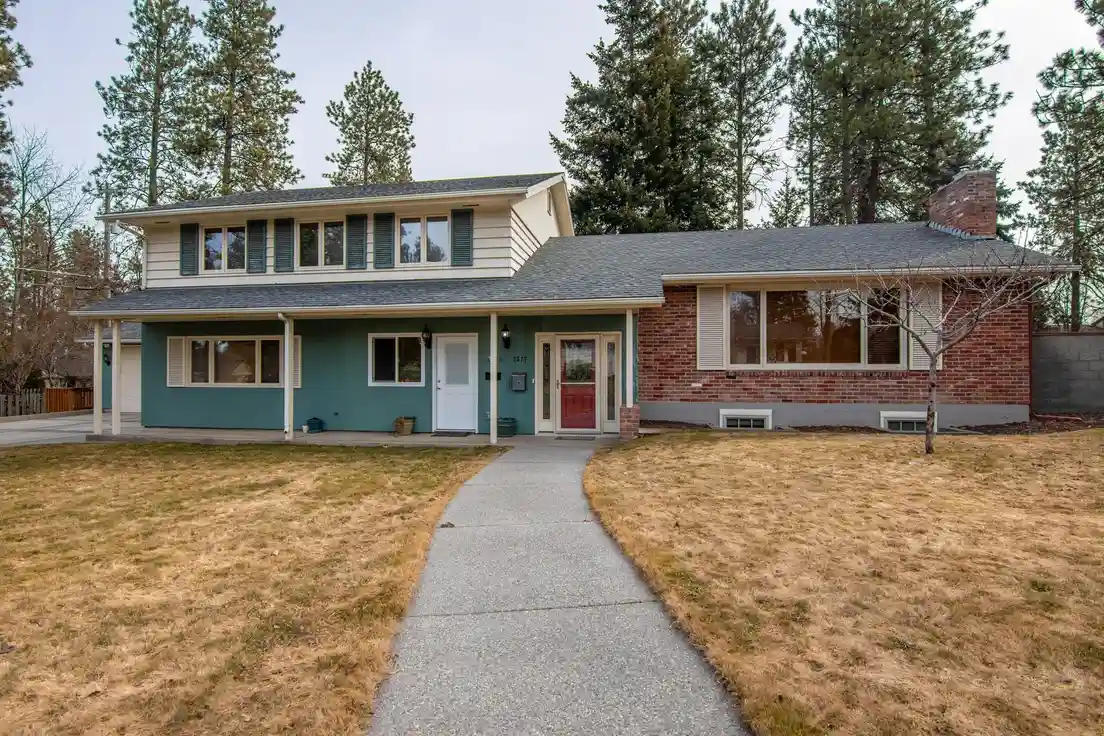
Photo by Clay Elliot on Pexels
Lighten the Fascia and Gutters to Visually Raise a Low Roofline
A ranch’s roof already sits lower than a two-story house’s, and dark, mismatched, or grime-streaked gutters and fascia board make that roofline read even lower and heavier than it actually is. Repainting the fascia and gutters a lighter color than the roof shingles — matching the trim, not the siding — tricks the eye into reading more distance between the roofline and the ground. A $15 can of gutter-rated spray paint handles a short run yourself; professional repainting runs $1–3 per linear foot if the fascia needs scraping and priming first, not just a fresh coat. This is a Saturday-morning project on a single-story house — no extension ladder rental required, which is the one genuine advantage a ranch has over anything taller.
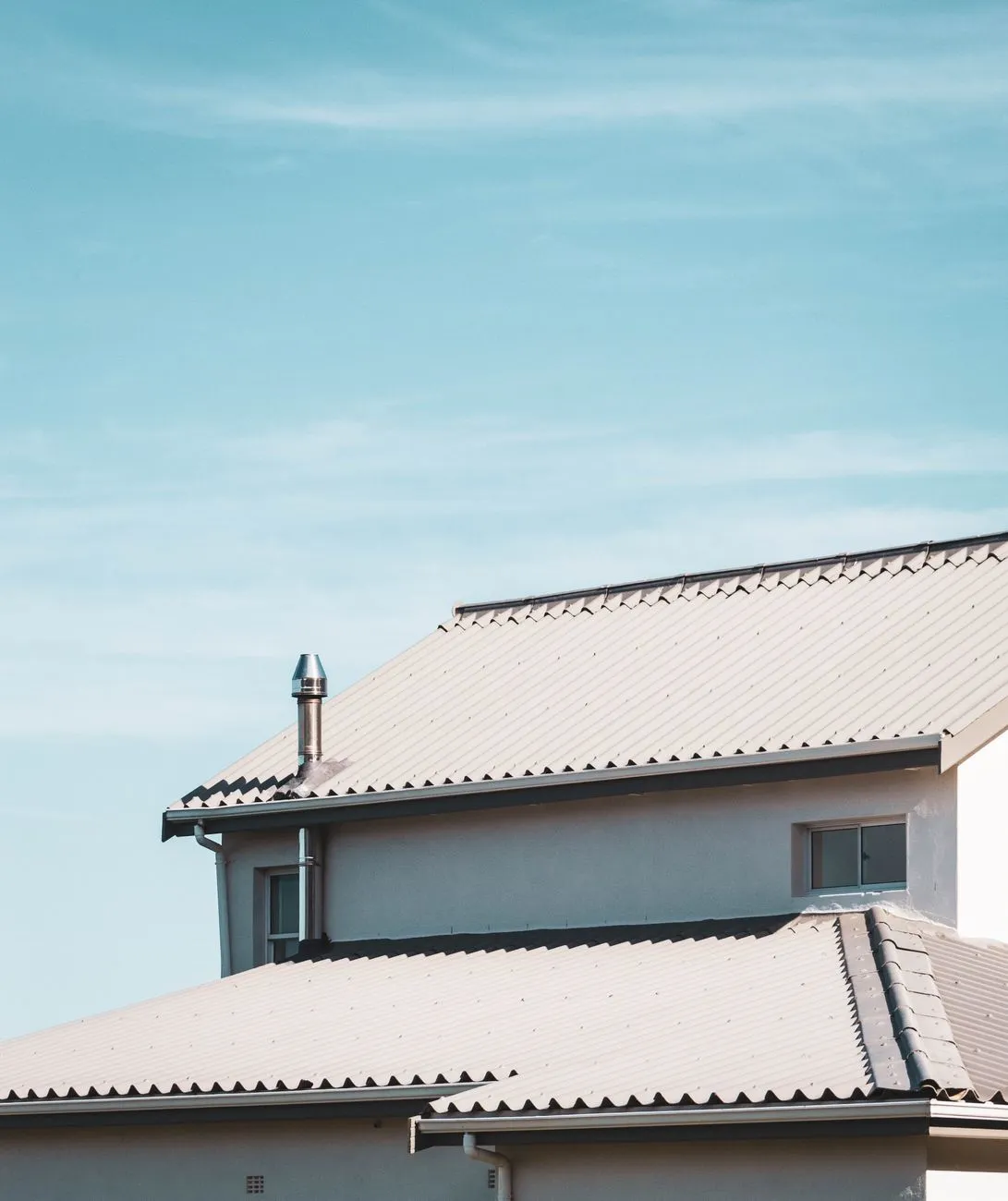
Photo by Myburgh Roux on Pexels
Add a Small Overhang or Portico at the Front Door
Plenty of ranch entries are just a door set flush into the facade with no overhang at all — no front porch roof, no portico, nothing to signal “this is the entrance” from the street. A small gabled overhang on two columns, sized for just the door and a step, runs $600–1,500 as a DIY kit with pre-cut brackets, or closer to $150 for a simple metal awning bracket if a full portico isn’t in the budget this year. (We measured a portico kit for a door that turned out to be two inches narrower than the standard size in the instructions. We do not recommend skipping that measurement.) Even a shallow 3-foot overhang adds real shadow, depth, and a more welcoming feel to a facade that’s otherwise flat from roofline to foundation.
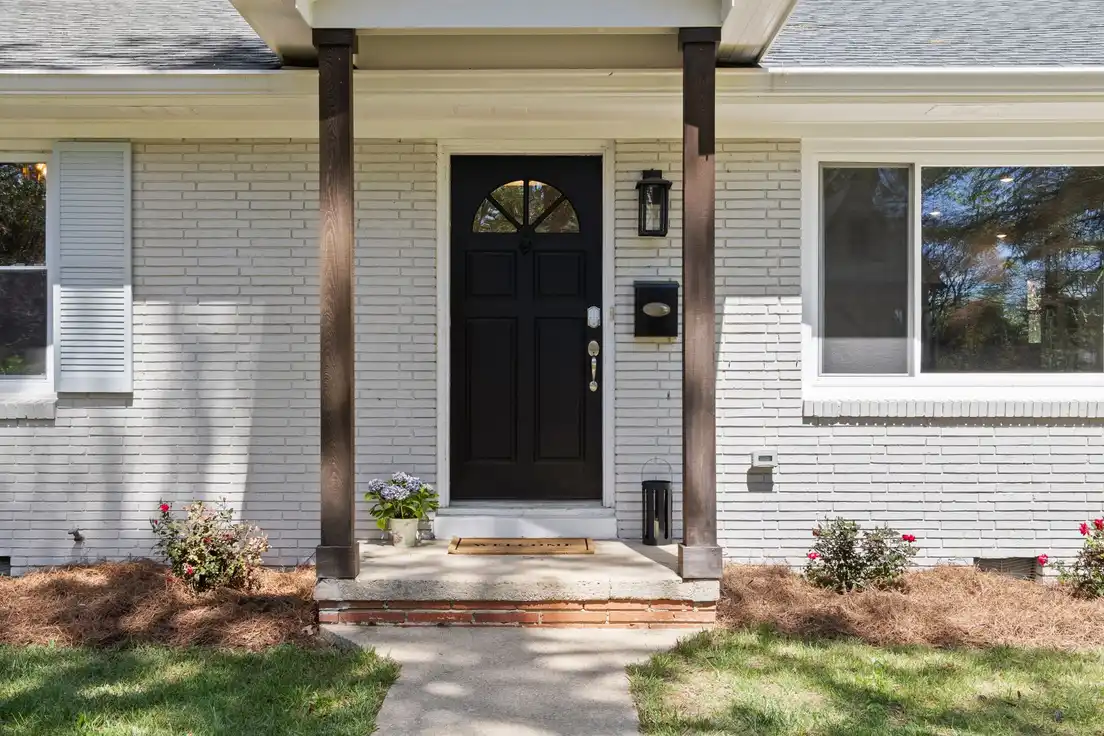
Photo by Curtis Adams on Pexels
Keep Foundation Plants Low to Show Off the Long, Horizontal Line
A ranch home’s best architectural feature is its long, low silhouette, and tall foundation shrubs — or trees planted too close to the house — hide exactly the line that makes the style read as intentional instead of just old. Trimmed dwarf boxwood, low junipers, or any evergreen that tops out under two feet keeps the wall visible above the planting instead of swallowing the bottom third of the facade. A flat of compact shrubs runs $15–25 per plant at most garden centers, and the trim-to-height rule matters more here than the specific species — the goal is a clean horizontal line at the base echoing the roofline above it, not a full landscape redesign or a landscape architect’s plant list.
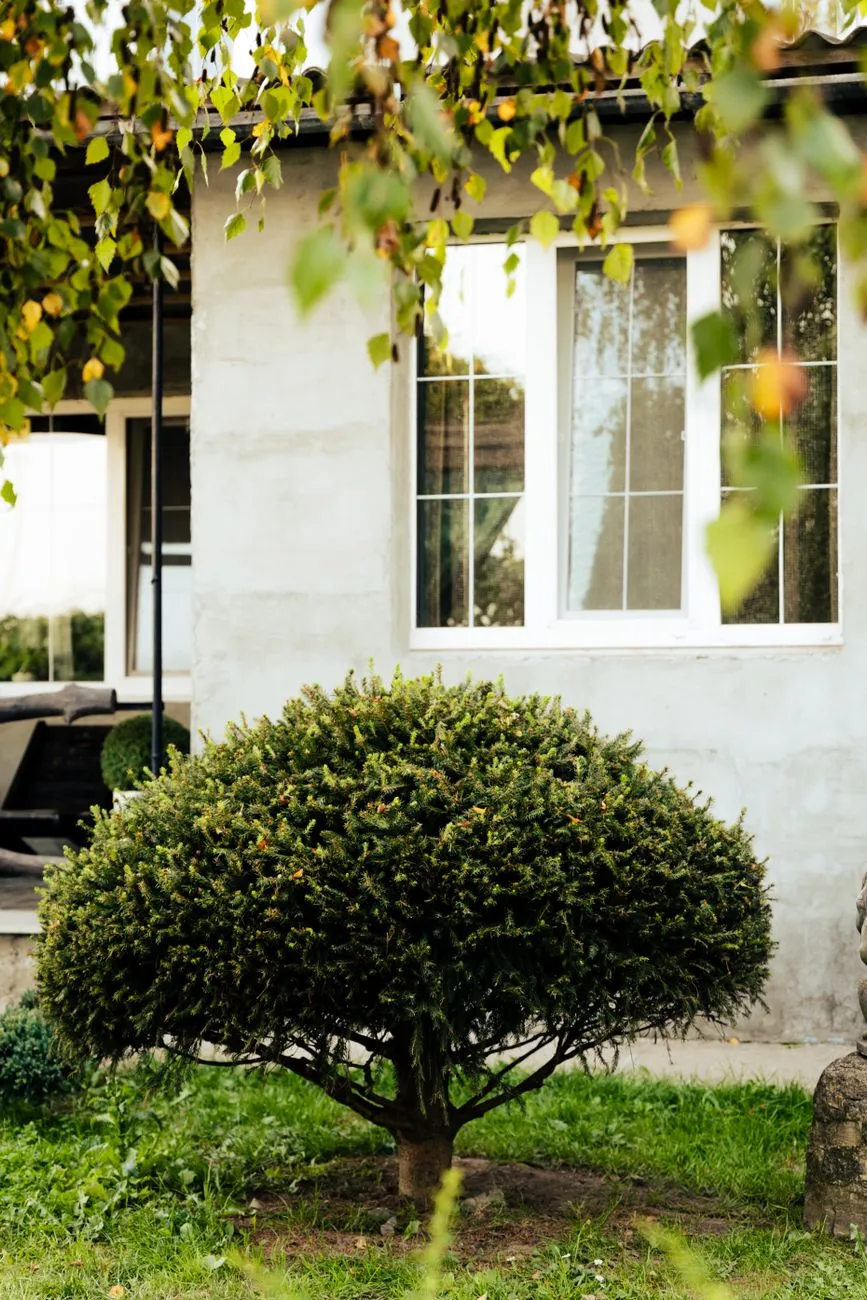
Photo by Tanita Lupa on Pexels
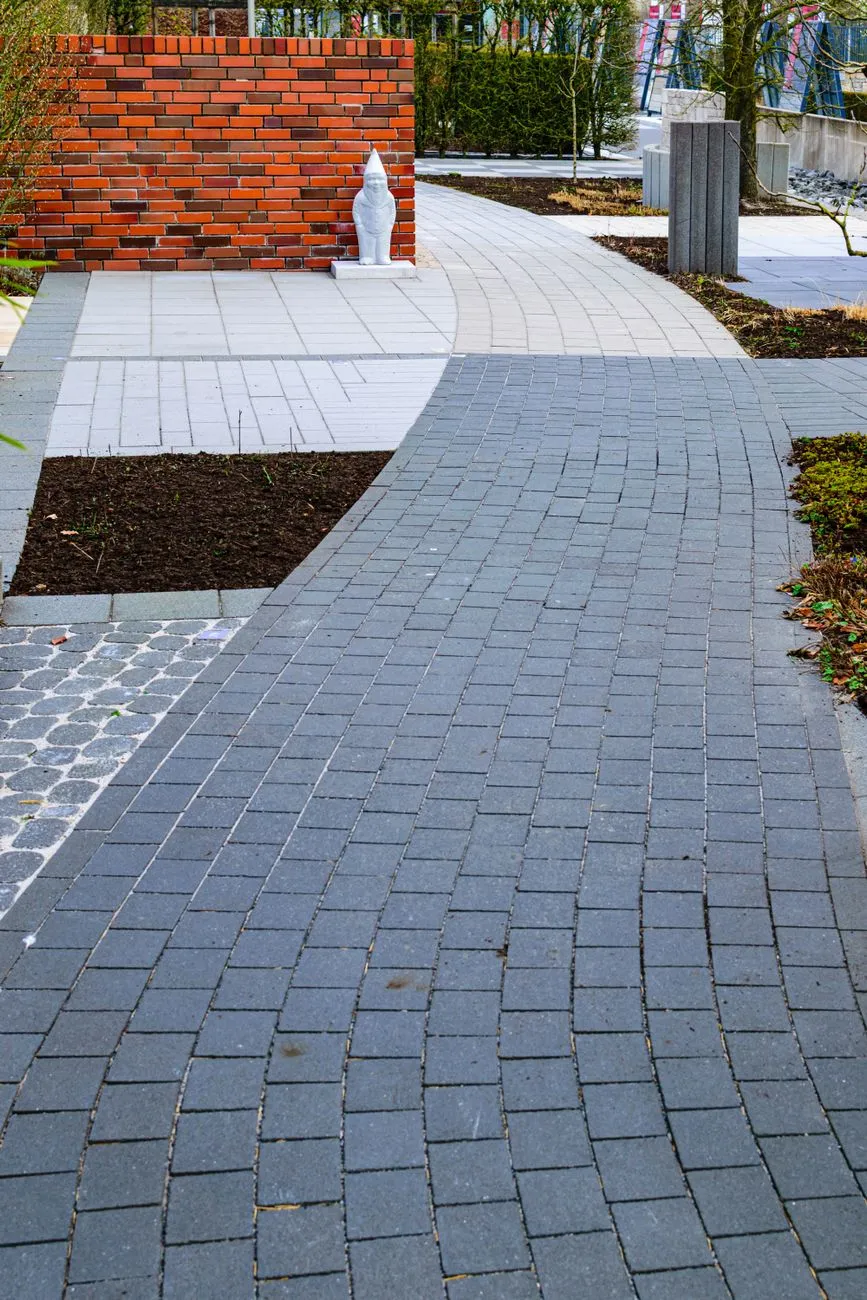
Edge the Walkway With a Low Brick or Paver Border
A plain concrete walkway with grass growing directly against both edges reads unfinished no matter how new the concrete is; a single course of brick or paver edging along both sides gives it a defined line without repouring anything. The Concrete Masonry & Hardscapes Association’s edge-restraint guidance specifies at least a 1-inch restraining surface against each paver to keep a border from spreading under foot traffic — worth following even on a small DIY run, since a border that shifts within a season defeats the point. Materials run $10–15 per linear foot for a basic brick or concrete paver edge, DIY-installable in a weekend with a rubber mallet and a level.
A friend’s HOA made her take down a freestanding privacy trellis less than a week after it went up — anything that reads as a structure, not furniture, over a certain height gets flagged. The workaround that passed with zero complaints: planter boxes staked along the walkway edge instead of a built border, technically freestanding furniture rather than a structure. If your HOA is strict about anything permanent along the front yard property line, that’s worth a two-minute check before you buy paver base, not after.
Size the House Numbers to the Ranch’s Wide Facade
A ranch’s facade is wider than it is tall and often close to symmetrical around the front door, so a single small set of house numbers reads as lost on it the way a postage stamp gets lost on a large envelope. Go up a size from what’s already there — 6-inch numbers instead of the standard 3–4 inch set — and spread them across a wider stretch of fascia or mount them beside the garage as well as the door if the entry alone doesn’t read from the street. A set of four to five oversized numbers in matte black or brushed brass runs $25–60 and installs with the screws already in the box. The goal is the same one that applies to any house: readable from the sidewalk, not just the porch — a ranch’s width just means the numbers have more competing wall to stand out against.
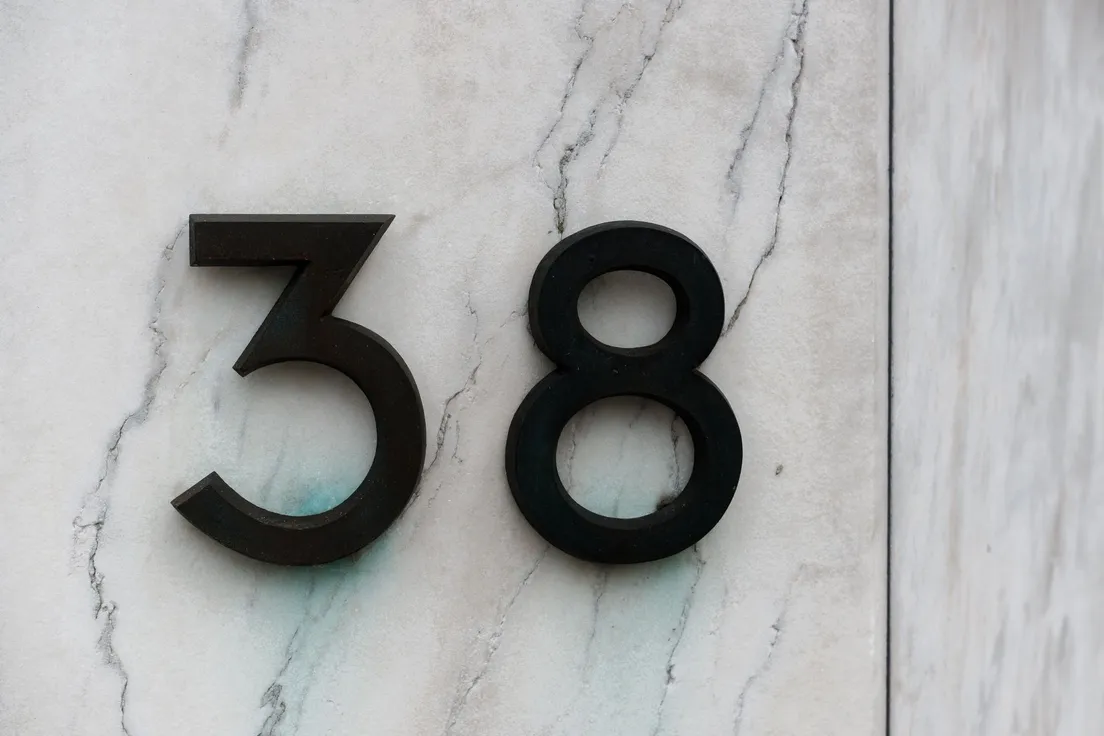
Photo by Markus Winkler on Pexels
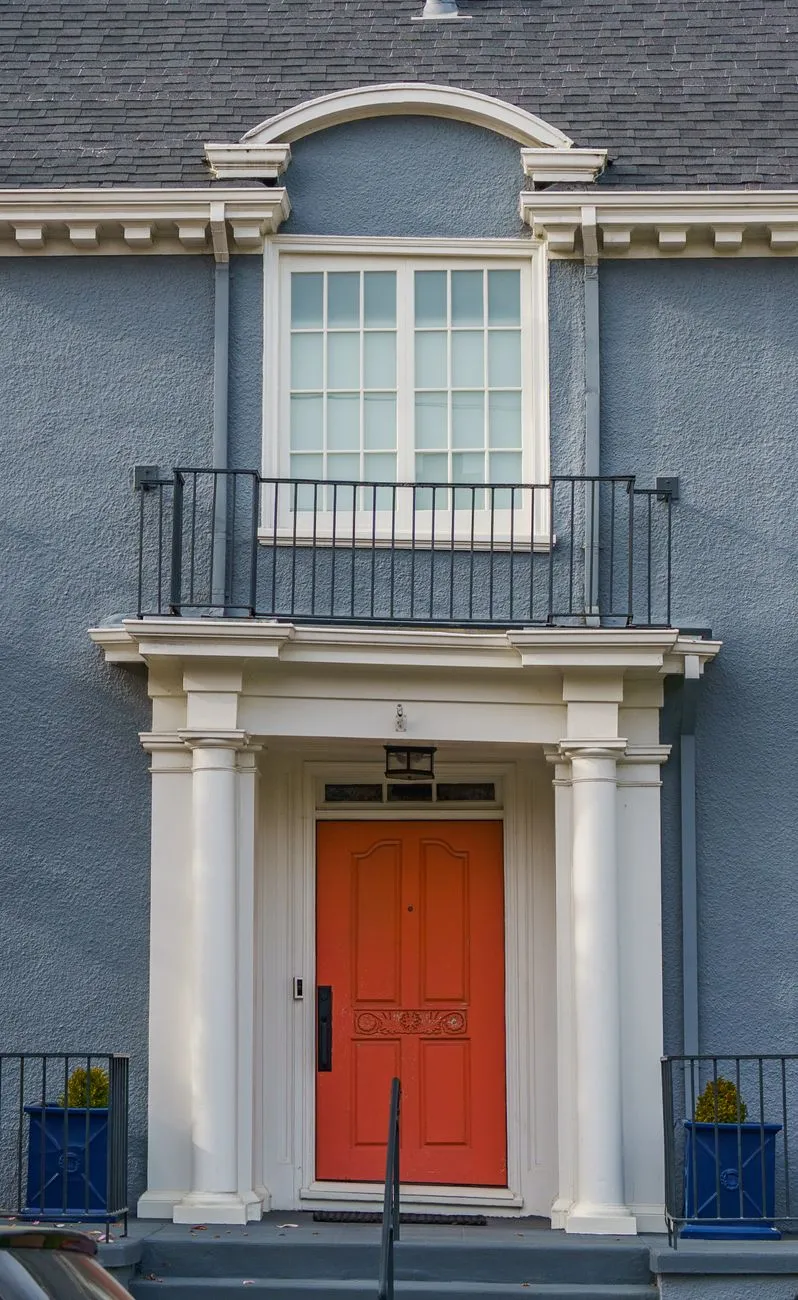
Repaint the Front Door in One Saturated Color
A ranch entry sits flush with the rest of the facade more often than a two-story house’s does, so the front door has to do more of the “here’s the entrance” work on its own — and a saturated color (deep red, forest green, or true black against a lighter body) does that job better than any porch decor could. Pick the door color as part of the same paint colors and color palette as the trim and hardware, not as a separate decision made later. A quart of exterior door paint runs $20–35 and covers most standard doors in two coats over a weekend, cheap enough to repaint again in a few years if the color stops working with a new siding choice. Skip anything described as “trendy” for 2026 specifically — a color that reads as dated in three years costs the same $25 to fix as one that was never fashionable in the first place, so pick one you’d still want to look at from the driveway in five years.
Add a Low Stone or Brick Skirt Around the Porch Base
Plenty of ranch porches sit on plain painted concrete block or exposed foundation with nothing dressing up the base, which reads as unfinished the same way bare drywall does indoors. A half-height manufactured stone veneer skirt around just the porch base — not the whole house — runs $12–20 per square foot in materials for a small area, well under what full masonry siding costs, and a single porch base is usually under 40 square feet total. This is a “small area, real material” trade: the same stone veneer that would be a stretch across an entire facade is genuinely affordable applied to one porch-sized section, and it’s the kind of texture the eye reads as “solid” even from across the street.
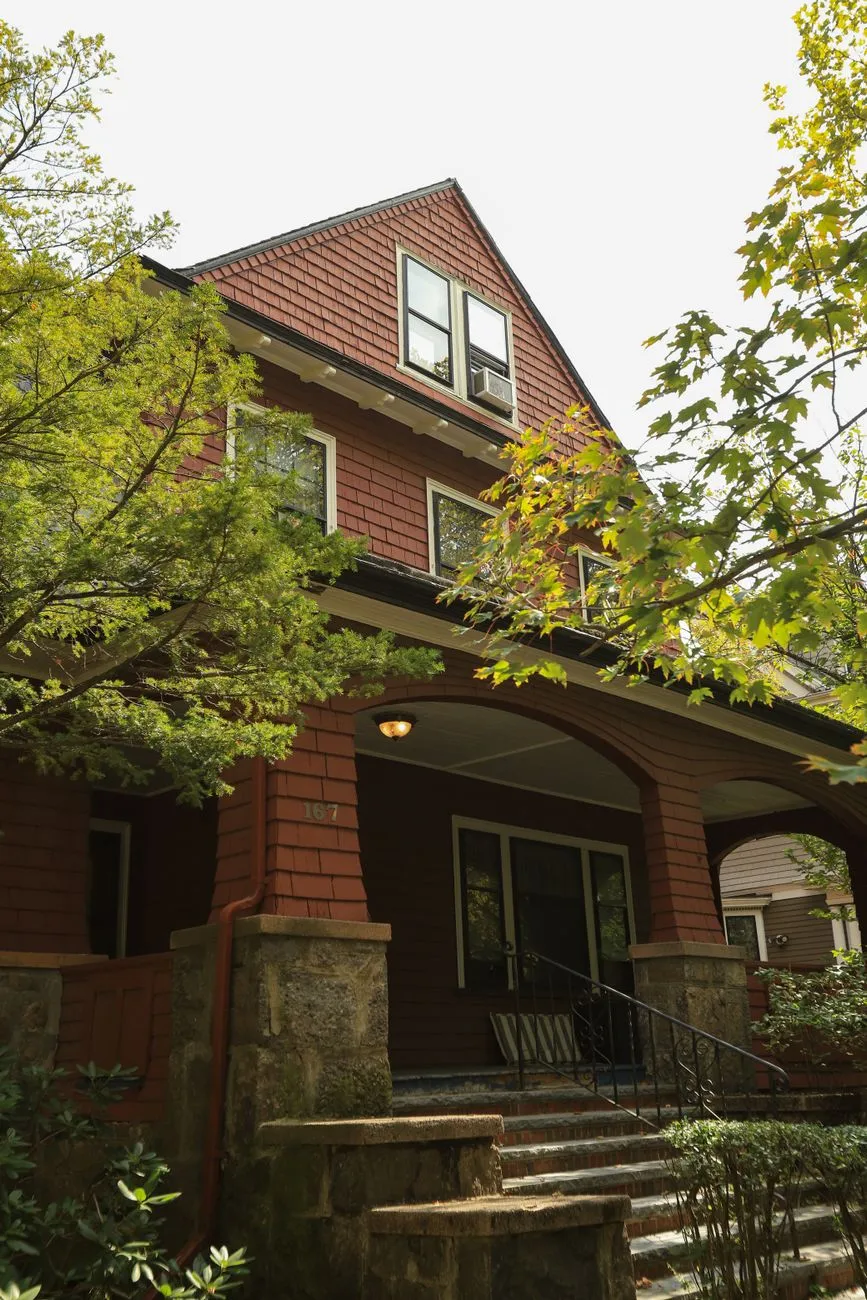
Photo by Makayla Asuncion on Pexels
The Honest Math: What a Full Ranch Curb Appeal Refresh Costs
Here’s the honest math, added up instead of estimated: garage door paint ($55), front door paint ($28), gutter and fascia touch-up ($15), and sized-up house numbers ($40) comes to $138 in new purchases for the four highest-impact, lowest-cost ideas on this list. Add a DIY vertical accent panel near the entry ($400) and a brick paver walkway border ($250 for a typical 40-foot run) and the number moves to $788 for a genuinely complete refresh, still with zero structural work. A stone porch-base skirt or a built portico pushes it past $1,000 if you want every idea on this list — do the first four before deciding whether the bigger two are worth it this year.

Rule of Thumb: Which Fix Matters Most on a Ranch Specifically
If you’re only doing one thing, paint the garage door first — it’s the largest single surface on most ranch homes, the cheapest fix on this list per square foot of visual impact, and the one project most owners skip specifically because it feels too big to bother with. Paint and lighting solve more of a facade’s problems than new materials do, same rule that applies to any house style, but a ranch’s low, wide shape makes that rule matter more: there’s more flat wall and less roofline to distract from a fix you haven’t made yet. After the garage door, the vertical accent near the entry does the most to make the house look designed rather than just maintained — a more cohesive set of paint colors and finishes, repeated everywhere the eye lands, down to the porch light fixture by the door and even a matching color palette on the back patio, is what actually turns a dated ranch home into a modern, cohesive ranch with a genuinely new look.
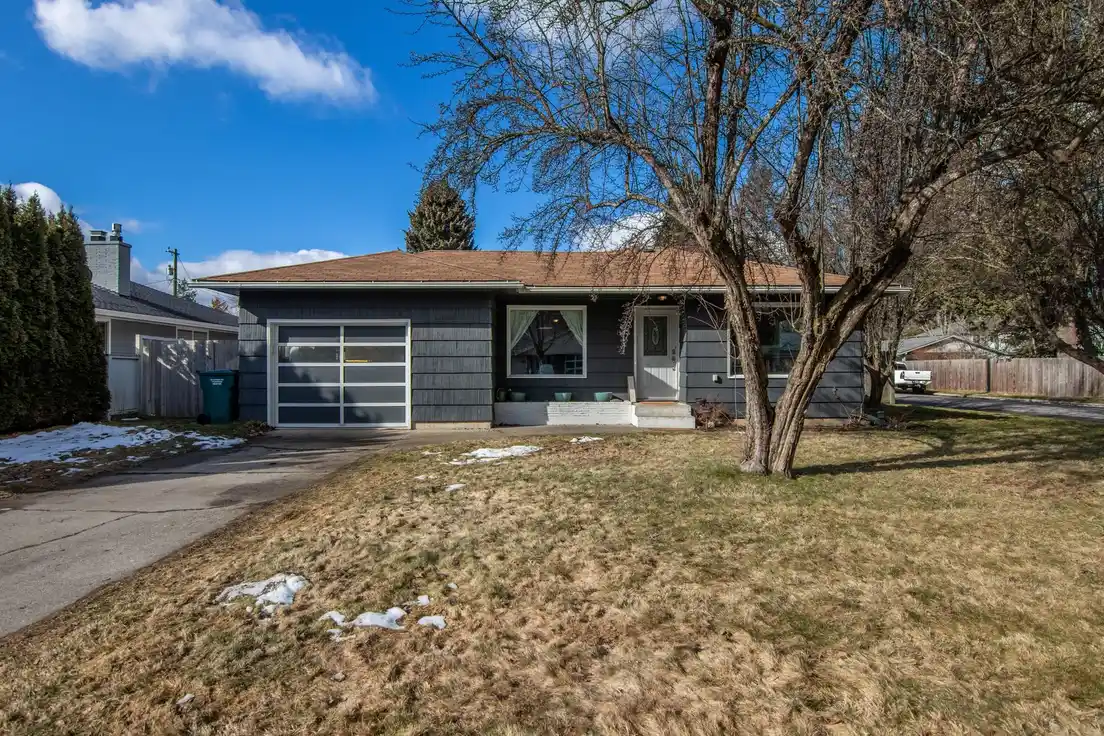
Photo by Clay Elliot on Pexels
Start with the garage door. Everything else on this list reads as more finished once the biggest surface on the house stops looking like an afterthought.
Frequently asked questions
What are some good ways to modernize a ranch-style home exterior?
Paint the garage door and front door in the same finish, swap window trim to a dark color against the siding, and add one vertical accent — board-and-batten or a different material — near the entry to break up the long, flat roofline. All three are paint-and-hardware projects, not structural remodels.
What color paint looks best on a ranch-style house?
A single neutral body color (warm white, greige, or charcoal) — a near-monochrome palette — paired with one darker trim and door color reads the most intentional on a ranch's long, flat facade. High-contrast trim against a light body does more visual work here than it would on a taller house, since a ranch has more wall and less roof to look at.
What are the most common exterior updates for ranch-style homes?
Garage door paint, a vertical siding accent near the entry, dark window frames or trim, and lightened fascia and gutters top most ranch remodel lists — all four target the same problem, a roofline so low and horizontal it reads as flat instead of finished.
What are the elements that define a ranch-style home?
A single story, a low-pitched roof, an attached garage that's usually the dominant street-facing feature, and a long, horizontal footprint with wide eaves. Most ranches were built between the 1940s and 1970s, which is also where the dated hardware and trim usually date from.
What are some budget-friendly exterior makeover ideas for a ranch house?
Start with the garage door and front door paint — both are one-gallon projects under $70 each — before spending on siding or roofing. A vertical accent panel near the entry and a repainted set of gutters both cost under $200 and change more of the street view than most people expect from paint alone.