
Bedroom
Dopamine Decor Bedroom Ideas That Won't Wreck Your Sleep
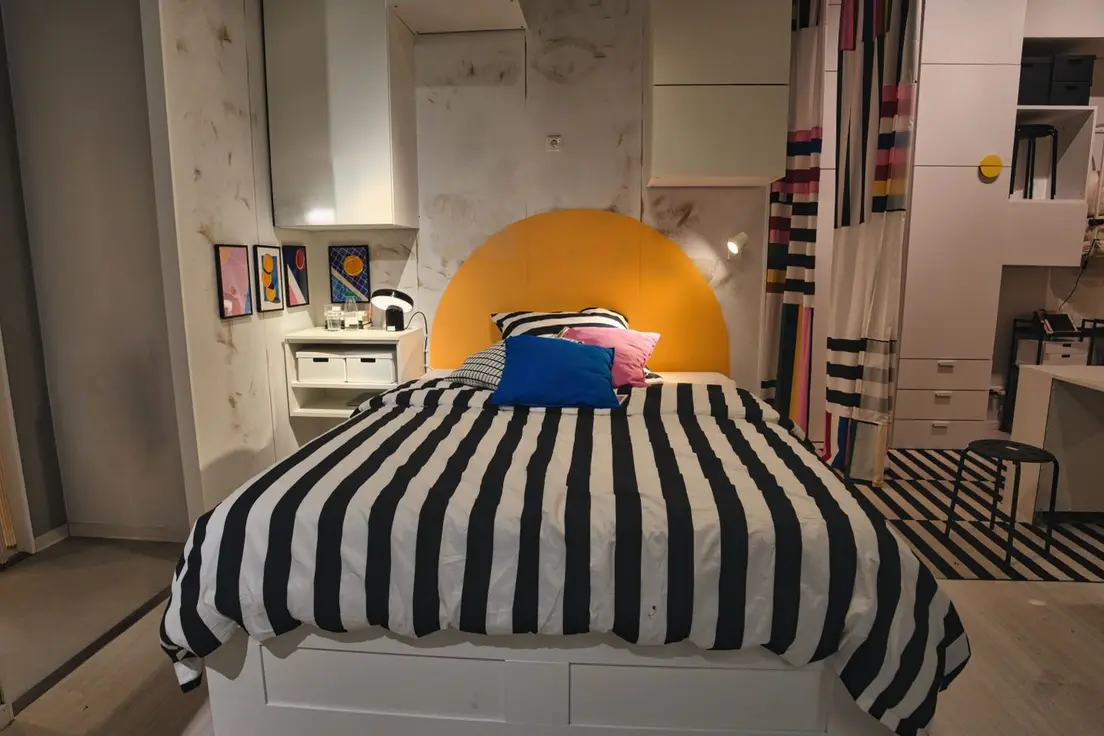
Photo by Travel with Lenses on Pexels
A dopamine decor bedroom uses bold color, pattern, and personal objects to make the room a feel-good place to wake up in — the trick is putting the loud stuff where it lands on your eyes, not on your pillow. Beige is a fine color for a room you’re trying to sell and a bad one for a room you’re trying to sleep, think, and start your day in. Most of the ideas below run under $50, come out clean at move-out, and don’t touch your mattress or your lease.
Dopamine decor bedroom ideas at a glance
Concept renders — visual references, not photos of a finished project.
What a Dopamine Decor Bedroom Actually Is
A dopamine decor bedroom is decorating for your own happiness instead of a neutral resale palette. It’s the bedroom version of an interior design trend that’s really just a name for a habit people have always had: surrounding yourself with the colors and objects you like. Dopamine is a neurotransmitter tied to reward and motivation, and the design world borrowed the word as shorthand for “this room makes me happy,” not as a lab claim. Nobody’s brain releases a measurable dose on contact with a coral pillow. What is real is the link between color and mood: warm, saturated hues energize a room more than muted greige, according to Psychology Today’s coverage of how color affects brain functioning. The dopamine aesthetic leans maximalist and personal — botanical prints, a bright duvet, a shelf of mismatched ceramics — and the aesthetics come from objects you actually chose. As a design trend applied to a bedroom, though, it comes with one constraint the trend pieces skip: you still have to sleep here. Everything below works around that.
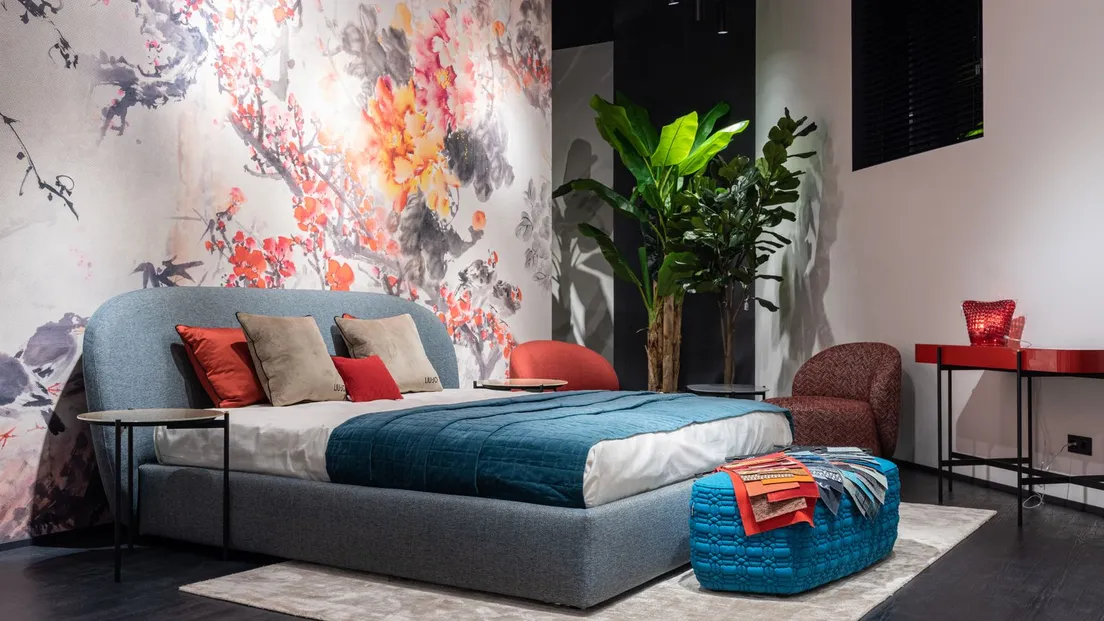
Photo by Max Vakhtbovych on Pexels
Zone the Color: Warm Colors Away From the Bed, Calm Around It
Put your most saturated color where your eyes land walking into the room, and keep the wall behind and around the bed calmer. The Sleep Foundation notes that cooler, muted wall colors support rest better than high-energy brights sitting in your sightline at bedtime. So: bold colors and warm colors — a bright yellow or teal accent — on the closet wall or a reading corner, and a blush pink or pastel green near the headboard. Two or three shades is plenty; the best color palettes here are mood-boosting colors you already wear, not ones off a chart. A washable area rug or carpet in one of those hues does the same job at floor level: a 5x8 by the bed, or an 8x10 under it if the room allows. Waking up is hard enough without an accent wall yelling encouragement at 6 a.m. This zoning is the whole reason a dopamine decor bedroom can still function as a bedroom — you get the color, and the sleeping half of the room just gets the quieter version of it.
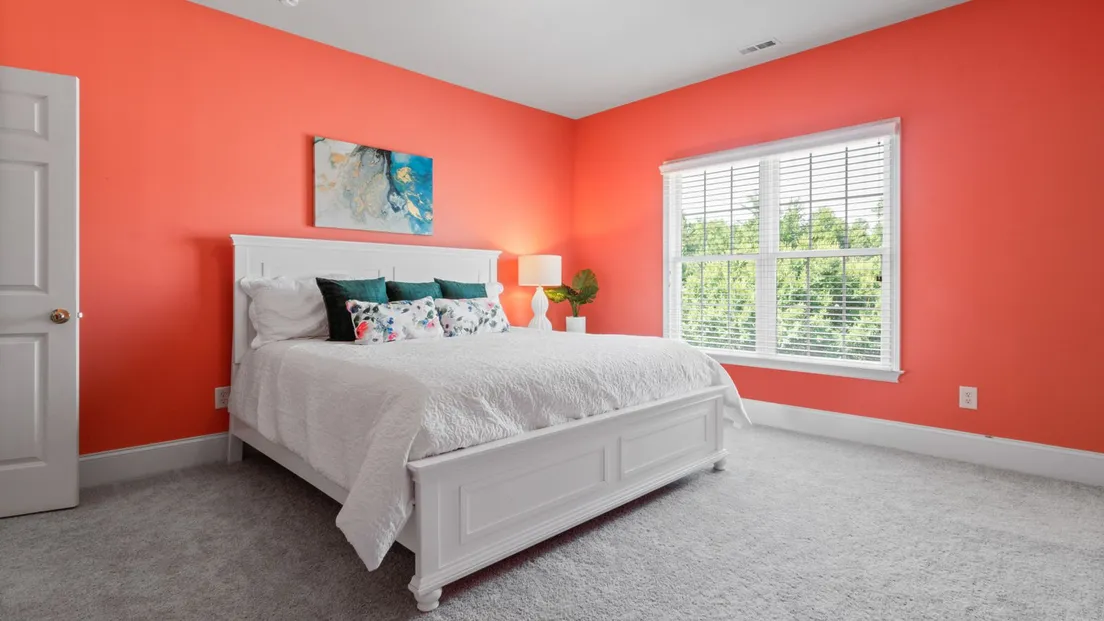
Photo by Curtis Adams on Pexels
Start With the Wall Behind the Headboard
The wall behind the headboard is the highest-impact surface in the room, so it’s where one bold move pays off most. Four renter-friendly options: a peel-and-stick wallpaper panel in a botanical or striped print ($25–45 for one accent wall, peels off clean), a large fabric tapestry or quilt draped over a tension rod, an upholstered or tufted headboard in a saturated color, or a $45 gallon of paint if your lease allows it. One warning from experience: a rental bedroom we redid came in a shade called “Contented Almond,” and three coats of a cheerful color later the almond was still bleeding through every afternoon like it paid rent. A stain-blocking primer we should have used on day one fixed it in twenty minutes. Test a swatch before you commit a whole wall.
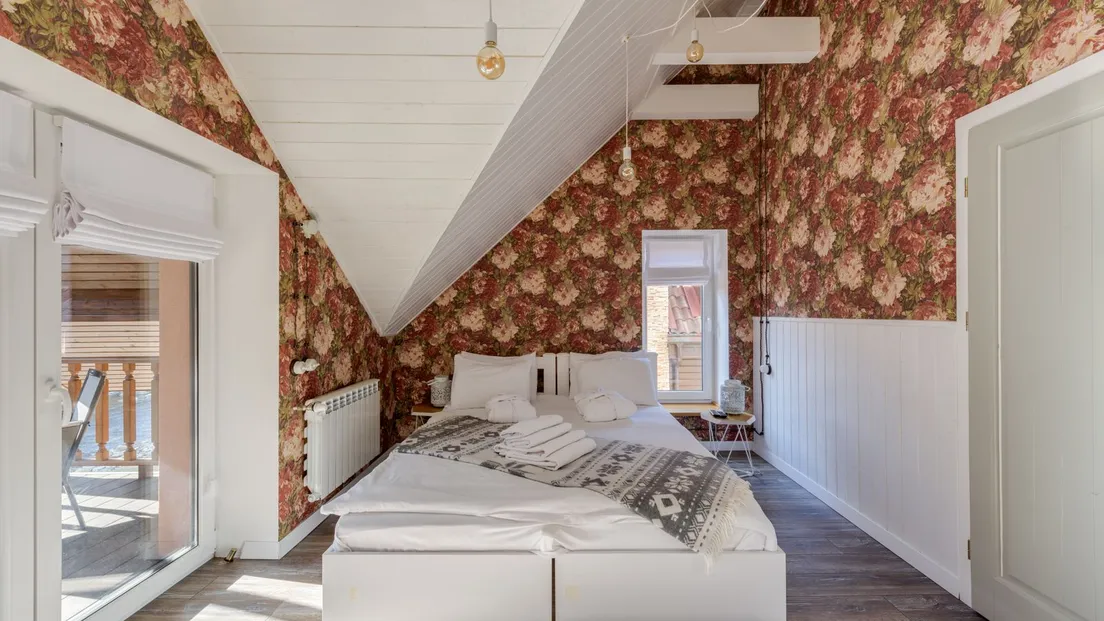
Photo by Max Vakhtbovych on Pexels
Layer Colorful Bedding and Mismatched Throw Pillows
Bedding is the biggest block of color in the room, so a bright duvet cover or bedspread does more visual work than any single accent. Start with one colorful duvet cover ($30–60 in cotton or linen), then layer two or three pillow covers and a cushion or two in patterns that share a color family but not a print — floral next to stripe next to solid. Two patterns that don’t match on purpose read as a choice; two that don’t match by accident read as laundry day. Add one chunky knit throw at the foot for texture against all that smooth cotton. Pillow covers swap seasonally for $10–15 each without touching the sheets underneath, which makes them the cheapest way to change the whole room’s temperature.
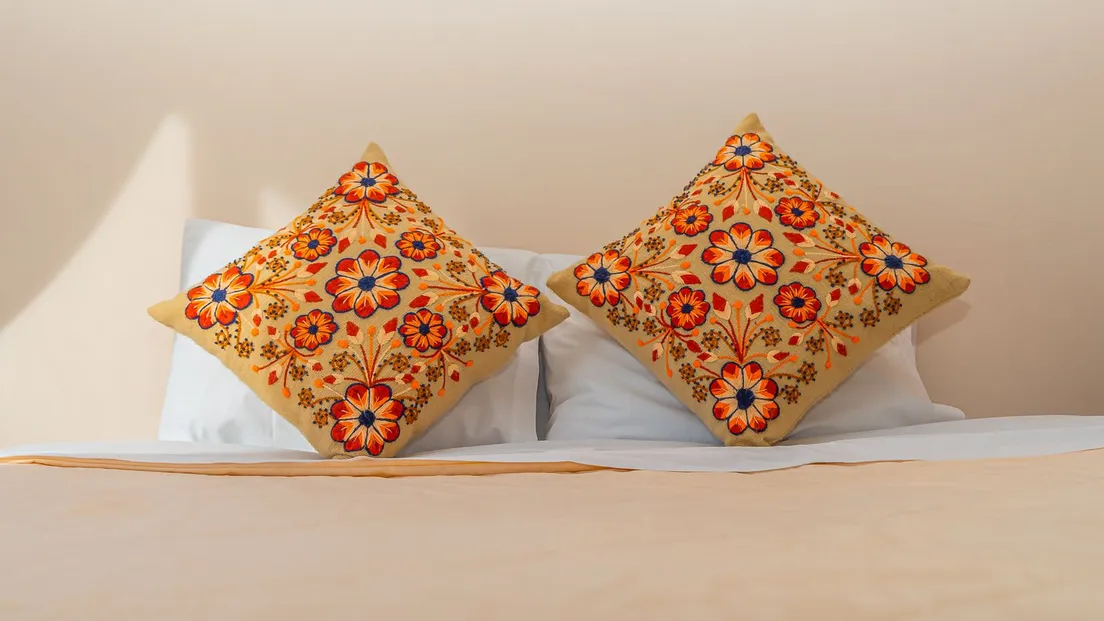
Photo by José Maria Ali Anaya Ccallocunto on Pexels
Build a No-Nail Gallery Wall of Bright Wall Art
A gallery wall of colorful posters, a canvas print or two, and other wall art turns a blank wall into the room’s second focal point, and you can do the whole thing without a drill — it’s the biggest single piece of wall decor most bedrooms are missing. These are the art pieces that make the room yours. Free printable art from design blogs plus $3–5 thrifted frames keeps a six-piece wall under $40; mix in a small mirror or a real painting if you have one, to bounce light around. Command strips do the hanging: they’re rated by weight, not by vibe, and 3M’s product weight-limit guide puts small picture-hanging strips near a pound per pair and mediums a few pounds more — check the number before you trust a framed print with glass to it. Mix frame sizes and leave the gaps uneven. A grid of evenly spaced frames reads like a dentist’s waiting room; uneven spacing reads like someone who collects things.
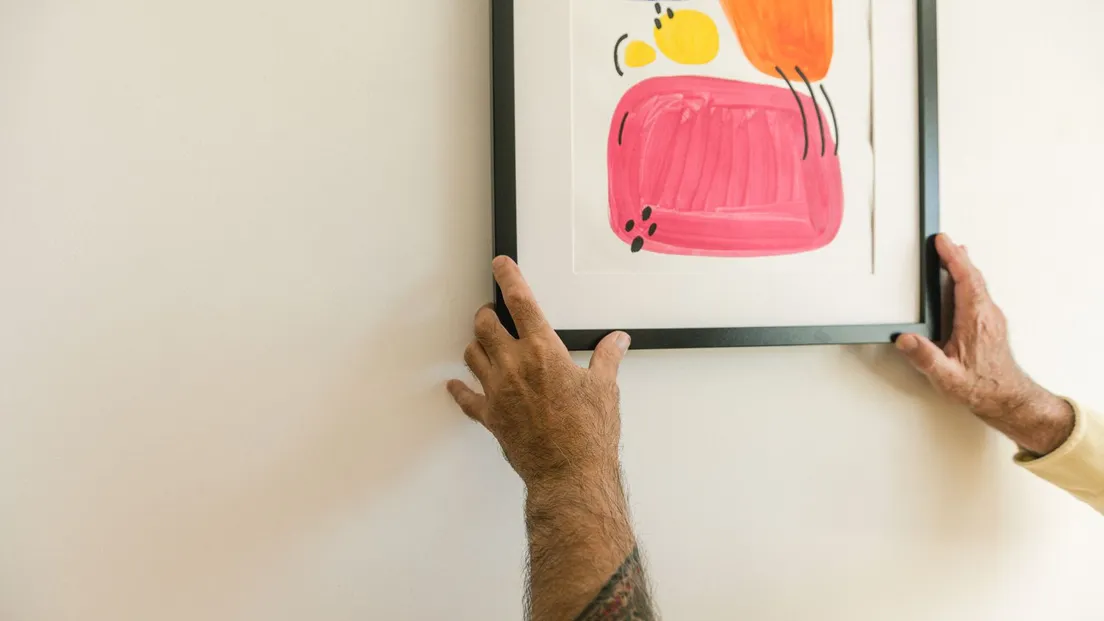
Photo by SHVETS production on Pexels
Layer Warm Lighting: a Bedside Lamp, a Neon Sign, a Night Light
Swap the standard white table lamp for one with a colored ceramic or glass base — a small object doing focal-point work for $20–40, and a blush pink, amber, or teal base reads as intentional in a way a builder-grade lamp never does. Colorful floor lamps in a corner, or a desk lamp on the nightstand, do the same at a different scale — any light fixture that isn’t builder-grade white helps. Then add one low-voltage glow for ambient lighting after dark: a small LED neon sign, LED lights behind the headboard, a warm night light, or a strand of string or fairy lights, $15–40 and renter-safe with zero wiring. Keep every bulb warm — 2700K or lower, on a dimmer if you can — so the lamp that’s cheerful at 7 p.m. isn’t blasting you awake at 11. Hold it to one glowing sign, though. A single neon sign is a personality trait; a second one turns the room into a bar with no bartender and no last call. Paint and lighting solve more of a bedroom’s problems than new furniture does, and they’re the cheap half of the equation.
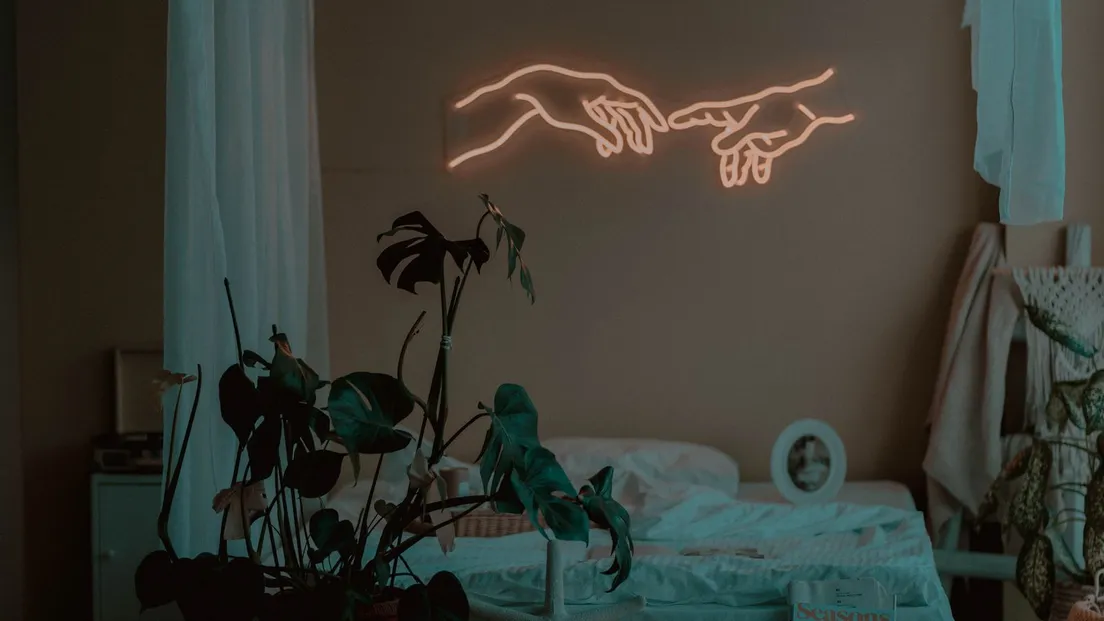
Photo by Galina Yarovaya on Pexels
Paint a Thrifted Dresser or Nightstand a Bold Color
A $20–40 flea-market dresser in a color you chose beats a new one in “greige,” and a $10 can of sample paint is the whole upgrade. Sand lightly, prime, two coats — one afternoon of work. A bold dresser front becomes the thing guests comment on instead of the mattress you spent actual money on. Two practical notes: measure the doorway and the stair turn before you haul anything over 24 inches home, because the top return reason in this niche is “didn’t fit,” not “wrong color.” And test the paint on the inside of a drawer first — a color is a lot bolder across a full dresser front than it looks on the chip.
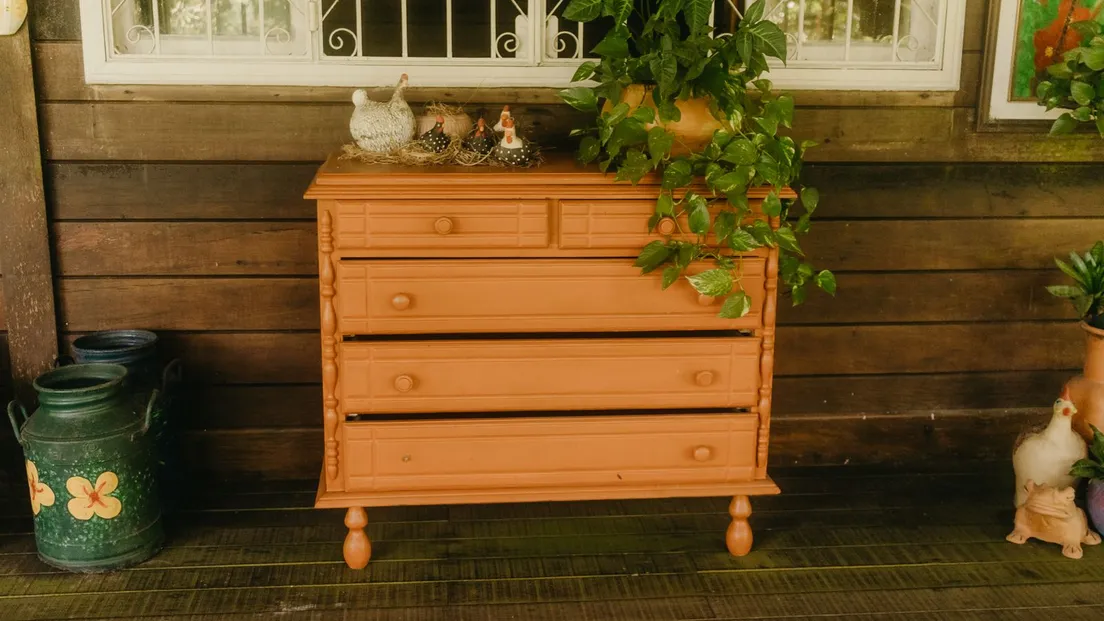
Photo by Kawê Rodrigues on Pexels
Bring In a Vase, Some Plants, and Playful Kawaii Objects
The small stuff — a sculptural vase, a smiley planter, a shelf of mismatched ceramics — is the bedroom decor that makes a room read as collected instead of shopped in one trip. These are the personal touches, the bit of whimsical kitsch that a resale-safe room never has. A single statement vase ($12–25, thrifted or new) earns its shelf spot even empty; add a fresh flower or a dried stem when you remember. A cactus in a $6–10 kawaii pot with a face on it is the cheapest, hardest-to-kill way into the cute aesthetic. Real plants don’t belong in every corner, though — a north-facing bedroom with one small window is real-plant murder, not a failure of your care routine, and a decent faux stem gets you the look with none of the guilt. A shelf of thrifted ceramics looks collected; the same shelf bought in one big-box run looks like a display you’re not allowed to touch.

Photo by Sóc Năng Động on Pexels
Keep One Calm Anchor So You Can Still Sleep
Every dopamine decor bedroom needs one deliberately quiet element, and the bed itself is the right place for it. Keep the sheets and the wall directly behind your head in calm, low-saturation tones, and let the color happen everywhere else. Add blackout curtains or a liner if the windows face a streetlight, and a warm dimmable lamp for the last hour before sleep — the same calm-color logic behind our japandi bedroom ideas for a calm space, just applied to one zone instead of the whole room. The goal is a bedroom that can throw a party and still let you sleep through the night; most bad dopamine bedrooms just skipped the second half. If the room feels too busy to relax in, pull one thing out, not five — usually a single over-saturated object is doing all the damage.
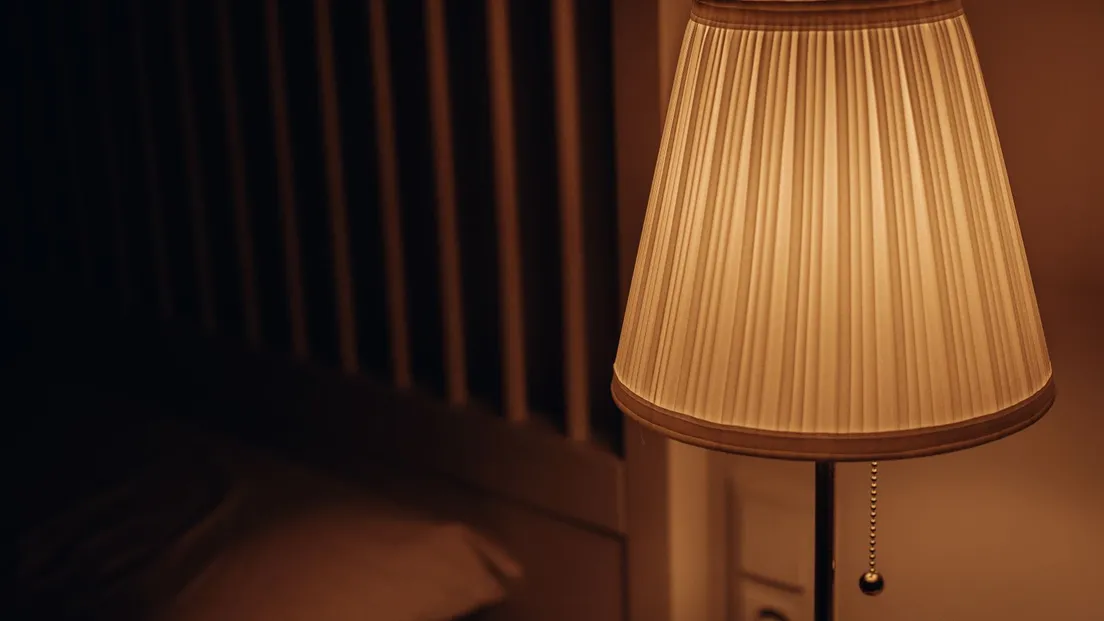
Photo by Juan Pablo Serrano on Pexels
The Honest Math: What a Dopamine Decor Bedroom Costs
Added up, not estimated: one peel-and-stick accent panel ($40), a colorful duvet cover ($45), three pillow covers ($36), a six-frame printable gallery wall ($40), a ceramic-base bedside lamp ($30), a small LED neon sign ($28), and a thrifted dresser repaint ($25 for the dresser plus paint) comes to about $244 for a room that hits nearly every idea here. Trim it: skip the dresser and the neon, thrift the frames and the vase, and the same room lands near $110. Spend up: a real framed art piece and a linen duvet instead of cotton pushes it past $400. The honest number depends on what you already own. The shoppable version of the mid-range build is our dopamine decor makeover, and the textiles-first approach in cozy bedroom makeover ideas on a budget overlaps with the cheap end of this list.

Photo by Karola G (kaboompics.com) on Pexels
Rule of Thumb: Joy on Purpose, Not Clutter
The line between dopamine decor and a messy room is intention, not the number of objects — a room full of things you chose reads curated, and a room full of things that just landed there reads unfinished. The Marie Kondo test still applies: if a piece doesn’t spark joy or do a job, it isn’t adding color, it’s just in the way. That edit is what turns a colorful bedroom into a personal retreat instead of a pile. Live with the space for a week before you buy the next thing, because half of “this room needs more” is really “this room needs editing,” and editing is free. Start with one bold move and sit with it for a week. If it still makes you smile on day seven, keep going; the beige will wait.
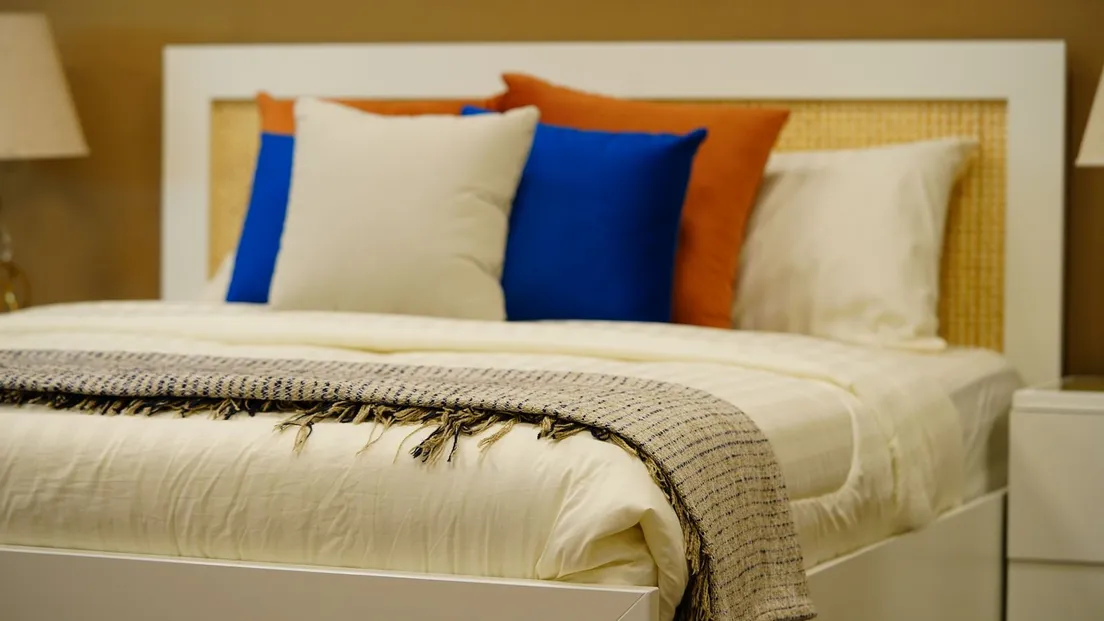
Photo by Atul Mohan on Pexels
Frequently asked questions
What is a dopamine bedroom?
A dopamine bedroom — a dopamine room applied to where you sleep — is decorated for how it makes you feel rather than for a neutral, resale-friendly look. It's a home decor approach built on bold color, pattern, and personal objects — bright bedding, gallery walls, colorful lighting — concentrated away from the bed so the sleeping area stays calm. The name refers to mood, not a measurable brain chemical.
Is dopamine decor still in?
Yes. Search interest and major retailers still track dopamine decor as an active category in 2026, and it overlaps with maximalism and personal, collected-over-time interiors that show no sign of fading. The label may change, but decorating for joy instead of resale is a durable shift, not a one-season trend.
What are dopamine decor colors?
Warm, saturated hues do most of the work: true red, hot pink, bright yellow, orange, and coral, usually balanced with one or two calmer anchors like teal, soft green, or blush pink. There is no single scientifically proven dopamine color — the rule is picking shades you are genuinely drawn to over ones that photograph well.
How do you create dopamine decor in a small bedroom?
Work in layers you can add and remove: a peel-and-stick accent panel on one wall, a bright duvet cover, two or three mismatched pillow covers, a colorful bedside lamp, and a small gallery wall of printable art. Keep the bed itself calm, and stop before every surface is covered.