
Backyard & Patio
Free Standing Patio Covers: DIY Ideas, Kits, and Real Costs
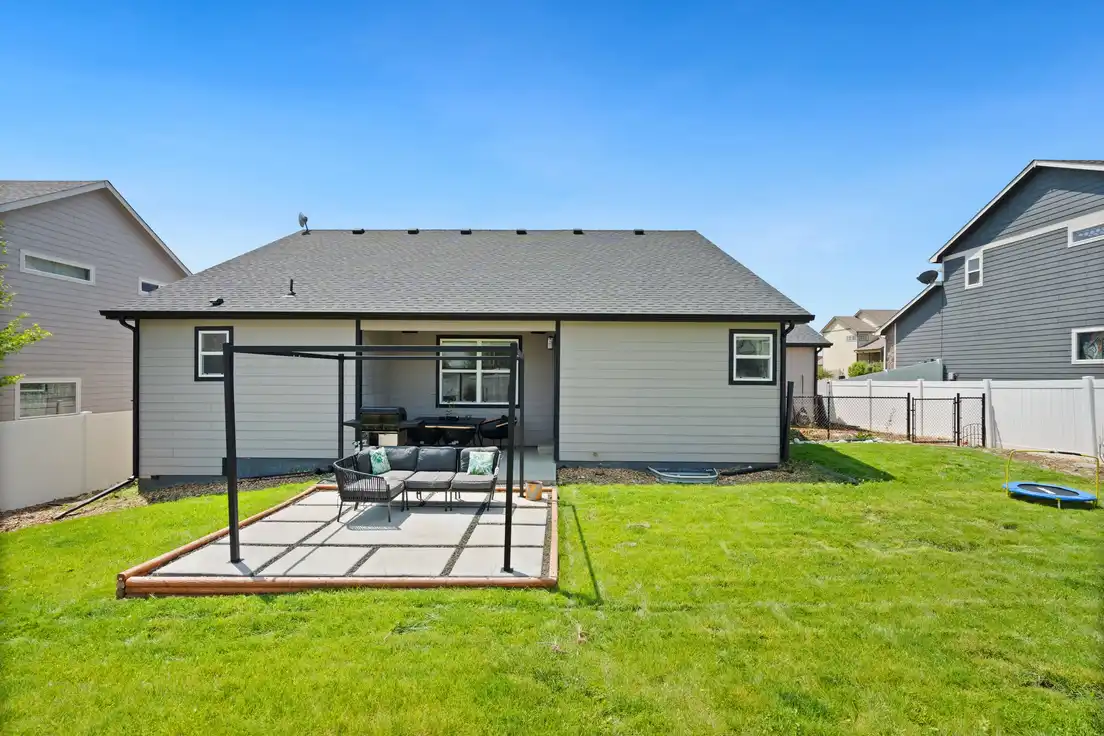
Free standing patio covers solve the one problem an attached cover can’t: you don’t have to touch your house’s roofline, gutters, or siding warranty to get shade. They set on their own posts and footings, which means a townhouse renter with an HOA-approved plan, a homeowner who doesn’t want to void a roof warranty, or anyone whose roofline just doesn’t line up with where they actually want shade can all build one the same way. Below are six real structure types, what each one costs, and the honest math on DIY versus paying someone else to set the posts.
Know when a freestanding patio cover beats one attached to the house
A freestanding patio cover makes sense the moment attaching one gets complicated: a roofline that doesn’t reach far enough, an HOA that won’t approve anything touching the house, or a warranty that says any new fastener in the fascia voids it. Standing the structure on its own four (or six) posts sidesteps all three problems at once.
The tradeoff is real too — freestanding needs its own footings on both sides, not just one, so material costs run a bit higher than an equivalent attached cover. (We’ve also just never liked the idea of drilling into a roof that took eighteen years to pay off. Call it a bias.)
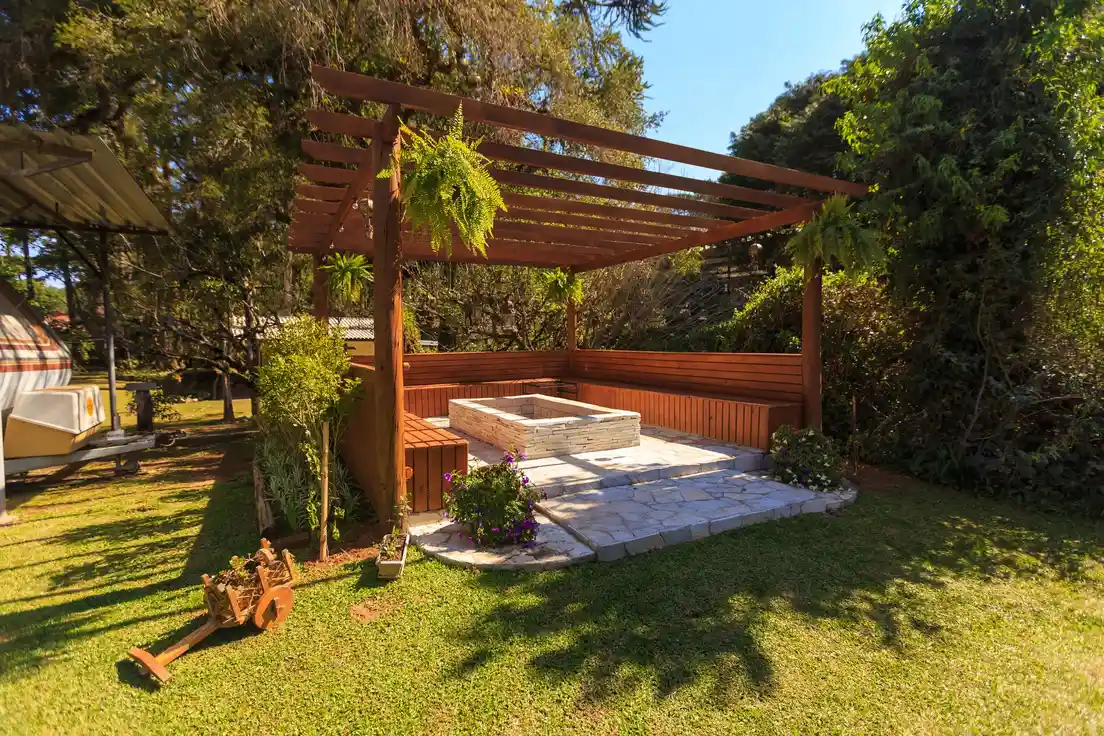
Photo by Matheus Bertelli on Pexels
Build with an aluminum patio cover kit for the fastest weekend install
An aluminum patio cover kit is the fastest route from bare concrete to shade — the frame ships pre-cut and pre-drilled, so assembly is mostly a circular saw for trimming and a drill for the fasteners, not a full framing job. Expect $2,000–6,000 for a 10×20 kit with a solid or louvered roof, depending on brand and finish.
Aluminum won’t rot, warp, or need repainting the way wood eventually does, which is the actual trade you’re paying for. It also has the personality of a filing cabinet — accurate, useful, never once the reason a neighbor compliments your yard.
Frame a wood patio cover yourself if you want it to match the house
A wood-framed patio cover is the one that actually looks built, not installed — cedar or pressure-treated pine rafters read as an extension of the yard in a way aluminum never quite does. Materials for a 10×12 frame typically run $800–2,000 depending on species, well under an equivalent aluminum kit, though labor is entirely on you.
Train a fast climber like wisteria or jasmine up one post and you’ll have partial green shade within a season or two — cheap, and it’s the one upgrade that gets better looking every year instead of needing maintenance. Seal the wood every 2–3 years or it grays out faster than the rest of the yard.
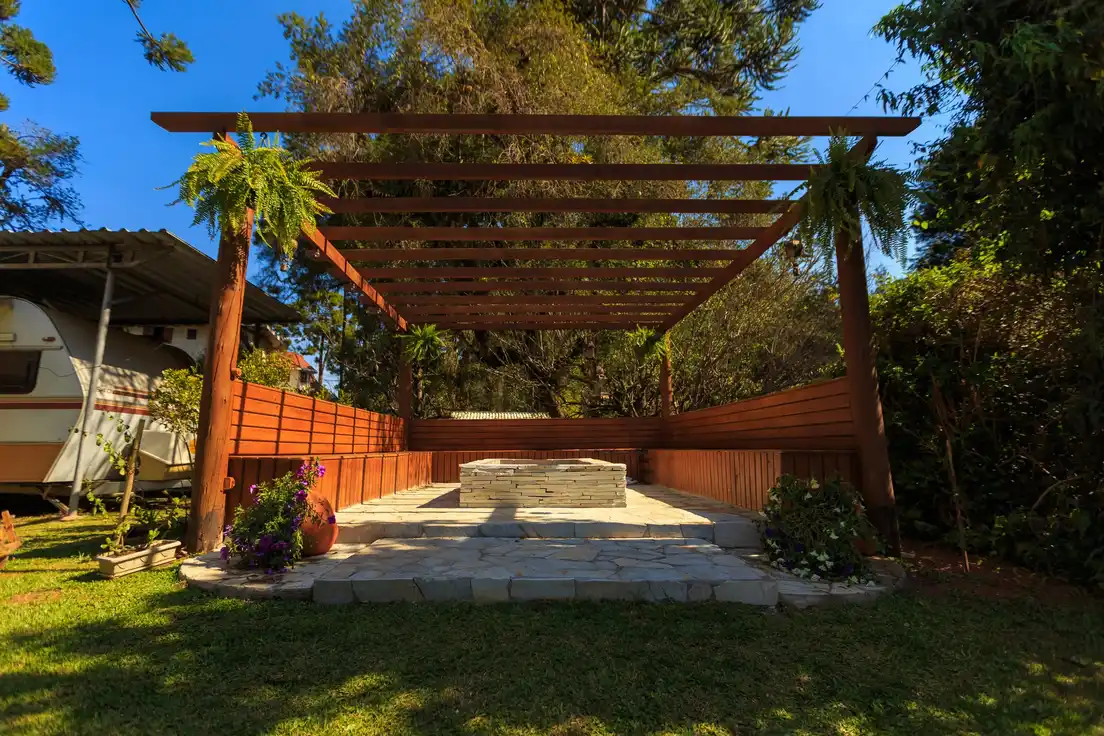
Photo by Matheus Bertelli on Pexels
Add a louvered roof if you want to control shade without going solid
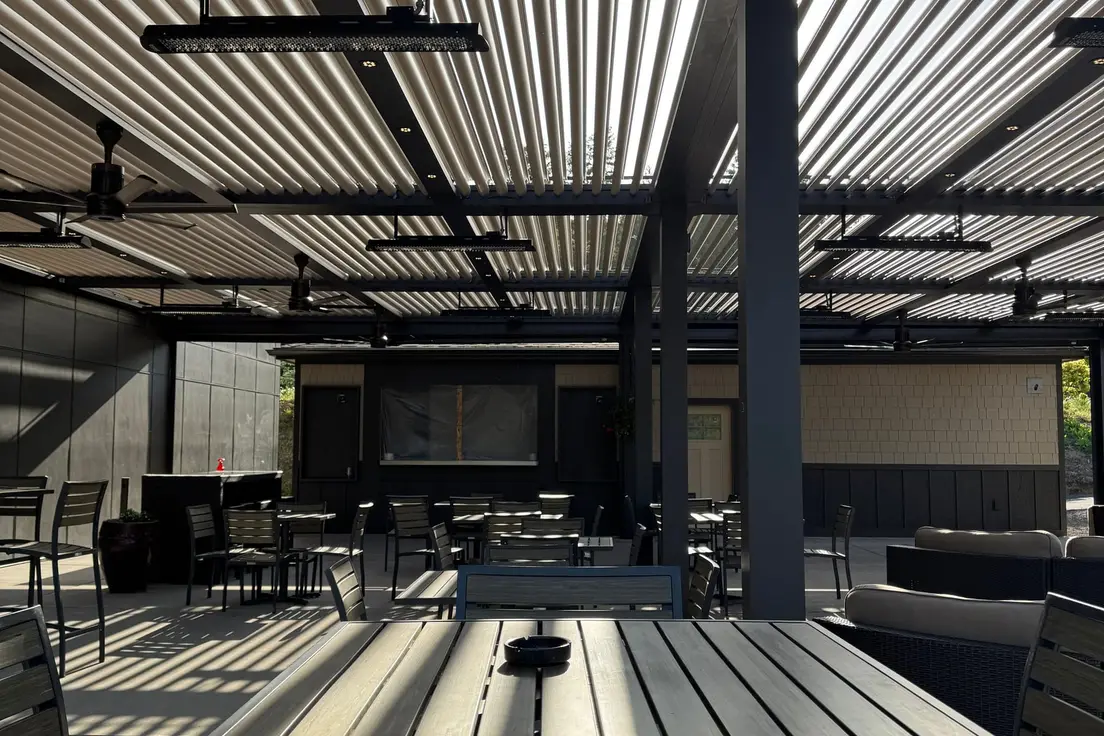
A louvered roof is a row of adjustable slats you rotate open for sunlight or closed for shade and light rain, instead of committing to one fixed roof year-round. Manual-crank versions start around $2,500 for a 10×10 footprint; motorized, push-a-button versions run closer to $5,000–9,000.
It’s the one structure on this list that pays for itself twice — once as a roof, once as the umbrella you no longer have to also buy. Skip it if your patio only ever needs one setting; the flexibility is wasted on a spot that’s shaded all day anyway.
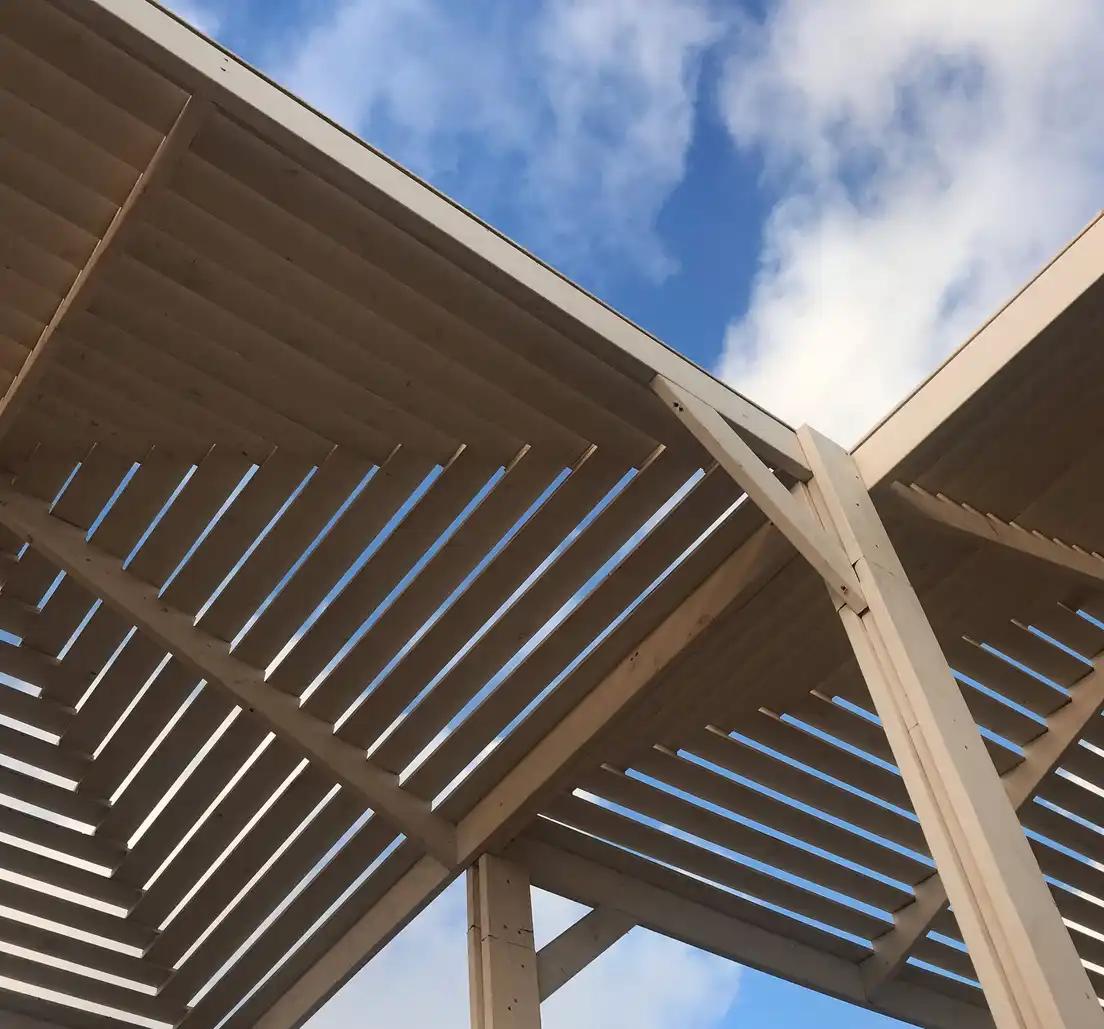
Photo by Daria Ryzhova on Pexels
Choose a solid polycarbonate or metal roof panel to stay fully dry underneath
A solid roof — twin-wall polycarbonate panels or a standing-seam metal roof — is the only option here that keeps a table dry in a real downpour, not just a light sprinkle. Polycarbonate runs cheaper and lets diffused light through; metal panels cost more but shrug off hail without the cloudy, sagging look a bargain-grade polycarbonate panel gets after a few summers.
Buy the UV-stabilized panel, not the corrugated bargain sheet — the difference shows up in year three, not on the showroom floor.
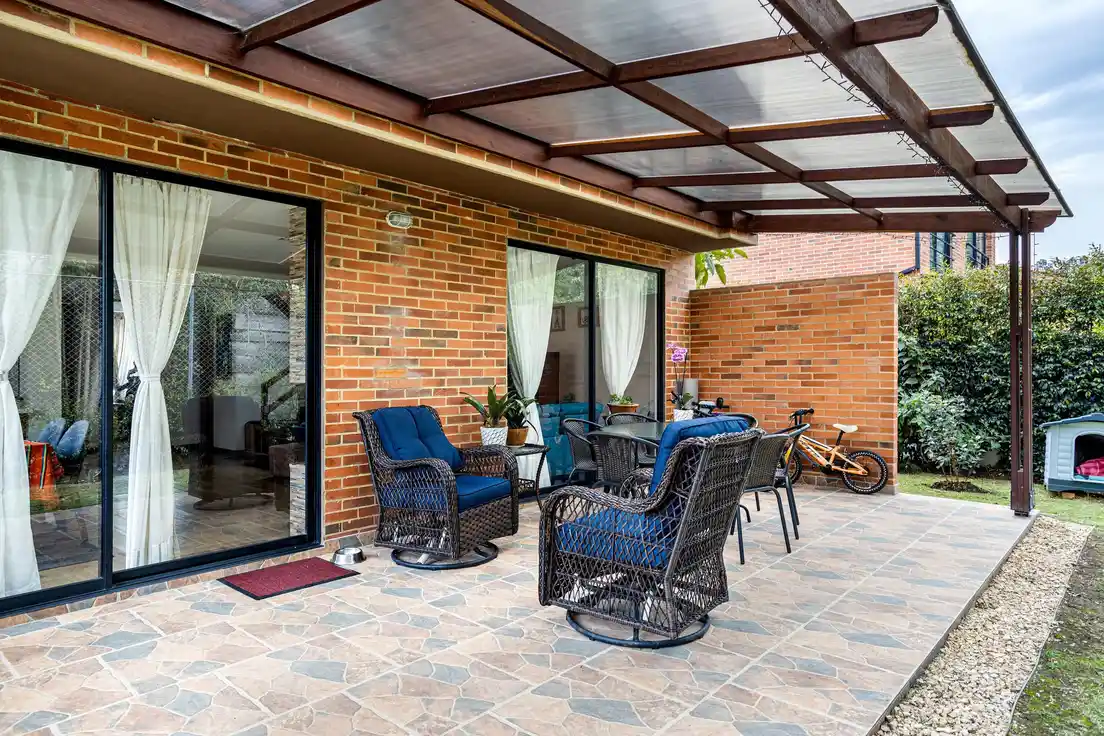
Photo by Gustavo Galeano Maz on Pexels
Go with shade sails for the cheapest real coverage
A triangular or square shade sail, stretched between three or four anchor points, is the cheapest way to cover a patio that isn’t a pop-up canopy — $150–400 per sail plus turnbuckles and eye bolts, no footings required if you’re anchoring to an existing fence, wall, or post. No frame to build means no weekend lost to assembly.
The tradeoff: fabric sags and fades, and a sail that’s lost its tension in a storm looks like a pirate ship that lost an argument. Budget to replace one every 5–8 years, and that’s still cheaper over a decade than one aluminum kit up front.
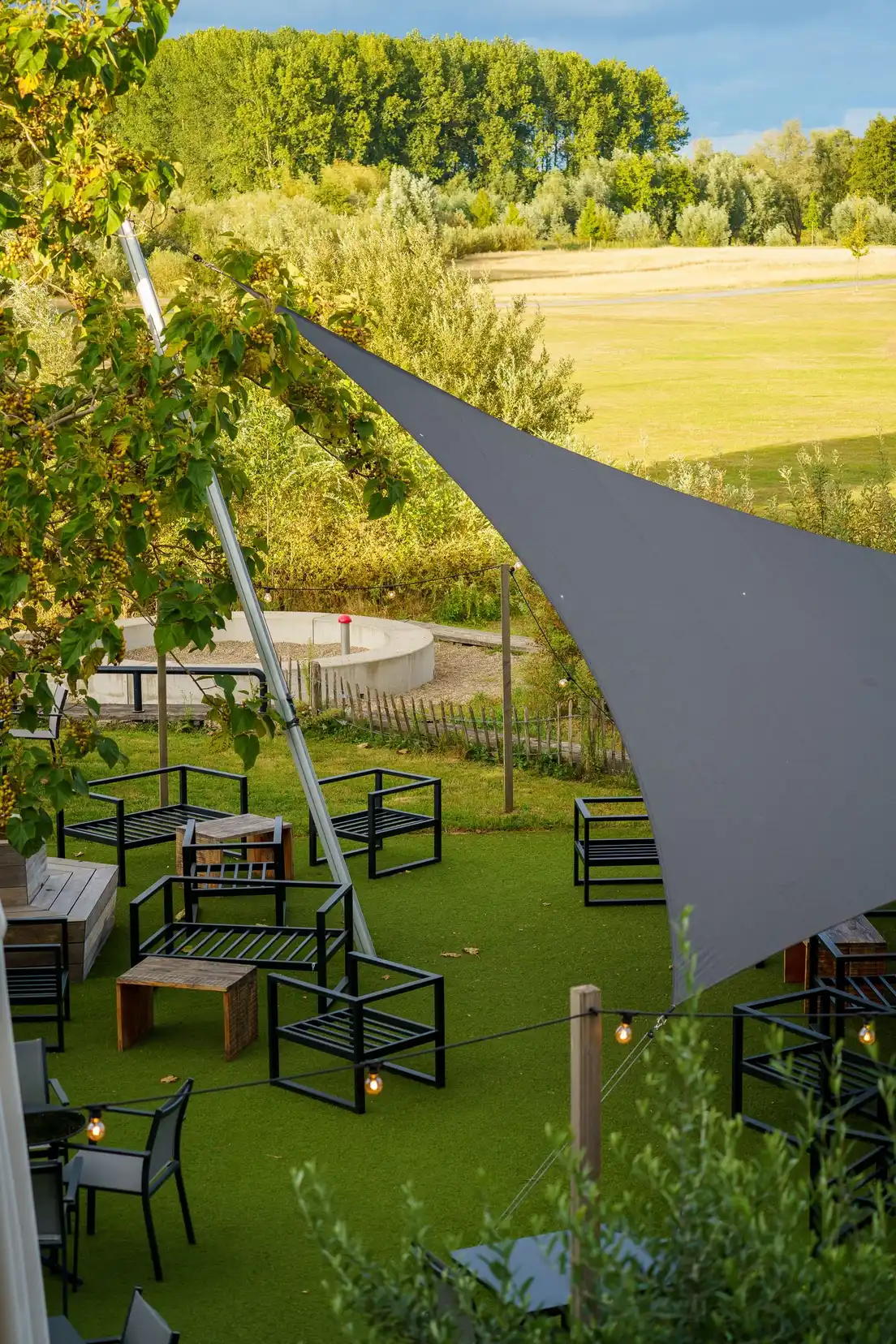
Photo by Maarten Ceulemans on Pexels
Pair a retractable awning with the frame for shade you can put away
A retractable fabric awning mounted to the top of a freestanding frame gives you a third setting beyond “open” and “solid roof”: shade when you want it, full sun when you don’t, without the cost of a motorized louvered roof. Manual crank versions run $300–800; motorized runs $800–1,500 for a 10-foot width.
(We’ve also learned the hard way that a fabric awning left extended through a windstorm is how you lose an awning. Retract it before the forecast turns, not after.)
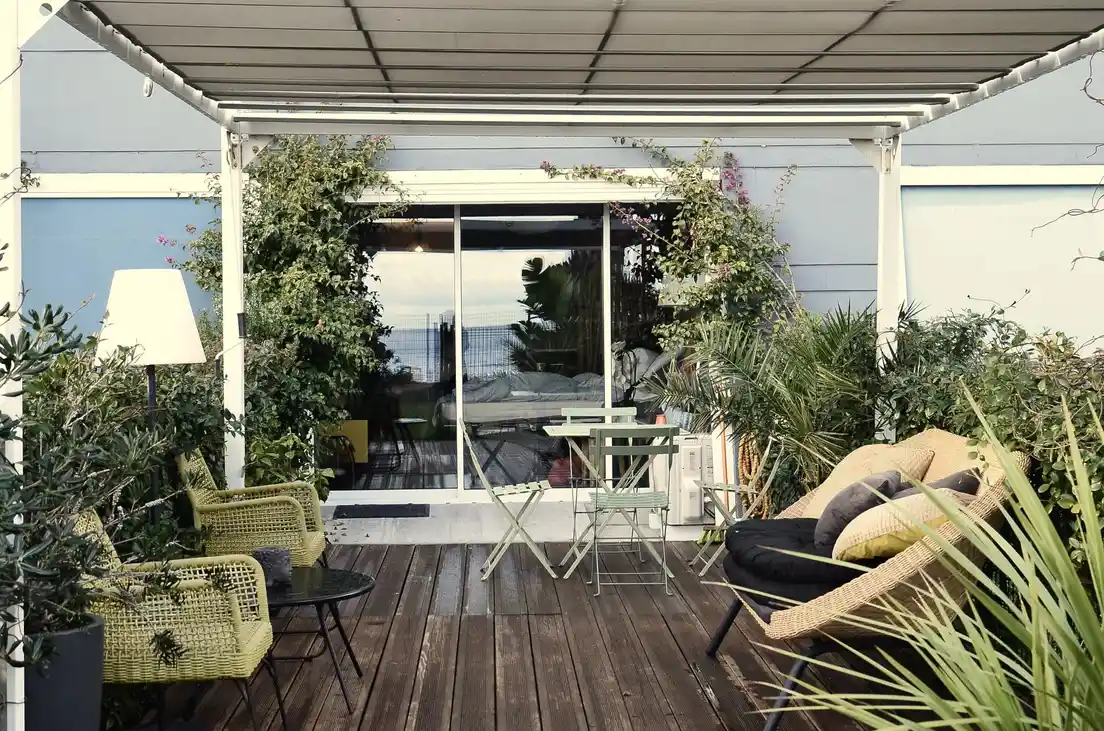
Photo by Skylar Kang on Pexels
Set footings deep enough that the structure won’t rock in wind
Every post on a freestanding patio cover needs its own concrete footing, set below your local frost line, not just a post sitting in a bag of quick-set at the surface. Skip this step and the whole structure can rock loose within a season — wind load on a roof this size is higher than it looks standing under it.
Rent a two-person auger for the day instead of hand-digging four to six holes; it’s the cheapest hour you’ll spend on the entire project relative to how much back pain it saves. Skipping the footing to save an afternoon is how a $4,000 patio cover turns into a very expensive lean-to by August. The International Residential Code’s patio-cover appendix sets the baseline structural requirements most local codes reference. If the ground underneath is still bare dirt or cracked concrete, our patio ideas with pavers roundup covers what to put down before the posts go in.
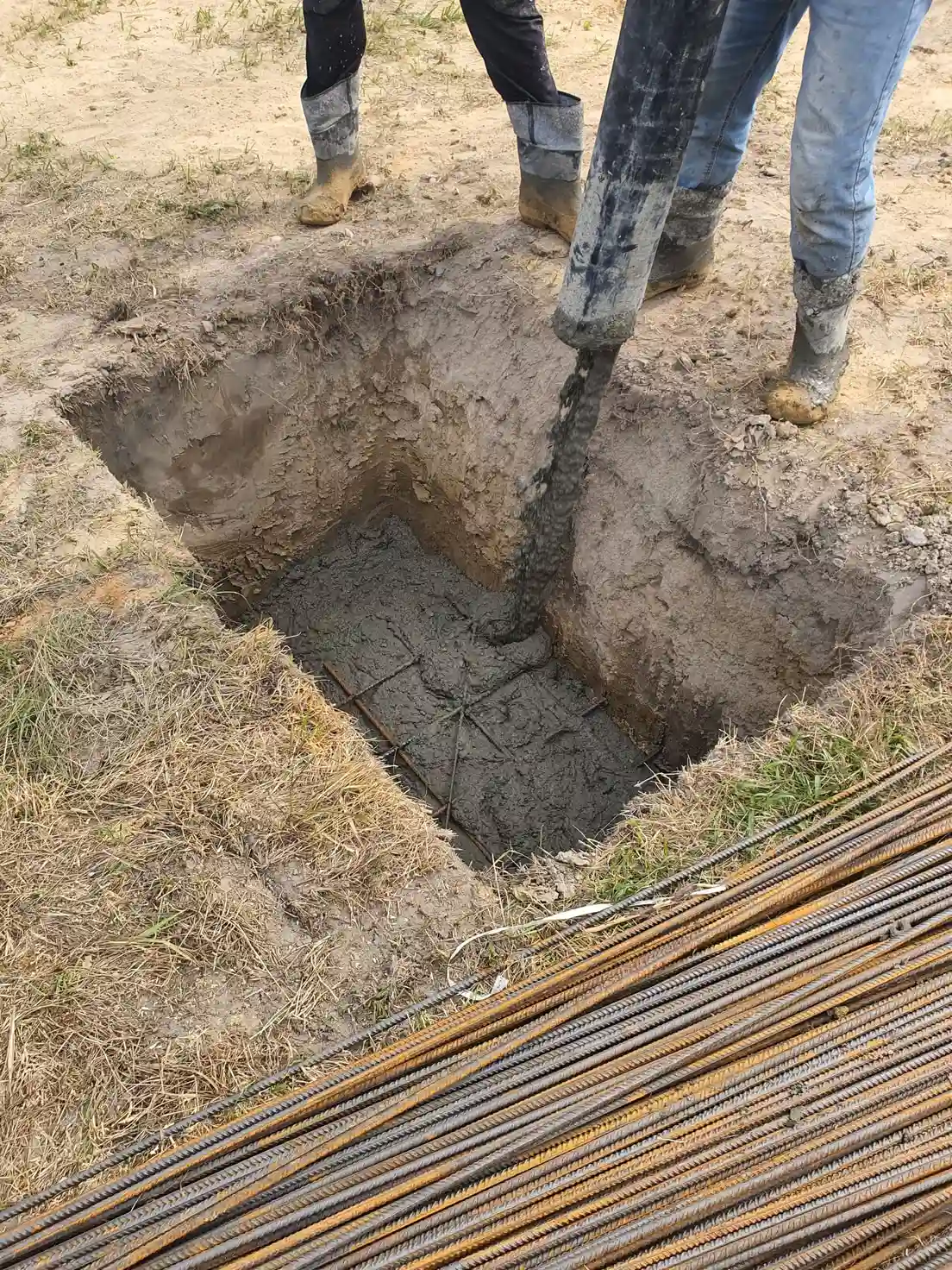
Photo by Piotr Jachowicz on Pexels
Check permits and HOA rules before you set a single post
Most municipalities require a permit once a patio cover is permanent — set in concrete footings — rather than a temporary canopy you could fold up and move. Requirements vary by square footage, roof type, and distance from the property line, so one phone call to the local building department before you buy materials is cheaper than a stop-work order after.
We once put up a freestanding trellis in a townhouse backyard on a Saturday, and it came down the following Tuesday after a very polite HOA letter about structures over 4 feet. The fix — the same idea staked into large planter boxes, technically furniture, not a structure — passed with zero complaints and looked nearly identical. Ask before you dig, not after someone else asks for you.
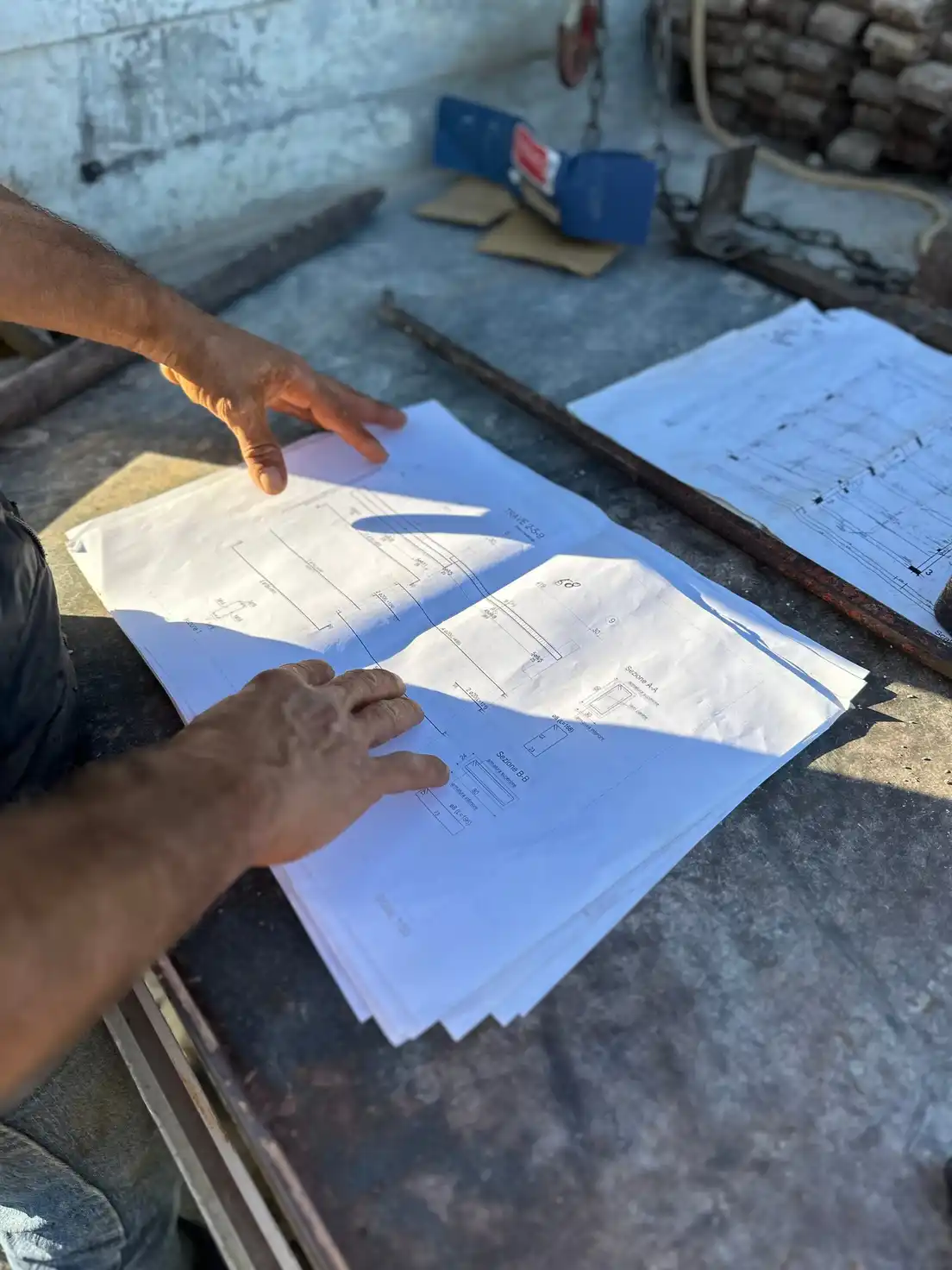
Photo by Maren Ferraro on Pexels
Add lighting and a ceiling fan once the roof’s up
Once the roof’s on, string lights are the fastest $30–60 upgrade that makes a bare frame feel finished — clip commercial-grade shatterproof bulbs to the rafters, not the cheap glass ones, if this is staying up past one season. A ceiling fan rated for damp or wet locations (check the box, not just the price tag) runs $120–250 and does more for a hot patio than any amount of extra shade fabric.
Run the wiring before you commit to a solid roof, not after — fishing a cable through a finished ceiling is the annoying way to learn this. Once the structure’s up, our covered patio ideas guide has the furniture, curtain, and layout side of finishing the space.

Photo by Alexander Popadin on Pexels
Here’s the honest math: kit vs. custom build vs. contractor-built
Which free standing patio cover makes sense for your yard comes down to your time budget as much as your dollar budget — the materials are rarely the expensive part.
DIY kit or wood build
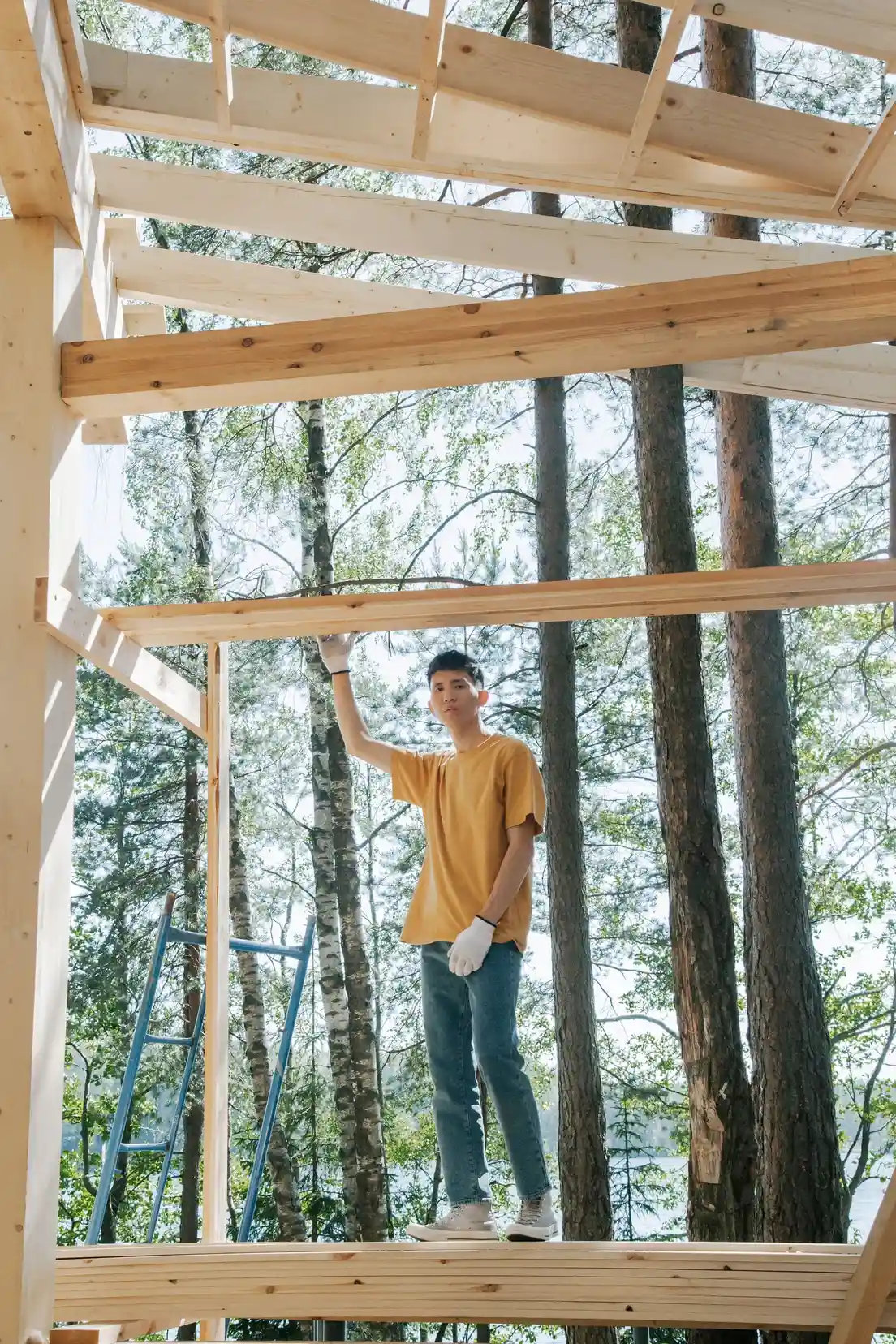
An aluminum kit or a wood-framed build under about 200 square feet is a realistic two-person weekend project: one day for footings and posts, one for the roof. Total materials land between $800 (basic wood) and $6,000 (aluminum, louvered), plus a rented auger.
Contractor-built
A contractor-built cover of the same size runs $6,000–15,000+ installed, and it’s worth it once the yard slopes, the footprint tops 300 square feet, or you want a solid roof engineered to local wind-load code rather than assembled from a kit manual. The FTC’s guide to hiring a contractor is worth fifteen minutes before you sign anything.
Start with the footings. Every decision above them — kit or lumber, solid or louvered — is reversible in a way a badly set post never is.
Frequently asked questions
What is a freestanding patio cover called?
A freestanding patio cover is most often called a pergola, though the same structure with a fully solid roof is usually sold as a "freestanding patio cover kit" or "patio cover structure." Both describe a self-supporting, four-post roof that doesn't tie into the house — as opposed to an attached patio cover, which bolts into the existing roofline.
What is the cheapest way to cover a patio?
A shade sail is the cheapest real coverage, usually $150–400 for the sail plus mounting hardware, with no permanent posts if you can anchor to an existing fence or wall. A basic 10×10 pop-up canopy is cheaper still but isn't built to stay up year-round the way a sail or a kit is.
Do freestanding patio covers require permits?
Often, yes, once the structure is permanent (set in concrete footings) rather than a temporary canopy — check your local building department before you dig. Requirements vary by size, roof type, and how close the structure sits to your property line, so a phone call before you buy materials saves a return trip later.
Can you install a freestanding patio cover yourself?
Yes, for most aluminum kits and basic wood builds under about 200 square feet — the manufacturer's instructions typically call for two people and a weekend. Larger footprints, sloped yards, or anything with a solid, code-rated roof are where hiring it out starts to make more sense than DIY.
Can you stand on an aluminum patio cover?
No — aluminum patio cover roofs, including louvered and solid-panel styles, are built to shed sun and rain, not bear a person's weight. Manufacturers are explicit about this in the install manual. Any maintenance (clearing debris, checking seals) should be done from a ladder, never from the roof itself.