
Living Room
TV Wall Ideas That Don't Look Like an Afterthought
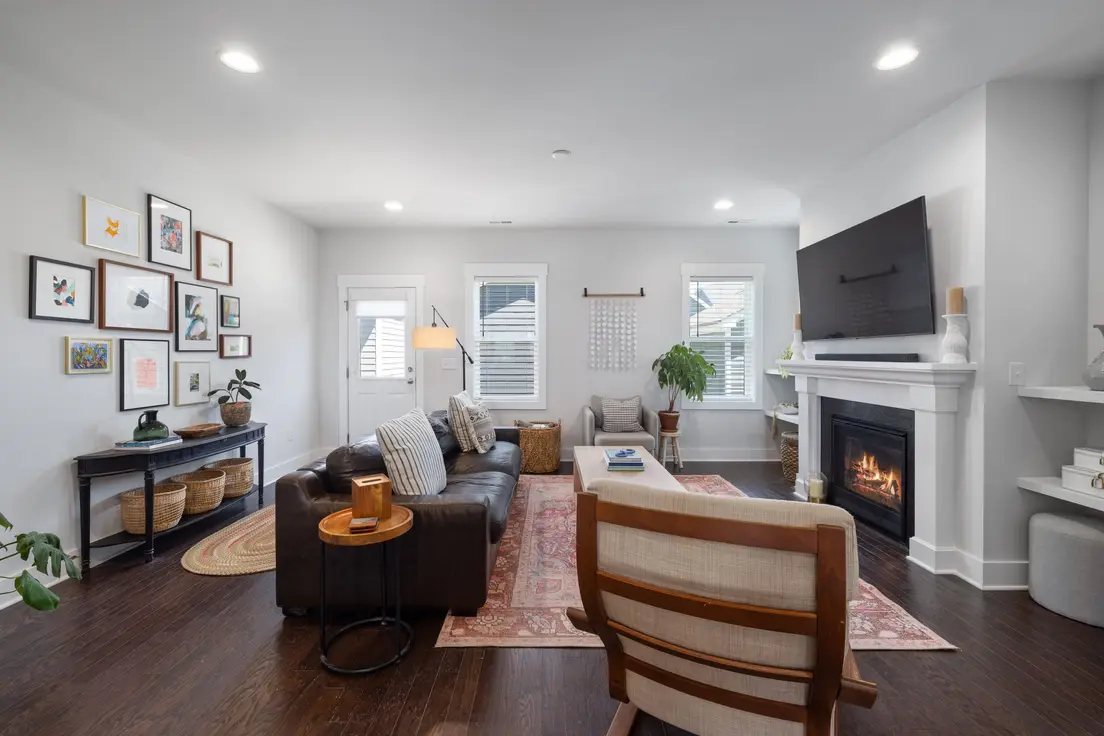
Photo by Curtis Adams on Pexels
The best TV wall ideas treat the screen as one part of a wall, not the whole wall — a mount, a color, and something on either side of it that makes the TV look planned instead of parked. Most of the 10 ideas below cost less than $300, work for a homeowner and a renter alike, and none require you to call a contractor, except the one idea where we tell you to call one. Start with the wall itself before you touch anything on it: a mount rated for the TV’s actual weight, anchored into a stud, is the one step every idea on this list assumes you’ve already done — the rest is interior design, not engineering.
10 TV wall setups at a glance
Concept renders — visual references, not photos of a finished project.
Paint the Wall Behind the TV a Color It Won’t Fight With
Paint and lighting solve more of a TV wall’s problems than new furniture does, and paint is the cheaper of the two. A plain white wall behind a dark screen reads as a hole punched in the drywall the second the TV turns off — a warm charcoal, deep green, or navy gives the screen a frame instead of a blank backdrop, and the contrast actually makes the picture look sharper when it’s on.
A gallon of paint runs $35–50 and covers most living room walls with a coat to spare. Test the color on an actual swatch taped to the wall for a full day before committing — the same charcoal that looks moody at 10am can go flat and gray by evening, depending on which way the room faces. If charcoal and navy feel too safe, our dopamine decor guide has bolder color pairings for a wall that’s meant to be the loudest thing in the room during movie nights, not just a backdrop for them.
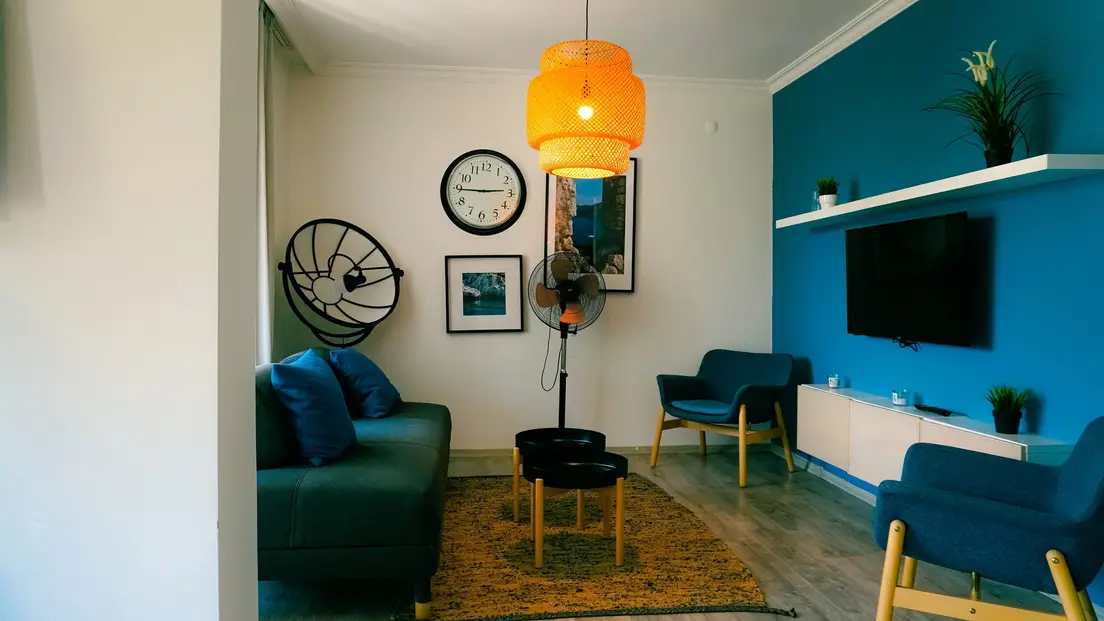
Photo by Erdem ÖZDEMİR on Pexels
Add Texture With Peel-and-Stick Wallpaper Instead of Paint
Peel-and-stick wallpaper commits about as hard as a Post-it note, which is exactly the point on a wall you might repaint in two years. It’s genuinely easy to install — a squeegee, a level, and an afternoon — and adds the pattern and texture a flat painted wall can’t, and it comes back off clean on the smooth, low-moisture drywall most living rooms actually have, the same surface rule that applies to any peel-and-stick material in this niche.
A roll runs $25–45 and covers roughly 28 square feet, enough for a single accent wall behind a mounted TV with some left over for mistakes. Skip a busy pattern directly behind a large screen — a geometric print in a muted palette reads as designed; a loud one competes with whatever’s on screen and loses.
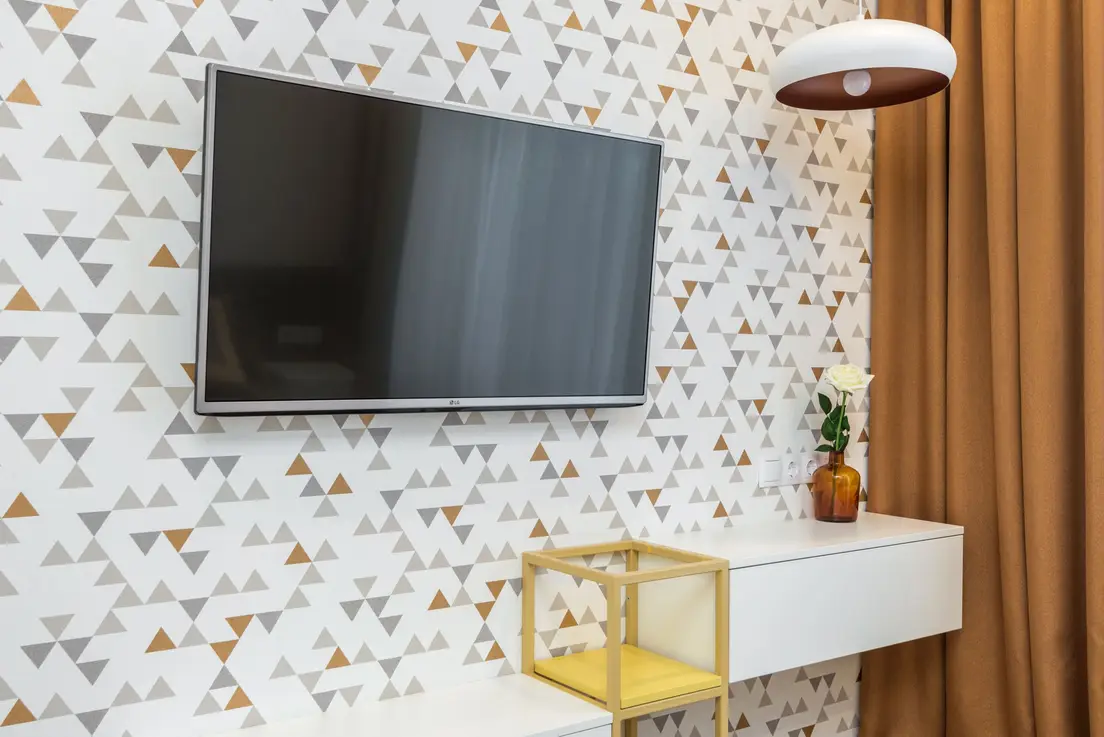
Photo by Max Vakhtbovych on Pexels
Flank the TV With Floating Shelves, Anchored Into Studs
A floating shelf on either side of the TV gives the wall somewhere else for the eye to land besides a black rectangle, and it turns dead wall space into display room for books, plants, or the speaker that would otherwise sit on the floor. Two 24-inch shelves run $30–60 each and mount with brackets rated well past what a few books and a plant actually weigh — style them light, like wall decor, not like a full bookcase crammed onto twelve inches of depth.
(Check the bracket’s stated weight rating before you hang anything heavier than a picture frame — “renter-friendly” on the box means nothing without an actual number, and a hook rated for 5 lbs will not hold a shelf full of hardcovers.) We’ve mounted a floating shelf into drywall alone exactly once, watched it come off the wall overnight with nothing on it but a candle, and bought a stud finder the next morning.
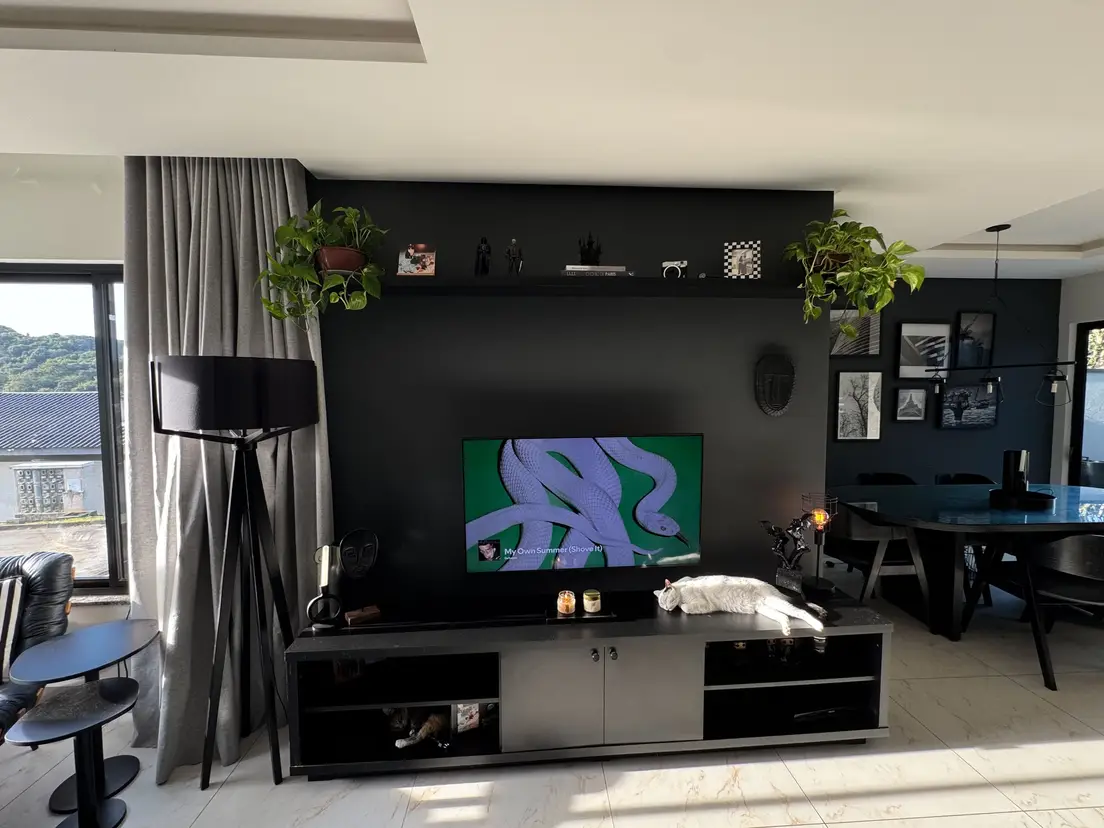
Photo by Fernanda Neitzel on Pexels
Build a Wood Slat Accent Wall Behind the TV
A wood slat wall reads as a real design decision; one flat sheet of wood paneling reads as a wainscoting project that stalled halfway. Vertical slats — either pre-made panels or 1x2 furring strips cut and spaced by hand — add real depth and shadow lines behind the screen, and the gaps between slats hide the TV’s mounting hardware better than a flat wall ever could. A warm walnut tone reads the richest against a dark screen; a lighter oak keeps the wall from feeling heavy in a smaller room.
Pre-cut slat wall panels run $80–150 for enough coverage behind a standard TV wall, or budget $120–200 in lumber and a router if you’re building the spacing yourself and comfortable with basic carpentry. Either way, this is a weekend project, not an afternoon one — plan on one full Saturday for the layout and cuts alone, and go floor-to-ceiling if the wall allows it; stopping a foot short of the ceiling is the detail that makes a slat wall look unfinished.
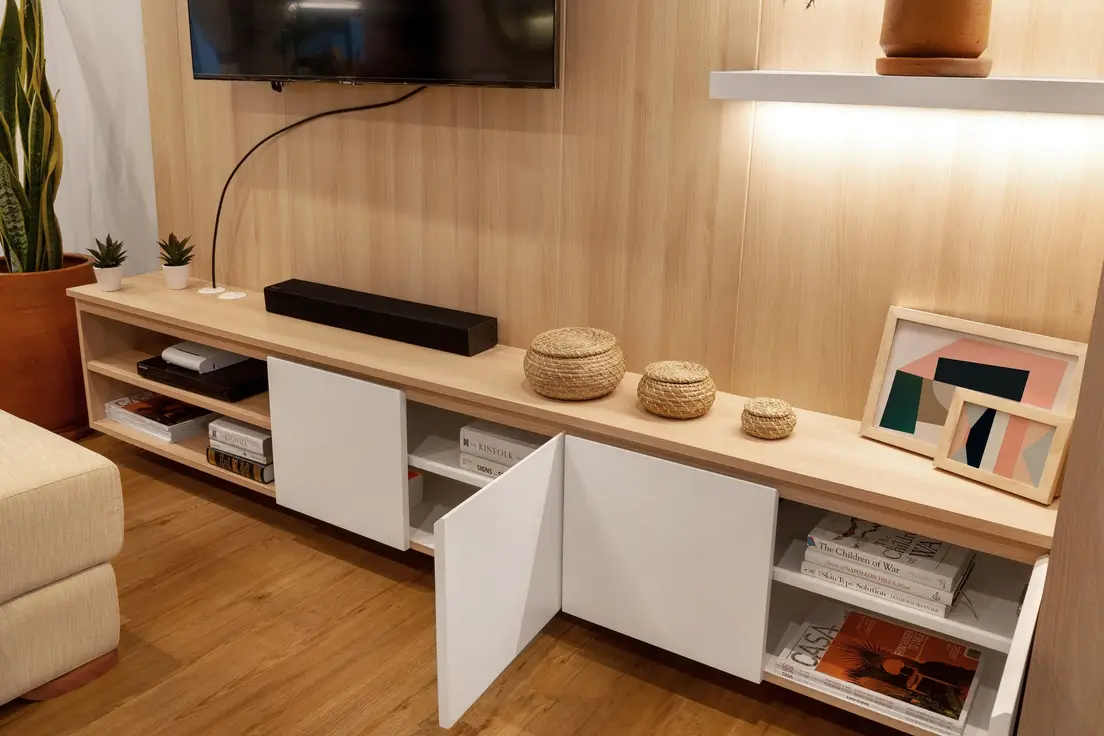
Photo by Hakim Santoso on Pexels
Panel the Wall With Picture-Frame Wall Molding
Picture-frame molding is drywall wearing a blazer — thin strips of MDF trim arranged into rectangles across the wall, painted to match, turning a flat surface into something with real architectural detail before the TV even goes up. It’s the same trick used on accent walls with no TV at all, applied here specifically to give the screen a frame instead of a floating black shape.
MDF trim runs $2–4 per linear foot; a full wall of picture-frame molding for an average living room typically runs $150–300 in materials, plus caulk and paint. This is a genuinely fussy DIY — miter cuts, wall studs to nail into, a lot of measuring twice — worth it if you’re already comfortable with a miter saw, worth hiring out if this would be your first project with one.
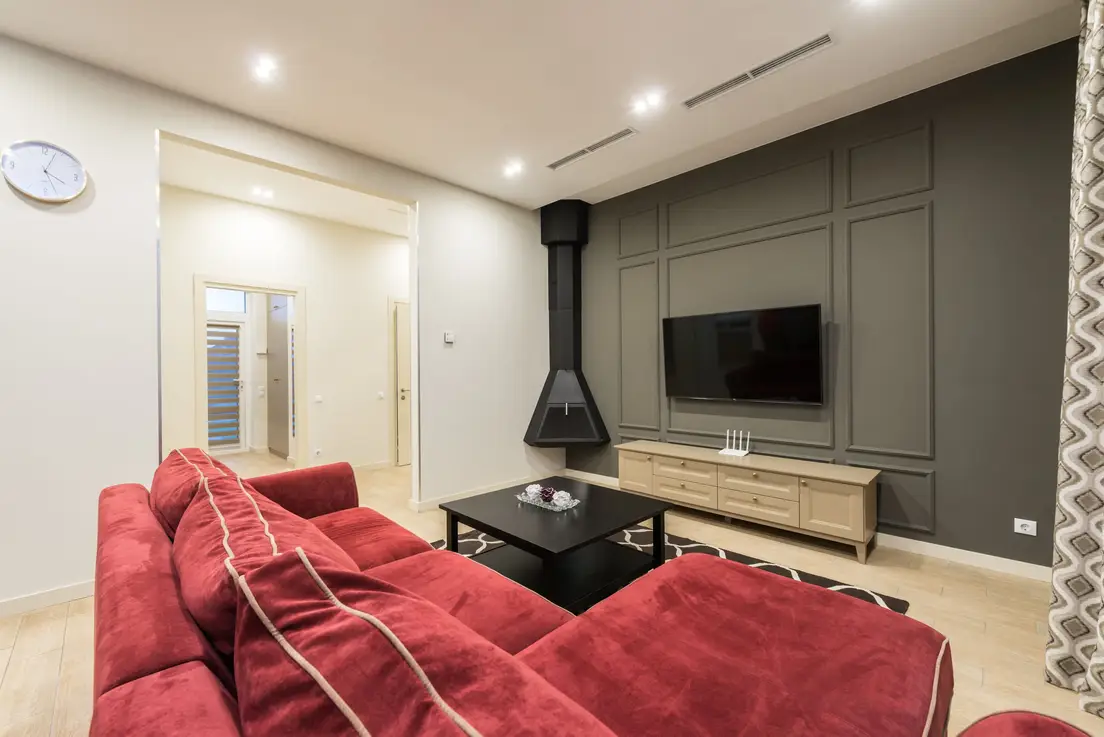
Photo by Max Vakhtbovych on Pexels
Add Real Texture With Brick or a Stone-Look Panel
Real exposed brick behind a TV is a happy accident of an older building, not a Saturday project — but a stone-look or brick-look panel gets most of that same rough, lived-in texture without a structural engineer or a demo crew. Peel-and-stick and adhesive panel versions install over existing drywall in a weekend and read as real from normal room distance, which is the only distance that actually matters.
Faux brick or stone panels run $6–12 per square foot, so a typical TV wall section runs $150–350 depending on coverage. This is the idea to reach for in a room that otherwise has zero texture — leather sofa, flat walls, smooth floors — where every other surface is already soft or shiny.
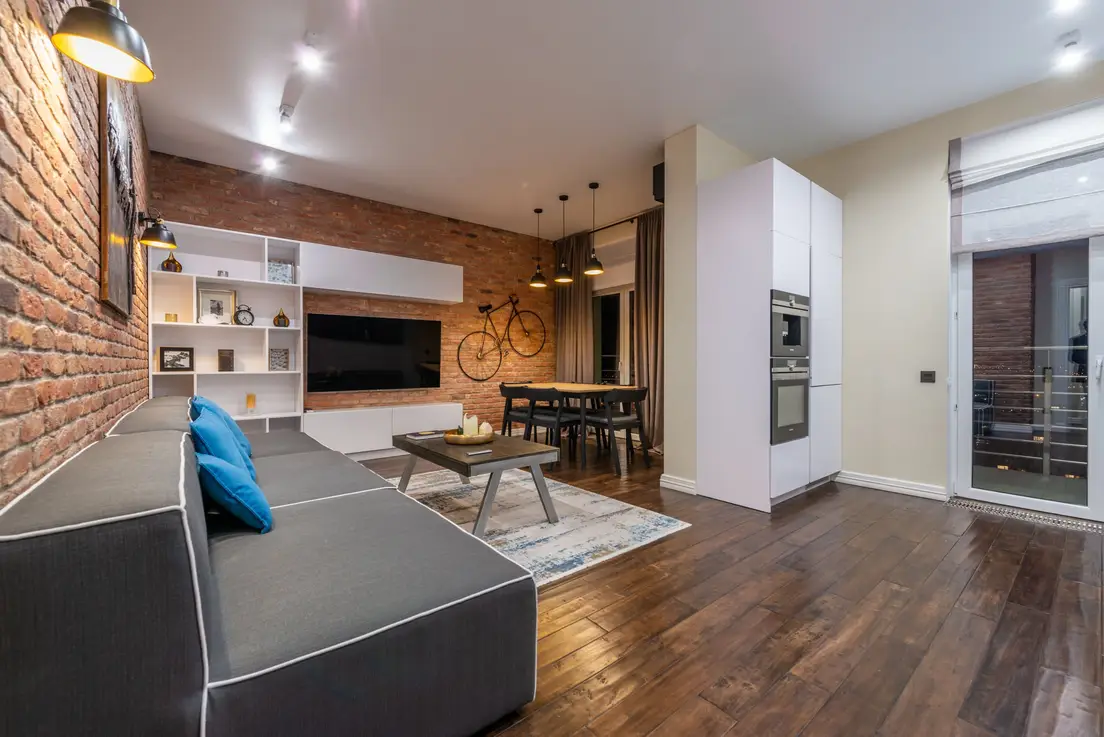
Photo by Max Vakhtbovych on Pexels
Pair the TV With the Fireplace Instead of Separating Them
Once the TV and the fireplace share a wall, the room finally agrees on where to look — two focal points on two different walls just means two competing conversations about where the sofa should face. Mounting the TV above the mantel, flanked by built-in cabinetry or stock shelving on either side, turns a fireplace wall and a TV wall into one wall that does the whole room’s job.
Confirm your fireplace’s heat clearance before mounting anything above it — most manufacturers rate a safe distance for electronics above a firebox, typically in the owner’s manual or a sticker inside the unit, and it’s worth checking rather than guessing. A basic mantel-height mount runs $150–300 including the bracket and any heat-shield spacer the manual calls for.
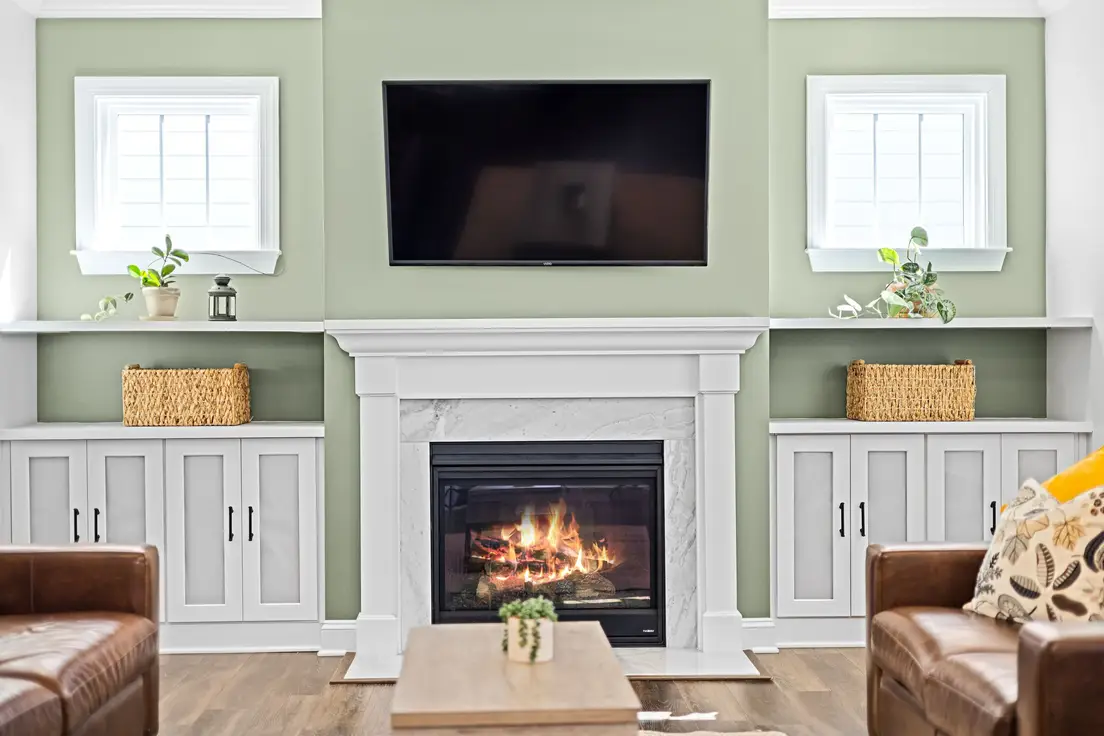
Photo by Curtis Adams on Pexels
Solve an Off-Center TV With the Right Corner Mount
An off-center TV on a full-motion swivel mount looks like a choice; the same TV on a fixed bracket looks like the cable guy ran out of wall. When the only real wall for a TV isn’t centered on the seating — common in older floor plans and corner layouts — a swivel or articulating arm mount lets you angle the screen toward the sofa instead of forcing the sofa to face an awkward angle.
Full-motion mounts run $40–80 for a standard TV size, versus $15–25 for a basic fixed bracket — the extra $25–50 buys real flexibility if the wall itself can’t move. Pair it with a low console or a single floating shelf underneath so the off-center placement reads as intentional, not like a TV stand that got pushed into the only open corner. This exact problem — a genuinely awkward wall, not just a small one — is the whole premise of our small living room ideas with a TV roundup if square footage is the bigger constraint than the wall itself.
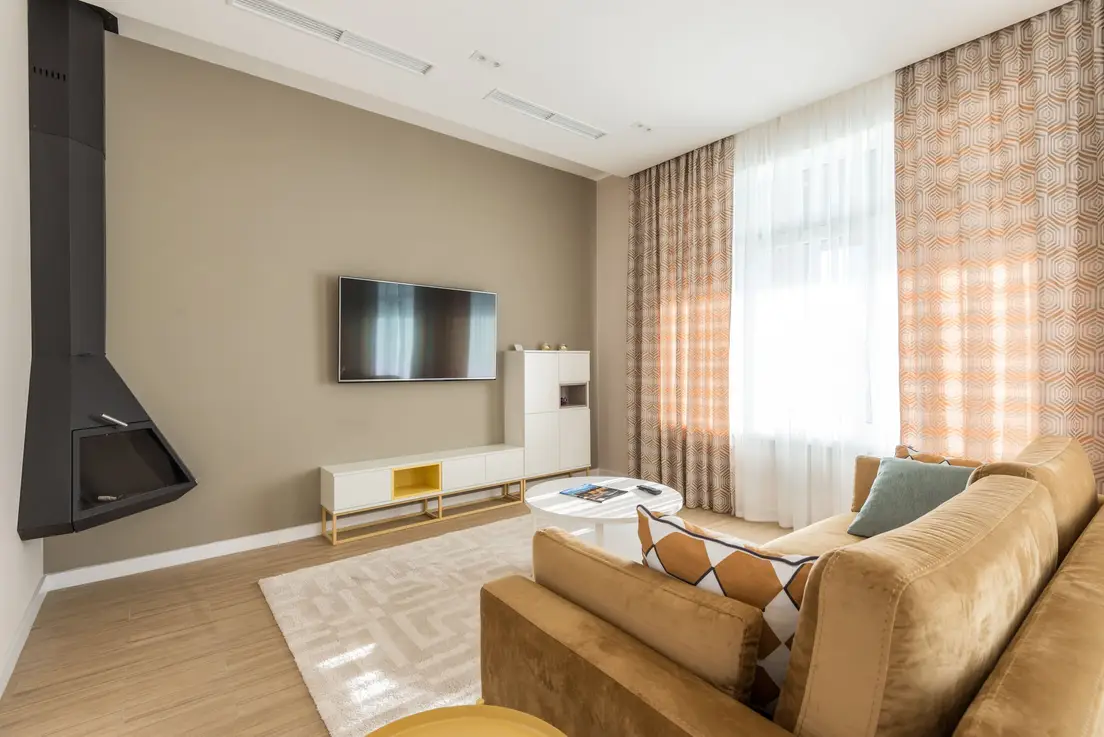
Photo by Max Vakhtbovych on Pexels
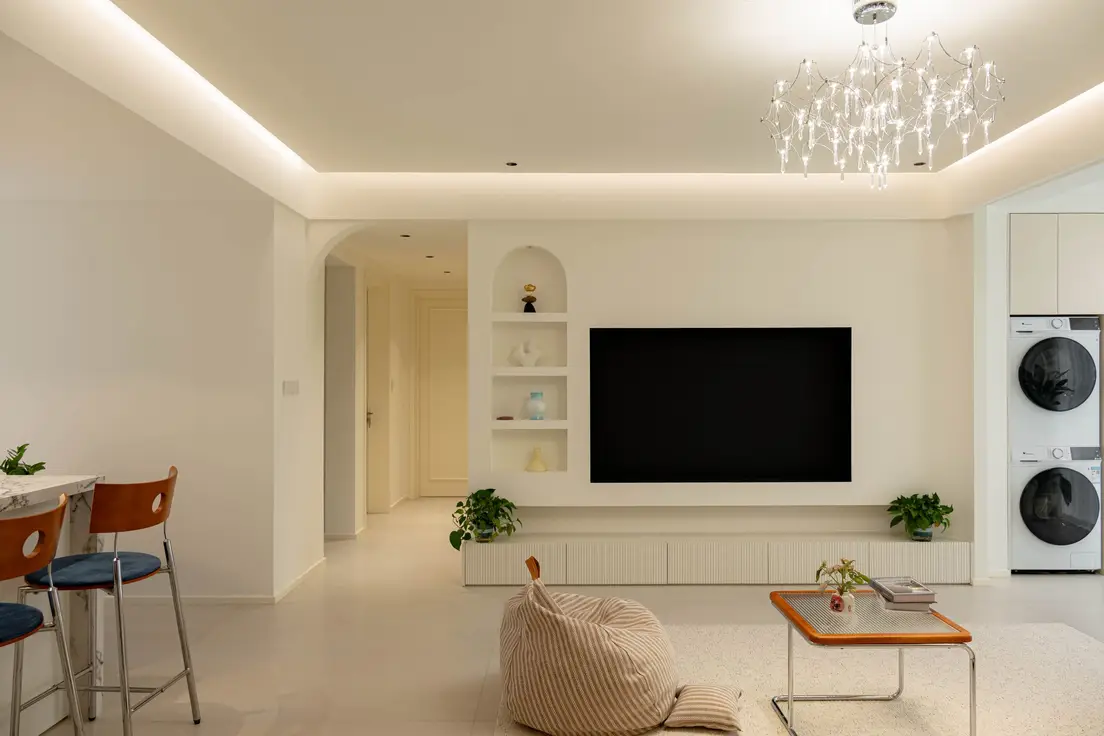
Recess the TV Into the Wall for a True Built-In Look
This is the one idea on this list that needs an electrician instead of a Saturday, and it’s the only one that makes the TV disappear completely into the wall instead of just blending in. An inset niche, built during a renovation or framed into an existing wall cavity, integrates the screen flush with the surrounding drywall or shelving — no visible mount, no shadow gap, no cable snaking down the wall.
Budget $800–2,000 for a professional recess job including the framing, electrical, and any shelving built into the same niche, well past what any other idea on this list costs. Worth it if you’re already opening the wall for a rewire or a new outlet anyway and want the high-end, built-for-it look; skip it if the only reason is aesthetics — the slat wall or the molding wall above gets you most of the same “the TV isn’t the point” feeling for a tenth of the cost and zero drywall dust.
Ground the Wall With a Low Console, or Skip It Entirely
Skip the console and a mounted TV just floats there, waiting for the rest of the room to catch up to it — a low piece of furniture underneath, even a narrow bench, gives the wall a bottom edge and somewhere to hide the router and the streaming box. You don’t need a console sized to fill the whole wall; a piece two-thirds the width of the TV reads as intentional, not undersized. A light live-edge or dark wood finish both work — the minimalist look leans light wood with open legs, the mid-century modern look leans dark wood with closed drawer storage.
Here’s the honest math on the two ways to get there:
The $250 flat-pack console
A basic flat-pack TV console runs $150–350 depending on finish and gives you closed storage for the stuff you don’t want visible — game consoles, cable boxes, the remote you’ll still lose in the couch anyway. We built one of these solo on a Sunday because “how hard can it be,” hit the instructions’ “2 persons” note on the step for setting the top panel onto the legs, and spent forty-five minutes holding one end with a knee while reaching for the last bolt with the other hand.
The $0 option: no console at all
If the wall already has a floating shelf or slat paneling doing the visual work, skip the console entirely — an empty stretch of floor under a mounted TV isn’t a gap, it’s a design decision, as long as the wall above it is doing something. Start here before you buy anything; you can always add furniture later, and going the other direction means returning a piece you didn’t need.
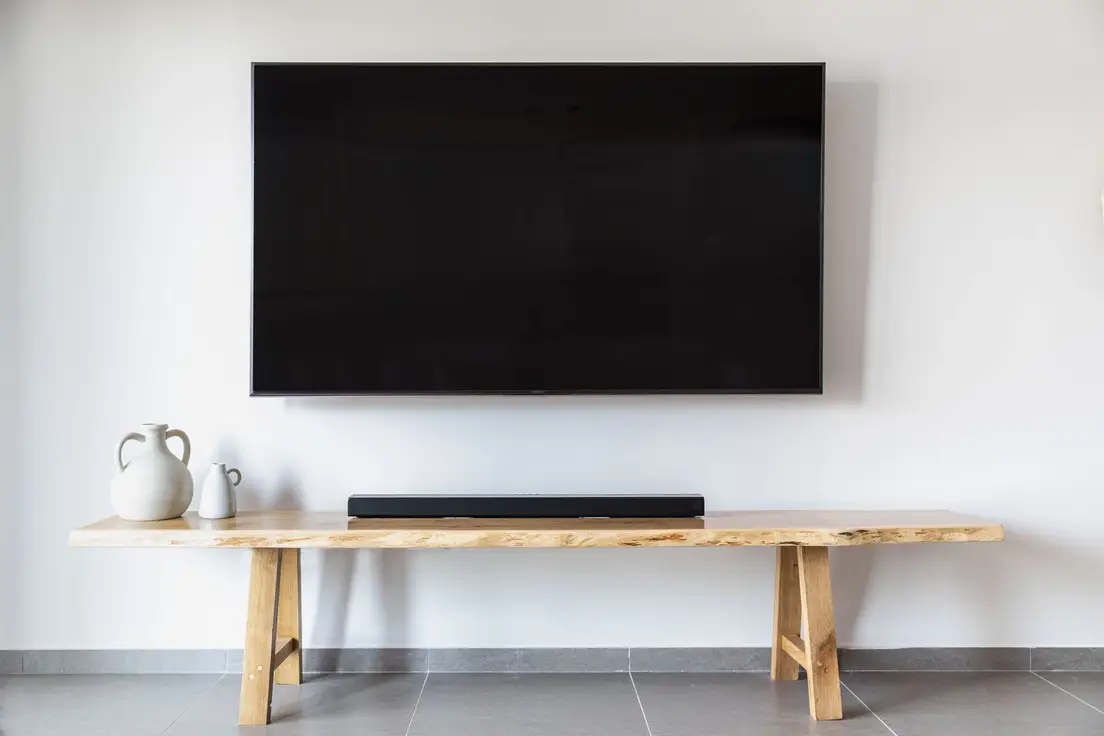
Photo by yair elgazar on Pexels
Start with the paint. Everything else on this list is easier to commit to once the TV stops looking like the only thing anyone planned for.
Frequently asked questions
What is the best design for a TV wall?
The best design pairs the TV with the wall's real structure — a fireplace mantel, a wood slat panel, or a recessed niche — instead of hanging it alone on blank drywall. Add floating shelves or a low console for scale, and mount everything into studs, not just anchors, so the design holds up over time.
Is it a good idea to hang a TV on a wall?
Yes, if you mount it into at least one wall stud with a bracket rated for the TV's actual weight — check the mount's spec sheet, not just the box's 'easy install' claim. A wall mount frees up the floor space a console would otherwise take, and it's the foundation almost every idea on this list builds on.
What is the best color to paint a wall behind a TV?
A color with enough contrast to frame the screen without fighting it — a warm charcoal, deep green, or navy all read as intentional, while stark white can make the TV look like a hole in the wall once it's off. Test a sample swatch in your room's actual light before committing to a full wall.
What are some ways to conceal my TV when it's not in use?
A gallery wall built around the screen and a piece of framed art on a motorized lift are the two real options, and only one is a weekend project — the lift is a genuine investment, not a DIY afternoon. A cheaper middle ground is sliding wood panels on a barn-door track that cover the screen entirely when it's off.
How do you style a wall with a mounted TV?
Treat the TV as one object in the composition, not the whole composition — add a floating shelf, a low console, or a few framed pieces at a different height so the eye has somewhere else to land. Keep cords hidden in a raceway or behind the wall, since visible cables undercut every other styling choice.