
Kitchen & Dining
Apartment Kitchen Ideas: 9 Renter-Friendly Upgrades
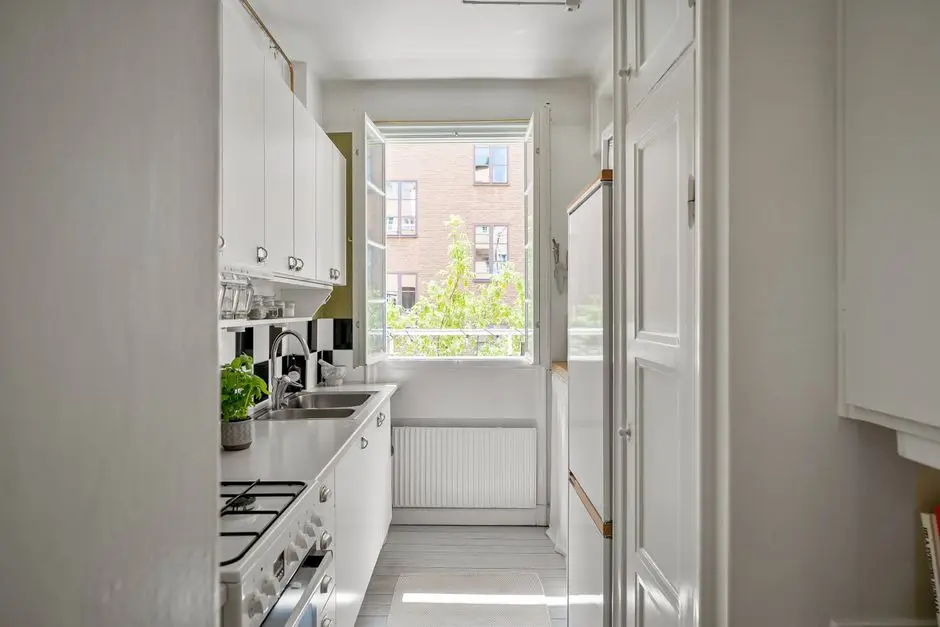
Apartment kitchen ideas mostly come down to one real constraint: you can’t touch the cabinets, the walls, or the floor, and you still want it to feel like yours. None of the nine ideas below need a landlord’s permission or a contractor, and every one comes off clean at move-out — most run under $150.
Six apartment kitchen styles to steal from
Concept renders — visual references, not photos of a finished project.
Add a Rolling Kitchen Island for the Counter Space a Rental Never Has
A rolling cart is the fastest way to add counter space and storage to a small apartment kitchen without a single tool. Look for one with a butcher-block or laminate top around 24×18 inches — big enough for a cutting board and a mixing bowl, small enough to tuck against a wall when you’re not using it. Locking casters matter more than the finish; a cart that drifts across the floor every time you lean on it gets abandoned in a closet by month two.
Budget $70–150 for a solid one with a lower shelf and a towel bar — enough room for the pots and pans that never fit the cabinet you actually have. It’s the only furniture on this list that survives a landlord walk-through and a move both — everything else here gets un-stuck with a hair dryer; this just rolls out the door.
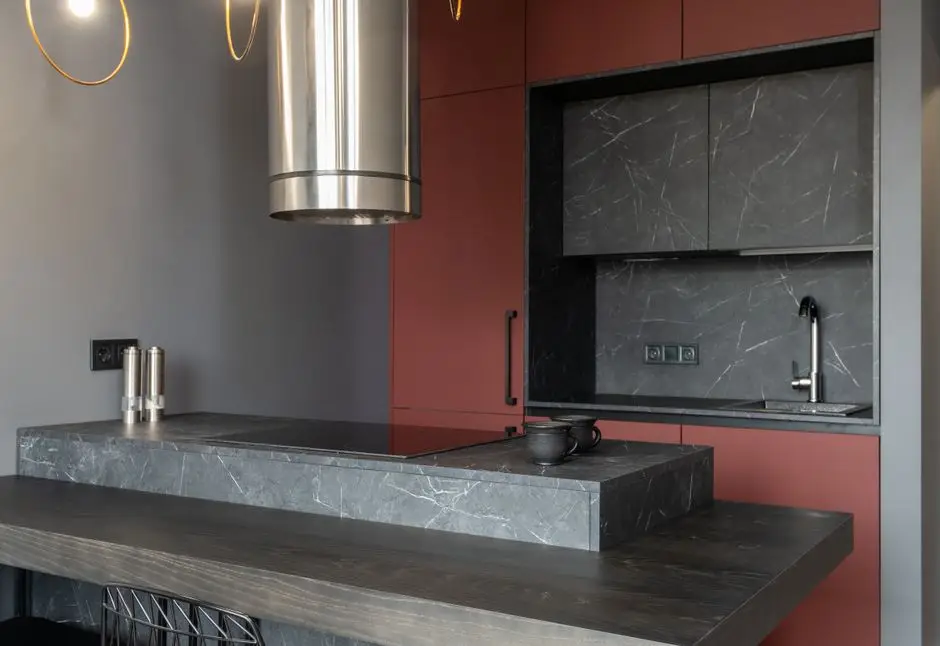
Photo by Max Vakhtbovych on Pexels
Wallpaper an Accent Wall Instead of Repainting the Whole Kitchen
Removable wallpaper covers more visual ground per dollar than almost anything else in a rental kitchen, and it skips the two-coats-plus-primer commitment paint requires. One wall — the end of a peninsula, the strip above open shelving, the side of a fridge cabinet — is plenty; wallpapering every wall in a small kitchen reads busy instead of airy. A lighter background reflects natural light back into a kitchen that’s usually short on windows, instead of absorbing it the way a dark accent wall does. Pick a pattern in the same warm-neutral family our warm minimalism guide recommends, and it reads intentional even against a landlord’s oak cabinetry.
A single roll runs $25–45 and covers about 28 square feet, enough for most single-wall accent jobs. (A swatch photo and a full accent wall are never quite the same pattern — order the sample roll first, or risk redecorating the same wall twice in one weekend.) Smooth, painted drywall is the only surface it reliably grips — skip textured “orange peel” walls entirely.
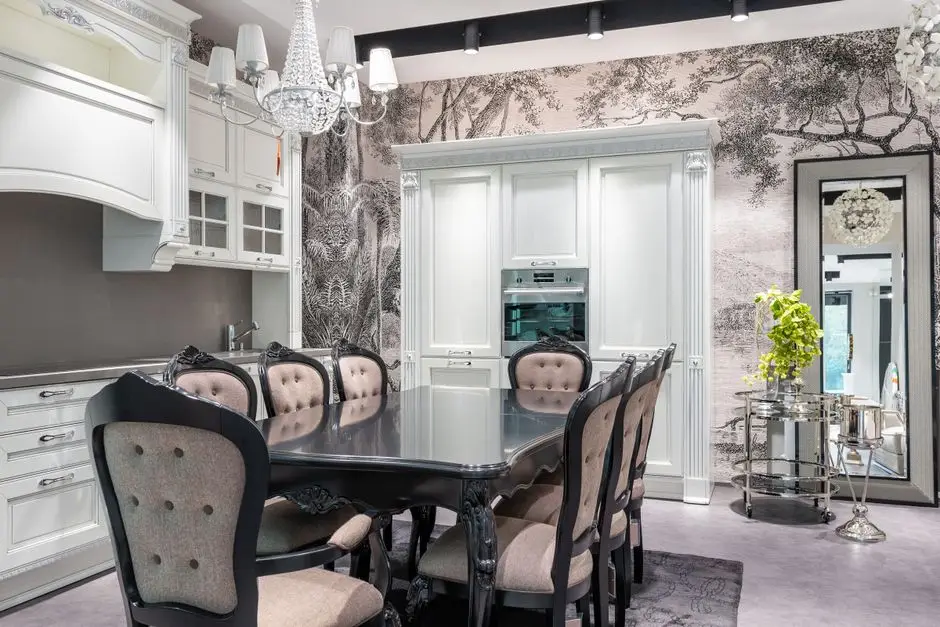
Photo by Max Vakhtbovych on Pexels
Install a Peel-and-Stick Backsplash — Just Not Right Behind the Stove
Peel-and-stick backsplash tile is genuinely good now, and it’s the single highest-impact upgrade on this list for the money. It sticks best to a smooth, flat, low-moisture surface, and it is not permanent-proof: Smart Tiles’ own installation FAQ rates its adhesive tile up to 120°F (49°C) — fine for most kitchen walls, tight for the six to nine inches directly behind an active burner. A backsplash glued right behind the flame is basically asking a sticker to survive a sauna every night for a year.
We learned this the annoying way instead of the easy way: a rental backsplash went up beautifully over one weekend, and six months later the two tiles closest to the stove started curling at the edges from the heat and steam. Everywhere else on that wall, away from direct cooking heat, it’s still holding years later. For the full step-by-step, see our DIY peel and stick backsplash guide.
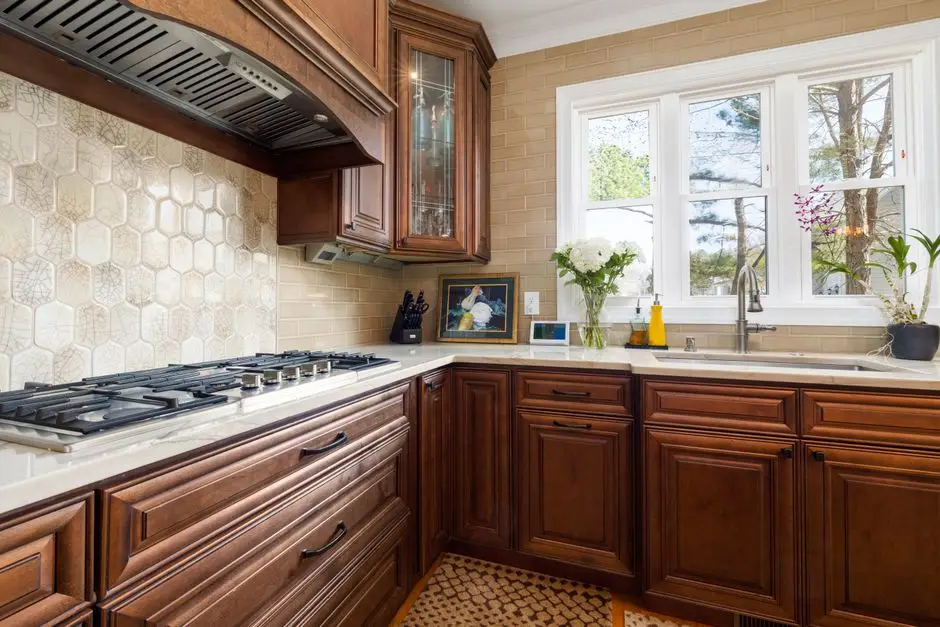
Photo by Curtis Adams on Pexels
Swap the Cabinet Hardware for New Pulls in an Afternoon
New cabinet pulls are the fastest flex in this entire list — twenty minutes, one screwdriver, and the kitchen suddenly looks like it got a whole new set of cabinets instead of the same oak boxes wearing better jewelry. Measure the existing hole spacing before you order (most builder-grade pulls sit at 3 or 3.75 inches), since mismatched spacing means either new holes or a trip back for the right size.
Budget $3–8 per pull; a full kitchen of 20–25 pieces runs $80–150 for solid brass or matte black — brass reads sharp against white cabinets, black disappears politely against oak. The same trick works on a dishwasher or refrigerator panel that takes a matching pull. Keep the old hardware in a labeled bag — most leases want the original pulls reinstalled before move-out, and “we lost the receipt and the screws” is not a fun conversation to have with a deposit on the line.
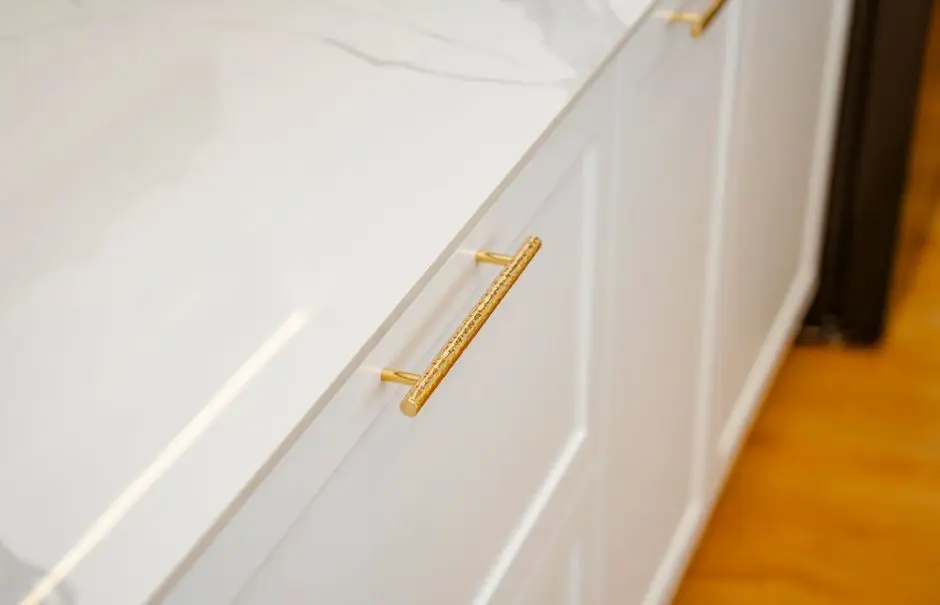
Photo by Bilguun Gantumur on Pexels
Mount Open Shelving Where the Upper Cabinets Feel Closed In
Open shelving does two jobs a closed cabinet can’t: it makes a small kitchen feel less boxed-in, and it turns everyday dishware into decor instead of clutter you’re hiding. Two or three floating shelves in place of one upper cabinet door is usually enough — going fully open-shelf across an entire wall leaves nowhere to hide the mismatched Tupperware. Anchor into studs with a renter-friendly bracket kit rated for real weight, not just command strips; loaded plates and mugs are heavier than most adhesive hooks are rated for.
Open shelving only works as long as what’s on it is worth looking at — mismatched mugs and a half-empty spice rack on full display reads more like a garage-sale table than a styled kitchen. A shelf bracket kit runs $15–30 per shelf; keep these open-shelf decor ideas limited to items you’d actually be fine with a guest seeing.
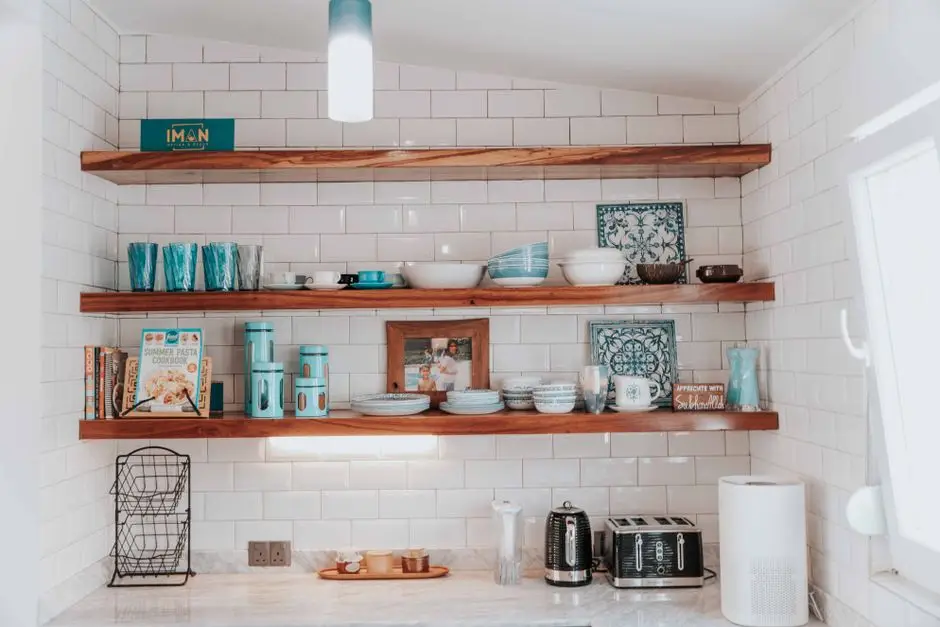
Photo by Keegan Checks on Pexels
Stack Risers and a Turntable Inside the Cabinets You Already Have
Most small apartment kitchens aren’t short on cabinets — they’re short on usable storage space inside them, and it shows up worst in a studio apartment kitchen, where one wall of cabinets has to do a whole kitchen’s job. A stackable shelf riser turns one kitchen cabinet shelf of stacked plates into two usable layers, and a $12 turntable does what a $400 pull-out drawer system promises, it just doesn’t come with a name that sounds like a Scandinavian furniture aisle. Corner cabinets are the worst offenders for wasted depth; a turntable there alone can recover a genuinely usable third of the space.
Add adhesive hooks to the inside of a cabinet door for lids and cutting boards, and these small storage hacks shrink the whole problem without a single new cabinet. Total cost for risers, one turntable, and a set of hooks: usually under $50.
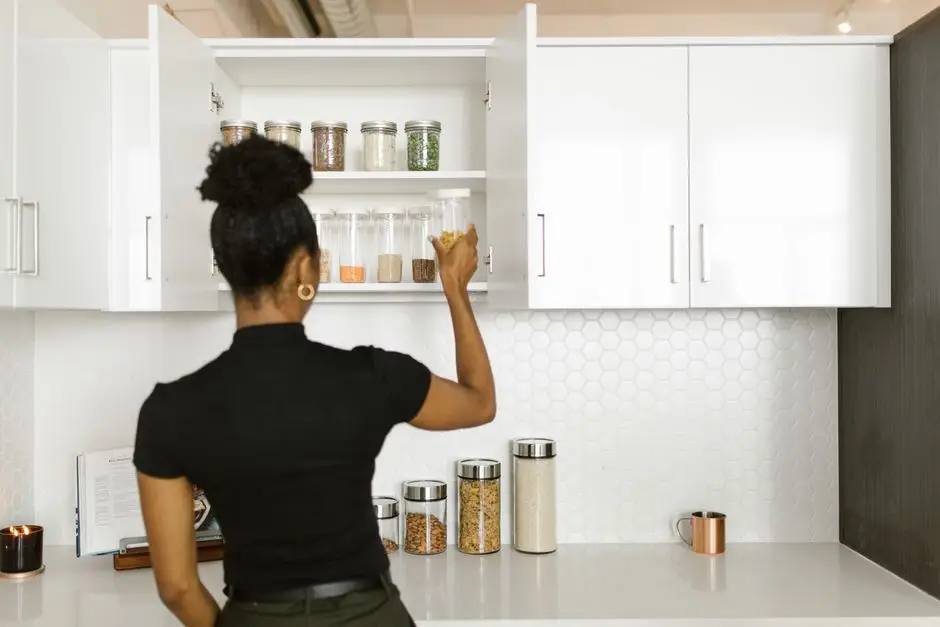
Photo by RDNE Stock project on Pexels
Add a Pendant Light or Puck Lights the Landlord Never Installed
A single flush-mount ceiling light reads like an interrogation room; one plug-in pendant over the sink or a strip of battery puck lights under the upper cabinets reads like somebody actually lives here. Plug-in pendants hang from a hook, not a hardwired box, so there’s no electrician and no hole in the ceiling — just a cord clipped along the wall to the nearest outlet.
Warm-white bulbs (2700–3000K) matter as much as the fixture itself; a cool 4000K bulb in a beautiful new pendant still reads like a break room. Budget $30–60 for the fixture and $25–40 for a three-pack of rechargeable puck lights under the cabinets, which do double duty as actual task lighting over the counter.
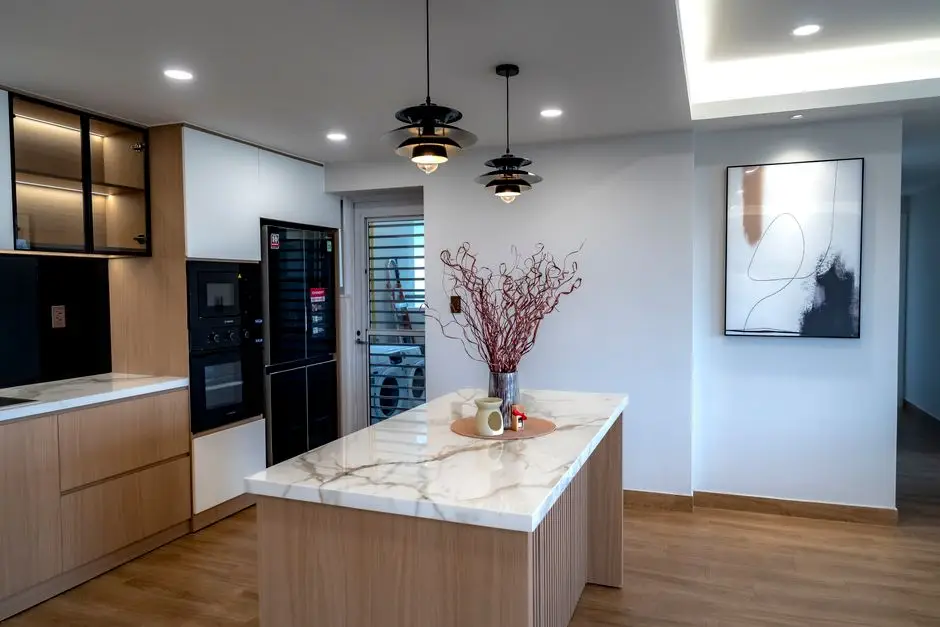
Photo by Quang Nguyen Vinh on Pexels
Trade the Dining Table for a Bar Cart or Banquette Nook
A full dining table needs floor space most small apartment kitchens don’t have to spare, and it eats into a floor plan that’s already tight. A bar cart parked against a wall solves “somewhere to set a plate” in a fraction of the footprint, and it tucks away when it’s not hosting anything. (The built-in banquette in the photo is the bigger, pricier, more-permanent option — the cart next to it is the one we’d actually buy first.) If the layout genuinely has the corner for a banquette and the lease allows built-ins, it seats more people in less floor space than any table-and-chairs setup will.
A decent bar cart runs $60–120; a small two-seat bistro table and chair set, if a cart feels too small, runs $150–250. Either beats squeezing a six-person dining table into a galley kitchen that was never built to hold one.
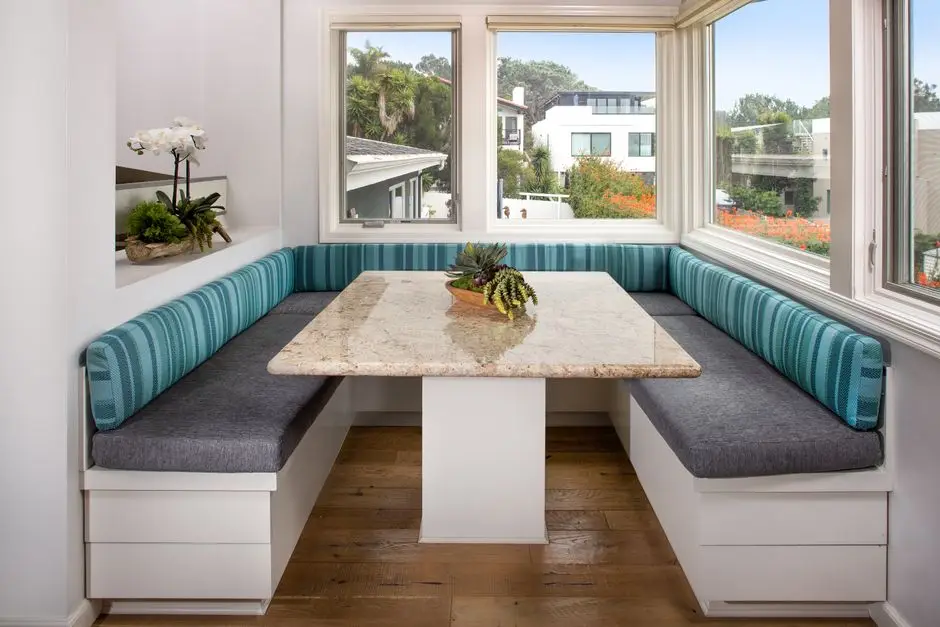
Photo by ASR Design Studio on Pexels
Cover Worn Flooring With Peel-and-Stick Vinyl Tile
Peel-and-stick vinyl floor tiles over ugly linoleum or a scuffed floor are the flooring equivalent of throwing a rug over a stain, except this one survives a mop. Wood-look tile in a warm oak or walnut tone covers the widest range of existing cabinetry colors without clashing. It goes down over most existing flooring without adhesive removal or subfloor prep, and it comes back up at move-out with a putty knife and patience. Skip it directly in front of the oven, sink, or dishwasher, where standing water is a regular event — the seams are the weak point.
A box covering roughly 20–24 square feet runs $30–50, so a full small-kitchen floor typically lands in the $100–200 range depending on square footage. It’s a bigger project than anything else on this list — budget a full afternoon, not a lunch break.
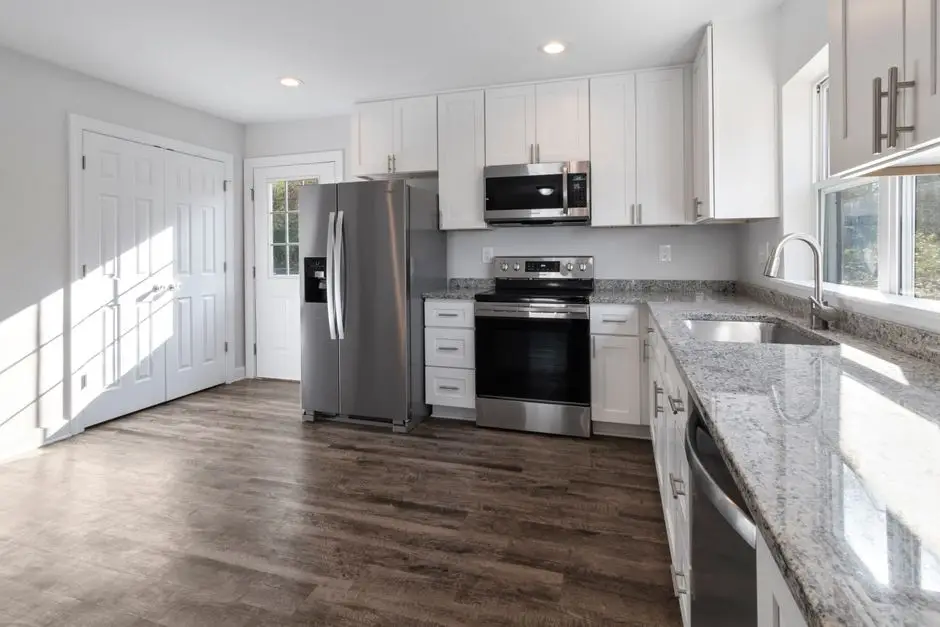
Photo by Curtis Adams on Pexels
Here’s the Honest Math on an Apartment Kitchen Refresh
An apartment kitchen refresh is one of the cheaper rooms on this entire site to fix well, because the highest-impact kitchen design upgrades — hardware, a pendant, a backsplash — are also the cheapest ones. The trap is assuming a rental kitchen needs new cabinetry or a real renovation to stop feeling like a landlord’s afterthought. It almost never does.
The $150–300 version
New cabinet hardware, one plug-in pendant or puck lights, and cabinet risers with a turntable. This alone fixes the two biggest reasons an apartment kitchen reads unfinished: dated hardware and flat, builder-grade lighting.
The $400–600 version
Add the peel-and-stick backsplash and a rolling kitchen island or bar cart on top of the fixes above. Save the vinyl floor tile for its own weekend — it’s the one project here worth doing on its own timeline instead of squeezed into the same Saturday as everything else.
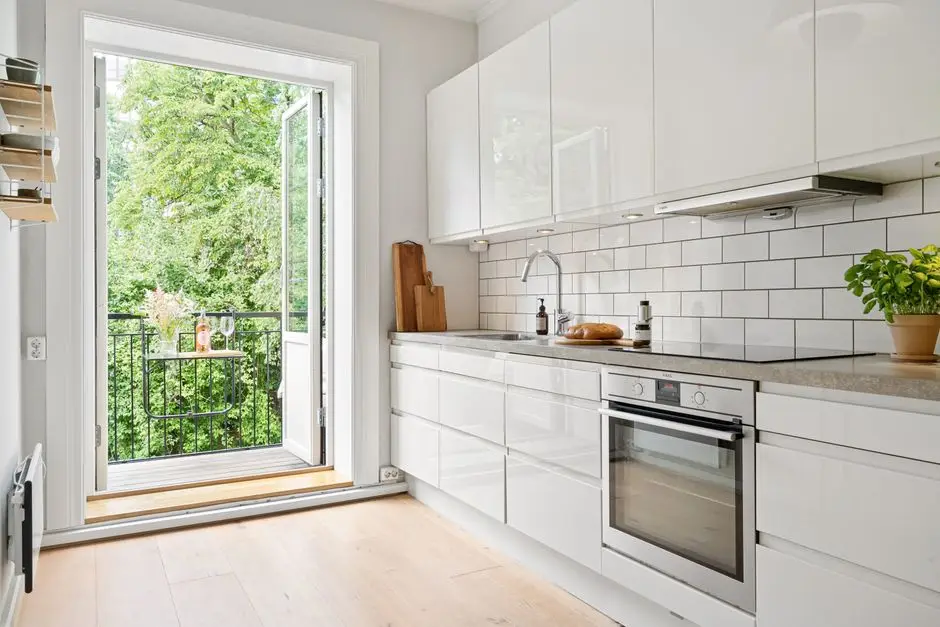
Start with the cabinet hardware. It’s the fastest before-to-after in this entire list, and unlike almost everything else here, you actually get to keep it when you move. If a full structural kitchen is more your speed than a rental refresh, our modern rustic farmhouse kitchens guide picks up where this one stops.
Frequently asked questions
How do you make an apartment kitchen look nice?
Focus on the three things a lease doesn't govern: hardware, lighting, and what's sitting out on the counter. Swap the cabinet pulls, add one warm-white pendant or puck light, and clear the counter down to the appliances you actually use daily. Those three changes cost under $150 combined and read as a finished kitchen, not a decorated rental.
What are some creative ideas for a small apartment kitchen?
A rolling cart adds counter space without needing to renovate, open shelving swaps closed cabinets for a display you control, and a peel-and-stick backsplash covers a builder-grade tile pattern in an afternoon. All three are fully reversible, which matters more in a small rental kitchen than it does in a house you own.
How can you maximize storage in a small apartment kitchen?
Stack shelf risers inside every cabinet to use the dead air above stacked plates, add a lazy Susan or turntable to corner cabinets, and mount adhesive hooks inside cabinet doors for lids and cutting boards. None of it requires drilling, and all of it comes down clean at move-out.
What are some rental-friendly upgrades for an apartment kitchen?
Peel-and-stick backsplash tile, removable wallpaper, adhesive cabinet hardware, and a freestanding kitchen cart are the four upgrades most likely to survive a landlord walk-through. Each is designed to come off without patching drywall or repainting, which is the actual test for renter-friendly, not just the label on the package.
Is $10,000 enough for an apartment kitchen remodel?
For a full remodel — new cabinets, countertops, appliances — $10,000 is tight in most US markets. This list isn't that project. Every idea here is a renter-friendly upgrade, not a remodel, and the whole list runs $150–600 total, not $10,000, because none of it touches the cabinets' bones or the layout.