
Style Guides
Warm Minimalism Interior Design: 2026 Color Palette
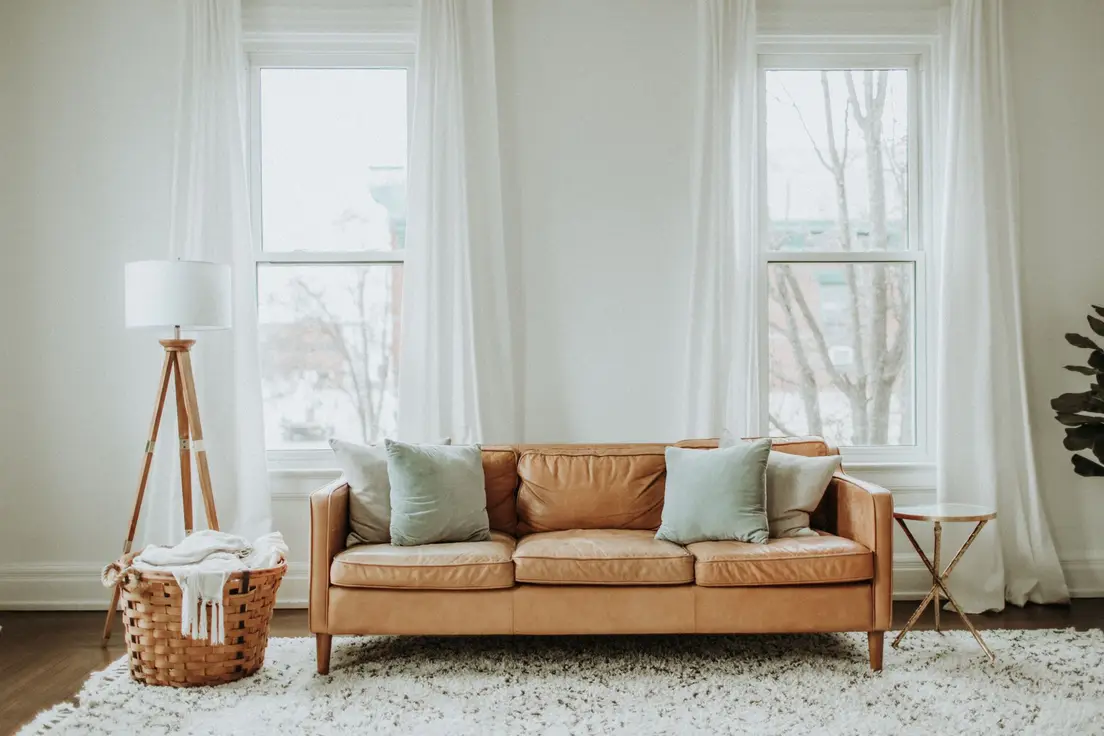
Photo by Leah Newhouse on Pexels
Warm minimalism interior design swaps the stark, catalog-white version of minimalism for warm neutrals, real texture, and a handful of pieces that actually earn their spot. None of it requires new furniture — most of the 2026 shift is paint, materials, and what you already own, styled with fewer, better choices instead of more of them. A minimalist home doesn’t have to mean an empty one.
What Warm Minimalism Interior Design Actually Means
Warm minimalism is the home design people actually want to live in — same restraint and negative space as the stark, all-white kind, minus the part that made it feel abandoned. The “fewer things, chosen deliberately” rule stays exactly the same. What changes is the palette and the materials underneath it: warm neutrals instead of bright white, real wood and linen instead of glossy laminate and glass, a minimalist interior decor plan that’s built to feel calm rather than photograph empty.
Traditional minimalism got a reputation as the aesthetic an empty apartment wears right before the open house — all restraint, zero fingerprints. Warm minimalism is what the same room looks like a year later, once someone’s actually been living in it. It borrows its design philosophy — and most of the actual principles of warm minimalism — from the same place Scandinavian design and japandi do: quality over quantity, fewer things chosen on purpose, a living space that still feels calm rather than staged. It just runs with warmer numbers than the strictest minimalist interior design purists prefer.
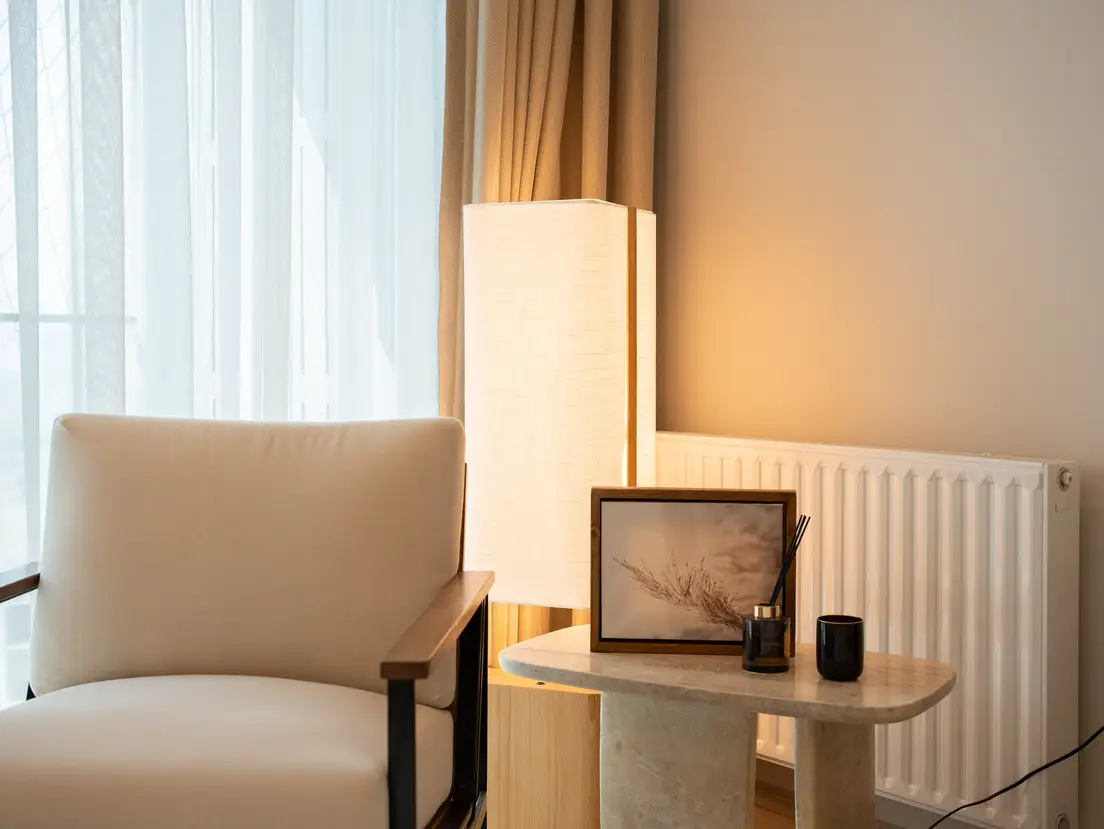
Photo by Ansar Muhammad on Pexels
Build a Warm Neutral Color Palette Before Anything Else
Start with the wall color, not the furniture — the palette is doing more work here than any single piece will. Swap stark white or cool gray for a warm, muted neutral: greige, oatmeal, warm taupe, or a soft clay. These read calm under daytime light and don’t turn blue-gray at night the way a cooler white does.
Add one grounding tone — a rust, olive, or deep terracotta — in a single place, a pillow or a vase, not spread across the room, so there’s a focal point instead of a wash of the same beige. A gallon of a warm neutral runs $35–50 and covers most rooms with a coat to spare. Test it on the actual wall for a full day before committing — we once painted three coats over a rental’s “eggshell” before realizing the old color needed a stain-blocking primer first, because nobody had disclosed what was actually under it. Twenty minutes with a swatch would’ve saved us the weekend.
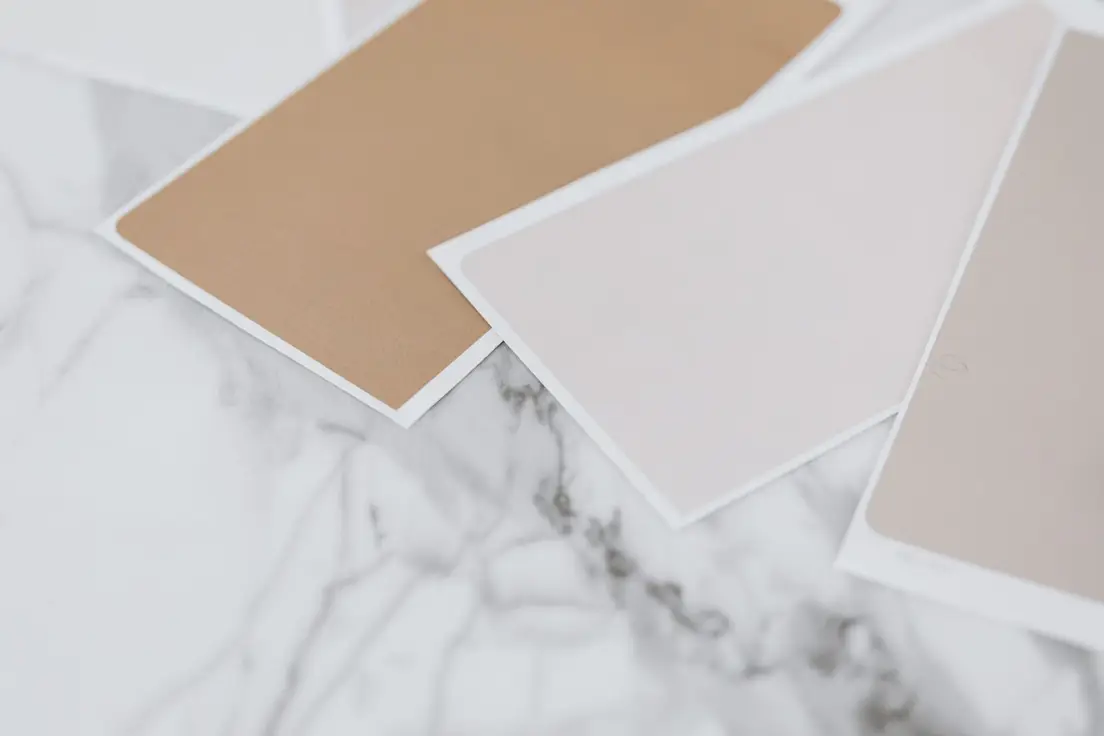
Photo by Karola G (kaboompics.com) on Pexels
Choose Natural Materials: Linen, Wool, and Terracotta Over Glossy Finishes
Material choice is the other half of “warm” — glossy laminate and cold metal read stark no matter what color surrounds them. Natural linen upholstery, a wool or boucle throw, unfinished or lightly oiled wood flooring, and one earthy terracotta or unglazed ceramic piece cover most of what a warm minimalist room needs.
None of it is expensive on its own: a linen pillow cover runs $15–25, a wool throw $40–70, a terracotta planter under $20. Stick to two or three materials total — wood, linen, wool is a safe combination — more than that starts competing with itself instead of reading clutter-free and intentional. A glass-and-chrome coffee table in a warm minimalist room is the one guest who didn’t get the dress code.
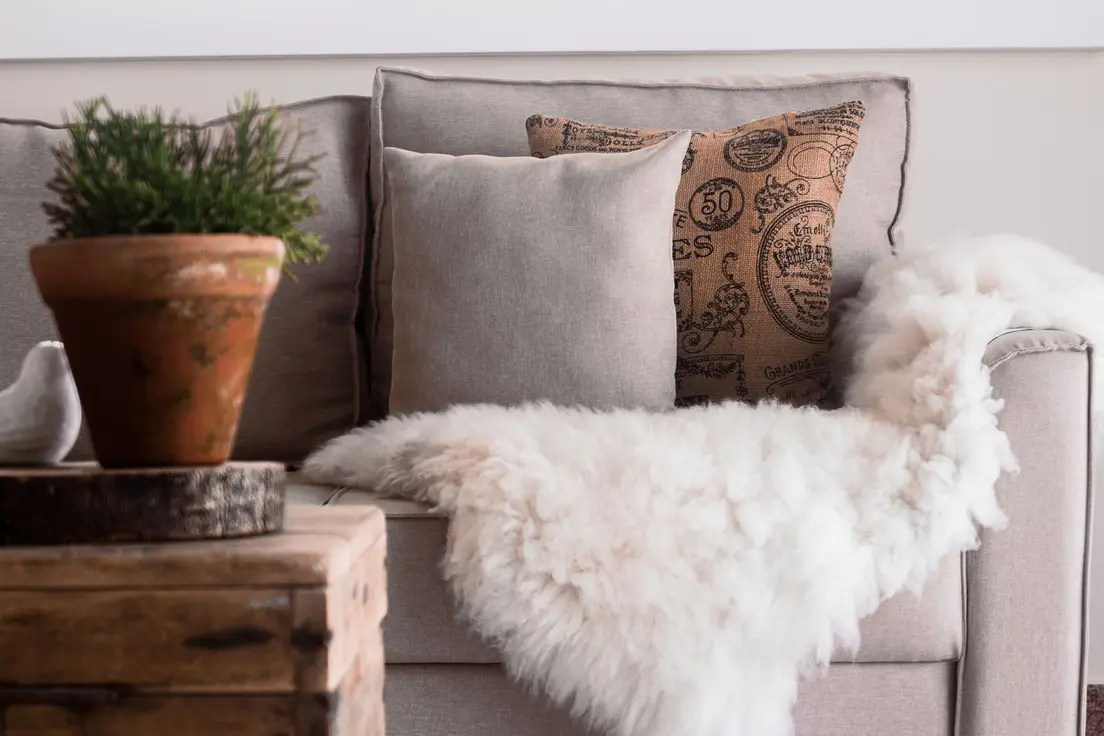
Photo by Luke de Moura on Pexels
Layer In Texture So the Room Doesn’t Read Cold
Texture is the actual difference between “warm” and “sterile” once the paint and materials are right. A woven jute or wool rug, a nubby throw, a linen slipcover — none of it adds visual clutter, since it’s still inside the neutral palette, but it adds real visual interest and keeps the room uncluttered instead of just empty.
Skip this step and a warm-toned room still photographs a little stiff, like the color got the memo and the texture didn’t. Budget $60–150 for a rug or two textiles; that’s usually enough to fix a room that looks right on camera but feels like a hotel room in person. Go bigger than feels reasonable on the rug specifically — front legs of every seating piece on it is the rule of thumb, or it floats in the middle of the room like it’s still deciding whether to stay.
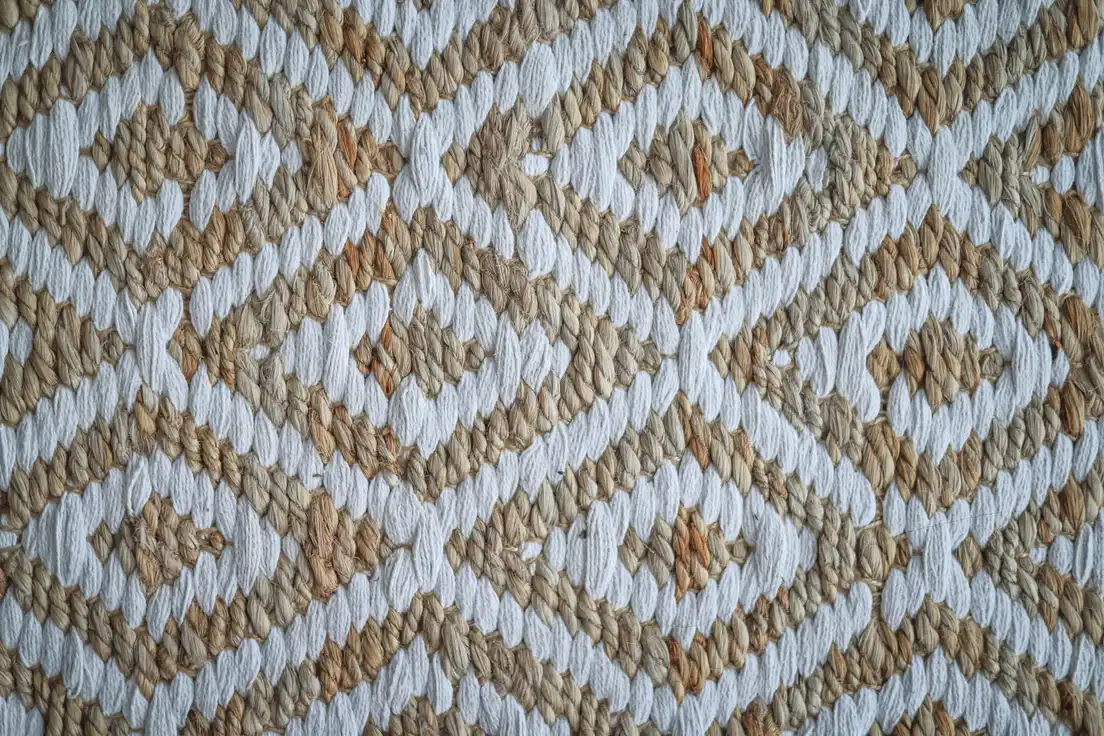
Photo by Valeria Boltneva on Pexels
Pick Furniture With Clean Lines That Still Feels Tactile
One piece of minimalist furniture decides whether the room reads warm minimalist or just sparse: the sofa or the main seat. Keep the silhouette simple — no busy tufting, no skirted base — but choose a nubby boucle, a soft linen, or a worn leather over a smooth poly-blend. Organic shapes (a rounded arm, a curved back) read just as edited as hard right angles, and they’re the warmer choice.
A wood-framed accent chair in a warm tone does more for the “tactile, not stark” goal than a second neutral pillow ever will. A well-made piece in a natural fabric runs $600–1,800 depending on size; it’s the one splurge worth planning for, everything else on this list is cheap on purpose. (We’ve sat in the smooth poly-blend version exactly once, in a showroom, and left with static cling and zero regrets about skipping it.)
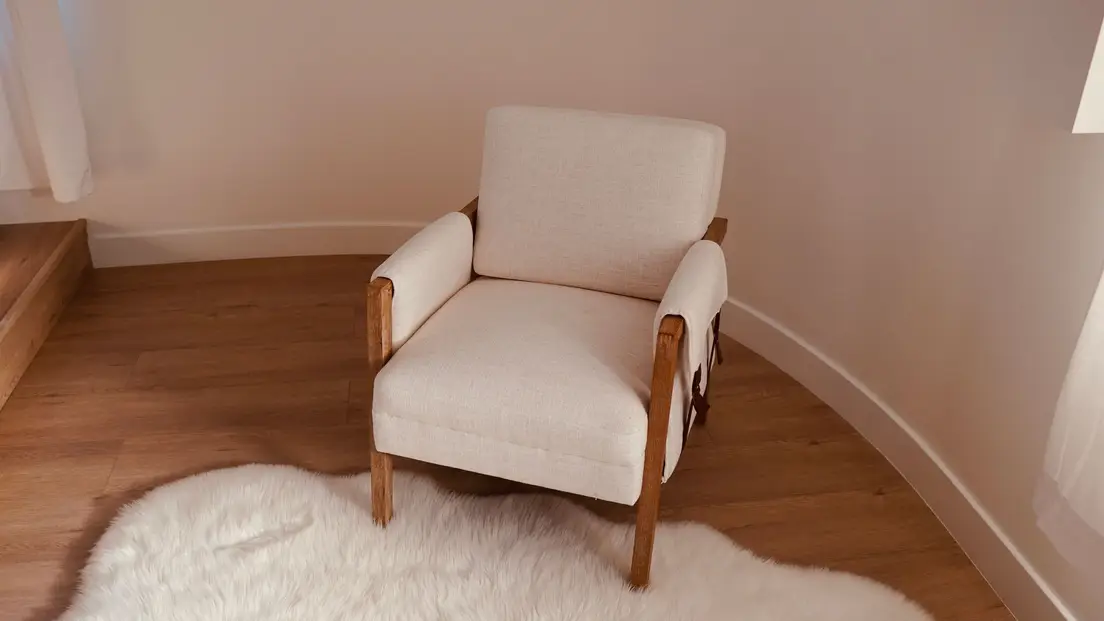
Light the Room Warm, Not Sterile
A cool-white bulb undoes every warm paint choice on this list in about four seconds. Swap any builder-grade bulb for a warm 2700K — ENERGY STAR’s own color-and-mood guidance puts 2700K–3000K at the yellow, incandescent-matching end of the scale, exactly the range that reads warm instead of clinical. The same fixture reads completely differently once the light stops being blue-white.
A floor or table lamp at seating height does more than an overhead fixture ever will. Turn the overhead off at night and see how much of the room’s “cold” problem was actually lighting, not furniture. A pack of warm bulbs runs under $15 — the highest-leverage, lowest-cost fix on this entire page. An overhead fixture left on its own is the fastest way to make a warm room feel like it’s under interrogation.
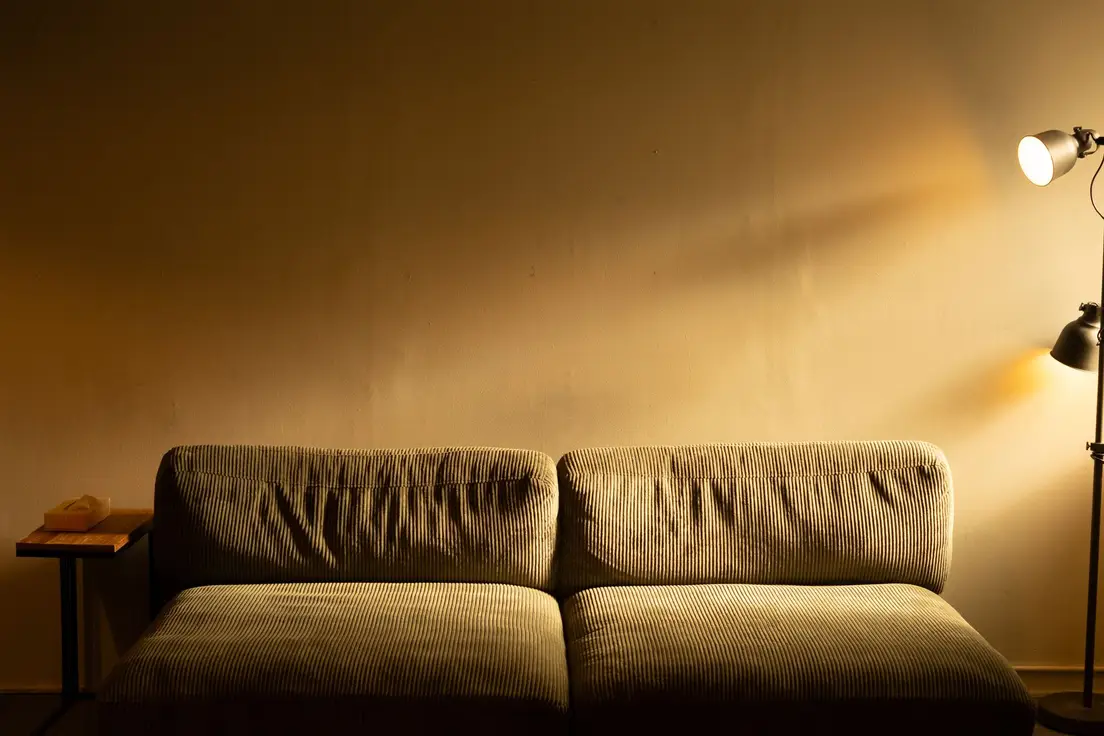
Photo by Josh Sorenson on Pexels
Add One Sculptural or Ceramic Accent, Not a Shelf Full
One decorative piece with real shape does more than five small matching accessories. Unglazed ceramics, a rounded stone bowl, a mirror with a plain frame, or one abstract art print — pick one piece with real presence, and it adds more character to a shelf than five small matching pieces.
A shelf with one sculptural object reads intentional; a shelf with eight small objects on it isn’t a style choice, it’s a display case nobody’s dusting. A good ceramics piece runs $20–60 secondhand or from a small studio — skip the mass-produced version if it’s meant to be the room’s one quiet flex.
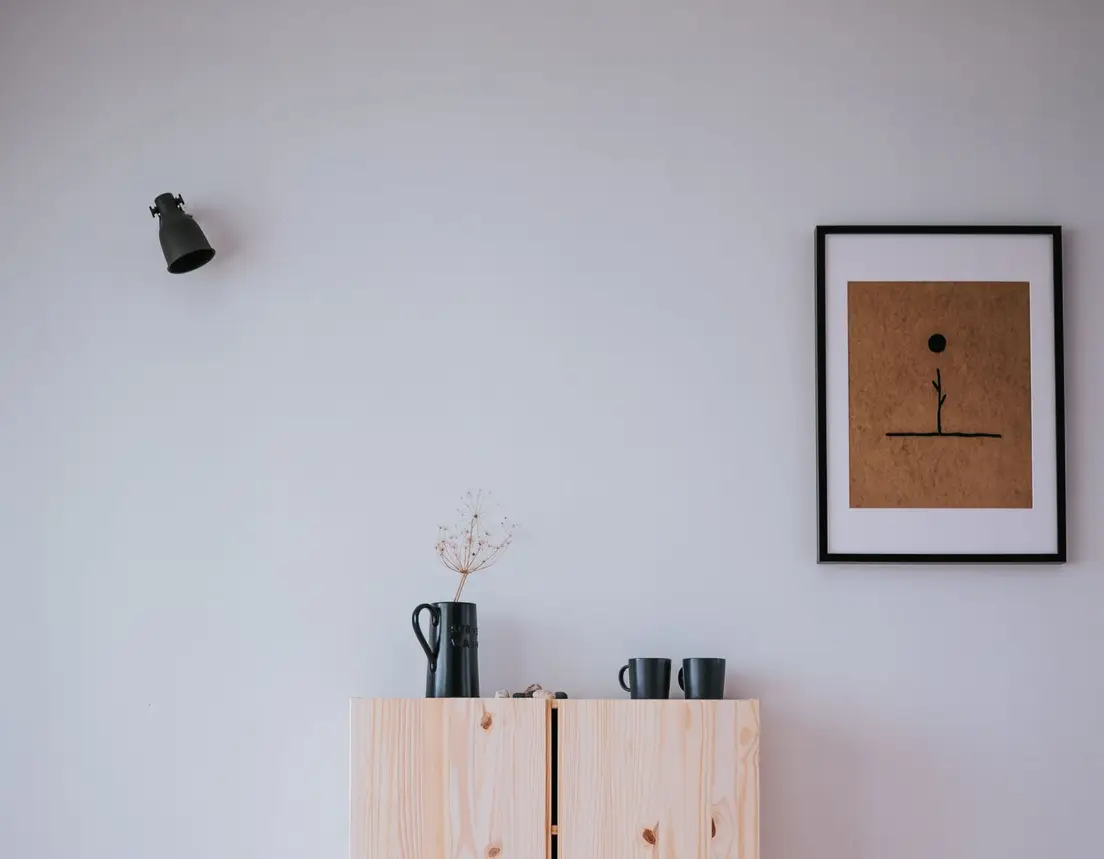
Photo by PNW Production on Pexels
Bring Warm Minimalism Into a Living Room
A warm minimalist living room is the easiest room to apply this to, since a sofa, a rug, and a lamp already do most of the work — and the same warm neutral palette usually carries straight into an open, minimalist kitchen without a hard stop at the cabinets. Start with the palette and the rug, then let the sofa be the one splurge — if the current sofa already fits the simple-silhouette rule, don’t replace it. Swap the pillow covers and the bulbs first and see how far that gets you before spending on furniture.
Our modern minimalist living room guide goes deeper on the colder, stricter version of this look, if stark still fits the space better than warm does.
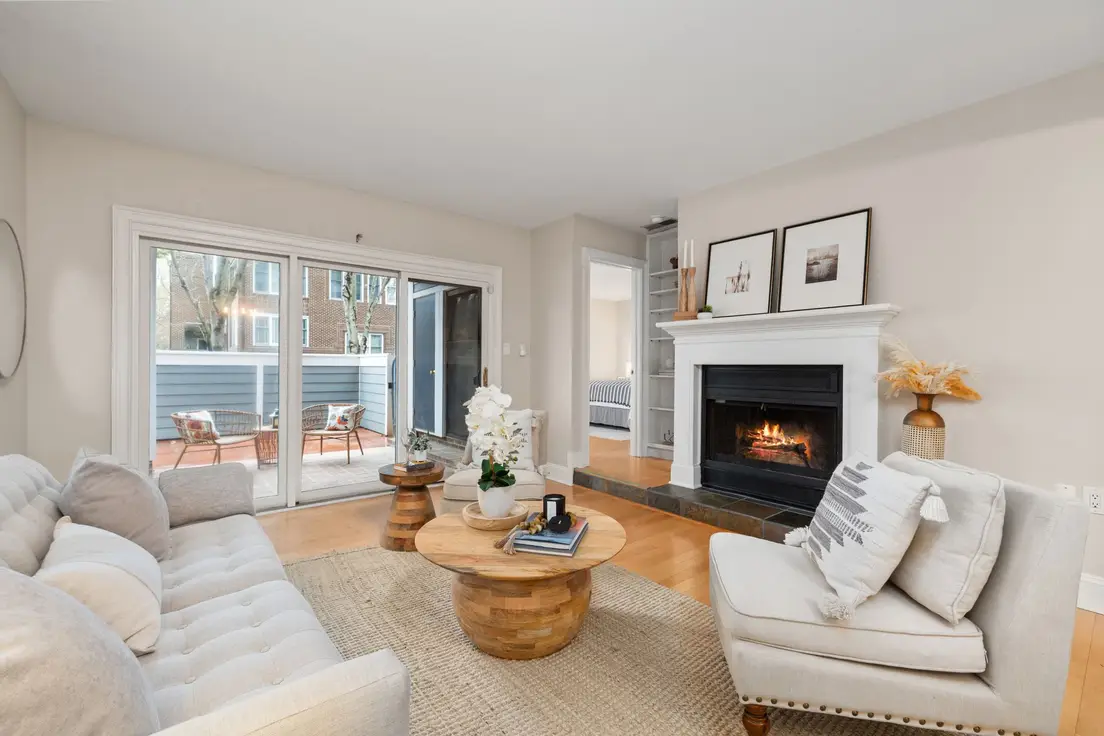
Photo by Curtis Adams on Pexels
Bring Warm Minimalism Into a Bedroom
A bedroom is the lowest-risk room to go warm minimalist in, since nobody else has to approve the palette. Linen or cotton bedding in a warm neutral, one wood or rattan headboard, and a single textured wall piece cover most of it.
Skip the matching nightstand pair if two close-enough ones are already sitting in the garage — a warm minimalist bedroom cares more about consistent tone than a perfectly matched set. Warm light does more here than anywhere else in the house, since it’s the last thing you see before the lights go off. Our master bedroom ideas guide has the fuller room-by-room breakdown of warm minimalist decor if the bedroom is the whole project, not just one piece of a bigger one.
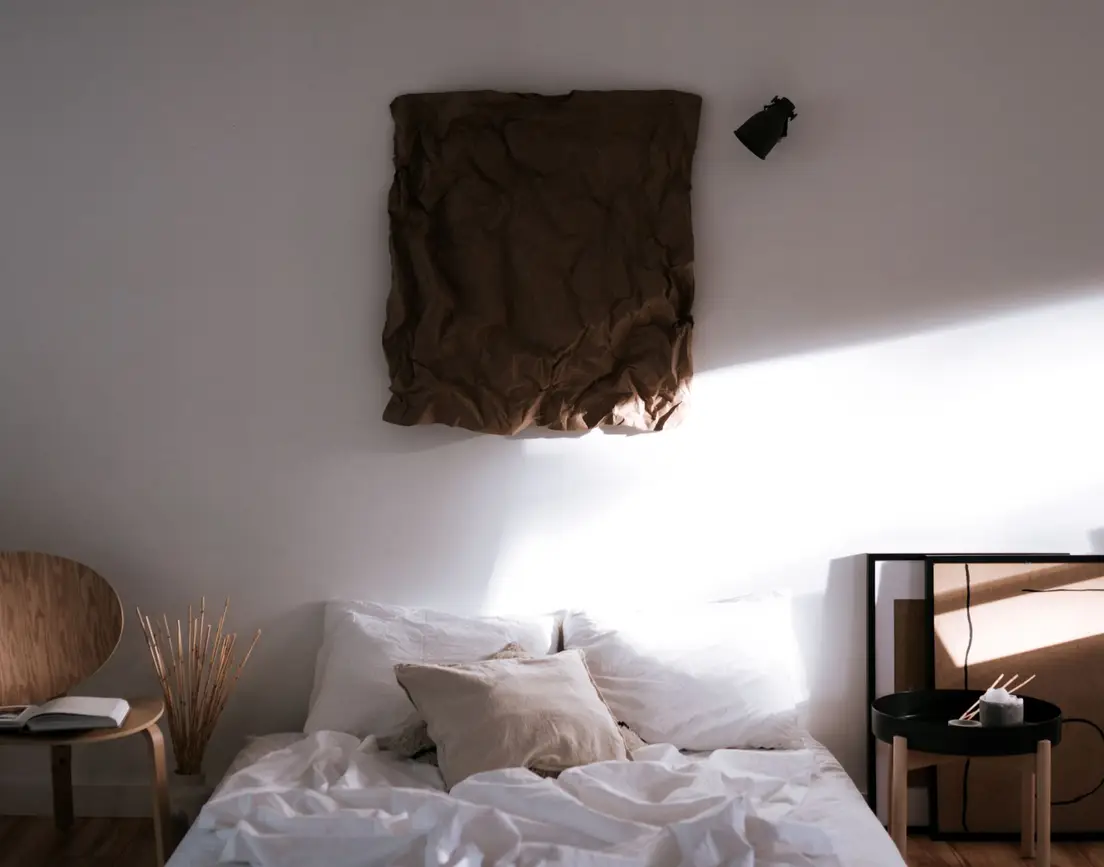
Photo by PNW Production on Pexels
Warm Minimalism vs. Traditional Minimalism: What to Skip
Skip anything that trades warmth for a sharper photo: glass tables, chrome legs, an all-white palette with nothing to break it up. Traditional, cold minimalism optimizes for how a minimal interior photographs empty; warm minimalism optimizes for how it feels lived in — same design principles, different priority. If a piece only works with absolutely nothing else around it, it’s probably the wrong pick for this version of the style.
Paint and lighting solve more of a room’s “feels cold” problem than new furniture does — the two cheapest fixes on this entire page do more than any splurge on it. The opposite instinct entirely — more color, more pattern, more personality on the walls — is dopamine decor, for when restraint stops feeling relaxing and starts feeling like a rule you didn’t agree to.
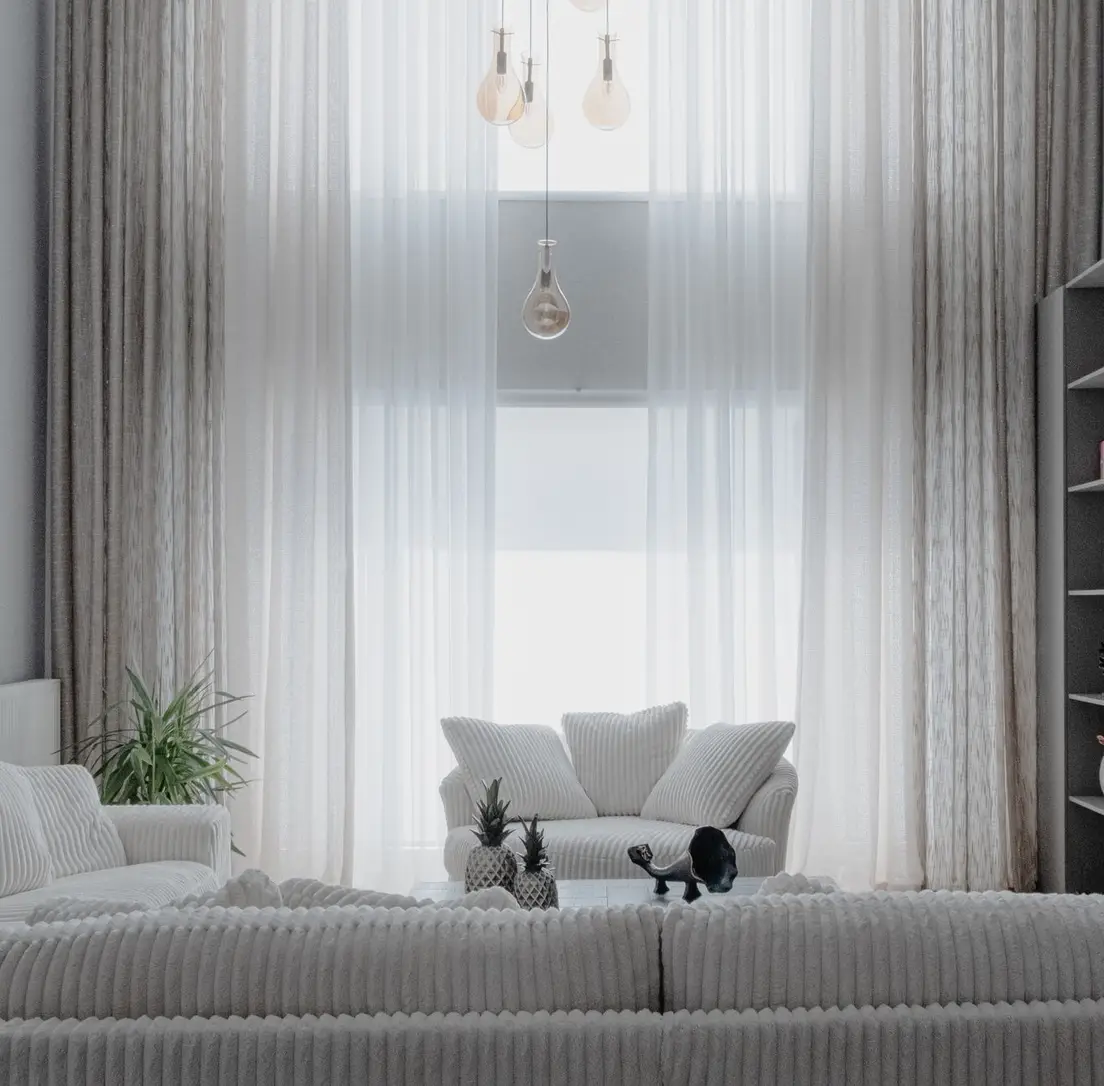
Photo by Beyza Kılıçdere on Pexels
The Honest Math: Building a Warm Minimalist Room on a Budget
Warm minimalism is one of the cheaper style directions on this site to do well, since the whole point is fewer purchases, not more — the trap is assuming “warm” means buying an entirely new, coordinated furniture set. It doesn’t. Most of what’s above is under $150 per idea, and two of them are close to free.
The $0–150 Version
Paint one wall or the whole room a warm neutral, swap bulbs to 2700K, and add one textile — a throw or pillow covers in a tone that’s already close. This alone fixes the two biggest reasons a room reads cold: lighting temperature and a wall color doing the stark version’s job.
The $500–800 Version
Add the furniture upgrade and one ceramic accent on top of the free fixes above. That’s roughly the range our planned $700 living room glow-up Look will walk through once it’s live — skip the accent piece if the budget’s tighter and the room still works with one fewer object.

Photo by Karola G (kaboompics.com) on Pexels
Start with the paint, not the sofa. Everything else on this list reads warmer once the wall behind it stops being the coldest thing in the room.
Frequently asked questions
What is warm minimalism?
Warm minimalism is a version of minimalist design that keeps the restraint and negative space of traditional minimalism but swaps stark white and cold materials for warm neutrals, natural texture, and a few pieces with real presence. The rule is still 'fewer, better things' — the palette and materials underneath it are just warmer.
How is warm minimalism different from traditional minimalism?
Traditional minimalism leans on bright white, glossy finishes, and hard edges — it photographs well empty but can feel sterile once someone's actually living in it. Warm minimalism keeps the same edited approach but uses warm neutrals, natural materials like linen and wood, and warm-toned lighting, so the room reads calm instead of cold.
What are some examples of warm minimalism decor?
A warm greige or clay wall color, a linen sofa instead of a glossy leather one, a wool or jute rug, one ceramic or ceramic-style vase instead of a shelf of small objects, and warm 2700K lighting instead of a cool-white overhead fixture. Two or three natural materials — wood, linen, wool is a safe combination — cover most of the look.
Is minimalism still popular in 2026?
Yes, but the version gaining ground is the warmer one — search interest in 'warm minimalism' has grown alongside a documented shift away from the starkest, all-white minimalist rooms toward warmer neutrals and more texture. The core minimalist habit of editing down to fewer, better things hasn't gone anywhere; it's the palette that's changed.