
Bedroom
Bedroom Ideas for Couples: 11 Fixes for a Shared Room
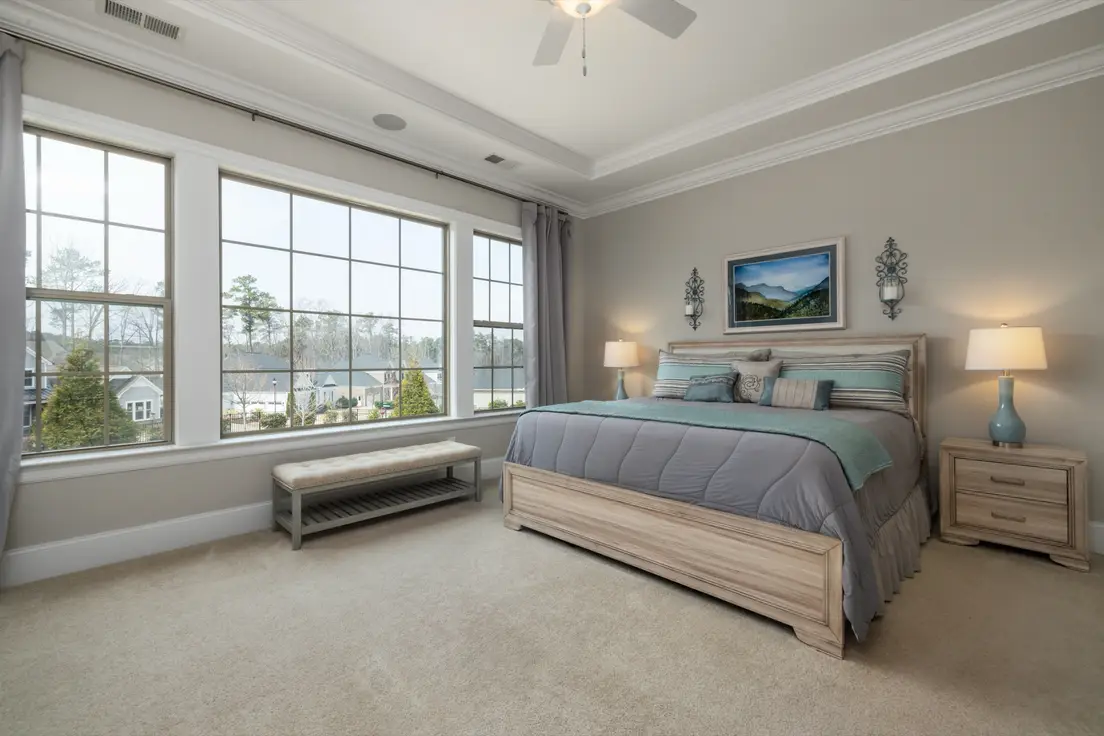
Photo by Curtis Adams on Pexels
The best bedroom ideas for couples solve the same problem first: two people, one room, and slightly different ideas of what “comfortable” means. Start with a bed big enough for both, matching nightstands with a light on each side, and storage split evenly down the middle, then add style. Most of the fixes below cost under $100, and none involve deciding who’s right about the thermostat.
Size the Bed and Headboard for Two: Queen vs. King
The bed is the one purchase a couples bedroom can’t fudge. A queen mattress is 60 inches wide, which gives each person 30 inches — about the width of a crib mattress, if you’ve ever wondered why one of you wakes up on the edge. A king is 76 inches, or 38 inches each, close to a twin bed per person. Go king if the room leaves roughly 30 inches of walkway on both sides of the bed; otherwise a queen with a good mattress is the smarter call. A mattress with low motion transfer matters more than bed size if one of you gets up early. Then add a headboard both of you lean against: an upholstered fabric headboard ($150–300) is the bedroom decor piece couples use most, because it’s the backrest for every late-night conversation.
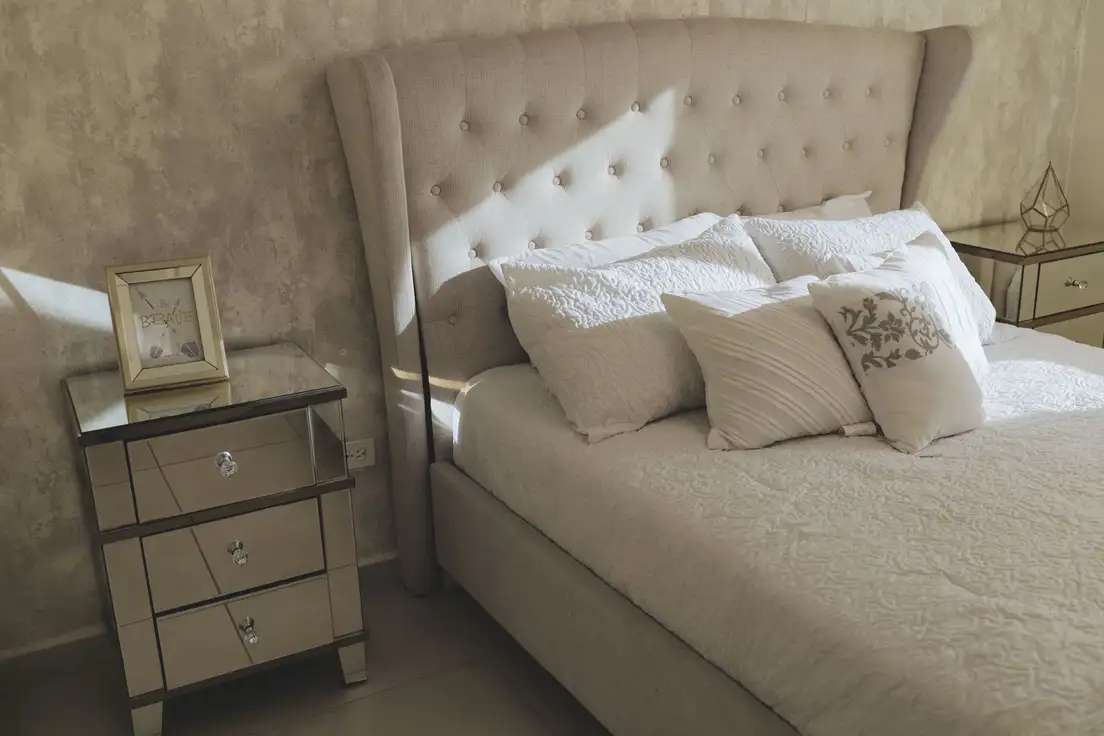
Photo by Luis Quintero on Pexels
Give Each Person a Matching Nightstand and Bedside Lamp
Two matching nightstands are the cheapest way to make a shared bedroom look designed instead of assembled. One nightstand and a stack of books on the floor tells everyone which side of the bed lost the negotiation. A pair runs $80–200 for basic two-drawer models; aim for 24–28 inches tall, roughly level with the top of the mattress. They don’t need to be identical inside — one side can hold a phone charger and a book, the other a hand cream collection that has its own ecosystem — but on the outside, match the size and finish so the bed reads as symmetrical.
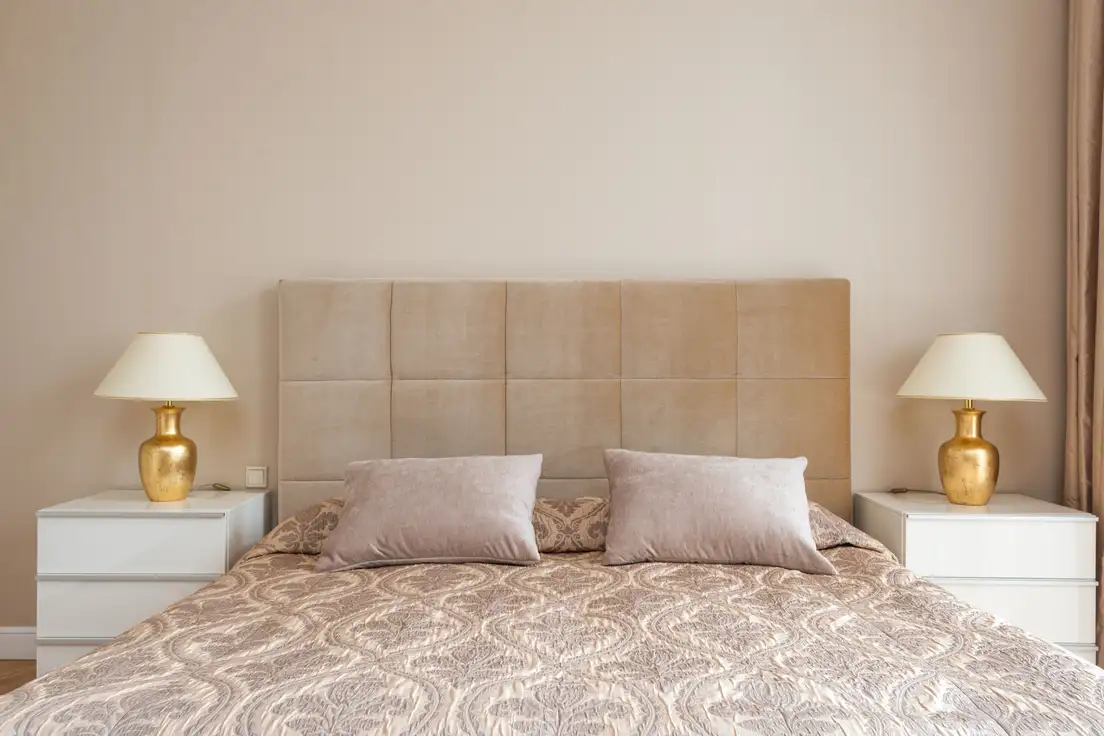
Photo by Max Vakhtbovych on Pexels
Mount a Wall Sconce or Lamp for Each Side of the Bed
Two people rarely go to sleep at the same minute, so each side needs its own light. Swing-arm wall sconces ($40–80 each, plug-in versions need no electrician) aim light at one pillow instead of the whole room. The ceiling light is not a reading lamp. It’s an alarm clock for whoever is already asleep. Use warm 2700K bulbs, and add a dimmer or smart bulb ($15–20) so the light that’s on can go low. If you prefer table lamps, buy them as a pair with matching shades — two different bedside lamps undo the symmetry the matching nightstands just bought you.
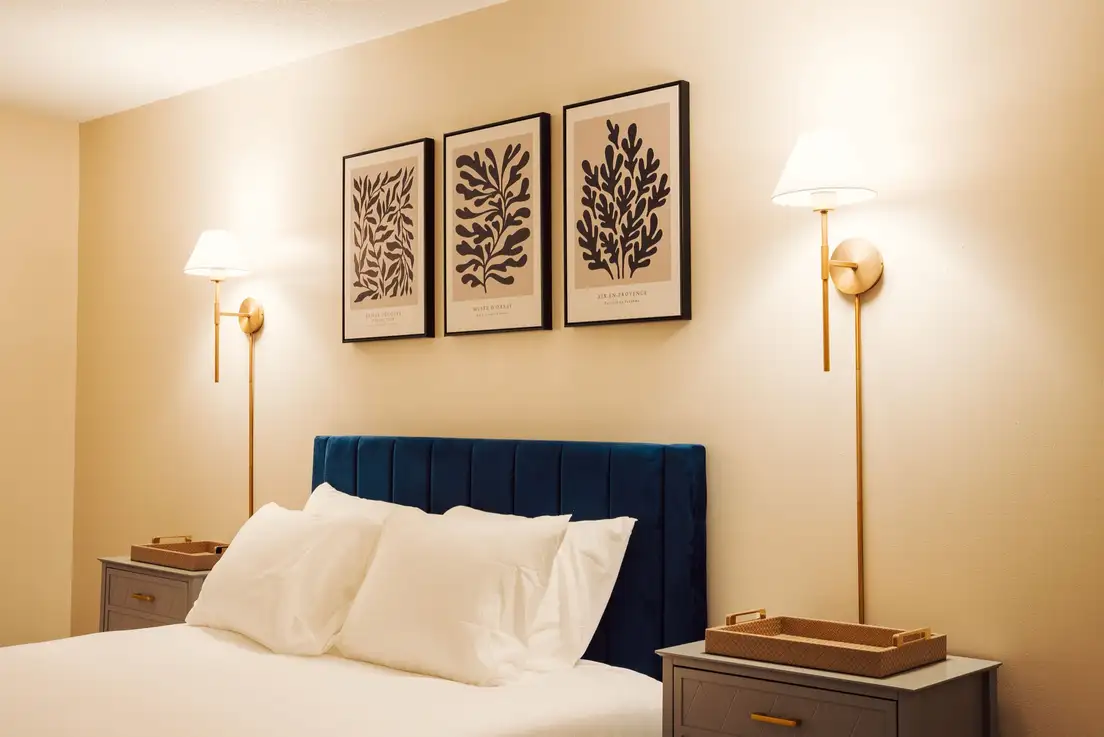
Photo by Raphael Loquellano on Pexels
Layer Two Duvets and Mixed Textures Instead of One Comforter
Separate duvets on one bed — sometimes called the Scandinavian sleep method — end the 3 a.m. blanket tug-of-war for about $60–120. Use two twin-size duvets in the same color over a shared fitted sheet and pillows. Each person picks their own warmth: one lightweight, one heavy. A single duvet shared between a hot sleeper and a cold one guarantees that one of you is always wrong. During the day, fold both at the foot of the bed or layer a throw blanket across the top, and nobody can tell from the doorway. Mix textures on top — a waffle-knit or faux fur throw, linen pillow covers, two throw pillows in an accent color — so the bed looks layered, not split. One texture per layer is plenty.
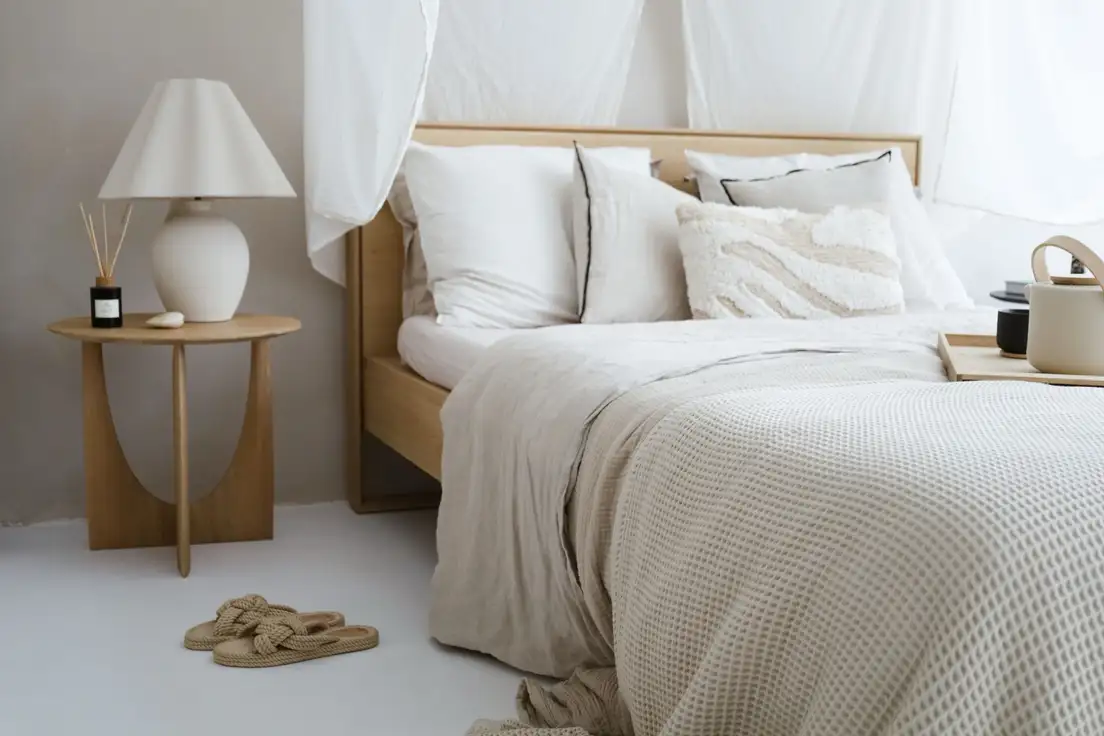
Photo by Natalia Walusiak on Pexels
Set a Romantic Bedroom Mood With Dimmers and Candles
A romantic bedroom is mostly a lighting problem, not a decor problem. Put the main fixture on a dimmer ($20–30), keep bedside lamps on warm 2700K bulbs, and add one or two candles or flameless LED candles for date night. That’s it. Agree on scent first: one person’s favorite candle is the other one’s headache, so unscented candles or a low essential oil diffuser are the safe middle. Rose petals and heart-shaped pillows read as a hotel honeymoon package. Low, warm light reads as a room two adults actually live in, and that ambiance is most of what makes a couple bedroom feel intimate. Keep real candles on a stable tray at least 12 inches from curtains and bedding, and never leave them burning while you sleep — the NFPA reports that more than a third of home candle fires start in the bedroom.
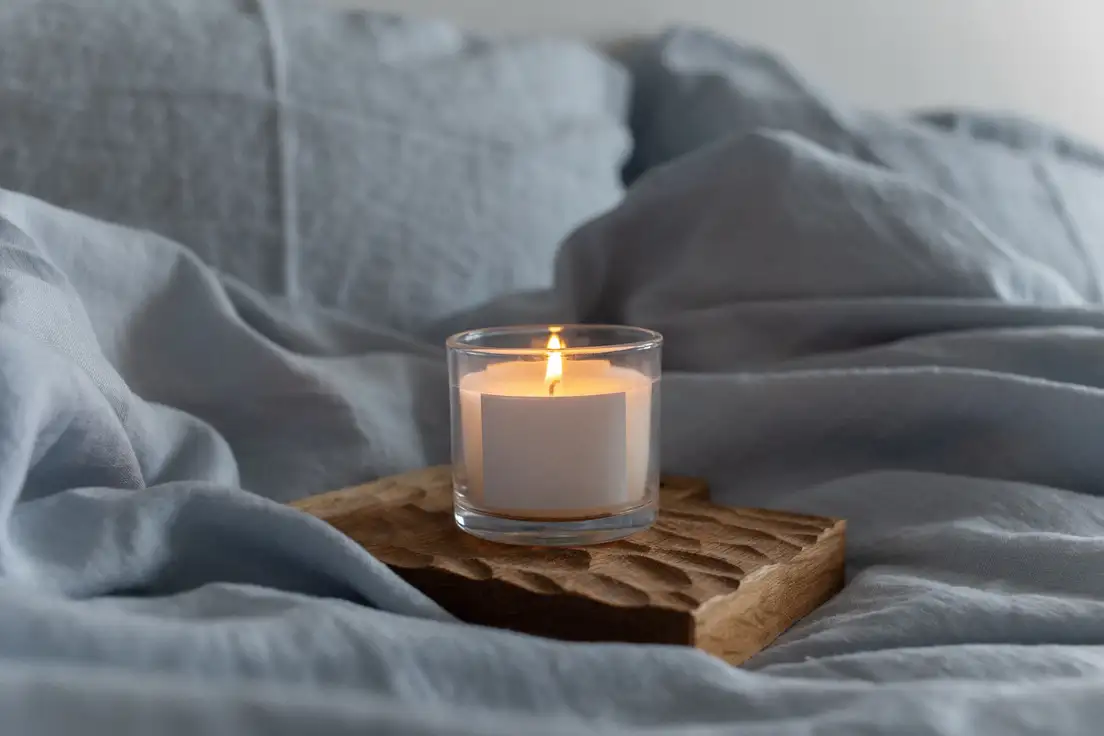
Photo by KATRIN BOLOVTSOVA on Pexels
Anchor the Bed With a Rug Big Enough for Both Sides
The rug should reach both people’s feet in the morning, not just the side closest to the door. For a queen, buy an 8×10; for a king, a 9×12. Both sides of the bed should get at least 18–24 inches of rug, so whoever gets up first steps onto something soft. A 5×7 tucked under one side looks like it’s apologizing for being there. Expect $150–300 for a flat-weave or low-pile 8×10 at the time of writing.
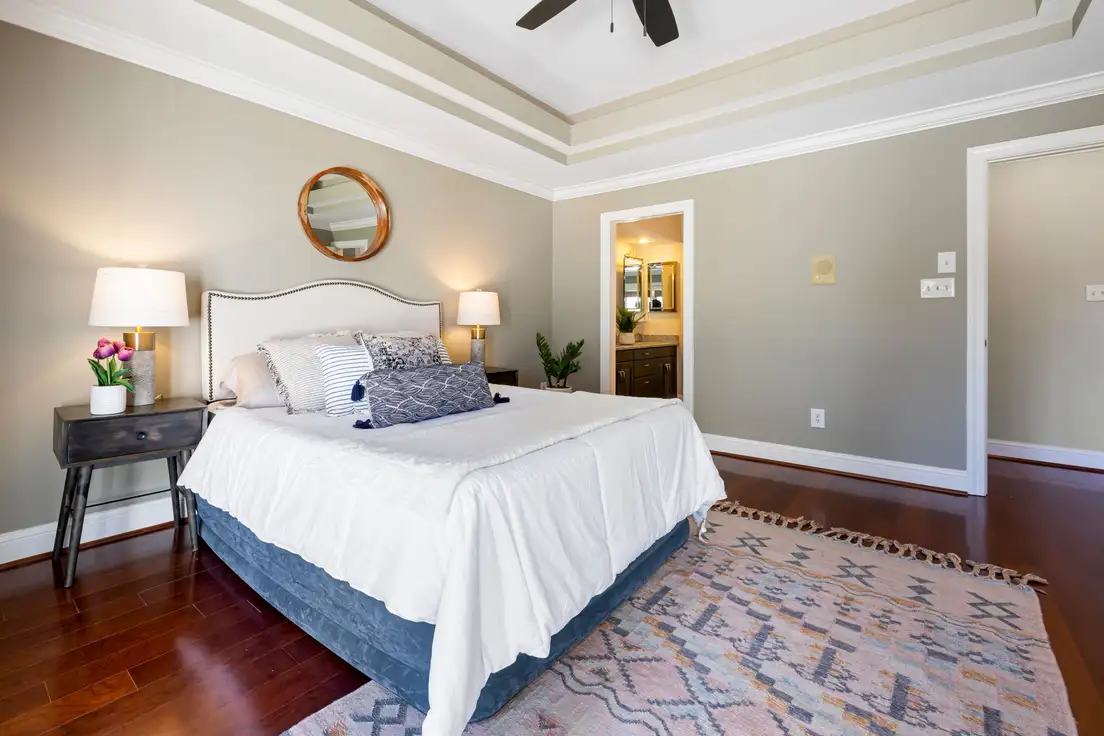
Photo by Curtis Adams on Pexels
Split the Storage Evenly: Dresser, Closet, and a Storage Bench
Uneven storage starts more bedroom arguments than paint colors do. Split the dresser drawers down the middle, give each person half the closet rod, and add a storage bench at the foot of the bed for extra blankets ($100–200). Under-bed drawers or bins ($30–60) catch the overflow. If one person owns noticeably more clothes, say so out loud and agree on the split once, rather than letting their sweaters slowly colonize the other side. A closet divider tag costs $8 and settles it permanently. These storage solutions do more for a calm couple bedroom than any decor will.
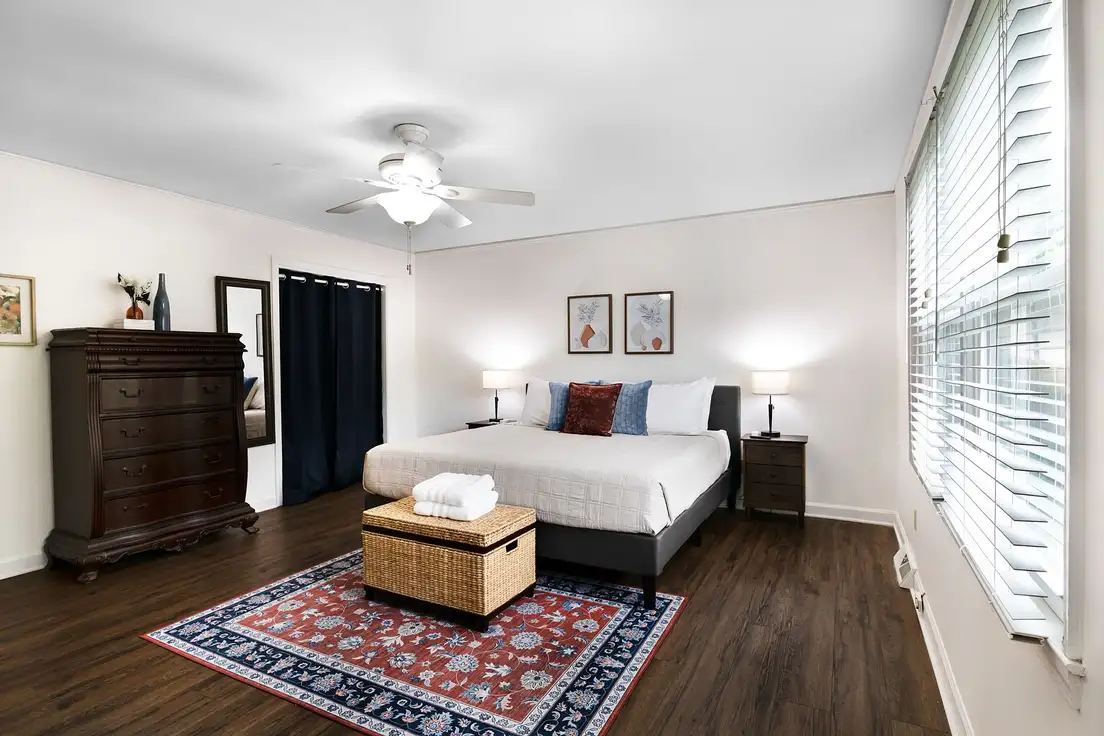
Photo by Arshad Khan on Pexels
Hang Blackout Curtains for Two Different Schedules
If one of you works early and the other works late, blackout curtains are the most useful thing on this list. A pair of blackout panels runs $40–80; hang the rod 4–6 inches above the window frame and a few inches past each side so light doesn’t leak around the edges. Layer a sheer curtain in front for daytime natural light, and pick a curtain color one tone darker than the wall color. Whoever sleeps in on Saturdays will treat this as the best purchase you’ve ever made together.
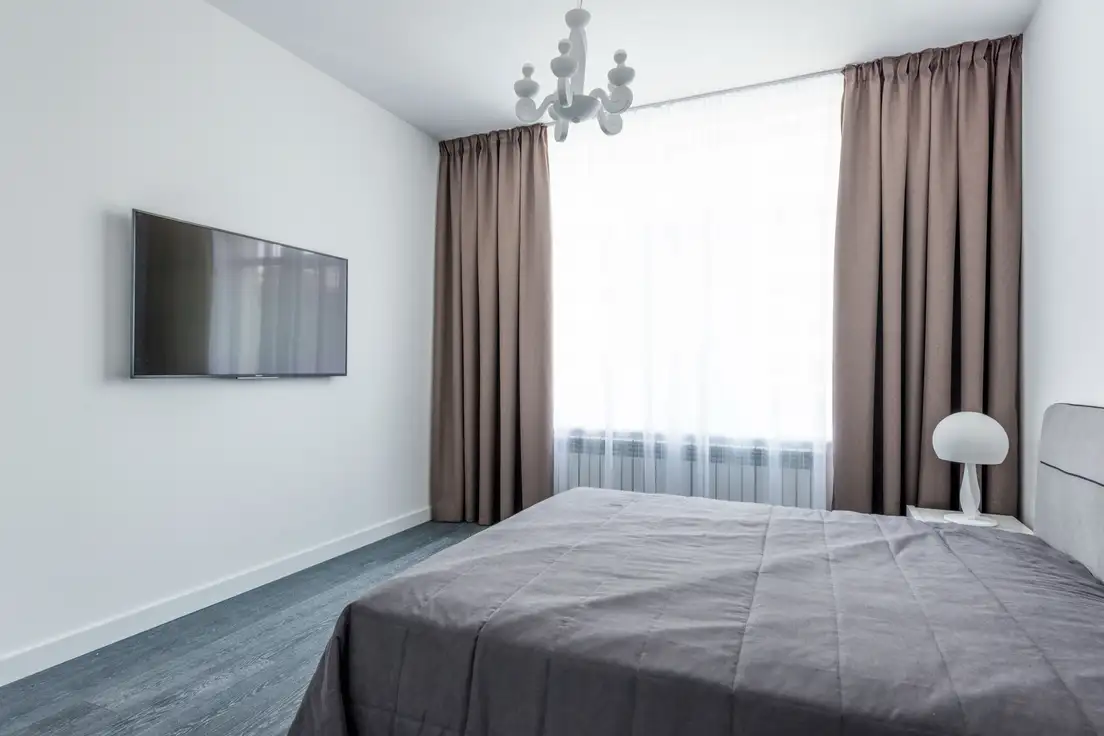
Photo by Max Vakhtbovych on Pexels
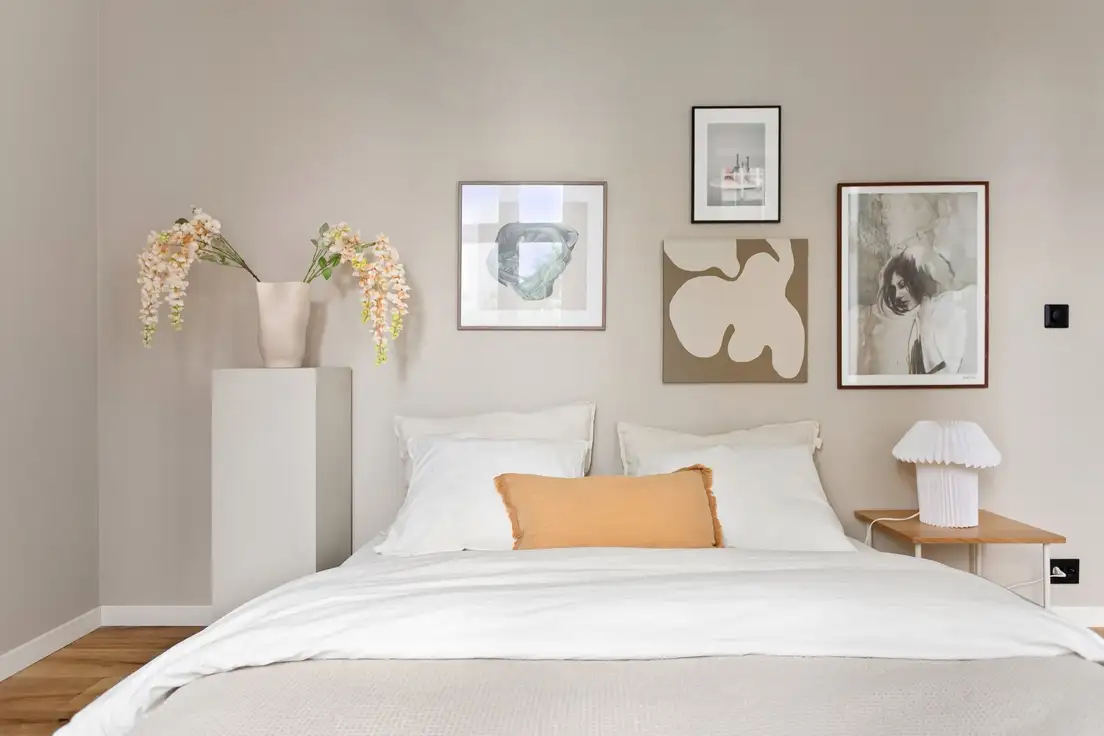
Pick Neutral Tones Together, Then Personalize With Framed Wall Art
Choose a neutral base you can both live with — warm white, beige, greige, or a soft sage green — and let personality show up in smaller things. If one of you wants moody and the other wants airy, compromise with a single accent wall or peel-and-stick wallpaper behind the headboard. Neutral walls are the closest thing a couple has to a treaty. Then add a gallery wall above the bed or dresser: a few frames of your own photos, a print one of you loves, a piece from a trip. Frames run $10–25 each; mix sizes but keep the frame color consistent so it looks like one decision. A leaning mirror beside the dresser adds natural light without adding opinions. Rustic, retro, or minimalist — the wall art can carry the style; the walls and big furniture stay neutral and harmonious. Paint, art, and a plant or a vase of florals are easier to change than furniture, so experiment there first.
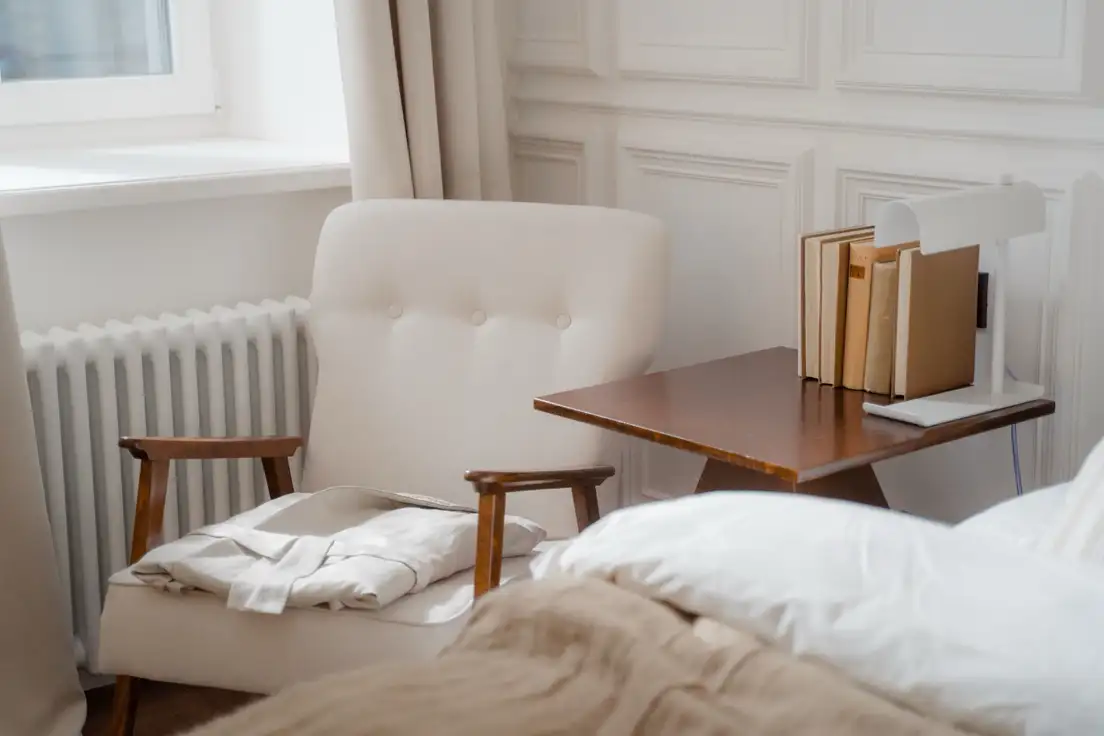
Add a One-Person Seating Area With an Accent Chair
A couple’s shared bedroom still needs one spot that belongs to one person at a time. If the room has a spare corner, an accent chair or small loveseat ($150–400) with a side table and a floor lamp gives whoever is awake a place to read without the bedside light keeping the other one up. It also gives the clean laundry somewhere to sit that isn’t the bed. (We say that with love. The chair will hold laundry at some point. Plan for it.)
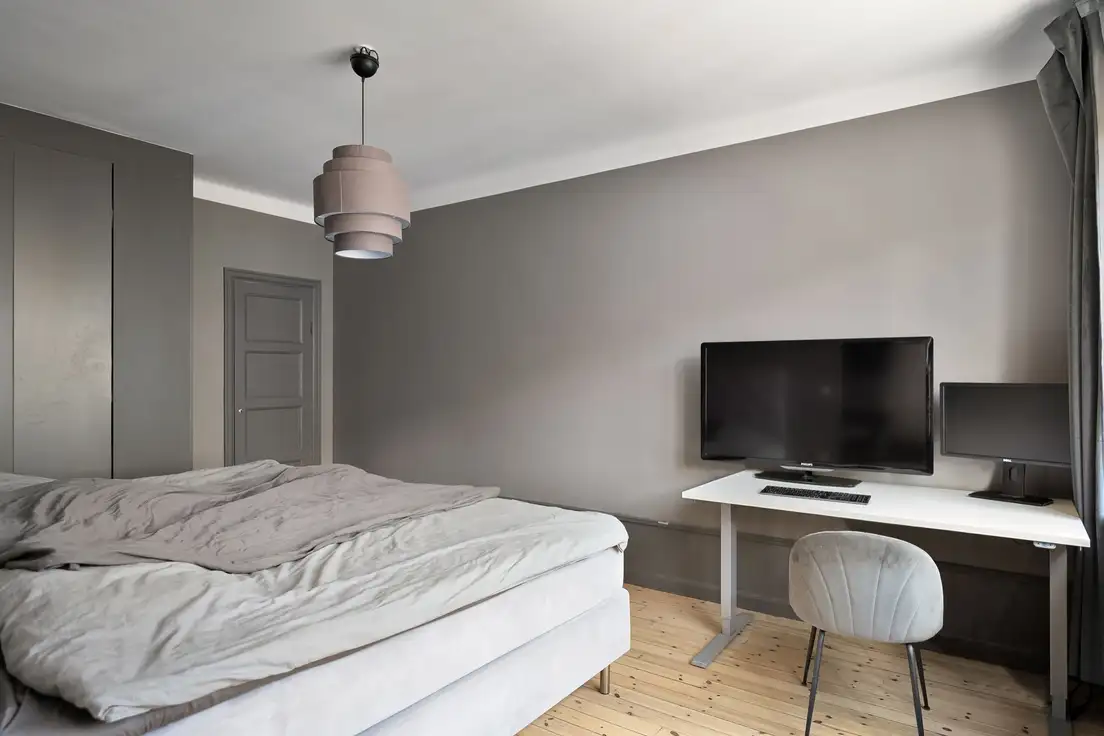
Keep the Desk Out of the Bedroom if You Can
A desk in a couples bedroom means one person’s work happens a few feet from the other’s sleep. If there’s any other spot in the home — a corner of the living room, a hallway nook — put the desk there. If the bedroom is the only option, pick a narrow wall-mounted or folding desk, face it away from the bed, and give it its own task lamp so the main light can stay off. A glowing monitor at 11pm is not a romantic light source, no matter how good the dimmer is.
The Honest Math: What a Couples Bedroom Refresh Costs
Here’s the honest math, added up instead of estimated:
- Fairness core — about $380: matching nightstands ($140), two plug-in swing-arm sconces ($110), warm bulbs and a dimmer ($30), two twin duvets ($100).
- Full refresh — about $650: everything above, plus an 8×10 rug ($200) and blackout curtains ($70).
- If the bed is too small: a king mattress and frame add $900–1,500, which is why it’s worth deciding last, not first.
Do the $380 version first. Lighting and fair storage solve more couples’ bedroom complaints than new furniture does, and you’ll know whether you still want the bigger bed once each side has its own light. Live in it for a week before buying anything bigger. Our master bedroom ideas guide covers more master bedroom decor ideas, and the best color for bedroom walls guide covers palettes two people can agree on.
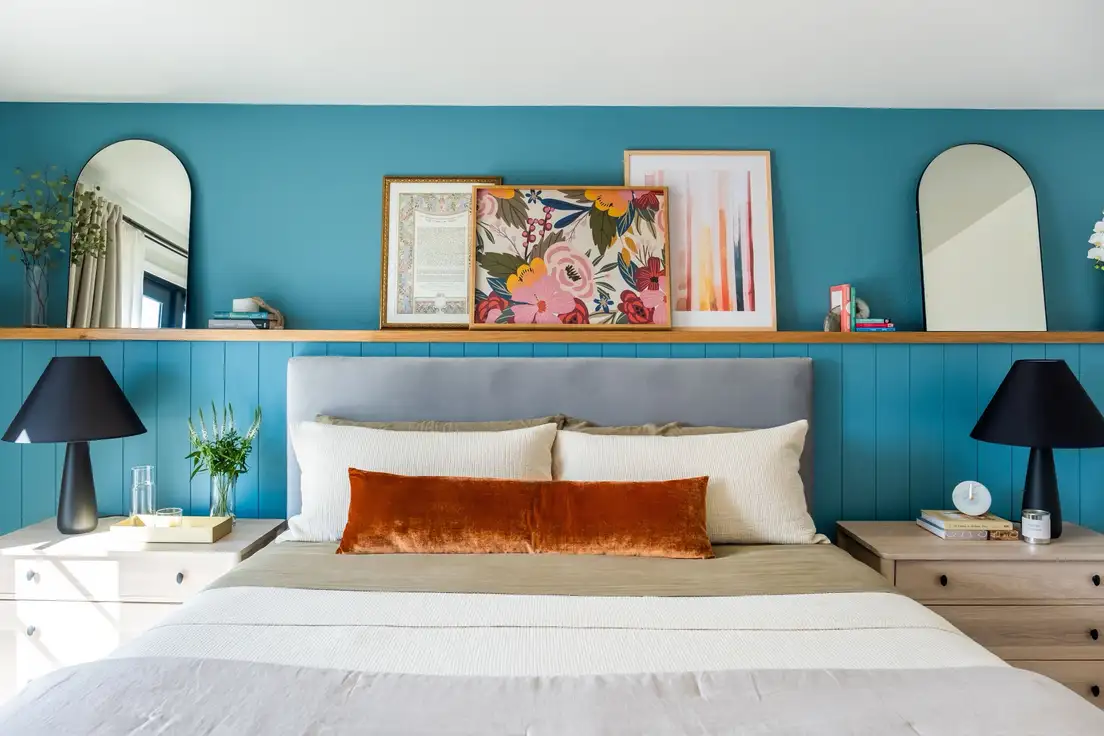
Photo by ASR Design Studio on Pexels
Rule of Thumb: 30 Inches on Both Sides of the Bed
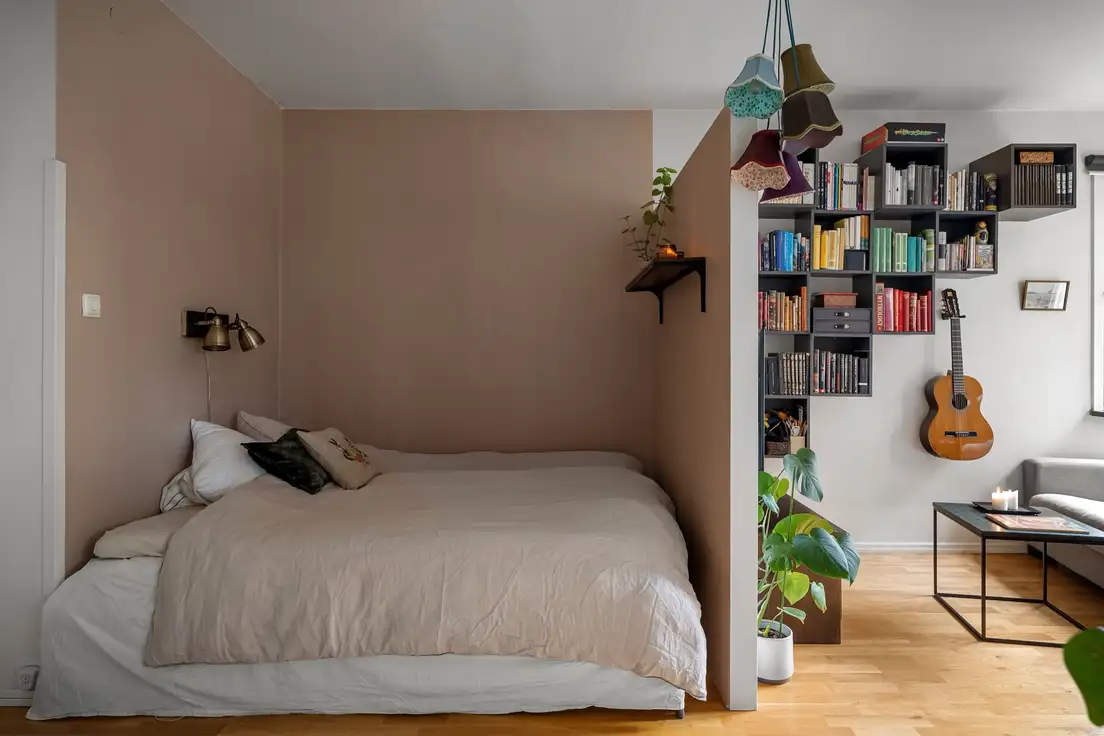
A couples bedroom needs about 30 inches of walkway on both sides of the bed and at the foot, so each person can get in and out without climbing over the other. Measure that before you choose a bed size, not after. In a small bedroom, it’s tempting to push the bed into a corner to free up floor space. That works for one person and fails for two: whoever sleeps against the wall becomes the one who climbs over. If the room is under about 10 by 11 feet, choose a full or queen, keep it centered, and use wall sconces instead of nightstand lamps. For more small-room layouts, see our small primary bedroom layout ideas.
Start with the lights and the nightstands. Everything else on this list is easier to agree on once each side of the bed has its own.
Frequently asked questions
How do you decorate a bedroom for a couple?
Start with fairness, then style. Give each person their own nightstand, reading light, and drawer space, choose a bed at least a queen (a king if the room allows 30 inches of walkway on both sides), and pick a neutral base palette you both accept. Add one shared accent, like art or a headboard, and keep personal clutter in each person's own zone.
What size bed is best for a couple?
A king (76 by 80 inches) gives each person 38 inches, close to a twin mattress's width. A queen (60 by 80 inches) gives each person 30 inches, which works for many couples but feels tight if either sleeps restlessly. Choose the king only if the room still leaves about 30 inches of clearance on both sides of the bed.
How do couples share a small bedroom?
Keep the bed centered so both people can get out without climbing over each other, use wall-mounted sconces instead of table lamps to free up nightstand space, and choose a bed frame with drawers underneath. Narrow 15-inch nightstands and a shared dresser with drawers split down the middle keep storage even without crowding the floor.
What colors are best for a couples bedroom?
Warm neutrals — greige, warm white, soft taupe — are the easiest shared base because neither person usually objects to them. Add one accent color both agree on through bedding or art rather than paint. Muted blues and sage greens also work well and are generally seen as calm, restful bedroom colors.
Should couples have separate blankets?
Many couples sleep better with two separate duvets on one bed, sometimes called the Scandinavian sleep method. Each person controls their own warmth and stops losing the covers at 3 a.m. Use two twin-size duvets over a shared fitted and flat sheet, folded neatly during the day so the bed still looks made.