
Kitchen & Dining
Clean Kitchen Habits That Actually Stick (No Deep Clean)
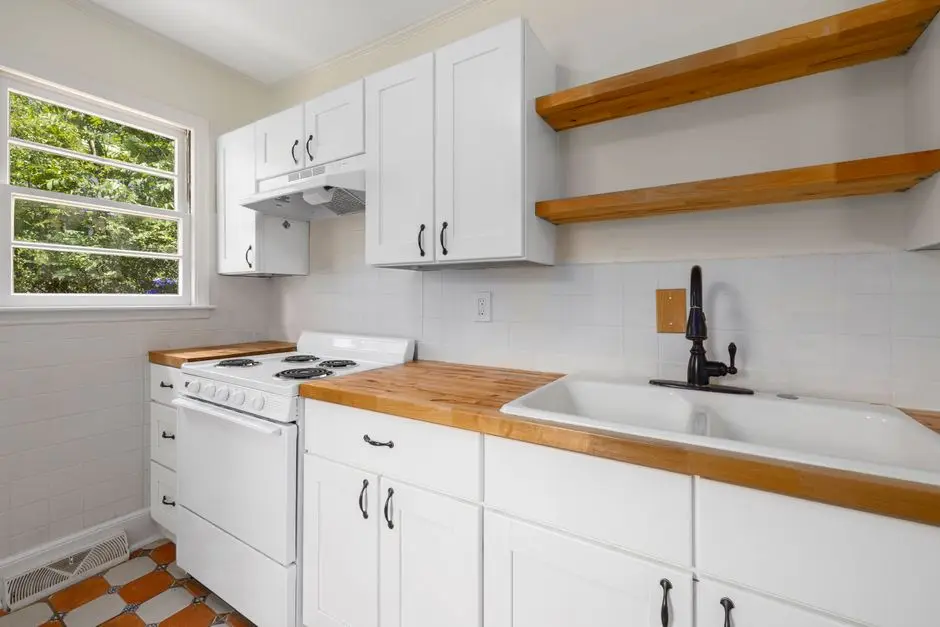
Photo by Curtis Adams on Pexels
A clean kitchen isn’t a Saturday deep-clean marathon — it’s nine two-minute habits, done in the right order, plus about $60 in tools that make the habits easier to keep. None of it needs a new dishwasher or a weekend gutting the pantry. It just needs fewer decisions between “this is dirty” and “this is handled.”
Wipe the Counter Down Before the Pan Even Hits the Stove
Wipe the counter before you start cooking, not after — a clear counter at the start means less to scrape off once dinner’s had three hours to bake onto it. Grab a microfiber cloth and a general spray cleaner, thirty seconds, done, before you even open the fridge. The habit takes less time than deciding what to make for dinner. (Ask us how we know a “quick weeknight dinner” can leave a counter looking like a crime scene by 7:15 if that thirty seconds gets skipped.) Keep the cloth folded over the faucet, not shoved in a drawer — a cleaning tool you can’t see in three seconds is a cleaning tool you’ll skip.

Photo by RDNE Stock project on Pexels
Load the Dishwasher As You Cook, Not After the Plates Pile Up
Load the dishwasher while the onions are still sweating, not after the whole meal’s plated and cold. Mixing bowls and food prep dishes go in the second they’re empty — there’s no reason a bowl that held raw flour needs to sit in the sink for four more hours, and washing dishes in small batches beats one big pile every time. A full dishwasher run after dinner still does the real work; loading while you cook just means cleanup afterward is down to three plates and a pan, not the entire kitchen. Pots and pans that don’t fit the rack go straight into a hot soapy soak instead of piling up next to the sink. Rinse before loading if the dishwasher’s more than a few years old — newer sensor-cycle models genuinely don’t need it, but an older unit still does, whatever the manual promises.
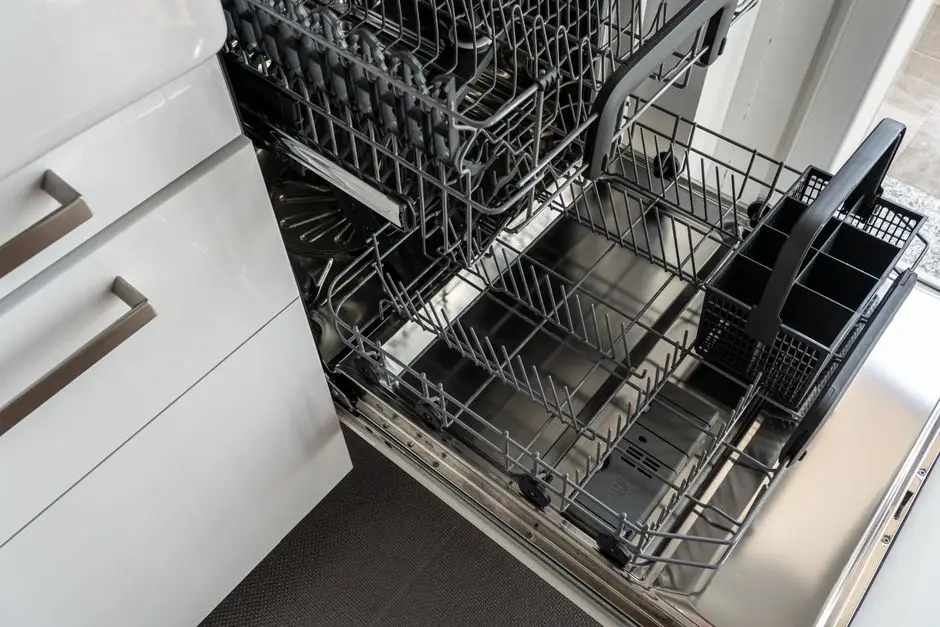
Photo by Castorly Stock on Pexels
Keep a Sink Caddy So the Sponge Isn’t Sitting in Standing Water
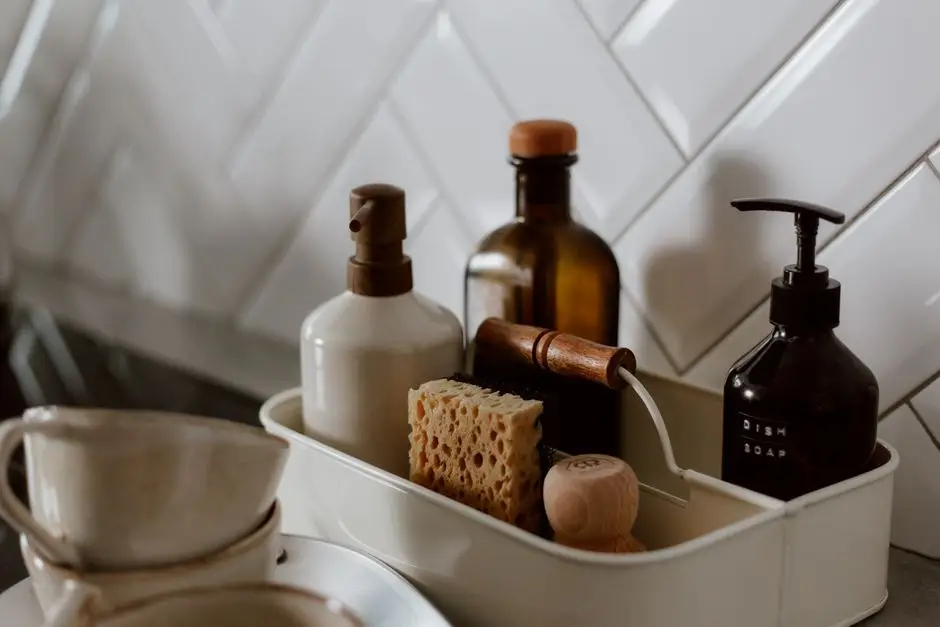
A sponge sitting flat in a puddle by the faucet is doing the opposite of its job — it’s a $2 bacteria colony with a handle. Michigan State University Extension’s germiest-items research puts the kitchen sponge at the top of the list, ahead of the bathroom items most people assume win that contest. A small caddy or a suction-cup holder keeps the sponge, dish soap, and scrub brush up off the counter and actually drying out between uses. Budget $10–15 for a caddy that holds three or four items; skip the ones molded for one specific soap bottle brand, since you’ll replace the soap before you replace the caddy. Swap the sponge itself every two weeks — a limp, sour sponge doesn’t get a kitchen cleaner, it just moves the mess from one surface to another.
Run a Five-Minute Kitchen Shutdown Before Bed
Every dish in the sink, every crumb on the counter, and every takeout container left out gets dealt with in one five-minute pass before bed — not because a messy counter is a moral failing, but because a clean kitchen at 7am is worth more than five extra minutes on the couch the night before. Clear the countertops down to what actually gets used daily; a coffee maker earns its spot, six months of unopened mail doesn’t. Mail and stray papers collect on a kitchen counter faster than anywhere else in the house, and a quick swipe of the baseboards under the lower cabinets once a week keeps dust from turning into visible clutter along the floor. Our warm minimalism guide covers the same “fewer things out” cleaning routine for the rest of the house. Do the shutdown at roughly the same time every night, not “whenever” — “whenever” is how a five-minute habit turns into a Saturday project.
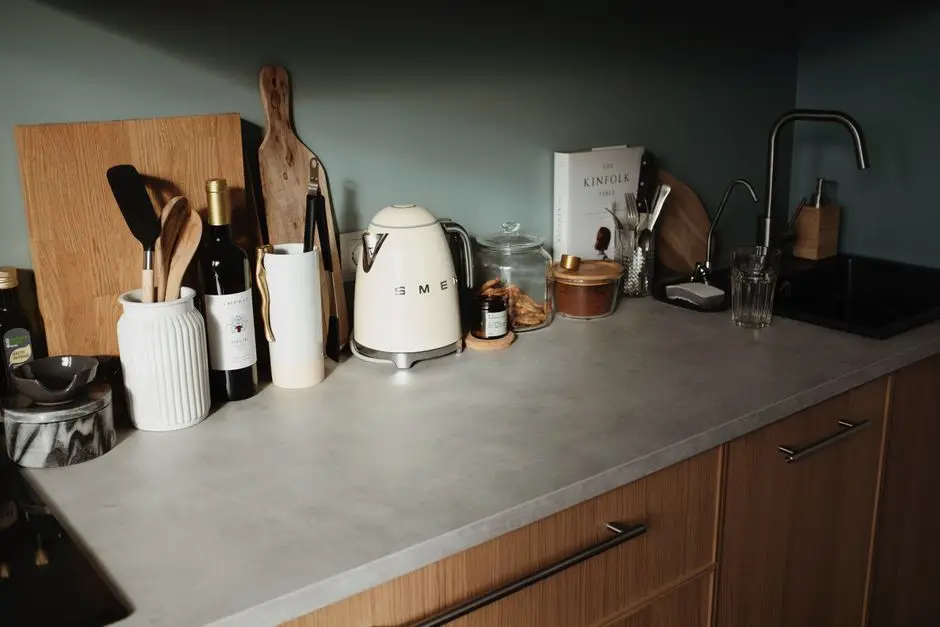
Photo by ready made on Pexels
Corral the Pantry Before It Turns Into a Junk Drawer With Shelves
A pantry doesn’t need a label maker and matching glass jars to function — it needs everything grouped by type and front-facing, so you can see what’s actually in there before buying a fourth jar of cumin. Stackable bins keep boxes upright instead of leaning like a game of Jenga nobody agreed to play. Corral snacks, baking supplies, and canned goods into three or four bins for $8–12 each; that’s the whole system, no $200 pantry teardown required. The same bin logic works one drawer over, for the junk drawer that’s collected batteries, takeout menus, spare lids with no matching container, and a single button for the last three years. It’s also the fastest way to spot the kitchen cabinets that need a real wipe-down, not just a pantry reshuffle. Anything expired gets tossed during the sort — a pantry clean is also the one honest expiration-date audit most kitchens get all year. Our apartment kitchen ideas guide has more on working with the cabinets a rental already gives you.
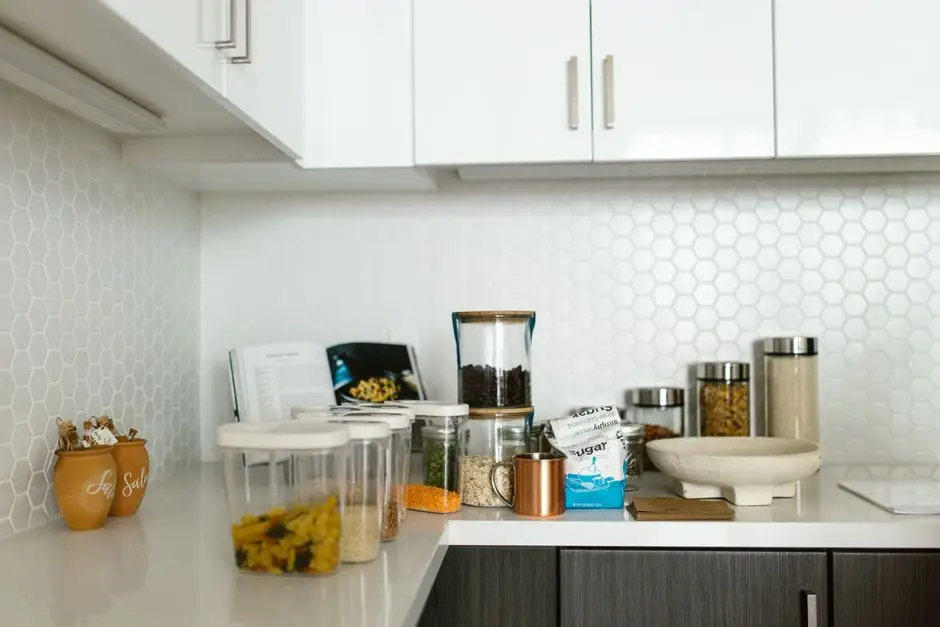
Photo by RDNE Stock project on Pexels
Build One Real Cleaning Caddy Instead of Ten Bottles Under the Sink
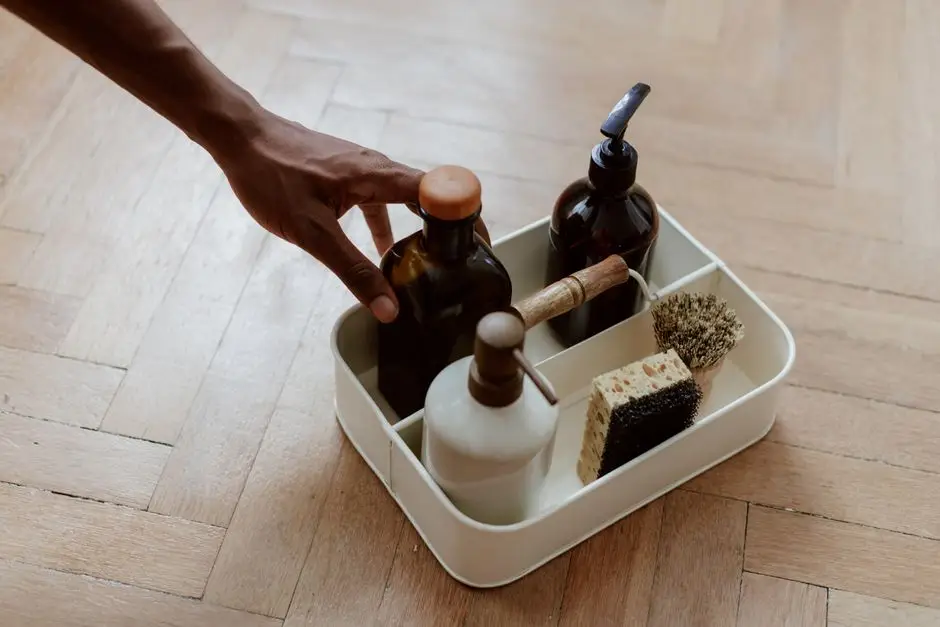
Ten half-used cleaning bottles rolling around under the sink isn’t a cleaning system, it’s an inventory problem. One caddy with an all-purpose spray, a degreaser, glass cleaner, and a scrub brush covers 90% of what a kitchen actually needs — everything else is a specialty product for a problem that comes up twice a year. Budget $25 for solid basics, or $50–60 if the degreaser and glass cleaner are the nicer, less-fumey versions; either way, it beats replacing a $4 bottle of something bought once and never opened again. Keep the caddy under the sink, not spread across three cabinets — the whole point is not hunting for the spray bottle mid-spill.
Scrub the Stovetop the Same Night, Not the Same Week
Grease and food splatter on a stovetop harden fast — what wipes off in thirty seconds tonight needs baking soda paste and real elbow grease by the weekend. Let the burner grates and drip pans soak in hot soapy water for ten minutes while you eat dinner, then the stuck-on bits wipe clean instead of requiring a scouring pad and a grudge. A gas stove’s grates and caps lift off the top for exactly this reason, and plenty of people never actually take them out. For glass or induction tops, skip anything abrasive — a dedicated ceramic-cooktop cleaner runs about $8 and won’t scratch the surface the way a butter knife or steel wool will.
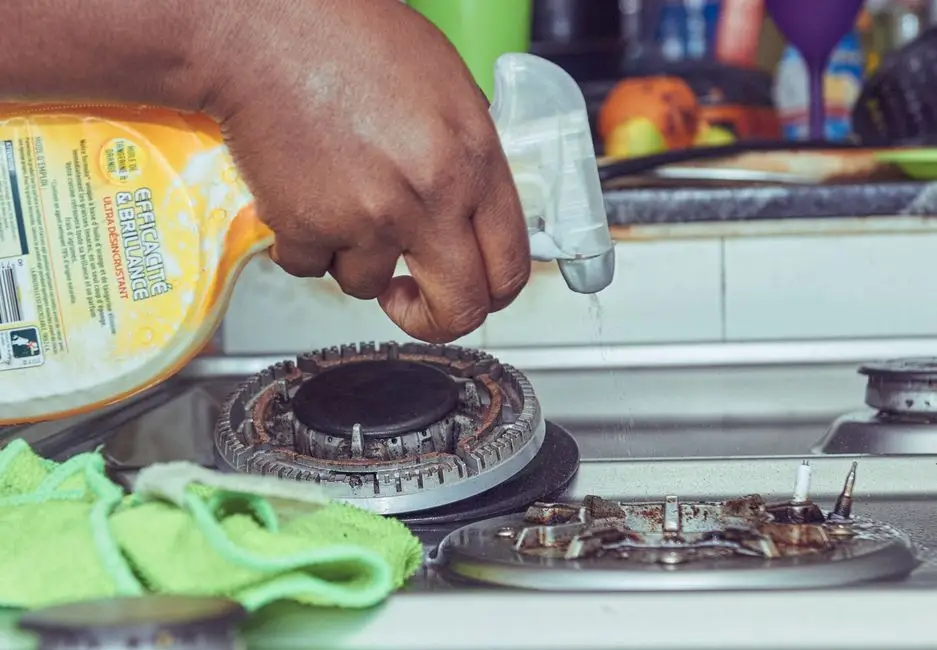
Photo by Stephane Fabrice Bassangue on Pexels
Give the Refrigerator a Five-Minute Pass Every Sunday
Before the grocery run, not after, pull everything off the shelves, wipe them down, and toss what’s grown a personality of its own. Five minutes on a Sunday means the fridge never gets bad enough to need a full unload-and-scrub session, which is a very different, much worse chore. Group by zone — dairy on one shelf, leftovers on another, produce in the drawers it was actually built for — so “clean” also means “you can find the mustard.” A $6 box of baking soda in the back corner, replaced every three months, handles the smell problem before it becomes a smell problem worth complaining about.

Photo by Kevin Malik on Pexels
Save the Real Deep Clean for the Oven, Twice a Year, Not Twice a Month
An oven doesn’t need attention every week — it needs a real deep clean twice a year and a quick wipe of the door and knobs in between. Skip the harshest oven-cleaner sprays if the unit’s self-cleaning; that feature exists to burn off buildup at high heat without a chemical assist, and running both at once is redundant, not extra-clean. For a manual clean, a baking soda paste left overnight loosens baked-on grime enough that it wipes out with minimal scrubbing the next morning. Twice a year is a genuine rule, not a guilt trip: an oven scrubbed every single week isn’t a clean kitchen, it’s a hobby.

Photo by RDNE Stock project on Pexels
Here’s the Honest Math on a Clean-Kitchen Kit
A clean-looking kitchen is one of the cheaper habits on this entire site to build, because the tools that make it stick — a caddy, some bins, the right cloth — cost less than a single takeout order. Tape the nine habits above to the inside of a cabinet door as a checklist for the first month; after that, they’re just how the kitchen runs.
The $35–50 version
A sink caddy, a basic cleaning caddy, and a set of stackable pantry bins. This alone fixes the two habits that do the most visible work: dishes staying out of the sink, and the counter staying clear enough to actually cook on.
The $80–100 version
Add the nicer, less-fumey cleaning products and a full set of pantry bins on top of the basics above. Skip the ceramic-cooktop cleaner and the oven-specific baking soda paste for now — both under $10, buy them the week you actually need them, not before.
None of this requires new appliances, a bigger kitchen, or willpower most people don’t have on a Tuesday. It requires nine habits done in roughly the same order every day — staying organized turns out to be less about discipline and more about not making the same five-minute decision from scratch every time.

Photo by Noland Live on Pexels
Start with the counter wipe and the sink caddy. Everything after that is just keeping a kitchen that’s already ahead of the mess, instead of catching up to it every weekend. If the kitchen itself — not just keeping it clean — is what needs a refresh, our modern rustic farmhouse kitchens guide picks up from here.
Frequently asked questions
What is the 20 minute rule of cleaning?
Set a timer for 20 minutes and clean until it goes off — no more, no less. It works because it turns an open-ended chore into a bounded one: you're not cleaning 'until the kitchen is perfect,' you're cleaning for 20 minutes, which is easier to actually start. Most kitchens get genuinely clean-looking in that window if the dishes haven't piled up for a week first.
What is the proper way to clean your kitchen?
Work top to bottom and dry to wet: clear clutter and wipe cabinet fronts first, then counters and appliances, then the sink and floor last. Cleaning the sink before the counters just means counter crumbs land in a sink you already scrubbed. Load the dishwasher or hand-wash as you go instead of leaving it for a separate pass at the end.
How can you keep your kitchen clean daily?
Wipe the counter before you cook, load the dishwasher while you cook, and run a five-minute shutdown before bed — clearing dishes, crumbs, and anything left out on the counter. Those three habits, done at roughly the same time every day, prevent the kind of buildup that turns into a weekend deep-clean project.
What cleaning supplies should be used to clean a kitchen?
An all-purpose spray cleaner, a degreaser for the stovetop, glass cleaner, a scrub brush, and microfiber cloths cover almost everything a kitchen actually needs. Baking soda and white vinegar handle the tougher jobs — burnt-on stovetop grime and a musty garbage disposal — without a specialty product for each one.
How often should you deep clean your kitchen?
A full deep clean — inside the fridge, behind appliances, mopping under the toe-kicks, the oven interior — is a twice-a-year job for most households, more like spring cleaning than a weekly one. Daily habits (wiping counters, loading the dishwasher, a nightly shutdown) keep the kitchen looking clean in between; the deep clean is for the buildup those daily habits don't reach.