
Living Room
Japandi Living Room Ideas on a Budget
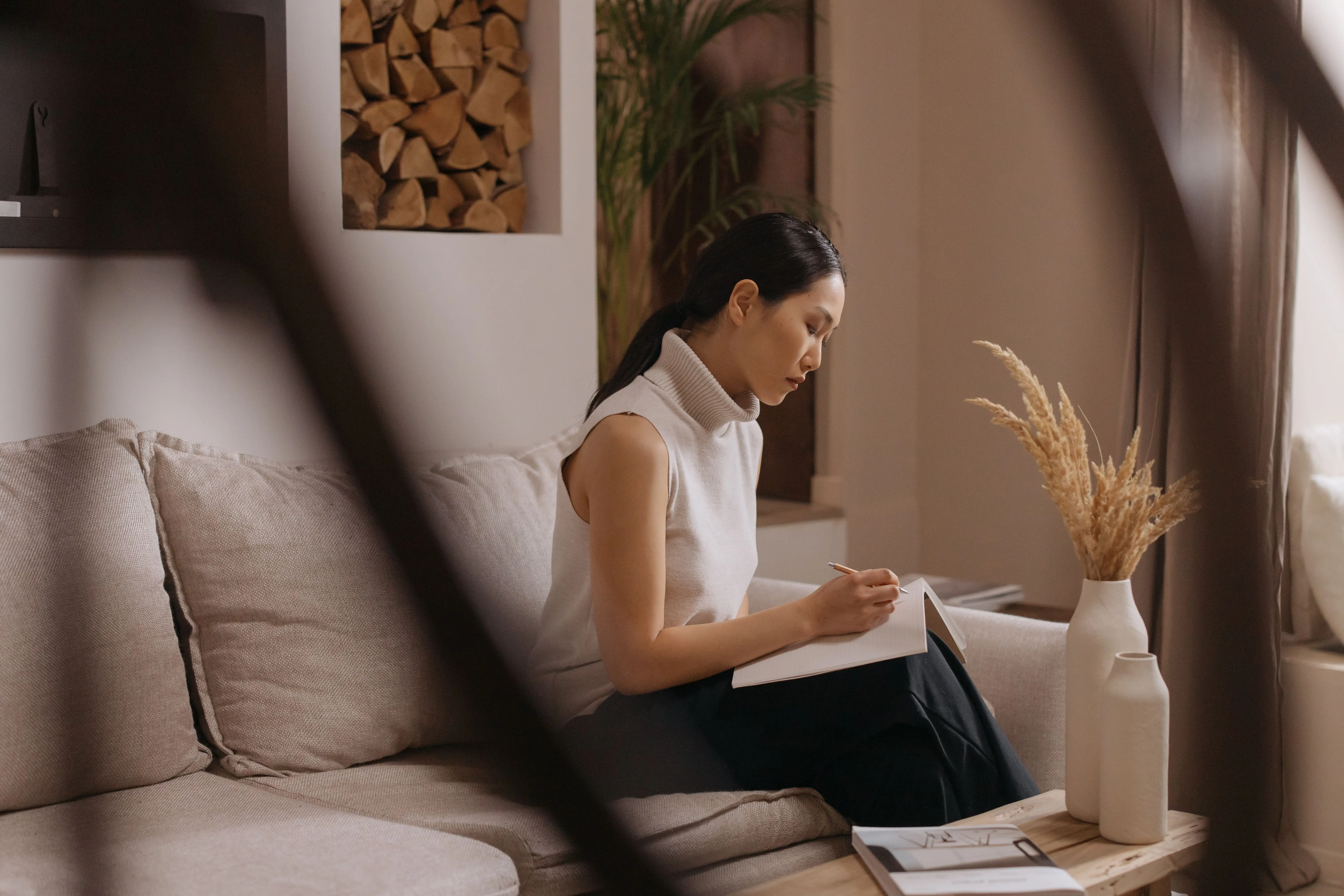
Photo by cottonbro studio on Pexels
Japandi living room ideas on a budget all lean on the same trick: fewer, lower pieces in one wood tone, with the natural materials — linen, rattan, unfinished wood — doing the work that a bigger furniture budget would otherwise do. It’s a japandi interior design approach that blends Japanese minimalism and Scandinavian warmth, which in practice means restraint without going cold. None of the 12 ideas below need a full furniture set; most start with editing the room you already have, and the honest math at the end adds every real price into one number.
Live With the Room for a Week Before You Buy Japandi Furniture
Half of what feels like “I need Japandi furniture” is actually “I need to clear the surfaces I already own,” and clearing them is free. Pull everything off the shelves and out of the corners that isn’t a sofa, a lamp, or a plant, then live with that bare version for a week before buying a single piece — most living rooms turn out to need one or two things, not an entirely new set.
We’ve stood in a room styled for a Japandi mood board and still owned four throw blankets we couldn’t name a use for. Whatever’s still bothering you after the week is the real shopping list; everything else was decorating for the sake of it.
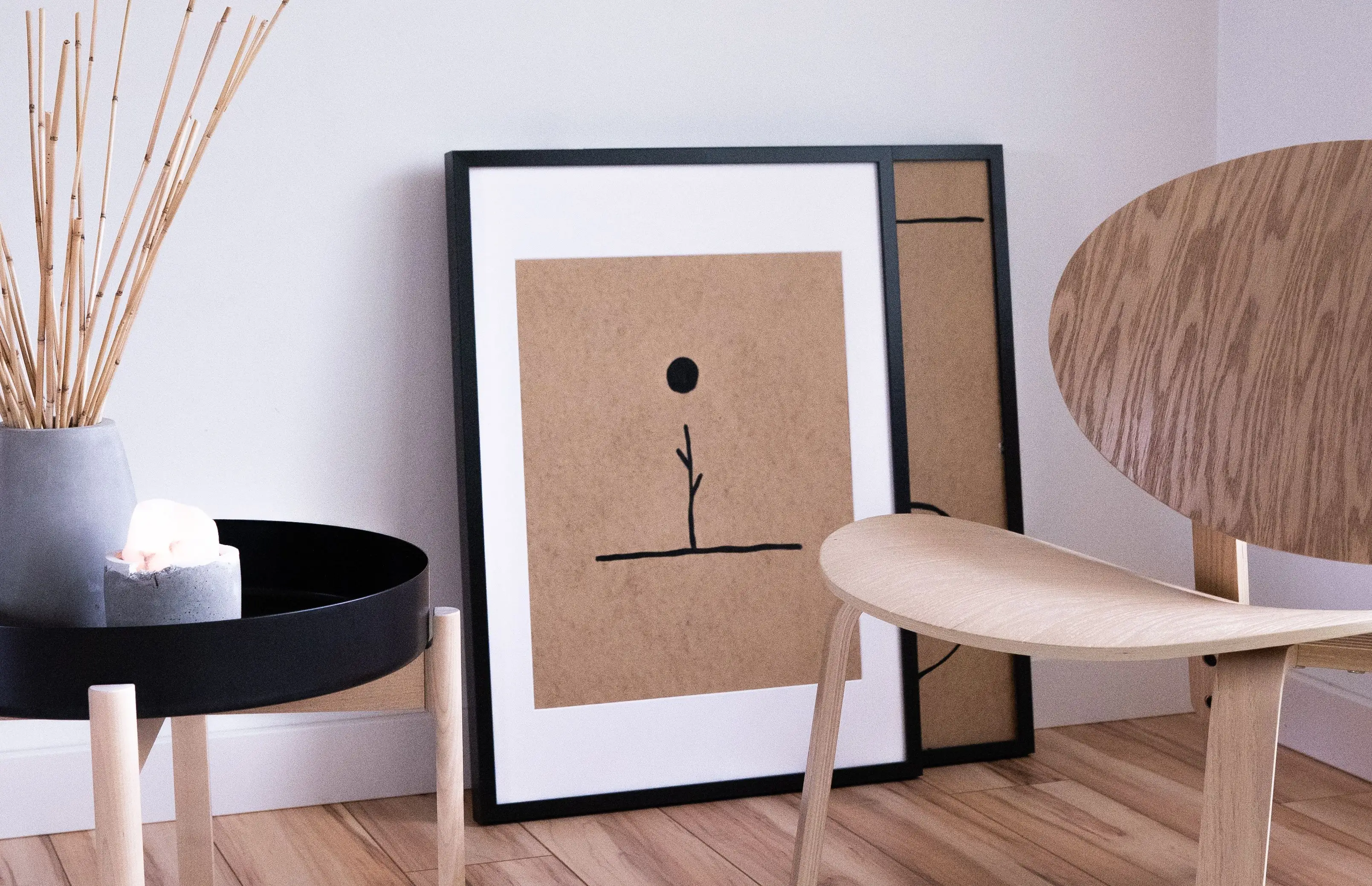
Photo by PNW Production on Pexels
Paint the Walls a Muted, Neutral Tone
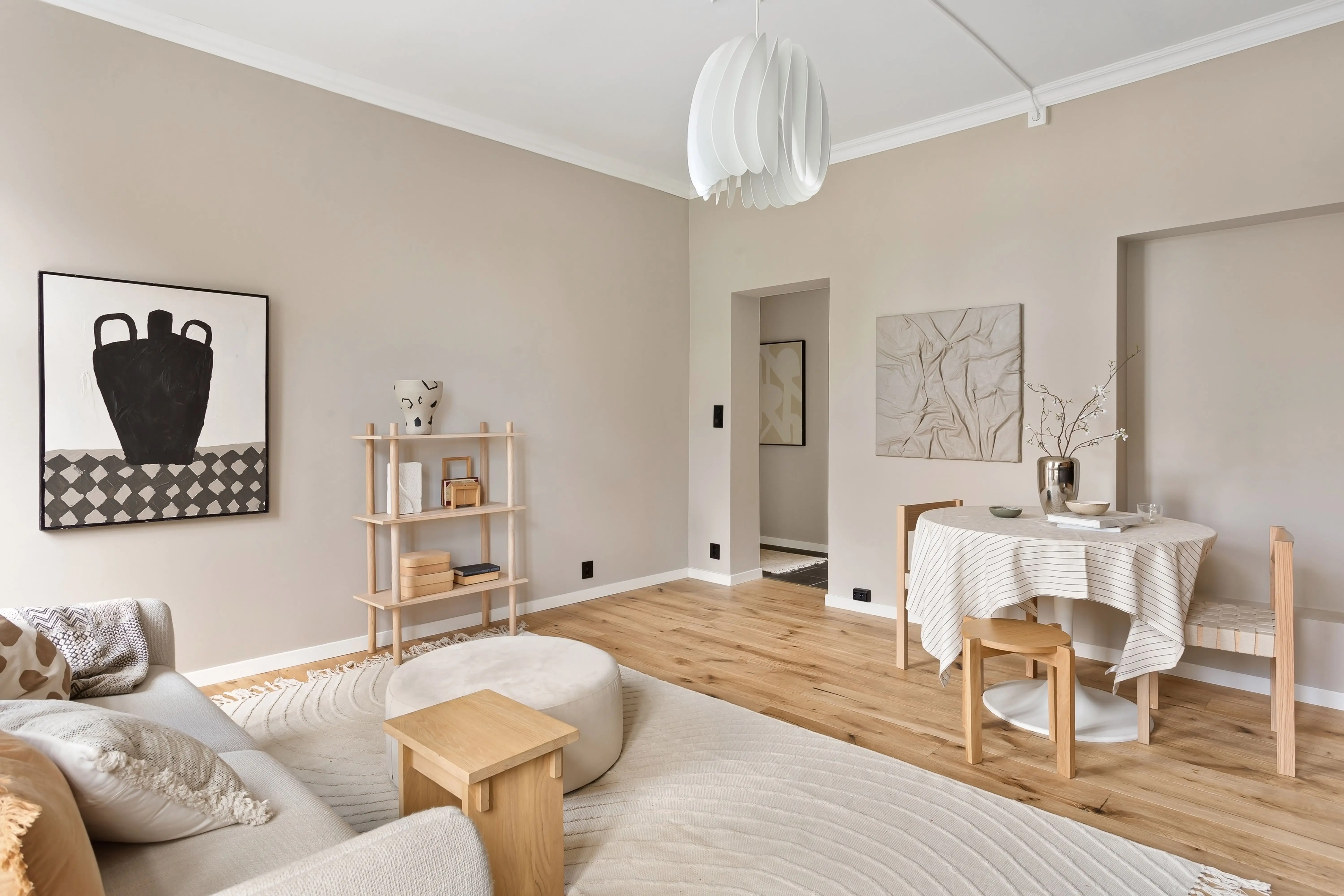
Paint solves more of a Japandi living room’s “feels cold” problem than new furniture does, and it’s the cheaper fix. Skip stark white — it reads clinical under most US living room lighting — and go for a warm greige, oatmeal, or soft clay hue instead. Those beiges give the same restrained palette a base that looks lived-in, not showroom-staged.
A gallon runs $35–50 and covers most rooms with a coat to spare. Pair the neutral tones on the wall with sheer curtains instead of heavy drapes — they let in more natural light during the day, which does as much for the “warm, not cold” goal as the paint itself. Test the color on the actual wall for a full day before committing; a swatch under afternoon light can look nothing like the same swatch at 8pm.
Choose a Low Sofa With Clean, Solid-Wood Legs
A low-back sofa with exposed solid-wood legs is the single piece of furniture that decides whether a room reads Japandi or just generically minimalist. Skirted bases and rolled arms both work against the look; a fully exposed leg and a clean-lined back read closer to the ground and closer to the style. This is the one splurge worth planning for — everything else on this list is cheap on purpose.
A well-made low sofa — couch, if that’s the word in your house — in a neutral linen or boucle textile runs $900–1,900 depending on size.
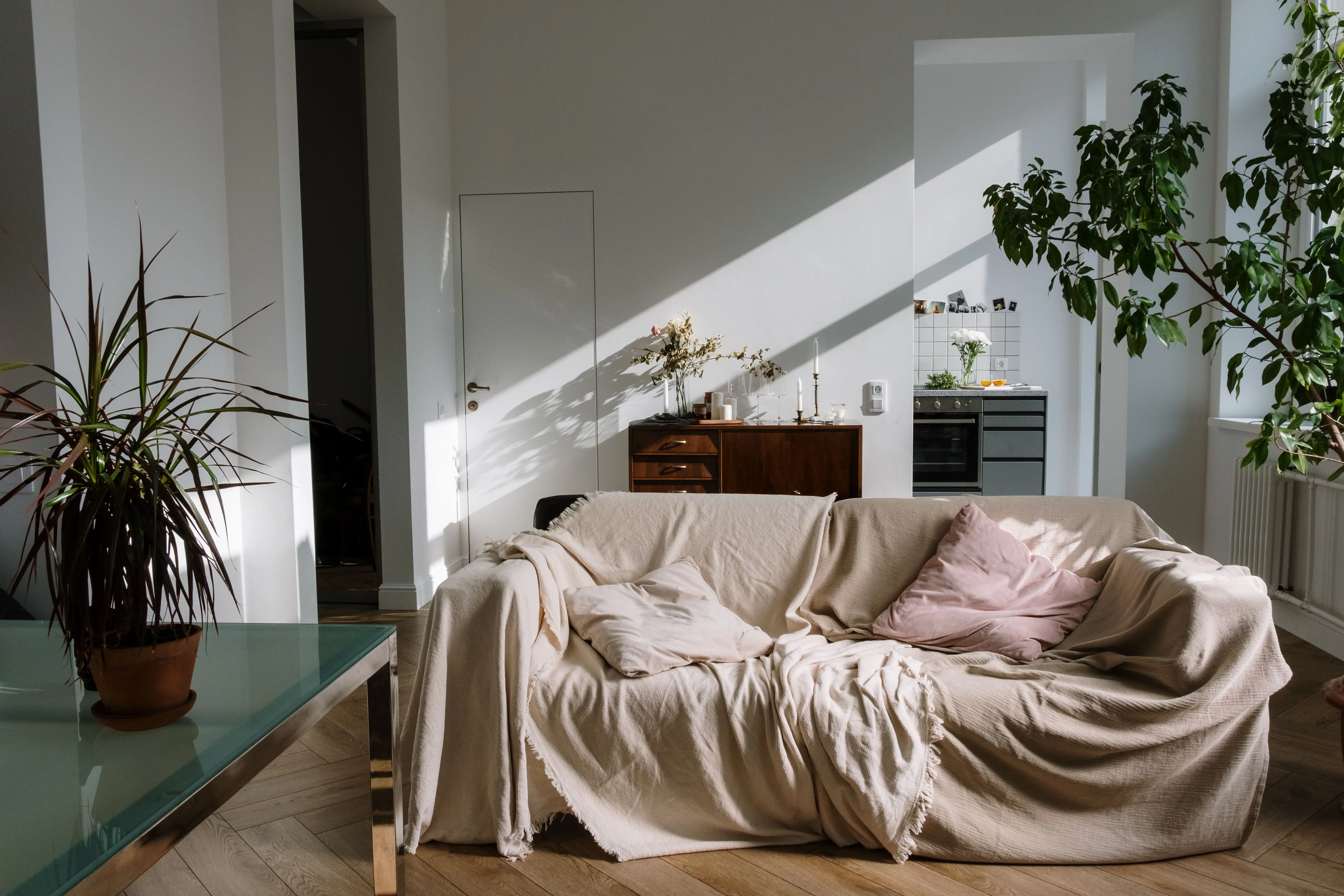
Photo by cottonbro studio on Pexels
Bring In Natural Materials: Rattan, Linen, and One Wood Tone
Natural materials are the actual difference between “calm” and “sterile” in a Japandi room, and picking just one wood tone is what keeps a room with several different pieces of furniture from looking unplanned. Rattan or cane-backed chairs, a linen throw, a jute basket, an unfinished wood shelf — none of it adds visual clutter because it all sits in the same earthy, neutral palette.
A room with zero texture is a hotel lobby wearing a Pinterest board’s clothes. Budget $60–120 for two or three linen or wool pillow covers and a throw — that’s usually enough texture to add warmth to a room that photographs fine but feels flat in person. If the whole style, not just this room, is the goal, our japandi style guide covers the full materials and color palette.
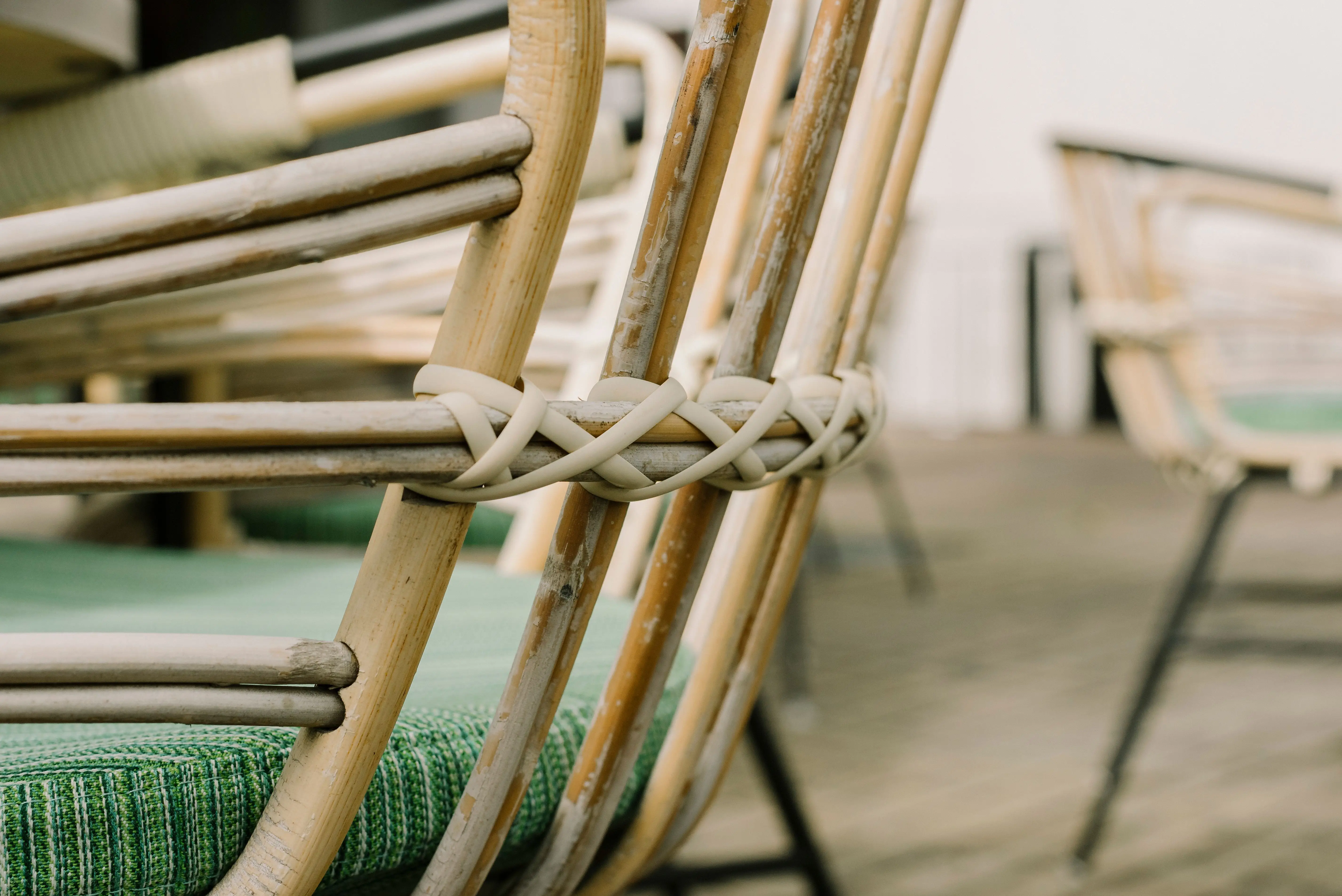
Photo by Alina Skazka on Pexels
Anchor the Floor With a Low-Pile Neutral Rug
A rug is almost always the highest-leverage first purchase in any room, living rooms included, and a low-pile wool-blend or jute weave (carpet, if that’s the word you grew up with) in a muted hue has more grounding presence in a Japandi room than a shaggy one. Go a size bigger than feels reasonable — front legs of every seating piece on the rug is the rule of thumb, since a rug that stops short of every seat reads like a place mat wearing a rug’s ambition.
An 8×10 runs $150–280 in wool or a wool blend; synthetic blends run cheaper but flatten faster under daily foot traffic. Skip a bold pattern here — the rug is the one surface that’s supposed to disappear into the palette, not compete with the sofa.
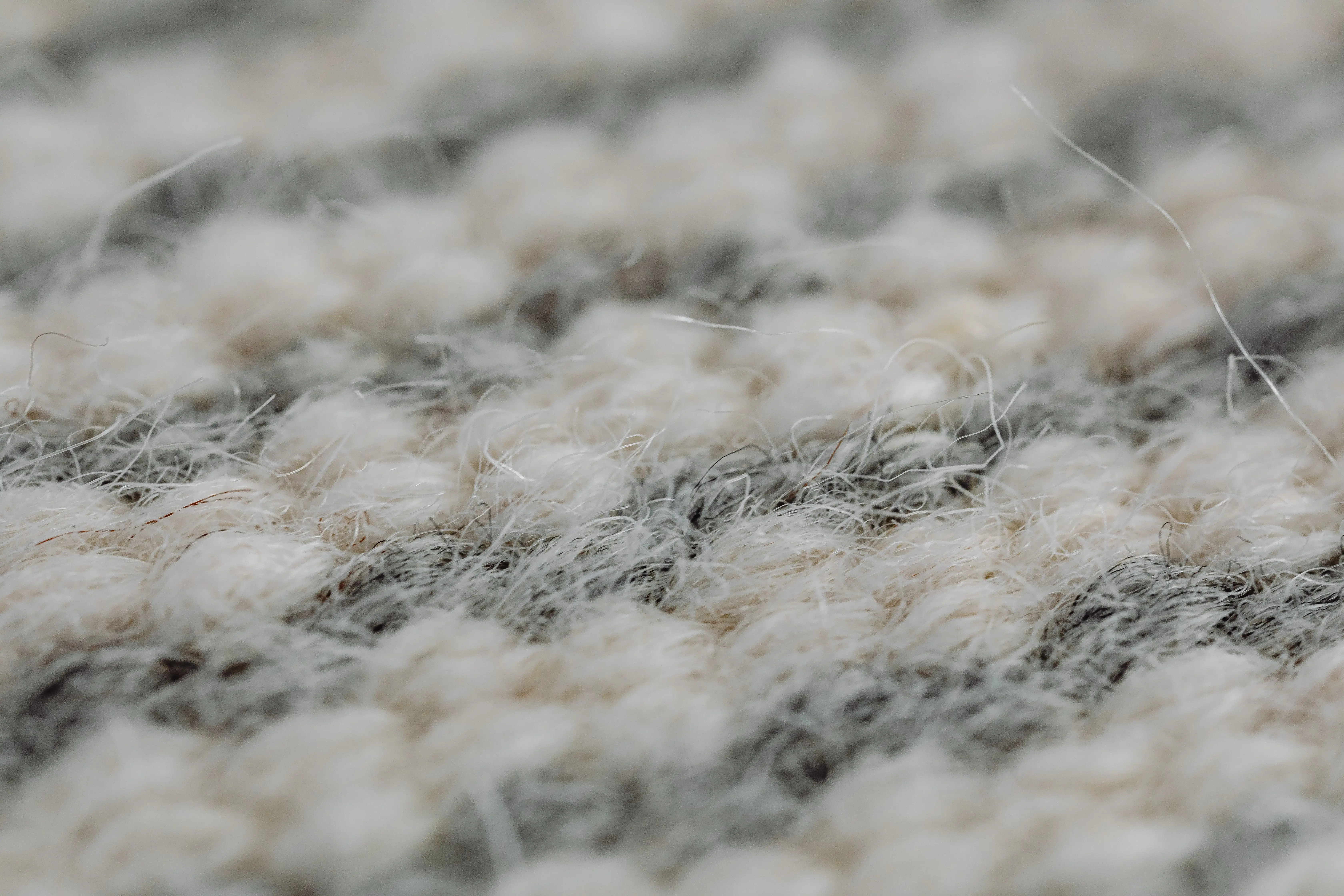
Photo by Kaboompics.com on Pexels
Add Accent Chairs With a Mix of Shapes, Not a Matching Pair
Two identical accent chairs look like a hotel lobby ordered a two-pack; two chairs with different shapes in the same wood tone look like a decision. A low rattan or cane-backed chair paired with a simple upholstered one gives the seating area visual interest without adding a second sofa’s worth of bulk or budget.
A single well-made accent chair runs $200–450; a rattan or cane version usually lands at the lower end of that range and adds the natural-material texture the room needs anyway. Keep the wood tone consistent with the coffee table and console — mixing three different wood finishes in one room is the fastest way to make a deliberately chosen room look unplanned.
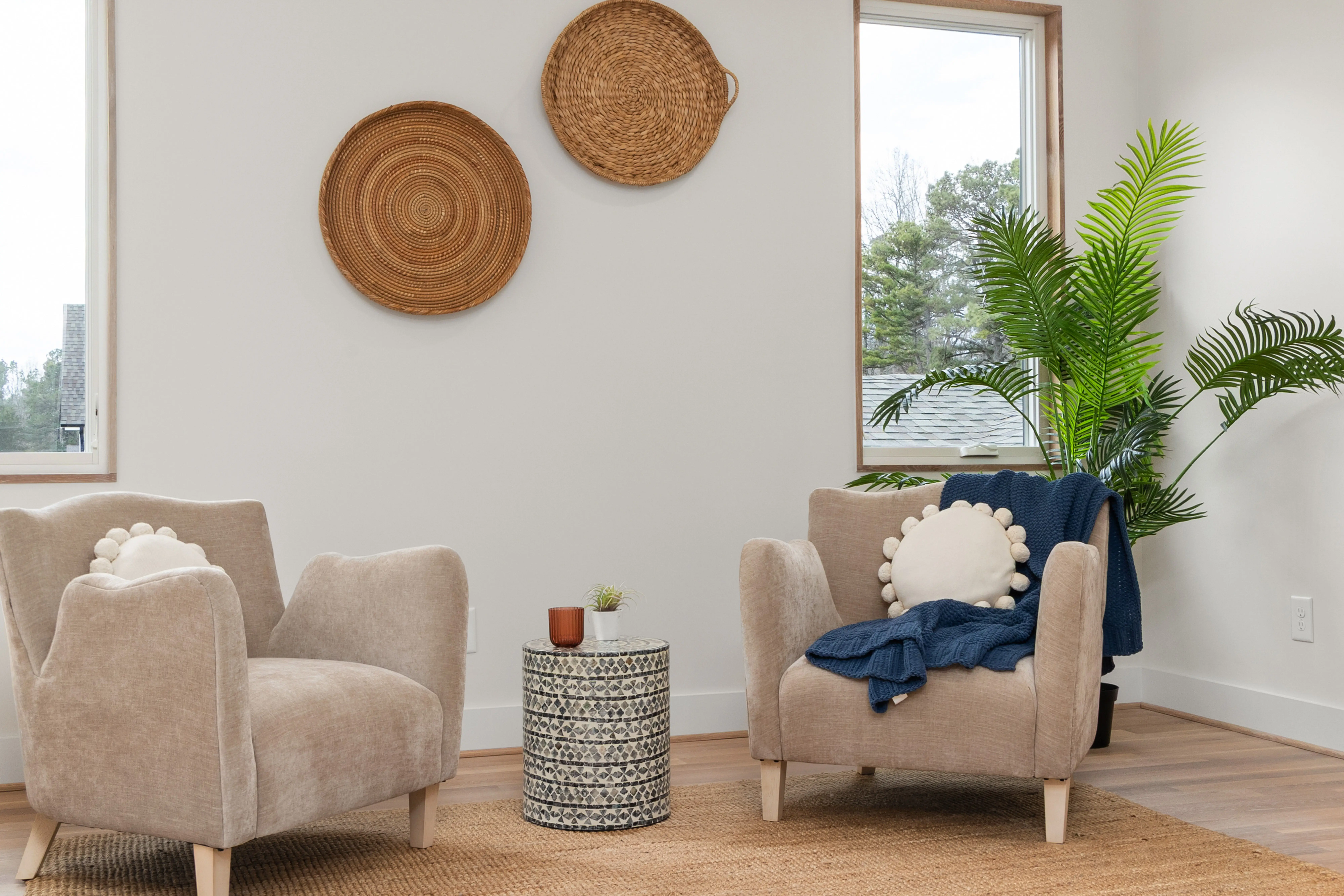
Photo by Curtis Adams on Pexels
Curate One Sculptural Accent, Not a Full Shelf
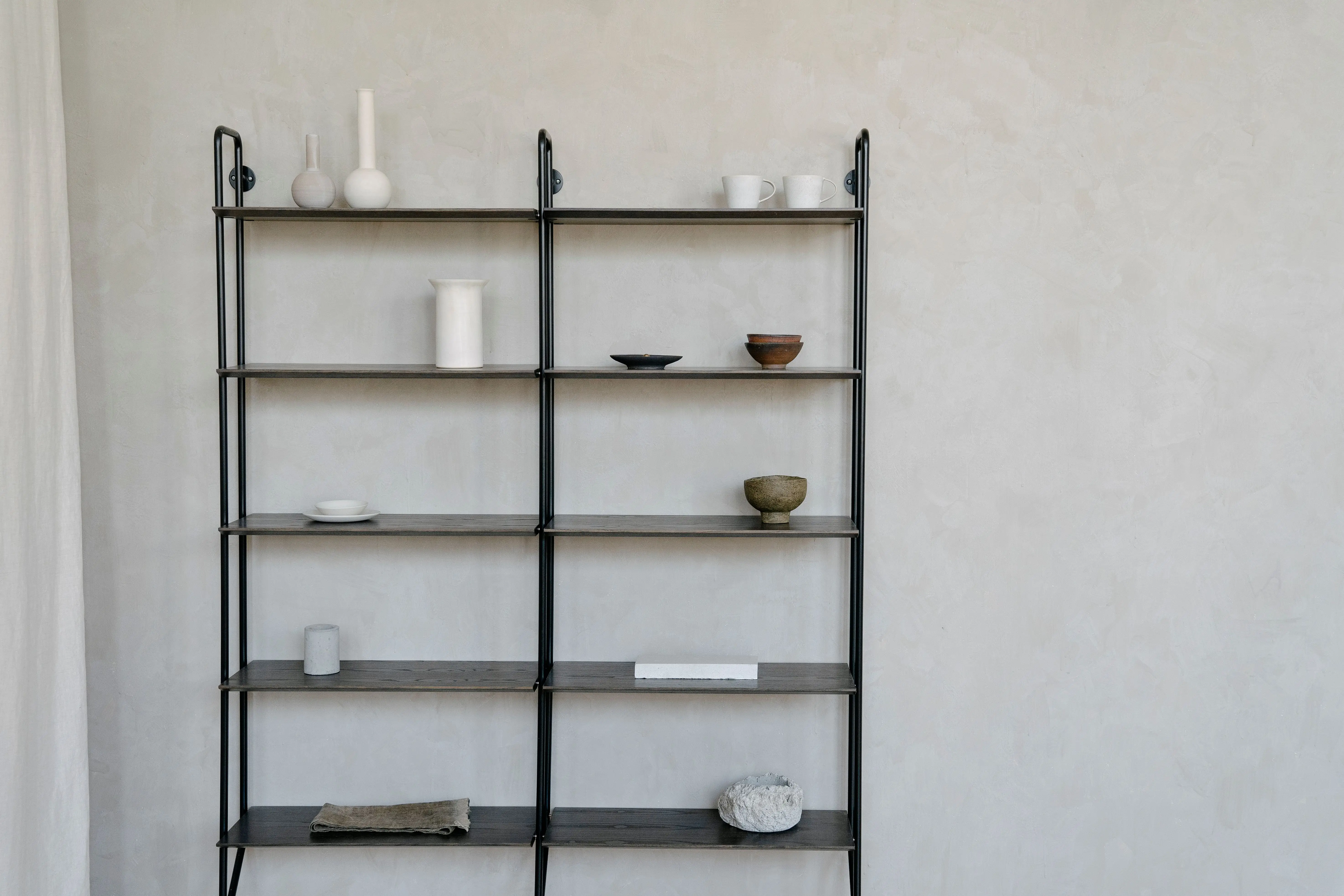
A single well-shaped ceramic vase or a small stack of books with one object on top does more for a Japandi shelf than a crowd of matching trinkets. One sculptural piece reads intentional; a shelf with a dozen small objects reads like it’s still being unpacked. Our first instinct is always “one more vase.” The shelf disagrees.
A hand-thrown or hand-thrown-look ceramic piece runs $20–50. A cheaper option from a home-goods store does the same visual job on a coffee table nobody examines up close as a pricier “designer” version — put the savings toward the sofa instead. Skip a glass coffee table here if the room already leans cold; wood does more to add warmth to a Japandi space than any other single surface choice.
Hide Clutter Behind Closed, Slatted Storage
Visible clutter undoes a Japandi living room faster than any wrong wood tone — remotes, chargers, the mail pile all need a door to disappear behind. A low solid-wood console or cabinet with closed doors, slatted or paneled fronts included, gives the same storage as open shelving without any of it showing up in the photo.
A basic closed-door console runs $200–380. We assembled one flat-pack, solo, on a Sunday afternoon, because “how hard can it be” — the instructions said two people on the door-hanging step. It was not, in fact, two people. (Measure the doorway before the console arrives — cabinets are wider than they look in the showroom.) Forty-five minutes later it was done, crooked, then fixed, then done properly.
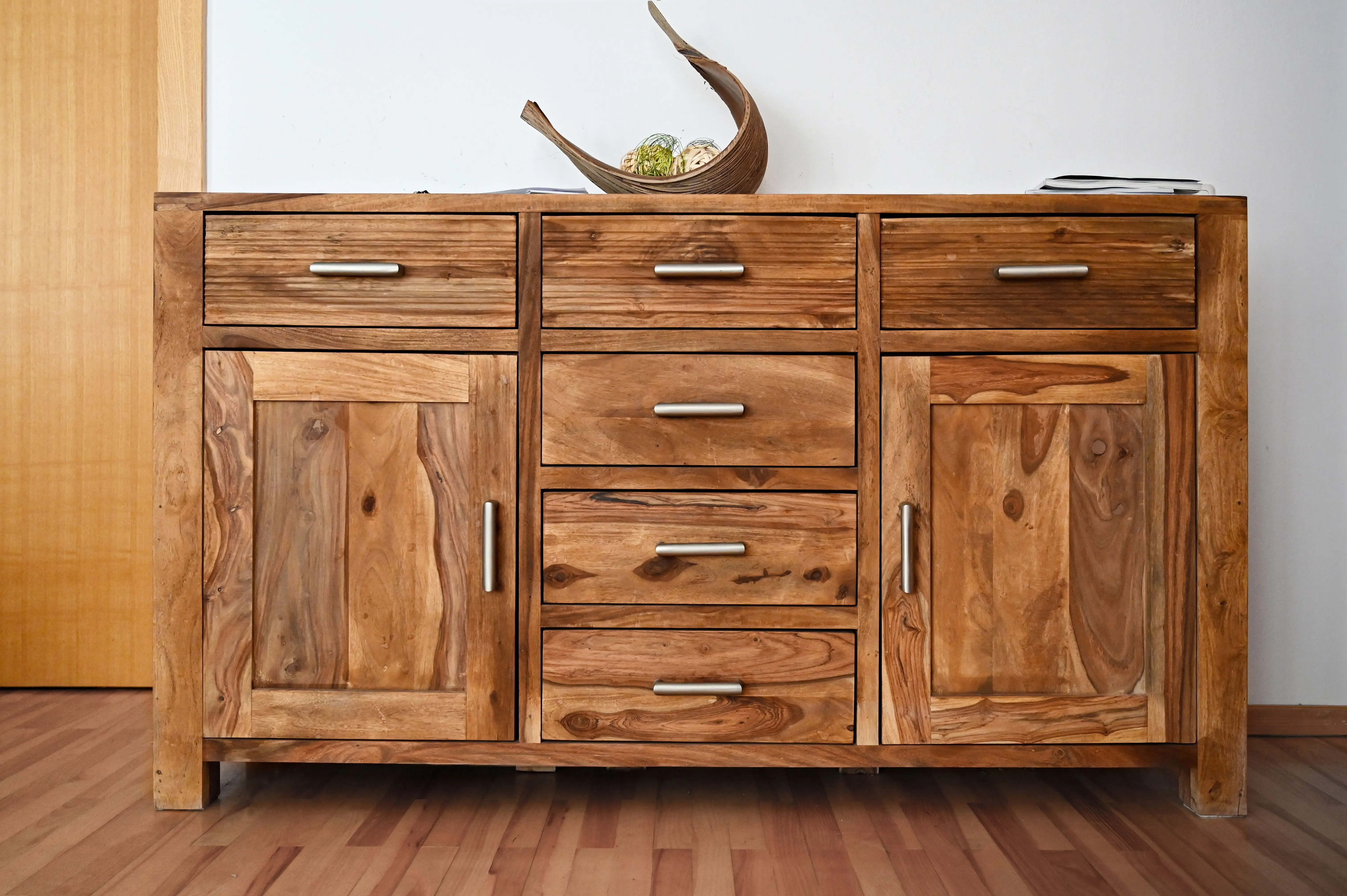
Photo by adrian vieriu on Pexels
Warm Up the Lighting With Lamps, Not the Overhead
A single overhead fixture is doing its best impression of an operating room — one or two table lamps or a paper-shade floor lamp at seating height does more to warm a Japandi living room than swapping a piece of furniture. Swap any builder-grade bulb for a warm 2700K bulb; the same fixture reads completely different once the light stops being blue-white.
A basic paper-shade or ceramic lamp runs $45–90, and a simple pendant light over the coffee table is a fair swap if floor space is tight; a pack of warm-white bulbs is under $15 and is the highest-leverage, lowest-cost fix on this whole list. ENERGY STAR’s bulb-buying guide lists 2200–3000K as “Soft White, Warm White” — the ambient range that reads calm rather than clinical.
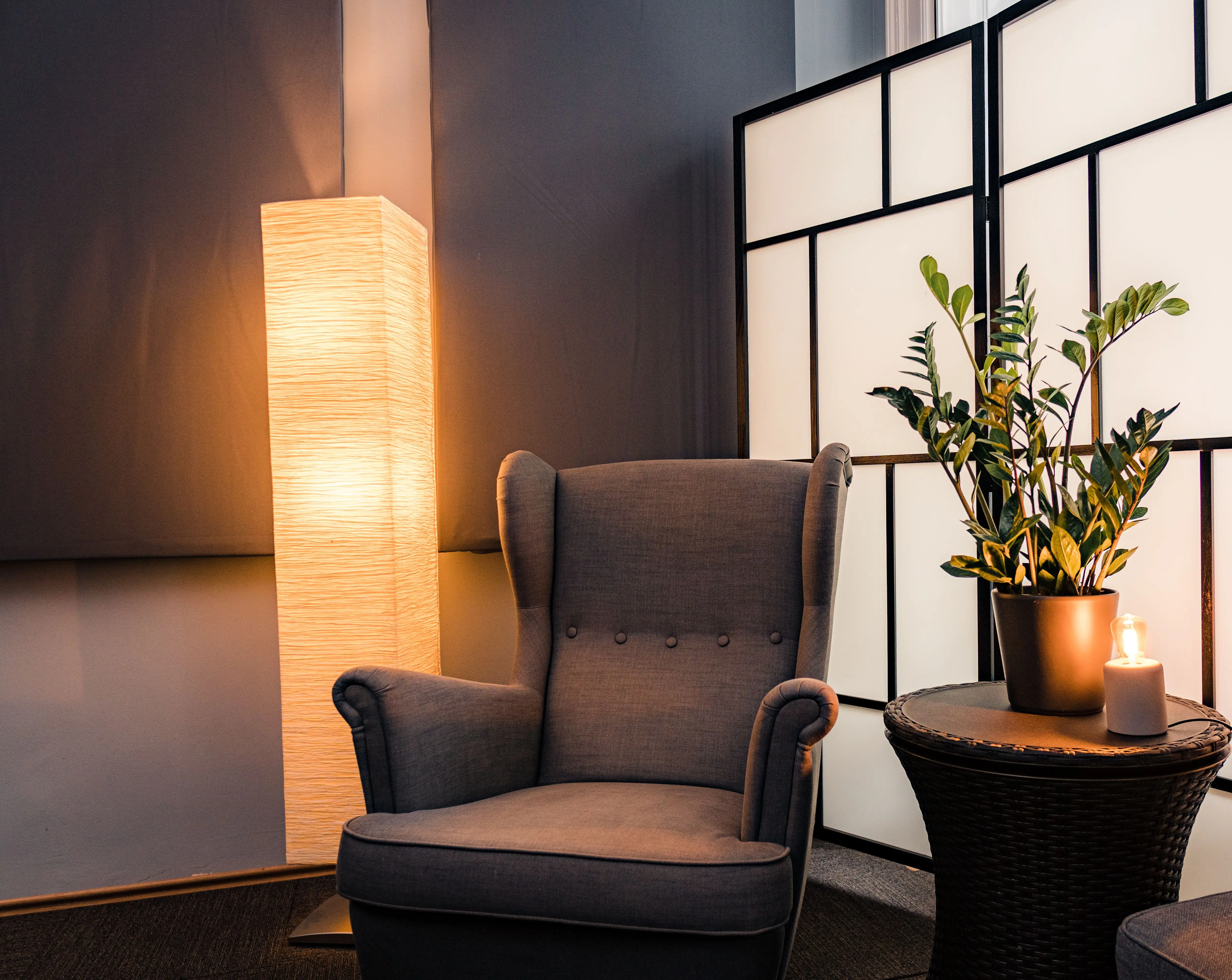
Photo by dlxmedia.hu on Pexels
Bring In One Plant for Wabi-Sabi, Not a Jungle
Wabi-sabi — the Japanese half of Japandi’s design ethos — is about accepting a little imperfection, and one real plant with an imperfect leaf or two fits that better than a jungle of six matching pots. A fiddle-leaf fig, a snake plant, or a rubber plant in a plain ceramic pot adds the one green note the room needs without turning maintenance into a second hobby.
A mid-size plant in a simple pot runs $25–60 at most garden centers. Real plants don’t belong everywhere — a dim corner with no window is real-plant murder, not a decorating failure — so a good faux version is a fair swap there, no apology needed.
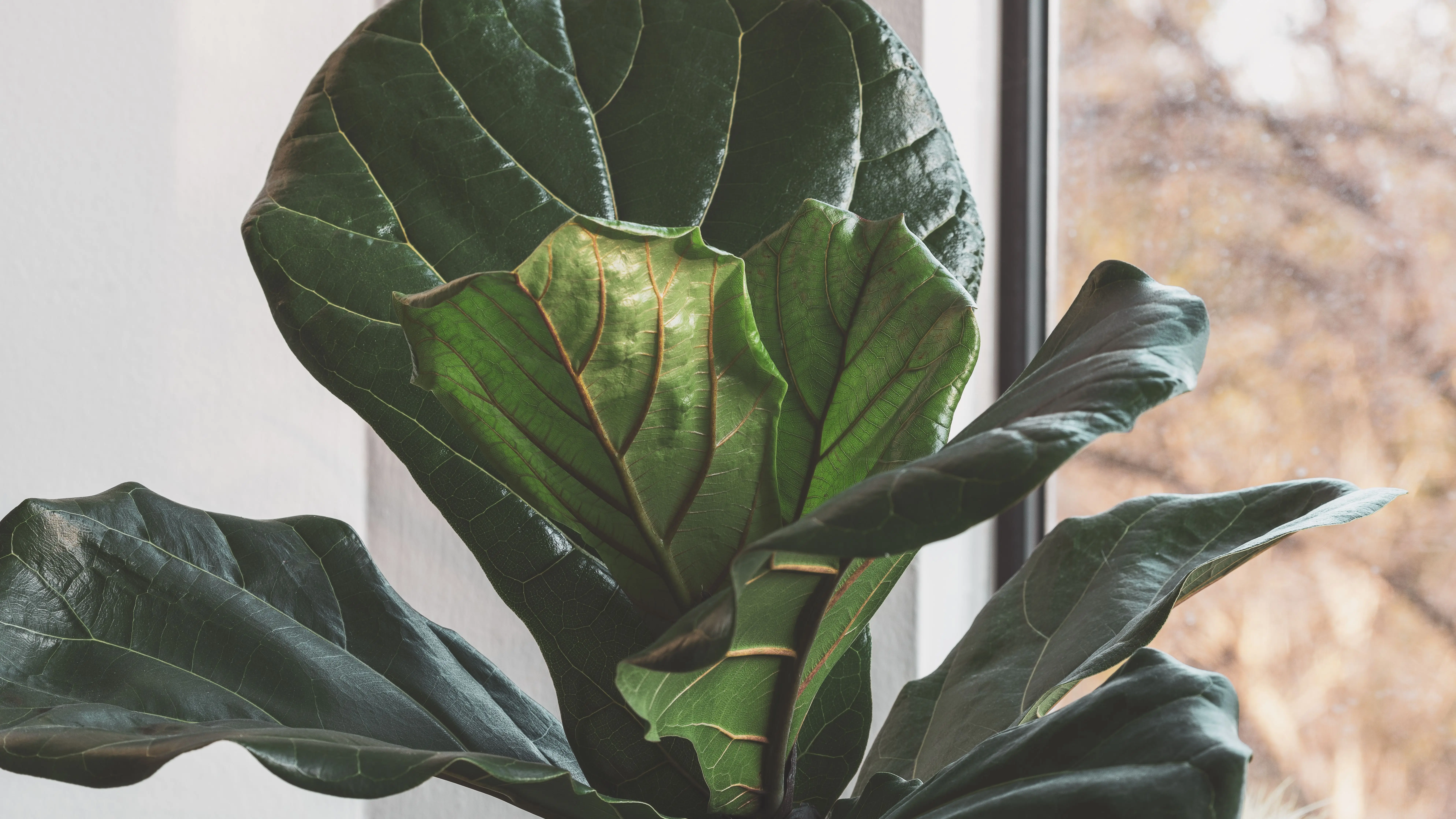
Photo by Scott Webb on Pexels
Scale the Look Down for a Small Living Room
Japandi and a small living room are natural partners — negative space is already the point of the style descended from Scandinavian design, so a spacious-feeling apartment room doesn’t require more square footage, just fewer, lower pieces. Keep every piece close to the floor and skip anything with a solid, boxy base; open wood legs let the floor stay visible under the furniture, not just around it.
The same low-sofa and single-rug rule from earlier applies here, just at a smaller scale — an 8-foot sofa reads oversized in a 10×12 room no matter how low its legs are. If square footage, not style, is the actual constraint, our small living room ideas with a TV roundup goes deeper on layout specifically.
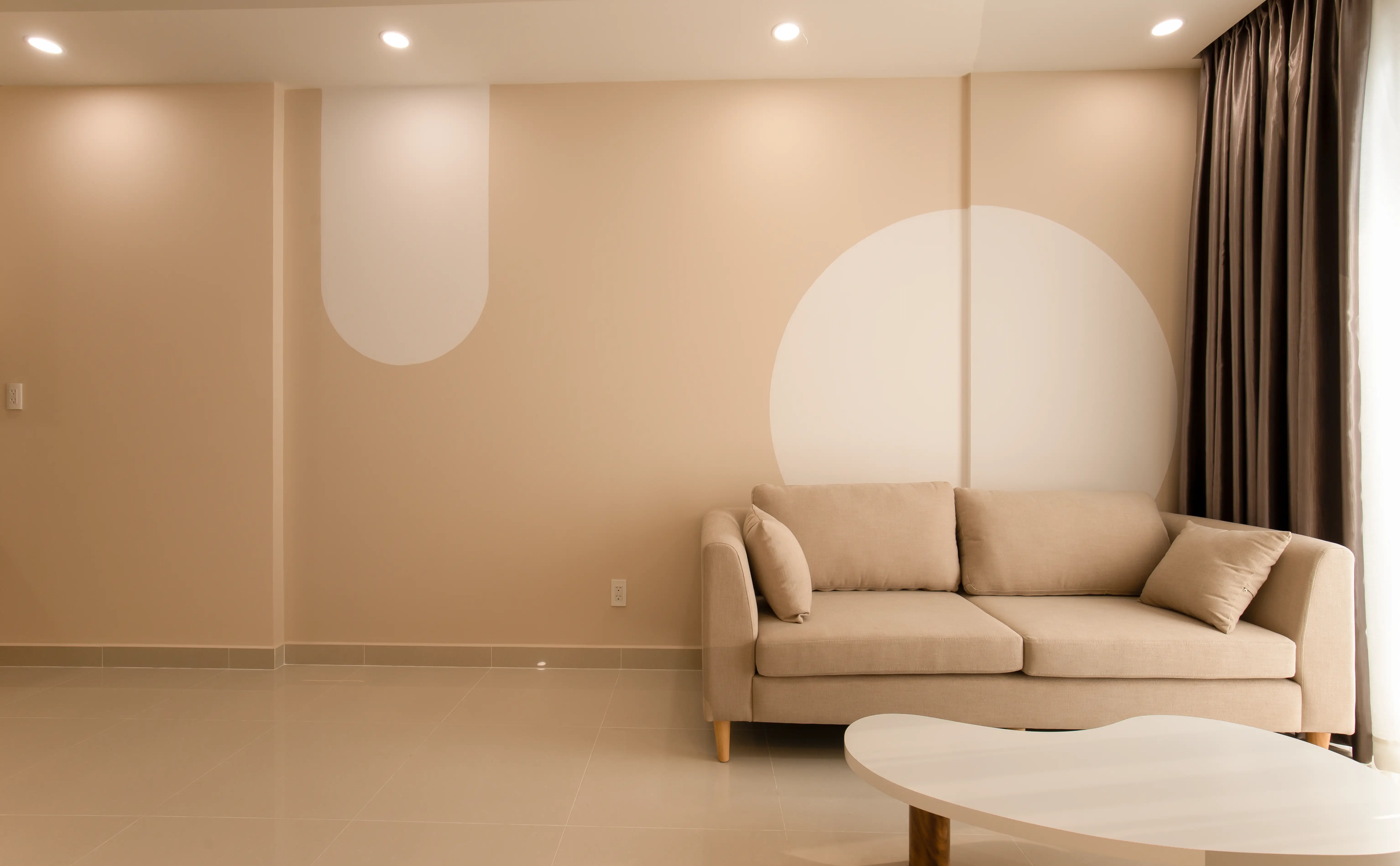
Photo by Thới Nam Cao on Pexels
Here’s the Honest Math on Japandi on a Budget
A Japandi living room is one of the cheaper style directions on this site to do well, because the whole ethos is fewer purchases, not more — the trap is assuming the look means replacing every piece of furniture at once. It doesn’t. Most of what’s above is under $150 per idea, and a couple (declutter, lighting) are close to free.
The $0–250 version
Declutter, swap bulbs to warm-white, add a rug if you don’t already own one, and paint one wall if the current color is stark white. This alone fixes the two biggest reasons a room reads cold: lighting temperature and visual clutter, not the furniture underneath it.
The $700–1,100 version
Add the low sofa, an accent chair, and the console on top of the free fixes above. If our japandi bedroom ideas guide is next on the list, the same wood tone and palette carry straight over — one shopping trip, two rooms.
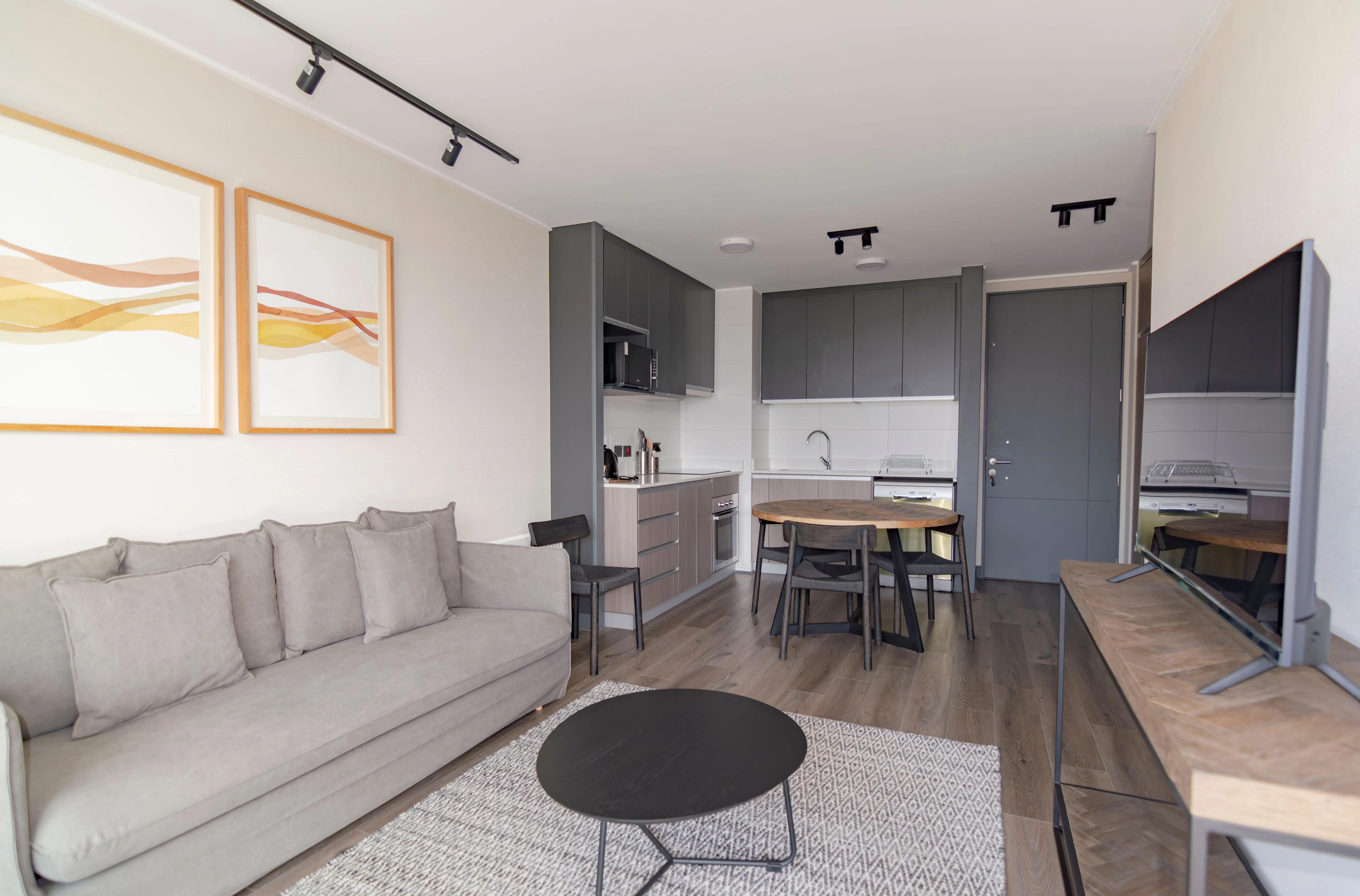
Photo by Athenea Codjambassis Rossitto on Pexels
Start with the lamp and the rug. Everything else on this list looks like a decision once the room stops looking like moving day.
Frequently asked questions
What is a Japandi style living room?
A Japandi style living room blends Japanese minimalism with Scandinavian warmth — low, solid-wood furniture, a muted neutral palette, and negative space instead of wall-to-wall decor. It favors natural materials like linen, rattan, and unfinished wood over glossy finishes, and keeps clutter out of sight so the room reads calm rather than empty.
What colors work best in a Japandi living room?
Muted neutrals work best — warm greige, oatmeal, soft clay, and off-white, rather than stark white or bright accent colors. One or two deeper tones (charcoal, forest green, rust) can anchor a cushion or a single piece of art, but the wall and furniture palette stays quiet so the wood tones and texture do the visual work.
What furniture is typically used in a Japandi living room?
Low-profile sofas and accent chairs with exposed solid-wood legs, a round or organic-shaped coffee table, rattan or cane-backed chairs, and closed-door storage instead of open shelving. Furniture stays close to the ground, and every piece is chosen for clean lines — ornate carving, glossy lacquer, and bulky upholstery all work against the look.
What are common Japandi decor mistakes?
The two biggest are buying an entirely new furniture set instead of editing what's already there, and mixing too many wood tones — three or more finishes in one room reads unplanned, not deliberate. Skipping texture (linen, rattan, wool) is the other common miss; an all-neutral room with zero texture reads sterile instead of calm.
Is Japandi style expensive to achieve?
Not necessarily — the style rewards fewer, better pieces over a full furniture set, so most of the cost is one splurge (the sofa) plus a handful of $20–150 items: a lamp, a vase, textured pillow covers. Decluttering and a rug or paint refresh alone can move a room most of the way there for well under $200.