
Bedroom
Mens Bedroom Ideas: Masculine Bedroom Decor & Design Ideas
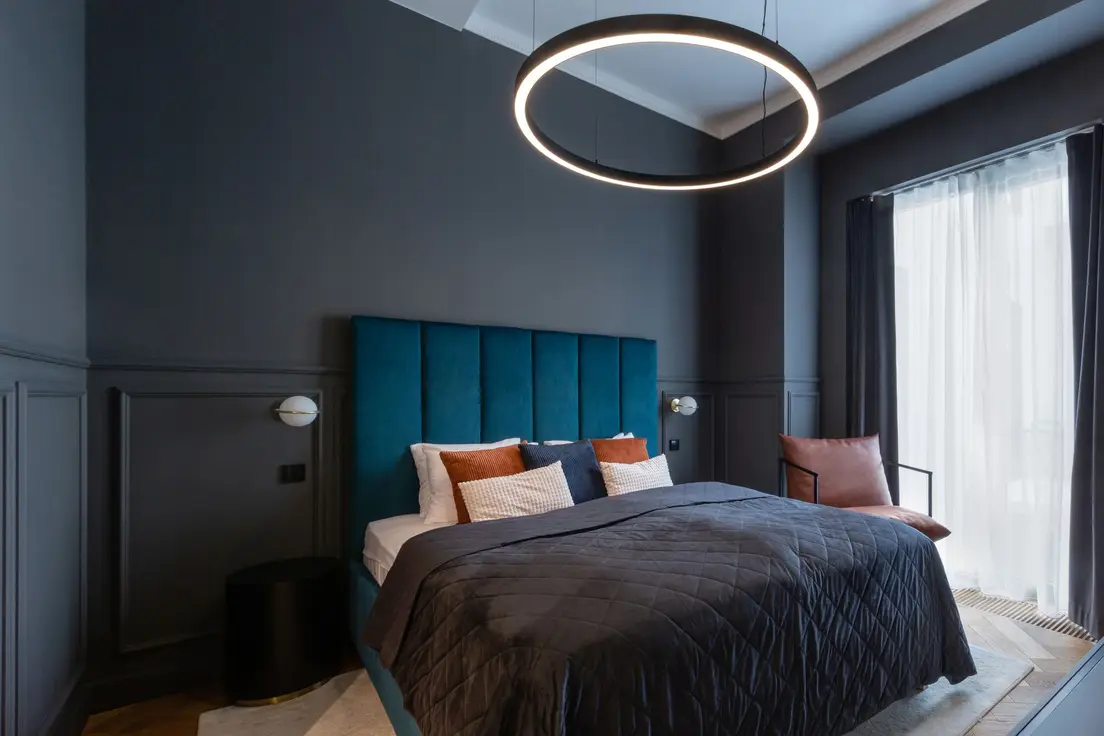
Photo by TurnKey Apartments on Pexels
The best mens bedroom ideas aren’t about adding stuff — they’re four decisions: one dark hue on one wall, texture instead of pattern, a bed frame that sits low, and lighting that isn’t a single ceiling bulb. Get those right and a masculine bedroom reads deliberate instead of unfinished, which is the actual gap between a man’s bedroom and a room he happens to sleep in. Most men’s bedroom ideas online are really decorating decisions made for a showroom; these are bedroom ideas for men with a real budget. This is modern bedroom design for a masculine space, not a man cave with a neon sign in it. Below are twelve masculine design ideas ranked by impact per dollar, most under $200, all workable in small spaces, none requiring an interior designer or a landlord conversation.
Paint One Accent Wall in Dark Hues: Charcoal, Navy, or Deep Olive
Paint the wall behind the bed a dark hue and leave the other three alone — that’s the single cheapest change on this list and the one that does the most. One gallon covers about 350 square feet, which is more than enough for a standard 12-foot wall, and runs $35–60 in a decent eggshell or matte. Charcoal, navy, and deep olive are the three dark hues that work hardest here; the reason it goes behind the bed is that it’s the one wall you never look at while you’re lying in it. If you’re still deciding on the shade, our guide to the best color for bedroom walls walks through how each one behaves at different times of day. Not a painter? Peel-and-stick wallpaper in a textured solid gets close for about $35 a roll. Builder-grade white in every room is a developer’s cost decision, not a design choice. Prime first over a glossy landlord finish — we put three coats of warm off-white on a rental bedroom’s “Contented Almond” eggshell and the almond was still bleeding through in the afternoon light, because nobody mentioned it was a stain-blocking base.
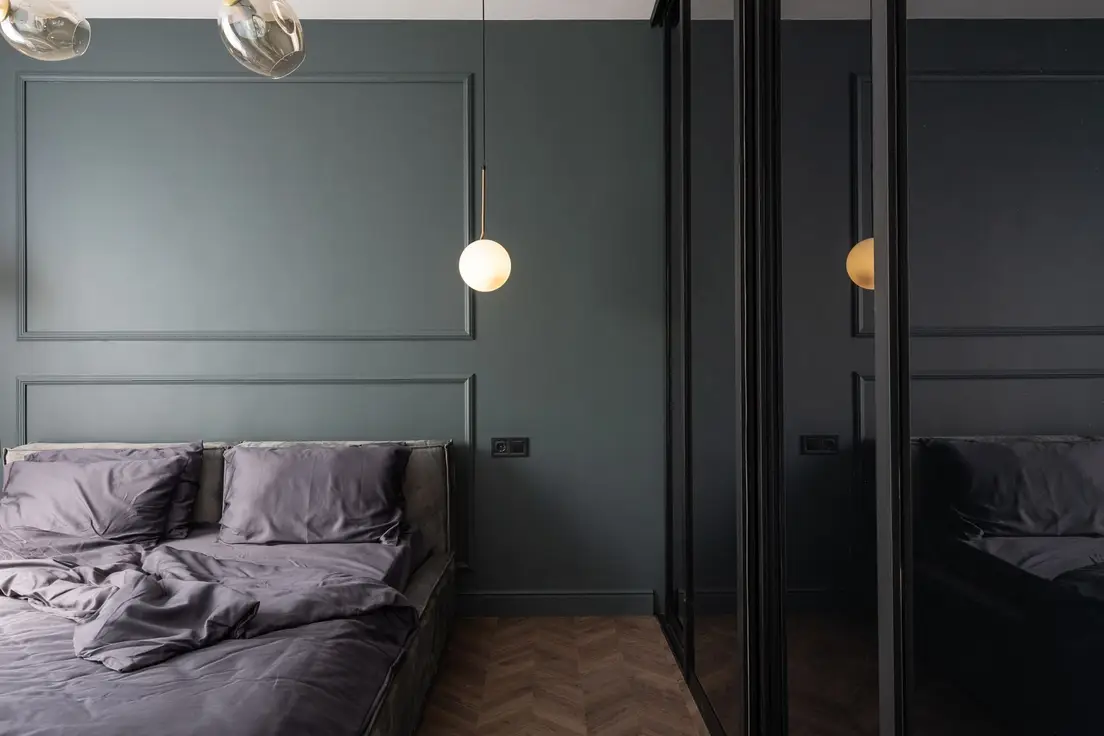
Photo by Max Vakhtbovych on Pexels
Add Wall Panels or Wood Slats as a Feature Wall Behind the Bed
Wall panels behind the bed give a bedroom a headboard, a focal point, and a texture upgrade in one weekend. Peel-and-stick slat panels run $30–50 per 2×4-foot section, so a 6-foot feature wall behind a queen is roughly $120–160 in materials. Vertical slats make an 8-foot ceiling read taller; horizontal ones widen a narrow room. Slat panelling is the most minimalist feature wall there is — texture without a single new color. Go mid-to-dark walnut rather than orange-toned pine, the finish that makes new wood panels look like a 1978 basement rec room. Renting? Mount the panels to 1/4-inch plywood, lean it against the wall behind the bed, and take it with you.
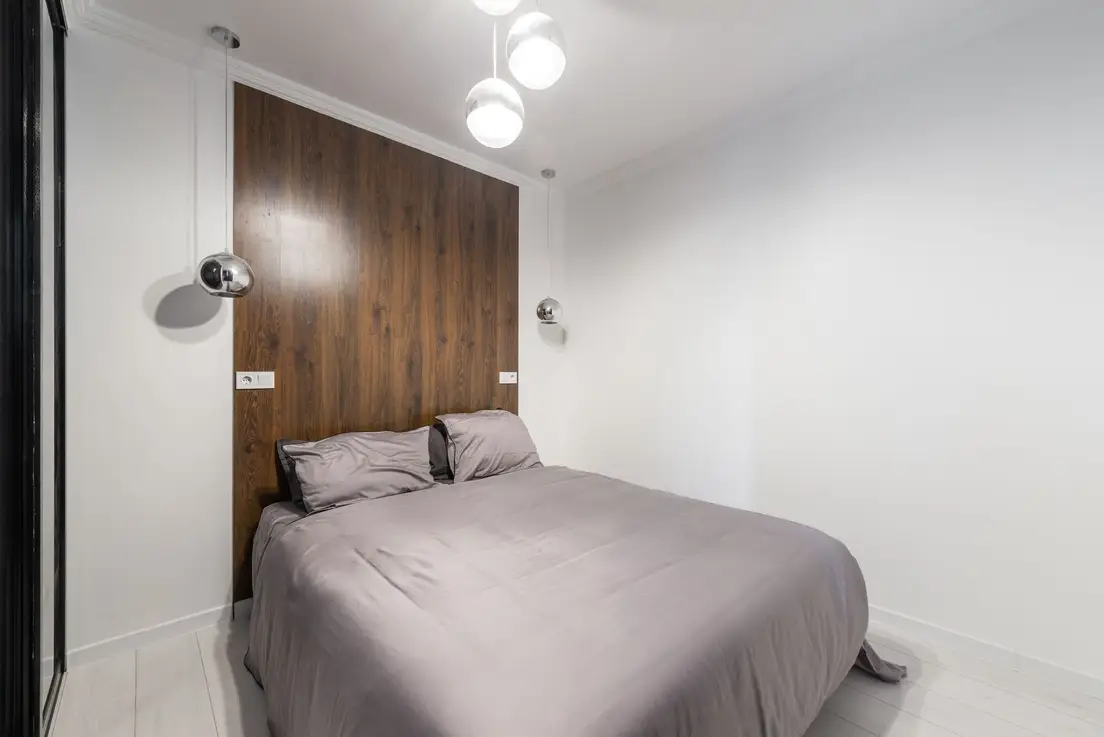
Photo by Max Vakhtbovych on Pexels
Swap In a Low-Profile, Space-Saving Bed Frame With Storage
A low-profile platform bed frame does two jobs at once: it makes the ceiling look higher and it gives you four drawers of storage that aren’t a stack of bins in plain sight. Expect $250–450 for a queen frame with four built-in drawers, versus $150–250 for a plain low platform. Unfussy is the goal: no canopy, no footboard, no carved posts. Aim for 10–14 inches to the top of the mattress — low enough to read modern, high enough that getting out of bed isn’t a floor exercise. This is the one piece worth measuring the stairwell for, not just the room — the most common furniture return in this category is a frame that didn’t fit around the landing.
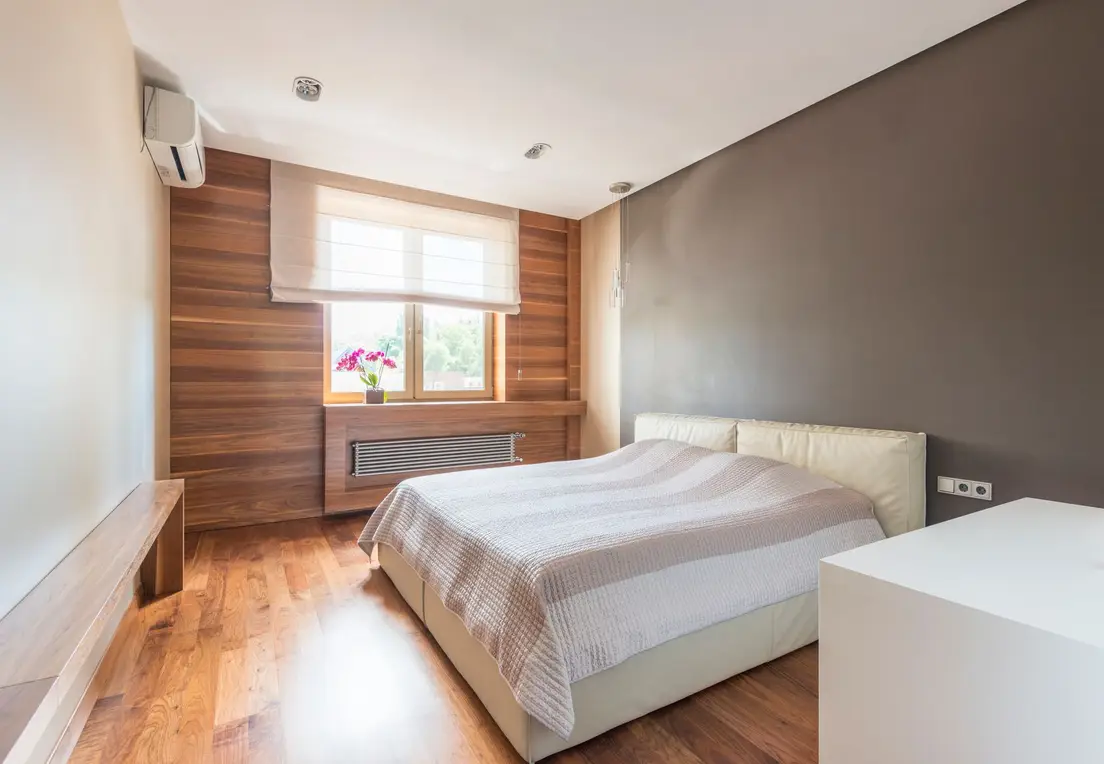
Photo by Max Vakhtbovych on Pexels
Give the Bed a Leather or Tufted Headboard
A headboard is what separates a bed from a mattress on a frame, and in a masculine bedroom it’s where the room’s one piece of real material should go. Top-grain leather headboards start around $400; a faux-leather or channel-tufted panel in charcoal, cognac, or olive runs $120–250 for a queen and wall-mounts on two anchors rated for 30+ lbs. Channel tufting reads cleaner than diamond tufting, which skews formal. Go tall enough to clear your shoulders when you sit up — about 48 inches off the floor. Mount it to the wall rather than the frame and you can keep it through two more apartments and one more bed.
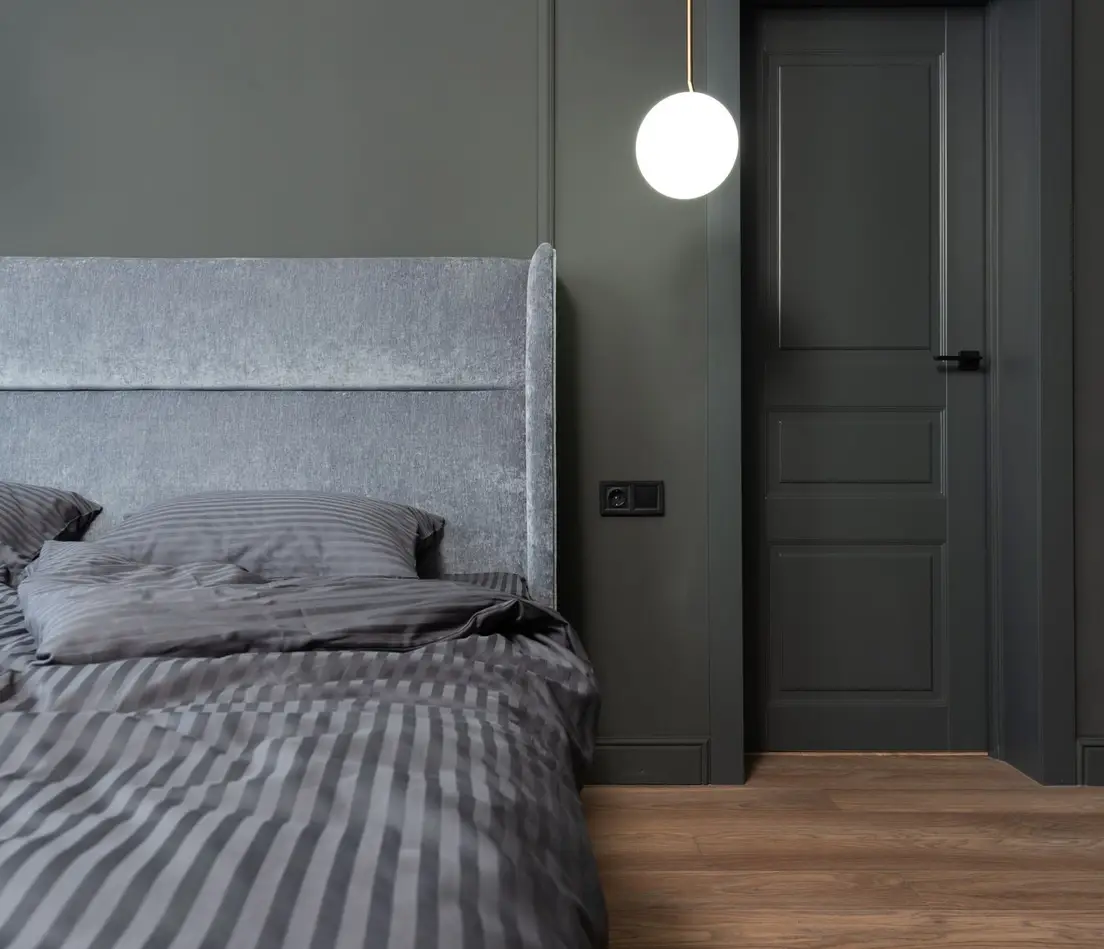
Photo by Max Vakhtbovych on Pexels
Keep the Bedding Neutral and Layered, Not Matched
Buy the duvet cover, the sheets, and the throw separately in three shades of the same neutral, and the bed stops looking like it came out of one plastic bag. A washed-linen or linen-blend duvet cover runs $80–140 and gets better with every wash; cotton percale sheets are $50–90. Charcoal, oatmeal, olive, and warm grey all layer with each other. Three textiles in three weaves is what makes a bed read cosy rather than flat. Two pillows you sleep on plus one lumbar is the whole formula. If the bed looks flat, the issue is almost always that every piece is the same color and the same weave, not that something’s missing.
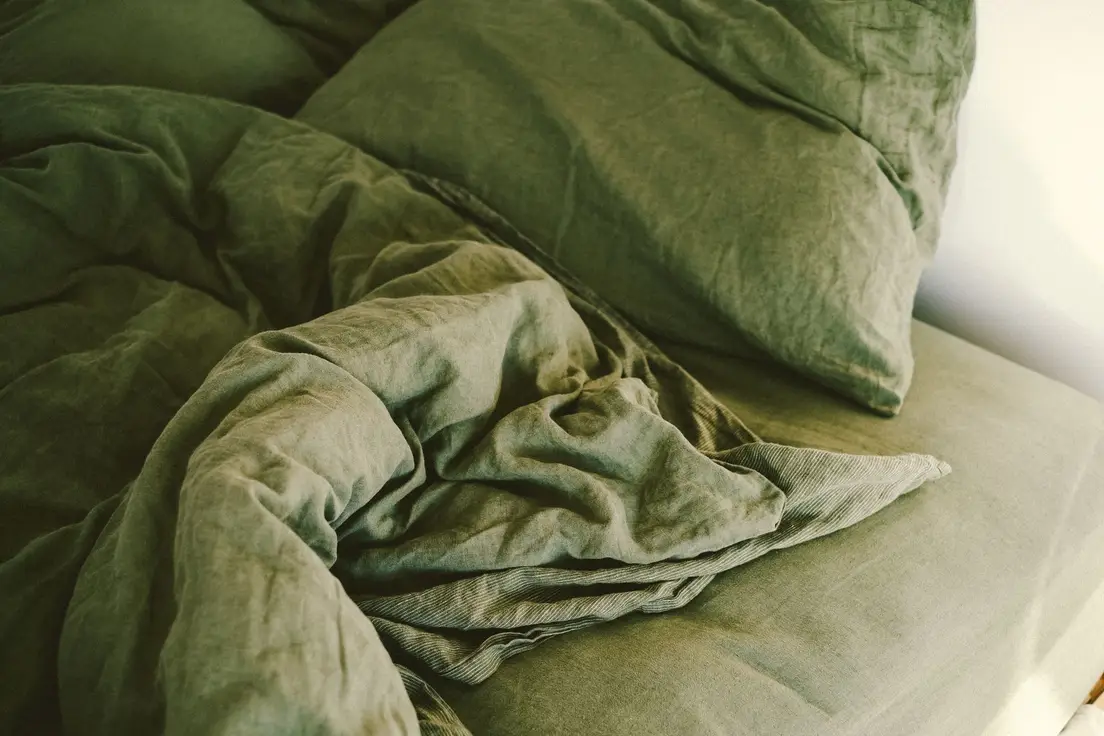
Photo by Valeriia Miller on Pexels
Ground the Room With an Area Rug in Neutral Colors or Geometric Patterns
A rug is almost always the highest-leverage first purchase in any room, and in a bedroom it’s also the only thing between your feet and a cold floor at 6 a.m. Go bigger than feels reasonable: for a queen, an 8×10, so the rug runs 24–30 inches past each side of the bed. Budget $150–280 for wool, $80–150 for a flatweave kilim with geometric patterns. Stick to neutral colors if the walls are already doing the work. Texture is what keeps a neutral room from reading cheap — a flatweave, a chunky throw, and one leather or wood surface do more than any amount of color would. A 5×7 under a queen bed looks less like a rug and more like a bath mat that wandered into the wrong room.
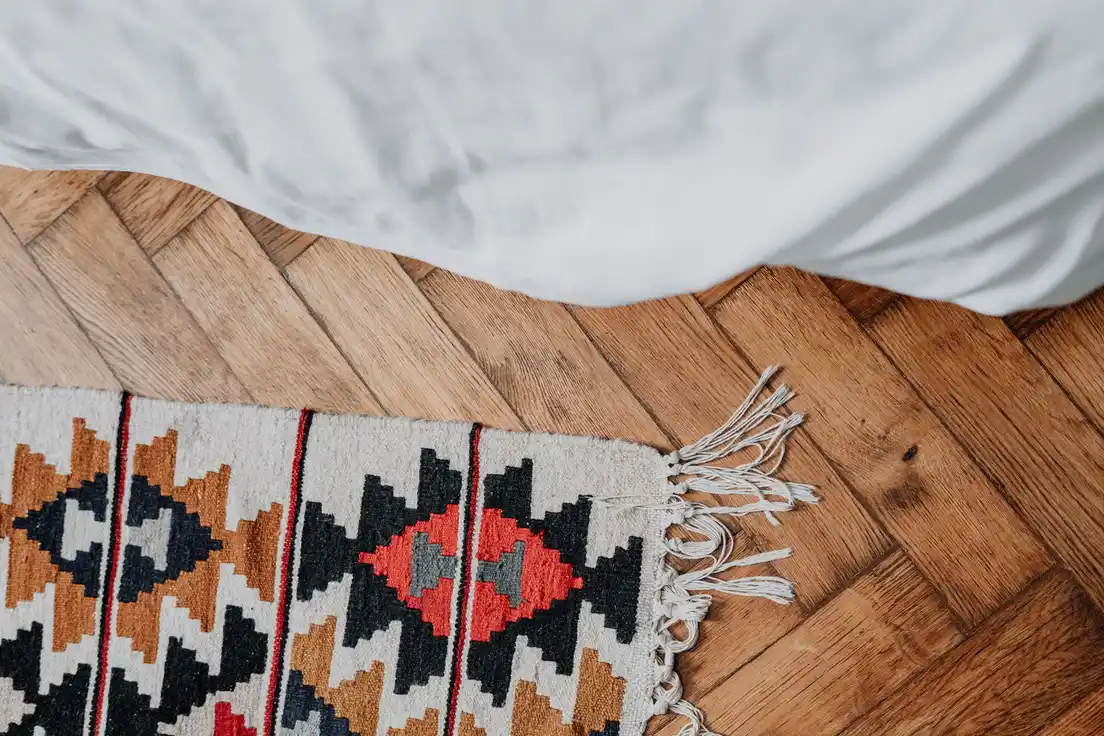
Photo by cottonbro studio on Pexels
Fix the Bedroom Lighting First: Warm Bulbs, Lamps, and LED Lights
Swap the bulb before you buy anything else — a $6 warm 2700K bulb in the existing fixture fixes more of what’s wrong with a bedroom than $600 of new furniture does. The builder-grade 4000K bulb that came with the place is the single reason a well-furnished room still photographs like a rental listing. Add two more sources at different heights: $40–70 wall sconces or bedside lamps, and a $20 LED strip behind the headboard. Put the overhead on a dimmer ($15, twenty minutes, one screwdriver). Skip the color-changing LED lights unless this is also a gaming room — they date a stylish bedroom faster than anything else in it, and so do alarm clocks with a blue display. The ENERGY STAR guidance on bulb brightness and color temperature lays out the Kelvin ranges if you want the actual numbers before buying. Three warm sources beat one bright one every time, and it’s the cheapest verdict on this entire list. It’s the same restraint behind our warm minimalism style guide: fewer lights, warmer, better placed.
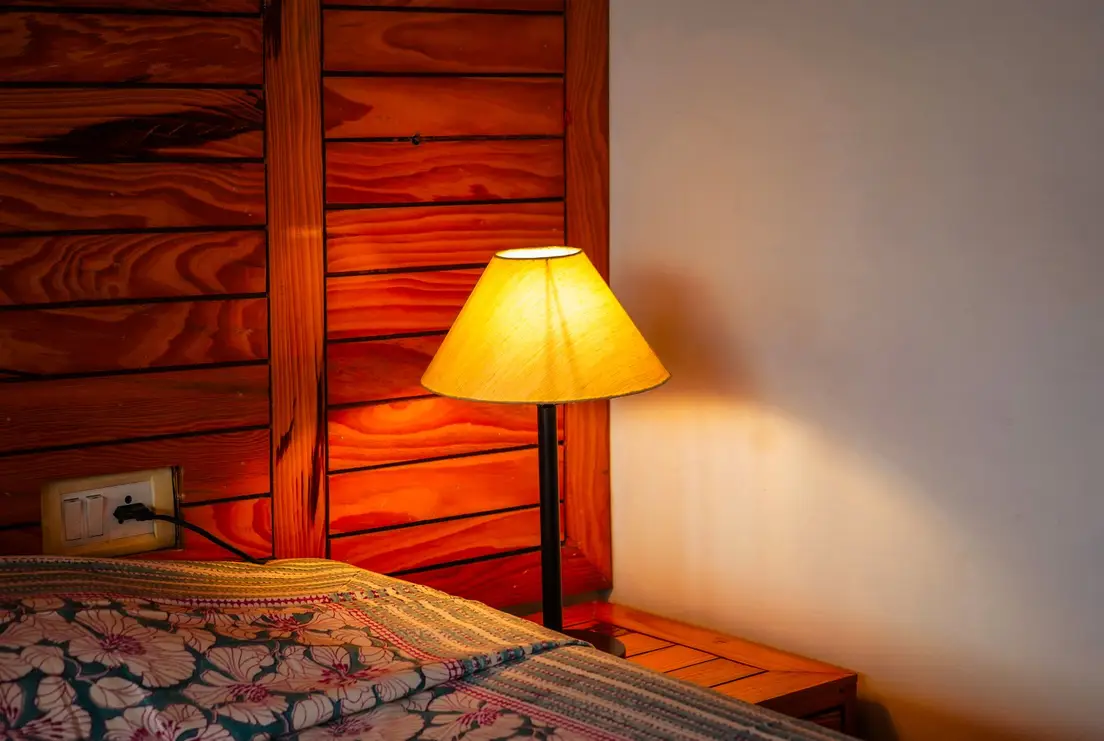
Photo by Mustafa Fatemi on Pexels
Hang One Oversized Piece of Wall Art Instead of a Gallery Wall
One large framed piece above the bed beats a gallery wall of small frames in a male bedroom, because scale is what makes wall decor read as decor instead of as dorm. Aim for roughly two-thirds the width of the bed — about 40 inches over a queen — centered at eye level, around 57–60 inches off the floor. A large print in a black or walnut frame runs $80–180; printing your own photo at 24×36 and framing it is closer to $60. Black-and-white photography, an architectural line drawing, or one abstract in the room’s colors all work. Four small frames in a grid is a gallery wall; four small frames arranged by vibe is a bulletin board.
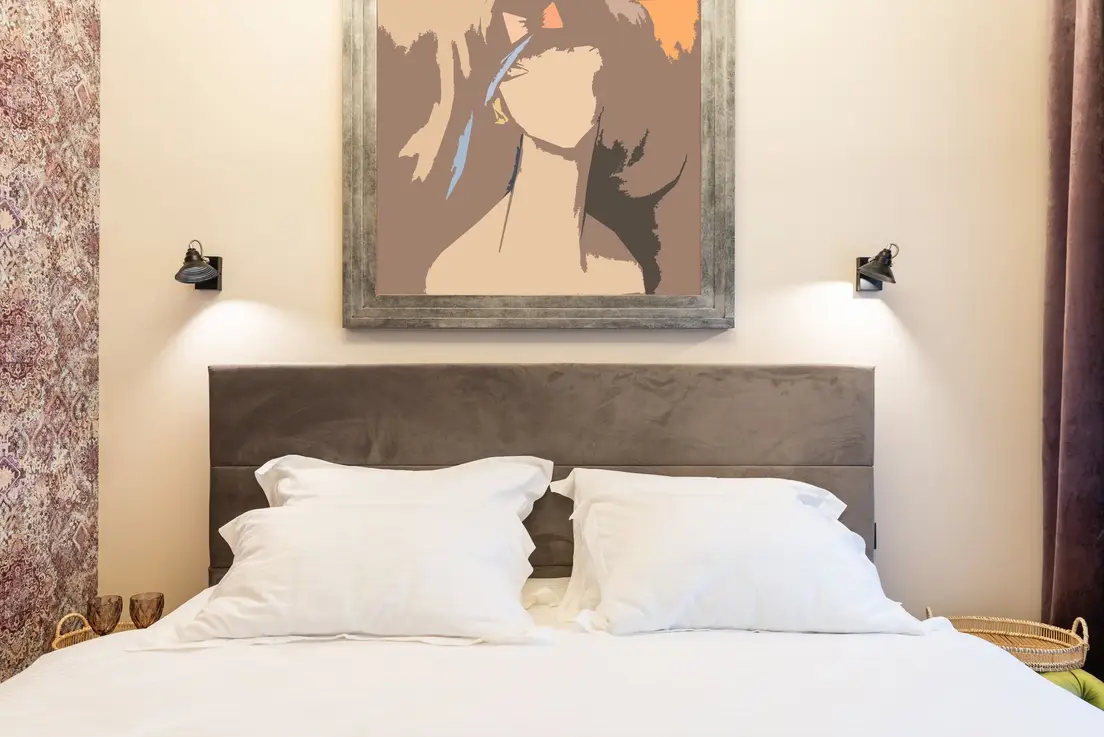
Photo by Max Vakhtbovych on Pexels
Borrow From Industrial Style: Brick, Metal, and Clean Lines
Industrial style gives a masculine bedroom its hard edge, and the trick is one hard material against three soft ones. Exposed brick if you have it, brick-look peel-and-stick panels at $25–40 per 10 square feet if you don’t. Matte black is the metal to standardize on — curtain rod, sconces, frames, drawer pulls, one finish, about $60–100 across a whole room. Clean lines, low count, geometric designs only where they earn it: one brick or concrete surface, one run of black metal, stop. Balance every hard surface with natural materials — wood, leather, wool — or the bachelor pad tips into warehouse. Three competing hard materials and a loft-style bedroom starts reading as a theme restaurant that serves burgers on a shovel.
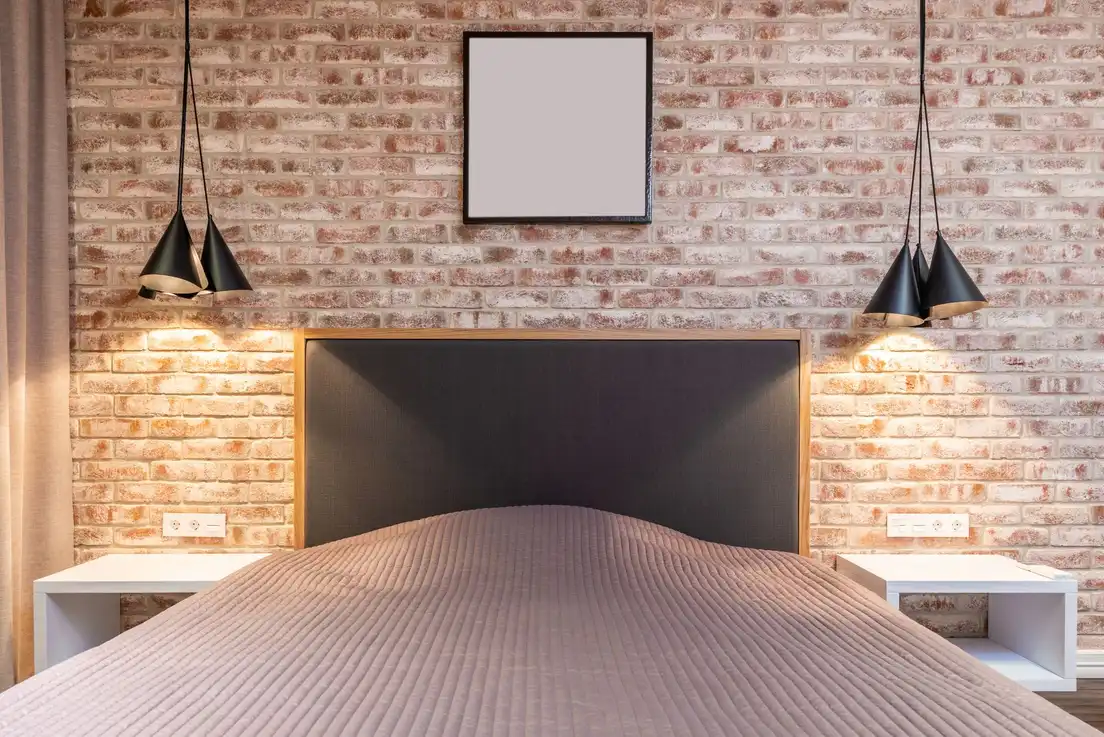
Photo by Max Vakhtbovych on Pexels
Hang Blackout Curtains High and Wide
Mount the rod 4–6 inches below the ceiling and run it 8–10 inches past each side of the window frame — same curtain, same window, and the wall suddenly reads a foot taller. Blackout panels run $30–60 per pair and are the difference between sleeping until 7 and being woken by a streetlight at 4:40. Go floor-length and let the hem kiss the floor; a curtain stopping at the windowsill is the window-treatment equivalent of pants that are slightly too short. Pick a heavy woven texture in charcoal or greige over a shiny blackout liner, which looks exactly as synthetic as it is. A $12 matte black rod ties it to the rest of the room’s metal.
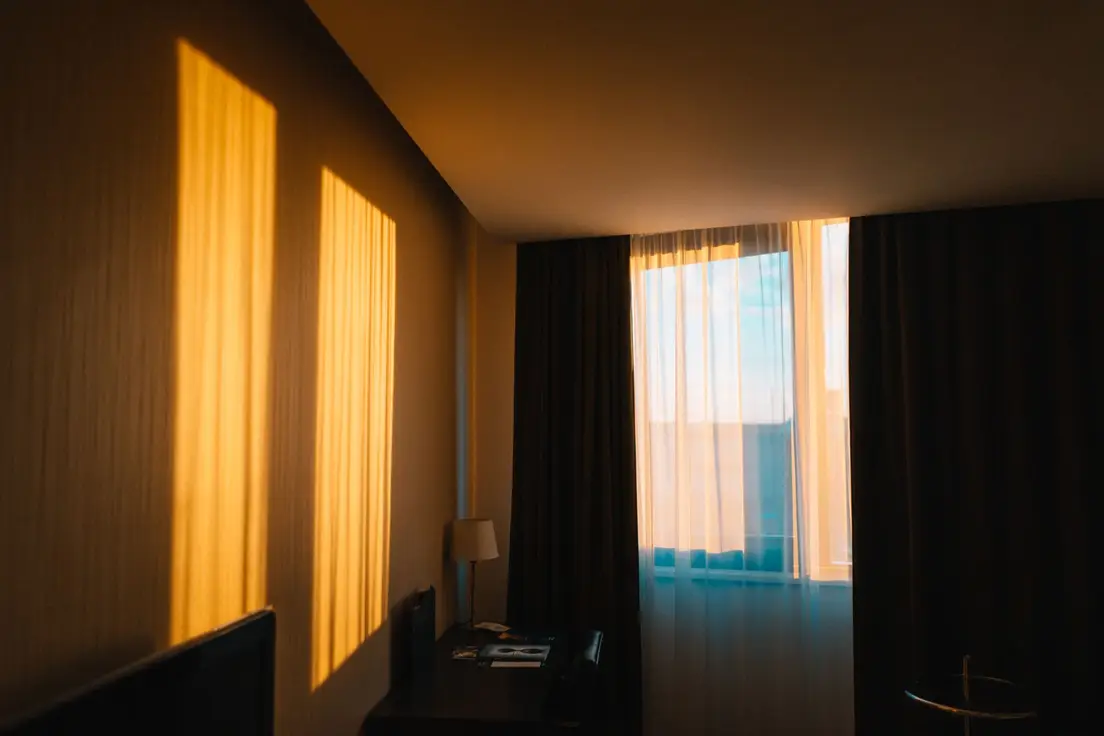
Photo by Lukas Rychvalsky on Pexels
Clear the Nightstands Down to Three Objects
A nightstand holding a lamp, a book, and a small dish reads styled; the same nightstand holding a charger, two glasses, a receipt, and yesterday’s watch reads surrendered. Three objects is the whole rule, and a $15 leather valet tray collects keys, watch, and wallet into one of them instead of four. A candle or a small framed painting is a fine third object; a stack of receipts is not. Add a $25 cable organizer behind the bedside table so the charging cable stops being part of the decor. Budget $60–120 for a nightstand with one drawer — the drawer is what keeps the three-object rule workable. Run the same edit across the dresser top; that part costs $0.
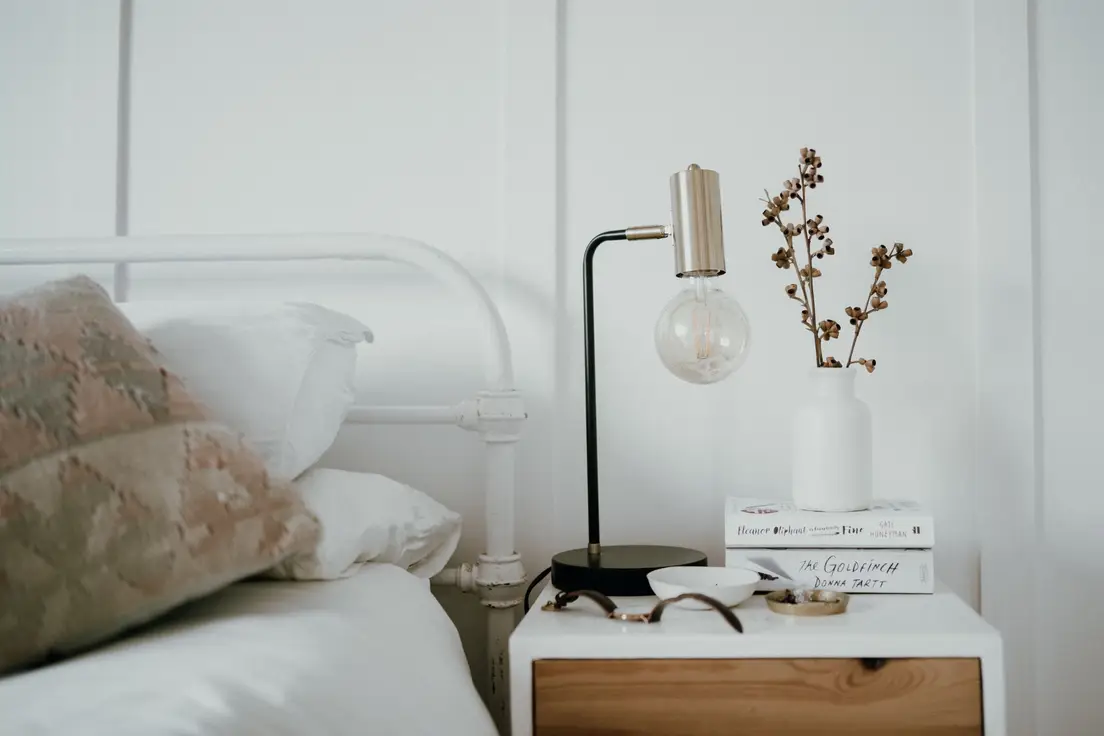
Photo by Taryn Elliott on Pexels
Put One Large Plant in the Empty Corner for Natural Materials
Every bedroom has one dead corner, and one large plant fixes it for $35–70 — a snake plant, a ZZ plant, or a rubber tree, all of which survive a north-facing room and an owner who travels. Go big: one 4-foot plant in a $30 matte ceramic planter beats five small pots scattered around the room, which read as a collection rather than a decision. If the room genuinely has no window worth the name, buy a good faux — a dim bedroom is real-plant murder, not a character flaw, and a decent faux fiddle-leaf at $60 beats a real one dying slowly in the corner all winter. Wood tones and one living thing are what keep a dark, hard-edged room from feeling severe. For the same decisions at a wider scope and without the masculine angle, our master bedroom ideas guide covers the whole room.
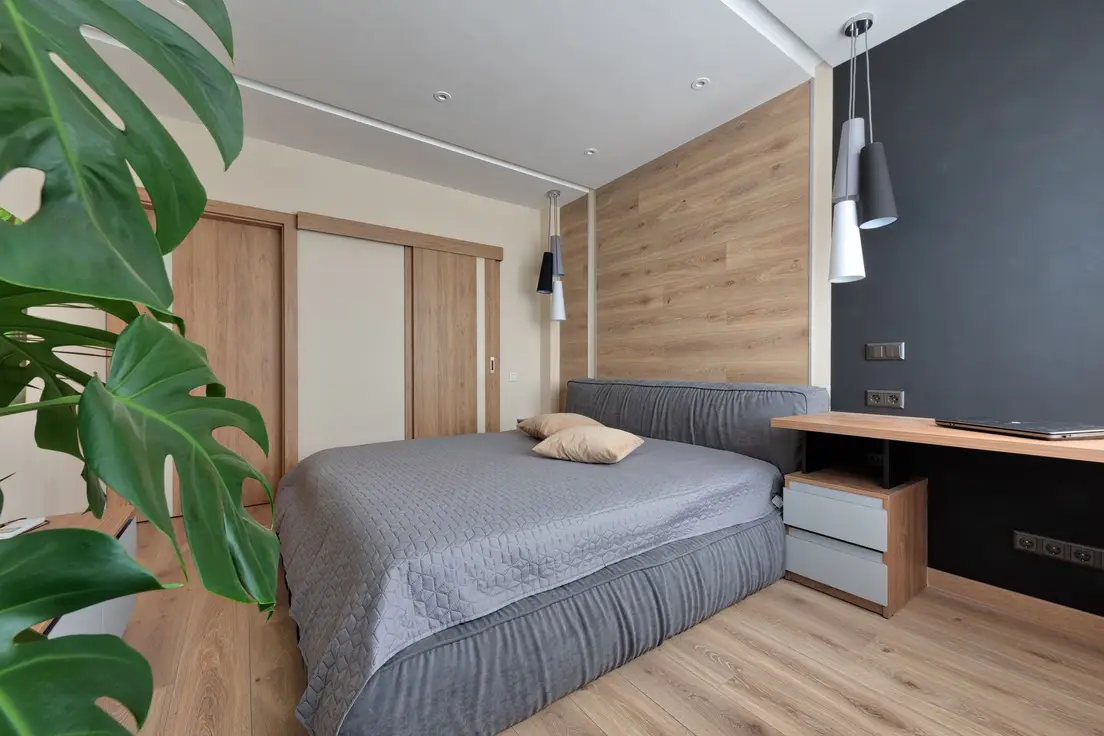
Photo by Max Vakhtbovych on Pexels
Here’s the Honest Math on a Mens Bedroom Makeover
On a tight budget these masculine bedroom decor ideas are cheaper than the finished room suggests, because the three that change the most — paint, lighting, and the rug — are near the bottom of the price list, not the top. The same three moves carry a masculine vibe into a living room too, for what it’s worth.
The $150–250 version
A gallon of charcoal or navy paint for one accent wall, warm 2700K bulbs plus a dimmer, blackout curtains on a high-mounted matte black rod, and a valet tray. This is the whole “why does my bedroom look unfinished” problem solved without buying a single piece of furniture.
The $600–900 version
Add a low-profile bed frame with storage, an 8×10 wool rug, a wall-mounted headboard, and one oversized piece of art. Live with the first version for a week before committing to this one — a decent share of what feels like “I need new furniture” turns out to be “I need to move the dresser and clear two surfaces,” and that part is free. For the shoppable version of this exact room, see our men’s bedroom makeover.

Photo by olia danilevich on Pexels
Start with the bulb and the accent wall. Everything else on this list looks better in a room that isn’t lit like a parking garage.
Frequently asked questions
What are some cool things for a man's bedroom?
The highest-impact ones are a dark accent wall behind the bed, a low-profile bed frame with storage underneath, one oversized piece of wall art instead of a poster collage, and a real area rug. Add warm 2700K lighting on a dimmer and the room reads finished. Skip the neon sign and the gaming-chair-as-furniture arrangement.
What should every man have in his bedroom?
A bed frame that isn't on the floor, blackout curtains, two light sources besides the ceiling fixture, a dresser with enough drawers that nothing lives on a chair, and one surface kept clear. Everything else is personal. Those five fix the problems people actually notice when they walk in.
What colors work well in a man's bedroom?
Warm neutrals as the base — greige, oatmeal, warm white — with one dark hue doing the heavy lifting: charcoal, navy, or deep olive. Keep it to three colors total, counting wood tones as one. Dark walls work best on the wall behind the bed, where you don't look at them while lying in bed.
How can you make a small men's bedroom feel stylish and functional?
Use a low-profile bed frame with drawers, mount the lighting on the wall instead of the nightstand, hang curtains from near the ceiling to make the wall read taller, and keep the palette to two colors plus wood. One large piece of art beats four small ones in a small room — fewer objects, more floor visible.
What lighting works best in a men's bedroom?
Three sources at different heights: a warm 2700K overhead on a dimmer, a pair of wall sconces or bedside lamps, and one low accent light such as an LED strip behind the headboard. Avoid a single 4000K ceiling fixture — it's the main reason a well-furnished bedroom still looks like a rental listing photo.