
Living Room
Modern Minimalist Living Room Ideas That Don't Feel Cold
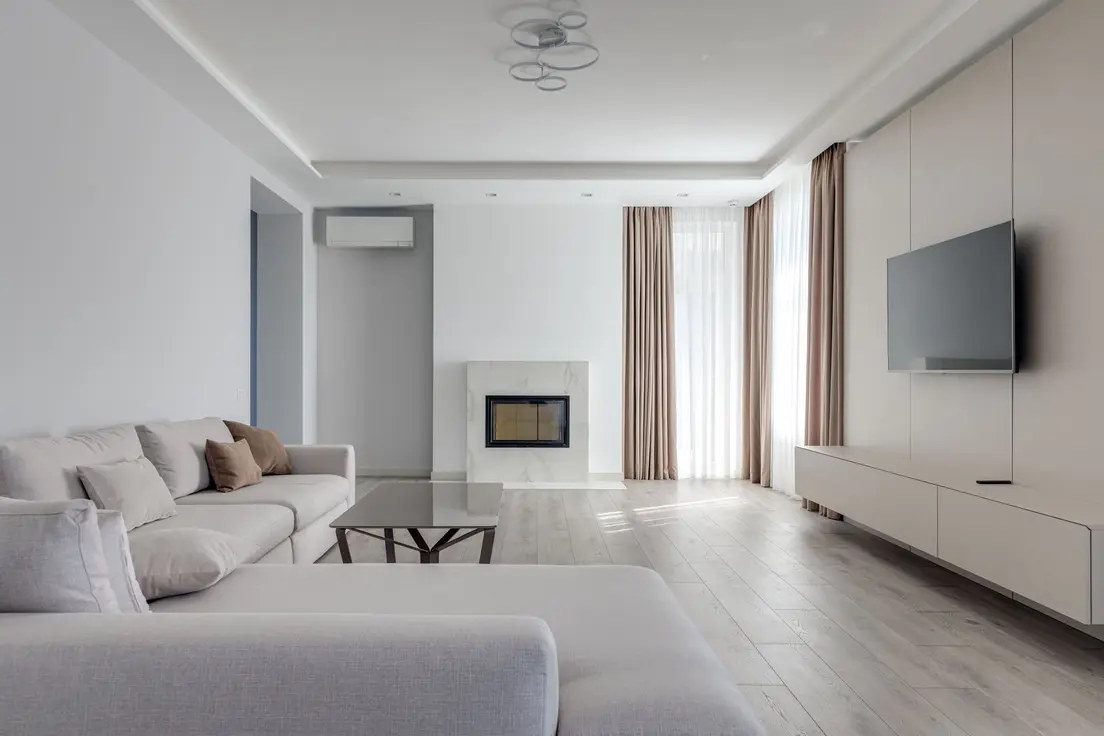
Photo by Max Vakhtbovych on Pexels
A modern minimalist living room isn’t an empty one — it’s a room where every piece left in it is doing real work, in a warm neutral palette instead of a stark white one. The 12 ideas below build a calm, uncluttered room without the sterile, nobody-actually-lives-here look minimalism gets blamed for. None of it requires buying an entirely new living room; most of it starts with editing the one you already have.
Live With the Room for a Week Before You Buy Anything
Half of what feels like “I need new minimalist furniture” is actually “I need to declutter and rearrange what I already own,” and rearranging is free. Pull everything out of the room that isn’t a sofa, a coffee table, or a light source, then live with that bare version for a week before buying a single thing — most rooms turn out to need one new object, not twelve.
Sit with the discomfort of the empty spots; that’s the part that actually trains your eye for minimalist design. (We’ve done this exercise and immediately missed a side table we swore we didn’t need. We were wrong. We bought one side table, not three.) Whatever’s still bothering you after a week is the real shopping list — everything else was decorating for the sake of decorating.
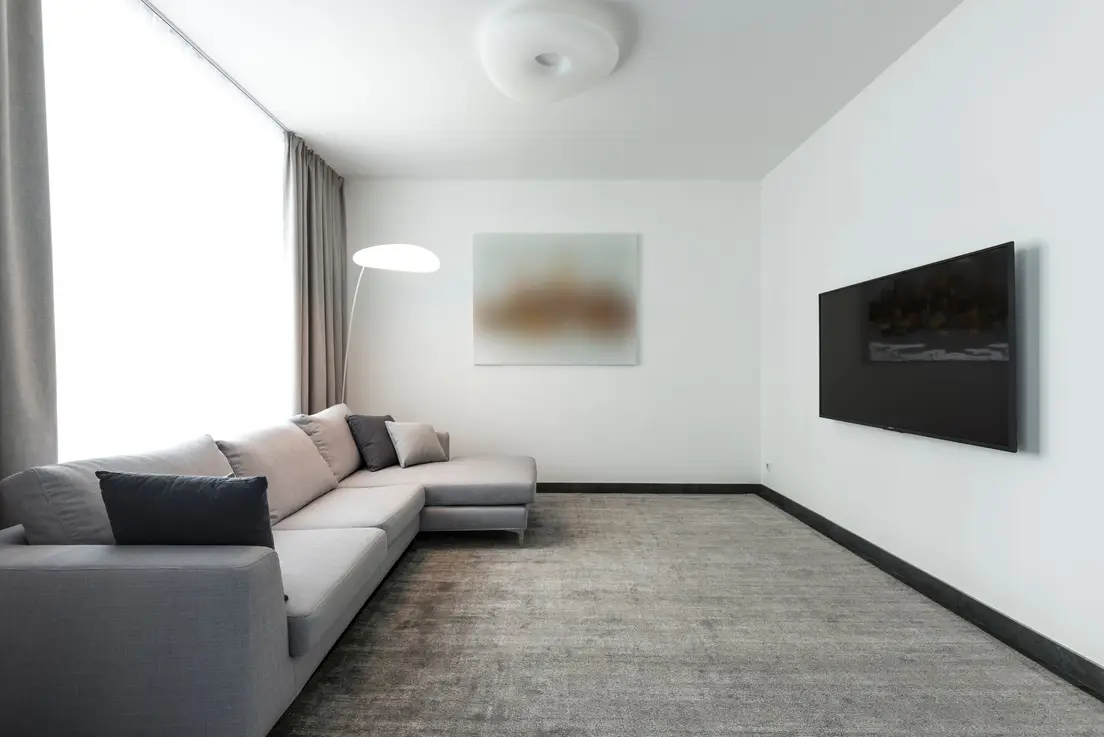
Photo by Max Vakhtbovych on Pexels
Paint the Walls a Warm Neutral, Not Stark White
Paint and lighting solve more of a minimalist room’s “feels cold” problem than new furniture does, and paint is the cheaper fix. Stark white reads clinical under most US living room lighting; a warm greige, oatmeal, or soft clay tone gives the same clean minimalist decor a base that looks lived-in instead of showroom-staged. Benjamin Moore recommends eggshell for living rooms specifically — it holds up to daily traffic better than flat while staying low-sheen enough to read matte from normal viewing distance.
Pair the warm wall color with simple, light curtains instead of heavy drapes — they let more natural light in during the day, which does as much for the “warm, not cold” goal as the paint itself. A gallon runs $35–50 and covers most rooms with a coat to spare. Test the color on the actual wall for a full day before committing — we once painted three coats over a rental’s “eggshell” only to watch the old color bleed through every afternoon, because nobody told us it needed a stain-blocking primer first. Twenty minutes with a swatch would’ve saved us a weekend.
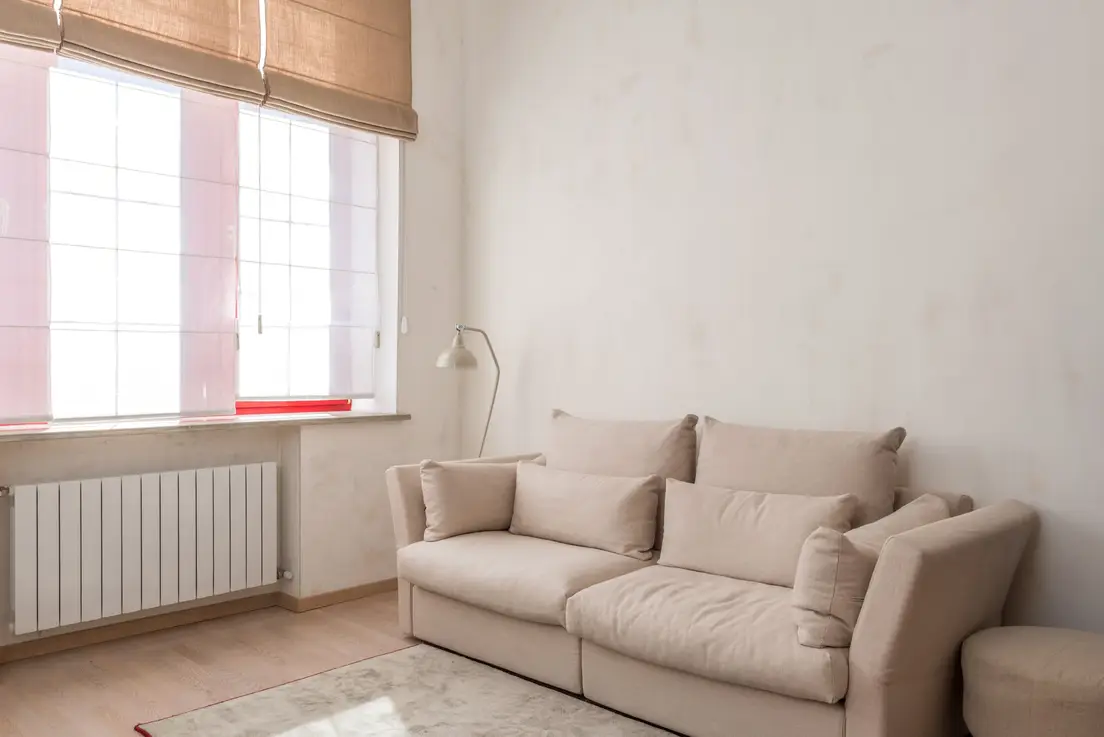
Photo by Max Vakhtbovych on Pexels
Choose a Low-Profile Sofa With Clean Lines
A low-back sofa with simple, unbroken lines is the single piece of furniture that decides whether a room reads as modern minimalist or just sparse. Skip rolled arms, skirted bases, and busy tufting — channel-tufting or a fully smooth back both work — and keep the leg style consistent with everything else in the room (wood with wood, metal with metal) — a tapered mid-century modern leg reads just as minimalist as a fully hidden base, as long as it matches. This is the one splurge worth planning for; everything else on this list is cheap on purpose.
A well-made minimalist-style sofa in a neutral fabric runs $800–1,800 depending on size and upholstery — velvet and boucle hold their shape longer than a basic poly-blend, worth the difference if this sofa needs to survive more than two years.
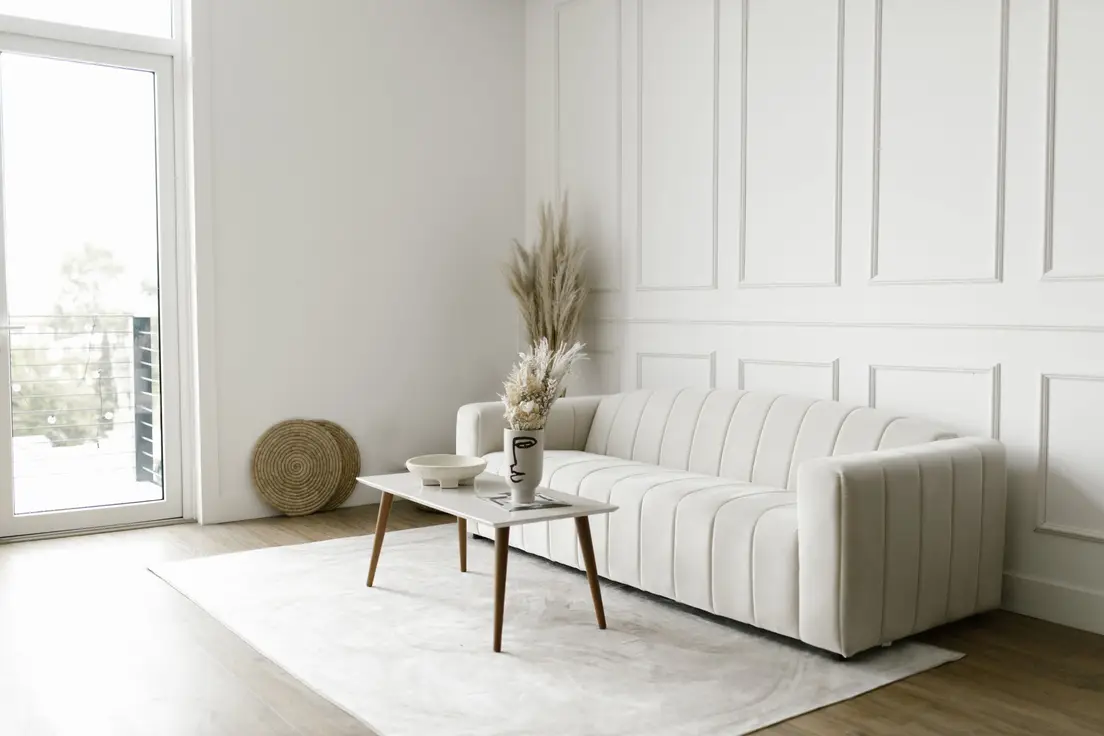
Photo by RDNE Stock project on Pexels
Layer in Texture So Minimalist Doesn’t Read Cold
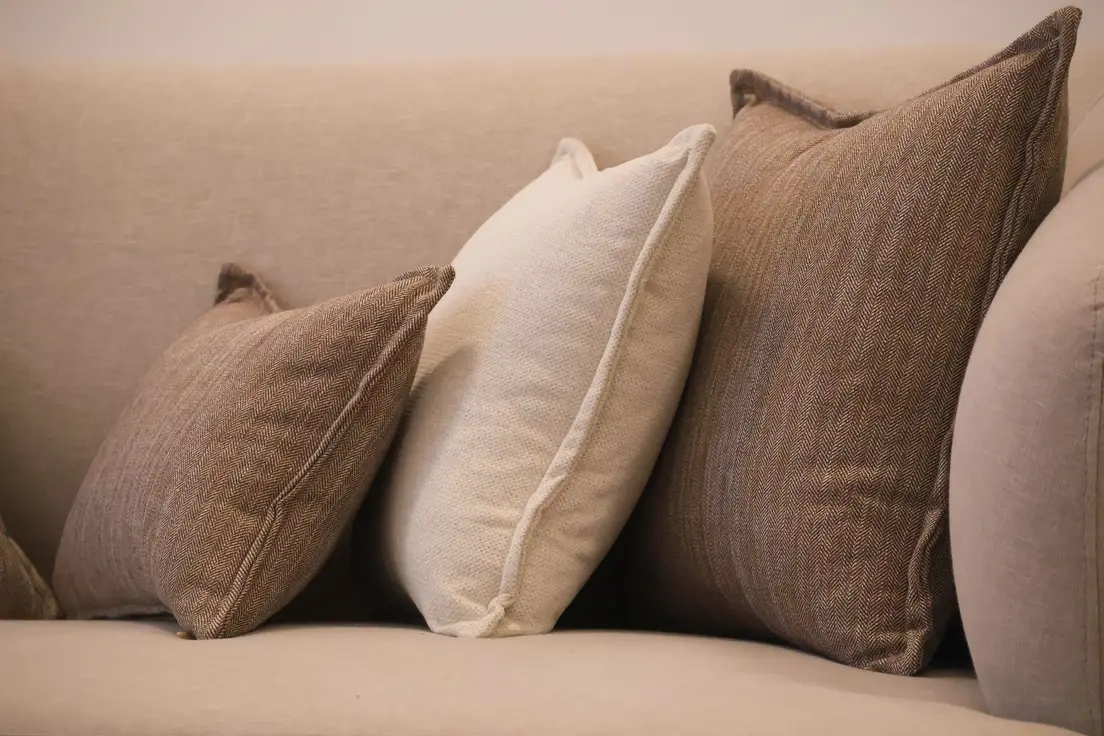
Texture is the actual difference between “calm” and “sterile” in a minimalist living room, and it’s the step people skip when they’re chasing a clean look. Linen throw pillows, a chunky wool or boucle throw, a jute basket, an unfinished wood shelf — none of it adds visual clutter because it’s all still in the neutral palette, but it gives the eye and the hand something real to land on.
Skip this step and a minimalist room reads like a furniture showroom the night before the store closes — technically staged, nobody home. Budget $60–120 for two or three linen or wool pillow covers and a throw; that’s usually enough texture to fix a room that photographs fine but feels like a hotel lobby in person. Stick to two or three materials total (linen, wood, wool is a safe combination) — five different textures fighting for attention undoes the whole point of editing the room down.
Anchor the Room With One Neutral Area Rug
One rug in a solid neutral or a barely-there pattern does more to finish a minimalist living room than any single piece of wall decor. Go bigger than feels reasonable — front legs of every seating piece on the rug is the rule of thumb — since a rug that floats in the middle of the room reads unfinished no matter how good everything around it looks.
(We’ve done the float-in-the-middle rug once. It didn’t read minimalist — it read like the room was still deciding on a rug.) For a 10×10 seating area, that’s an 8×10 rug, roughly $150–300 in a wool or wool-blend weave; synthetic blends run cheaper but flatten faster under daily foot traffic. Skip the bold graphic pattern here even if it’s tempting — the rug is the one surface in this room that’s supposed to disappear, not compete with the sofa for attention.
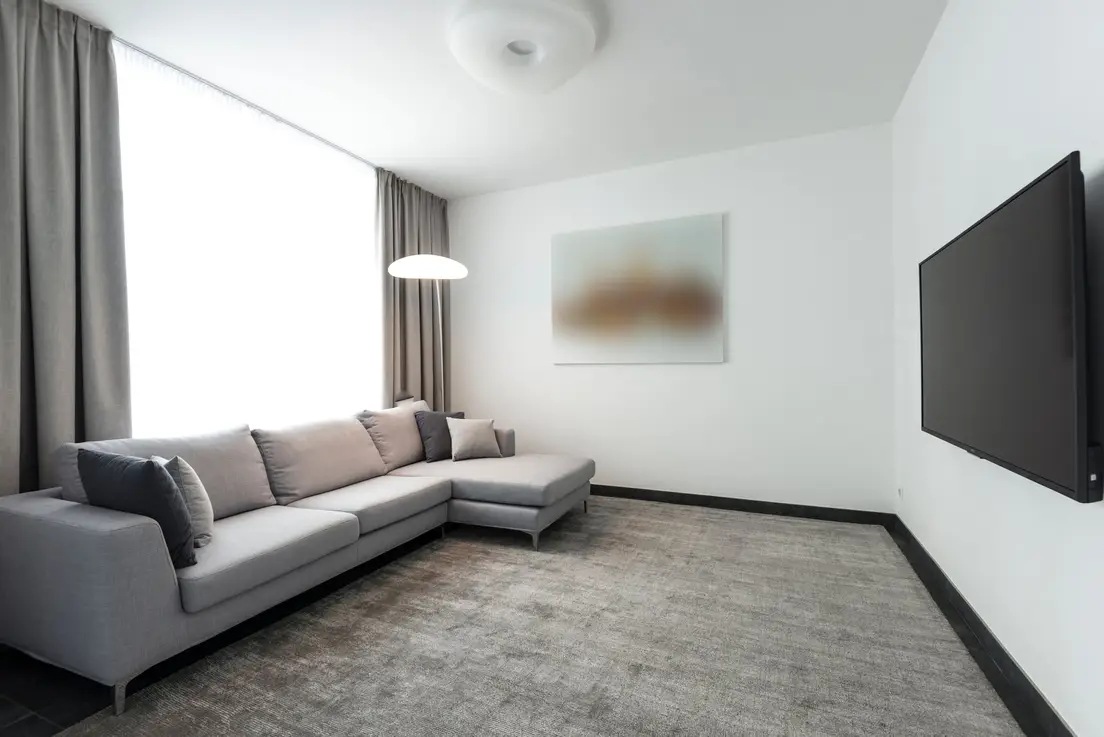
Photo by Max Vakhtbovych on Pexels
Hang One or Two Sculptural Pieces, Not a Gallery Wall
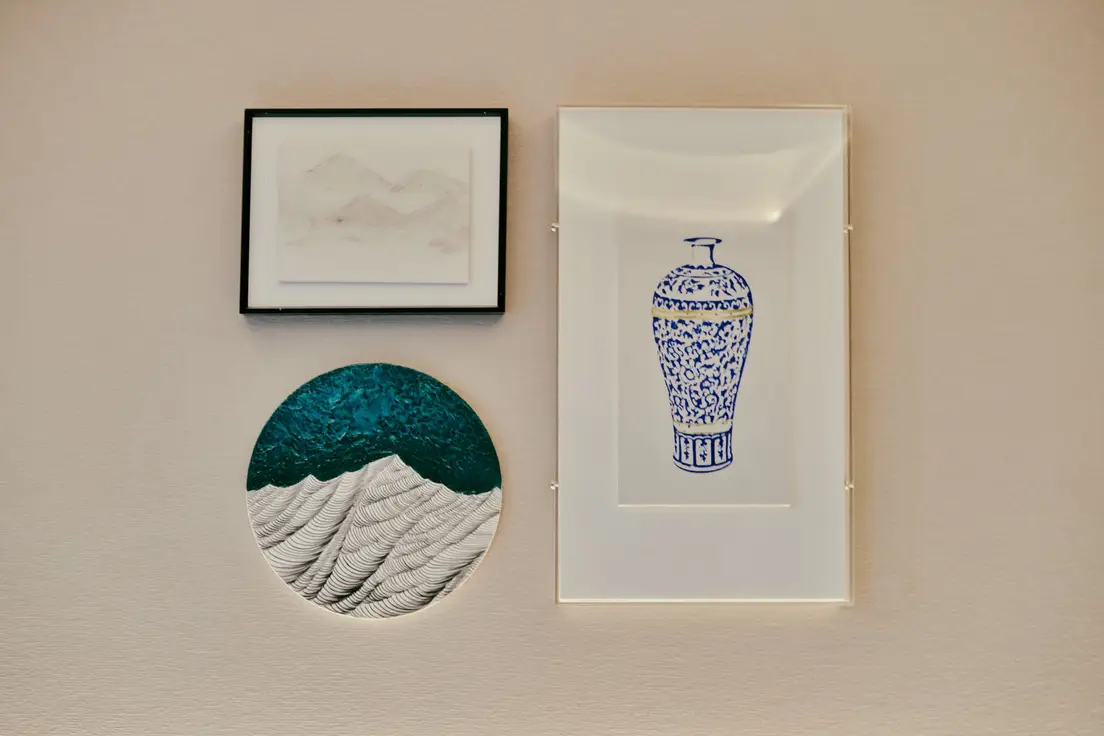
A gallery wall is a maximalist move wearing a minimalist room’s clothes — in a genuinely edited space, one or two pieces of wall art or a single sculptural object does the job a dozen small frames were trying to do. Pick one piece with real scale (a large abstract print, a textured ceramic wall hanging) over several small ones; a wall with one intentional thing on it reads more finished than a wall with six things fighting for the same six square feet.
A large framed print runs $80–200 depending on size and framing; a small sculptural vase or ceramic piece for the coffee table or console fills the same role for $30–60. If a full accent wall behind the seating is more the goal than a single art piece, our TV wall ideas guide has options — wood slats, molding, paint — that keep the same restrained, uncluttered feeling.
Hide the Clutter Behind Closed Storage
Open shelving photographs beautifully and lives badly — the remote, the charging cables, the mail pile all need somewhere to go that isn’t visible, or the room stops looking minimalist within about a week of actually living in it. A low media console or cabinet with closed doors gives you the same storage space as open shelving while hiding everything that doesn’t belong in the photo.
A basic closed-door console runs $150–350 depending on finish; budget for real drawer or door hardware, since the cheapest hinges are the first thing that fails under daily use. If you’re adding anything taller than a low console — a bookcase, a tall cabinet — the CPSC recommends anchoring any furniture over 30 inches tall to the wall, especially with kids or pets in the house; a $15 anchor kit is a cheap trade for a piece that can’t tip.
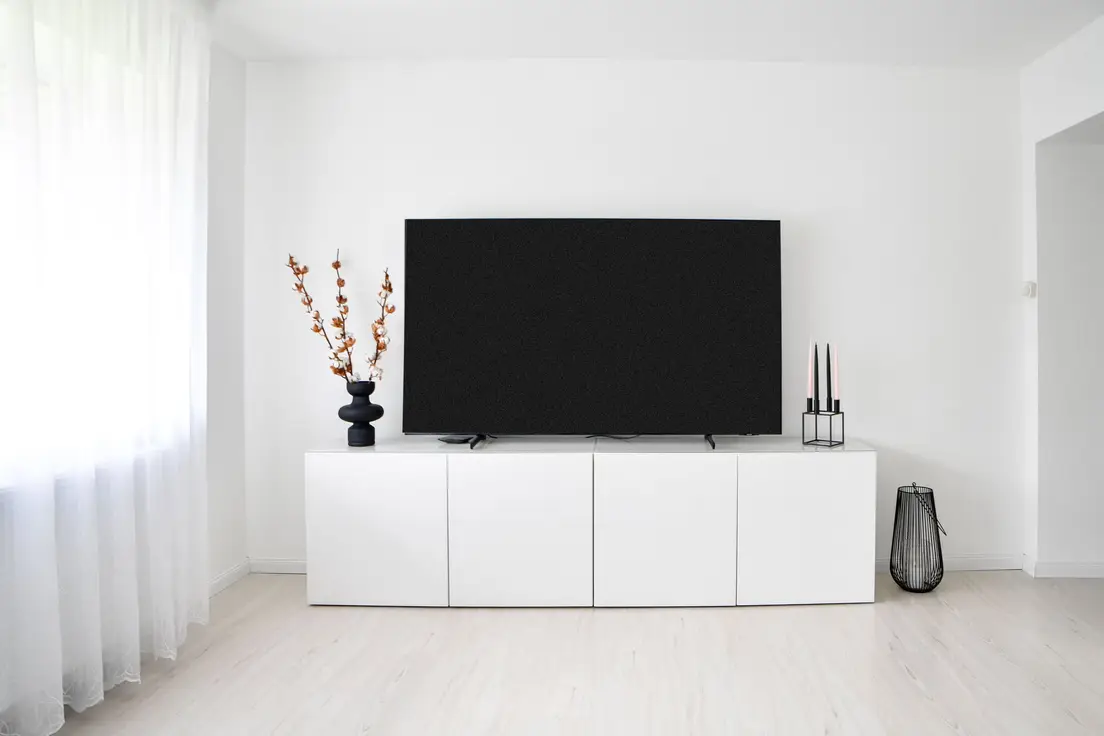
Photo by Margo Evardson on Pexels
Pick a Coffee Table That Earns the Floor Space
A coffee table in a minimalist living room has to work harder than in a maximalist one, since there’s nowhere else for the remote, the coasters, or the one stack of books to hide. A round or oval wood table with simple legs is the safest shape — no sharp corners to navigate around, and the organic form softens a room that’s otherwise all straight lines.
A solid-wood round coffee table runs $150–400; skip the glass-top version if the room already leans cold; wood does more to warm the space than any other single surface choice. Style it with one tray, one candle or vase, and nothing else — a coffee table with eight decorative objects on it is a display shelf, not a coffee table anymore.
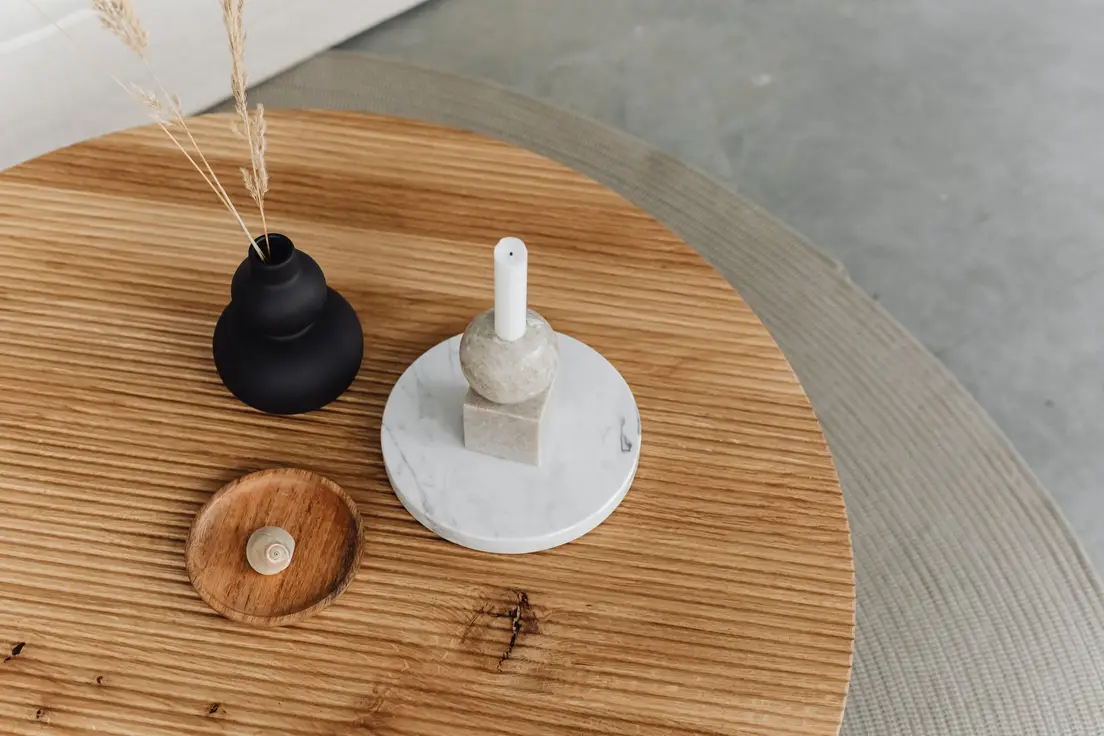
Photo by Karolina Kaboompics on Pexels
Light the Room Warm, Not Sterile
An overhead fixture alone is the fastest way to make a minimalist room feel like a dentist’s waiting room; a floor lamp or two at seating height does more to warm the space than swapping a single piece of furniture. Swap any builder-grade bulb for a warm 2700K bulb — the same fixture reads completely differently once the light stops being blue-white.
A basic arc or task floor lamp runs $60–120; a pack of warm-white bulbs is under $15 and is the highest-leverage, lowest-cost fix on this entire list if the room’s biggest problem is actually lighting temperature, not furniture at all. Turn off the overhead at night and rely on lamp light only — it’s the fastest way to test whether lighting, not decor, was the room’s real problem the whole time.
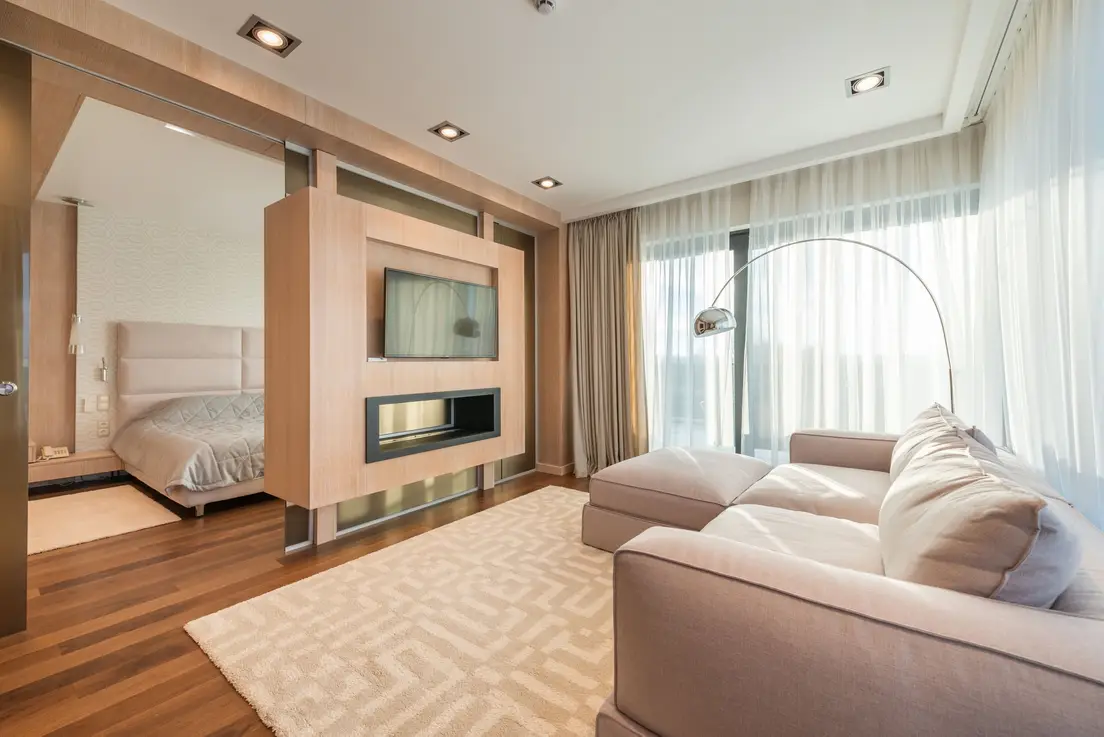
Photo by Max Vakhtbovych on Pexels
Scale a Minimalist Look Down for a Small Living Room
Minimalist design and a small space are natural partners — fewer, better pieces read as spacious in a way a small room crammed with furniture never does. Keep every piece multi-functional or at least visually light (open legs instead of a solid base, a nesting side table instead of a permanent one) so the floor stays visible under the furniture, not just around it.
The same low-profile sofa and single rug rule from earlier applies here, just at a smaller scale — an 8-foot sofa reads oversized in a 10×12 room no matter how minimal its lines are. If square footage, not style, is the actual constraint you’re solving for, our small living room ideas with a TV roundup goes deeper on layout specifically.
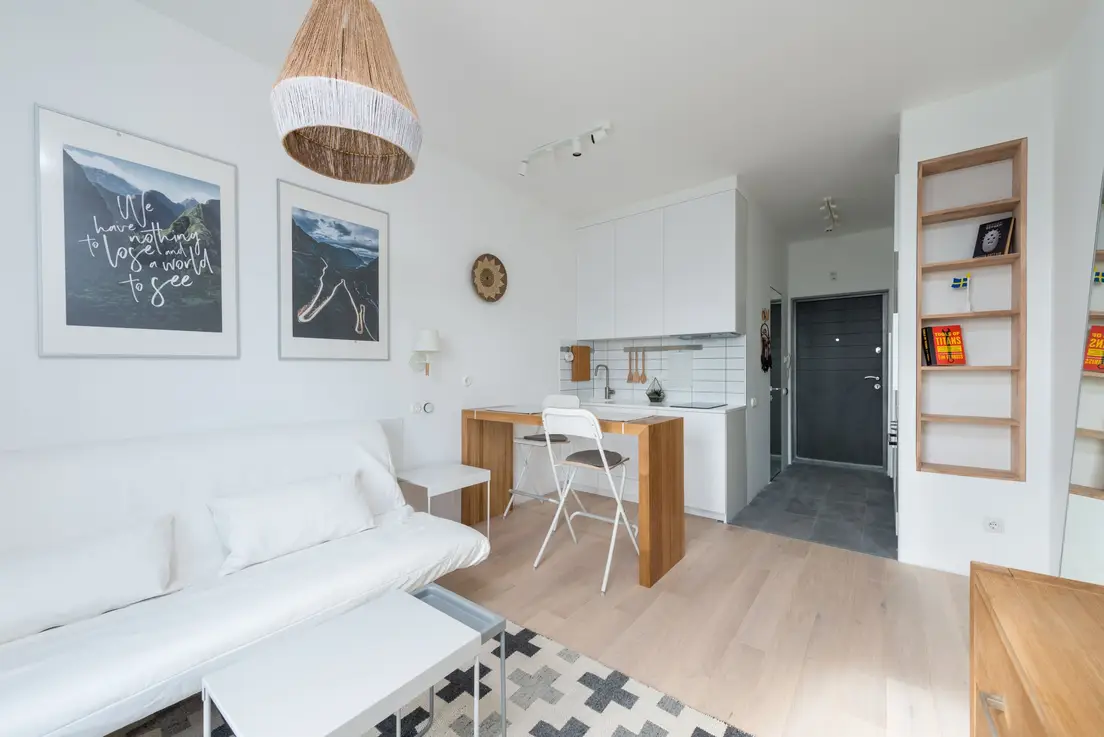
Photo by Max Vakhtbovych on Pexels
Borrow Scandinavian Restraint Without Going Cold
A scandinavian minimalist living room and a stark modern one share the same neutral palette but not the same mood — Scandinavian and japandi styling lean on light wood, rounded organic shapes, and visible texture, where a colder modern-minimalist room leans on hard edges and glossy finishes. Borrowing the wood and texture half of that formula is the fastest way to keep a minimalist room from tipping into showroom-cold.
A light oak side table or a simple bent-wood chair runs $80–200 and does more to soften a room’s overall feel than a second neutral throw pillow would. If the whole aesthetic — not just one room — is the goal, our dopamine decor guide is the opposite instinct, for when all that restraint stops being relaxing and starts feeling like a rule.
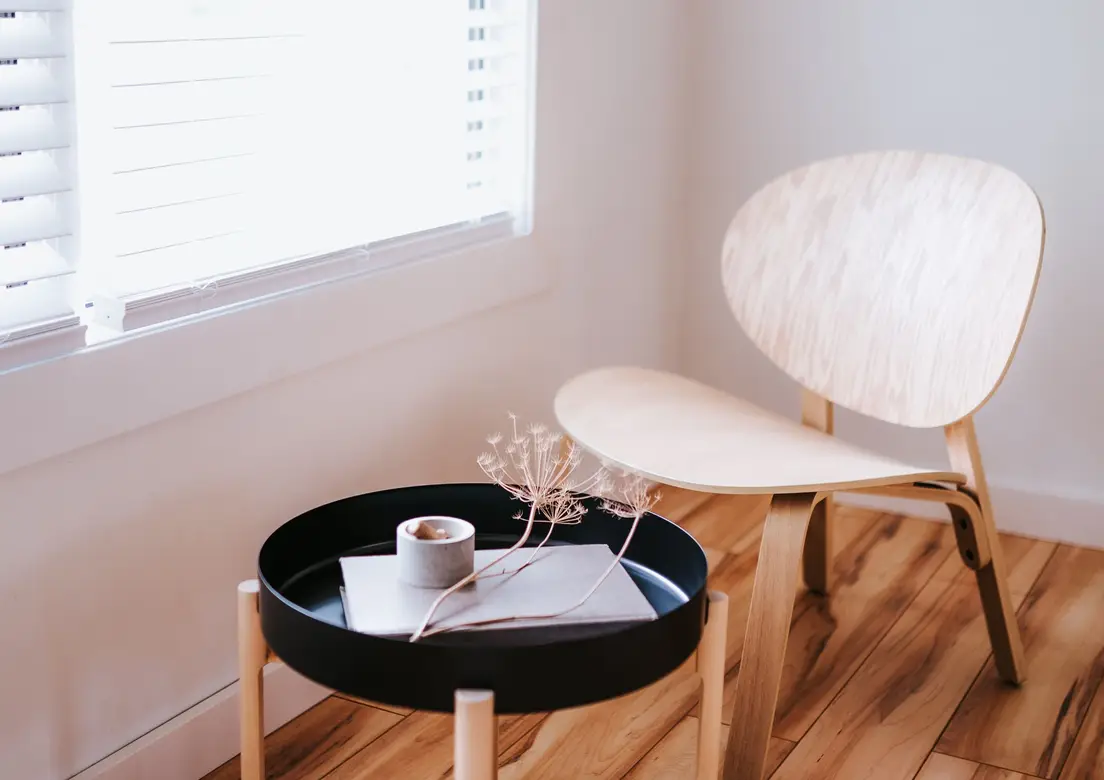
Photo by PNW Production on Pexels
Here’s the Honest Math on Doing This on a Budget
A minimalist living room is one of the cheapest style directions on this entire site to do well, because the whole point is fewer purchases, not more — the trap is assuming “minimalist” means buying an entirely new, matching, expensive furniture set. It doesn’t. Most of what’s above is under $150 per idea, and several (declutter, lighting) are close to free.
The $0–200 version
Declutter, swap bulbs to warm-white, and add one rug if you don’t already have one. This alone fixes the two biggest reasons a room reads cold: lighting temperature and visual noise, not the furniture underneath it.
The $600–900 version
Add the sofa upgrade, the console, and the coffee table on top of the free fixes above. This is roughly the range our planned $700 living room glow-up Look will walk through once it’s live — skip the console or the art if the budget’s tighter and the room still works with one fewer piece.
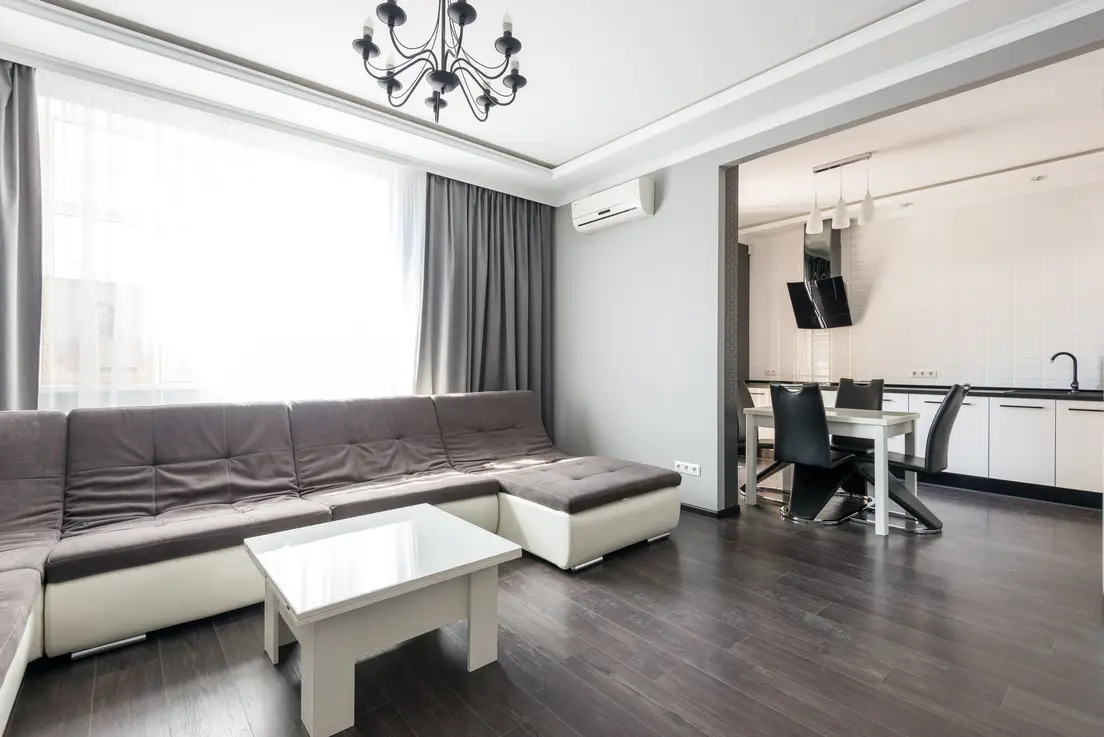
Photo by Max Vakhtbovych on Pexels
Start with the declutter week, not the shopping list. Everything else on this page works better once you actually know what the room’s missing instead of guessing.
Frequently asked questions
What is modern minimalist style?
Modern minimalist style pairs a restrained, neutral color palette with clean-lined, low-profile furniture and real negative space instead of wall-to-wall decor. It isn't the same as stark or empty — a well-done modern minimalist living room still uses texture (linen, wood, wool) and warm lighting so the room reads calm, not cold. Fewer pieces, chosen deliberately, is the actual rule.
What is the 2/3 rule for living rooms?
The 2/3 rule suggests filling about two-thirds of a room's floor space with furniture and layout, leaving the remaining third open for walking paths and breathing room. In a minimalist living room, that open third is doing real work — it's what keeps a room with very little decor reading as intentional instead of unfinished.
What are common minimalist living room mistakes?
The two biggest are going too cold — an all-white room with zero texture reads sterile, not calm — and buying an entirely new furniture set instead of editing what's already there. A minimalist room still needs warmth (wood, linen, a rug) and at least one piece with real presence; empty isn't the same as edited.
How do you make a minimalist living room feel cozy?
Layer in texture — a wool or linen throw, a nubby area rug, unfinished wood — instead of adding more objects. Warm-white lighting (2700K bulbs) does more than any single piece of furniture to keep a minimalist room from feeling like a waiting room. One deliberate splurge piece, like a good sofa, reads warmer than five small matching accessories.