
Living Room
11 Organic Modern Living Room Decor Ideas (Real Budgets)
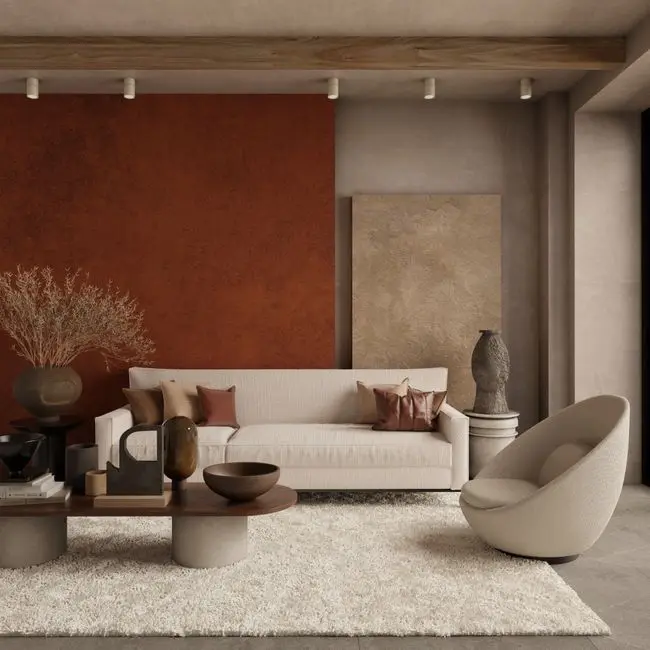
Photo by Pușcaș Adryan on Pexels
The best organic modern living room decor ideas do one thing at a time: swap a hard edge for a curve, a synthetic fabric for linen, a mass-produced print for something with a visible thumbprint. None of it requires gutting the room. Most of the eleven ideas below run under $150 apiece and layer on top of furniture you already own — this is a texture problem, not a shopping-list problem.
In interior design terms, organic modern sits between two styles people already know: it keeps modern furniture’s simple silhouettes and restraint (no clutter, no matching living room sets), but trades minimalism’s cool, stripped-down palette for the warmth of raw materials and natural textures. A pure modern minimalist living room can feel a little like an empty gallery; organic modern is the same clean layout with the temperature turned up — wood, clay, linen textile, and rattan instead of glass, chrome, and glossy laminate. The neutral color palette stays the base, but it leans earthy (sand, oatmeal, clay) rather than stark white, and it should soothe a room instead of making it feel like empty space. If the phrase “warm minimalism” already sounds familiar, our warm minimalism style guide covers the broader palette this room pulls from.
Choose a Bouclé or Linen Sofa Over Leather
Skip leather for this look. Bouclé, linen, or any nubby woven upholstery is what makes a couch read organic modern instead of just “modern” — leather reads corporate lobby, not warm living room. If a full sofa isn’t in the budget, a bouclé slipcover runs $80–150 and does most of the visual work for a fraction of the price; a genuinely new linen-upholstered sofa runs $700–1,400. A slipcover is usually the smarter move anyway if you might move within a couple of years — reupholstery and full replacement rarely pay off on that timeline. If the current piece is a sectional and not a sofa, the same rule applies: a slipcover made for sectionals costs more than the standard three-seat version ($120–200), but it’s still cheaper than replacing the whole thing.
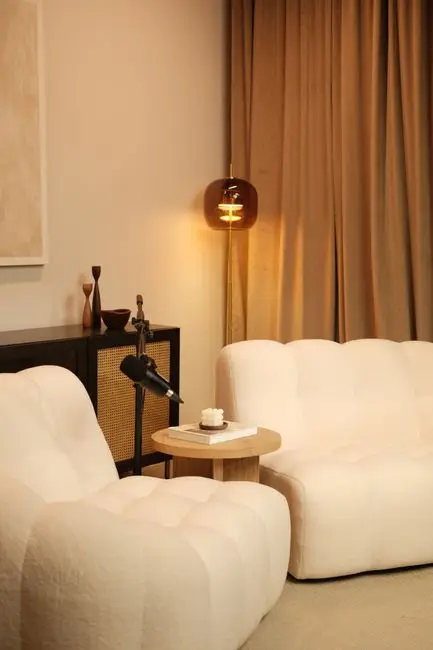
Photo by Pavel Morillo on Pexels
Layer a Jute or Wool Area Rug for Texture
A natural-fiber area rug does more for an organic modern living room than any print could, because it’s the largest textured surface in the room and the one thing every other piece sits on — it works over wall-to-wall carpet or bare flooring alike. Budget an 8×10 jute or wool rug at $150–260, and measure the actual floor, not a photo of it — we once ordered an outdoor rug off a photo instead of the real slab and ended up $40 over budget on the reorder after the first one looked like a bath mat in the space. Indoors, the same lesson holds: pull the tape measure before you order the “10×10” size that turns out to be 9×11 once the furniture is placed.
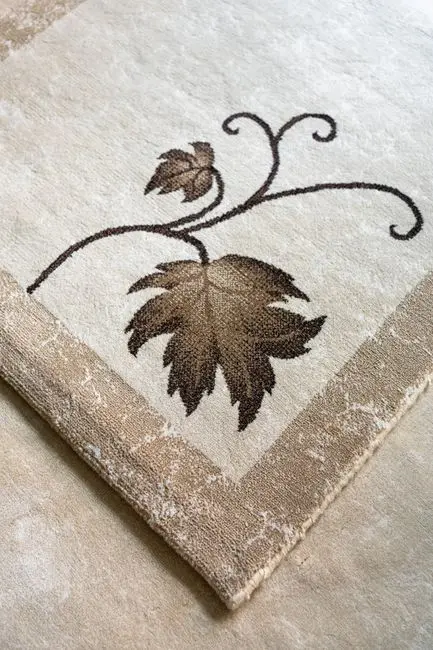
Photo by Beyzanur K. on Pexels
Bring In Ceramic and Terracotta Accents
Ceramic and terracotta are the fastest, cheapest texture add in this entire style — a shelf of three or five unglazed clay vessels does more for the “organic” half of organic modern than a single expensive piece could. A $12 terracotta pot from the garden aisle sits in the same visual category as a $90 “artisan vessel”; it’s just $78 more honest about where it came from. Group pieces in odd numbers (three or five, per the 3-5-7 styling rule) and vary the heights so the shelf doesn’t read like a straight line of soldiers. Stick to one color family — unglazed terracotta, matte cream, or a single deep glaze — rather than mixing five different finishes on one shelf; that’s the difference between “collected” and “cluttered.”
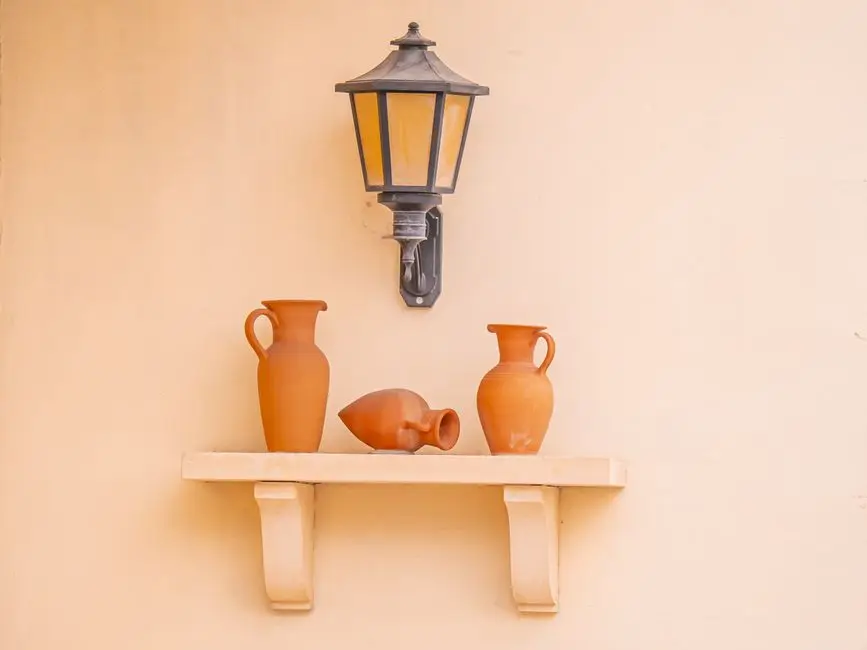
Photo by The Daphne Lens on Pexels
Add a Live-Edge or Rounded Wood Coffee Table
A coffee table with a visible wood grain or a live edge is the single furniture swap that reads most “organic” in a modern room, because it’s the piece you look down at and touch most often. Real live-edge slabs run $200–450 depending on size and wood species; a rounded pedestal-base table in a budget-friendly material starts closer to $90–150 if the live edge isn’t in the cards yet. (Measure the doorway before it arrives — a round table isn’t automatically the easier one to carry in.) Walnut and acacia both read warmer than pale oak, which is worth knowing if the rest of the room already leans neutral — one darker wood tone anchors a room that would otherwise be all beige and cream.
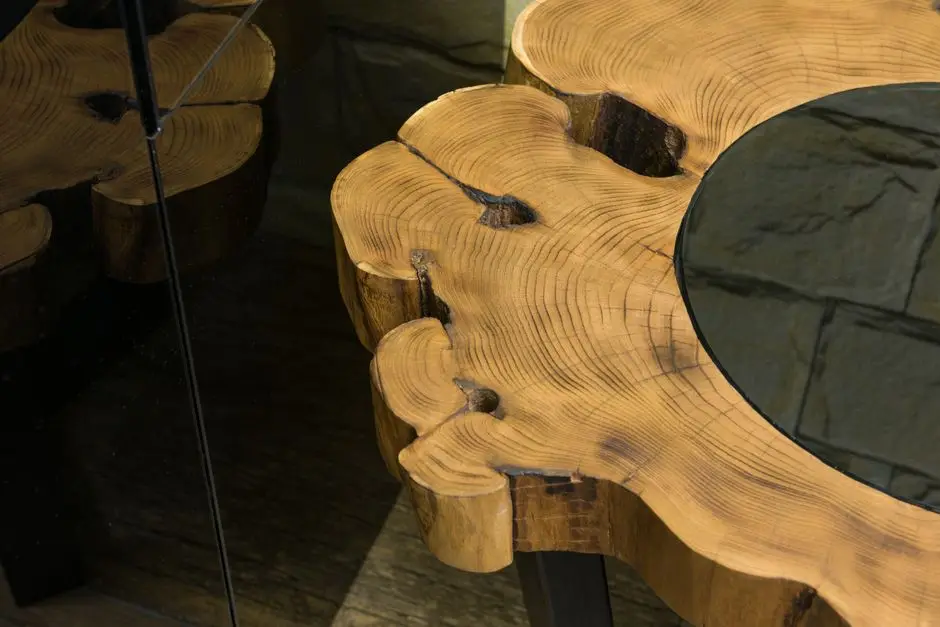
Photo by Max Vakhtbovych on Pexels
Warm Up One Wall With an Earth-Tone Paint
Paint solves more of this problem than new furniture does — before buying a single new piece, ask whether one terracotta, clay, or olive accent wall gets you 80% of the look for the cost of a sample pot ($8–12) and a gallon ($45–65). Builder-grade white walls have the personality of a landlord’s listing photo; one warm wall behind the sofa changes the whole room’s temperature without touching the furniture layout. Look for a low- or zero-VOC paint if the room doesn’t ventilate well — the difference matters more in a closed-up apartment than a house with windows on two sides.
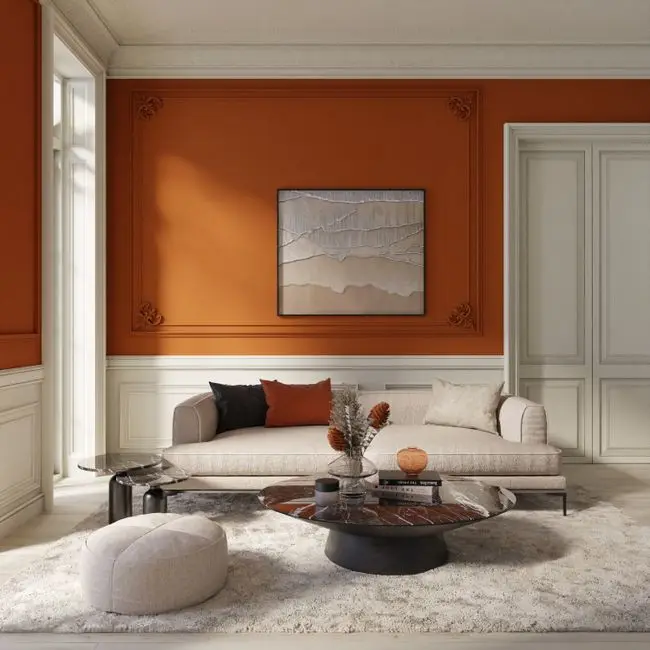
Photo by Pușcaș Adryan on Pexels
Choose a Curved, Organic-Shaped Sofa or Chair
A curved sofa or a rounded-arm chair is the clearest visual signal of “organic” in this style, because every other line in a modern room is straight. We’ve measured a curved sectional against a rectangular doorway exactly once. It did not fit — curved pieces are often wider at their deepest point than the spec sheet’s single “width” number suggests, so measure the actual widest point, not just the listed dimension. A single curved accent chair ($200–500) is the lower-commitment version if a full curved sofa is too big a swing.
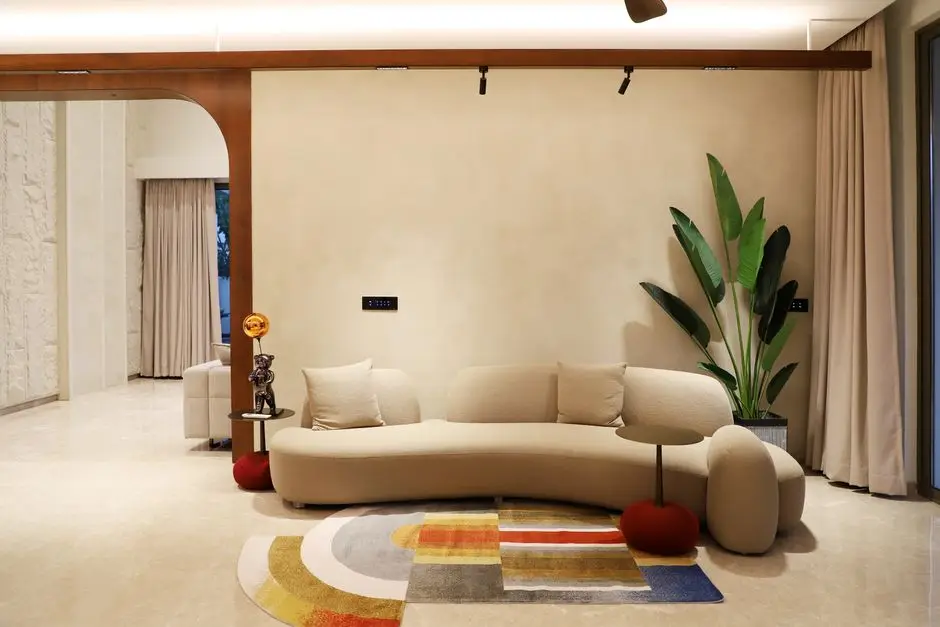
Photo by Sharath G. on Pexels
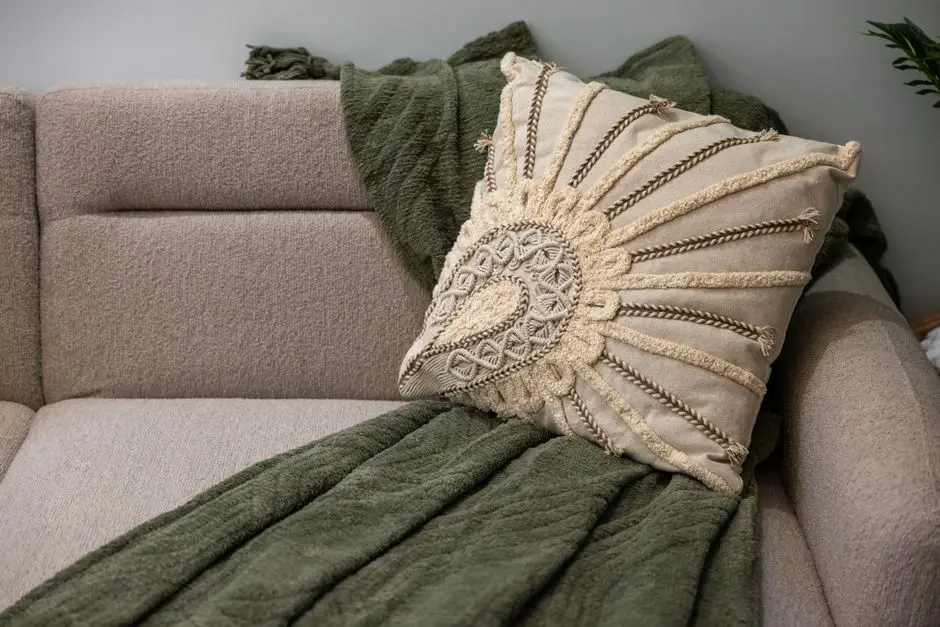
Layer Chunky Knit Throws and Textured Pillows
Pillows and throws are the cheapest way to add texture without committing to anything permanent — a chunky knit throw ($30–45) and two or three textured pillow covers ($20–35 each) can turn a plain bouclé sofa into the room’s focal point in one afternoon. Three throw pillows reads intentional. Seven reads hostage situation. Mix at least two materials (a knit throw plus a woven or tasseled pillow) rather than matching everything to one fabric — the whole point of this style is that the textures don’t match perfectly, they just agree with each other. Our japandi living room ideas round-up leans on the same low-key, natural-material instinct if this room ends up wanting fewer curves and more straight lines.
Add Dried Botanicals Instead of Fussy Florals
Dried pampas grass, bunny tails, or eucalyptus stems in a ceramic vase give the room the organic softness of real plants without the maintenance — fresh eucalyptus lasts about a week; dried pampas grass lasts until you get bored of it, which is a lot longer. A full vase of dried stems runs $15–25 and needs zero water, zero sunlight, and zero guilt when you forget about it for a month. A dim, north-facing living room corner is real-plant-murder territory anyway; dried botanicals don’t care.
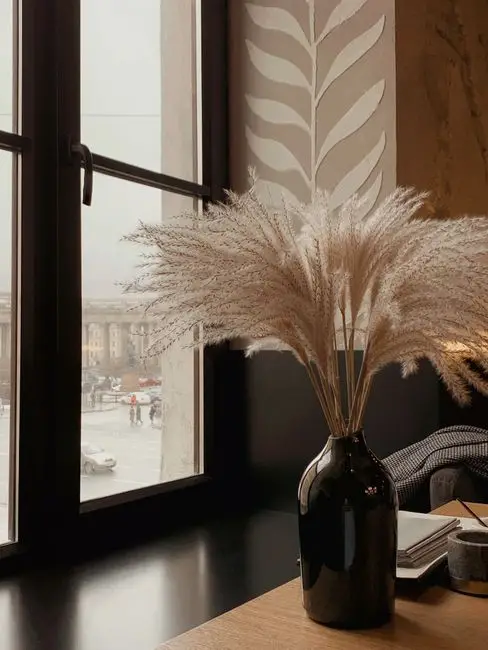
Photo by Dina Nasyrova on Pexels
Light the Room With Rattan and Warm-Toned Fixtures
Swap the bulbs before you swap the fixture: a warm 2700K bulb ($8 for a two-pack) reads dramatically more organic modern than the builder-grade 4000K “daylight” bulb most rentals ship with, and it’s the cheapest single change on this list. Once the bulb temperature is fixed, a rattan or cane-shade floor lamp ($60–120) layers in the natural-material texture the rest of the room already has. Check the color temperature (Kelvin) printed on the box — the FTC’s guide to shopping for light bulbs breaks down what that number actually means before you buy the wrong pack twice.
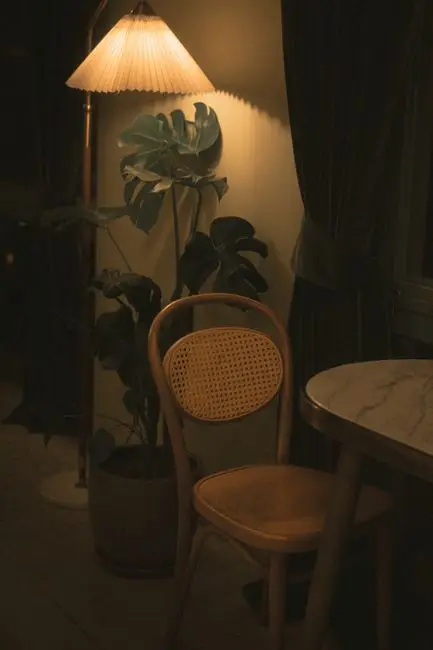
Photo by Orhan Pergel on Pexels
Add One Velvet or Suede Accent Chair
This is the one line item where spending more actually shows — put the extra money here instead of into a fourth throw pillow. A velvet or suede accent chair in a warm neutral runs $150–250 for a decent version and $400–550 for one that’ll survive a toddler, a dog, and three more years of use. Skip anything in a cool gray or true black; the whole point of this chair is to be the warmest, softest-looking object in the room. If leather is genuinely non-negotiable, look for one piece with real patina — worn, uneven, a little imperfect — rather than the stiff, uniform kind; that’s the one place leather still fits this style.
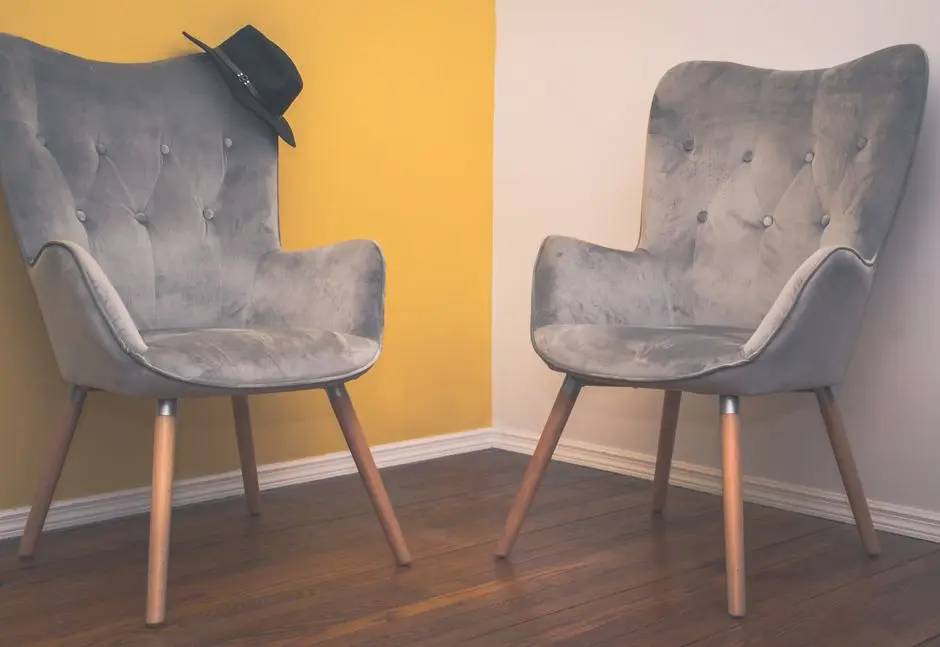
Photo by Steve A Johnson on Pexels
Hang Natural Linen Curtains, Not Blackout Polyester
Linen curtain panels ($40–70 each) let in soft, diffused light instead of the flat glare a bare window lets through, and they add the last texture layer most organic modern living rooms are missing: fabric with actual visible weave. Polyester blackout curtains block light and also look like a hotel conference room got evicted. Hang panels close to ceiling height rather than window-frame height — it’s a free trick that makes the whole wall look taller and the room feel like more open space, no extra fabric cost beyond the length you’d need anyway.
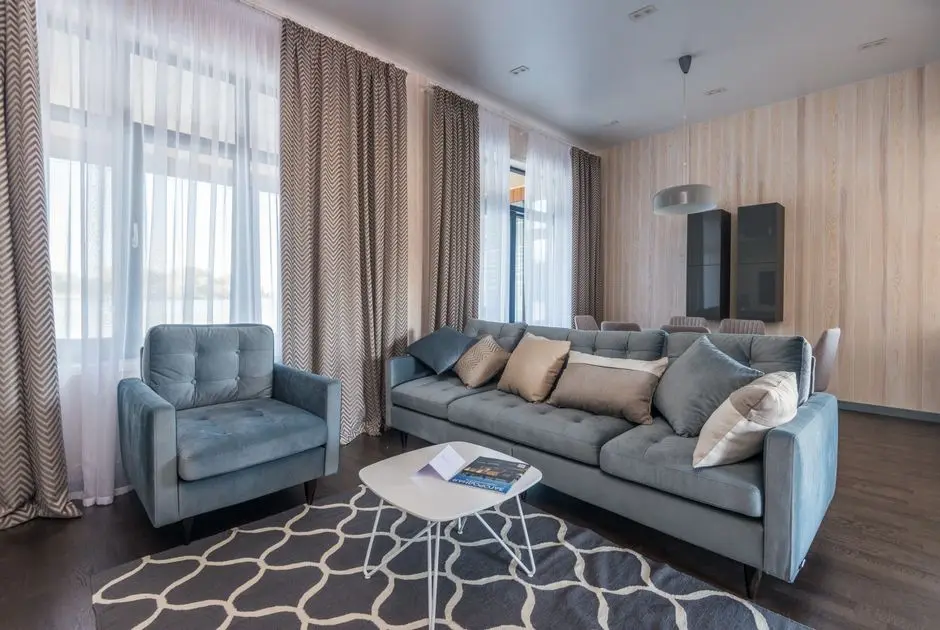
Photo by Max Vakhtbovych on Pexels
The Honest Math
None of these require doing all eleven at once. A realistic first pass — a jute rug, a wall of paint, a bulb swap, and one ceramic vessel — lands around $250–350 and changes the room more than any single new furniture piece would. Add the accent chair and the linen curtains for a fuller room, and the honest total climbs to roughly $700–900 before you’ve replaced a single piece of existing furniture. Start with the rug and the paint; both change more square footage per dollar than anything else on this list.

Photo by Kaboompics.com on Pexels
For a full room glow-up on this exact palette, our organic modern living room makeover Look walks through the shoppable version of this room start to finish — it’s in the works, so check back if it’s not live yet.
Frequently asked questions
What is organic modern style in a living room?
Organic modern pairs the clean lines and restraint of modern furniture with raw, tactile materials — wood, linen, clay, rattan — instead of glass, chrome, and glossy laminate. The furniture silhouettes stay simple; the materials do the visual work. A living room reads organic modern when it feels warm and textured rather than cold and showroom-flat.
What colors are used in organic modern style?
Warm neutrals carry the room: oatmeal, sand, clay, and greige, with one or two deeper accents like terracotta, olive, or walnut brown. Pure white and cool gray are used sparingly, if at all — they read more minimalist than organic. Think the color of raw materials (unfinished wood, unglazed clay, undyed wool), not a paint chip labeled 'Arctic White.'
What furniture works well in an organic modern living room?
Bouclé or linen-upholstered sofas, curved or rounded-arm chairs, live-edge or pedestal-base wood tables, and rattan or cane accent pieces. Skip glossy laminate, chrome legs, and leather, which read more corporate than organic. Simple silhouettes matter more than brand names — a $300 curved chair reads the same as a $3,000 one from across the room.
How can I incorporate natural elements and textures into organic modern decor?
Layer at least three real textures into the room: a jute or wool rug, a bouclé or linen throw, and a ceramic or terracotta accent. Add one live-edge or unfinished-wood surface and one dried botanical arrangement. The goal is a room that invites touch — smooth glass and glossy plastic are the two materials to actively avoid.
What is the 3-5-7 rule in decorating?
It's a styling shortcut for shelves and coffee tables: group objects in odd numbers — 3, 5, or 7 — because odd-numbered groupings read as more natural and less staged than even ones. Vary the heights within each group (tall, medium, short) so the eye has somewhere to travel instead of landing on a flat row.