
Backyard & Patio
Pergola vs Gazebo vs Pavilion: Costs, Permits, Verdict
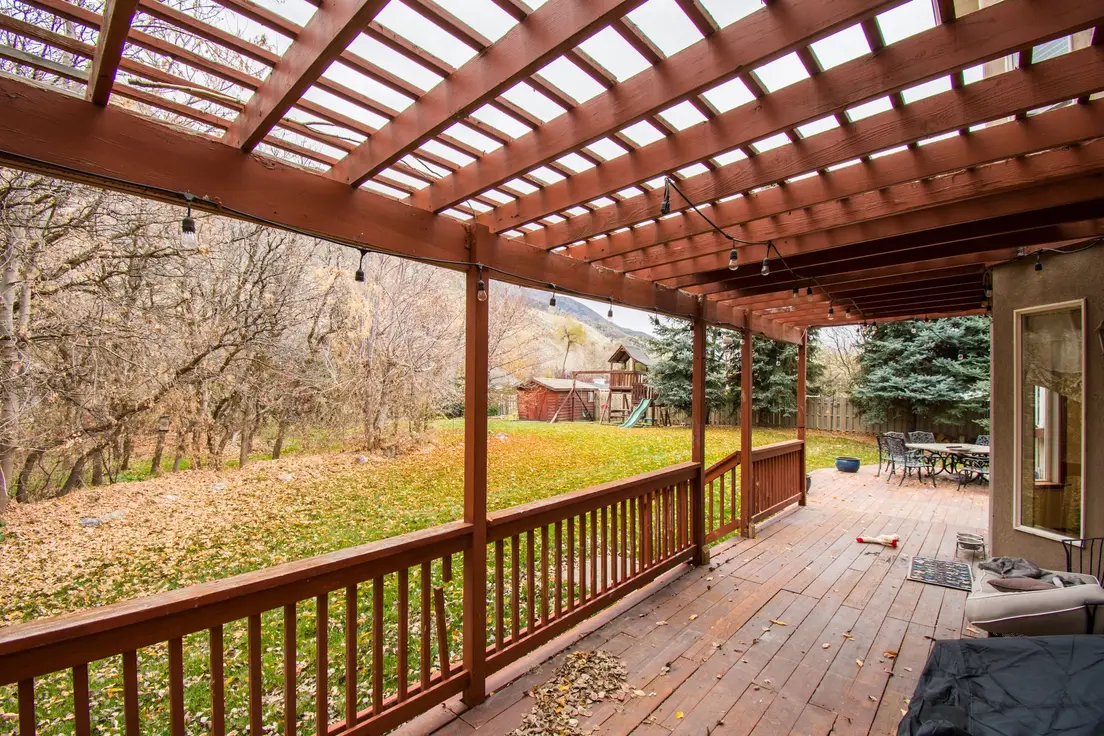
Photo by Get Lost Mike on Pexels
A pergola has an open, slatted roof and costs about $2,100–6,000 installed. A gazebo has a solid roof and costs about $5,400–9,000. Choose a pergola for filtered shade and climbing vines, and a gazebo if you need rain cover or bug screens.
Below: the differences between pergolas and gazebos, what each costs, when a permit kicks in, where a pavilion fits and a checklist to settle the argument. Every price is a national range from cost surveys, so use it to sanity-check quotes, not to replace them.
What is the difference between a pergola and a gazebo?
The difference is the roof. A pergola has posts and crossbeams with an open, slatted top, while a gazebo has a solid roof and usually railings or screens around the sides.
Wikipedia’s entry on the pergola describes a garden feature that forms a shaded walkway, passageway or sitting area, with posts supporting crossbeams and an open lattice, often under trained vines. Its entry on the gazebo calls it a pavilion structure, sometimes octagonal, often open on all sides and covered with ordinary roofing such as shingles. A gazebo is a freestanding structure, standalone by design, with its own roof and usually its own floor.
| Pergola | Gazebo | |
|---|---|---|
| Roof | Open slats or crossbeams; louvered versions open and close | Solid, usually shingled or metal, often pitched |
| Rain cover | Partial at best; none on a basic open roof | Full |
| Sides | Open; vines, curtains or screens added later | Railings, screens or walls |
| Shape | Rectangular, four or more posts | Often octagonal or hexagonal |
| Attached to the house | Can be attached or freestanding | Freestanding |
| Floor | Sits on an existing patio, deck or lawn | Often built with its own deck floor |
| Installed cost, national average | $4,000 (range $2,100–6,000) | $7,590 (range $5,365–9,025) |
| Best for | Dappled shade, vines, a dining table under string lights | Dry seating, bug screens, a spot you can use in a drizzle |
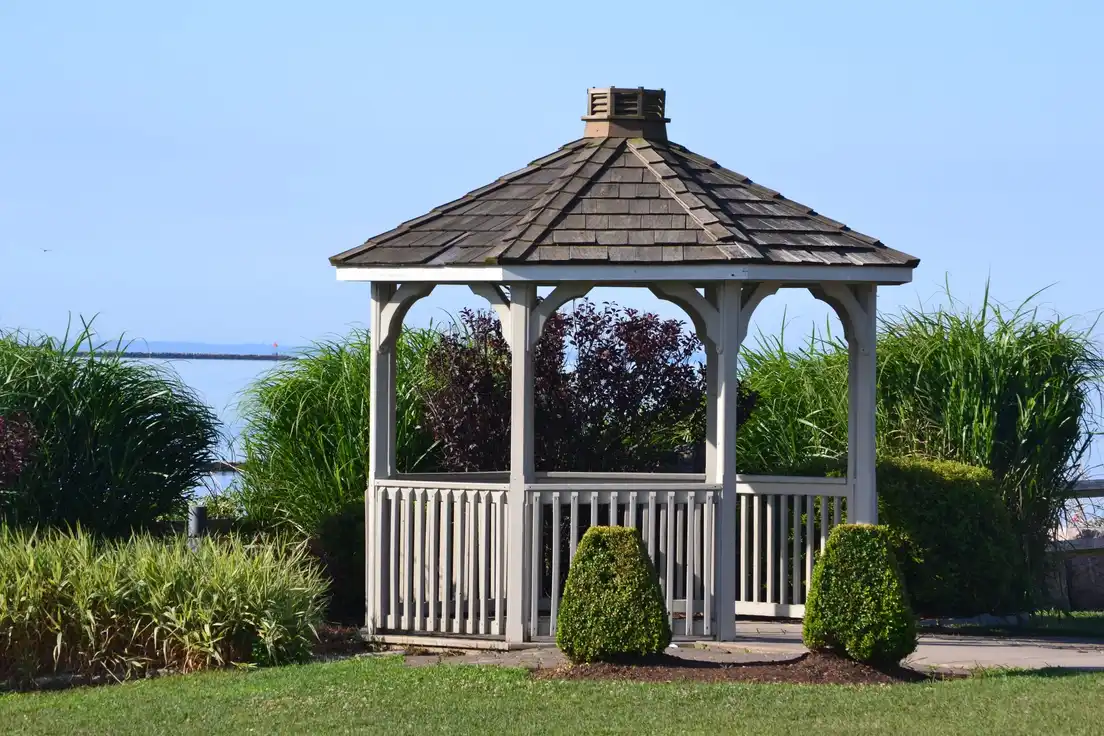
Photo by MMc Photography on Pexels
Which roof is better in hot sun: a pergola, a louvered pergola or a gazebo?
A gazebo gives the most shade and protection, and the only dependable rain cover: full weather protection, shade and shelter in one roof. A louvered pergola comes closest, because you can close the slats when it rains and open them when it doesn’t.
A basic pergola gives you partial shade, striped and moving with the sun. You can thicken it with closely spaced crossbeams, which Fixr says can add up to 50 percent to the cost, or with shade cloth, a retractable canopy or climbing plants such as vines. Vines fill in over a season or two, then do the shading for free. Sitting under a bare pergola in a downpour is a very expensive way to stand outside.
A louvered pergola is the upgrade for people who want both. One St. Louis louvered-pergola builder says its closed louvers form a solid roof that sheds rain, and rates its aluminum models for winds up to 90 mph depending on design. That is a manufacturer’s figure, so check the rating on the exact model you buy, and check the snow-load rating too if your winters are real ones.
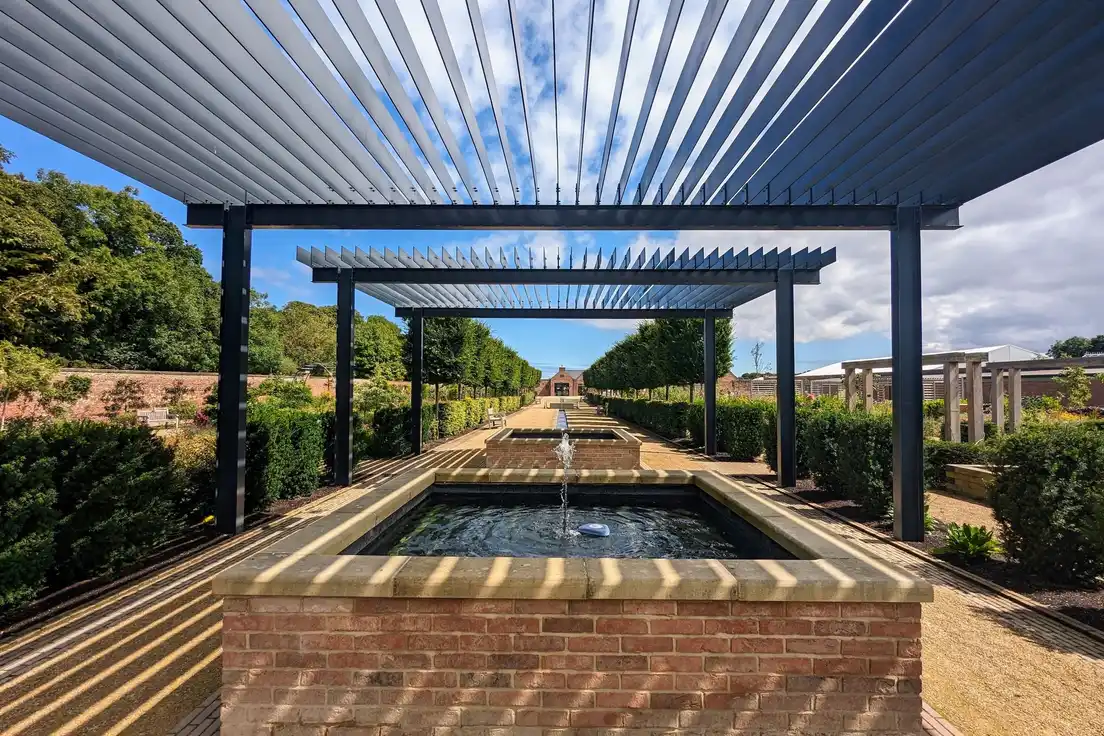
Photo by Mike Norris on Pexels
Which fits your outdoor space better, a pergola or a gazebo?
A pergola fits against a patio, deck or house wall. A gazebo needs open ground of its own and works as the focal point of the yard.
Versatility is a pergola’s selling point. It can stand alone or attach to the house, shade a deck, a grill or a walkway, and mark out an outdoor living area without closing it in. All it needs is vertical posts on level footings, so it slots onto an existing patio. A gazebo is a standalone structure with its own floor, which suits the far end of the yard, where it becomes the centerpiece of the garden space instead of an extension of the house.
Shape matters too. A pergola’s rectangle lines up with a patio edge and a dining table. Gazebos are often six- or eight-sided and read as a garden structure from across the lawn, and many have built-in seating along the railing. That railing is handy, and it also takes floor space away from loose furniture.
Roof design carries the look. A pitched or hipped gazebo roof, sometimes with a cupola, suits a traditional garden. A flat slatted or louvered pergola roof suits a modern house. Match the pitch and trim to your siding so the structure reads as part of the property. Heat and weather conditions finish the job: an open roof is the cooler, breezier choice in a hot summer, and a solid roof is the one that sheds snow and hard rain, so check the local snow-load and wind requirements before you choose the roof.
How much does a pergola cost compared with a gazebo?
A pergola costs about $2,100–6,000 installed and a gazebo about $5,365–9,025, according to Lawn Love’s cost surveys, which put the national averages at $4,000 and $7,590. The roof is the price gap.
Lawn Love’s pergola cost guide (updated December 2025) puts a pergola at $20–60 per square foot, about $37 on average. Fixr’s comparison of two 9-foot wooden structures lands in the same neighborhood: $3,000–6,000 for the pergola and $5,000–10,000 for the gazebo.
| Option | Cost, installed unless noted | Source |
|---|---|---|
| Pergola, national range | $2,100–6,000 (average $4,000) | Lawn Love |
| Pergola, pine / cedar / redwood / teak | About $25 / $30 / $45 / $55 per sq ft | Lawn Love |
| Louvered roof, added to a pergola | $25–130 per sq ft extra | Lawn Love |
| Gazebo, national range | $5,365–9,025 (average $7,590) | Lawn Love |
| Gazebo by material | Metal $2,900–8,300, wood $4,100–6,900, vinyl $4,100–7,600 | Lawn Love |
| Gazebo kit, DIY, 10×10 | About $1,500 for cedar, $952 in materials for pressure-treated pine | Lawn Love |
| Labor to assemble a prefab gazebo | $500–1,500 | Lawn Love |
Run the louvered number on a 10×14 footprint and the roof alone adds $3,500–18,200. That is our arithmetic on Lawn Love’s per-square-foot range, and it is the cleanest way to see why louvered pergolas sit at the top of every price list. For roof types beyond these two, our patio cover cost guide prices gable, louvered and enclosed covers side by side.
Our verdict: a DIY kit is worth it for a pergola or gazebo on level ground. Skip DIY for a motorized louvered roof or anything that needs wiring, because the money you save on labor is gone the first time a mistake costs a day of an electrician’s time.
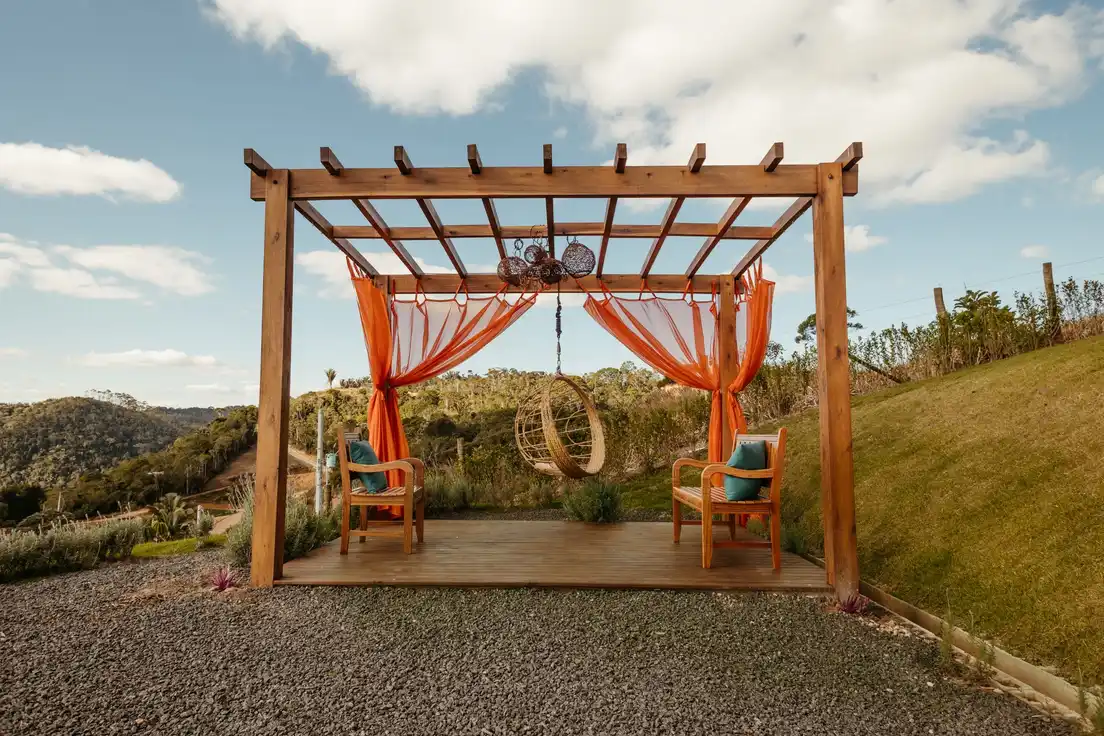
Photo by Jonathan Borba on Pexels
Do you need a permit for a pergola or a gazebo?
A homeowner often needs no permit under 200 square feet and usually needs one above it, with a zoning or HOA check either way for any outdoor structure. The rule varies by city, so call the building department and read your local building codes before you buy.
The International Residential Code, the model code many US towns adopt, exempts one-story detached accessory structures up to 200 square feet from a building permit in section R105.2. Cities write their own versions. Maplewood, Minnesota, for example, states that gazebos and pergolas larger than 200 square feet require a building permit. A 10×14 is 140 square feet. A 12×20 is 240.
Three things move the answer. First, the exemption covers detached structures, so a pergola bolted to the house is a different conversation. Second, electrical work for lights, a fan or a motorized roof can need its own permit. Third, setbacks and HOA rules apply even when no permit does, and freestanding structures are a common restriction point. Lawn Love says gazebo permits usually cost under $500, so the fee is rarely what stops a project.
Ask before you dig. It is the only line item on this page that costs nothing.
Where does a pavilion fit: gazebo vs pavilion vs pergola?
A pavilion is the big sibling: a larger, usually rectangular structure with a solid pitched roof and open sides, built to shelter a whole seating area, a dining table or an outdoor kitchen. A gazebo is smaller and often octagonal. A pergola is the one with the open roof.
The names blur in practice. Wikipedia itself describes a gazebo as a pavilion structure, and builders use the words loosely, so judge a listing by the footprint and the roof, not the label. Pergola, gazebo, pavilion: three names for a roof on legs, and most of the arguing is about the roof.
A pavilion uses more material than an open pergola of the same footprint, which is why we did not find a reliable national price for one. Quotes depend almost entirely on size, roof material and posts. Watch the permit line, though: a modest 12×20 pavilion is 240 square feet, past the 200-square-foot mark where many cities start asking for paperwork. Our free standing patio covers guide walks through the kit, footing and roof options if you are building one.
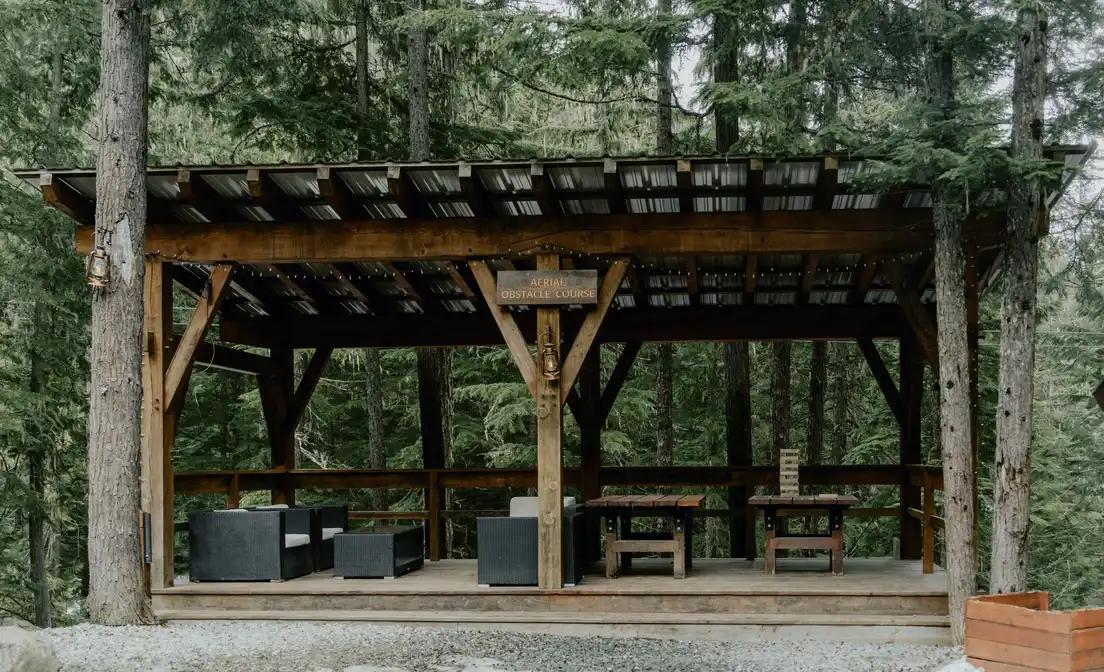
Photo by Red Nguyen on Pexels
Which roof design lasts longer and needs less upkeep: wood or aluminum?
Aluminum and vinyl outlast wood and skip the sealing: aluminum pergolas are the minimal-maintenance pick. Wood costs less up front and needs re-staining or sealing every two to three years.
Lifespan numbers in this niche mostly come from people who sell the thing, so treat the ranking as the real information and the years as a rough guide. Fixr estimates a hardwood pergola needs significant repair after about 5 to 10 years and says a gazebo lasts about twice as long. A louvered-pergola builder claims 20-plus years for aluminum and 15 to 20 for wooden gazebos. The two sources disagree on the exact years and agree on the order: aluminum, then a roofed wood structure, then an open wood frame.
Add the small chores. A shingled gazebo roof needs the care any roof does: debris cleared, flashing checked and shingles replaced eventually. A pergola under vines needs pruning, and the vines hold moisture against the wood. Metal frames rust wherever the coating chips, so touch up scratches the week you find them.
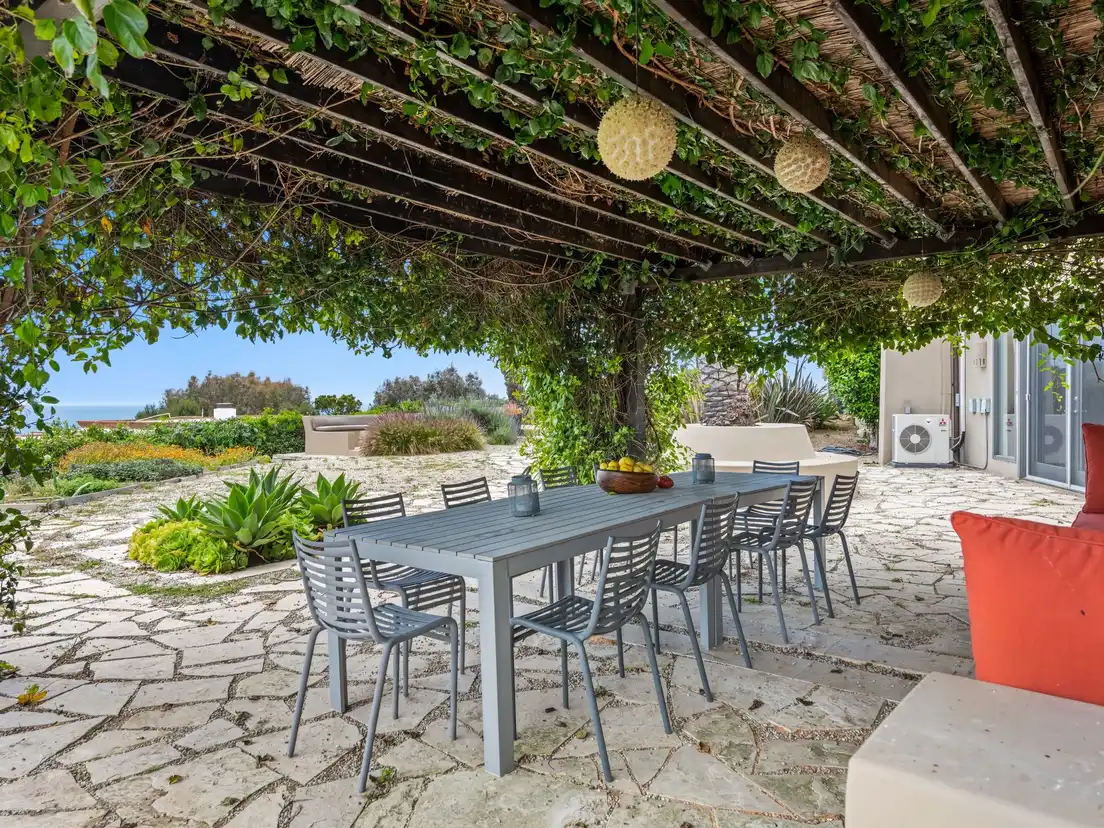
Pergola or gazebo: a checklist before you buy
Before you pay for either one, run these six checks:
- Do you need to stay dry? If yes, buy a solid roof: a gazebo, a hardtop kit or a louvered pergola with a real rain rating.
- Is the footprint under 200 square feet? A 10×14 is 140 and a 12×12 is 144, both under the common permit line. A 12×20 is 240.
- What are the wind and snow ratings? Read the wind and snow ratings in the product listing before you buy. A cheap steel hardtop kit can be rated for as little as 30 mph and a few inches of snow, which makes it a summer shade roof, not a winter one.
- Where does the afternoon sun hit? A west-facing seat needs louvers, a curtain or a solid roof.
- Do bugs bother you? Fixr notes a gazebo can be screened in, while a pergola offers no insect protection.
- Have you checked your permit and HOA rules? Do it before the posts, not after.
Our verdict: buy a pergola if you want filtered light, vines and a place to eat under string lights, and skip it if the real goal is staying dry. Buy a gazebo only if you will use it in the rain or behind screens. If a solid roof is the goal and a $7,000 gazebo is not, a freestanding hardtop kit sits between the two. Our freestanding patio cover kit makeover prices one with anchors, a rug and seating.
Putting the pergola vs gazebo decision together
Settle the rain question first, then the 200-square-foot line, then the budget. If the answer is a solid roof on a small footprint, our free standing patio cover makeover shows a 10×14 hardtop kit, how to anchor it and eight things to put under it for about $1,750 at the time of writing. For how these structures sit next to porches and decks, our porch vs patio guide sorts out the vocabulary.
Decide about the roof first. The name on the box can wait.
Frequently asked questions
What is another name for a pergola?
Arbor and bower are often used interchangeably with pergola, though an arbor is normally the smaller structure, built over a bench, a gate or a path. A pergola is larger and more open: posts and crossbeams that shade a walkway or a seating area, often under climbing vines. A louvered pergola is the same frame with adjustable roof slats.
What's the point of a pergola without a roof?
An open pergola gives you structure, filtered shade and something for vines or fabric to grow on or hang from. The slats cut direct glare but not rain. It also marks out an outdoor room on a patio or deck without closing it in, and you can add shade cloth, a retractable canopy or louvers later.
Why is a pergola so expensive?
Installed pergolas run about $20–60 per square foot, and the material moves that number: pine is about $25 per square foot and teak about $55. Closely spaced crossbeams can add up to 50 percent, and a louvered roof adds $25–130 per square foot. Footings, labor and permits come on top of the frame.
Can a pergola provide as much rain protection as a gazebo?
Not an open one. A basic slatted pergola lets rain through, while a gazebo's solid roof keeps the seating area dry. A louvered pergola with the slats closed forms a solid roof that sheds rain, and a canopy or polycarbonate panels get a fixed pergola close. Blowing rain still reaches the open sides of both.