
Porch & Curb Appeal
Simple Home Exterior Design: 9 Rules That Actually Work
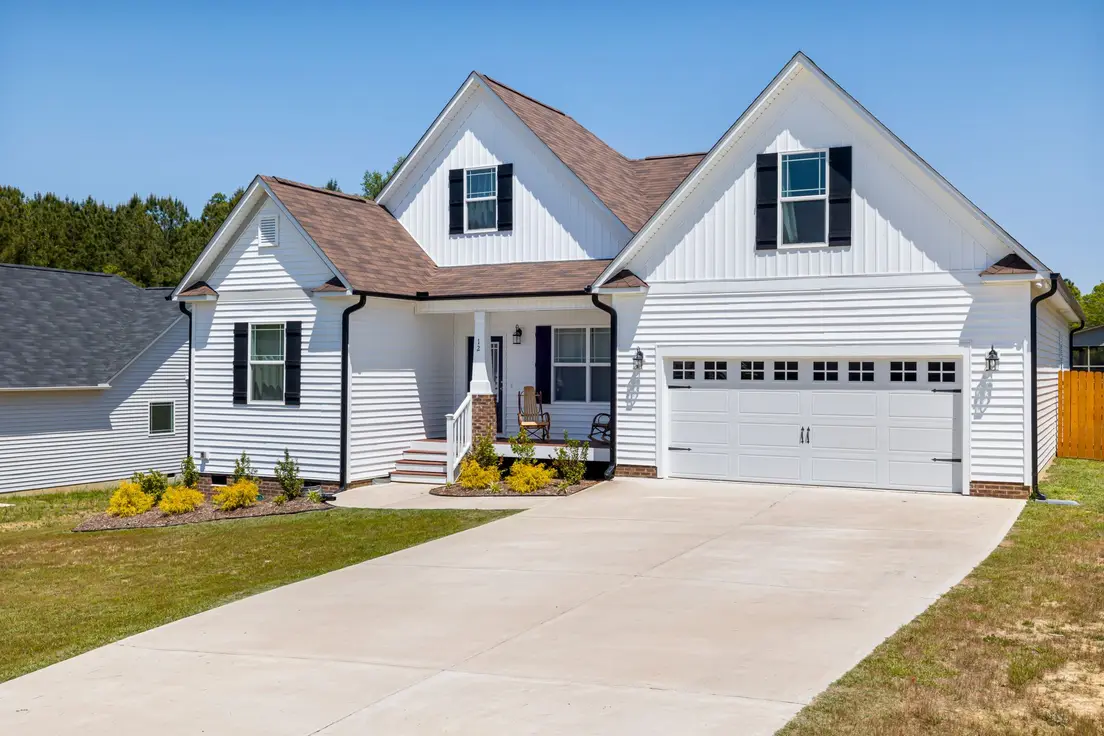
Photo by Curtis Adams on Pexels
Simple home exterior design isn’t about doing less — it’s about deciding less, on purpose, and then repeating that decision everywhere a visitor’s eye lands. A house with six colors, three metal finishes, and two unrelated trim styles isn’t complicated, it’s just undecided. Every idea below is a rule about reducing the number of decisions your house’s exterior is currently making, not a renovation.
We’ve stood in front of enough builder-grade houses to know the real fix is rarely a bigger budget — it’s a paint sprayer, a $12 can of matte black spray paint for hardware, and the discipline to stop at two colors. (Somewhere a listing photographer is filing this under “the boring reveal.” We’re fine with that.)
If your porch specifically still looks tired after all this, our curb appeal ideas guide covers the mailbox, house numbers, and porch lights in more product-by-product detail. The same “fewer decisions, repeated on purpose” logic runs through our warm minimalism color palette guide too — it’s the same restraint, just applied indoors first.
12 simple home exteriors, one rule each
Concept renders — visual references, not photos of a finished project.
Pick One Trim Color and Repeat It Everywhere
Pick one trim color — white, black, or a dark charcoal — and put it on every window frame, the fascia, and the porch posts, with nothing else competing for attention. Most builder-grade houses ship with three “trim” decisions nobody actually made on purpose: white window frames, a different white on the fascia, and unfinished aluminum gutters that read as a fourth color entirely. A gallon of exterior trim paint runs $45–65 and covers a typical single-story home’s windows and porch trim in a weekend. We once counted four separate metal finishes on one rental porch — brass hinges, nickel house numbers, a black mailbox — and called it “eclectic” because admitting it was just neglect felt worse.
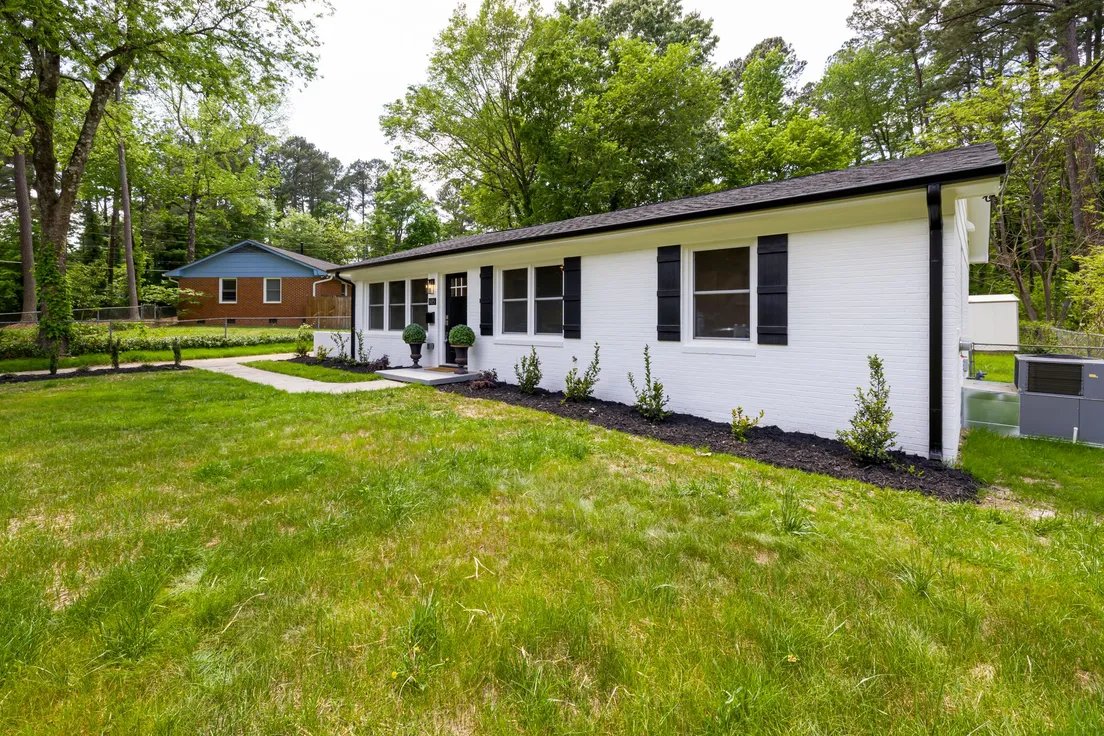
Photo by Curtis Adams on Pexels
Limit the Siding to Two Colors, Not Three
Two siding colors — one main body color and one for gables, a garage, or a lower band — reads as a deliberate palette. A third color almost never does; it usually isn’t a design choice, it’s a leftover can nobody wanted to return. If your house already has three or more colors fighting across the facade, the cheapest fix isn’t new siding, it’s painting the odd one out to match its nearest neighbor. Vinyl, fiber-cement, and stucco all take exterior acrylic paint fine if it’s prepped and primed first — budget $2,500–4,500 to have a single-story house professionally painted, or a rented sprayer and one long weekend if you’re doing it yourself.
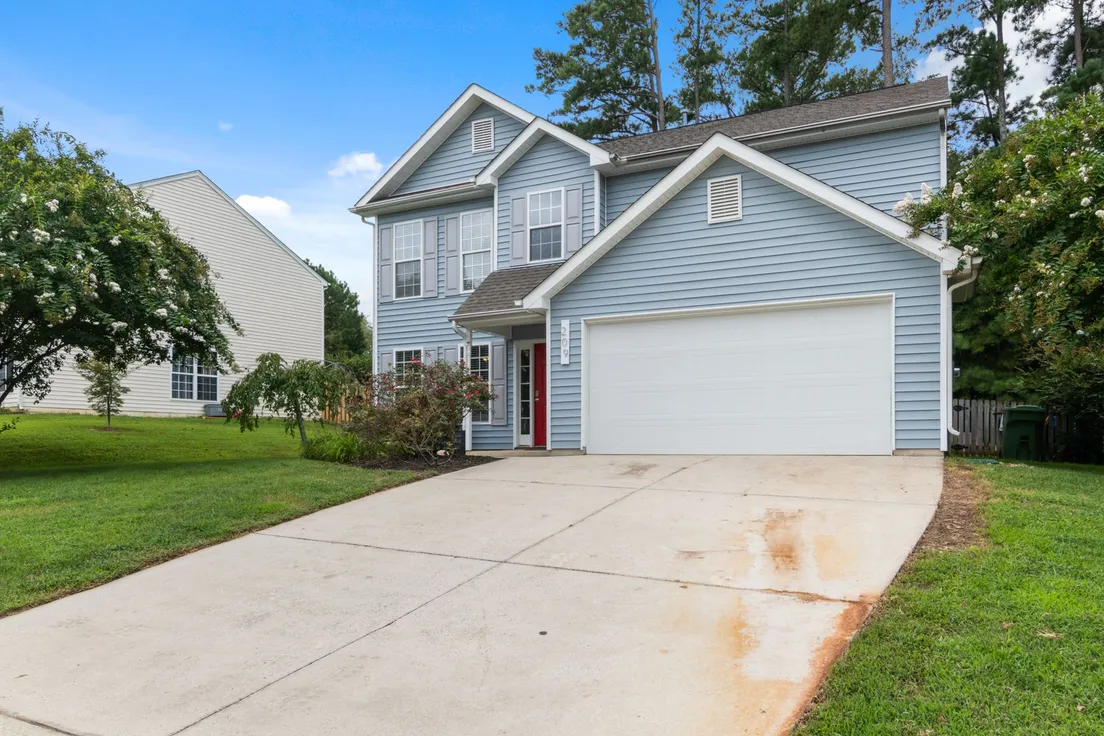
Photo by Curtis Adams on Pexels
Match the Roofline Hardware in One Finish
Gutters, downspouts, and roof vents are the least-planned surfaces on most houses, and they’re visible from the street on every single one. Mismatched mill-finish aluminum gutters against a white or black house photograph like a smudge nobody wanted to admit was there. Painting existing gutters to match the trim color runs about $1–3 per linear foot professionally, or a $15 can of gutter-rated spray paint if you’re doing a short run yourself; either way, it’s cheaper than most people assume for how much it changes the roofline’s read. Roof and soffit vents in the same dark finish as the gutters finish the look without anyone consciously noticing why the roofline suddenly looks intentional.
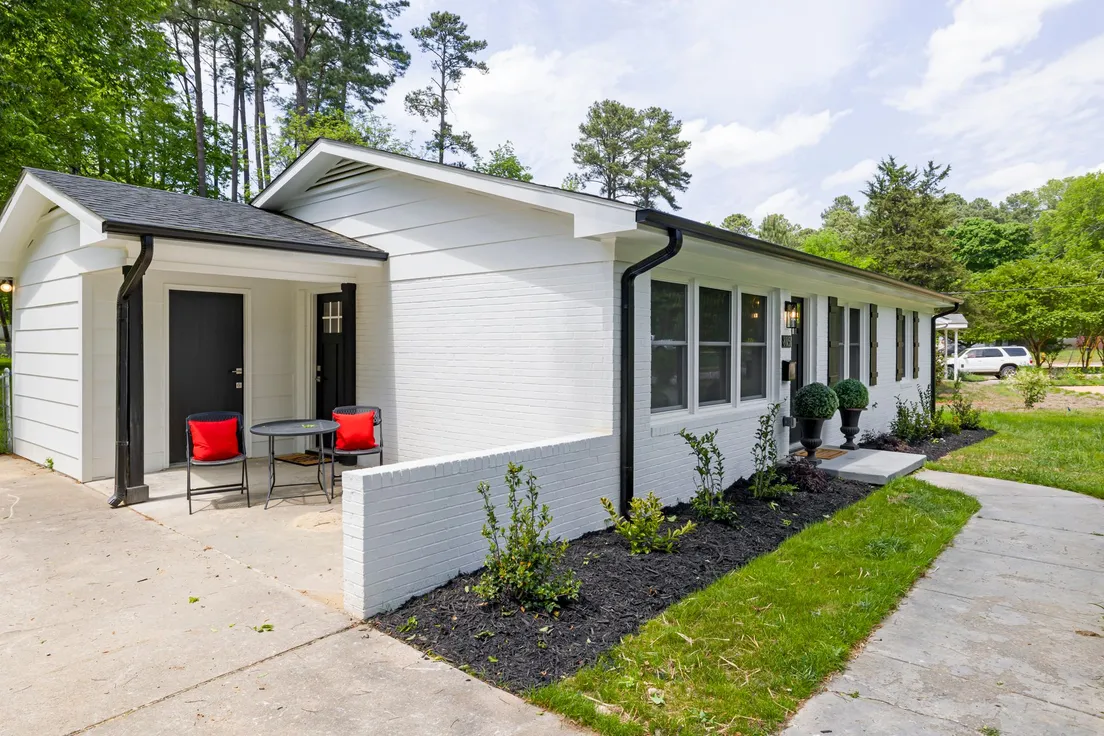
Photo by Curtis Adams on Pexels
Keep the Windows and Shutters the Same Style Front to Back
Every window on the street-facing side of the house should carry the same shutter style, the same trim width, and the same finish — not “matching-ish.” We measured one house’s replacement shutters wrong by two inches once, and the window ended up looking permanently surprised, like it had just heard bad news. Composite shutters run $30–60 per window and install with clips or screws directly into the siding; if the house wasn’t built for shutters (most modern craftsman and ranch styles weren’t), skip them entirely rather than bolting on a style the architecture never asked for. Consistent window trim width alone, even with zero shutters, does most of the “put together” work by itself.
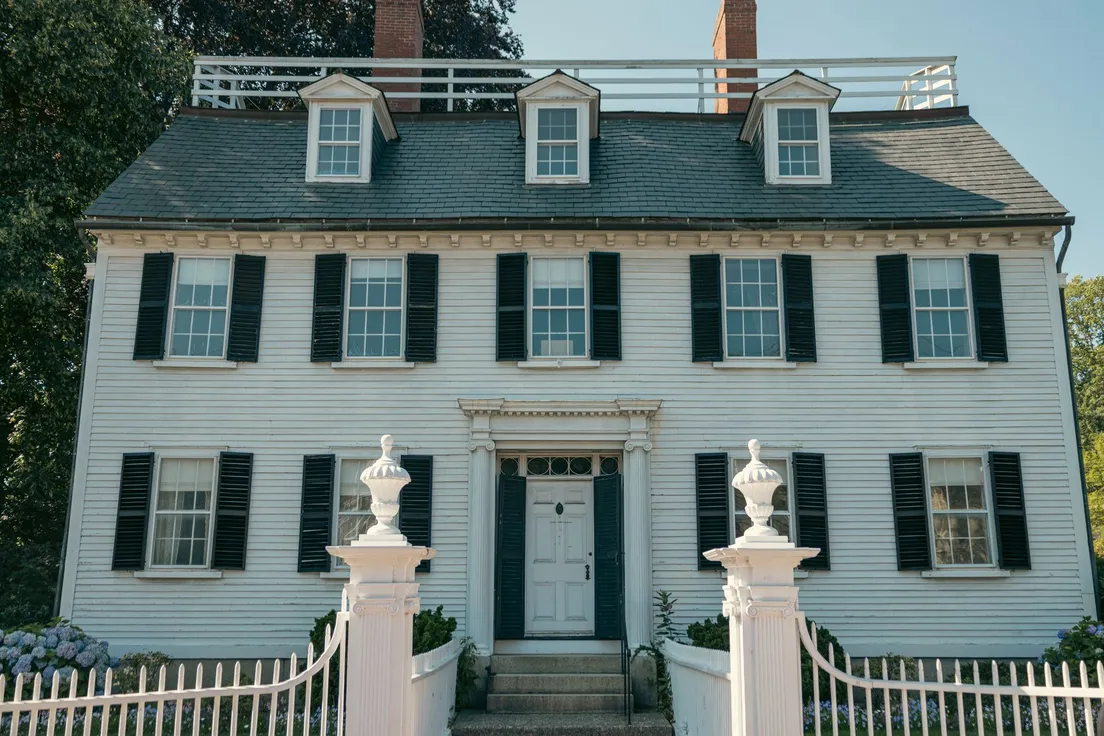
Photo by Banx Photography on Pexels
Let the Stone or Brick Accent Stay the Only Accent
If the house already has a stone, brick, or shake accent — a chimney, a porch base, a single gable — let that material do all of the texture work and keep everything else flat and quiet. Stacking a stone accent next to shake siding and a brick planter reads less like texture and more like the house couldn’t pick a personality at the store. An existing masonry accent is also the one material worth never painting with ordinary paint; the Brick Industry Association’s technical guidance warns that traditional paint films trap moisture inside brick and stone, and it’s essentially a one-way decision once applied, rarely looking as good as the original material even years later. Everything around it — siding, trim, gutters — should be one or two flat colors that let the texture read as the single deliberate feature it is.
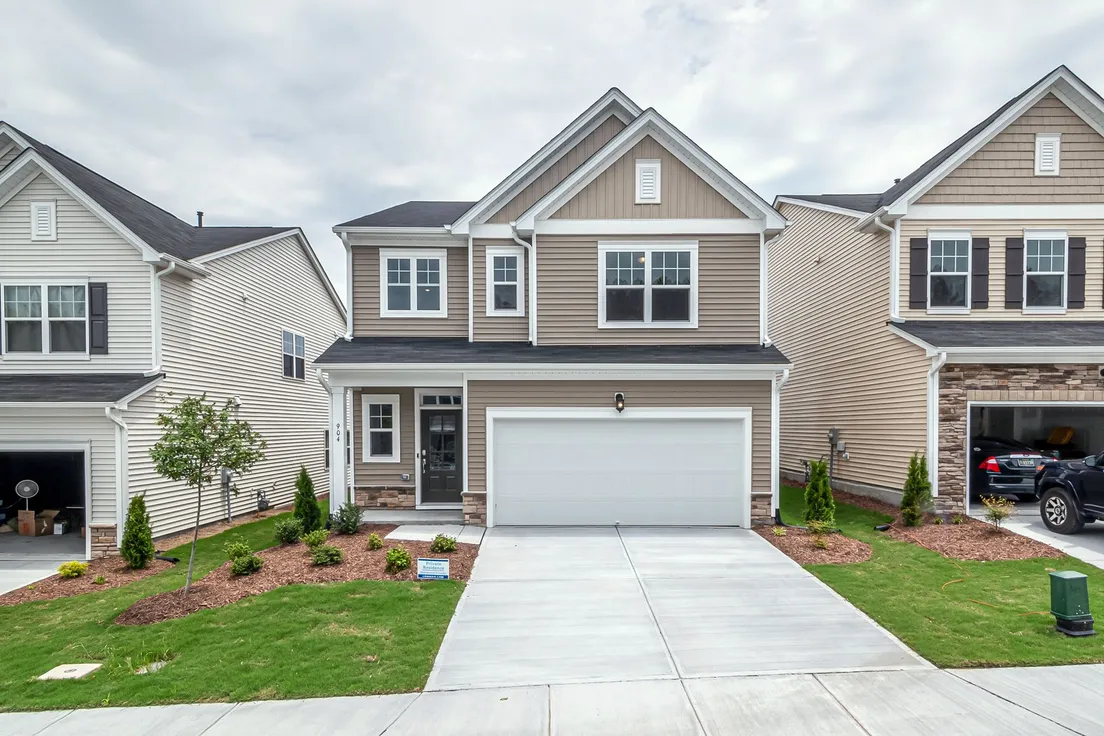
Photo by Curtis Adams on Pexels
Simplify the Entry to One Door Color and One Hardware Finish
The front door is the one place a genuinely saturated color earns its keep — a deep green, navy, or black door against a neutral facade reads as a deliberate accent, not a mistake. What kills the effect is a doorknob in one metal, a house-number plaque in another, and a porch light in a third. (Three metal finishes at one door is the exterior equivalent of black shoes with a brown belt — somebody always notices, even if they can’t say what’s wrong.) Pick one finish — matte black and brushed nickel are the two safest, most available options — and buy the knob, kickplate, and light fixture in that same finish, even if it means three separate small purchases instead of one. A plain concrete walkway to the door is fine left as-is; it doesn’t need to match anything, it just needs to be swept.
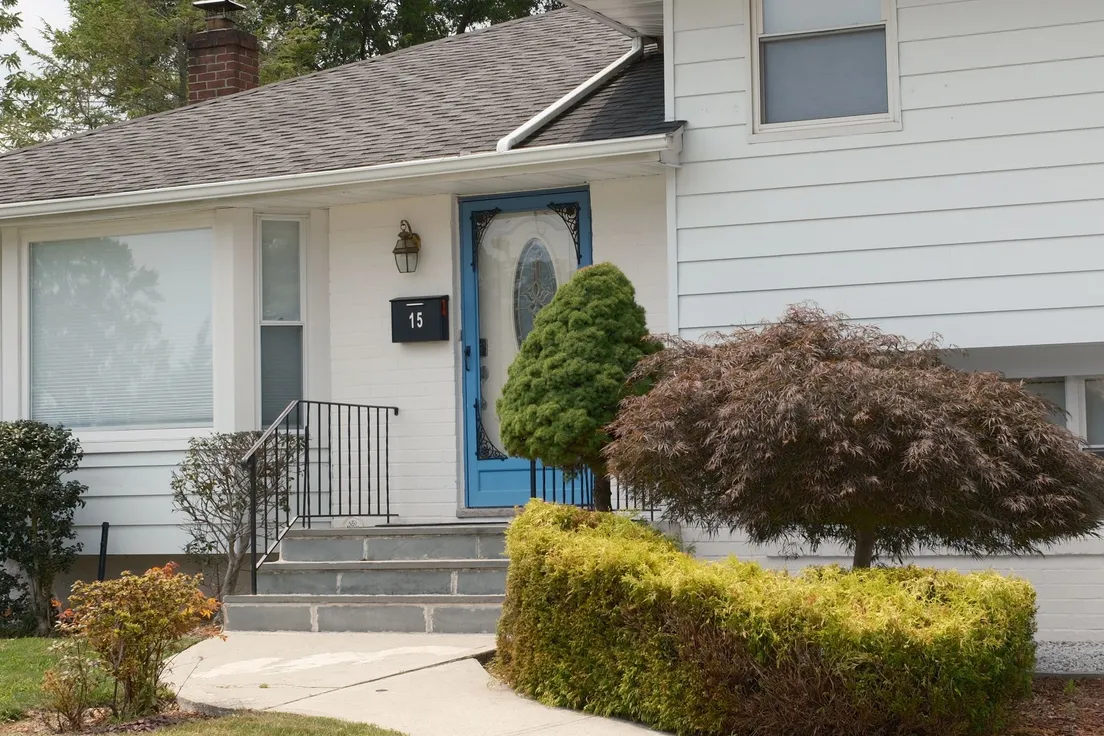
Photo by Mingyang LIU on Pexels
Choose One Architectural Style and Stop Fighting It
Craftsman, colonial, ranch, and modern farmhouse each come with their own trim proportions, window shapes, and porch details — and bolting details from one style onto a house built as another almost always looks off, even to someone who couldn’t name why. We once watched a contractor bolt farmhouse brackets onto a 1990s colonial two doors down; it looked like the house was wearing a costume, not finishing a renovation. Figure out what your house actually is first (see the FAQ below), then choose new hardware, trim width, and color only from options that style would have shipped with. A craftsman house wearing consistent craftsman details — tapered porch columns, a stone base, one body color — looks finished without a single element being expensive on its own. If restraint indoors is more your interest than the facade, our modern minimalist living room guide applies the same one-palette rule to the inside of the house.
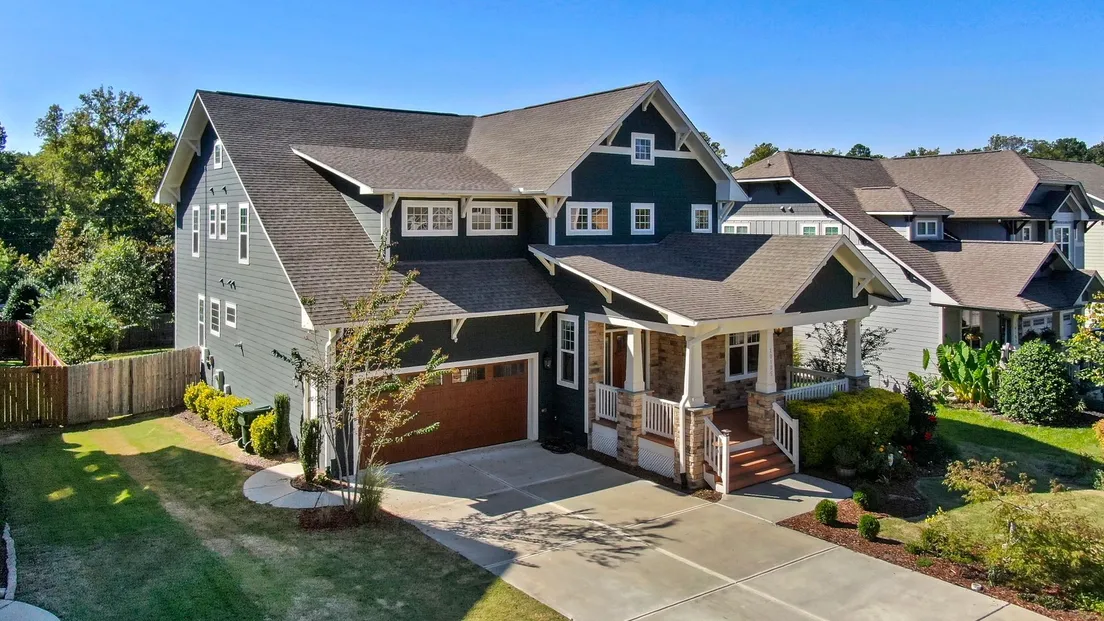
Photo by Curtis Adams on Pexels
Light the Facade With One Warm Color Temperature
Every exterior light fixture on the house — porch sconces, a garage light, any uplighting on a stone accent — should run the same warm 2700K bulb, not a mix of whatever came pre-installed in each fixture. DarkSky International recommends 2700K or lower for residential outdoor fixtures specifically, since cooler, bluer light scatters further and reads harsher from the street than a warm bulb ever does. A cool-white porch light next to warm string lights on the same house makes the whole facade look like it’s still deciding on a color temperature, and it’s the kind of mismatch that reads as “off” from the street even when nobody can name it. Swapping every exterior bulb to the same warm temperature costs under $30 total for most houses and is the single cheapest fix on this entire list relative to how much it changes a dusk photo. Check your HOA before adding any new fixed uplighting, though — some communities regulate exterior lighting the same way they regulate fences and freestanding structures.
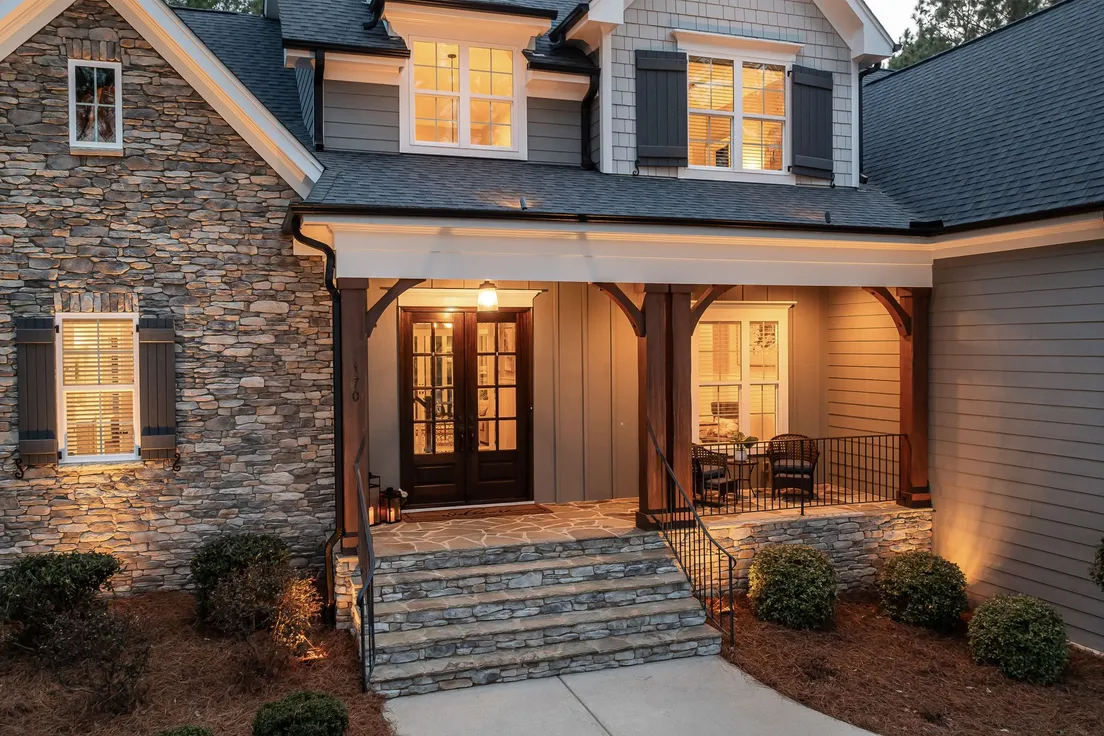
Photo by Curtis Adams on Pexels
Edit the Foundation Planting Down to One Repeating Shrub
A foundation bed with nine different plant varieties reads like a garden center display got left behind, not a planned yard. One repeating shrub — a trimmed boxwood, dwarf holly, or similar evergreen — planted at even spacing along the foundation does more for a “designed on purpose” look than a mixed bed ever will, and it survives a missed watering week far better than annuals. This isn’t a full landscaping overhaul: it’s editing what’s already there down to one shape repeated, and skipping anything that needs weekly deadheading to look intentional. A single plant type at the foundation also happens to be the cheapest version of this idea — one trip to a garden center instead of five, and it reads as landscape design on purpose instead of whatever survived from the builder’s original planting.
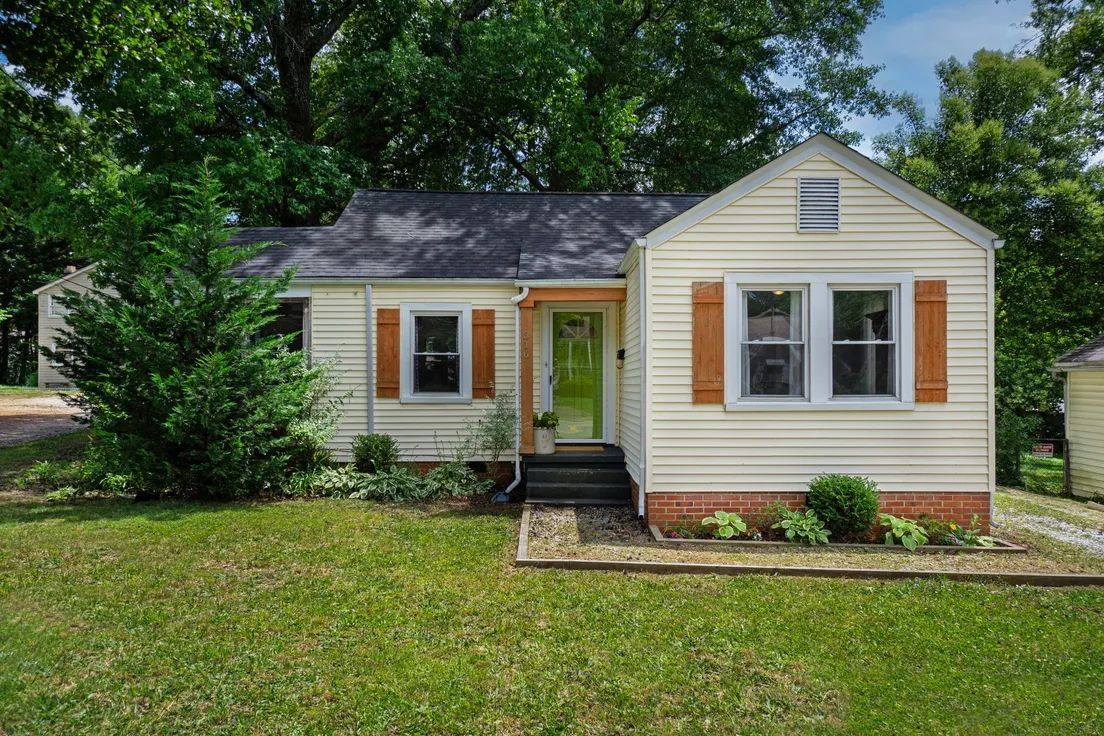
Photo by Arshad Khan on Pexels
The Honest Math: What a Full Simple-Exterior Refresh Costs
Here’s the honest math, added up instead of estimated: a gallon of trim paint ($55), gutter touch-up paint ($15), a matching door/hardware set ($75), and a warm-bulb swap for every exterior fixture ($30) comes to $175 in new purchases for a house that already has decent bones and just needs its existing colors and finishes unified. A full two-color siding repaint pushes the number to $2,700–4,700 if you hire it out, or closer to $400–600 in paint and sprayer rental if you do it yourself over a long weekend. Do the $175 version first — it’s the cheapest way to find out how much of the “messy” feeling was actually a mismatch problem, not a material problem, before spending on anything bigger.

Rule of Thumb: Which Fix Matters Most If You Only Do One
If you’re only doing one thing, unify the hardware finish first — every doorknob, light fixture, house number, and gutter in one metal color is the single cheapest, fastest change on this entire list, and it’s the one most people never think to do as a set. Paint and lighting solve more of a facade’s problems than new materials do, in that order, before you spend a dollar on new siding or stone. After hardware, the two-color siding rule is the next highest-impact fix, because it’s the thing every neighbor and every listing photo actually registers first, even if they’d never be able to say why the house suddenly reads as “done.”
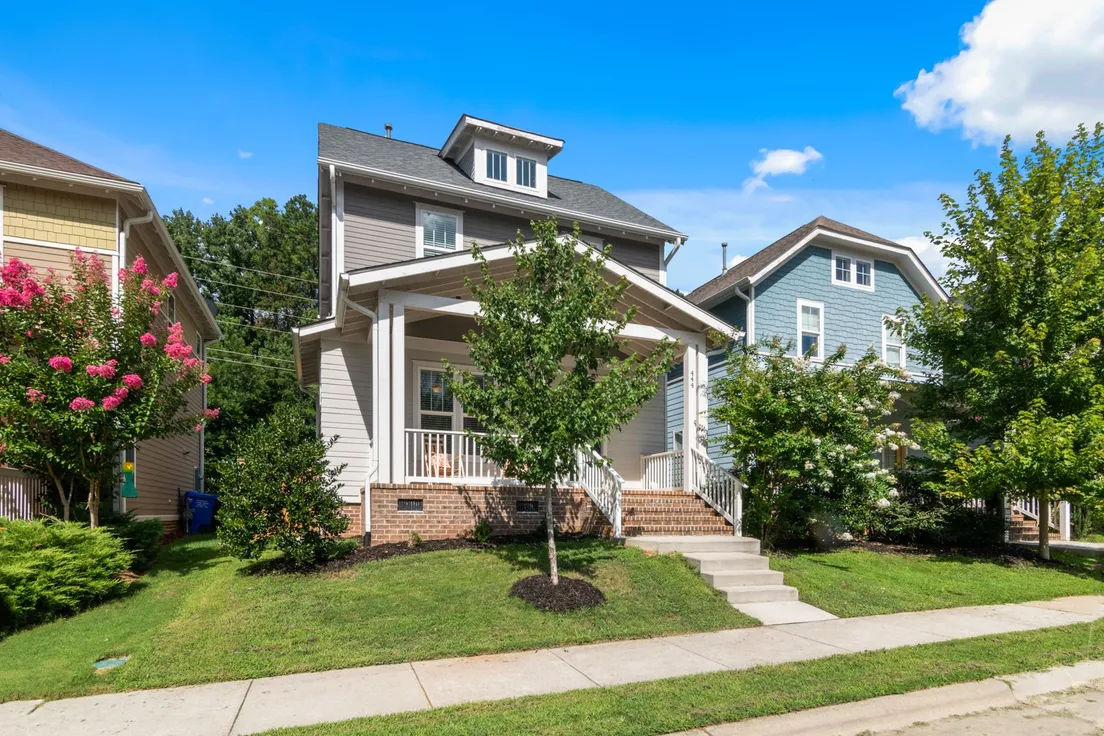
Photo by Curtis Adams on Pexels
A friend’s HOA once made her take down a freestanding privacy trellis less than a week after it went up — a reminder that any exterior change bigger than paint and hardware is worth a two-minute lease or HOA check before you buy the materials, not after. Start with the hardware finish. Everything else on this list looks more expensive once the small metal details stop arguing with each other.
Frequently asked questions
What exterior color makes a house look expensive?
Neutral, low-contrast palettes read as expensive more reliably than any single color — warm white, greige, or charcoal siding paired with one darker trim tone and matching black or bronze hardware throughout. The expensive look comes from consistency across gutters, light fixtures, and the door, not from the specific hue chosen.
What are the trends for exterior house design in 2026?
The dominant look is fewer materials used more consistently — one siding color, black or bronze hardware throughout, and warm-toned exterior lighting instead of cool white. Bold, saturated front doors are still trending against otherwise neutral facades, and a single stone or shake accent section is replacing whole-house material mixing.
Is there a free app to redesign the outside of your house?
Yes — paint brands like Behr and Sherwin-Williams offer free online visualizer tools where you upload a photo of your house and preview siding, trim, and door colors before buying anything. They're a genuinely useful first step before committing to a full gallon of exterior paint.
How do I figure out my home's architectural style?
Look at the roofline, window shape, and any existing trim details — a steep gable roof and shutters usually points to colonial or farmhouse, while a low-pitched roof and horizontal lines point to ranch or midcentury. Once you know the style, keep new materials and colors consistent with it instead of introducing details it was never built to have.