
Small Spaces
Small Apartment Ideas That Don't Need More Square Feet
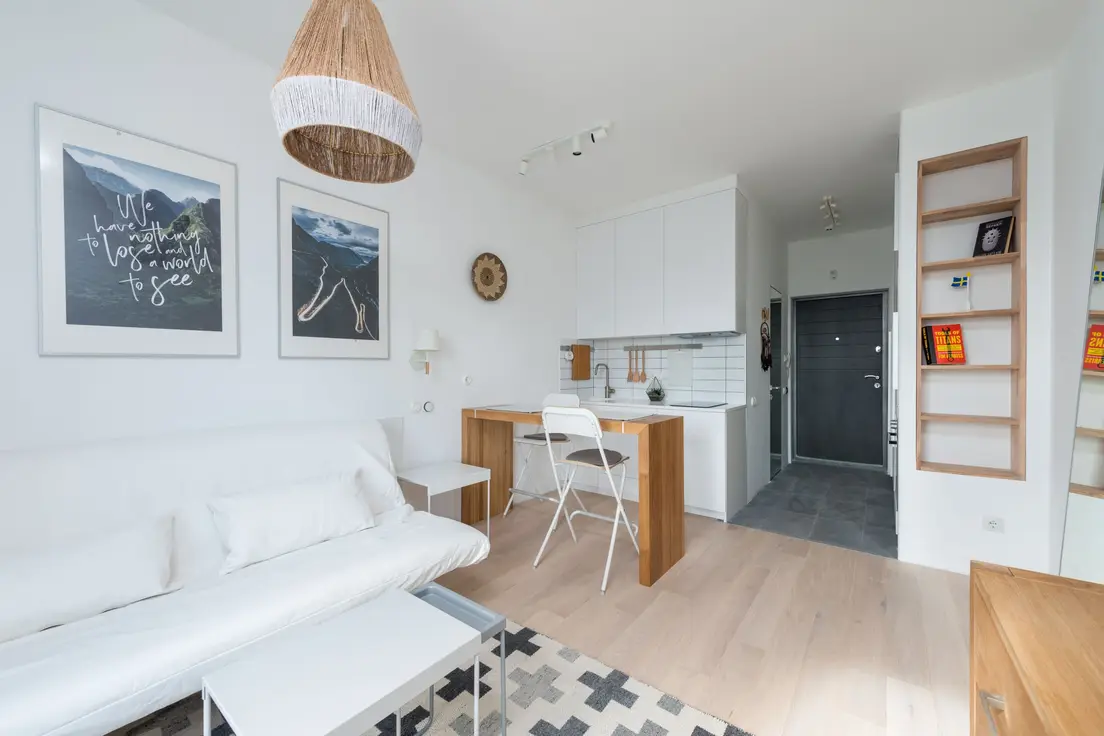
Photo by Max Vakhtbovych on Pexels
The best small apartment ideas make the square footage you already have work harder, not the square footage you wish you had. The national average U.S. apartment now runs 910 square feet, and the average studio is 460 — so most of us are furnishing less room than a big-box mattress showroom, permanently. None of the 12 ideas below need a bigger lease, just smarter furniture, real storage, and a couple of walls you’re allowed to zone without actually building one — decorate around the apartment you have, not the one on the listing photos.
Parlor to Patio started in a rented duplex with a 4×8 balcony, a plastic folding chair, and a Pinterest board that sat untouched for two years. First real project cost $180 and took one Saturday. We know exactly how far a weekend and a tight budget can stretch when the square footage itself isn’t up for negotiation — which is the whole premise of a small apartment.
Buy Multifunctional Furniture That Earns Its Square Footage
A sofa bed, a daybed with drawers underneath, or a desk backed by open shelving does the job of two purchases in the floor space of one — the single highest-leverage move on this list, especially in a studio where every square foot of floor space is already doing overtime. Flexible furniture like this is also what turns one seating area into a guest room for a night without a second lease. Live with the room for a week before buying anything new; half the “I need new furniture” feeling in a small apartment is actually “I need to rearrange what I own,” and rearranging is free.
Expect to pay a premium over the single-purpose version — a decent sofa bed runs $400–800 versus $300–500 for a sofa alone — but it’s cheaper than buying a sofa and a guest bed separately, and it’s the one piece that never has to be “put away” for company.
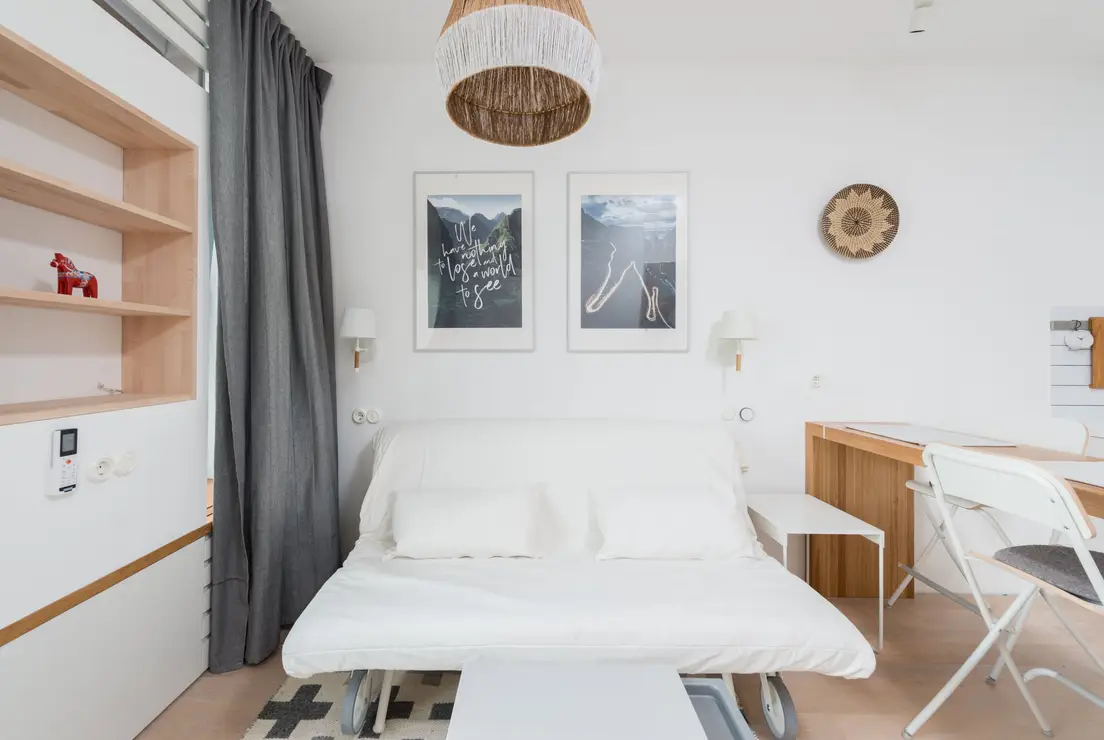
Photo by Max Vakhtbovych on Pexels
Mount Floating Wall Shelves Instead of a Bulky Bookcase
Wall shelves use the one dimension a small apartment never runs out of — vertical — without eating a single square foot of floor space a bookcase would claim. Three or four shelves staggered above a console or desk hold as many books and plants as a standard bookcase in roughly a third of the footprint, and they read lighter, which matters in a room where every solid object competes for visual space.
A basic floating shelf kit runs $15–40 per shelf in wood or MDF, and the weight rating depends entirely on the anchor, not the shelf — a plastic anchor holds 10–25 lbs, a toggle bolt gets you 100+ lbs, and a stud beats both. Find the stud for anything holding more than a few paperbacks; renter-friendly on the packaging means nothing without the actual number.
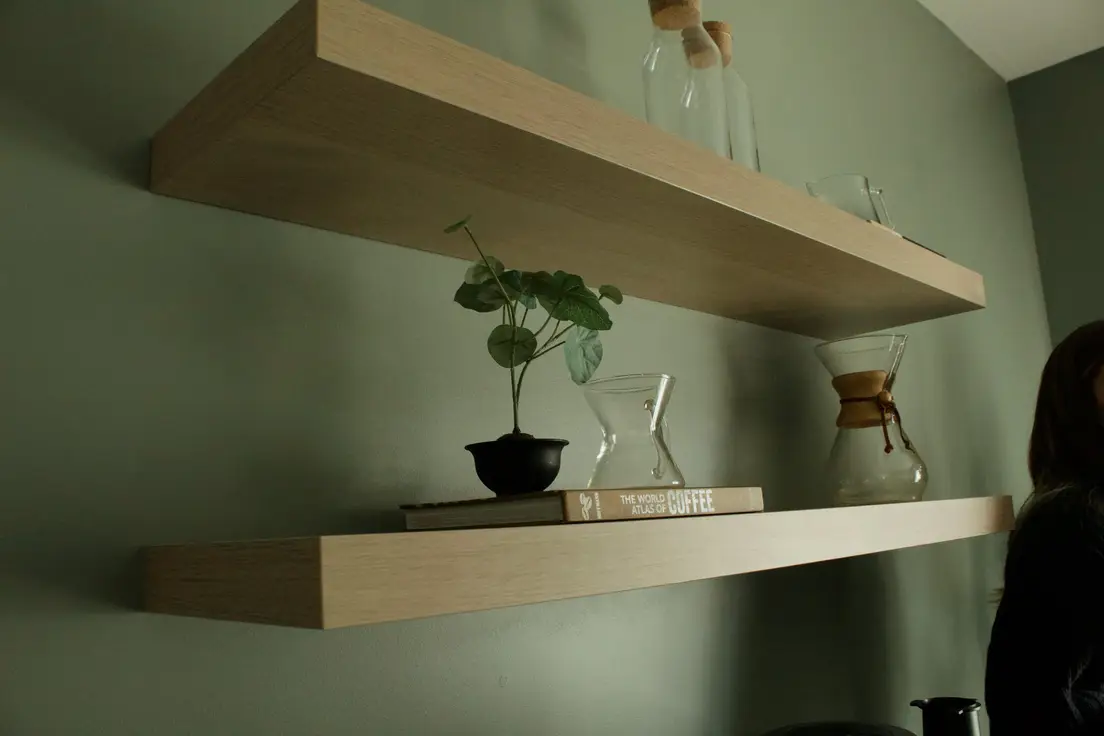
Photo by Avery Arwood on Pexels
Zone the Kitchen and Living Room with a Rug, Not a Wall
A rug is the cheapest, fastest way to split one open room into two readable zones — lay it under the sofa and let the kitchen’s hard flooring stay bare, and the eye clocks “living area” and “kitchen” as separate rooms even though nothing physically divides them. This is the fix for the studio or open-concept layout where a wall isn’t an option and honestly wouldn’t help; the goal is a visual cue, not a barrier.
Go bigger than feels reasonable — an 8×10 for the living zone runs $120–250 in a flatweave or low-pile that won’t trap crumbs near the kitchen edge. (We measured a rug off a photo once instead of the actual floor. It arrived, unrolled, and looked like a bath mat in a gymnasium.)
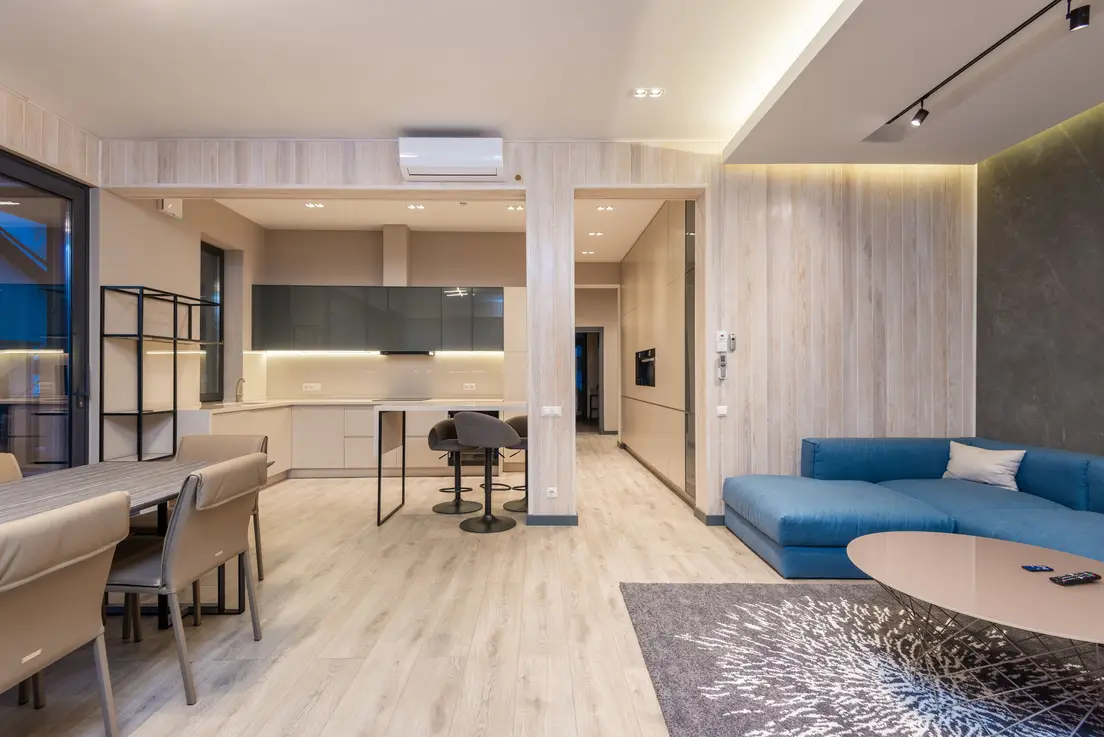
Photo by Max Vakhtbovych on Pexels
Choose a Storage Bed to Free Up Floor Space
A platform bed with drawers built into the base turns the single largest object in a small apartment into its biggest storage piece, instead of just its biggest piece. Off-season clothes, extra bedding, the box of cables nobody’s sorted since move-in — all of it goes under the mattress instead of into a dresser that’s eating floor space a nightstand could use.
A queen storage bed frame runs $250–500, roughly $100–150 over a basic frame, and it’s the rare upgrade that pays for itself by replacing a piece of furniture you’d otherwise have bought anyway (a short dresser or a set of bins). Measure the drawer clearance against your actual bed frame height before ordering — a low-profile platform sometimes doesn’t leave room for the drawers to fully open.
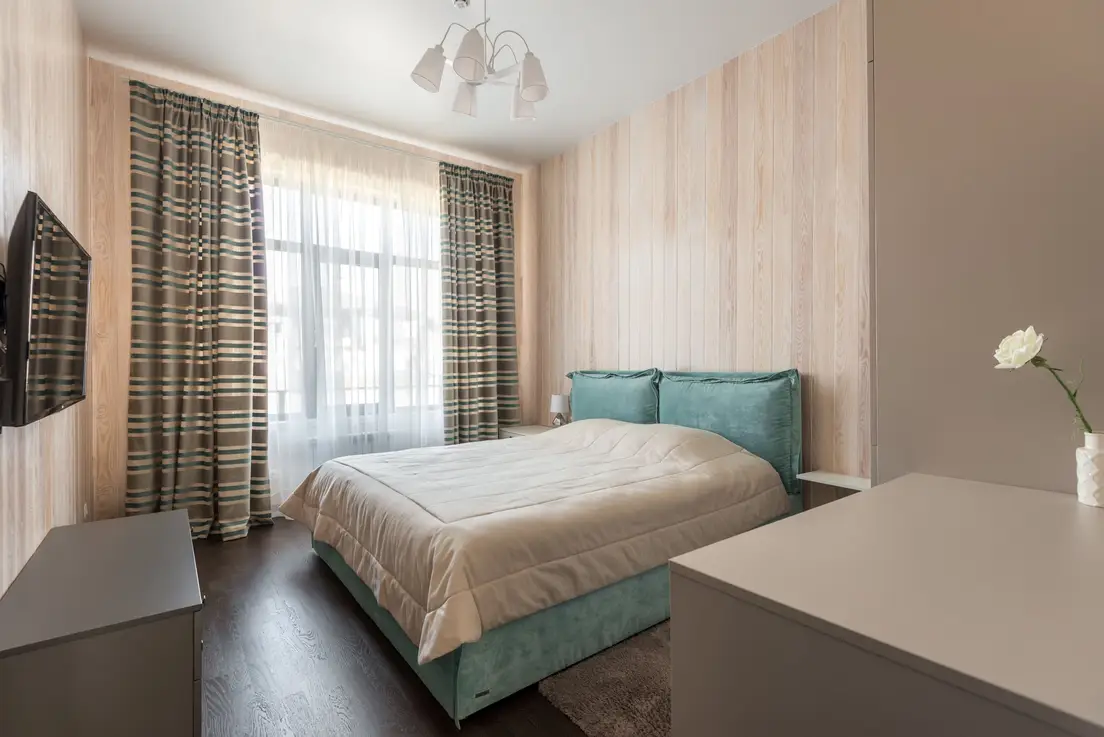
Photo by Max Vakhtbovych on Pexels
Hang Curtains for Privacy Without Losing the Light
A curtain on a ceiling track gets you real privacy between a sleeping area and the rest of a studio without blocking the one window doing all the work of lighting the whole apartment — the problem with a solid divider or a bookcase in a small space is that it also blocks half the natural light, and a small apartment usually only has one real light source to begin with.
A track kit runs $30–60 and a floor-length curtain panel adds $25–50; go sheer or a lighter weave if the room only has one window, so daylight still filters through when the curtain’s closed. For the full breakdown of zoning options — curtains, shelving, and actual temporary wall kits if you want something closer to a real second room — our room divider ideas guide covers the rest of this list in more depth.
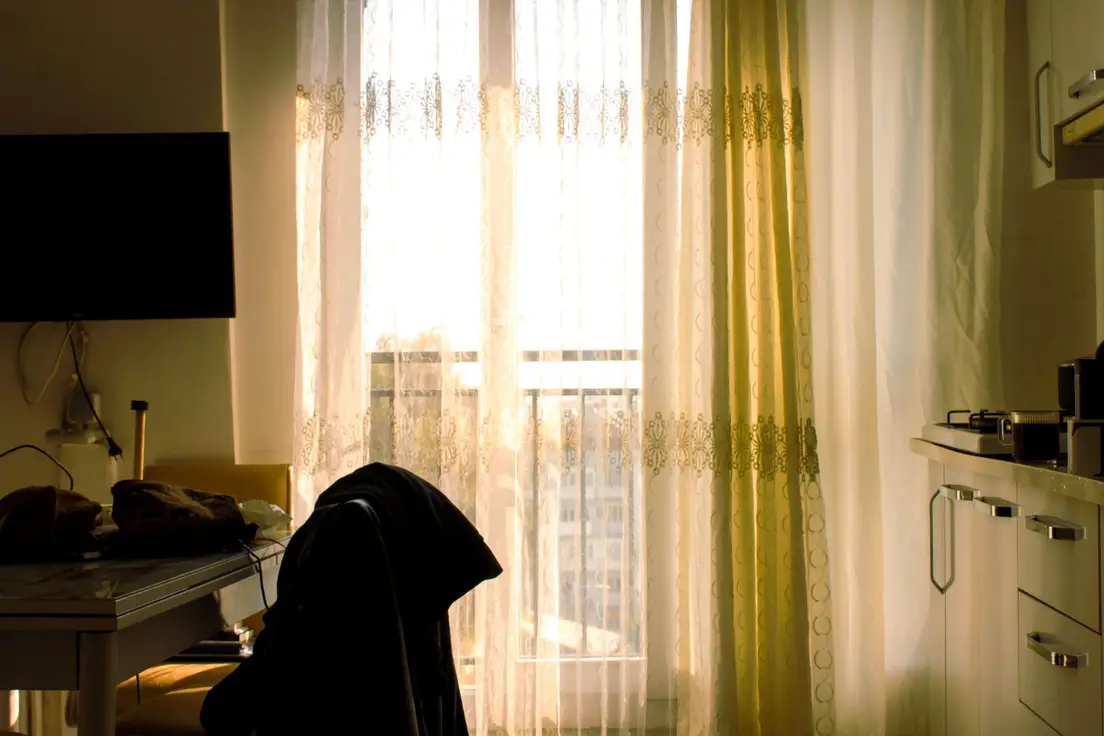
Photo by Gülru Sude on Pexels
Swap the Coffee Table for a Storage Ottoman
A storage ottoman does everything a coffee table does — footrest, surface for a drink, the piece that anchors the whole seating area — and then holds the blankets, the extra pillows, or the shoes that would otherwise pile up by the door. In a small apartment, every flat surface that isn’t also storage is a missed opportunity, and a coffee table is the single most common piece of furniture that’s only doing one job.
A basic fabric storage ottoman runs $60–150 depending on size; go for one with a removable lid rather than a lift-top hinge if you’ll be using the top as an actual table surface, since a hinge that has to swing clear needs room a small living room doesn’t always have.
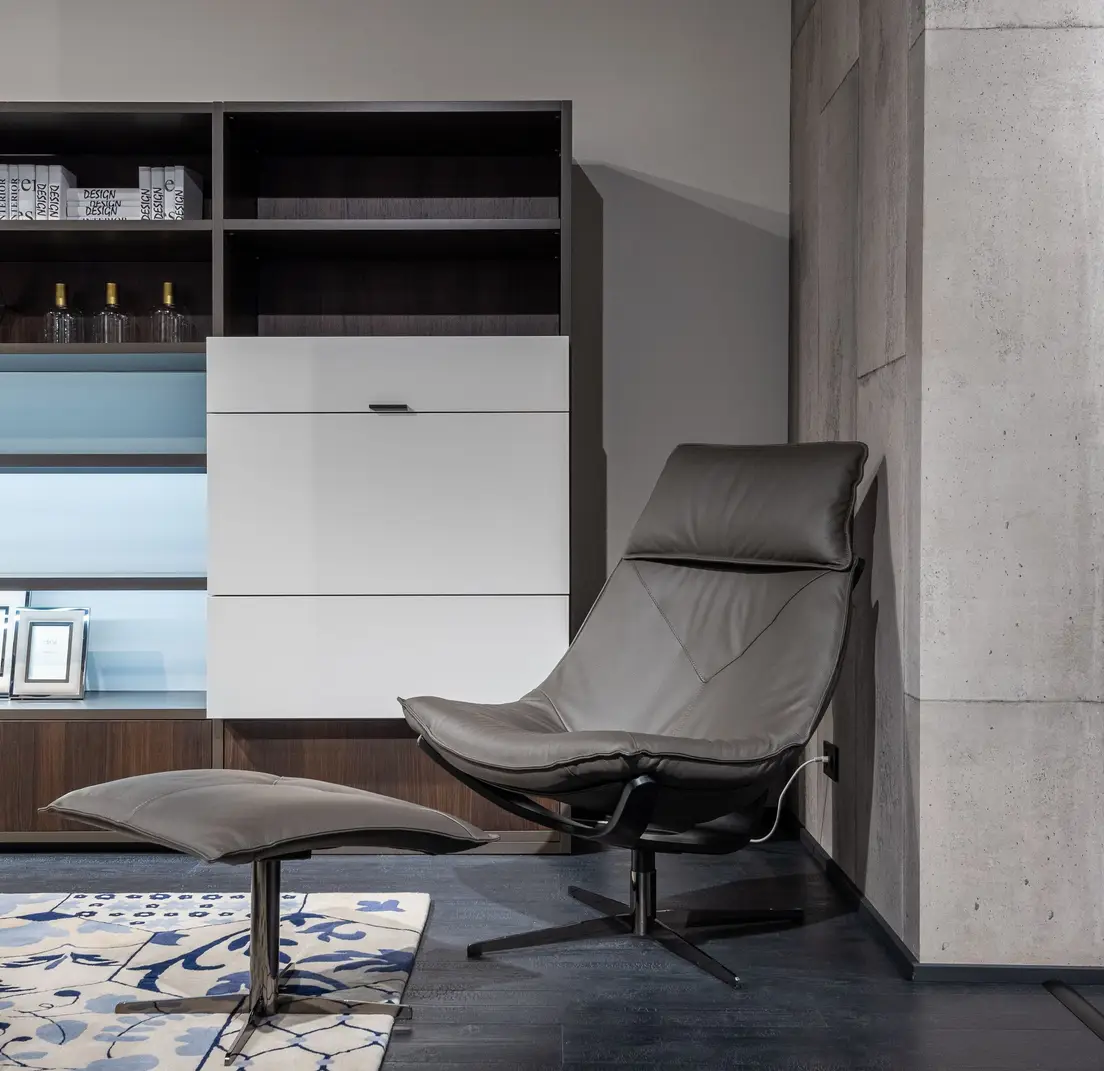
Photo by Max Vakhtbovych on Pexels
Build Vertical Storage to the Ceiling, Not Just the Wall
A bookcase or shelving unit that runs floor-to-ceiling stores roughly twice what a chest-height version does in the exact same footprint — the square footage cost is identical, so stopping a shelf at five feet just because that’s where furniture “usually” ends is leaving storage on the table, literally above your head. This is the move for the closet-adjacent wall, the awkward strip beside a window, or anywhere a small apartment has height it isn’t using.
An IKEA-style modular shelving unit that stacks to ceiling height is a genuine storage solution, not just decor — it runs $150–350 depending on material and whether it’s open or has cabinet doors on the lower sections for hidden storage (worth it for hiding the stuff that doesn’t photograph well). Anchor it to the wall regardless of height — a loaded shelf that tall is a genuine tip hazard freestanding.
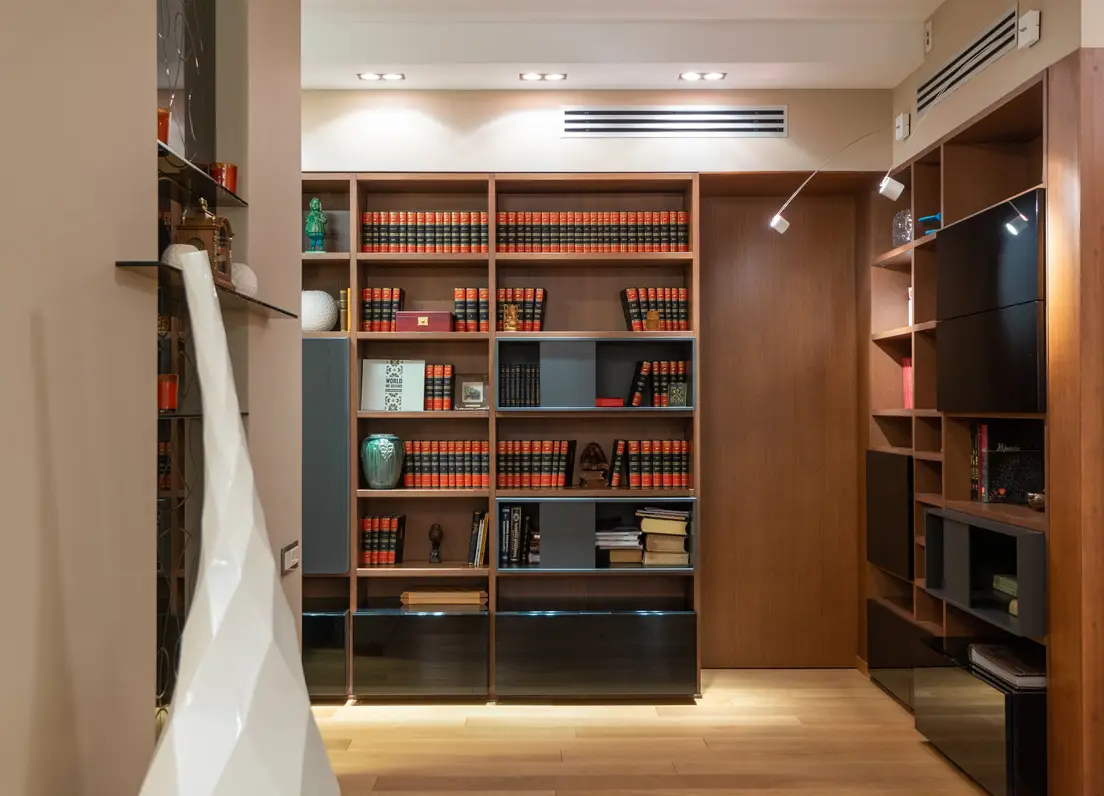
Photo by Max Vakhtbovych on Pexels
Pick an Entryway Console That Catches the Clutter
A slim console table by the door gives keys, mail, and the bag you’re about to forget one specific landing pad — the alternative in most small apartments is that all three end up on the kitchen counter, which is smaller than the console and already busy. A narrow 12–14 inch depth clears a hallway that can’t spare more, and a lower shelf underneath doubles as shoe storage without needing a separate rack.
A basic wood console runs $80–180; measure the actual hallway width before ordering; anything deeper than the walkway allows turns a landing pad into a hazard you walk into at 7am. (We speak from experience — measure the doorway and the walkway both, not just the wall it’s going against.)
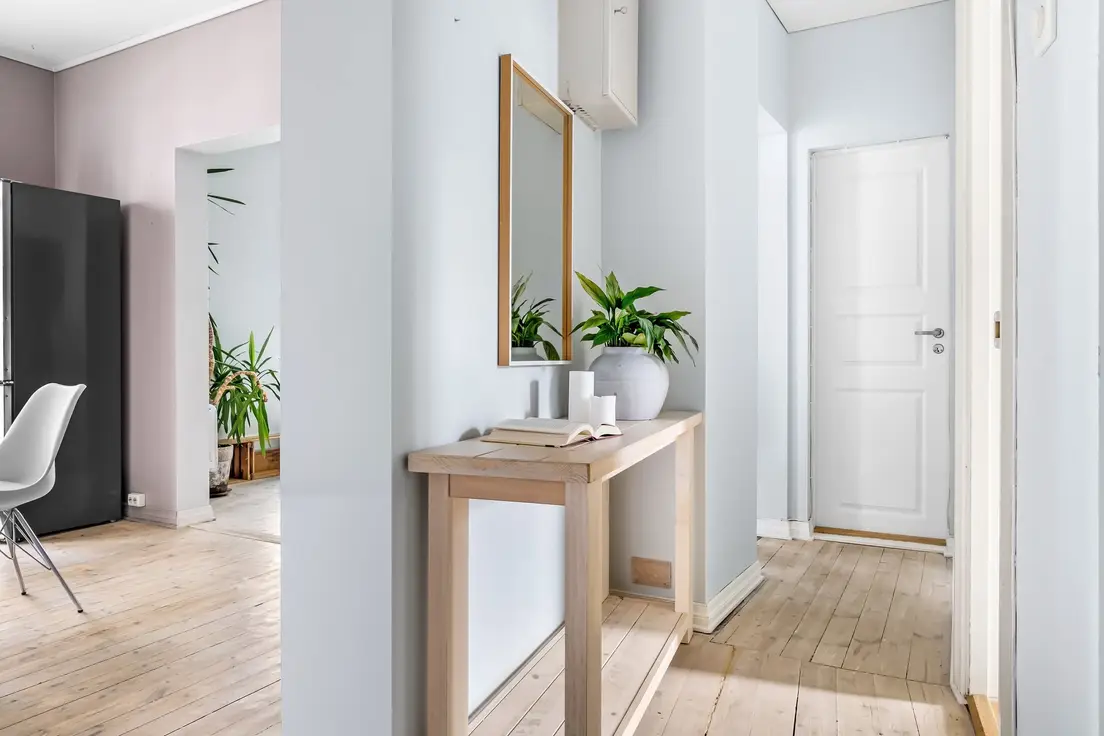
Photo by Alex Tyson on Pexels
Edit the Closet Down to a Capsule Wardrobe
A closet in a small apartment usually isn’t too small — it’s too full of clothes you’re not wearing, which is a decluttering problem dressed up as a storage problem, and the overflow is exactly what makes the rest of the apartment feel cluttered even when nothing’s technically out of place. Pulling everything out, keeping what’s actually been worn in the last year, and hanging the rest by category (not by whatever order it landed in) routinely frees up 20–30% of a standard reach-in closet without buying a single organizer.
Once it’s edited, add what actually helps: a second hanging rod to double vertical space runs $15–30, stackable bins for the shelf above run $10–20 each. Skip the closet system that costs more than the furniture in the room it’s serving — a $40 rod-and-bin combo does 90% of what a $400 built-in system does in a rental you don’t own.
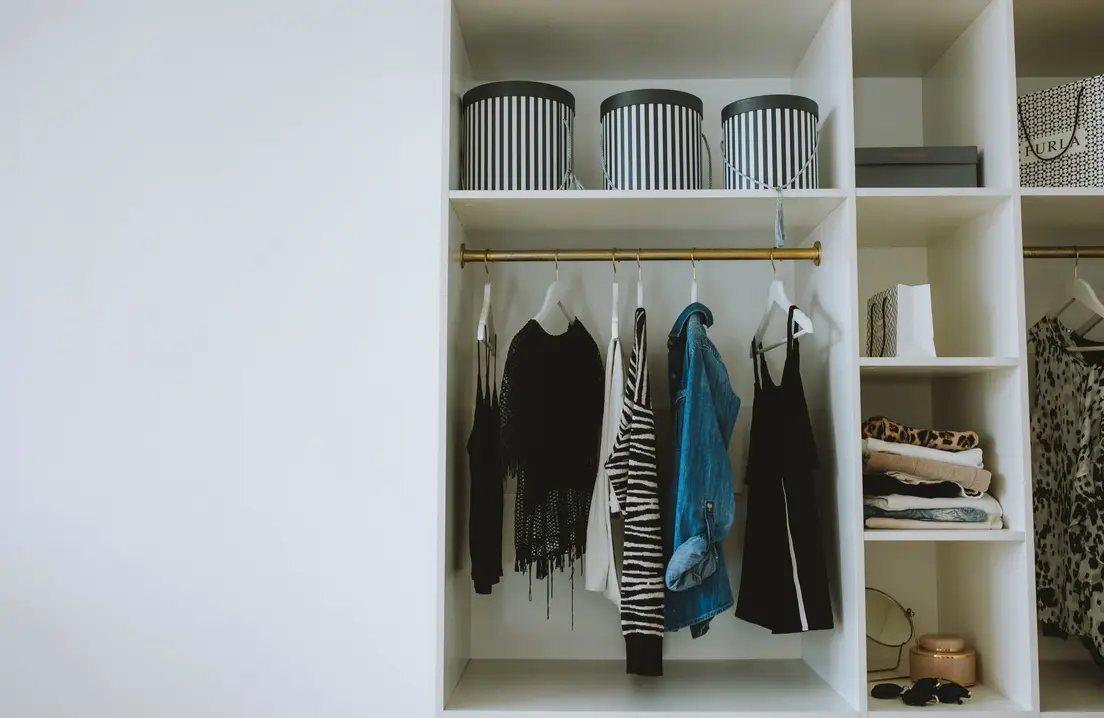
Photo by Anastasia Shuraeva on Pexels
Layer Warm Lighting Instead of One Overhead Fixture
One ceiling fixture lighting an entire small apartment is the fastest way to make it feel like a waiting room — a floor lamp in the reading corner, a table lamp by the bed, and the overhead off more often than on reads as three different rooms doing three different jobs, even in a studio with no walls between them. Warm 2700K bulbs over builder-grade 4000K do more for the mood of a room than almost any furniture purchase, and cost about $8 a bulb.
A decent floor lamp runs $30–70; that’s a smaller spend than most furniture on this list and probably does more to make the apartment feel finished than the coffee table did.
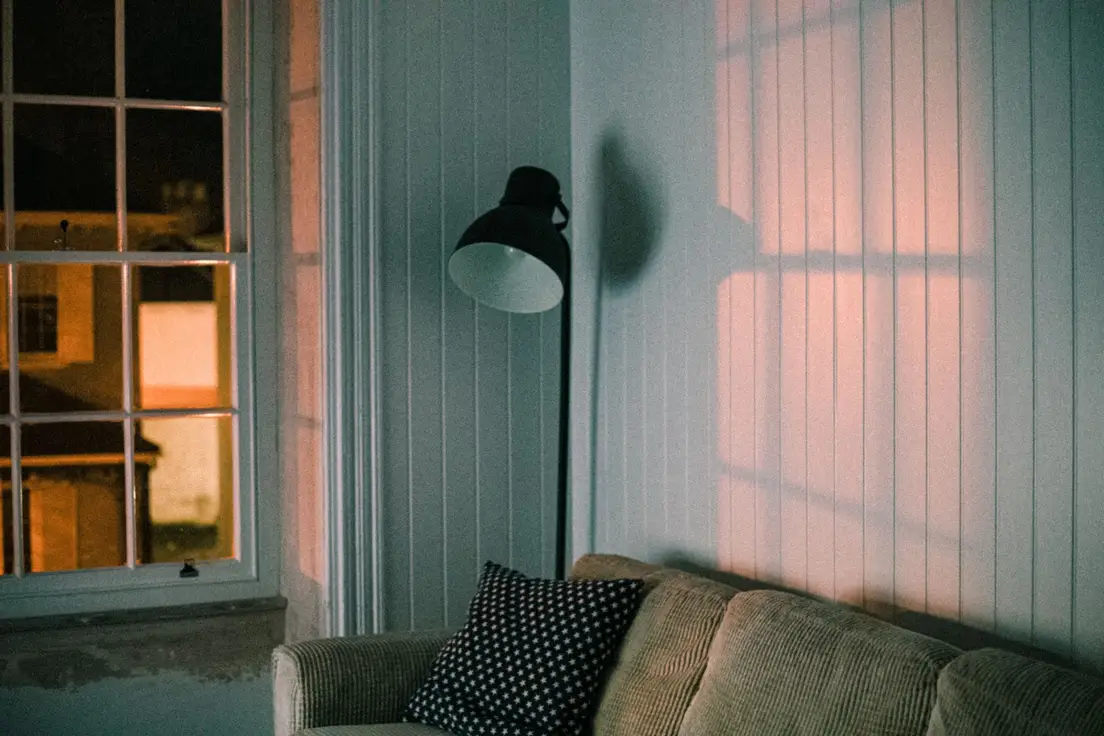
Photo by Lucian Petrean on Pexels
Choose a Light, Cohesive Palette for a Small Apartment Design That Feels Taller
A small apartment painted and furnished in two or three colors, max, reads noticeably more spacious and airy than the same square footage broken up by five competing accent shades — the eye doesn’t have to work to figure out where one “room” ends and another begins, because the palette doesn’t change. This is the same trick an interior designer reaches for on every tiny listing photo; it’s not the same advice as “paint everything white” — a warm off-white with one consistent wood tone and a single accent color does the same visual trick without going sterile. For more decorating ideas built on the same pared-back look, our warm minimalism interior design guide covers the style this idea borrows from.
Paint runs $30–60 a gallon and covers most studios in one to two coats; the cohesive palette costs nothing extra over a mismatched one, it’s just a five-minute decision made before the first purchase instead of after the fifth one.
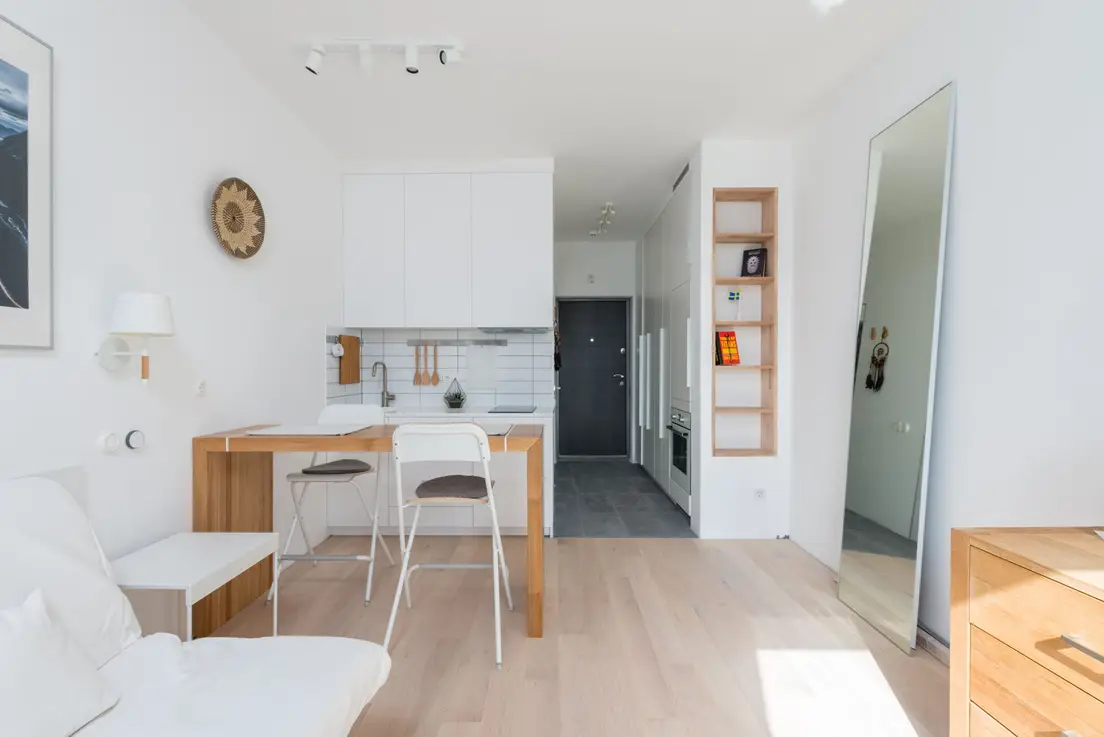
Photo by Max Vakhtbovych on Pexels
Curtain Off a Sleeping Nook Before You Build Anything Permanent
A ceiling-mounted curtain around the bed alone — not the whole room, just the sleeping nook itself — gets you a genuine sense of a separate bedroom in a studio for the cost of a track and a panel, and it’s the one zoning idea on this list that’s fully reversible in under ten minutes if a landlord or a future roommate situation says otherwise. It’s also the idea to reach for first, before a temporary wall kit or anything requiring tools, because it solves the actual problem (visual privacy around the bed) without the bigger commitment.
A track and blackout-lined panel runs $70–130 total; go blackout specifically for the sleeping side, since a studio’s main light source usually has to serve the living side too and won’t dim just because it’s technically bedtime.
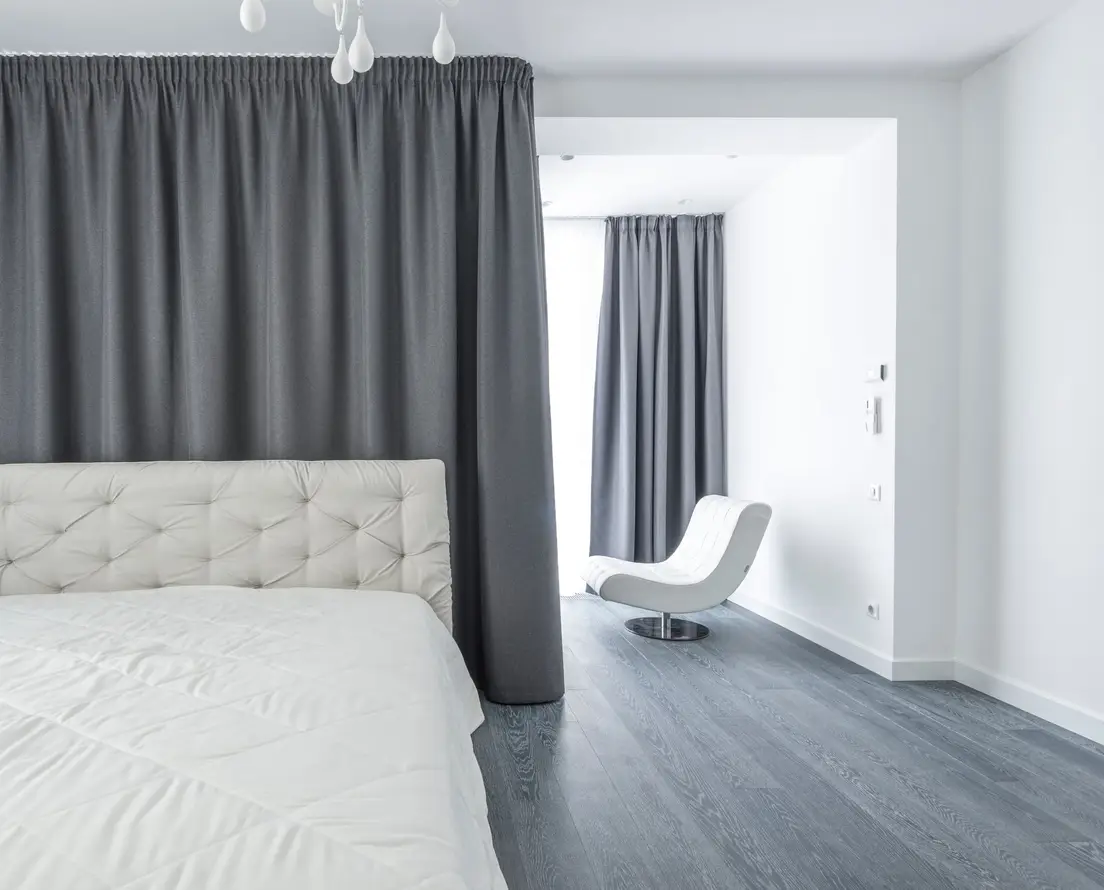
Photo by Max Vakhtbovych on Pexels
Start with whatever solves the problem you actually have — a storage bed if the closet’s full, a rug if the kitchen bleeds into the living room, a curtain if privacy’s the whole issue. The rest of the list is worth doing once the one thing bothering you daily is fixed.
Frequently asked questions
What are some good design ideas for a small apartment?
Multifunctional furniture (a sofa bed, a lift-top ottoman), vertical storage that uses the ceiling instead of the floor, and a light, cohesive color palette do the most work. Zoning a studio with a rug or a curtain instead of new walls comes next — cheap, reversible, and it doesn't touch your security deposit.
How do you maximize space in a small apartment?
Go vertical before you go wider — floating shelves and a bookcase that reaches the ceiling use square footage you're not standing on. Pick furniture that does two jobs (a storage bed, a console that's also a desk), and keep the floor as clear as the layout allows; visible floor reads as more space than it measures.
What are some minimalist ideas for a small apartment?
Cut the furniture count before you cut anything else — one seating piece, one storage piece per zone, and skip the matching side table if a stool already does the job. A light, single-family palette (two or three colors, max) reads calmer and larger than a room with five accent colors competing for attention.
What furniture works best in a small apartment?
Furniture that does two jobs: a sofa bed for a studio that needs to sleep a guest, a storage ottoman instead of a coffee table plus a chest, a console table that also works as a desk. Skip anything oversized for the room just because it photographed well somewhere else — measure the actual floor plan first.
How do you create separate zones in a studio apartment?
A rug is the cheapest zone marker — one under the sofa, a different one (or bare floor) under the bed, and the eye reads two rooms without a single wall. A curtain on a ceiling track or a floor-to-ceiling shelf unit goes further if you want an actual visual break, not just a floor cue.