
Bathroom
Small Bathroom Ideas on a Budget That Actually Work
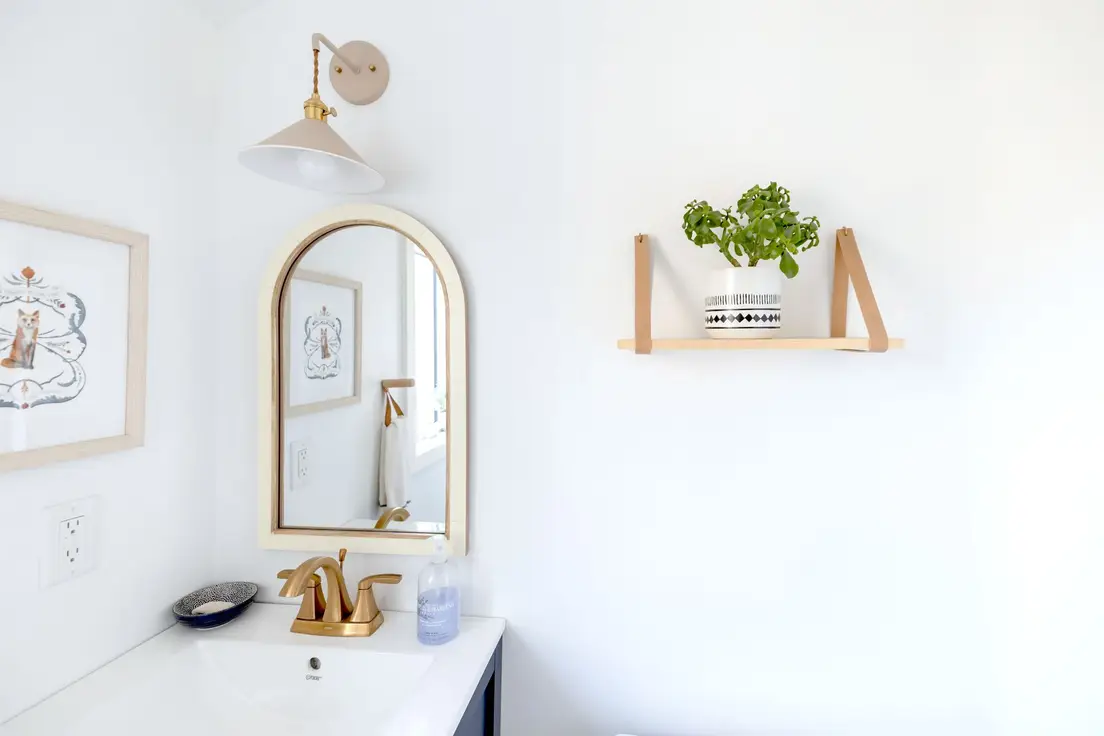
Photo by Andrea Davis on Pexels
Small bathroom ideas on a budget usually start with the instinct to gut the whole bathroom design and start over. Don’t. Paint, hardware, and lighting change the bathroom look more than a full bathroom renovation ever gets credit for, and none of them touch a pipe. Everything below is a swap or a refinish, not a remodel — most run under $200, work in even the smallest space, and the single priciest idea here still costs less than one new vanity, installed.
12 budget small bathroom refreshes at a glance
Concept renders — visual references, not photos of a finished project.
Repaint before you touch anything else
A fresh coat of paint is the highest-leverage $30 a small bathroom will ever see. Skip stark white — it reads flat and a little clinical under bathroom lighting. A soft neutral paint color with real warmth, or a bolder saturated color with a light trim for contrast, both read as intentional instead of cramped and keep the whole room cohesive. A quart covers most small bathrooms for $12–20; grab a $4 tester pot first, since bathroom walls hide more surprises than a bedroom’s ever do. (Test the swatch on the actual wall, not the paint chip under store lighting — the two rarely match.) Paint and lighting solve more of a small bathroom’s problems than new fixtures do, and paint is the cheaper half of that pair.
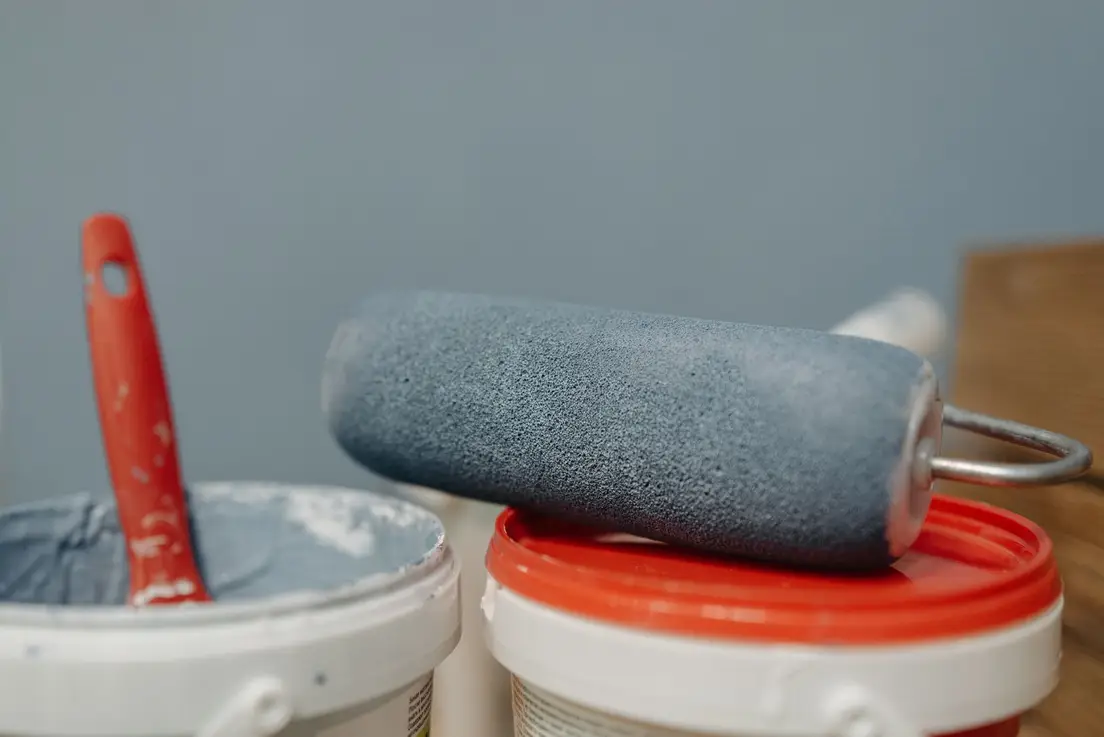
Photo by Pavel Danilyuk on Pexels
Refinish the tub or tile instead of tearing it out
A dated tub or tile surround doesn’t need to come out — it needs to get refinished. A DIY bathtub refinishing kit runs $30–60 and covers a tub in an afternoon, versus $1,500–3,000-plus for a full tub swap that also means new tile, trim, and probably a new floor. Tile refinishing kits work the same way on dated color or cracked grout, for $50–100 across a small bathroom’s worth of surface. It won’t last as long as a full replacement — plan on a touch-up in 3–5 years — but that’s a real trade, not a downgrade: most of the visual fix for a small fraction of the cost. (Ask us how we know a “quick refinish weekend” can still eat both days of one.)
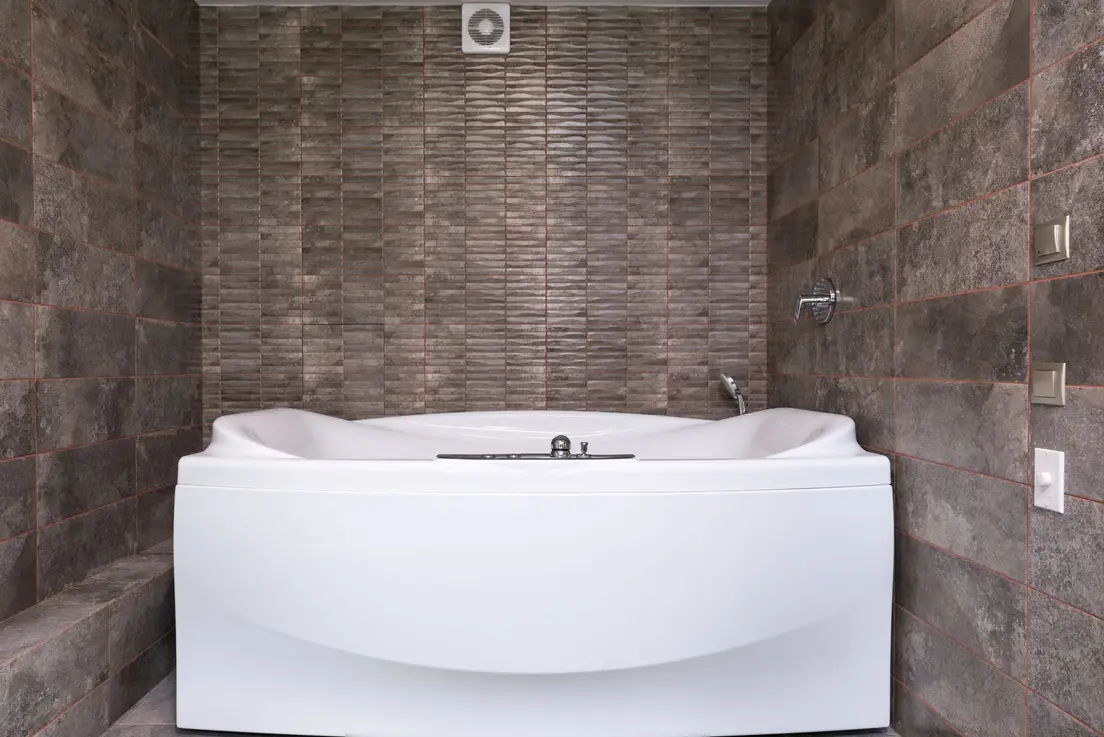
Photo by Max Vakhtbovych on Pexels
Swap the faucet and cabinet hardware before the whole vanity
A new faucet and a fresh set of cabinet pulls change more about how small bathroom vanities read than replacing the vanity itself does. A basic faucet swap runs $40–90 and is a genuine one-wrench, one-afternoon project if the supply lines are in decent shape. A full set of five to eight cabinet pulls in brushed nickel or matte black runs $20–40 total, reads chic, and is easy to install in about fifteen minutes with a drill. Brass or nickel hardware nobody chose on purpose is one of the fastest tells that a bathroom hasn’t been touched since it was built — swapping it changes how the whole run of cabinetry reads, no vanity replacement required. Round out the pass with a wall-mounted toilet paper holder in the same finish — $15–25, and the detail that makes the rest look intentional.
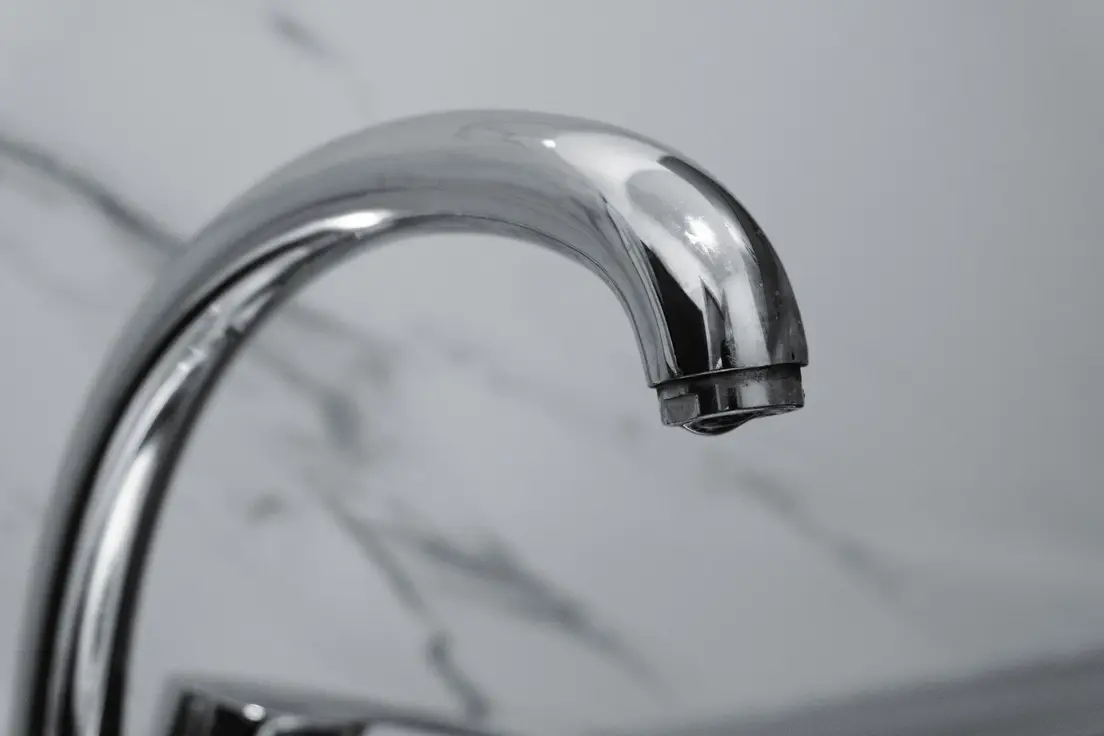
Photo by Zulfugar Karimov on Pexels
Hang a large mirror, not the builder-grade one
A small builder-grade mirror over a pedestal sink photographs like a gas station bathroom. Go bigger than feels reasonable — a large mirror that runs close to the full width of the vanity bounces more light across the room, makes the wall around it disappear, and turns into the room’s new focal point instead of the toilet. A 24×36 to 30×40 mirror in a simple metal or wood frame runs $50–130, hangs on the same wall anchors a smaller one would’ve needed, and is a fifteen-minute swap for anyone who owns a stud finder. Position it across from the window if there is one — natural light bounced across a small room reads airier than any bulb. It costs zero floor space, and it’s the one eye-catching change most guests actually notice.
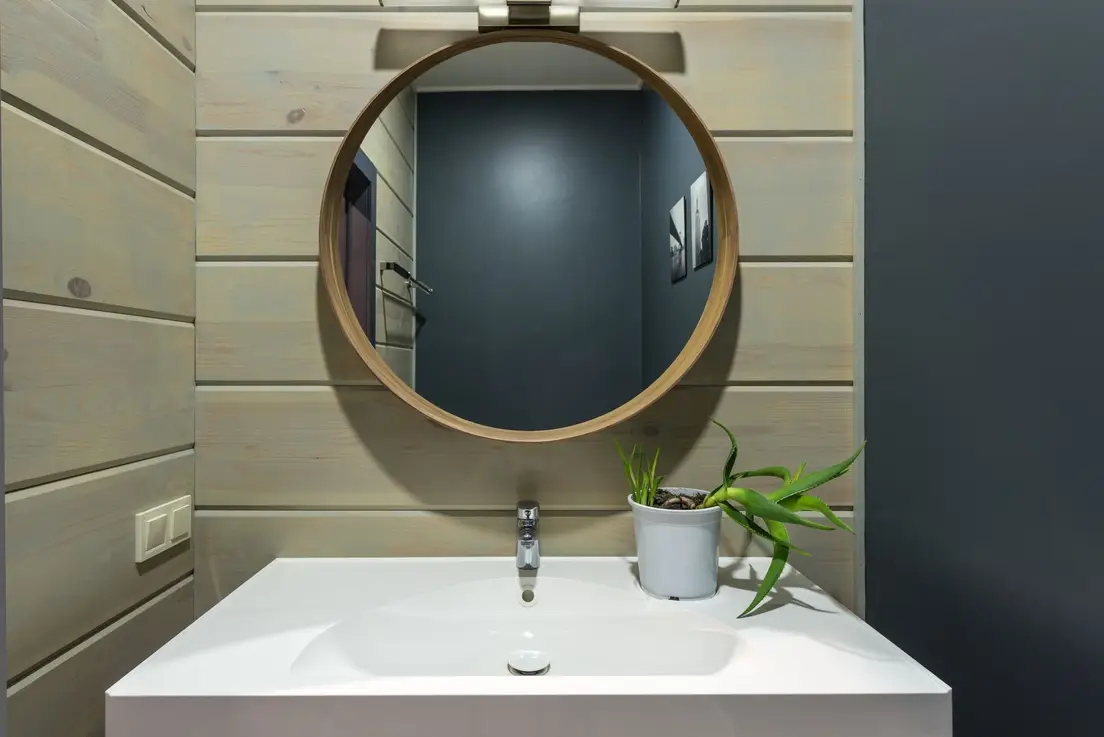
Photo by Max Vakhtbovych on Pexels
Trade the dated light bar for real lighting
A single fluorescent bar over the mirror has one setting: make everyone standing in front of it look mildly unwell. Add a pair of sconces at eye level on either side of the mirror instead, and the ceiling light becomes backup, not the only light source in the room. A pair of sconces runs $30–60 each; swap the bulbs for warm 2200–3000K instead of a builder-grade 4000K, same socket, a couple of dollars’ difference. ENERGY STAR’s own light bulb guide lists that warmer range under “Soft White” and “Warm White” on the box — worth checking the Kelvin number directly, since “soft white” alone hasn’t been a reliable label for years.
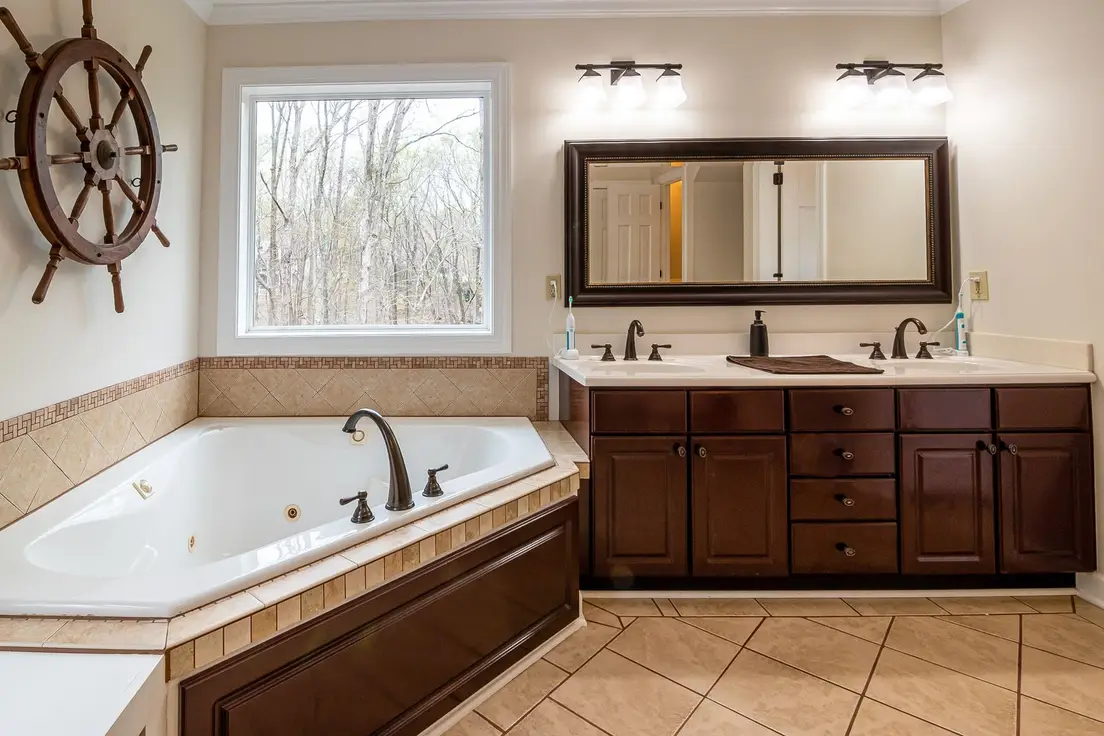
Photo by Curtis Adams on Pexels
Add open shelving instead of buying new cabinets
An empty stretch of wall above the toilet or beside the vanity is the easiest square footage a small bathroom has to gain, and claiming it doesn’t cost cabinet money. A pair of black metal or wood shelves runs $25–60 for the set and needs two wall anchors — no stud required if it’s rated for what’s going on it. Stack folded towels on the bottom, baskets for the loose stuff up top, one small plant if the spot gets any light at all, and a dead stretch of wall turns into actual storage instead of just wall. Open shelving is also easier to clean than a cabinet with doors, since there’s nothing to wipe down but the shelf itself. It’s the cheapest square footage on this whole list, and the only idea here that doesn’t touch a single existing fixture. If the vanity itself is what’s actually short on storage, surface-mounted medicine cabinets do the same job with a door for $10–20 more, or see our small bathroom ideas guide for cabinet swaps in more depth.
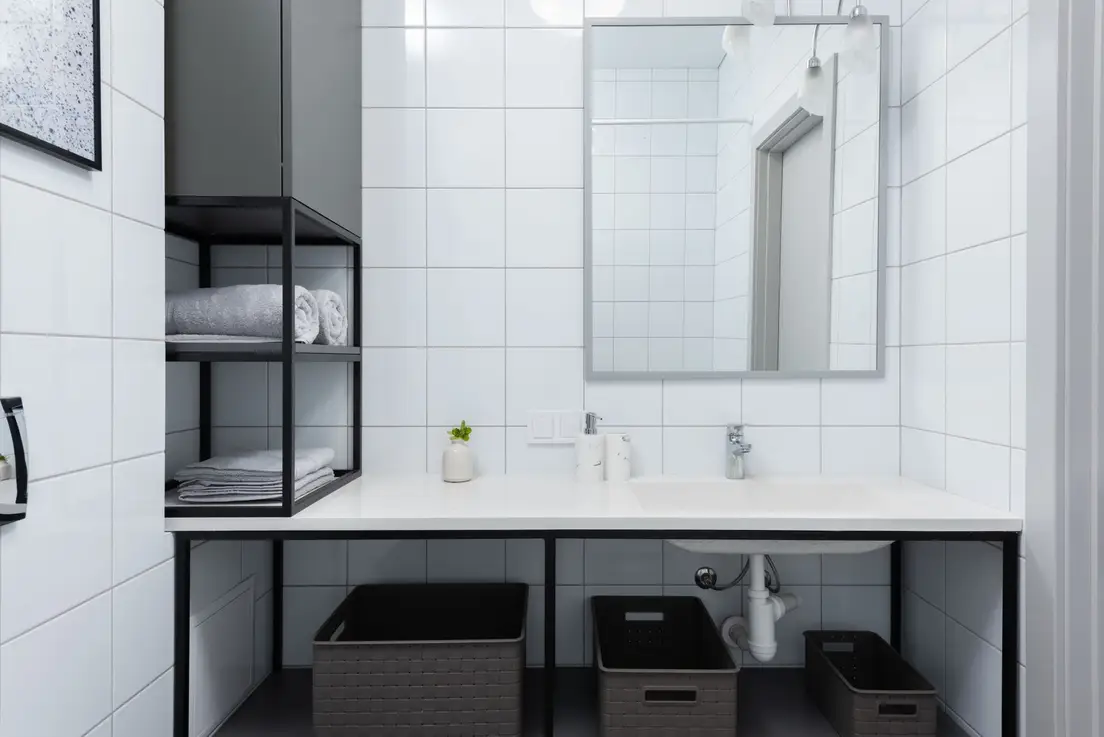
Photo by Max Vakhtbovych on Pexels
Peel-and-stick one accent wall, not the whole room
One peel-and-stick accent wall behind the vanity or inside a dry shower niche reads like a deliberate style choice; four walls of it reads like a rental that’s trying too hard. A roll runs $25–45, is genuinely easy to install for a first-timer, and covers one wall in an afternoon with no grout, no tile saw, and no drying time. Peel-and-stick is genuinely good now, but it isn’t permanent-proof — it sticks best to a smooth, flat, low-moisture surface, and it lifts at the edges anywhere steam or direct spray hits it daily. We learned that the annoying way on a kitchen backsplash near the stove instead of the easy way of reading the product spec first; the same lesson holds here. Keep it out of the actual shower stall and it holds up for years instead of months. Our DIY peel-and-stick backsplash guide has the full install walkthrough if this is a first attempt.
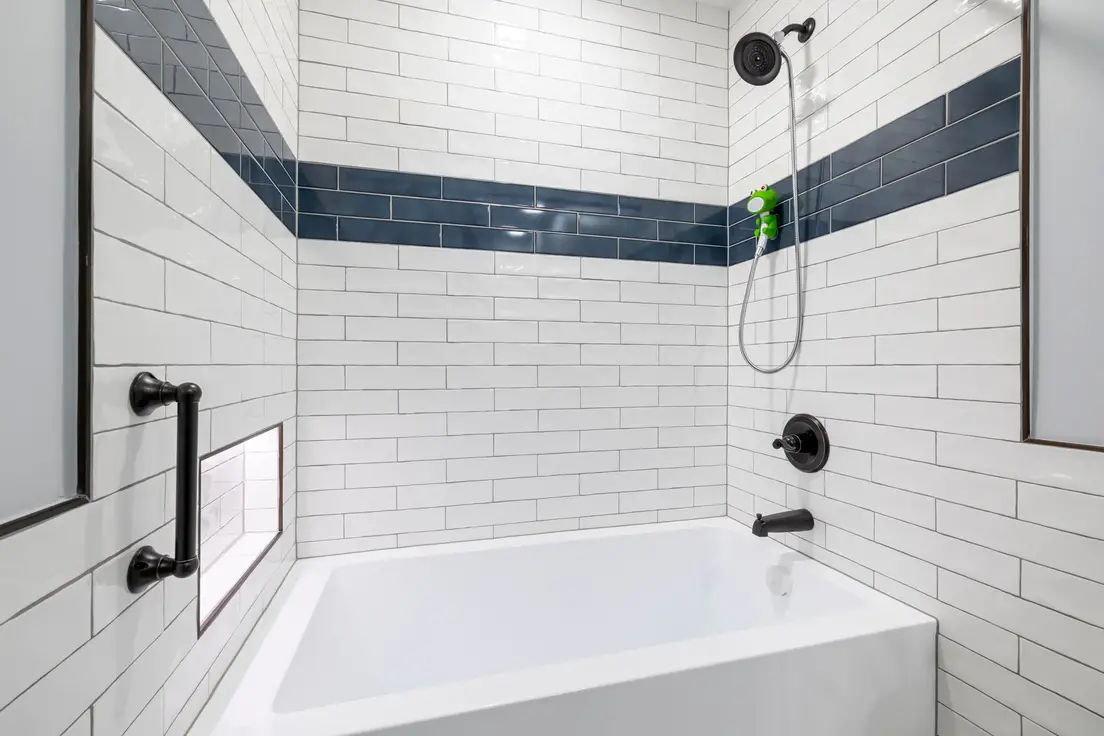
Photo by Curtis Adams on Pexels
Swap the shower curtain for something that doesn’t shrink the room
A heavy, opaque shower curtain is a wall you added on purpose — it chops the room in half the second it’s closed, and even open, a bunched-up curtain reads as clutter in a space with nowhere to hide it. A lighter fabric curtain in a pattern or color that plays with the wall does the same privacy job without visually building a second room inside the first one. The curtain is also the cheapest textile swap on this entire list — a good fabric curtain and liner together run $25–45, versus $150–350 for a frameless glass panel that does the same visual trick for a lot more money and a full afternoon of measuring. Start here before the glass upgrade — it’s the $30 version of the same idea, and the one worth trying first regardless of budget.
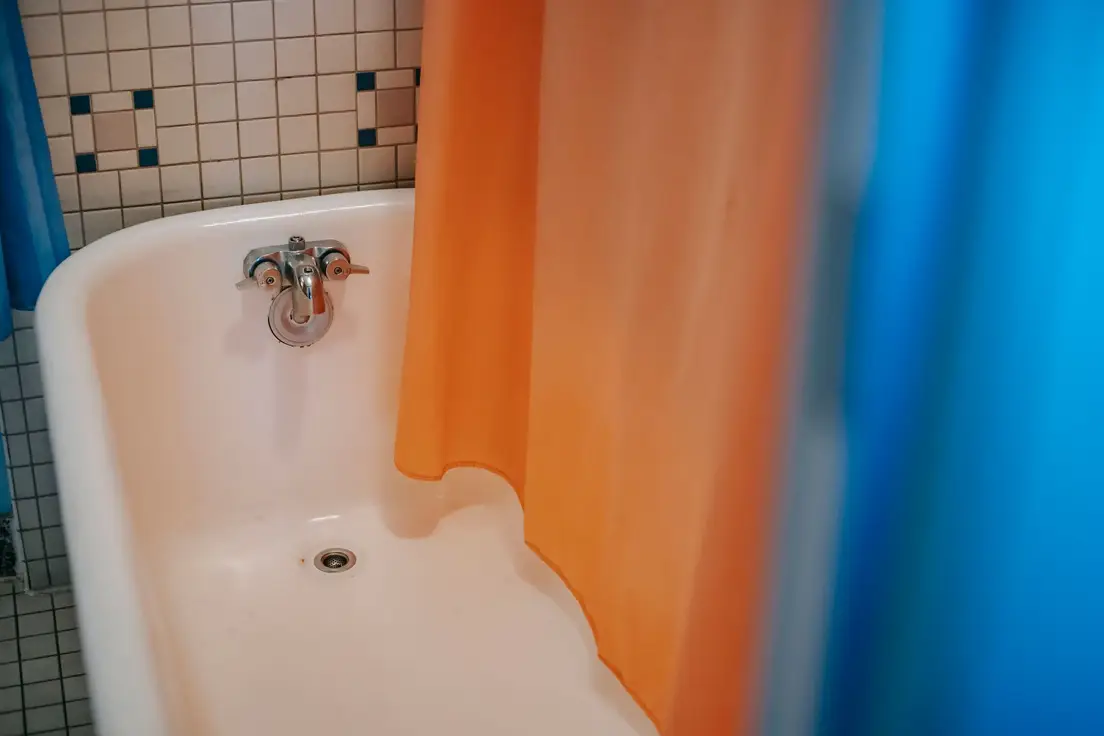
Photo by Charlotte May on Pexels
Refinish the countertop instead of replacing it
A chipped or dated laminate countertop doesn’t need a full stone slab to look finished — it needs a resurfacing kit. An epoxy or paint-based countertop kit runs $25–50 and covers a small vanity top in a weekend, curing hard enough for normal use in about three days. It won’t survive being used as a cutting board, but nothing in a bathroom asks it to. Real quartz or solid-surface vanity countertops run $400–900 installed — the priciest version of this idea, worth it only when the countertop itself, not just its color, is actually failing: cracked, delaminating, or separating from the cabinet. Resurface affordably now; price the custom countertop later.
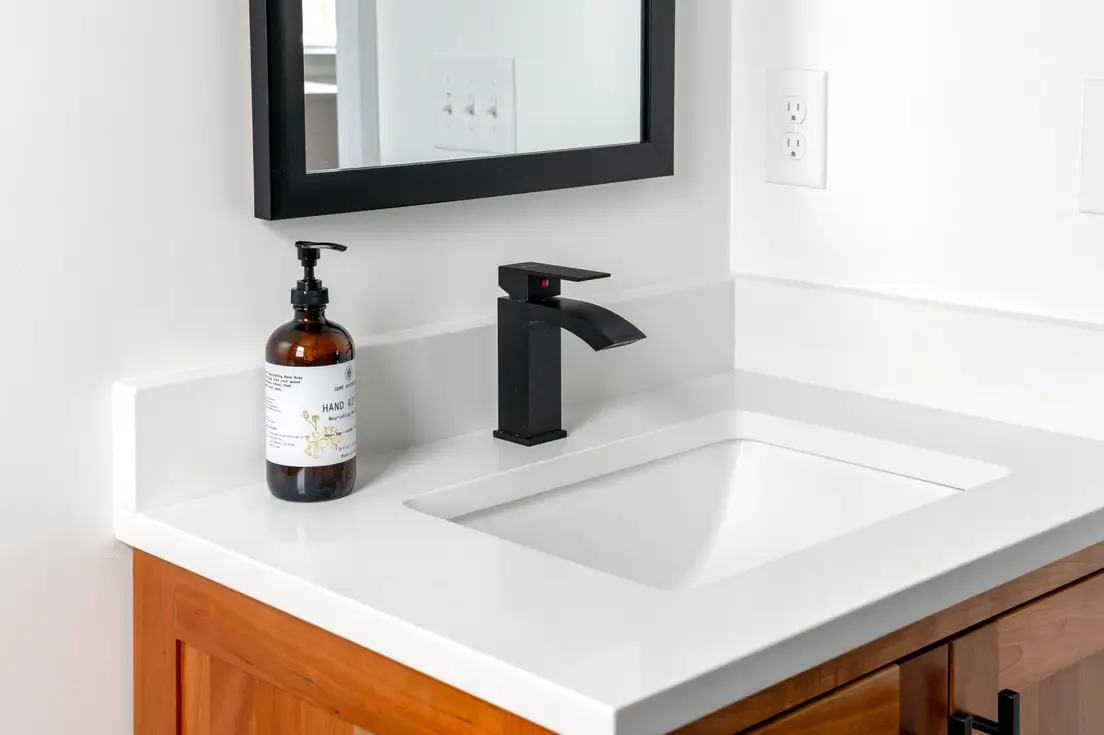
Photo by Andrea Davis on Pexels
Here’s the honest math on a $450 bathroom refresh
Paint ($20), a faucet and cabinet hardware ($80), a bigger mirror ($100), sconces and bulbs ($90), open shelving ($40), and a shower curtain swap ($35) add up to $365 — leave room for the $85 in tester pots, drill bits, and painter’s tape that never make it into anyone’s posted budget. That’s the full list, priced honestly, not rounded down. If the budget is genuinely $450 and not a dollar more, skip the tub, tile, and countertop refinishing this round. Both are worth doing eventually, just not at the expense of paint and lighting, which still do more per dollar than either one. None of this touches the existing fixtures’ plumbing — moving plumbing is what turns a $450 refresh into a five-figure job. It’s still the most impactful new look a small bathroom budget can buy without a permit — a do-it-yourself list from start to finish, not a trend chased for its own sake. If a full room-by-room styling plan feels like the next step once the swaps above are done, our warm minimalism interior design guide goes deeper on picking a calm, budget-friendly palette.
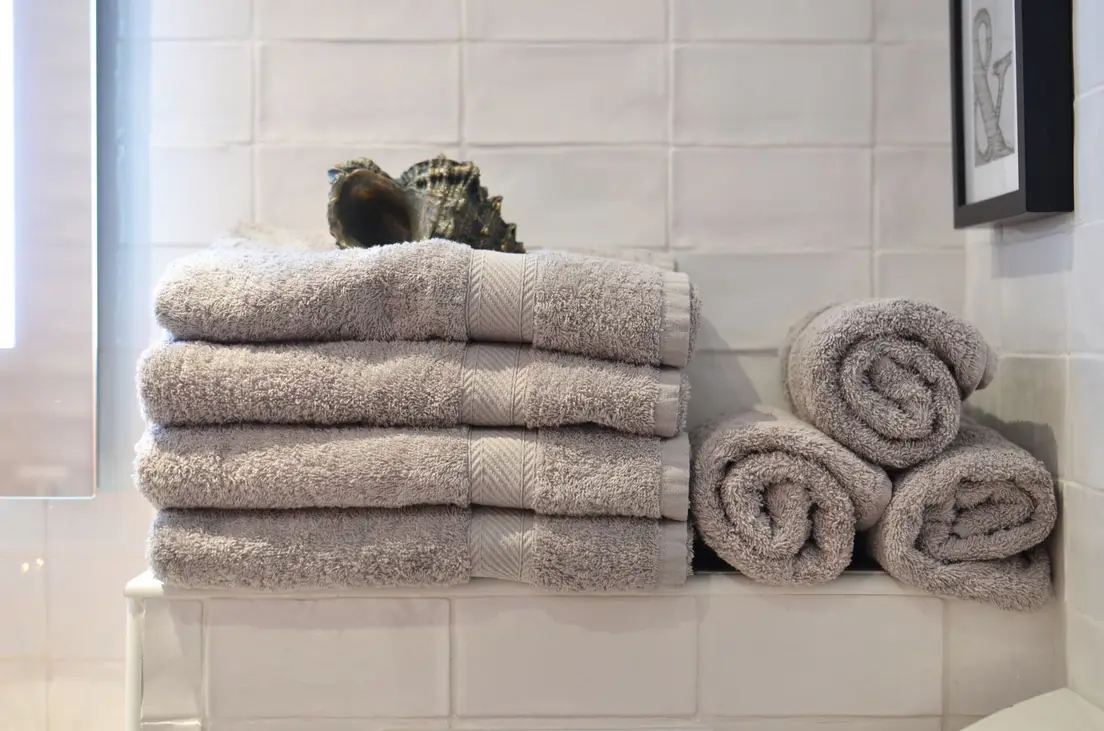
Photo by Skylar Kang on Pexels
Start with the paint and the mirror. Everything else here is optional; those two aren’t, and together they cost less than one throw pillow from a name-brand home store. It’s the HGTV reveal moment, minus the crew and the drywall dust.
Frequently asked questions
What are some ideas for a small bathroom on a budget?
Paint, hardware swaps, a bigger mirror, and better lighting deliver the most visible change per dollar in a small bathroom, typically under $400 combined. None of them touch plumbing or the layout. Refinishing an existing tub, tile, or countertop instead of replacing it stretches the same budget across bigger-ticket items without a full remodel's cost or timeline.
What is the average cost of a small bathroom remodel?
A full remodel that moves plumbing or changes the layout typically runs into five figures in most US markets, driven mostly by labor and permitting rather than materials. A cosmetic refresh that keeps the existing layout and fixtures — paint, hardware, lighting, and refinishing — usually costs a few hundred dollars and a couple of weekends instead.
What are the cheapest ways to update a small bathroom?
Paint and lighting are the two cheapest, highest-impact changes, together often under $150. Cabinet and faucet hardware swaps come next at $60–130 total, followed by a bigger mirror and swapped-out shower curtains. All four are DIY-friendly, reversible, and don't require a permit or a plumber in most jurisdictions — check local rules before any project that touches wiring.
Can you remodel a small bathroom for $5,000?
A true remodel — new tub or shower, new tile, moved or upgraded plumbing — is a stretch at $5,000 in most US markets once labor is included, and it depends heavily on region and scope. A cosmetic refresh using budget-friendly swaps costs a fraction of that and covers most of the visible impact without any plumbing work.
What color looks best in a small bathroom?
A soft, warm-toned neutral is the safest choice and rarely looks wrong, but a bolder saturated color with light trim for contrast can read just as put-together in a small room. Stark white often looks flat and clinical under bathroom lighting. Consistency between wall, ceiling, and trim colors matters more than the specific hue chosen.