
Backyard & Patio
Backyard Fire Pit Ideas: 13 Outdoor Fire Pit Setups
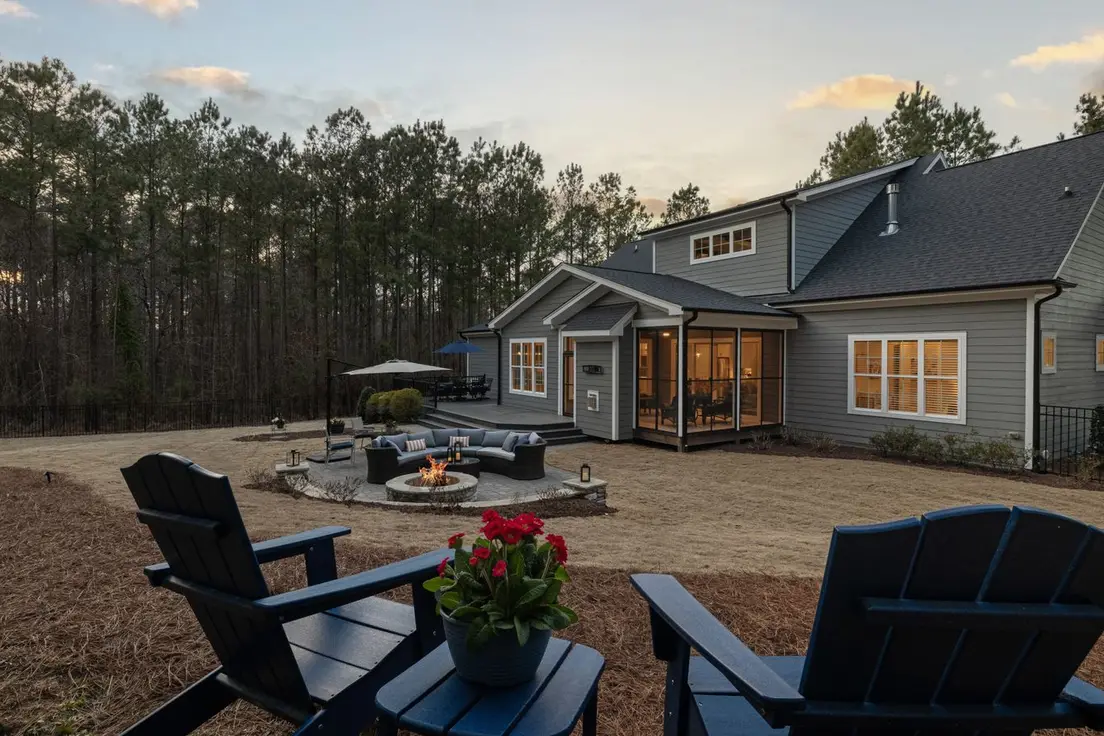
Photo by Curtis Adams on Pexels
The best backyard ideas with a fire pit all start below the fire, not at it: a level pad, a ring of chairs the right distance back, and enough clearance that the fire marshal never has an opinion. Get those three right and almost any outdoor fire pit — a $120 steel fire bowl or a built-in gas one — becomes the focal point of your backyard, the part of the outdoor space everyone drifts toward after dinner. Get them wrong and you’ve got a scorched circle in the lawn and chairs nobody wants to sit in. Most backyard fire pit ideas fall into two camps: buy a bowl, or build one. The 13 below cover the pad, the seating area, the fuel, and the landscaping around it — none of them needs a contractor, and most run a weekend and a few hundred dollars.
Backyard fire pit setups at a glance
Concept renders — visual references, not photos of a finished project.
Set the Fire Pit on a Gravel or Paver Pad, Not the Lawn
Put the fire pit on a hard, non-combustible surface — gravel, pavers, or a poured pad — before you think about chairs or landscaping. A steel bowl set straight on grass kills a brown ring in one evening and turns to mud by the third use. Build the pad at least two feet wider than the pit on every side: four inches of compacted crushed stone or pea gravel over landscape fabric is the cheapest version, about $150–300 for a 10-foot circle including edging. Pavers or flagstone over the same compacted base — the same base under any patio with pavers — run $400–700 in materials for a 10×12 patio and give you a level floor for chairs that won’t sink. That pad is the hardscape everything else in the fire pit design sits on: chairs, side tables, an outdoor rug. It also doubles as the non-combustible zone most fire codes require, so it’s doing two jobs. Grass under a fire pit gives you one good night and a bald spot you’ll be overseeding until July.
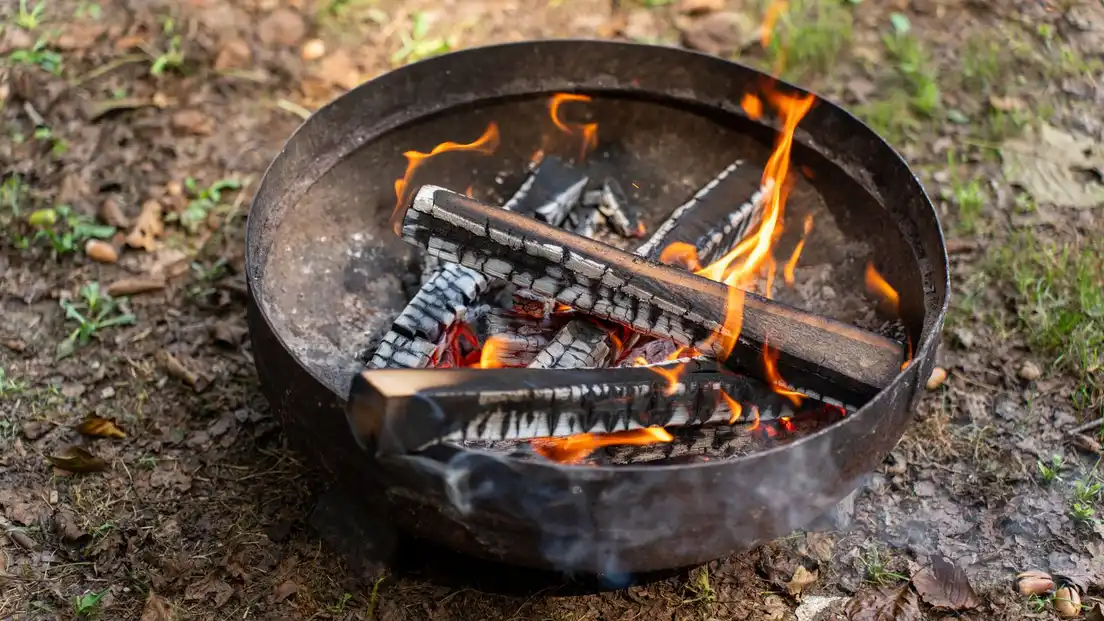
Photo by Vladimir Srajber on Pexels
Ring the Fire Pit Seating Area With Chairs That Match
Set the seating in a circle 4 to 6 feet back from the fire pit edge — close enough for the heat, far enough that a stray ember lands on the pad, not a cushion. A six-chair fire pit seating area needs roughly a 12- to 16-foot circle once you count leg room and a path to walk around. Adirondack chairs are the default for a reason: the reclined angle points everyone at the fire, so the whole group faces in the way seating around the fire is supposed to work, and resin ones run $60–120 each versus $150–300 for poly-lumber. Buy them in one style and one color. Four matching chairs read like a finished outdoor room; four chairs from four different Craigslist pickups read like a bus shelter. It’s the same “fewer pieces, repeated” logic from our warm minimalism guide, pointed at a patch of gravel.
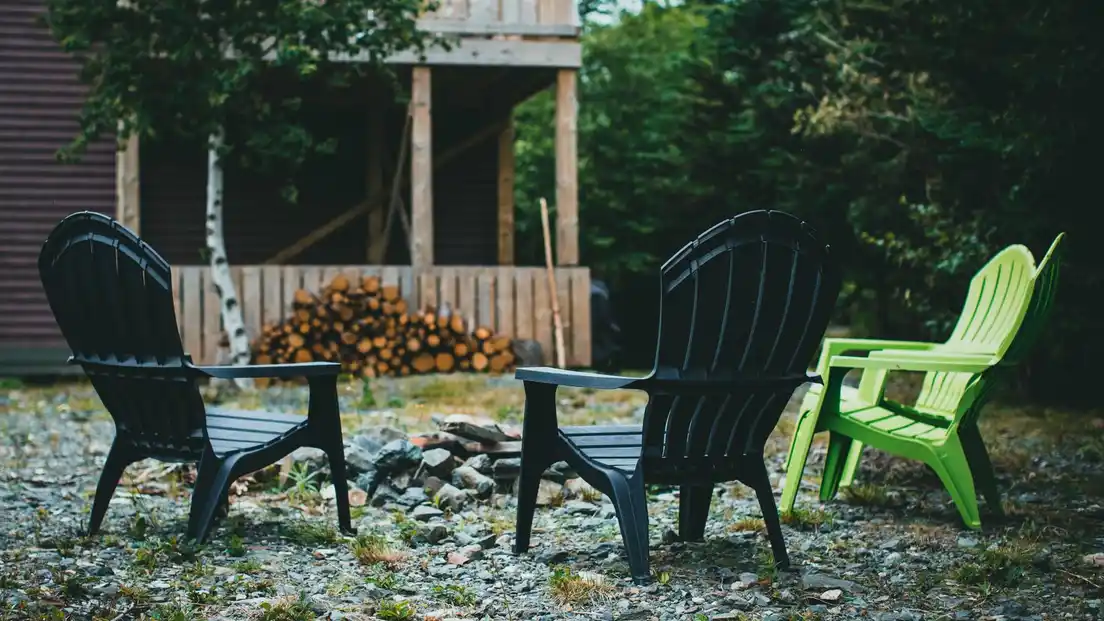
Photo by Jonathan Cooper on Pexels
Wrap a Concrete or Stone Fire Pit in a Low Seat Wall
A low seat wall around part of the fire pit adds seating that never competes with the furniture budget. It works whether you’ve got a metal fire pit dropped in the middle or a full stone fire pit built in place. Retaining-wall block stacks into a curved wall for about $4–8 per block; keep it 16–18 inches tall and 14–16 inches deep so it’s genuinely comfortable, and cap it with a flat coping stone. Wrap it around a third to half of the circle, not the whole thing — you still need gaps to step through and pull chairs in. A stacked-stone or concrete seat wall also shields the fire from wind on the exposed side, which matters more than it sounds on an open lot. Build it on the same compacted base as the pad or it heaves after the first freeze. We’ve asked four adults to share one cooler as a bench, and the friendship mostly survived.
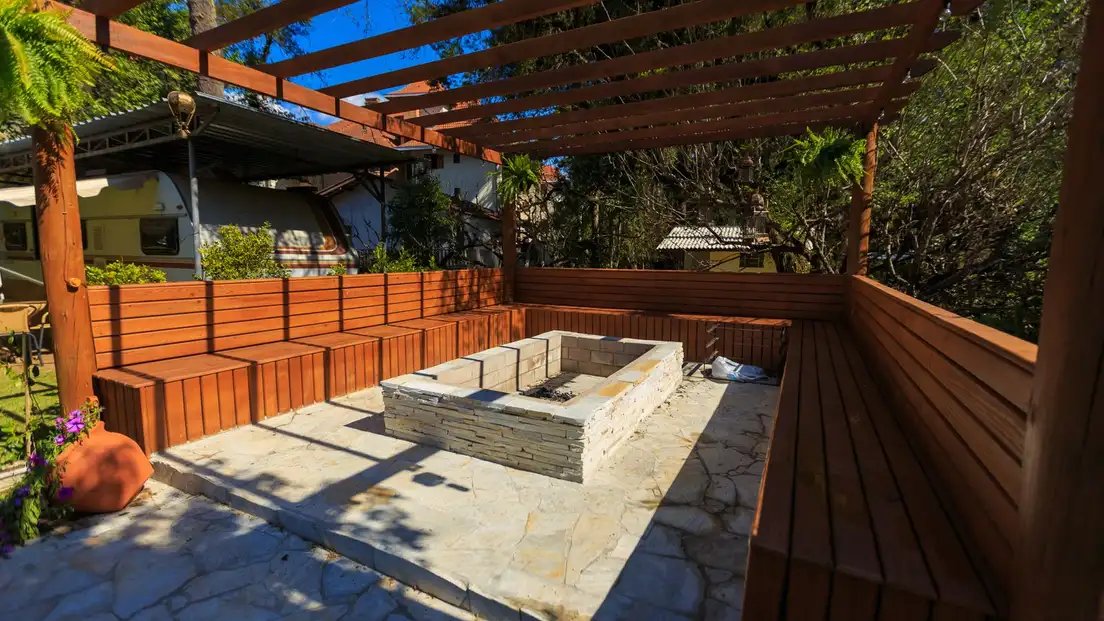
Photo by Matheus Bertelli on Pexels
Keep the Fire Pit 15 to 25 Feet From the House and Anything That Burns
Site the fire pit at least 15 feet from the house, the fence, the shed, and any low branches — 25 feet for an open wood fire. The International Fire Code sets recreational fires at 25 feet from a structure or combustible material (§307.4.2) and portable outdoor fireplaces at 15 feet (§307.4.3), with an exception for one- and two-family homes where local rules take over. Your city or county almost always modifies these, and many ban open burning on high-wind or poor-air-quality days — the EPA’s Burn Wise guidance covers what triggers a burn ban and how to check. Call your fire department before you pour a pad. Keep the pit out from under any pergola, awning, or tree canopy too; heat and embers rise, so “far enough” is a vertical measurement, not just a horizontal one — the placement note in our covered patio ideas has more on that. A built-in outdoor fireplace is the higher-budget cousin of a fire pit: same clearance logic, more money, and it needs a real footing.
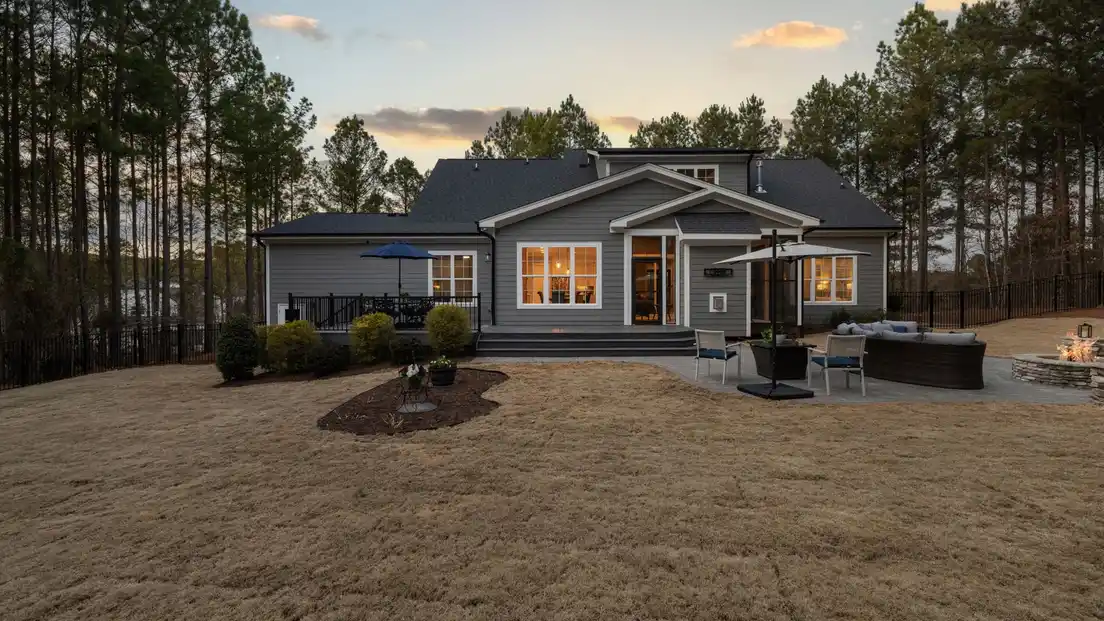
Photo by Curtis Adams on Pexels
Choose a Gas Fire Pit for a Small Yard, Wood-Burning for the Crackle
Pick gas if the yard is small, close to the house, or in a smoke-restricted area; pick a wood-burning fire pit if the crackling fire and the smell are the whole point. A propane fire table is a fire feature you light with a knob: no embers, almost no smoke, and it shuts off instantly — which is why it clears the 15-foot rule where an open fire needs 25. A 20-pound tank hidden in the base runs a burner 8–10 hours and costs about $20 to refill. Wood-burning fire pits are cheaper up front ($80–250 for a steel bowl), but you’re buying, hauling, seasoning, and storing firewood, and you’ll carry smoke smell into the house on every jacket. A wood fire smells like a camping trip; a gas fire smells like nothing and turns off like a responsible adult you’re not sure you want to become.
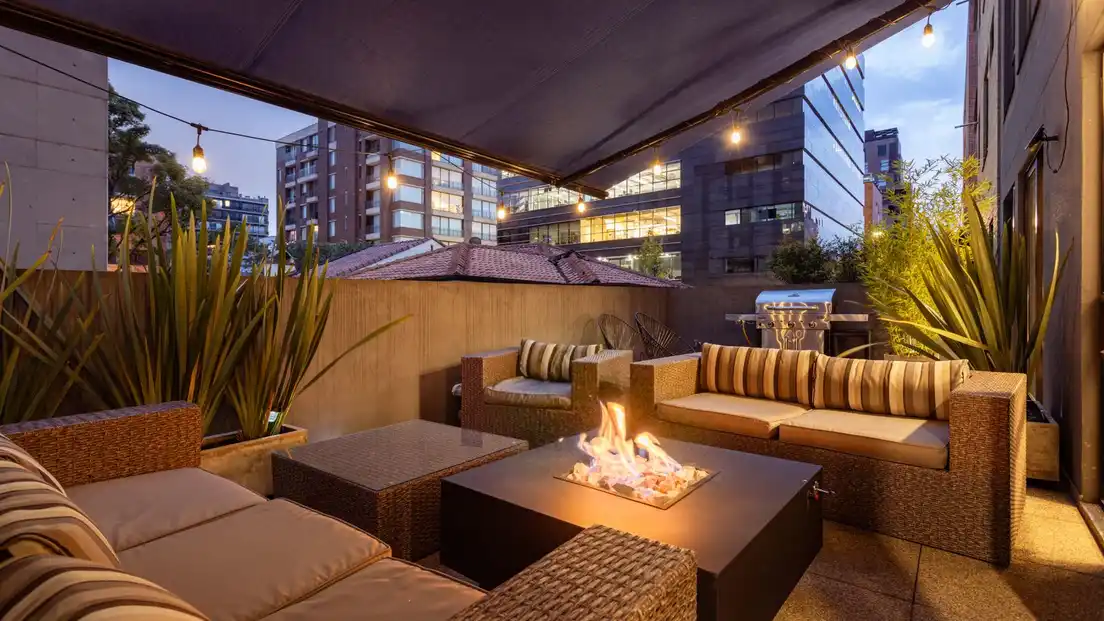
Photo by Gustavo Galeano Maz on Pexels
Pick the Fire Bowl: Steel, Metal, Concrete, or a DIY Stone Fire Pit Ring
For most yards, a plain steel fire pit or cast-iron fire bowl at $80–250 does everything a $600 one does. Thick-gauge steel and cast iron both last for years; a corten (weathering) steel bowl is meant to rust to a stable finish and never needs paint. Cast concrete fire bowls look heavier and more modern and run $200–500. A DIY stone fire pit or paver ring you build from wall block is about $150 in materials and reads permanent — but unlike a drop-in metal fire pit, it’s a fixed installation, so there’s no moving it when you re-landscape. Skip the designer bowls unless the look is genuinely why you’re doing this. A flame doesn’t know whether it’s rising out of corten steel or a truck brake drum someone found behind a barn.
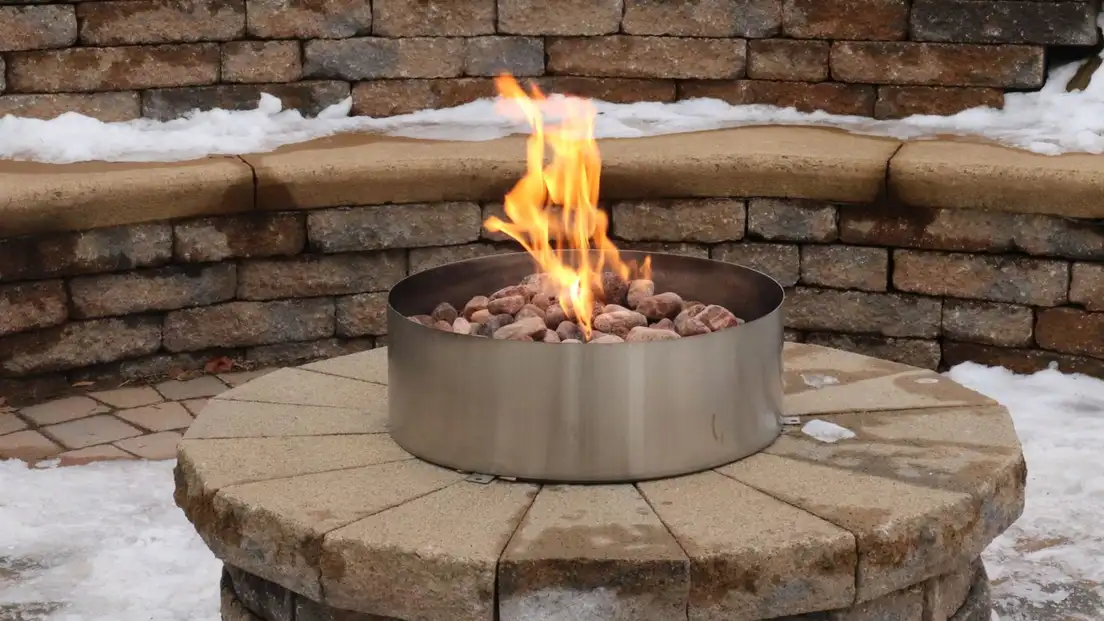
Photo by Karim Terfous on Pexels
Layer an Outdoor Rug Under the Seating to Make It an Outdoor Living Room
An outdoor rug under the chairs is the fastest way to turn a fire pit area into an outdoor living space instead of some furniture parked on gravel. Size it so the front legs of every chair sit on the rug — for a 12-foot seating circle that’s usually an 8×10 or a 9×12. It ties the seating area together visually and gives bare feet somewhere to land that isn’t gravel. Material matters more than pattern: it has to be flatweave polypropylene or a labeled indoor/outdoor fiber. A regular indoor rug dragged outside by the fire will mold within one wet season in most of the country; a polypropylene one rated for outdoor use won’t, and it’s $80–150 for an 8×10. Keep the rug a few feet clear of the fire itself — a jute rug too close to the flames is a science-fair project with a due date of the first hard rain.
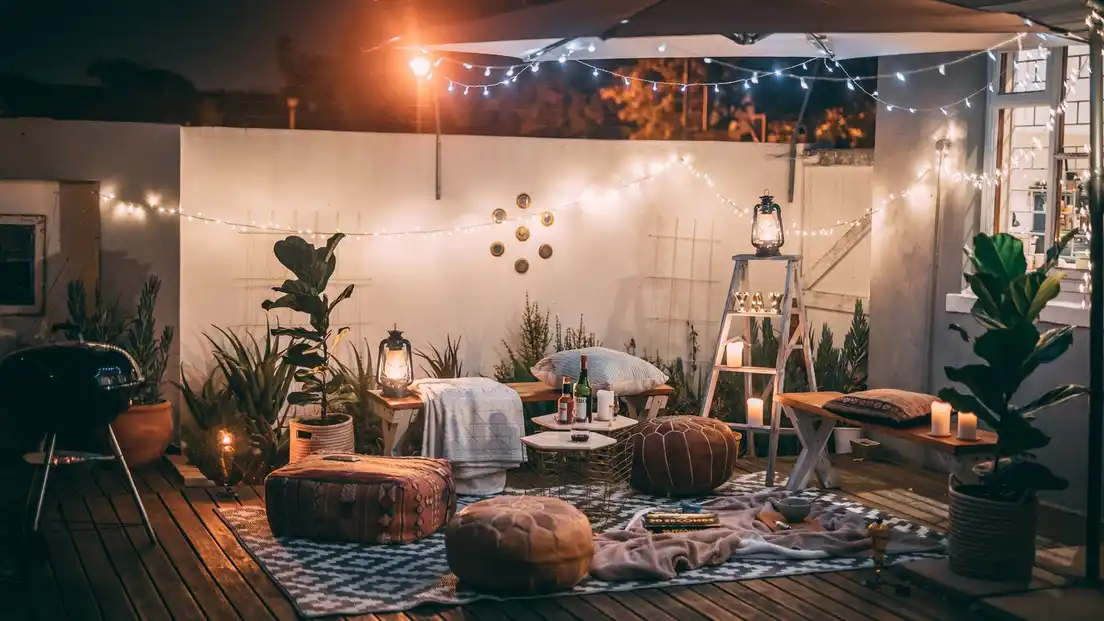
Photo by Taryn Elliott on Pexels
String Lights Overhead to Give the Fire Pit Lounge a Ceiling
String lights over the fire pit lounge give the space a ceiling and let people see each other once the fire burns down. Run them in a zigzag or a single span between the house and a post, a tree, or a 4×4 set in a bucket of concrete. Buy warm-white, commercial-grade, shatterproof bulbs. The first string lights we ran over a fire pit were the $14 glass-bulb kind; they looked perfect for exactly one summer, then six bulbs cracked over the winter and the whole strand came down. The $34 shatterproof replacement set is still up three years later. String lights are the highest joy-per-dollar item in a fire pit setup and the first thing to break if you cheap out — and on some blocks the HOA has an opinion about permanently mounted exterior lighting, so check before you screw hooks into the fascia.
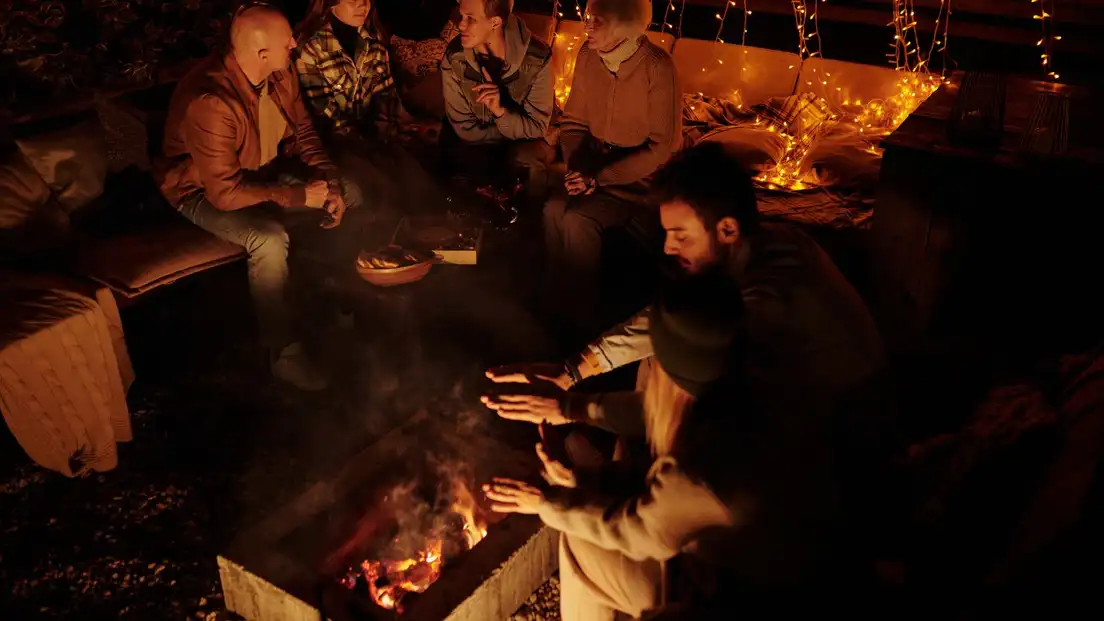
Photo by Askar Abayev on Pexels
Landscape the Fire Pit Corner With Planters or a Low Screen
Frame the fire pit zone on one or two sides with tall planters or a single lattice panel so it reads as a room, not a spot in the open yard. Tall planters are the fastest backyard landscaping move that also screens the fire: large ones — 24 inches or taller — with grasses, arborvitae, or clumping bamboo give you a soft wall that blocks wind, and they stay movable, which keeps them on the furniture side of most HOA rules about fence-line structures. Where the existing landscape already has a hedge or a slope, let it do the screening and skip the planters. One 6-foot cedar lattice panel on a stake-in post is about $40 and does the same job on a budget. Keep any screen a few feet back from the fire and skip anything flammable-looking right at the edge. HOAs and property managers regulate fence-line structures over 4 feet more than people expect — check yours before you sink a post. An open fire pit in the dead center of a bare lawn has the cozy energy of a parking-lot light pole.
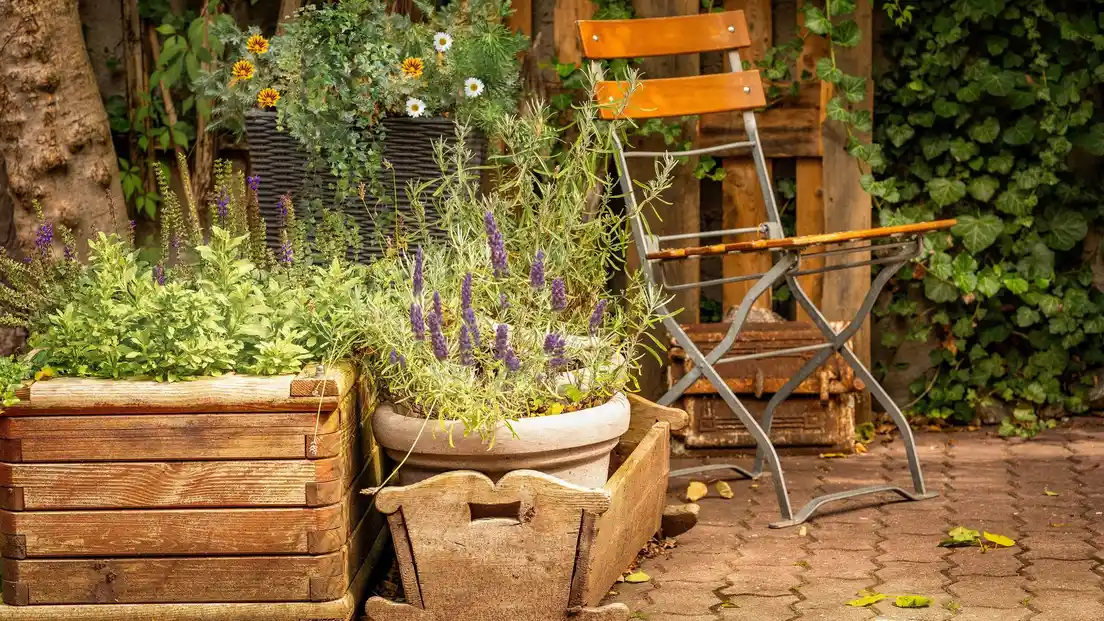
Photo by Gundula Vogel on Pexels
Keep a Side Table and S’mores Kit Around the Fire Pit, Within Reach
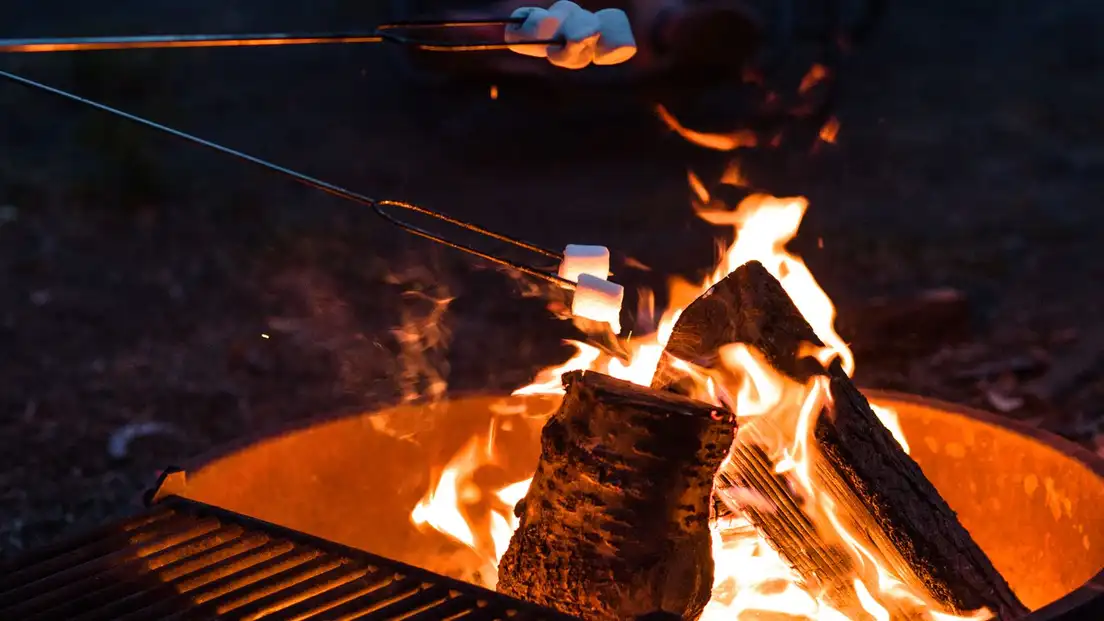
Put a small table between every two chairs so nobody has to choose between holding a drink and roasting a marshmallow. Metal or resin drink tables run $20–40 each, or use a galvanized tub on a stand that doubles as a cooler. Stock a weatherproof bin nearby with roasting sticks, a lighter, a fire poker, and marshmallows, so a fire night doesn’t start with a supply run. A bucket of sand or a garden hose within reach is the non-negotiable part of that kit. Nothing ends a fire pit evening faster than realizing the marshmallows are inside, past the dog, up the stairs, behind the thing you have to move to get to the other thing.
Match a Small Backyard With a Compact Fire Bowl or Fire Table
In a small backyard, a 24- to 30-inch fire bowl or a rectangular fire table fits where a full fire pit circle won’t. A compact steel bowl, a portable fire pit, or a quick DIY fire pit ring of wall block needs only about a 6-foot clear radius instead of 8, and a fire table pulls double duty as the coffee table, so you’re not fitting both. Push the seating to two loveseats, or a bench plus two chairs, against the yard’s edges and leave the middle open. For the rest of a tight yard, our small backyard patio ideas on a budget cover the layout math. A 40-inch bowl in a 15-foot yard isn’t a centerpiece, it’s a moat.
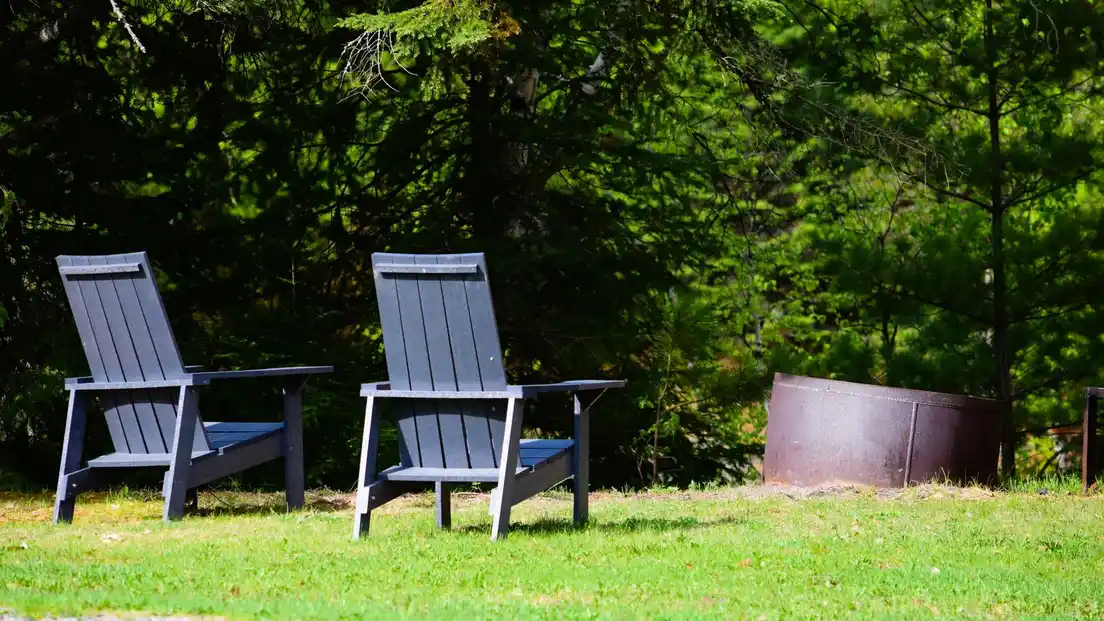
Photo by Deneen L Treble on Pexels
The Honest Math: What a Backyard Fire Pit Setup Actually Costs
Added up, not estimated: a solid DIY backyard fire pit setup runs about $700–750, and a built-in version runs five to ten times that. The budget build: a steel wood-burning bowl ($130), a 10-foot pea-gravel pad with edging and fabric ($200), four resin Adirondack chairs ($340), a shatterproof string-light set ($35), and a $25 thrifted side table comes to roughly $730, plus a weekend of labor. Step up to a cast-iron or corten bowl ($250), a DIY paver pad ($450), two poly-lumber chairs plus two resin ($520), and an 8×10 outdoor rug ($120), and you’re near $1,340. A contractor-built gas fire pit set into a new paver patio extension runs $4,500–9,000, depending on gas-line work and patio size. The shoppable version of the budget build — bowl, two chairs, and the small stuff — is our $480 backyard fire pit makeover. Do the cheap version first: it tells you how often you’ll actually use the outdoor living area before you pay anyone to pour concrete.

Rule of Thumb: Build the Fire Pit Pad First, Everything Sits on It
If you do one thing this weekend, build the pad — level, non-combustible, two feet wider than the pit all around. Every other decision gets easier once the floor exists. After the pad, set the bowl and live with it for a week before buying chairs; half the time the spot you picked turns out to be too close to the neighbor’s window or square in the afternoon sun. Then buy seating in one style, add the rug, and string the lights last. Gas versus wood, steel versus stone, planters versus lattice — those fire pit design choices are all reversible. The pad and the clearances are the parts you don’t want to redo. Start with the pad. Every chair, light, and marshmallow on this list looks better once the fire pit has stopped quietly sinking into the lawn.
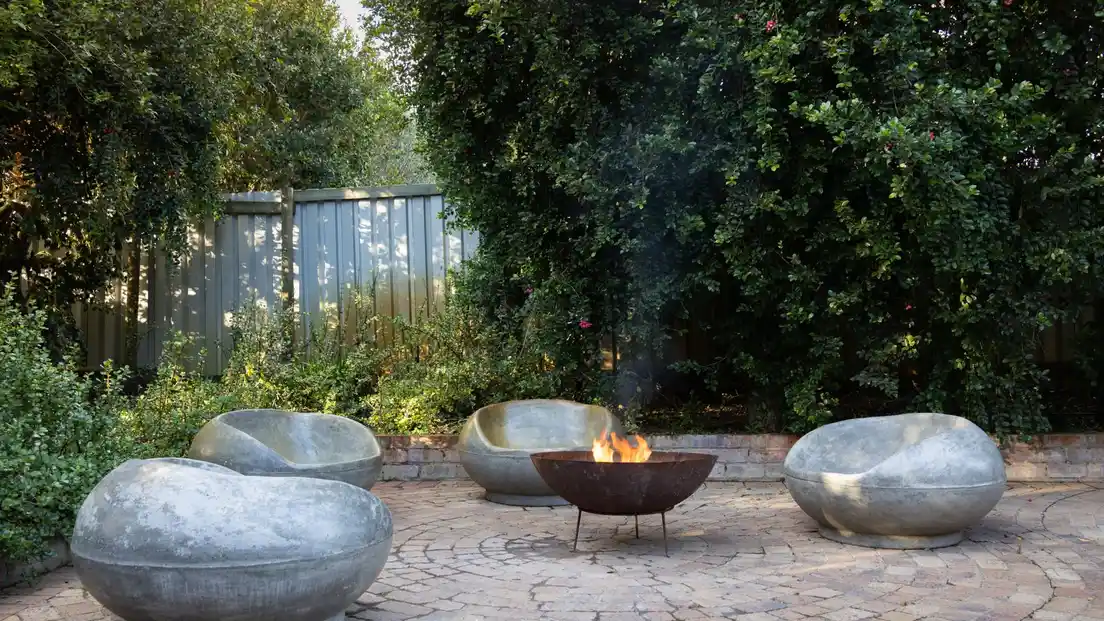
Photo by Magda Ehlers on Pexels
Frequently asked questions
What landscaping goes well with a fire pit?
Low, non-flammable planting works best: ornamental grasses, boxwood, lavender, and succulents in beds or large pots set a few feet back from the flames. Gravel, decomposed granite, or pavers make the fire pit zone itself. Keep mulch, dry ornamental grasses, and overhanging branches well clear — those are the parts that catch.
How far should a fire pit be from the house?
The International Fire Code calls for 25 feet between an open recreational fire and any structure or combustible material, and 15 feet for a portable outdoor fireplace, though one- and two-family homes follow local rules that are often less strict. Keep the pit clear of fences, sheds, and low branches too, and never under a pergola or awning.
Do backyard fire pits add home value?
A fire pit rarely shows up as a line item in an appraisal, but a finished outdoor seating area is a common selling point that photographs well in a listing. A modest setup — a few hundred to a couple thousand dollars — is more about using the yard now than recouping the cost at sale. Built-in gas features add the most perceived value.
What's the best surface to put a fire pit on?
A non-combustible pad: compacted gravel, pavers, flagstone, or a poured concrete slab, built at least two feet wider than the fire pit on every side. Gravel is cheapest and drains well; pavers give a level floor for chairs. Never set a fire pit directly on a wood deck, dry grass, or bare soil that turns to mud.
What size fire pit is best for a backyard?
A 30- to 40-inch outer diameter suits a group of four to eight; drop to 24–30 inches for a small yard or a two-to-four-person setup. Leave 4 to 6 feet of clearance between the fire pit edge and the nearest chair, and plan on a 12- to 16-foot circle for the whole seating area.