
Living Room
Loveseat vs Sofa: Size, Fit and How to Choose
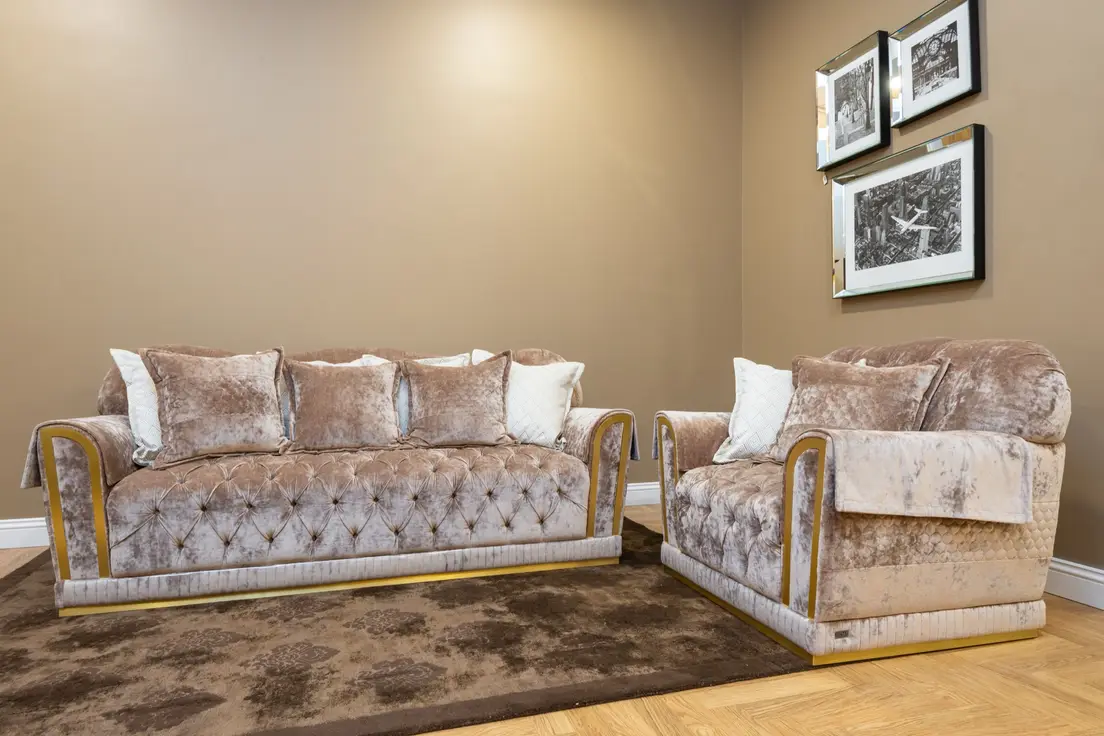
Photo by Max Vakhtbovych on Pexels
A loveseat seats two and runs about 50–70 inches wide. A sofa seats three or more and runs 72–96 inches, per SeatCraft’s size guide. In a small living room, pick the loveseat if the sofa would leave you less than a 30–36 inch walkway. Otherwise the sofa wins on seats.
Below: how the two differ, which fits a small apartment, how much floor to leave around each, when a sectional is the better choice and how to check the door before you buy. The sizes are retailer ranges, so use them to sanity-check a listing, then reach for the tape measure.
What is the difference between a loveseat and a sofa?
A loveseat is the smaller piece, a seat made for two; a sofa has the bigger seating capacity, three or more. Most of the rest follows from that: a loveseat is shorter and takes less wall.
A sofa, for comparison, seats three or more and runs about 72–96 inches wide. Loveseat sizes by type, per SeatCraft:
| Loveseat type | Width | Depth |
|---|---|---|
| All loveseats | About 50–70 in (some up to 72) | 30–40 in |
| Standard fixed model | 54–68 in | 32–36 in |
| Compact apartment model | 48–58 in | 30–34 in |
| Reclining loveseat (upright) | 60–74 in | 36–40 in |
| Oversized deep-seat loveseat | 64–72 in | 38–42 in |
SeatCraft’s own pages differ by a couple of inches depending on the section, and other retailers draw the line elsewhere. There is no standard, so a “loveseat” from one brand can be wider than a “sofa” from another. Read the width, depth and seat depth in the listing, not the category name. A reclining or oversized loveseat can be wider and deeper than a compact sofa.
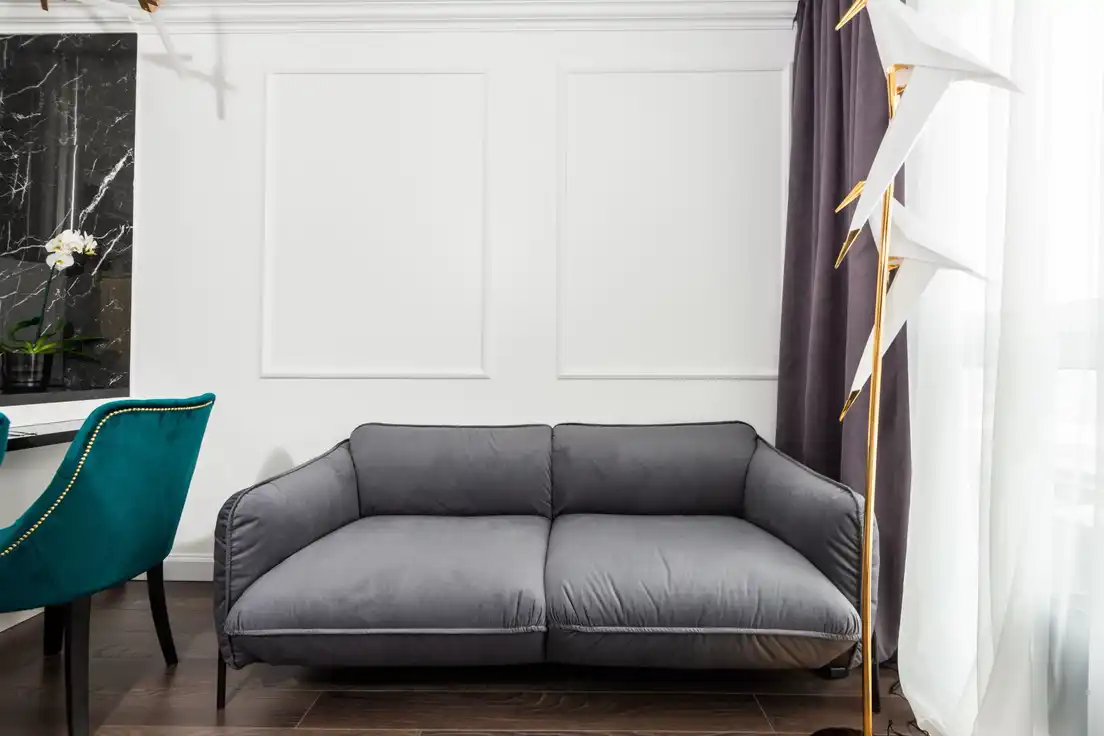
Photo by Max Vakhtbovych on Pexels
Which fits a small living room better, a loveseat or a sofa?
A loveseat fits most small living rooms better, because the compact versions are only 48–58 inches wide and 30–34 inches deep. A sofa still wins when you regularly seat three people and the wall can take it. The loveseat plus an accent chair gives you secondary seating without the footprint of one big piece of furniture, and a pair of ottomans doubles as side tables.
Here is the rule of thumb: measure your longest uninterrupted wall, then tape the seat’s footprint on the floor and walk around it for a day. If the tape blocks a door, a drawer or the path to the kitchen, the piece is too big, whatever the product page says. Most small living rooms have one real wall, and the sofa and the radiator will both claim it. The radiator has tenure.
A sleeper sofa or sleeper loveseat is a fair answer to a studio with no guest room. Measure the open length and depth too, and tape that footprint, because a sofa bed only becomes a bed when the room lets it open. In an open space where the seating also divides the room, a loveseat leaves more walking space. Our guide to multifunctional furniture for small apartments covers which convertibles are worth it, and small apartment ideas shows how the seating fits around the rest of the room.
If you are starting from a bare wall, the seating decision is the first one in a small apartment makeover: width first, then rug, lighting and storage.
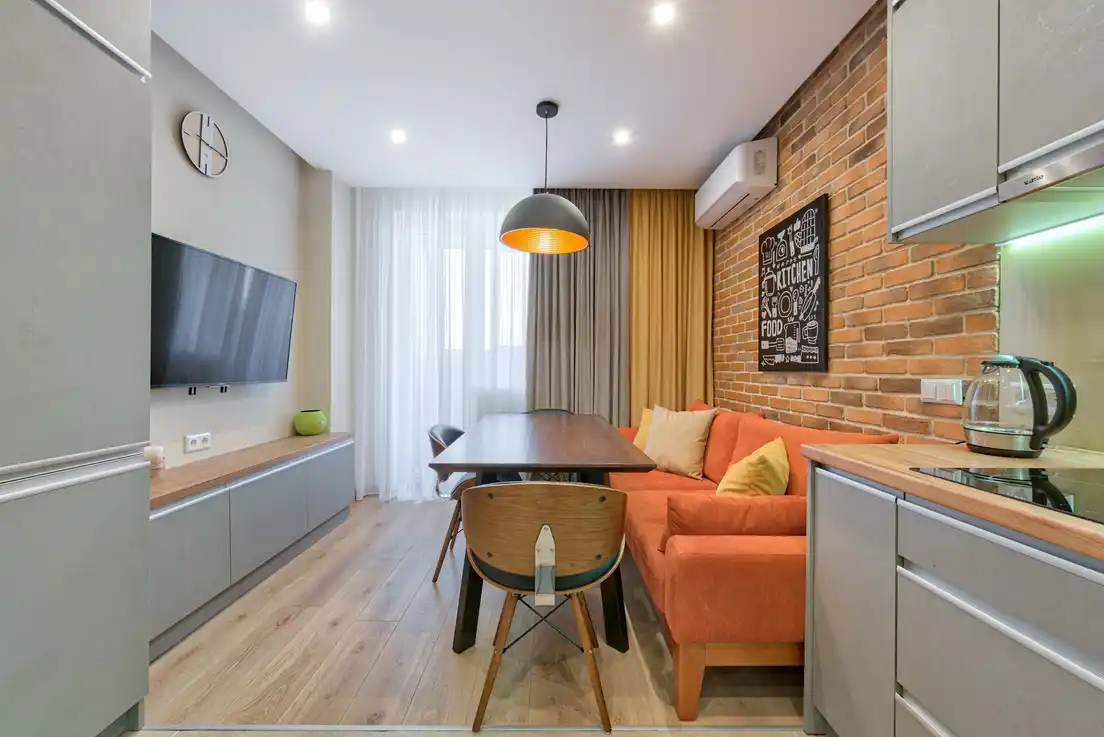
Photo by Max Vakhtbovych on Pexels
How much walkway and coffee table space does a sofa or loveseat need?
Leave about 30 to 36 inches for main walkways and 14–18 inches between the front of the seat and the coffee table. Those are the figures in WhatARoom’s and Parrot Uncle’s furniture guides, and Parrot Uncle adds that a tight apartment can get away with less.
Work backward from the room, not the product, and note the traffic flow first. Subtract the seat’s depth, the 14–18 inch gap and the coffee table’s depth from the room’s width, and see what is left for the walkway. If the answer is under 30 inches, go to a shallower piece: a compact loveseat is 30–34 inches deep, where a standard fixed model runs 32–36.
Our small living room ideas with TV post shows how a media wall changes the math.
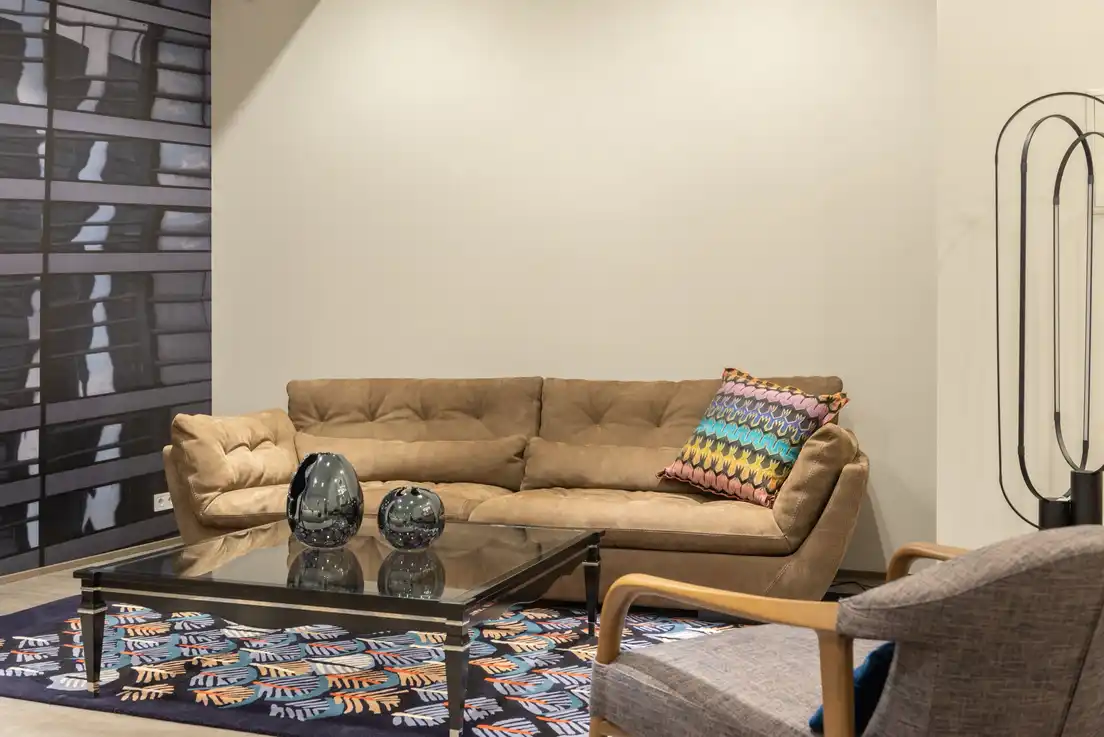
Photo by Max Vakhtbovych on Pexels
Sectional vs sofa and loveseat: which is the better choice?
In a narrow room, buy a sofa and a loveseat; in a small square room, a compact sectional usually seats more. WhatARoom says a standard sofa-and-loveseat pair seats about five, an L-shaped sectional in the same footprint five or six and a U-shape seven or more.
The pair wins when the room is long and narrow or has two focal points, because you can leave a walkway between the pieces. A sofa facing a loveseat across a coffee table is also a small negotiation table with throw pillows, which is either a feature or a warning. The sectional wins in a square room, and if you regularly seat five or more, the sectional is the honest answer. Sectional sofas with a chaise add a lounge spot, and modular sofas let you rearrange the pieces when you move, which suits a family room or a rental.
Our post on small living room layouts with a sectional shows the square-room case.
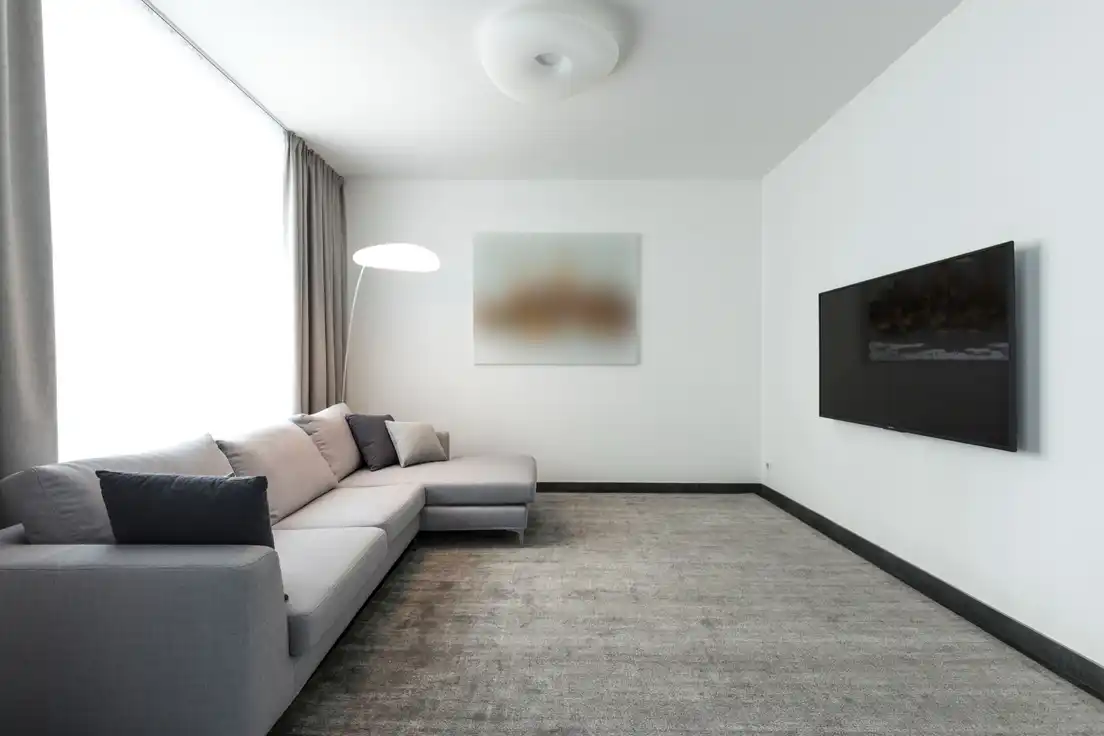
Photo by Max Vakhtbovych on Pexels
Will a sofa or loveseat fit through your door and stairs?
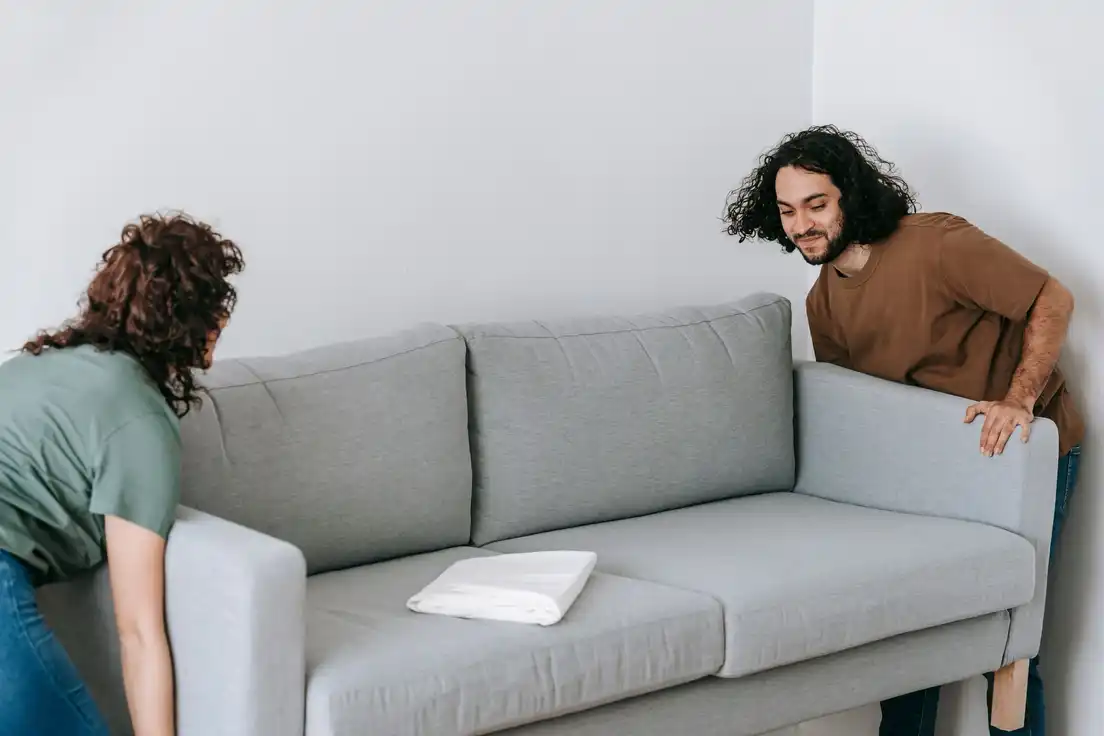
Measure the doorway, the stairwell turns and the elevator before you order, not only the room. A piece that fits the wall and not the entrance is the return nobody plans for, and a 96-inch sofa that can’t turn a landing is just a very expensive wedge.
This is where a loveseat quietly wins. It is shorter, so it pivots through a tight stair turn and a narrow hall where a long sofa jams. Write down three numbers before you buy: the narrowest doorway, the tightest corner and the elevator’s inside width. Compare them with the listed width and depth, and check whether the legs or arms come off.
Our verdict: if a delivery path is tight, skip the long sofa and buy the loveseat. You can add a second seat later; you cannot un-wedge a sofa.
Loveseat or sofa? A checklist before you buy
Answer these five, and the choice usually makes itself:
- How long is your longest free wall? The piece must be shorter than the wall, and leave a 30–36 inch walkway in front or at the end.
- How many people sit there on a normal week? Two or fewer points to a loveseat. Three or more points to a sofa or a sectional.
- Does it need to sleep a guest? Measure the open length and depth, and tape that footprint on the floor.
- Is there a 14–18 inch gap to the coffee table? If not, go shallower.
- Did you measure the door, the stairs and the elevator? Do it before you pay, not after the truck arrives.
Our verdict: if you host a third person twice a year, buy the loveseat and a chair that moves. Seats you fill two evenings a year are rent you pay on wall space.
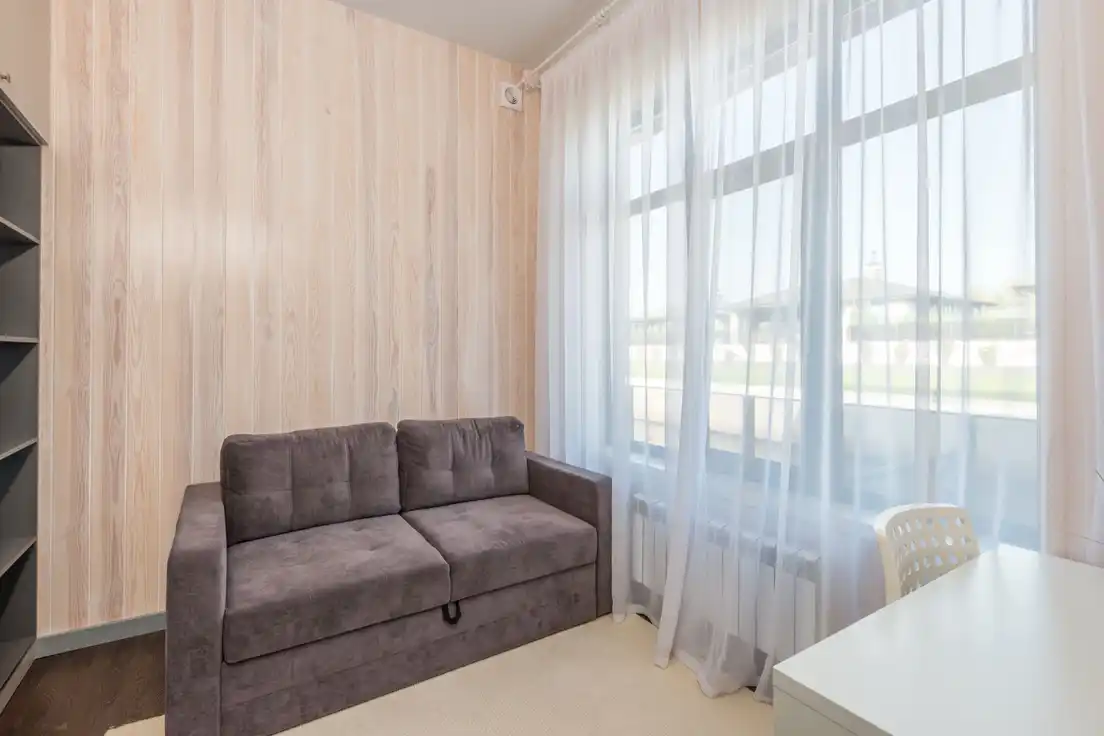
Photo by Max Vakhtbovych on Pexels
What comes after the loveseat vs sofa decision?
Start with the wall and the walkway, then the door, then the seats. Once the seating has a width, the rest of the furnishing follows: a rug sized to the front legs, curtains, a lamp and somewhere to put a coat.
We built that plan as a small apartment makeover, with the seating first. Before you open it, start with the tape measure. It has never once been talked into a sofa.
Frequently asked questions
What is the difference between a couch and a sofa?
None that matters when you shop. In everyday US usage both words mean the same long upholstered seat for several people, and retailers use them interchangeably. Compare the listed width, depth and seats instead of the name on the tag.
Can two people sit on a loveseat?
Yes, that is what it is built for. A loveseat seats two adults, usually with one seat cushion and one back cushion, in about 50–70 inches of width. Compact apartment versions run 48–58 inches, a snug fit for two, so check the listed width.
What is the difference between a loveseat and a settee?
A settee is a small, upright seat for two, traditionally with a formal, often wood-framed look. A loveseat is a compact sofa: deeper, more padded and made for lounging. The settee suits an entryway or the foot of a bed.
What is the difference between a chair and a half and a loveseat?
A chair and a half is one extra-wide chair, built for one person with room to curl up or sit sideways. A loveseat is a small sofa for two people side by side. Pick the chair and a half for a solo reader, the loveseat for two.