
Porch & Curb Appeal
Modern Farmhouse Exterior: 12 Ideas That Read as Farmhouse
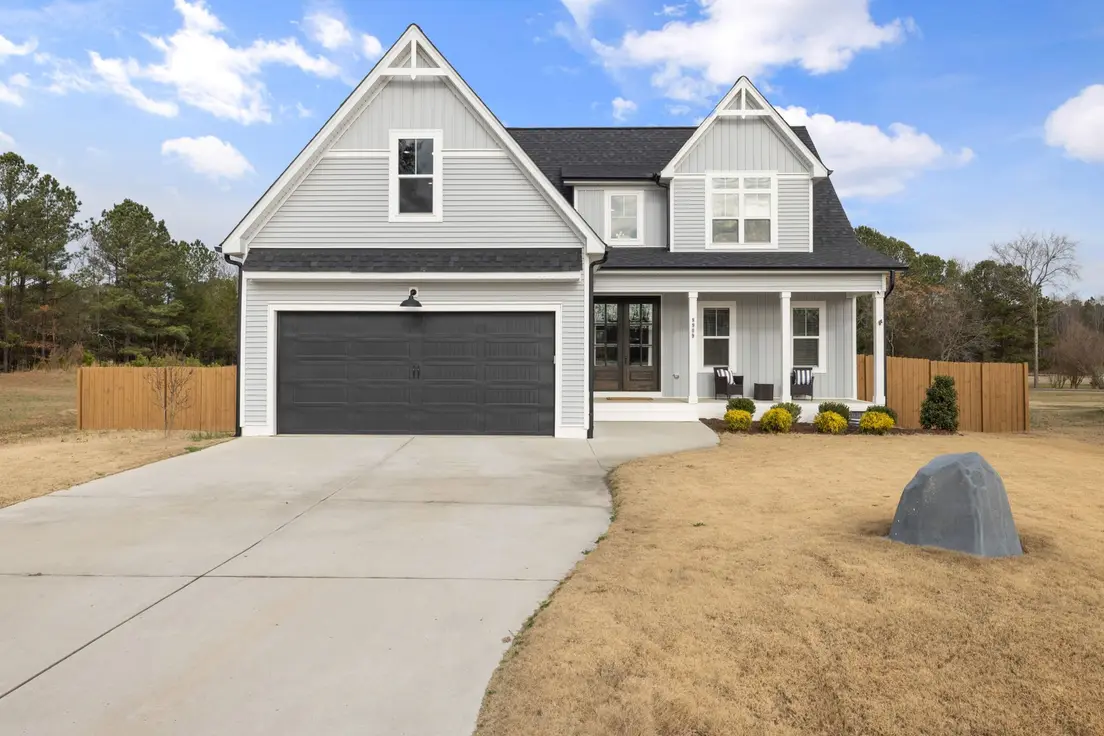
Photo by Curtis Adams on Pexels
A modern farmhouse exterior is a plain gable-roofed house wearing about five details on purpose: warm-white siding, black-framed windows, a board-and-batten accent, square porch posts, and matte-black hardware. Nearly every modern farmhouse you’d stop to photograph is running that same short list. Get those five right and the style reads instantly. Get them slightly wrong — stark blue-white paint, fake carriage hinges, four competing textures — and you land in the uncanny valley every new subdivision is currently stuck in. Builder-grade modern farmhouses fail on the details, not the bones.
Fixer Upper wrapped in 2018 and the look refused to leave, like a houseguest who’s technically family now, so it’s worth knowing which parts actually carry it. The best modern farmhouse exterior design isn’t the most expensive one — it’s the most consistent one, and almost none of that design is construction. The timeless modern farmhouse look is a handful of finishes repeated, not a bigger budget. This is the same “fewer decisions, repeated everywhere” discipline we use in our simple home exterior design rules, pointed at one specific style, and most of the fixes below are paint, exterior lighting, and hardware, under $200 each. If you want the inside to match, our modern farmhouse interior design guide covers the palette and materials that carry the look past the front door.
Start With a Warm White or Greige Siding Color
The one decision that makes or breaks a modern farmhouse exterior is the white, and it should lean warm. A creamy white, a soft greige, or a classic white with warm undertones reads as “restored farmhouse”; a cool, bright, blue-white reads as a walk-in freezer with a porch. The most popular color on modern farmhouses right now is actually a warm greige, not a true white. Most homeowners overshoot toward the bright cool white and regret it by August. A gallon of exterior acrylic runs $45–70, and a single-story house takes 4–6 gallons plus primer. We learned the swatch lesson the slow way on an interior wall once: a warm white that looked perfect on the chip went faintly green every afternoon, and it took a primer coat and three tries to admit a $6 sample would’ve saved the weekend. Same rule outside, times the square footage — tape four whites to the shaded side and look at them at 8am, noon, and dusk before you buy a five-gallon bucket.
Add Board-and-Batten Siding to the Gables, Not the Whole House
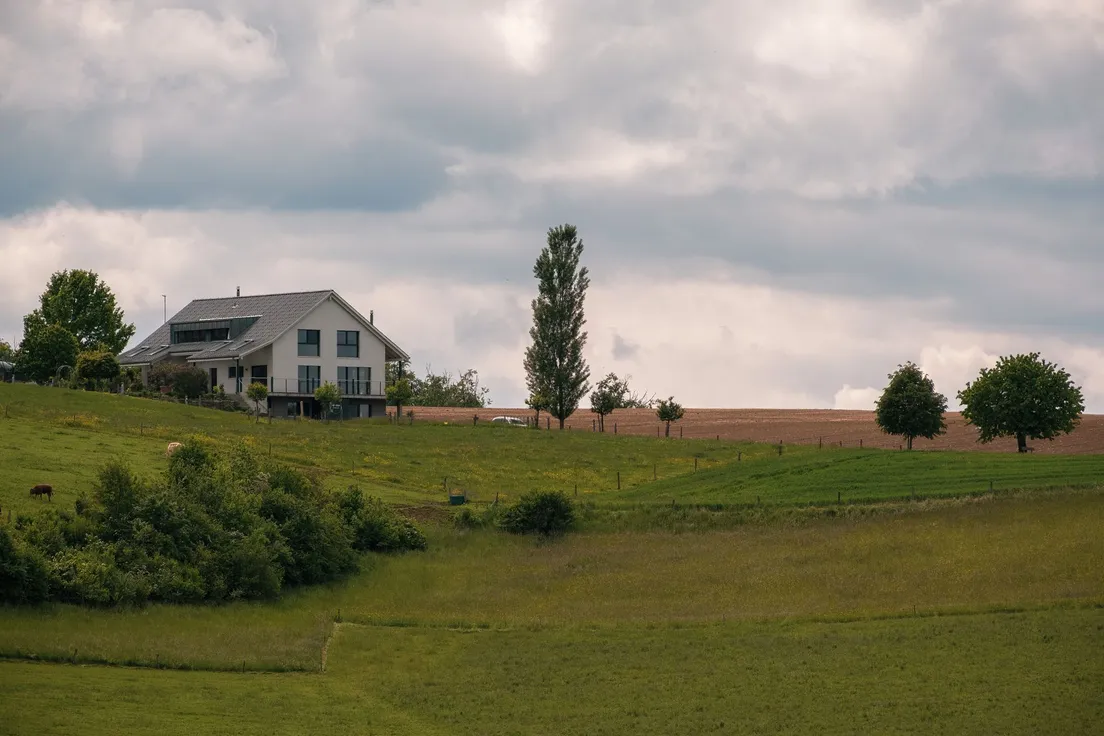
Board and batten — vertical boards with narrow battens over the seams — belongs on the gable ends and maybe a front entry section, not wrapped around all four elevations. Of the farmhouse siding styles, this one is the most overused: applied sparingly, the vertical siding is how you add texture and signal modern farmhouse style without shouting; run it across the whole house and the place starts to look like it’s wearing corduroy. Most modern farmhouses that read as fake made exactly this mistake. Fiber cement siding in a board-and-batten profile (James Hardie and similar) runs about $3–7 per square foot installed, so limiting it to two gables instead of the entire exterior is also the cheaper call by a wide margin. If the existing siding is sound, a painted vertical-batten treatment on just the gable triangles — new boards over the old lap — is a weekend job, not a re-side. Keep the batten spacing consistent, 12 inches on center is standard, or the wall reads as a mistake instead of a choice.
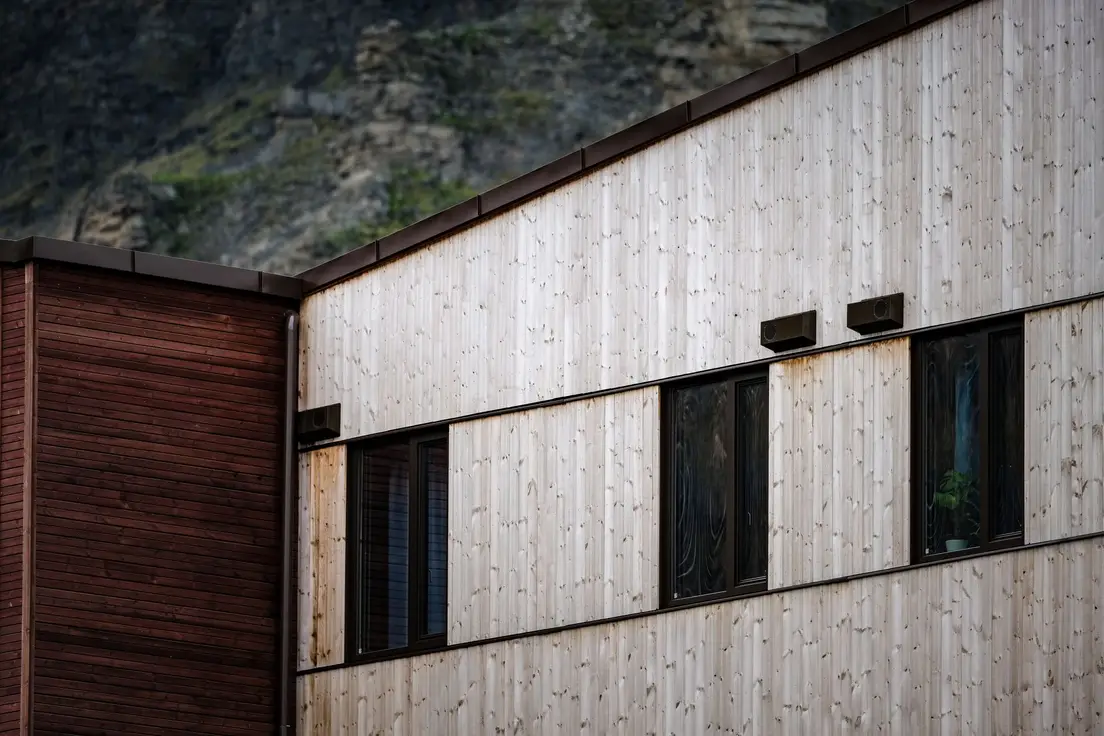
Photo by Francesco Ungaro on Pexels
Trade Jet-Black Windows for Soft Black or Bronze Trim
Black windows are a modern farmhouse signature, but pure jet-black against bright-white siding reads sharp in the listing photo and a little like a spreadsheet in person. Soft black, warm black with brown undertones, or dark bronze gives you the same high-contrast look with less glare. You don’t need new windows to get there: exterior-grade trim paint on the existing frames plus a black or bronze storm door does most of the work for $60–120 in materials. Carry the same tone to the shutters — if the architecture wants them, and most modern farmhouses skip shutters entirely — the porch light, and the house numbers, so the black reads as one deliberate accent color instead of five near-matches.
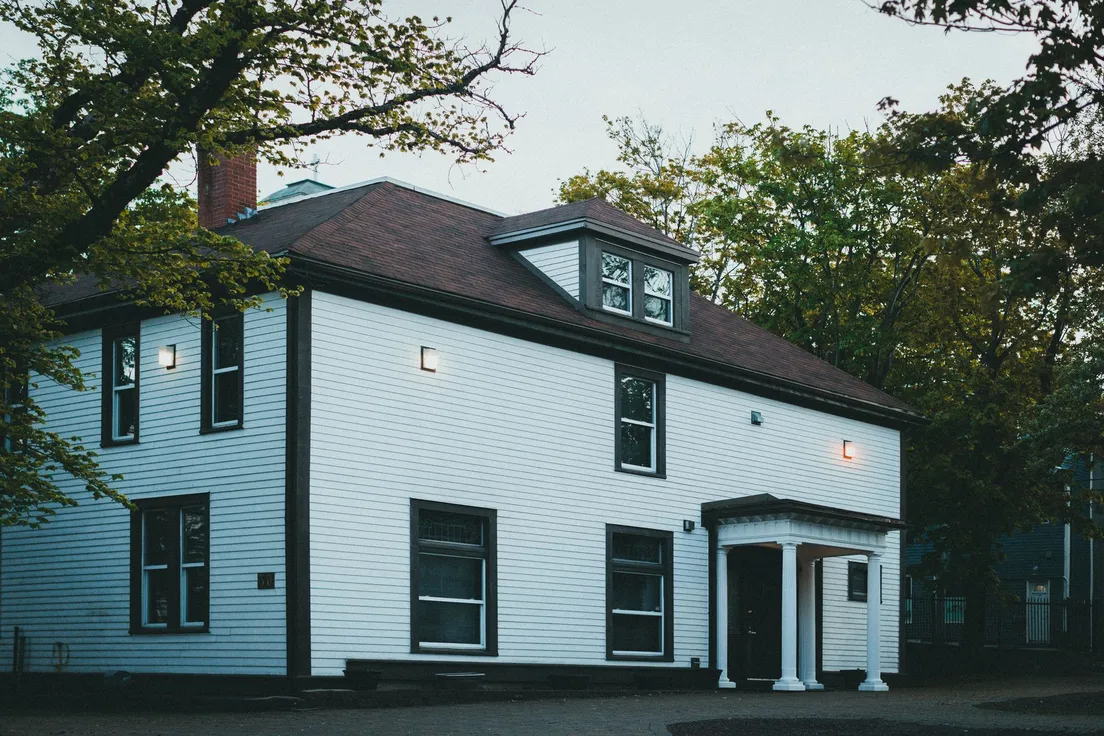
Photo by Jonathan Cooper on Pexels
Run a Standing-Seam Metal Roof Over the Porch or Front Gable
A standing-seam metal roof accent — over the porch, a bay, or the entry gable, often as a low shed roof — is the highest-impact farmhouse cue that isn’t paint. A full metal roof runs $10–16 per square foot and, on a suburban lot, means every hard rain sounds like applause you didn’t ask for; a porch-only accent gets the look for a fraction of that. A black metal roof, dark bronze, and bare galvalume are the farmhouse-correct colors, and a matte finish beats a glossy one. A light- or cool-colored metal roof is also a real energy play in a hot climate — the EPA notes that a reflective roof can cut peak cooling demand in an air-conditioned home by 11–27%, though bare metal isn’t the move: unpainted metal reflects well but sheds heat poorly, so a factory cool-coated finish wins. Match the accent color to the window trim so both rooflines — the main asphalt shingle roof and the metal accent — read as one deliberate palette.
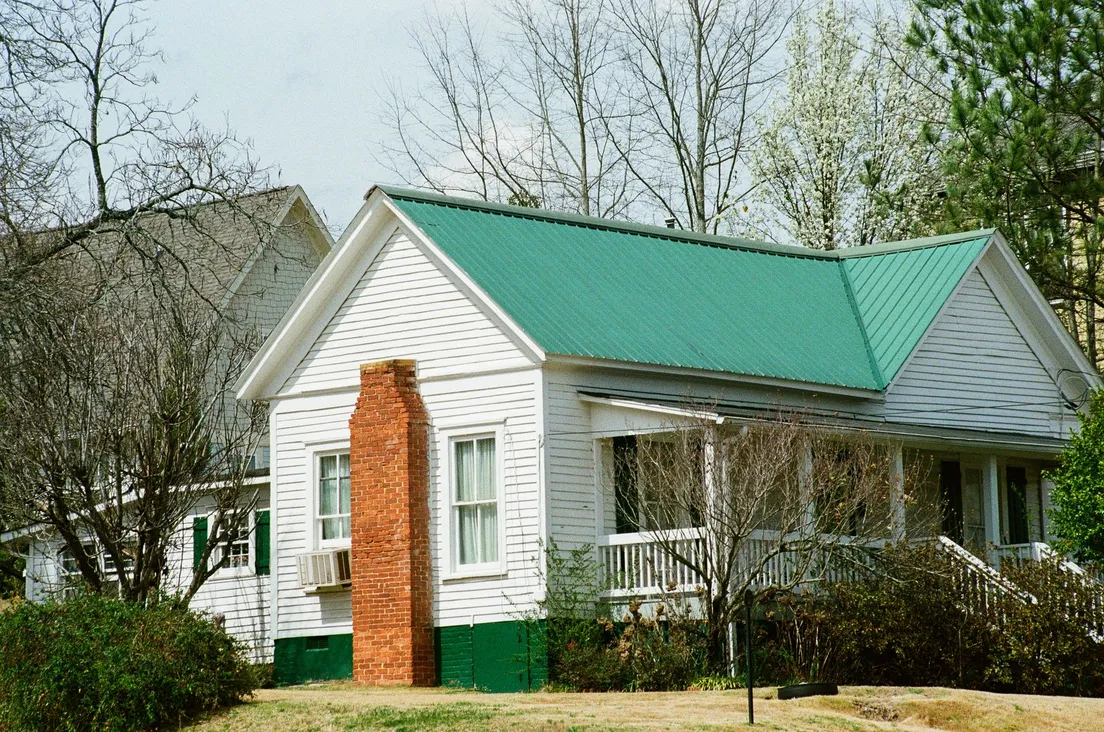
Photo by J.S. McDuff on Pexels
Keep the Front Porch Posts Square and the Railing Plain
Modern farmhouses keep the front porch plain, and it’s the one real outdoor living space on the facade: square posts, a plain top and bottom rail, thin balusters or none. Fluted columns, tapered craftsman piers, and stacked-stone column wraps are a lot of hat for not a lot of cattle on a farmhouse — they belong to other styles. A plain 6x6 cedar or PVC-wrapped post costs $25–60 each and reads more expensive than the chunky faux-wood column kits that run three times that. If the porch already has decent posts, the cheapest upgrade is swapping ornate colonial railing for flat 2x2 balusters and a square cap rail, about $8–12 per linear foot in materials. Painting the porch ceiling pale blue is optional and traditional; nobody will dock you points either way.
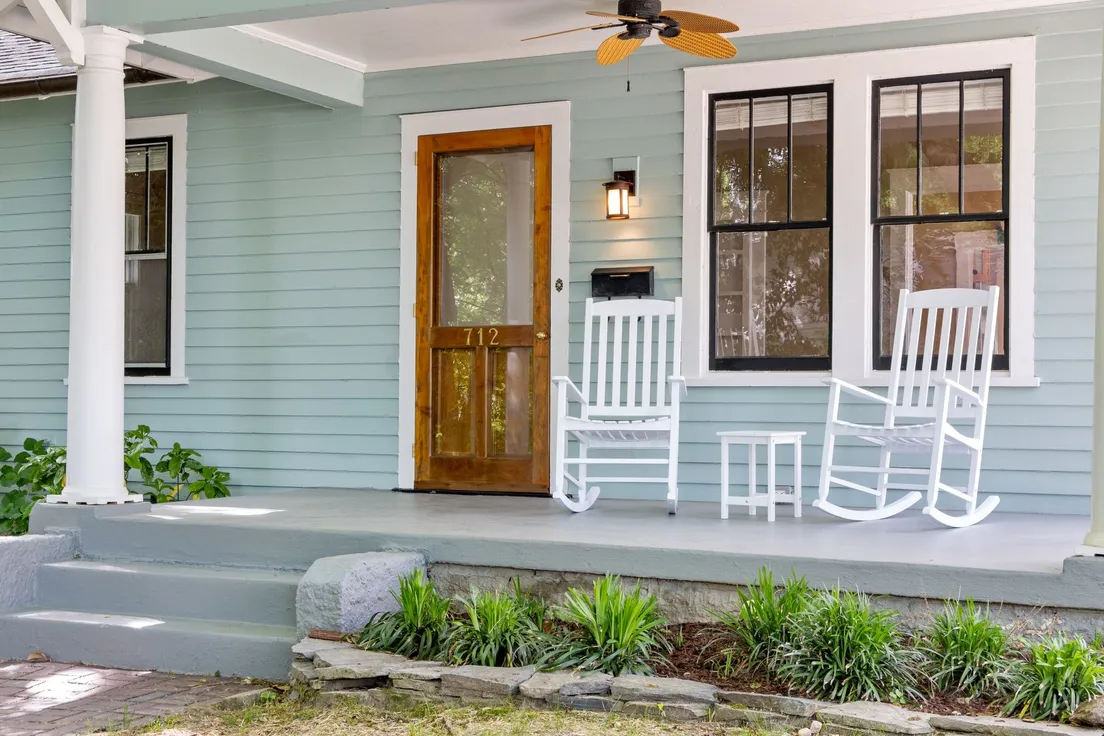
Photo by Curtis Adams on Pexels
Light the Exterior With One Warm Farmhouse Fixture, Repeated
Exterior lighting on a modern farmhouse is one fixture, repeated: a gooseneck barn light or a plain black lantern at the door, the garage, and any side entry, all running a warm 2700K bulb. One porch light in warm white next to a garage light in blue-white 5000K is the exterior equivalent of one dress shoe and one sneaker. DarkSky International recommends 2700K or lower for residential outdoor lighting, since cooler light scatters harder and reads harsher from the street. Matte-black gooseneck barn lights run $40–90 each, so a three-fixture swap plus warm bulbs is well under $250 and finishes the front of the house more than the number suggests. Skip the dusk-to-dawn sensor bulbs that flicker blue for the first minute — they undo the whole warm-light point.
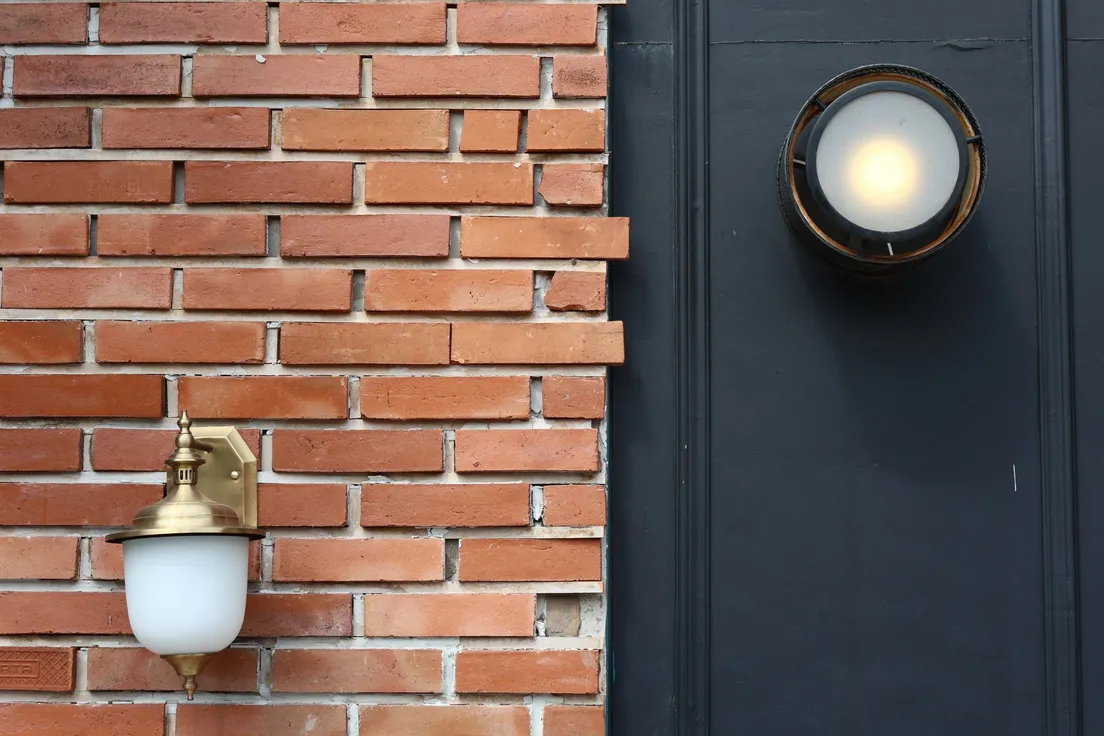
Photo by Bezalens JGP on Pexels
Swap the Flat Builder Garage Door for a Carriage-Style One
On most tract houses the garage door is the largest single surface facing the street, and a flat, ribbed steel builder door is the fastest thing to date the whole facade. Carriage-style garage doors — recessed panels, a matte finish, true black or a warm wood tone — are the farmhouse fix; a short row of windows across the top of a flat door doesn’t count, any more than a bow tie makes a T-shirt formal. A new insulated carriage-style door runs $1,000–2,500 installed; a bolt-on carriage hardware kit — magnetic handles and hinges — on a repainted existing door is $30–60 and buys most of the effect for a rental or a tight budget. Modern farmhouses almost always paint the garage doors to match the window trim and the roof accent, not the siding.
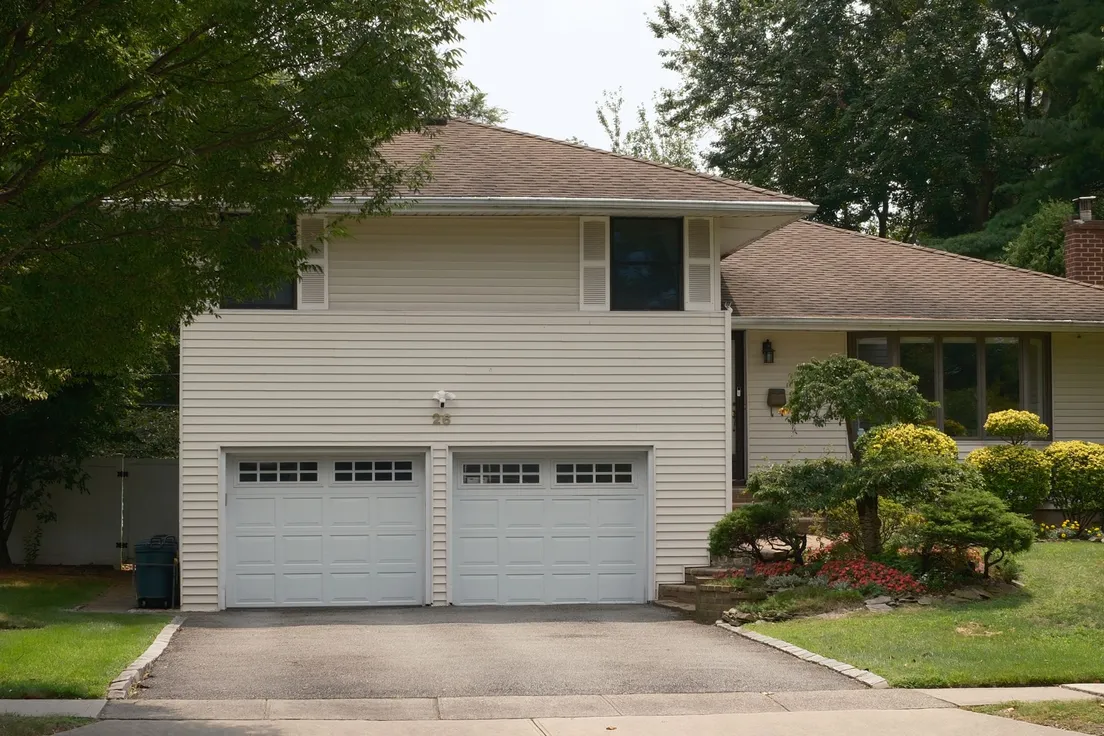
Photo by Mingyang LIU on Pexels
Mount Oversized Matte-Black House Numbers You Can Read From the Curb
Modern farmhouse house numbers are big, simple, and matte black — 5 to 8 inches tall, in a clean sans or a plain slab serif, mounted on a board or straight on the siding by the door. Builder-grade brass script numbers you can’t read from the street are decorative, not functional, and your delivery driver is the one paying for that choice. A set of six-inch numbers runs $15–40; a stained cedar or black-painted mounting board behind them is a $10 offcut and makes the whole thing look intentional. Put them where headlights actually hit at night, and carry the same black to the mailbox and the porch light — our curb appeal ideas guide breaks the mailbox-and-numbers pass down in more product-by-product detail.
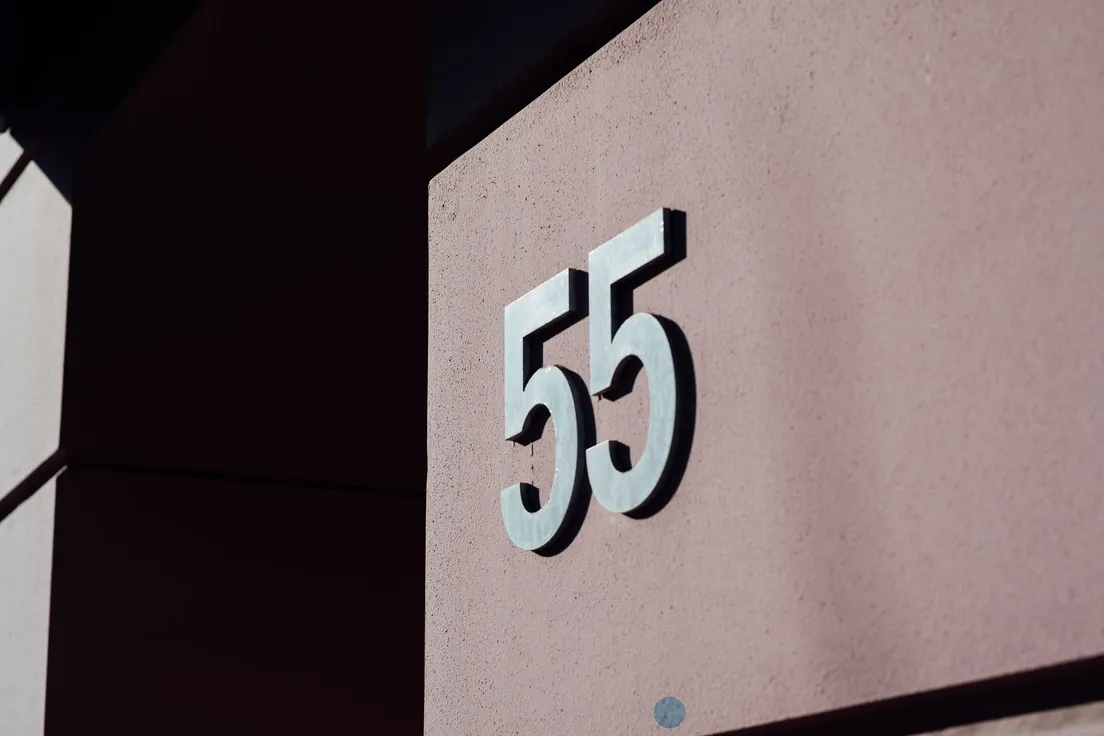
Photo by Markus Winkler on Pexels
Let One Wood or Stone Accent Carry the Texture
A modern farmhouse exterior gets exactly one texture moment — a cedar bracket over the door, a wood garage-door tone, a single stone chimney, or the board and batten gable — and everything else stays flat and quiet. Stone on the chimney plus shake in the gable plus brick on the planter plus a cedar porch ceiling is four textures doing the job of one, with none of them getting credit. Modern farmhouse design avoids that mixed materials pile-up: one stone chimney, or one warm wood tone on a wooden front door, against an otherwise classic white or greige wall. Natural wood accents are the cheapest way to add texture in that one spot — a stained cedar bracket is $30–70, versus hundreds for a stone veneer section. If the house already has a stone or brick element, make that the one.
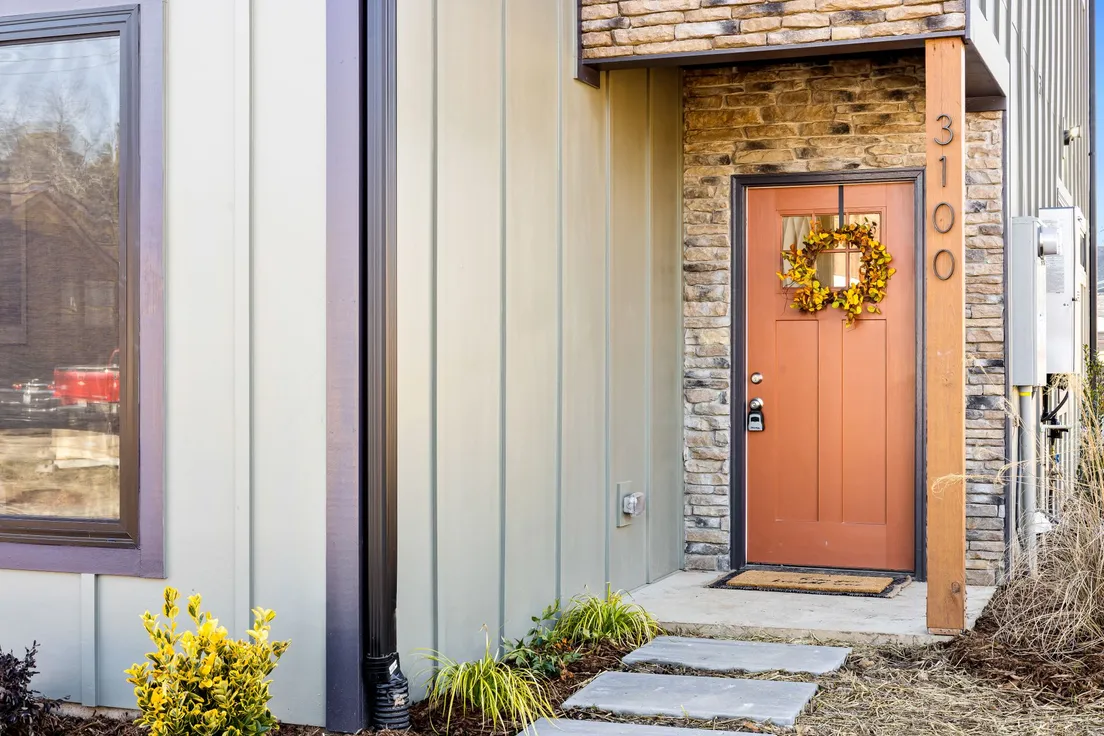
Photo by Curtis Adams on Pexels
Know Where Modern Farmhouse Ends and Rustic Farmhouse Begins
Modern farmhouse and rustic farmhouse are not the same style, and mixing their cues is why some houses read as costume. Rustic farmhouse wants the wood to look like it remembers a horse — weathered boards, aged metal, a wraparound porch with turned balusters. A modern farmhouse wants the wood to look like it was delivered Tuesday: crisp white, black windows, clean square lines, minimal trim, and a simple landscape of repeated boxwood rather than a mixed bed. If your house is genuinely old, leaning rustic is usually the more honest and cheaper call, since you’re maintaining architectural character instead of manufacturing it — the same logic runs through our ranch house curb appeal ideas for single-story homes. If it’s a 2005 tract house, the crisp white farmhouse is the more achievable target, because it’s mostly paint and hardware. The modern farmhouses that hold up over time pick one lane and stay in it; a new house faking a hundred years of patina everywhere fools no one, and the result reads as neither a unique design nor honest.
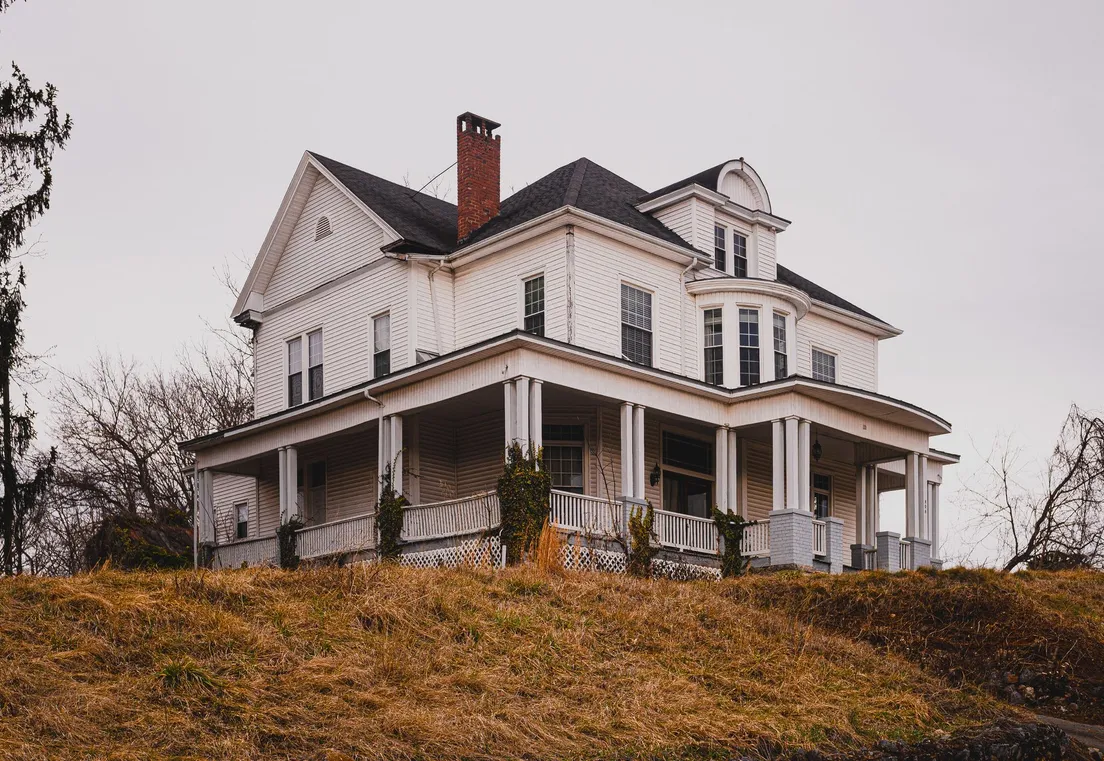
Photo by John Cheathem on Pexels
The Honest Math: What a Modern Farmhouse Exterior Refresh Costs
Here’s the honest math, added up instead of estimated. The paint-and-hardware version: 5 gallons of warm-white exterior paint ($300), black trim paint for the windows and door ($70), three matte-black gooseneck lights ($180), oversized house numbers with a mounting board ($45), and a carriage hardware kit for the garage ($50) comes to about $645 in materials for a house with sound siding — a long weekend or two of DIY labor on top. Add board and batten on two gables ($1,200–2,500 installed) and a standing-seam porch roof accent ($1,500–3,500) and you’re at $3,300–6,700 for the version that changes the roofline and silhouette of the entire exterior, not just the color. A full professional exterior repaint by itself runs $4,000–8,000 on an average two-story house, and a genuine new exterior — siding, roof, and windows all replaced — is a different project north of $40,000. Do the $645 pass first: it tells you how much of the “not farmhouse enough” feeling was color and hardware before you commit to structural work.

Rule of Thumb: The One Change That Reads as Farmhouse First
If you only do one thing, repaint the body a warm white — it resets your home’s exterior all at once, and it’s the change neighbors actually register. After the color, unify the hardware finish: every exterior light, the house numbers, the door handle, and the garage handles in the same matte black is the cheapest hour of work with the highest “wait, did they renovate?” return. Windows and the metal roof accent come next, in that order, and both are worth saving for rather than rushing. Board and batten and a new garage door are real upgrades, but they’re the last 20% of the design — don’t start there. Paint and lighting solve more exterior problems than new materials do: a $60 can of siding paint and a $4 warm bulb get you 80% of the way to a modern farmhouse exterior before you price a single square of new siding.
Photo by Makayla Asuncion on Pexels
Start with the paint color. Every black window, brass-to-black number, and gooseneck light on this list only looks intentional once the wall behind it stops fighting them.
Frequently asked questions
What is a modern farmhouse exterior?
A modern farmhouse exterior pairs a simple gable-roofed shape with warm-white or greige siding, black-framed windows, a board-and-batten accent (usually on the gables), square porch posts, a standing-seam metal roof or porch accent, and matte-black hardware and lighting. The farmhouse design is defined by restraint and high contrast, not ornament — a few materials used consistently across the whole facade.
What are the best exterior colors for a modern farmhouse?
Warm whites and soft greiges are the safest color palettes: creamy off-whites, warm neutrals like Alabaster or Accessible Beige, and pale warm grays photograph and age best. Pair the body color with a black, warm-black, or dark-bronze trim and window color, and keep the front door either matching-black or a single muted saturated tone like forest green or charcoal. Avoid cool, blue-based bright whites.
How is a modern farmhouse exterior different from a rustic farmhouse?
Modern farmhouse uses crisp white paint, black windows, clean square lines, and minimal trim — a new, deliberate look. Rustic farmhouse leans on weathered wood, aged metal, natural or reclaimed materials, and traditional details like turned porch balusters and wraparound porches. Modern farmhouse suits newer tract homes because it's largely paint and hardware; rustic farmhouse suits genuinely old houses with existing character.
How much does a modern farmhouse exterior makeover cost?
A paint-and-hardware refresh — warm-white body paint, black trim, matching black lighting, oversized house numbers, and a garage carriage-hardware kit — runs roughly $600–900 in materials plus DIY labor. Adding board-and-batten gables and a standing-seam porch roof accent pushes the total to about $3,300–6,700. A full professional exterior repaint by itself is typically $4,000–8,000 on a two-story home.
Do I need permission to change my home's exterior?
Painting usually doesn't require a permit, but many HOAs must approve exterior paint colors, and adding or replacing a roof, siding, or structural porch elements often does require a local building permit. Check your HOA covenants and your city or county building department before buying materials — approval is faster and cheaper than undoing finished work.