
Style Guides
Modern Farmhouse Interior Design: The Real Rules
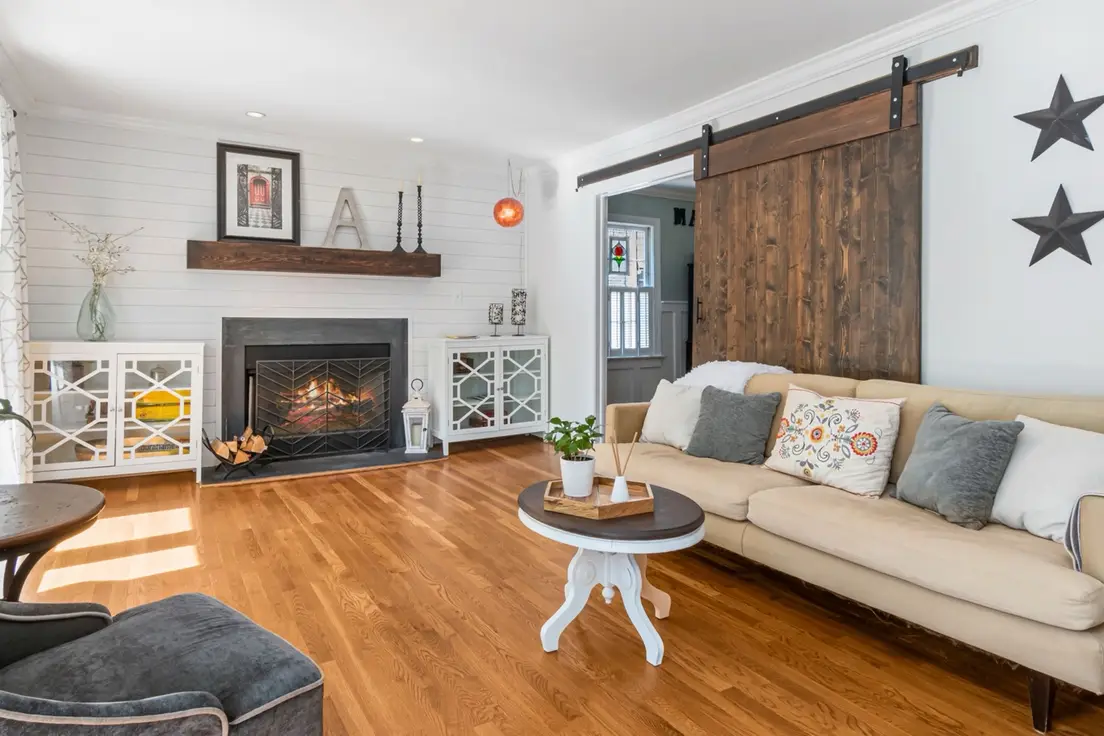
Photo by Curtis Adams on Pexels
Modern farmhouse interior design pairs the warm materials of a real farmhouse — wood, wicker, aged black metal — with a cleaner, calmer layout than the original country style ever had. None of the ideas below need a full remodel or an interior designer on retainer; most are paint, hardware, and where you already put your furniture, not a new build. The style has stayed near the top of home-design searches for a decade because it splits the difference between “designer” and “someone actually lives here,” and that’s the whole appeal.
What Modern Farmhouse Interior Design Actually Means
Modern farmhouse interior design takes a working farmhouse’s honest materials — real wood, wrought iron, a deep porcelain sink — and runs them through a cleaner, more current filter: lighter walls, simpler furniture silhouettes, and enough negative space that the room doesn’t read like a country gift shop. The “modern” half is doing real work here, not just marketing — it’s the reason this style outlasted the fully distressed, rooster-and-gingham version from a decade ago.
It also happens to be the fastest fix for the opposite extreme: a builder-grade room. Builder-grade anything from the 2000s and 2010s shares the same five tells — oak-toned everything, brass or nickel hardware nobody chose on purpose, a single flush-mount light, eggshell-white walls, and carpet where there should be flooring. Modern farmhouse swaps out almost every one of those for something with real texture, which is why it photographs like a full transformation even when the footprint hasn’t changed at all.
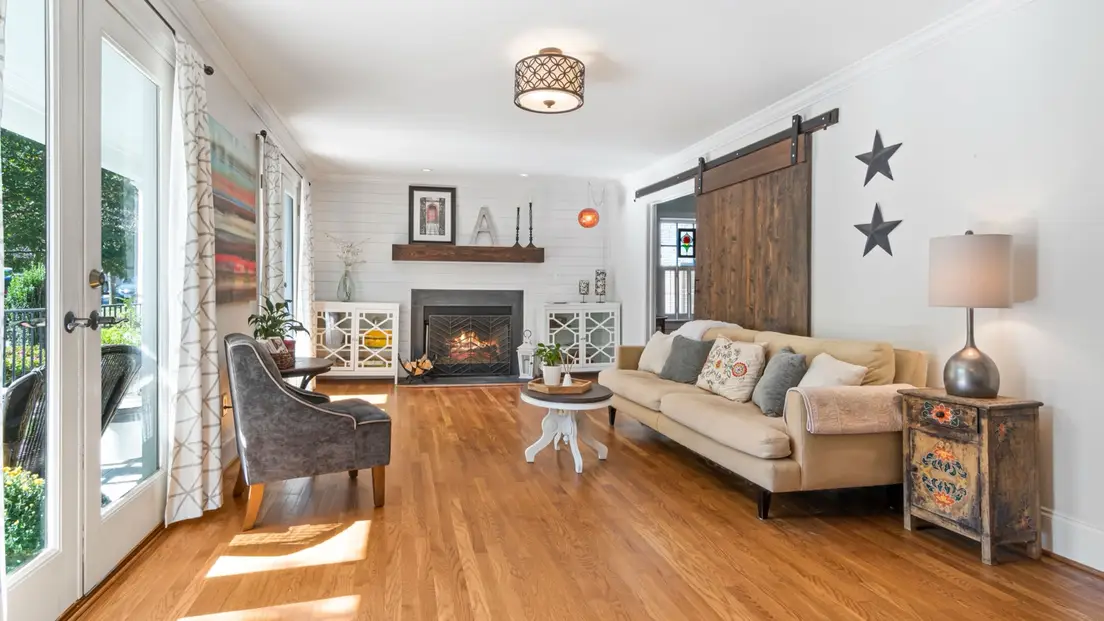
Photo by Curtis Adams on Pexels
Modern Farmhouse vs. Rustic and Traditional Farmhouse Style
Modern farmhouse, rustic farmhouse, and traditional farmhouse aren’t the same design style wearing different paint — they’re three points on one spectrum, and picking the wrong one is the fastest way to end up with a Pinterest board that doesn’t match the room you’re standing in. Traditional farmhouse is the oldest and busiest of the three: florals, gingham, a full corner hutch of collectibles. Rustic farmhouse strips the collectibles but turns the raw materials up — barn wood, wrought iron, visible age, minimal symmetry.
Modern farmhouse borrows rustic’s materials but edits hard: one reclaimed-wood accent, not four; a single black light fixture, not a chandelier built entirely of them. If a room feels more like a barn than a house, it’s landed on rustic. If it feels like a hotel lobby, it’s skipped farmhouse entirely and gone straight to plain modern — the target sits in the middle, on purpose.
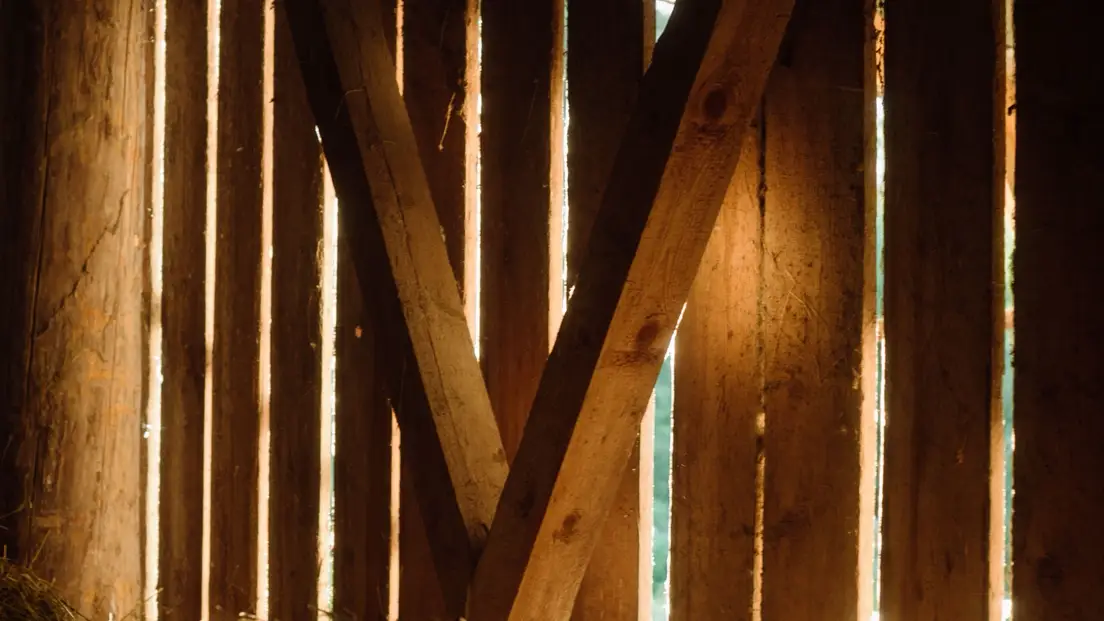
Photo by Plato Terentev on Pexels
Build a Neutral Color Palette With One Warm Wood Tone
Start with the walls, and keep them boring on purpose — a warm white or a light greige does more to make a room read “modern farmhouse” than any single piece of furniture will. Reserve real color for one warm wood tone, repeated at least twice in the room: a stained beam that echoes a stained table, or a kitchen island that matches an entry bench, so the space feels planned instead of assembled from whatever was on sale that week.
A gallon of warm off-white paint runs $40–55 and covers most rooms with a coat to spare. Skip cool grays and true white here — both read more Scandinavian-modern than farmhouse, and undo half the warmth the wood tone is supposed to add. (We once painted an accent wall the “perfect” sage from a paint chip and watched it turn minty green by 4 p.m. Test the swatch on the actual wall, at the actual hours you’ll see it.) One accent color, if you want it — a deep sage or a soft navy — earns its spot on a single wall or a set of cabinets, never both at once, in a palette this restrained. Most modern farmhouse style color palettes repeat that one wood tone at least twice in the room, which is what makes them read planned instead of picked at random.
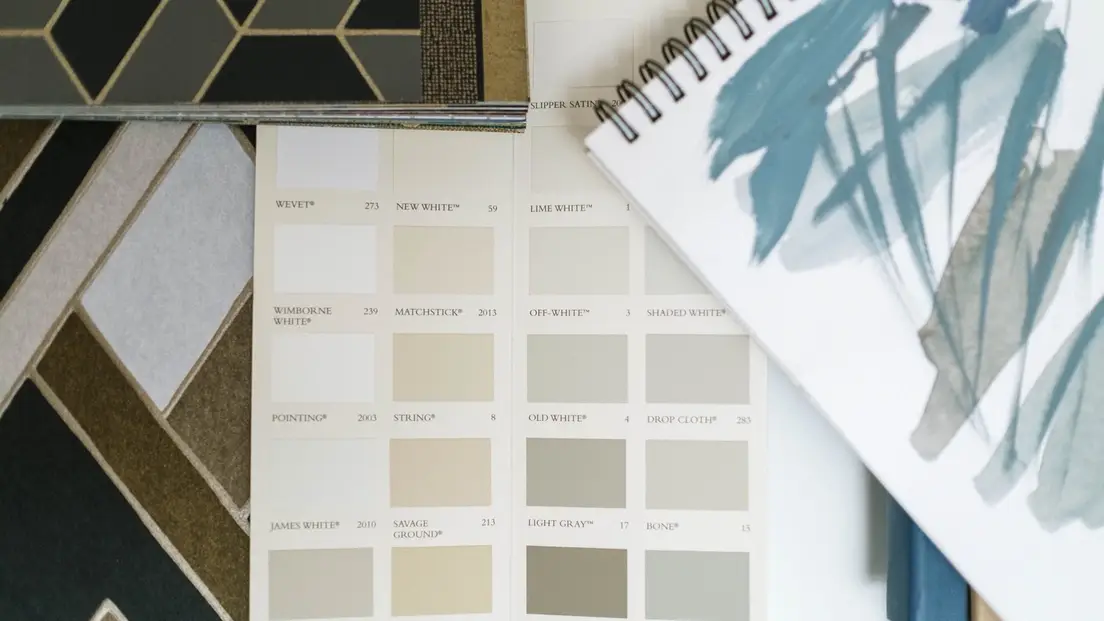
Photo by cottonbro studio on Pexels
Choose Natural Materials: Reclaimed Wood, Wicker, and Quartzite
Material choice is what actually separates a real modern farmhouse room from a photo of one — glossy laminate and chrome read as generic-modern no matter how much shiplap surrounds them. Reclaimed or reclaimed-look wood, a woven wicker or rattan piece, a linen textile, and a matte stone like quartzite or soapstone cover most of what this style needs, and none of it has to come from an actual barn to work: reclaimed-look engineered flooring and cabinet fronts get most of the visual payoff at a fraction of true-reclaimed pricing.
Real reclaimed lumber does carry a genuine edge worth knowing about if sustainability matters to your choice: the U.S. Forest Service’s own life-cycle research found reclaimed framing lumber uses roughly a tenth of the cumulative energy that producing the same amount of virgin lumber does. A wood veneer panel is the honest budget stand-in where solid reclaimed boards aren’t in the cards. Stick to two or three materials total — wood, wicker, and one stone or metal is a safe combination. A room with five wood tones and two metal finishes stops reading collected and starts reading like a showroom that ran out of matching stock.
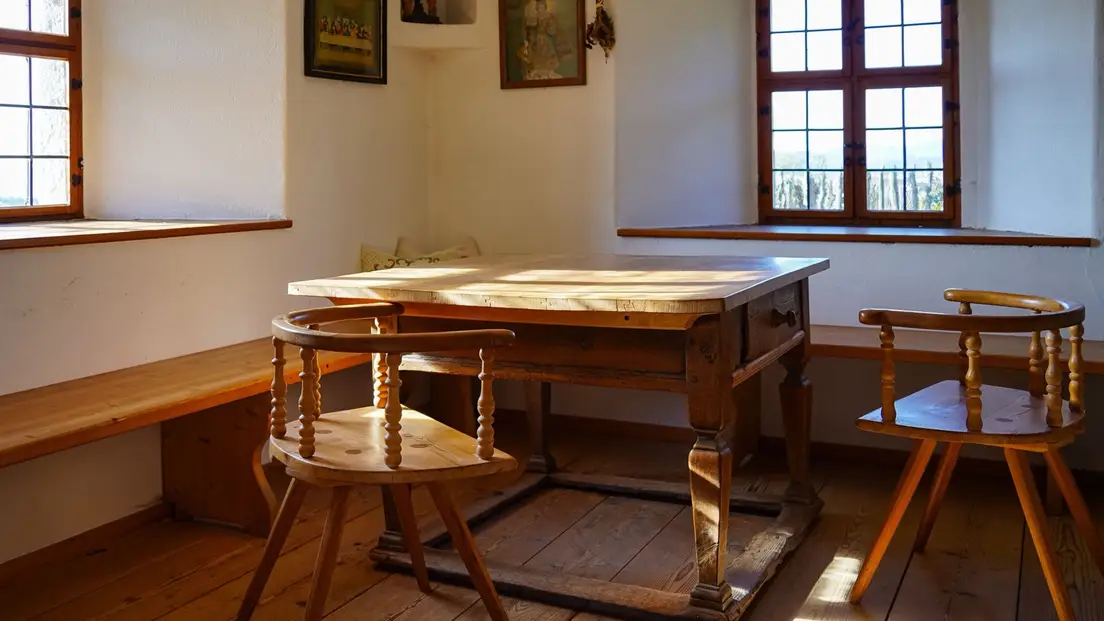
Add Architectural Character With Shiplap, Wall Paneling, and a Beamed Ceiling
A flat, featureless wall is the single biggest reason a room reads generic instead of farmhouse — architectural texture does work that paint and furniture alone can’t. Shiplap or board-and-batten wall paneling on one wall, a wainscoting-height panel treatment in a dining nook, or a faux beam across a vaulted ceiling all add the same kind of visual structure a real farmhouse got by accident, from a hundred years of additions and repairs.
Peel-and-stick shiplap panels get renters most of the way there for $25–40 a section; a lightweight foam-core beam runs $40–90 and mounts to the ceiling with construction adhesive, no structural engineer required. One architectural move per room is usually enough — a shiplap accent wall and a beamed ceiling in the same small room starts to look like a barn that got confused about which century it’s in.
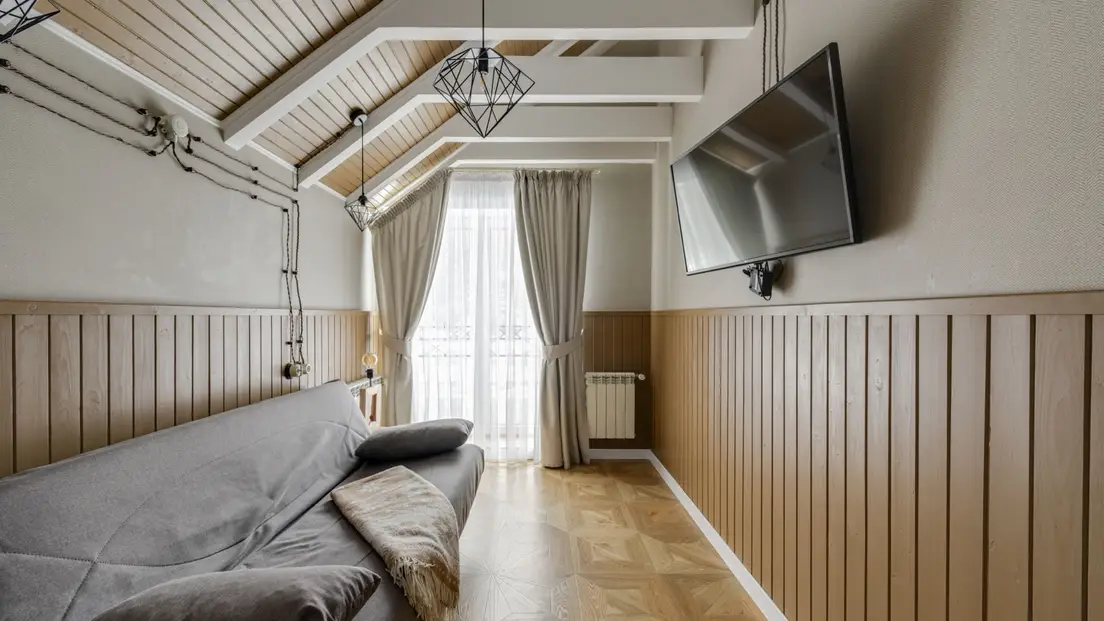
Photo by Max Vakhtbovych on Pexels
Layer In Farmhouse Lighting: Pendants Over Polish
Paint and lighting solve more of a farmhouse room’s problems than new furniture does, and lighting fixtures are the cheaper half of that equation. Swap a builder-grade flush-mount for a black metal dome pendant or a lantern-style fixture — $50–120 gets a real farmhouse fixture over an island, an entry table, or a dining spot, and it’s usually a Saturday job if the electrical box is already in place.
Warm 2700K bulbs matter as much as the fixture itself; a farmhouse pendant with a cool-white bulb inside just looks like an industrial fixture that wandered into the wrong house. One statement fixture per main sightline is the rule of thumb — three matching pendants over an island reads like a design choice, three different black fixtures fighting for attention in one small room just reads like clutter with better finishes.

Bring Modern Farmhouse Into the Living Room
A living room is the easiest room to prove this whole style in one shot: a slipcovered sofa, a jute or wool rug, and one piece of architectural texture behind the TV or fireplace usually gets a builder-grade room most of the way there. Most living rooms only need two or three of these moves, not all of them running at once. A rug is almost always the highest-leverage purchase on this entire list — it does more to make a room look finished than any other single item.
Go bigger than feels reasonable: a 9×12 for a normal-sized living room, not the 8×10 that looks close enough in an online photo. We ordered an 8×10 for what we’d measured, from a photo, as a 10×10 room once — it arrived, got unrolled, and looked like a bath mat in a gymnasium, because the actual room, planter boxes included, was closer to 11×13. Measure the real floor, not the picture of it, and the resizing headache disappears entirely.
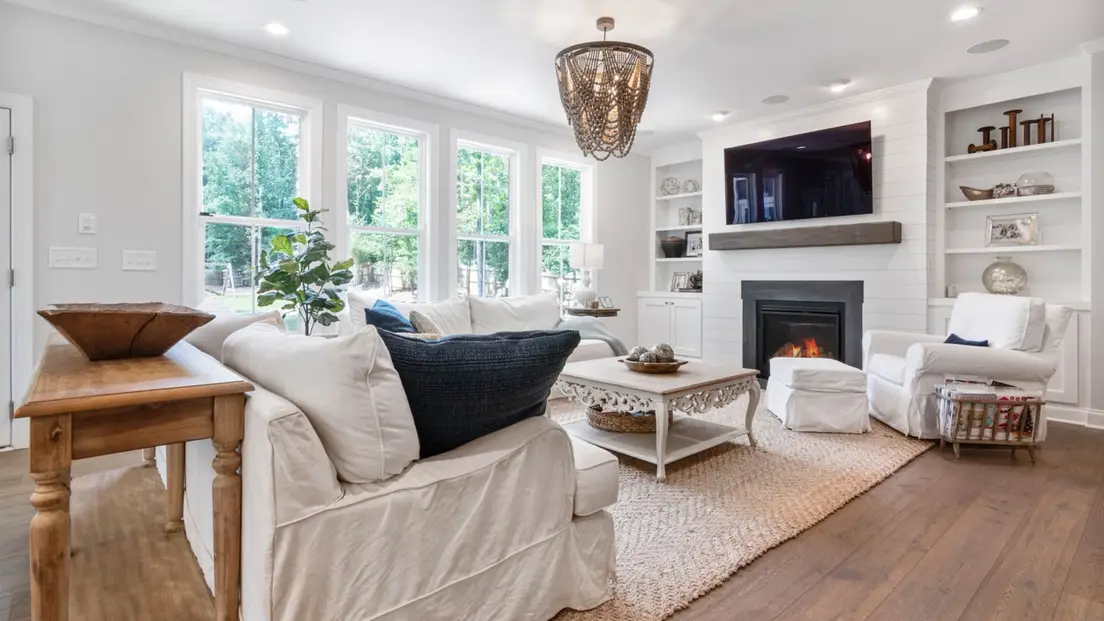
Photo by Curtis Adams on Pexels
Bring Modern Farmhouse Into the Kitchen
A kitchen carries more of this style’s signature moves than any other room — shaker cabinetry, a farmhouse apron sink, open shelving, and black hardware all read as farmhouse before a single accessory goes on the counter. White or off-white shaker cabinets on the perimeter with a stained wood island is the most common modern farmhouse kitchen combination, and it’s also the easiest version to do in stages: paint the uppers first, tackle the island later.
A butcher block or soapstone-look countertop and a tile backsplash in a simple subway or herringbone pattern finish the look for a fraction of what real stone and hand-laid stone tile would cost. If the kitchen is the whole project rather than one room in a bigger one, our modern rustic farmhouse kitchens guide goes deep on twelve specific, budget-priced ideas for exactly this room, most under $150 each.
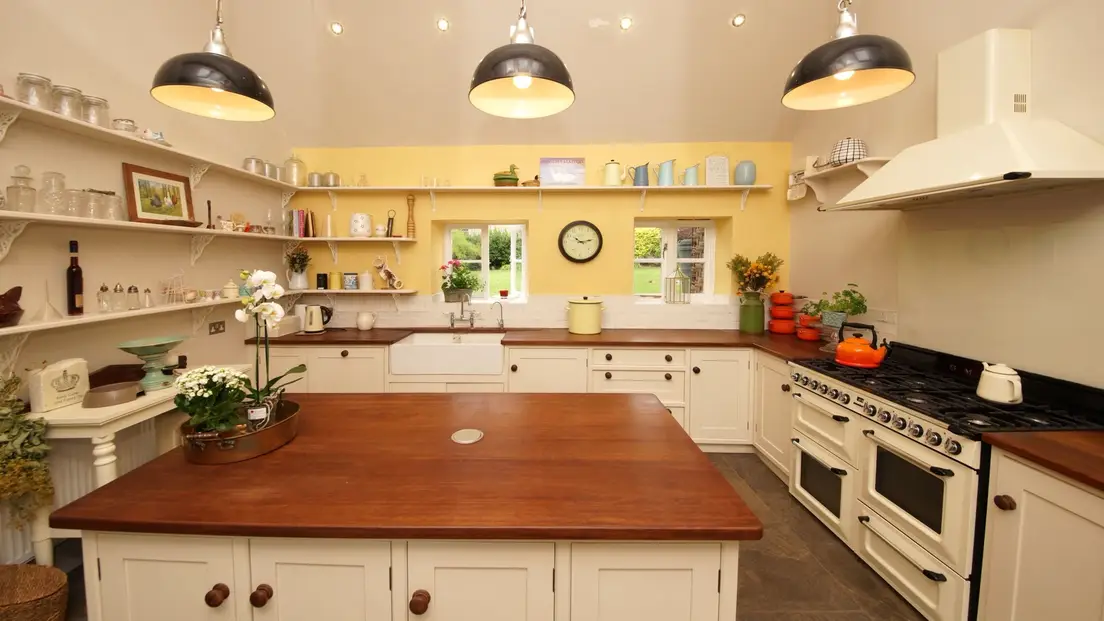
Photo by Phil Ledwith on Pexels
Bring Modern Farmhouse Into the Bedroom
A bedroom is the lowest-risk room to commit fully to this style, since it’s the one space nobody else has to approve. A whitewashed or weathered wood bed frame, linen or waffle-weave bedding in a warm neutral, and one wood or wicker nightstand cover most of the transformation without touching a single wall.
Skip the matching furniture set if a dresser already works — farmhouse rewards a slightly mismatched, collected-over-decades look more than a bedroom set that arrived in one box ever will. Our master bedroom ideas guide has the fuller room-by-room breakdown if the bedroom is the whole project, not just one piece of a bigger one.
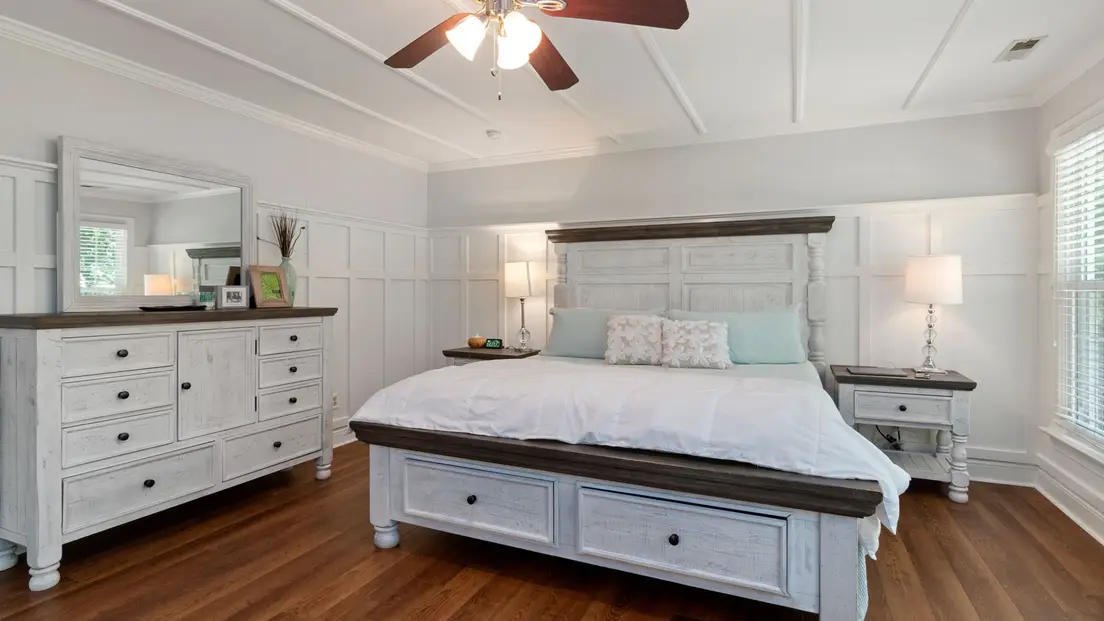
Photo by Curtis Adams on Pexels
Bring Modern Farmhouse Into the Bathroom
A bathroom takes farmhouse touches in smaller, more water-tolerant doses: a wood-look vanity, black matte fixtures, and a woven basket or two for towels do most of the work without introducing raw wood to a shower spray zone. Real reclaimed wood and steady moisture don’t mix — a wood-look porcelain tile or a sealed engineered vanity gets the same visual warmth without the swelling risk down the line.
A round or arched mirror in a black or brass frame is the single fastest upgrade in this room, at $40–90 for a mid-size option. Our small bathroom ideas guide covers the rest of this room’s budget moves if a farmhouse mirror is the only piece changing today.
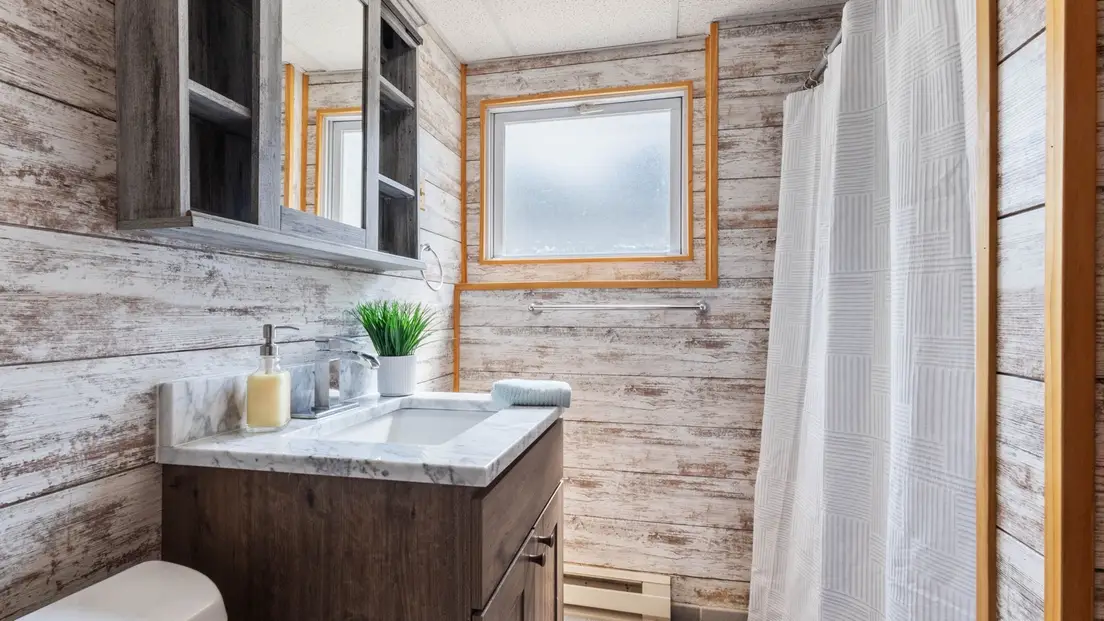
Photo by Ahmer Zaidi on Pexels
The Honest Math: What a Modern Farmhouse Refresh Actually Costs
Here’s the honest math, added up instead of estimated: one gallon of warm off-white paint ($45), a black metal pendant light ($85), a set of black cabinet hardware ($60), a jute rug ($130), and two woven baskets ($36) comes to $356 — enough to touch several rooms’ worth of the ideas above without replacing a single piece of furniture.
A cheap version and a splurge version both exist here: skip the pendant and lean on thrifted hardware and a smaller rug, and the same list lands closer to $180; add a real farmhouse sink or a reclaimed beam instead, and it climbs past $900 fast. Neither number is wrong — the honest total depends on whether you’re touching plumbing and structure or just the surface layer, the same math that applies to almost every room on this site.

Photo by Karola G (kaboompics.com) on Pexels
Rule of Thumb: Pick Two or Three Farmhouse Elements, Not the Whole Catalog
You don’t need every idea on this list running in the same room — you need two or three, done well, so the space reads like a decision instead of a themed restaurant. Start with the wall (paint or shiplap) and the lighting; those two alone fix more of a builder-grade room’s problems than any furniture purchase will. Everything else — the rug, the hardware, the reclaimed accent — layers on top once those two are settled and you’ve lived with them for a week.
If the neutral, textured direction here feels like too much restraint and not enough color, our dopamine decor guide covers the opposite instinct entirely. Start with the wall and the lighting. Everything else on this list reads more like a decision once those two stop looking like the builder left them.
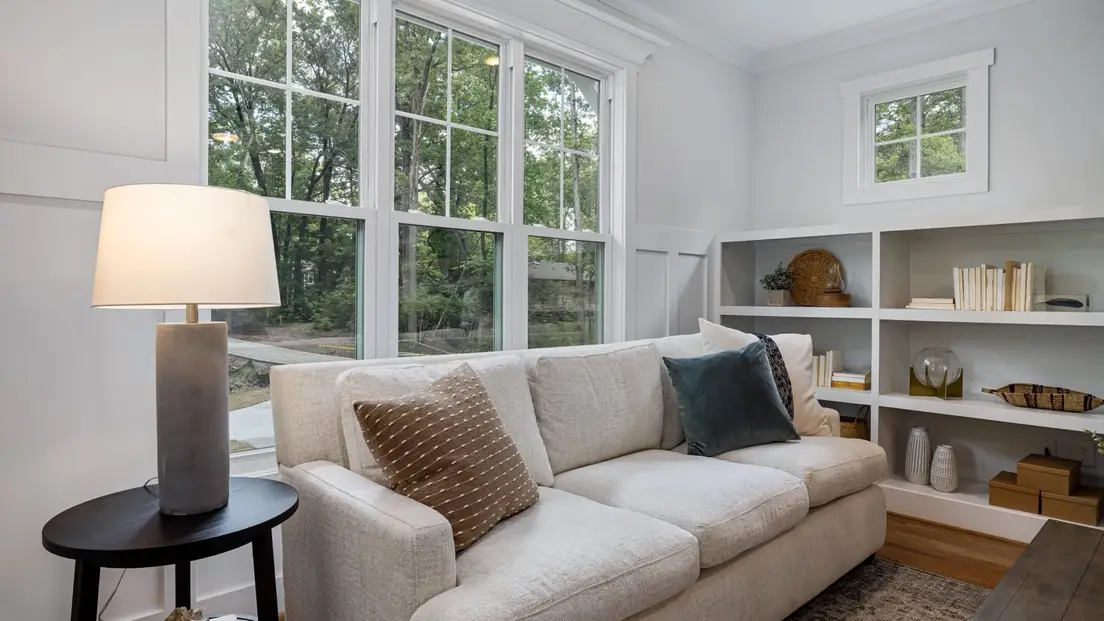
Photo by Curtis Adams on Pexels
Frequently asked questions
What is modern farmhouse interior design style?
Modern farmhouse interior design pairs a farmhouse's warm, lived-in materials — wood, wicker, aged black metal — with a cleaner, more restrained layout than the original country style. Think white or light walls, shaker-style cabinetry, black hardware, and one or two rustic details like a beam or a farmhouse sink, instead of a room stacked with rooster decor and gingham.
Is modern farmhouse interior design still popular in 2026, or is something replacing it?
It's still one of the most-searched home styles in the US, but it's evolved — the all-white, heavily distressed version from a decade ago has given way to warmer wood tones, mixed metals, and bolder paint moves. Styles like organic modern and japandi are gaining ground alongside it, not replacing it outright; most 2026 rooms borrow from more than one.
What's the difference between modern farmhouse and traditional or rustic farmhouse style?
Traditional farmhouse leans fully into raw, weathered materials and collected clutter — reclaimed barn wood, wrought iron, a full hutch of collectibles. Modern farmhouse borrows a few of those textures but pairs them with clean-lined furniture, a lighter palette, and real restraint, so the room reads current instead of like a movie set for a barn.
What are the key elements of modern farmhouse design?
A neutral base palette with one warm wood tone, shaker or simple-panel cabinetry, black or bronze hardware, at least one architectural texture (shiplap, beams, or wall paneling), and natural materials like wicker or jute mixed in through textiles and baskets. Most real rooms use four or five of these, not all of them at once.
What are common mistakes to avoid in modern farmhouse design?
The biggest one is over-committing — shiplap on every wall, a barn door on every doorway, and rooster signage on every shelf turns a real room into a theme park. The fix is picking two or three elements per room and letting plain walls and simple furniture do the rest of the work.