
Small Spaces
Office Living Room Combo: 12 Desk Ideas for Living Rooms
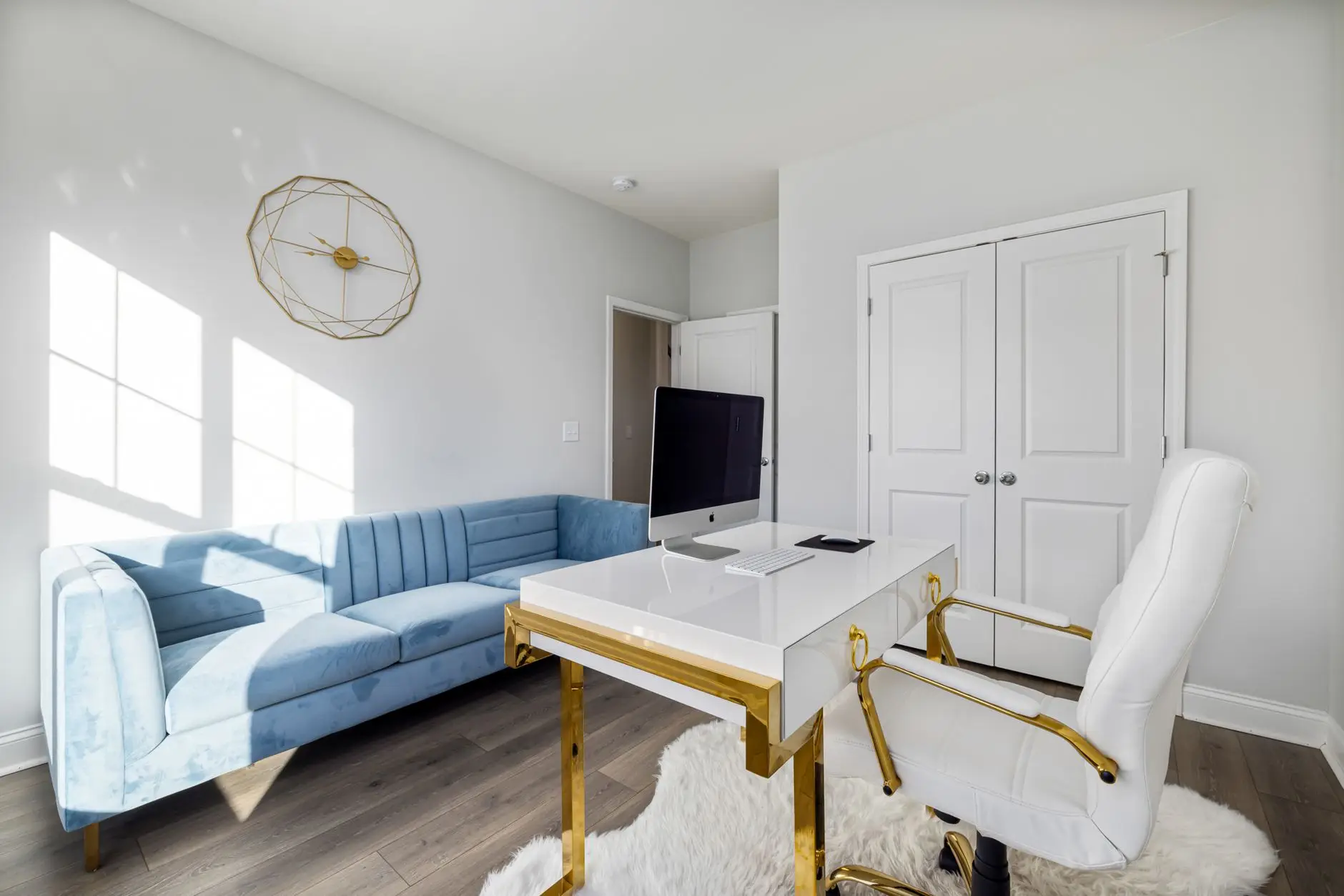
Photo by Curtis Adams on Pexels
An office living room combo works when the desk gets its own zone — behind the sofa, in a corner, or inside a closet — and can look like living room furniture again by 6 p.m. In most living rooms, remote work starts as a makeshift desk — a laptop on the coffee table and a lower back that files a complaint by Wednesday. Below are 12 living room office ideas that fit real square footage, what each costs at the time of writing, and the one desk we’d tell you to skip.
Before buying anything, move the kitchen table or a folding table you already own into each spot below for a few days. Rearranging is free, and a week of working from home in the wrong spot teaches you more about creating a living room office than any floor plan. Every living room office combo on this list follows the same rule: a designated work zone, and a way to make it disappear.
Put the Desk Behind the Sofa to Split the Living Room and Office
A desk pushed against the back of the sofa is the easiest way to give a living room and office two separate jobs without a single new wall. The sofa faces the TV; the chair faces the other way, so work stays behind you when you sit down to relax. Pick a desk the same length as the sofa or a little shorter, 24–30 inches deep, and about the sofa’s back height so it doesn’t overpower the seating area. A wooden desk runs $150–400; a standing desk works here too, as long as it drops back below the sofa line when you’re done. From the couch, it reads as a console table. From the chair, it’s a job.
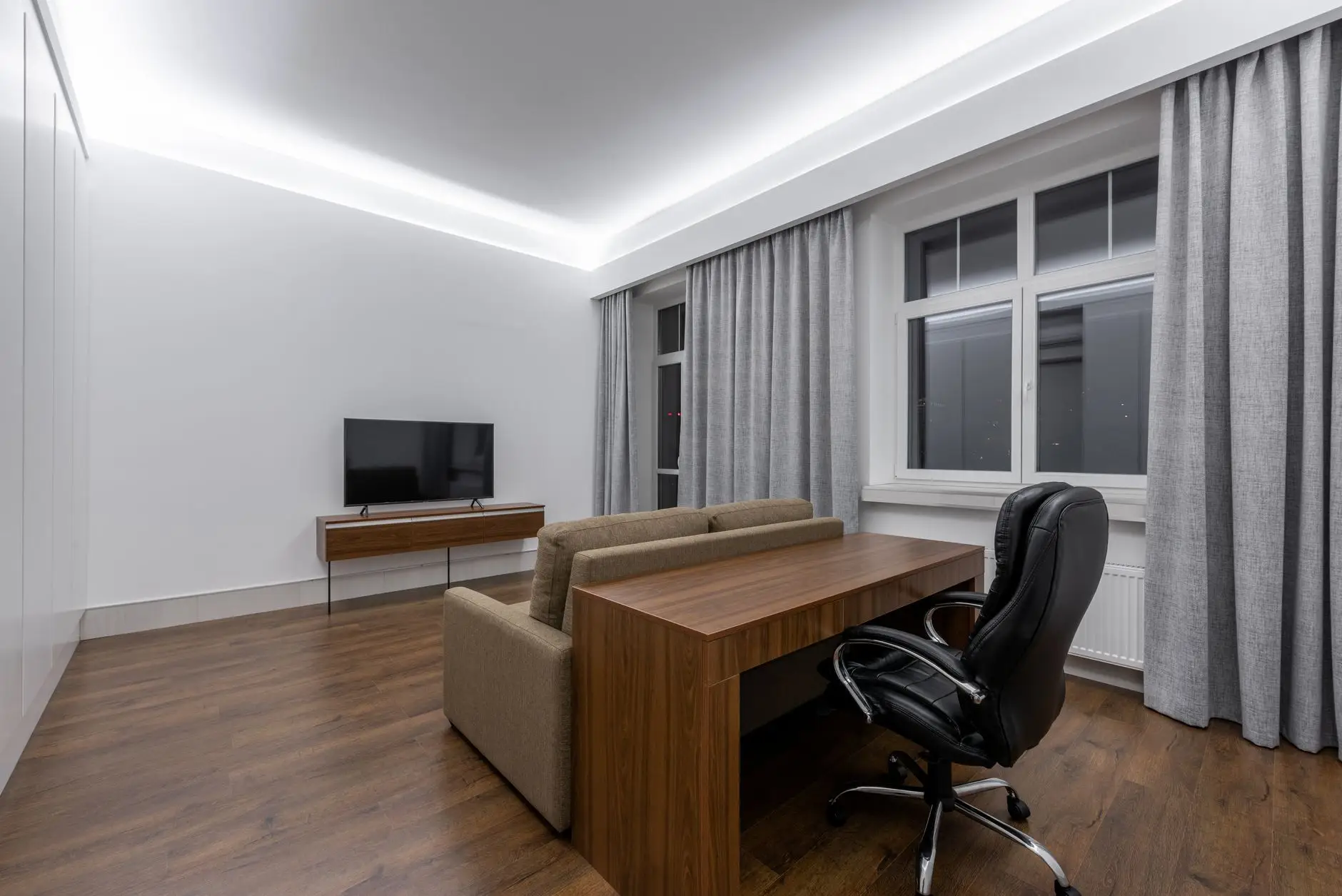
Photo by Max Vakhtbovych on Pexels
Face the Desk Toward Natural Light, Not Away From It
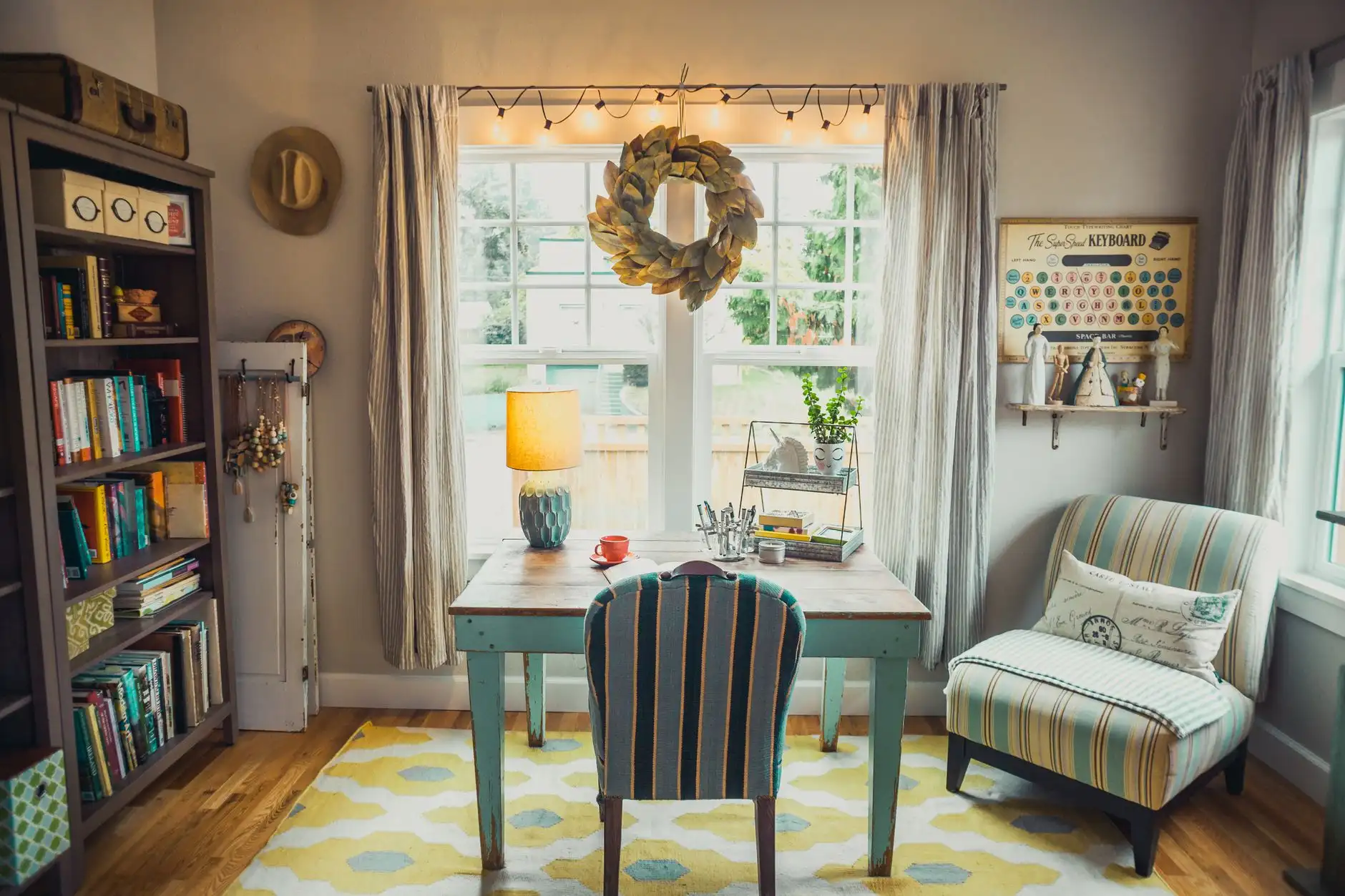
Set the desk beside or in front of a window so natural light lands on the work surface and on your face. It’s the single best upgrade to productivity in a living room office, and it costs nothing if the desk is already in the room. Side light is ideal. A window directly behind you turns every video call into a witness-protection interview. If the glare hits your screen at 3 p.m., a $25 sheer curtain panel softens it without blacking out the rest of the room. A desk in front of the window also keeps the office area off the main walkway, which makes the whole living space feel bigger.
Claim an Empty Corner for a Compact Desk and Office Chair
An unused corner is free office space in a small living room — a compact desk 36–42 inches wide fits where a floor plant usually sits. Expect $90–250 for a compact desk and $120–300 for an office chair you can sit in for eight hours; a desk chair in an upholstery fabric close to the sofa’s looks like it belongs in the lounge half of the room. Skip the L-shaped corner desk, even though it’s the one every search result wants to sell you. In a living room, it’s less a desk than a second sectional that only seats one. A straight desk plus a small shelf beside it gives you the same storage space and leaves the corner looking like part of the room, not a cubicle.
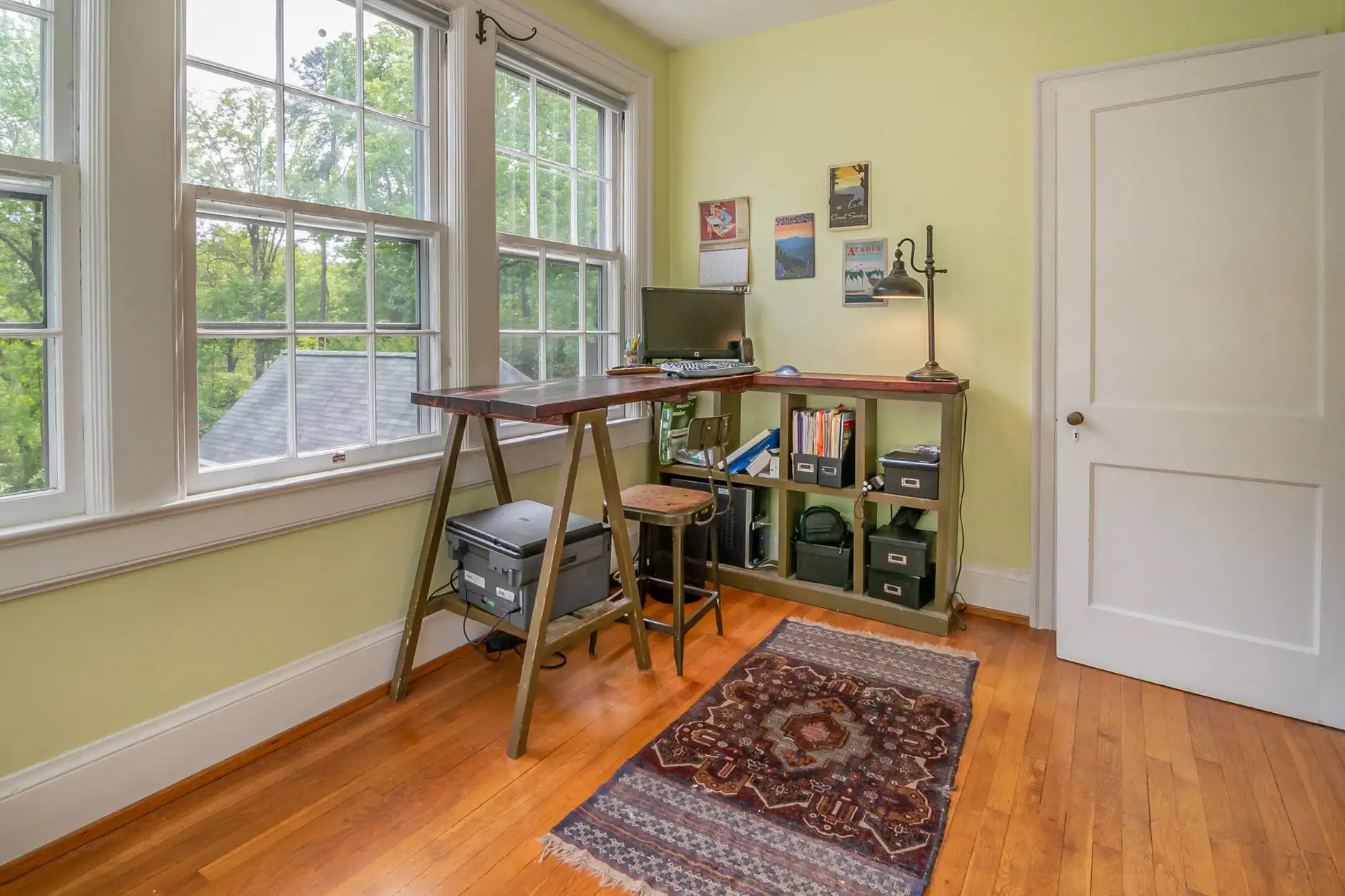
Photo by Curtis Adams on Pexels
Share the TV Wall With a Slim Living Room Desk
If the only empty wall is the one with the TV, share it: a slim living room desk at one end of the wall, the TV centered on the rest. Keep at least 3 feet between the desk and the TV console so each reads as its own piece of furniture, and match the desk to the console’s wood tones or metal finish so the wall looks planned — a black desk against a white wall reads as a deliberate choice, a random one reads as overflow. Our TV wall ideas guide covers mounting and cable routing for the other half of the wall. Put the desk far enough from the TV that the monitor and the remote never share a surface — proximity is how “one quick episode at lunch” happens.
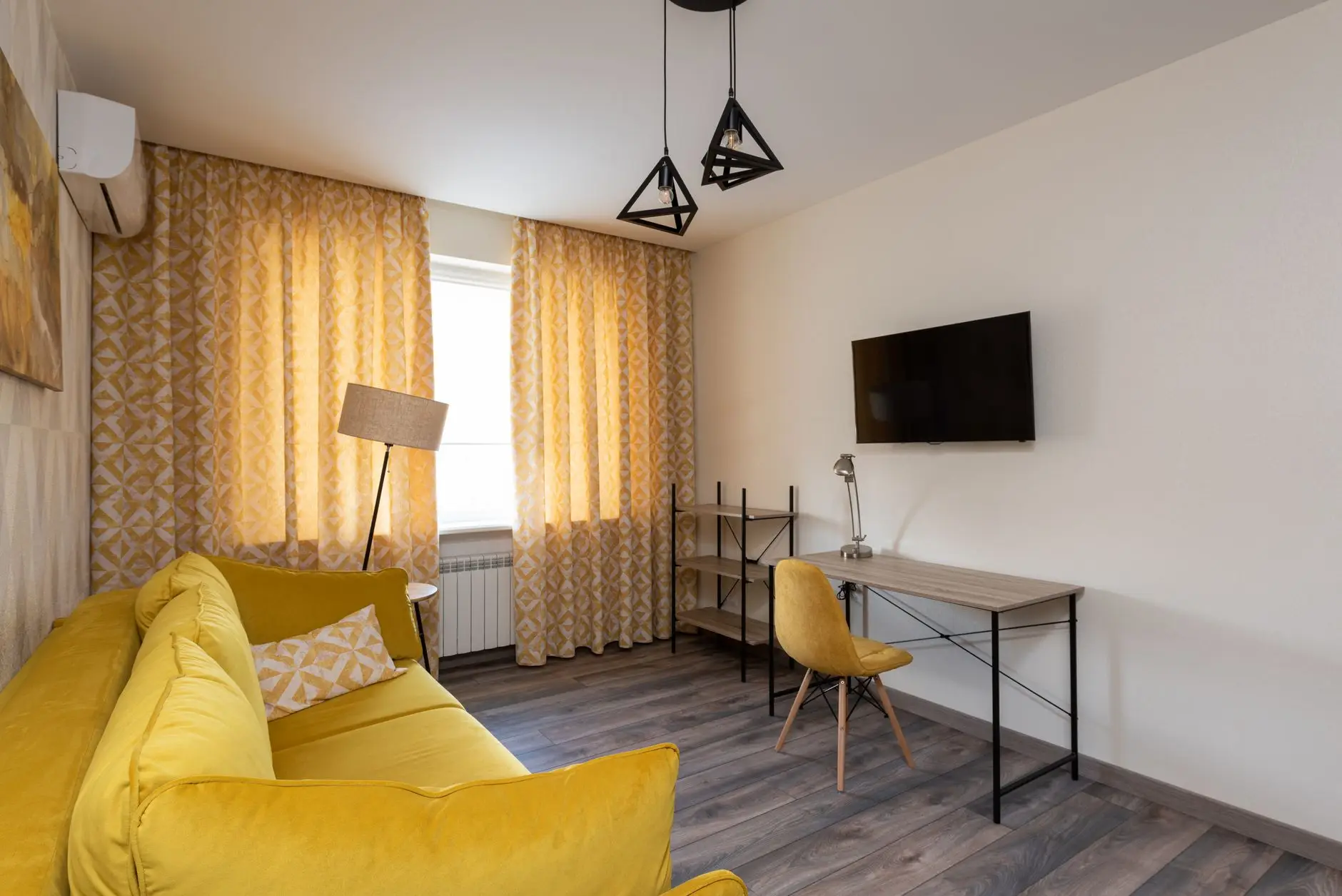
Photo by Max Vakhtbovych on Pexels
Choose a Secretary Desk That Closes at the End of the Workday
A secretary desk — a cabinet with a drop-front writing surface — is the best hidden storage desk for a living room because the whole workstation disappears behind one panel, and closed, it passes for a sitting room cabinet. Vintage secretaries turn up at estate sales and on Marketplace for $80–250; new ones run $250–600. A hutch desk with a bookshelf on top does the same job with open shelving instead of a lid. Check the depth: OSHA’s workstation guidance puts a monitor at least 20 inches from your eyes, so a 12-inch-deep secretary suits a laptop, not a full computer setup. A secretary is the only office furniture with a built-in end of shift: close the lid, and the spreadsheet is officially tomorrow’s problem.
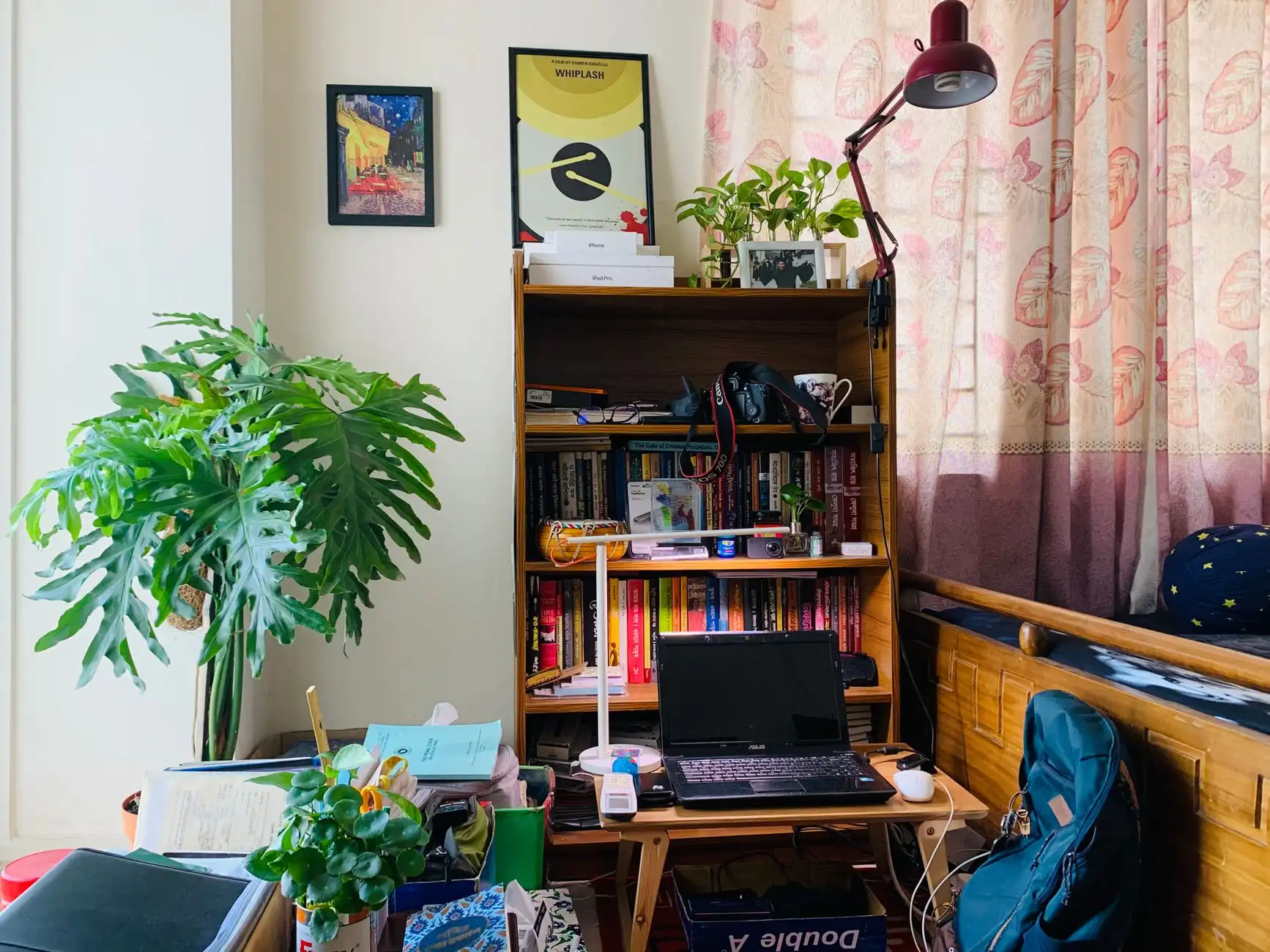
Photo by Shamsuddin Habib on Pexels
Lean a Ladder-Style Wall Desk Instead of Drilling Into Drywall
A ladder desk leans against the wall with a built-in work surface and one or two shelves above it, so renters get the floating shelf look without a single anchor hole. They run $80–200, sit 18–24 inches deep, and take up less floor than any standard desk. Put the heavier items low; the top shelf is for a plant and a piece of art, not a printer. It’s the best option when space is limited and the wall behind the sofa is the only empty one left. If you own the place, a true wall-mounted desk is $60–150, but it must hit studs. (Ask us how many anchor holes a “quick” floating desk install leaves behind. Actually, don’t.)
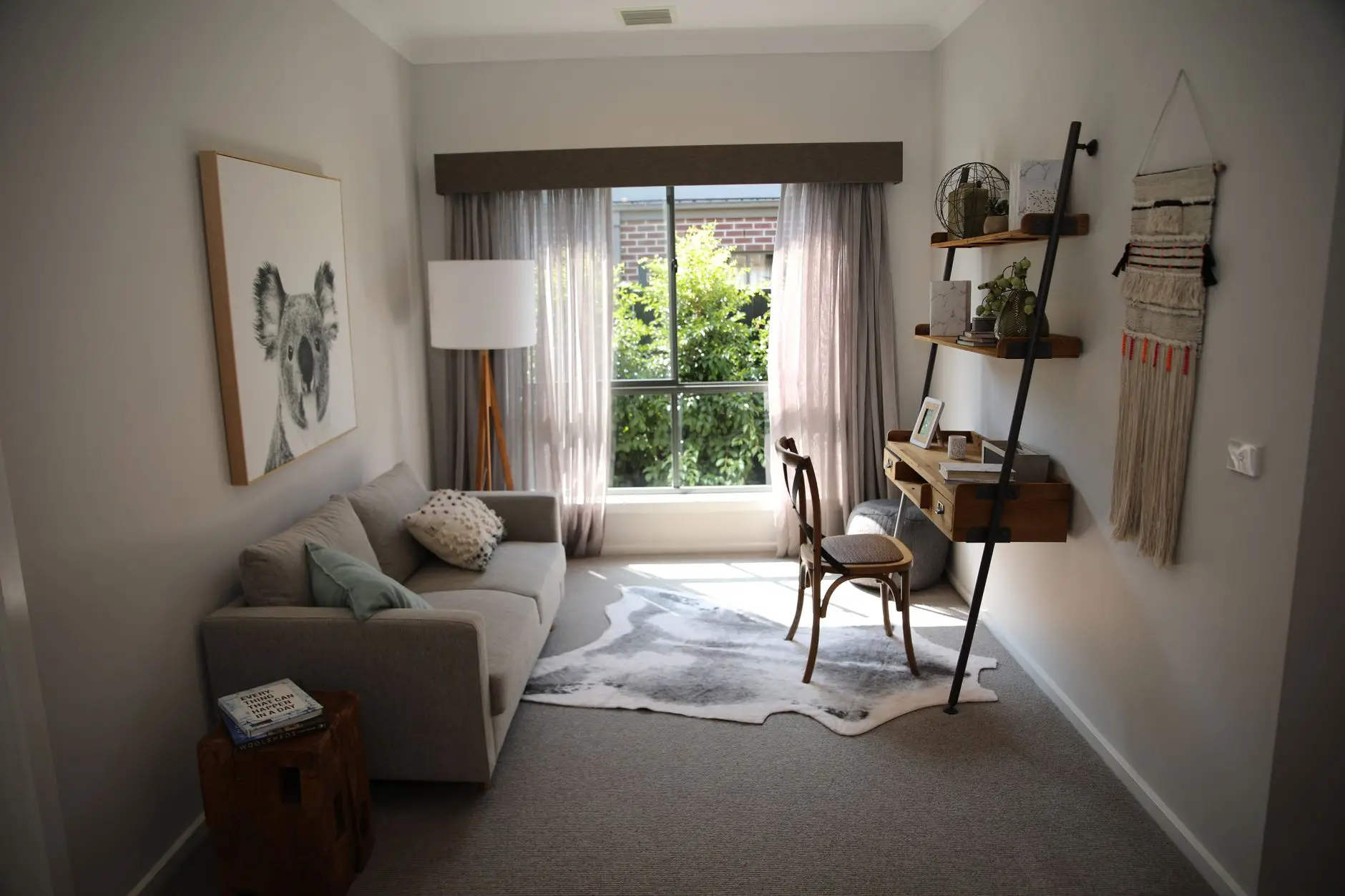
Photo by dp singh Bhullar on Pexels
Anchor the Office Area With Its Own Rug
A rug does the same thing for a desk that it does for a sofa: it tells the room where one zone ends and the next begins, even in a compact apartment with one open living room space. Use a 4×6 or 5×8 under the desk area, big enough that the office chair stays on it when pulled out — a chair rolling off the edge every few minutes gets old by lunch. Low-pile or flatweave, $60–180; skip shag, which traps chair casters. Measure the actual zone, not a photo of it. We once ordered an outdoor rug off a photo and got an 8×10 that looked like a bath mat in a gymnasium — then paid $40 more for the size that actually fit.
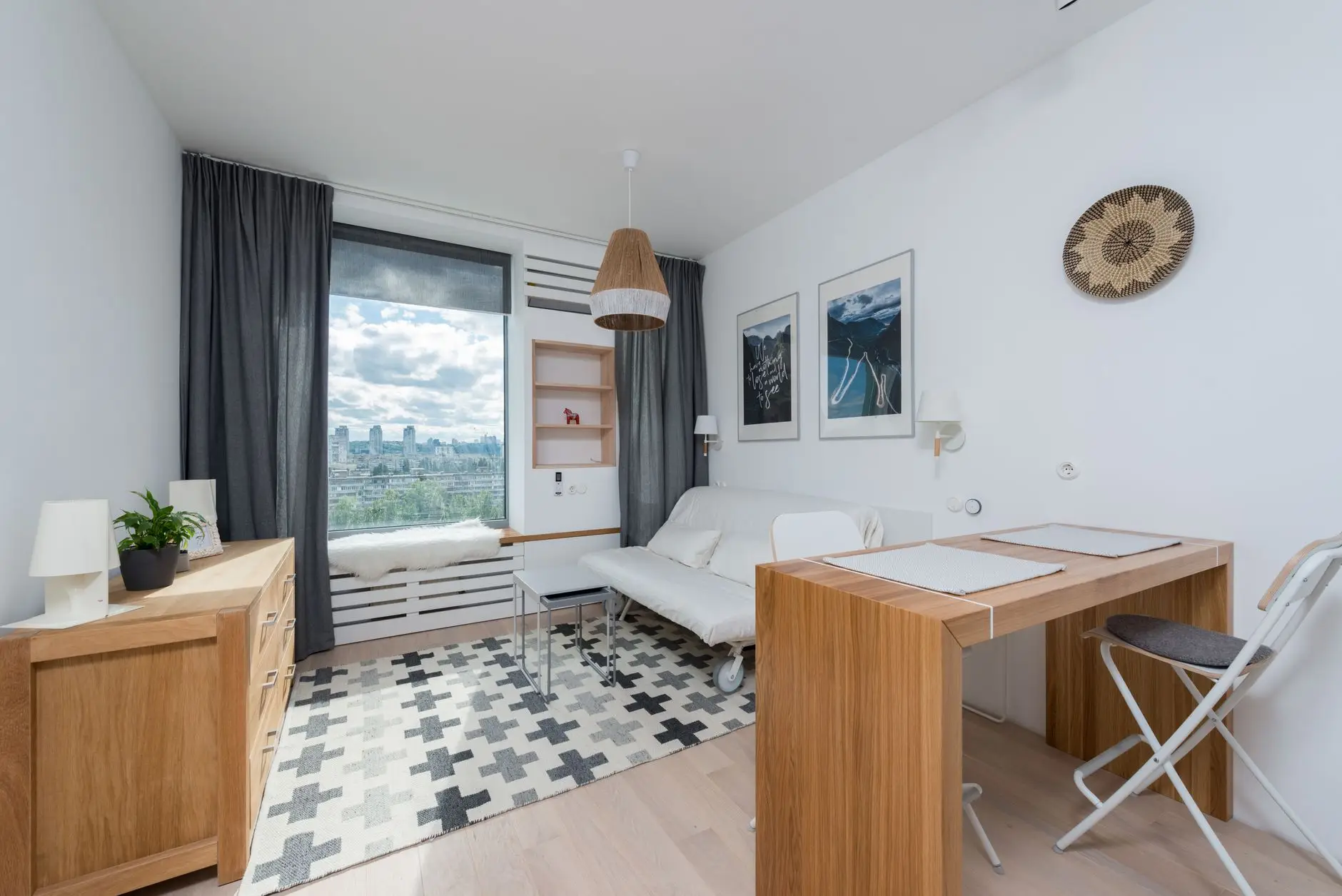
Photo by Max Vakhtbovych on Pexels
Divide the Living Area With a Bookcase, Screen, or Curtain
When the desk can’t face away from the seating area, block the view instead — it’s the oldest trick in interior design for an office in the living room. An open bookcase set perpendicular to the wall gives you a desk and bookshelf in one move and still lets light through, $70–200. A folding screen, $60–150, hides the desk the way a magician hides a card: everyone knows it’s there, nobody has to look at it. A curtain on a floor-to-ceiling tension rod runs $40–100 and needs no drilling. Our room divider ideas guide goes deeper on each option for renters.
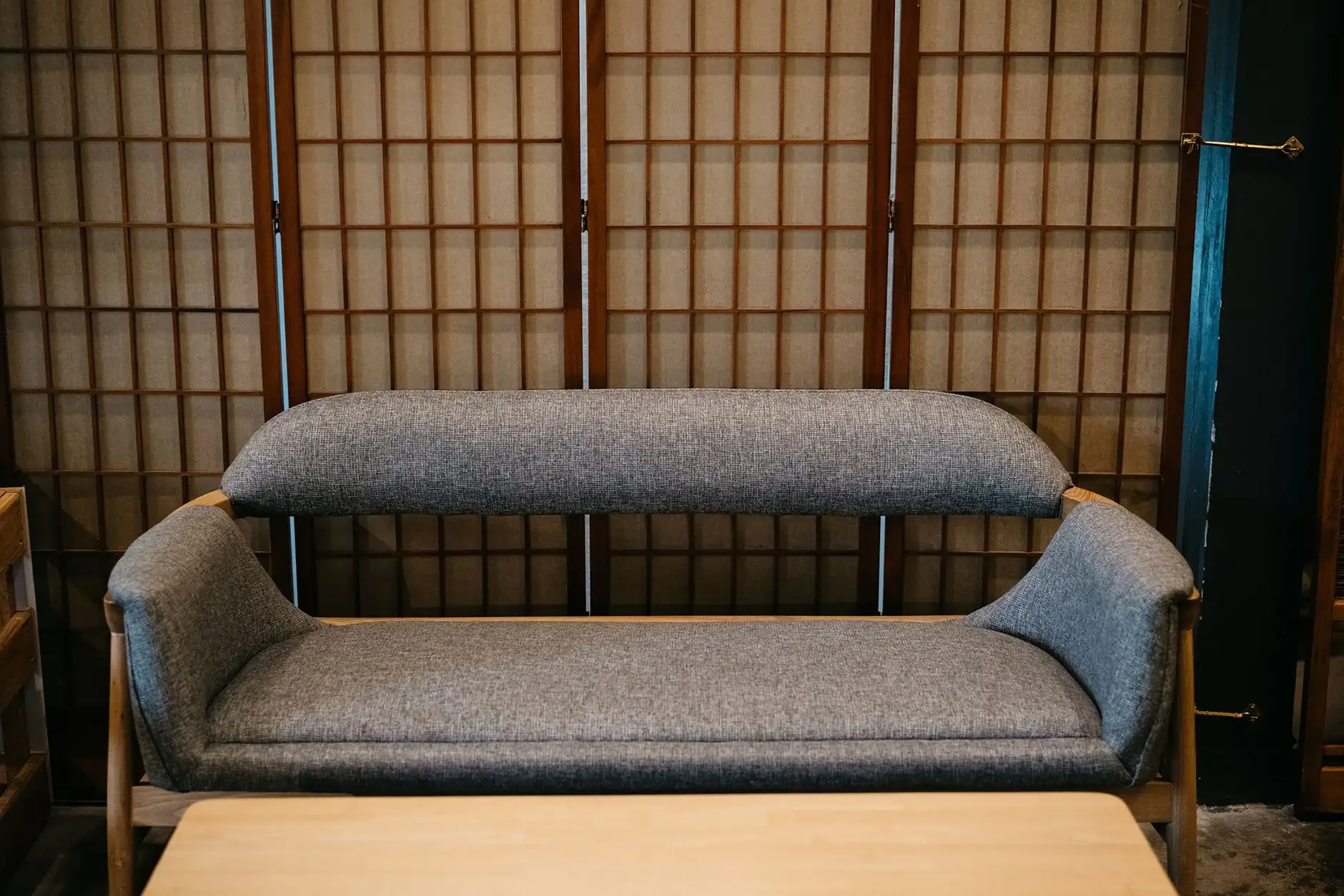
Photo by Markus Winkler on Pexels
Turn a Closet or Alcove Into a Built-In Desk Nook for a Home Office
A coat closet 24 inches deep or wider can become a built-in desk nook — a “cloffice” — with a desktop cut to fit, a floating shelf above, and doors that close on the whole thing. Pull the rod, add a 1-inch-thick desktop on cleats or two small file cabinets ($60–150 total), and run a power strip in from the nearest outlet. An alcove beside a fireplace or chimney works the same way without doors. It’s the closest a small apartment gets to a dedicated office space with a door you can close, and the cheapest built-ins you’ll ever own. A cloffice is the only home office where going to work means opening the door you used to throw shoes behind.
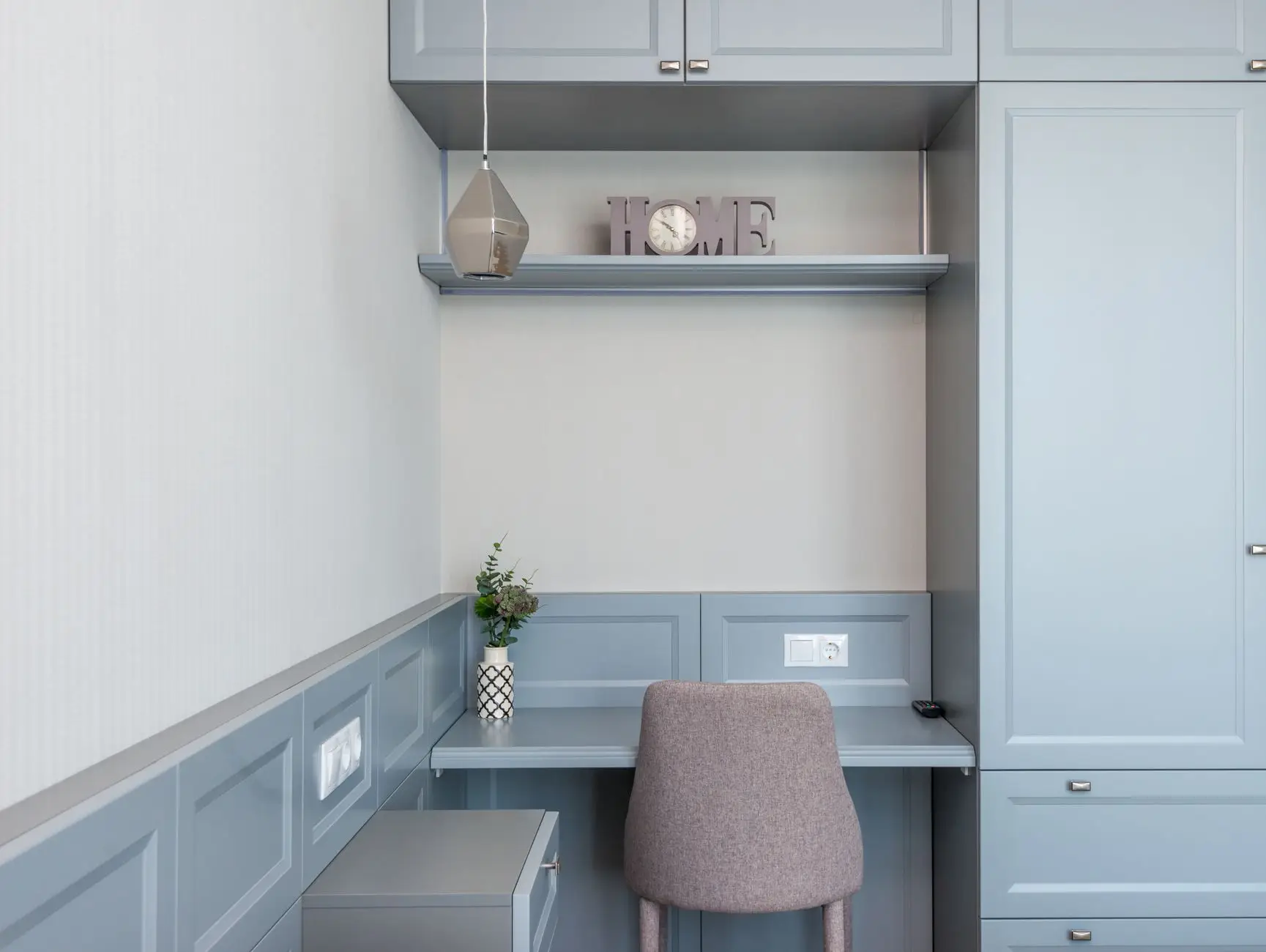
Photo by Max Vakhtbovych on Pexels
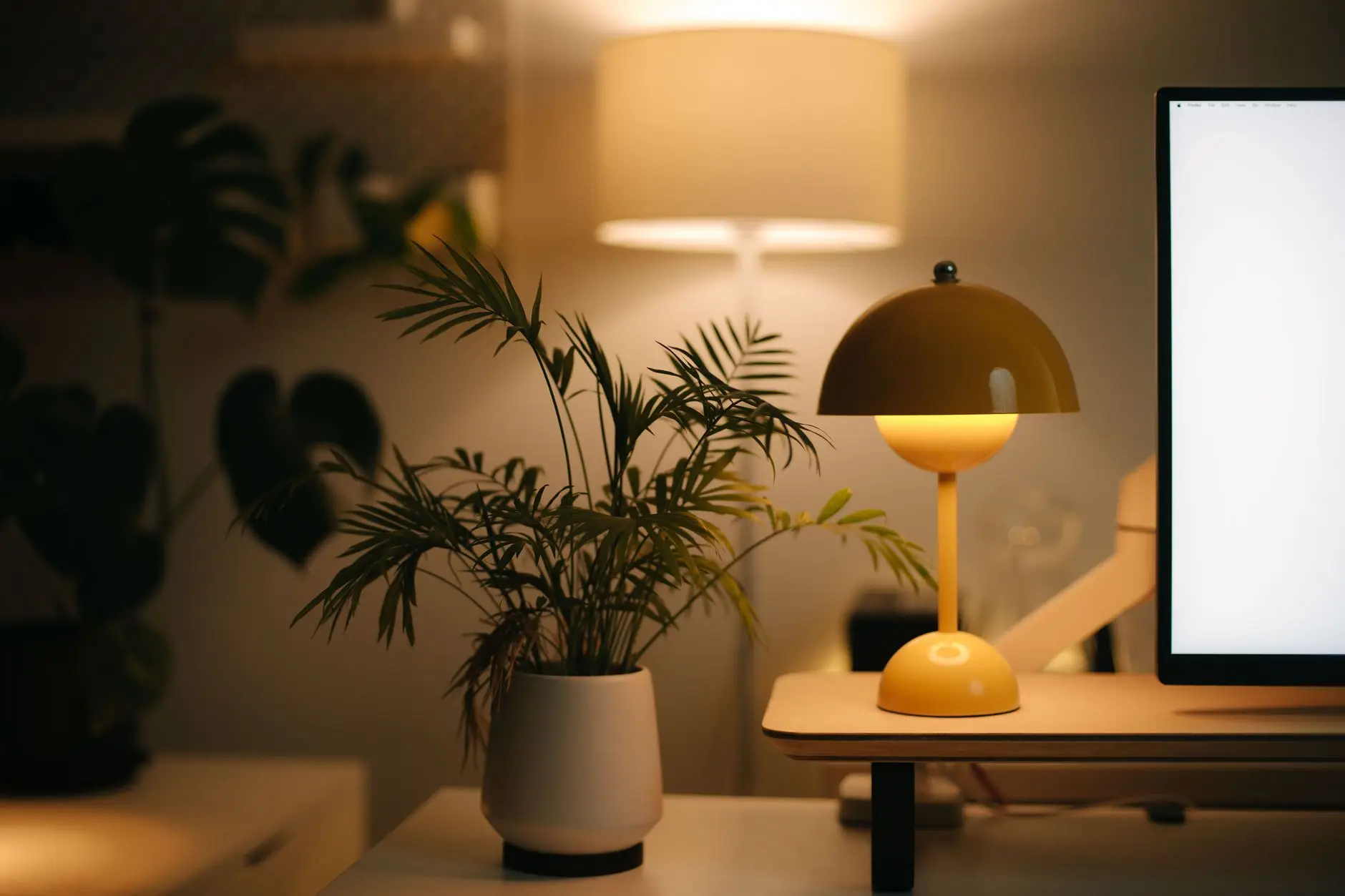
Light the Workspace With a Warm Table Lamp, Not the Overhead Fixture
A table lamp on the desk does more for a living room workspace than any new furniture: it lights the work surface and keeps the rest of the room soft. Look for 2700–3000K on the bulb box — the Department of Energy’s lighting guide explains that lower Kelvin numbers mean warmer light. A 5000K daylight bulb over the sofa turns a living room into a dentist’s waiting room by 8 p.m. A decent desk lamp is $30–80, and a $10 warm bulb in the existing ceiling fixture fixes the rest. This is the swap we’d make before buying a single piece of office furniture — warm light is why a desk feels like part of the room instead of a cubicle.
Hide Office Supplies, Cables, and Clutter in a Closed Cabinet
Clutter is what makes a living room office look like an office, so give every work item a closed home. A lidded bin or a two-drawer cabinet ($30–90) holds office supplies and paper with plenty of storage left for the printer; a cable tray screwed under the desk ($20–35) holds the power strip and chargers. The rat’s nest of cords under a desk is the living room’s version of an unmade bed. Keep the desk surface to a lamp, the laptop, and one plant, and let the rest of the decor — a gallery wall, a painting, a stack of books — belong to the living room. The goal is a space to work that switches between work and play without a 20-minute cleanup.

Photo by Jakub Zerdzicki on Pexels
Here’s the Honest Math: What a Living Room Office Setup Costs
A working living room office setup costs about $300–400 on a tight budget and roughly $770–1,285 if you buy the pieces you’ll keep for years. Here’s the honest math, before tax and shipping, at the time of writing:
| Piece | Budget | Keeper |
|---|---|---|
| Desk (compact, wood, or secretary) | $90–150 | $250–600 |
| Desk chair | $80–120 | $200–300 |
| Rug for the desk area | $60 | $150–180 |
| Table lamp + warm bulbs | $30 | $80 |
| Storage bin, cabinet, cable tray | $40 | $90–125 |
| Total | $300–400 | $770–1,285 |
The cheapest version is the table you already own, pushed behind the sofa, with a $10 warm bulb. If the square footage is tight enough that every piece has to do two jobs, our multifunctional furniture guide covers the desks and tables that fold away. Keep the pieces of furniture cohesive with the rest of the room — the warm minimalism palette of light wood, warm wood tones, and soft neutrals makes a desk read as furniture, not equipment. Our shop-the-look living room office makeover will pull the desk, lamp, rug, and storage from this list into one shoppable page with an honest total.
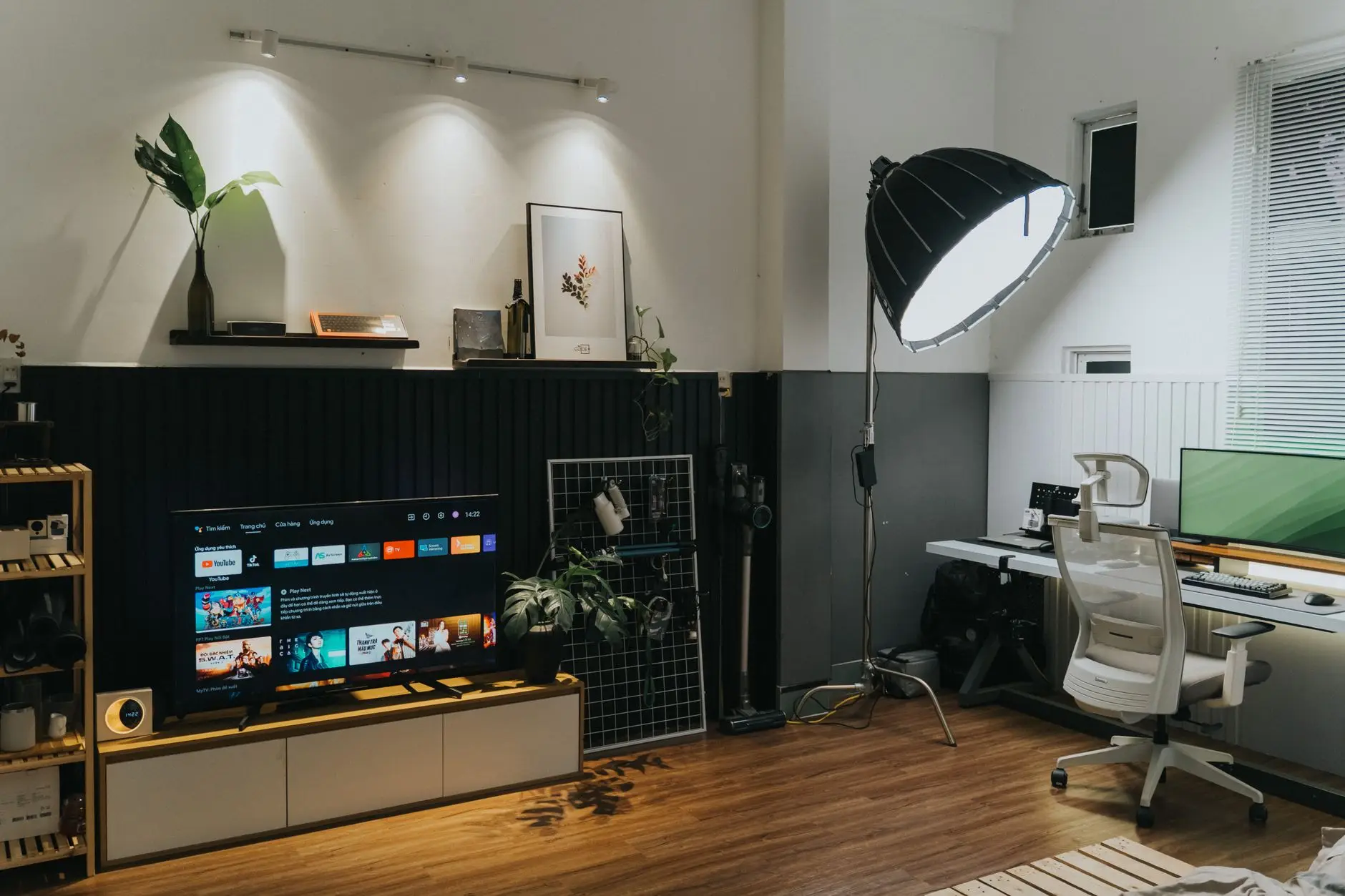
Photo by minhphuc .workspace on Pexels
Start by moving the table you already own behind the sofa for a week. If the office still bugs you on Friday, buy the desk. If it doesn’t, you just saved $400.
Frequently asked questions
How do you combine a living room and an office?
Give the office its own zone instead of scattering it through the room. Put the desk behind the sofa, in a corner, or along an empty wall, then define it with a rug, a bookcase, or a folding screen. Use closed storage for office supplies so the work area can disappear when the workday ends.
Where should a desk go in a living room?
The best spots are behind the sofa, beside a window, in an unused corner, or inside a closet or alcove. Avoid placing the desk where you face the TV or sit with your back to a busy walkway. Side light from a window is ideal; a window directly behind you makes video calls hard to see.
What is the 2/3 rule for living rooms?
It is a common sizing guideline: a piece should be roughly two-thirds the size of what it sits next to. A sofa runs about two-thirds the length of its wall, and a coffee table about two-thirds the length of the sofa. In a living room office, it keeps the desk from overpowering the seating area.
How do you hide a desk in a living room?
Choose a desk that closes, such as a secretary desk or a cabinet desk, or tuck the desk into a closet with doors. A folding screen, a curtain on a ceiling track, or an open bookcase can also block the view of the desk from the sofa without building anything permanent.
How do you keep a living room office from looking cluttered?
Limit the desk surface to what you use daily and give everything else closed storage: a cabinet, lidded bins, or a drawer unit. Route cables through a tray under the desk, keep paper in one box, and pick office furniture in the same wood tones or colors as the rest of the room.