
Style Guides
Organic Modern Style Explained: Design, Furniture & Decor
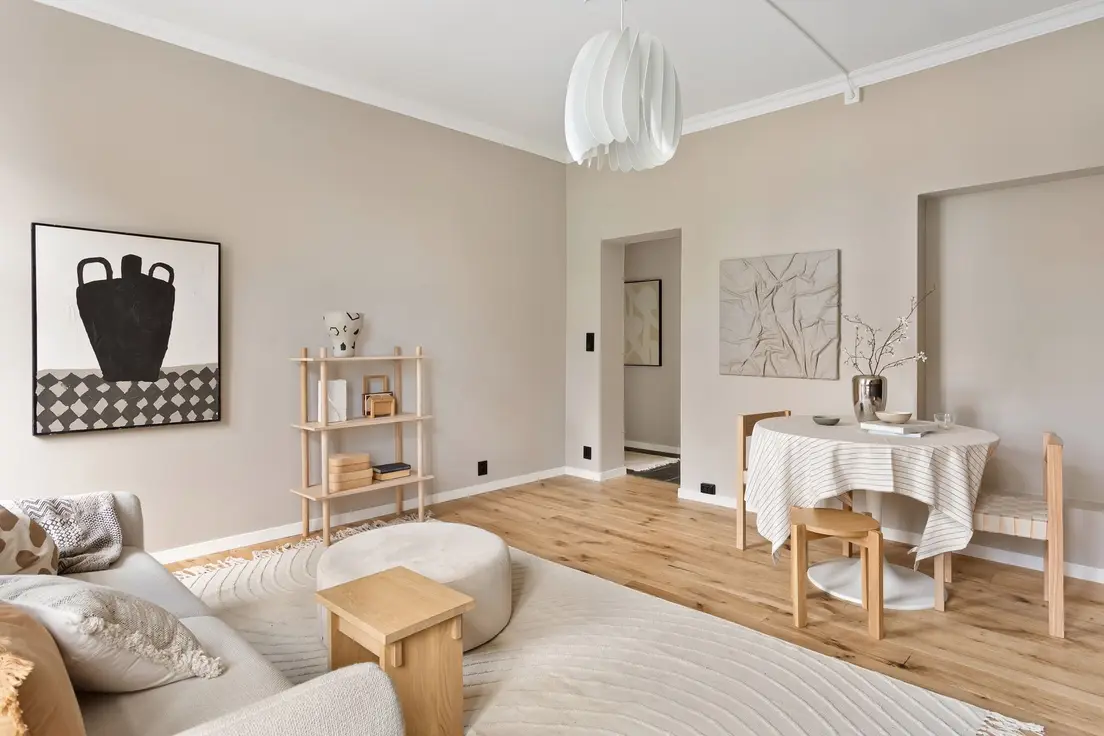
Organic modern style is modern design’s clean lines and restraint, built out of natural materials instead of glass and chrome: warm neutral walls, wood, linen, clay, stone, and furniture with rounded shapes. It’s the version of modern that looks like someone lives there. Most of the look comes from paint, light, and texture, which is good news, because the live-edge coffee table on every mood board costs more than most people’s first car payment. Below: what organic modern design actually is, where it came from, how it differs from its neighbors, and an honest shopping guide on what to buy first and what to skip.
What Is Organic Modern Style in Interior Design?
Organic modern is an interior design style that pairs modern furniture’s simple silhouettes with raw, natural materials and soft, rounded forms. The base is a warm neutral palette. The furniture keeps clean lines but loses the sharp corners. Every surface you touch — wood, linen, stone, clay — is something that grew, was quarried, or was fired, not molded from plastic.
The test is simple: if a room reads calm and uncluttered but still invites you to sit on the couch with your shoes off, it’s organic modern. If it reads like a dentist’s waiting room with very good taste, it’s just modern. Most organic modern design comes down to five things: a neutral base, natural materials, curved shapes, warm light, and one handmade piece with some character.
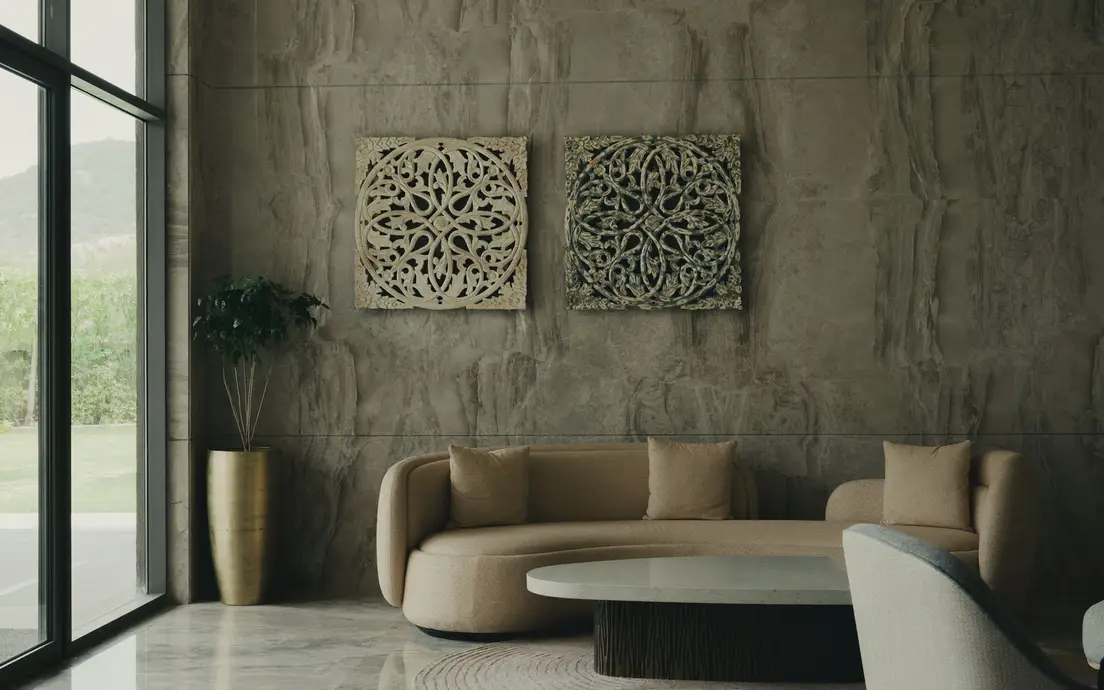
Photo by Ishan Sharma on Pexels
Where Organic Modern Design Came From: Wright, MoMA, and 1941
The style is older than its hashtag by about 80 years. Frank Lloyd Wright spent decades arguing for “organic architecture” — buildings shaped by their landscape and built from local materials, with Fallingwater, the house cantilevered over a Pennsylvania waterfall, as the famous example.
Furniture caught up in 1941, when the Museum of Modern Art ran Organic Design in Home Furnishings. Charles Eames and Eero Saarinen won first prizes there with molded plywood seating that curved to fit the body. That’s the American root of every rounded wood chair you see today. The current trend is that same idea, re-run with linen and oatmeal paint instead of plywood experiments — which makes your new sofa, technically, a museum reference.
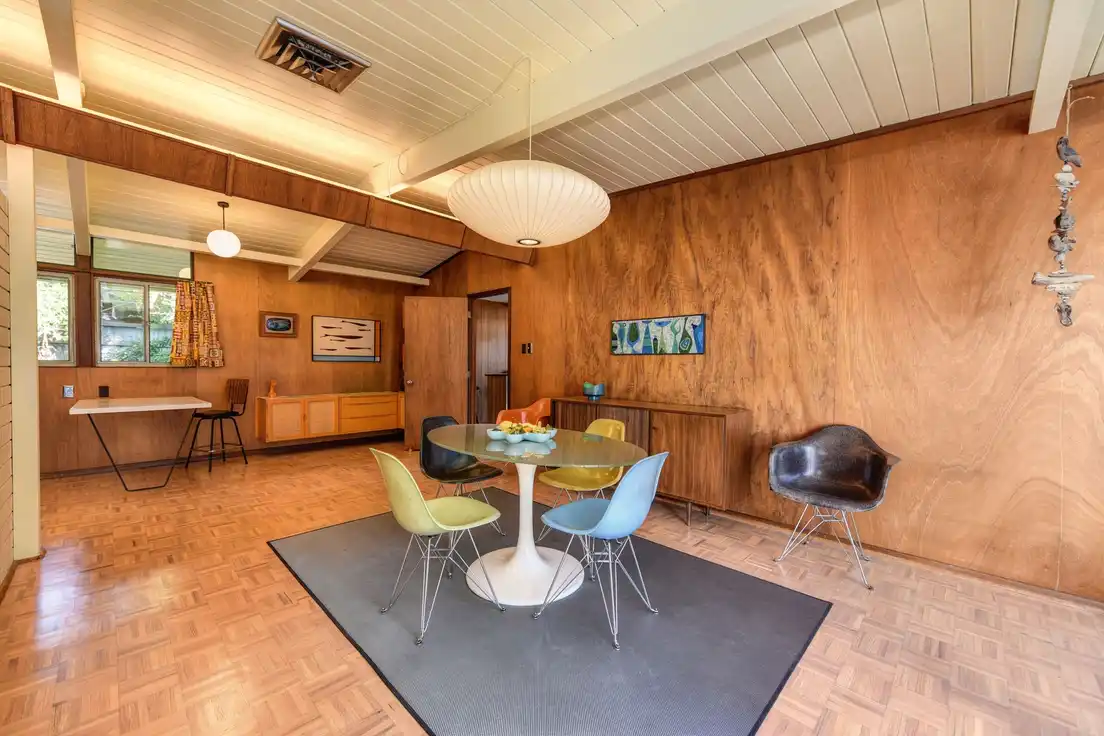
Photo by Stephen Leonardi on Pexels
Organic Modern vs. Modern, Warm Minimalism, and Japandi
Organic modern sits between three styles people already know, and the differences are mostly about materials and how strict the rules are.
Organic modern vs. modern furniture and design
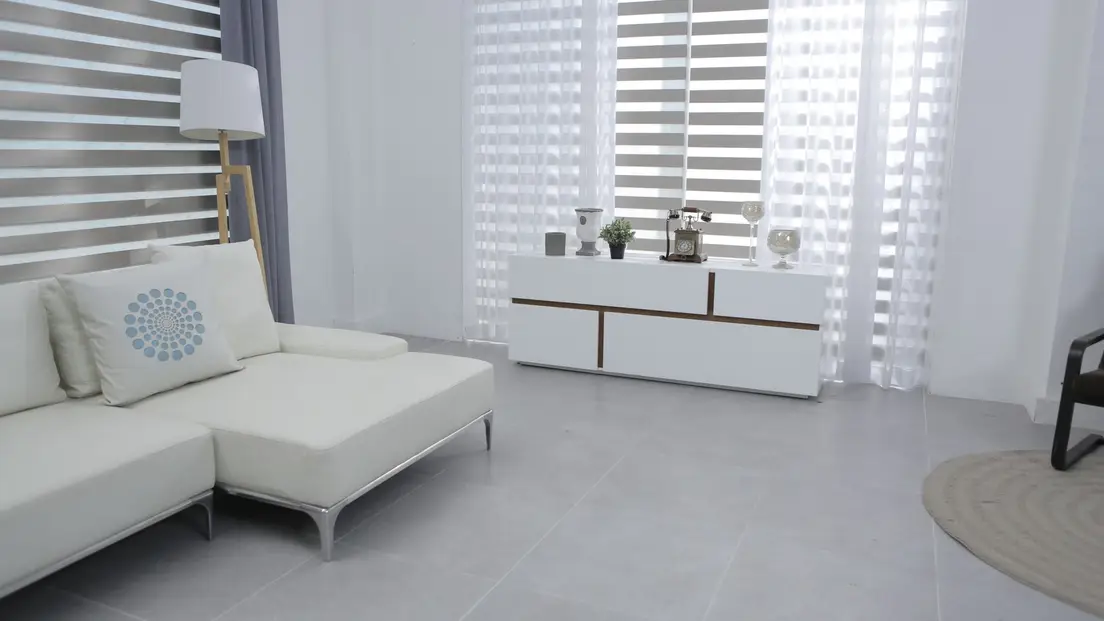
Modern design runs on glass, steel, lacquer, and cool gray. Organic modern keeps the silhouettes and swaps the finishes for wood, linen, and stone. If you like the strict, cooler version, our modern minimalist living room guide is the place to start.
Organic modern vs. warm minimalism
Close cousins. Warm minimalism is stricter about owning fewer things. Organic modern allows more texture, more curves, and more handmade objects.
Organic modern vs. japandi
Japandi is lower, darker, and more architectural — black accents, low platforms, and Japanese restraint. Organic modern is softer and rounder, with more cream and fewer straight lines.
Start With a Neutral Base: Cream, Sand, and Warm White
Paint the walls a warm neutral before you buy a single piece of furniture. Cream, sand, oatmeal, and warm white are the base of every organic modern room, and they do 70% of the work. Avoid stark white and cool gray, which turn blue at night.
A gallon of good interior paint runs $40–80 and covers about 350 square feet, so a 12×14 living room is two gallons and one weekend. Test two swatches on the actual wall and look at them at 8am and 8pm. Undertones matter: a cream with a pink undertone next to an oak floor with an orange one looks like two people decorated the room without speaking. Our guide to the best color for bedroom walls breaks down how undertones behave in different light. Linen curtains in a second neutral, hung near the ceiling, finish the base for $60–120 a pair.
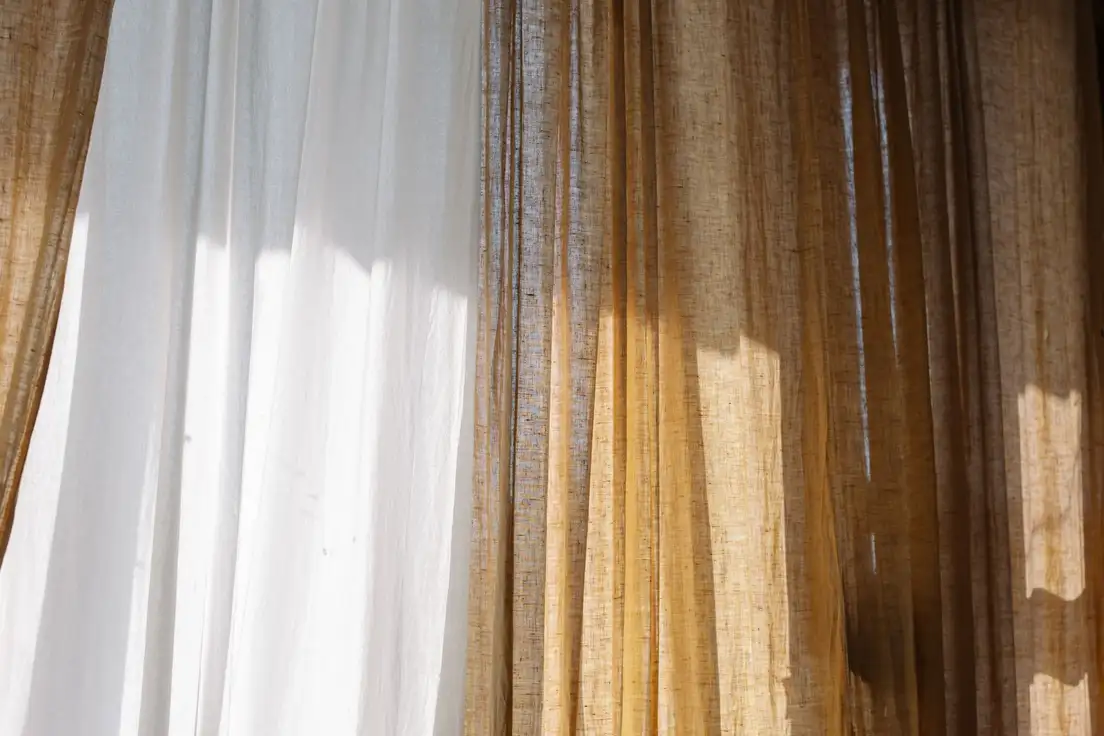
Photo by cottonbro studio on Pexels
Use Sage Green, Olive, or Clay as the Only Accent Colors
Pick one muted earth tone and use it in two or three places, not ten. Sage green, olive, clay, rust, and walnut brown are the classic organic modern accents. They read like things you’d find outdoors — moss, terracotta, bark — which is the whole point.
The cheapest way in is pillow covers ($15–30 each) and one throw. The bolder way is a single olive or clay accent wall, or a limewash finish ($60–90 a gallon) that gives the wall a soft, cloudy texture. Skip bright orange, saturated blue, and anything floral at full volume. One olive wall looks deliberate. Olive walls, olive pillows, olive rug, and an olive lamp looks like the room lost a bet.
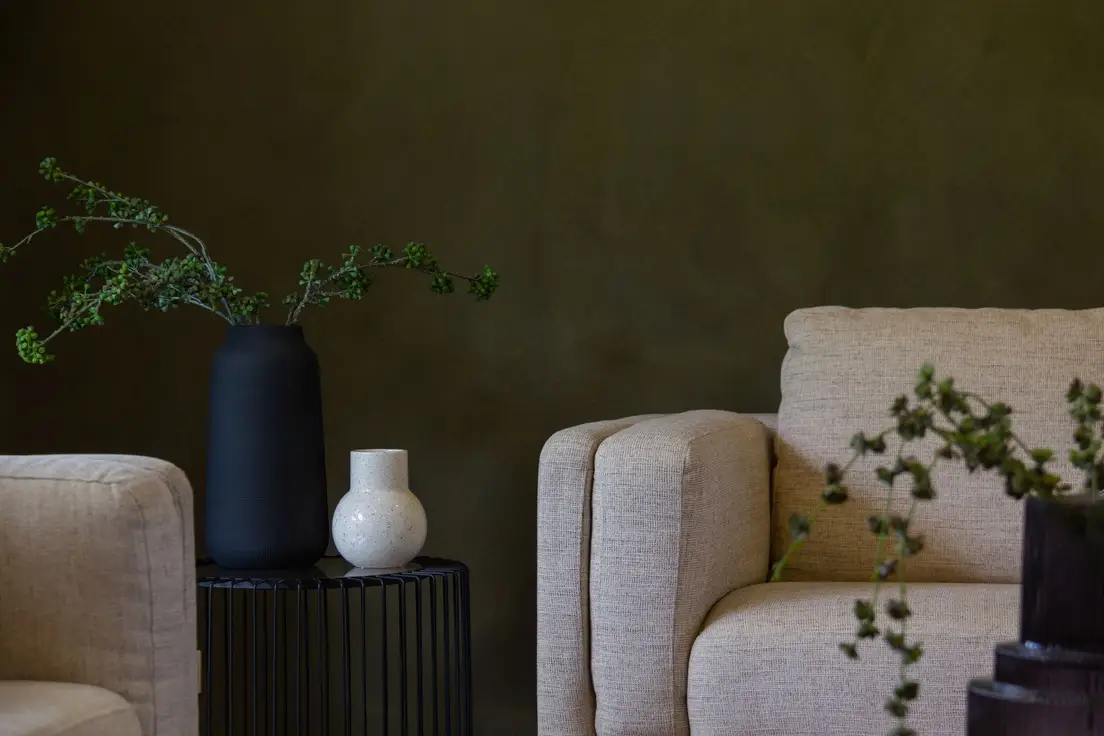
Photo by Martin Lang on Pexels
Choose Natural Materials: Wood, Stone, Linen, and Clay
Natural materials are the “organic” in organic modern, and four cover almost every room: wood, stone, linen, and clay. Add wool and rattan, and you have the full set of six. Aim for three of them in any one room.
For wood, light oak, white oak, and mid-tone walnut all work. Reclaimed wood adds a lived-in finish that new solid wood takes a decade to earn. Stone can be as small as a $25 marble tray. Linen goes on the sofa, the bed, or the windows. Clay means terracotta pots or stoneware. Some buyers also care about provenance — FSC-certified or reclaimed wood is the sustainable choice, and a good retailer will tell you where a piece came from. If a product page can’t say what the frame is made of, assume it’s particleboard in a wood-look costume.
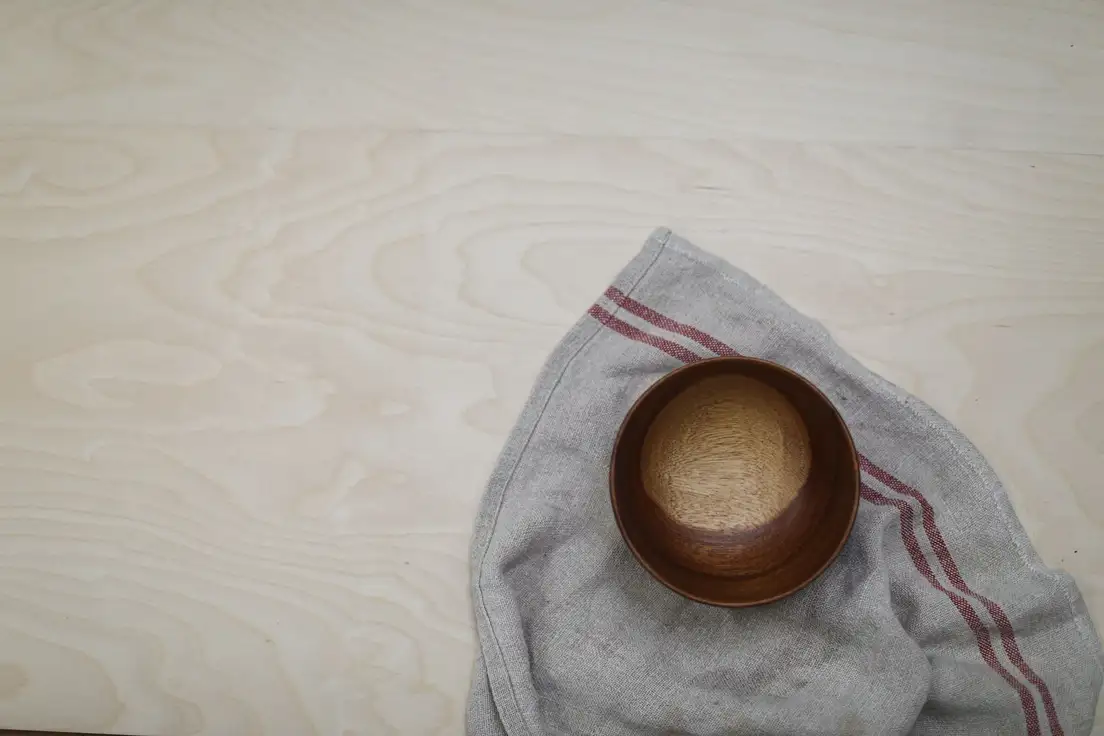
Photo by Cup of Couple on Pexels
Pick Furniture With Round, Circular Shapes and Clean Lines
Round off at least two pieces in every room. That’s the fastest way to make modern furniture read organic. A curved couch, a round or oval coffee table, a pedestal dining table, a barrel chair, or an arched mirror all count. Keep the lines clean — no tufting, no skirts, no scrolls — and let the shape do the work.
Circular pieces also solve a real layout problem: a 36-inch round coffee table leaves more walking room than a 48-inch rectangle, and no one catches a shin on a corner. Expect $150–400 for a round wood coffee table, $500–1,200 for a pedestal dining table, and $900–2,500 for a curved sofa. A curved sofa also needs about 6 inches more depth than a straight one. (Measure the doorway before you order the curved sofa. Those arcs don’t bend.)
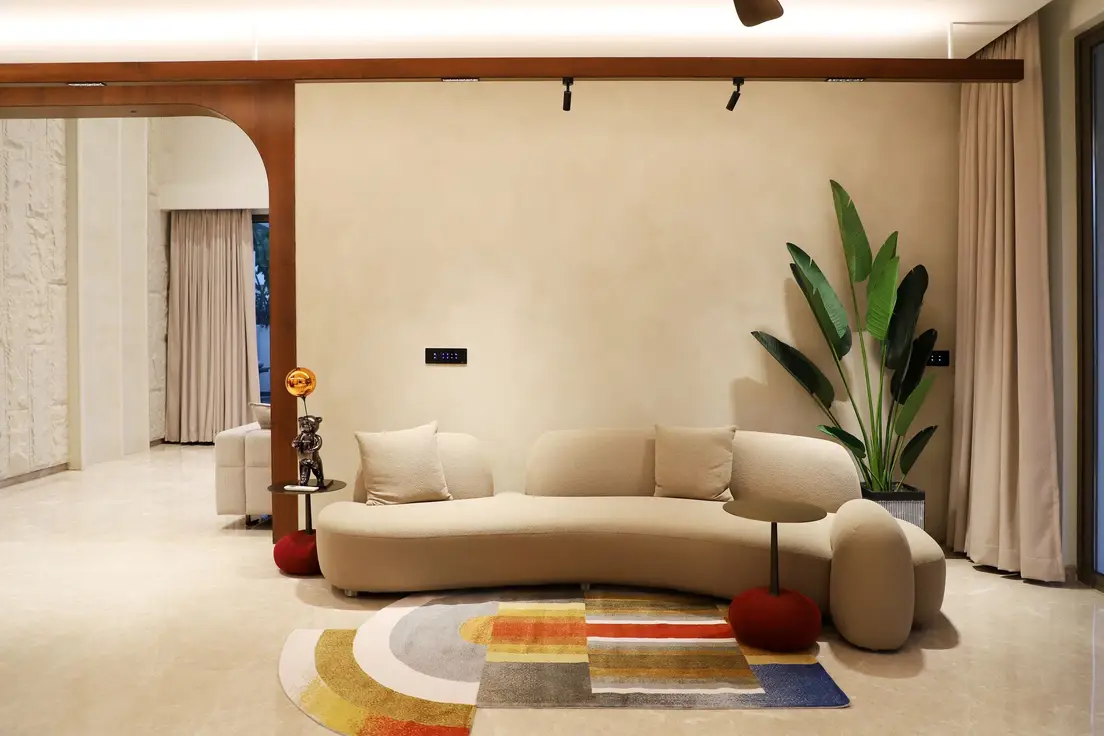
Photo by Sharath G. on Pexels
Layer a Jute or Wool Rug and Handmade Textiles for Texture
Texture is what keeps a neutral room from looking unfinished, and the rug carries most of it. A jute or wool rug gives you texture without adding a color. Expect $150–350 for an 8×10 jute rug and $300–800 for wool. Jute is rougher underfoot; wool is softer and lasts longer.
Size it bigger than feels right. The front legs of every seat should sit on it. We once measured a patio off a photo instead of the actual slab, and the rug that arrived looked like a bath mat in a gymnasium — same mistake, any room. Add handmade textiles on top: a chunky wool throw ($40–70), linen pillow covers, a woven or quilted textile on the bed. Mix nubby, smooth, and woven; three textures in the same color still look layered, not flat.
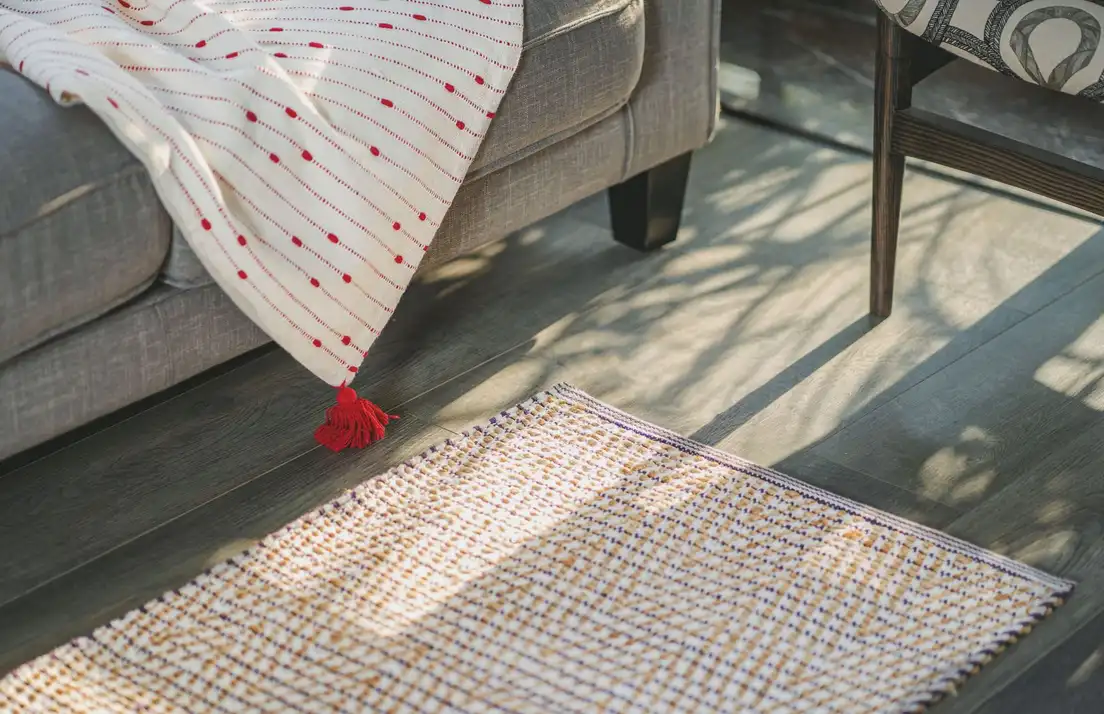
Photo by Dhally Romy on Pexels
Get the Lighting Warm: Paper, Rattan, and 2700K Bulbs
Lighting is the cheapest way to make a room read organic modern. Swap every bulb to 2700K, which is the warm, slightly golden end of white. The builder-grade 4000K bulb is why your new linen sofa looks great at noon and like a pharmacy aisle at 9pm.
Pick fixtures in natural materials: a paper lantern pendant ($25–60), a rattan or woven shade ($60–150), a ceramic table lamp, or a wood floor lamp. Paper and rattan diffuse light softly, which is what you want. For brightness, an 800-lumen bulb replaces an old 60-watt one, per ENERGY STAR’s lumens guide. Use at least three light sources per room at different heights. Brass or aged-brass finishes fit; chrome and glossy black don’t.
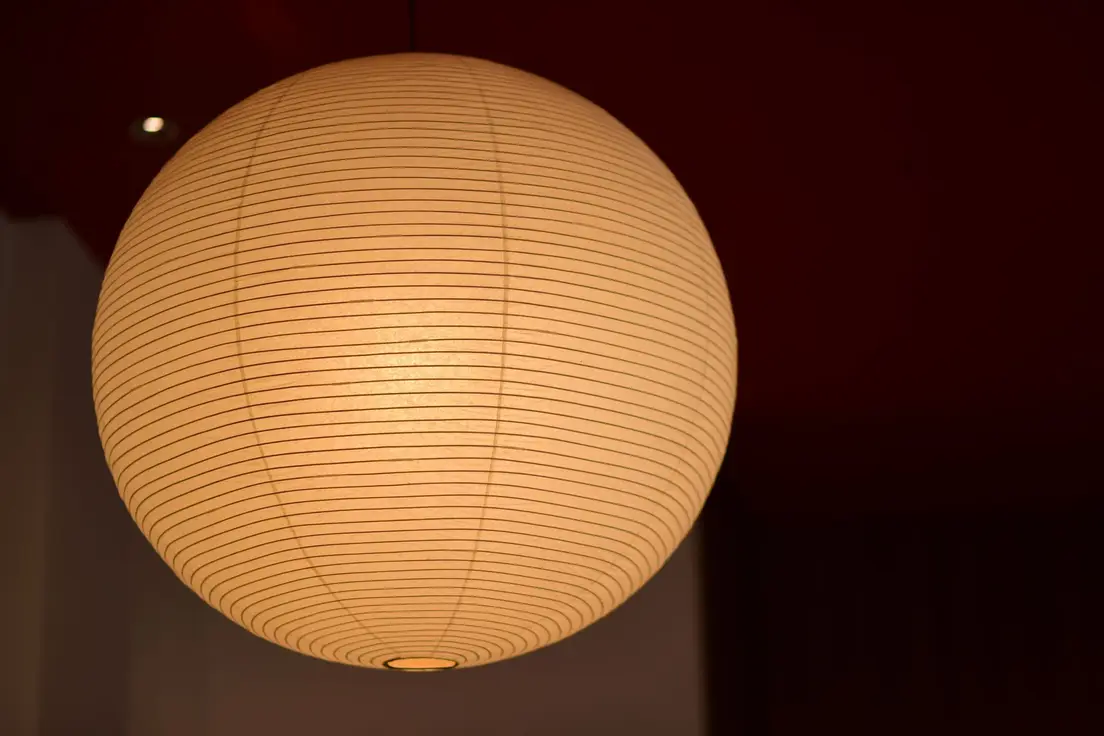
Photo by Sóc Năng Động on Pexels
Add One Statement Piece of Handmade Decor or Organic Modern Art
One sculptural piece beats a shelf of small decor. Choose a large stoneware vase, a textured plaster artwork, an abstract earth-tone painting, or a turned wood bowl. Organic modern art is mostly this: abstract shapes, natural textures, and a neutral palette, often handmade.
Handmade matters here because it’s unique. A local ceramicist or a craft fair offers a one-off vase for $40–120, about what a retail chain charges for a mass-produced one. Go big: a 14-inch vase reads as decor; a 5-inch vase reads as something you forgot to put away. Put it where the eye lands first — a console, a dining table, or the mantel. Then stop adding things. Decorative arts are a quiet flex, not a collection.
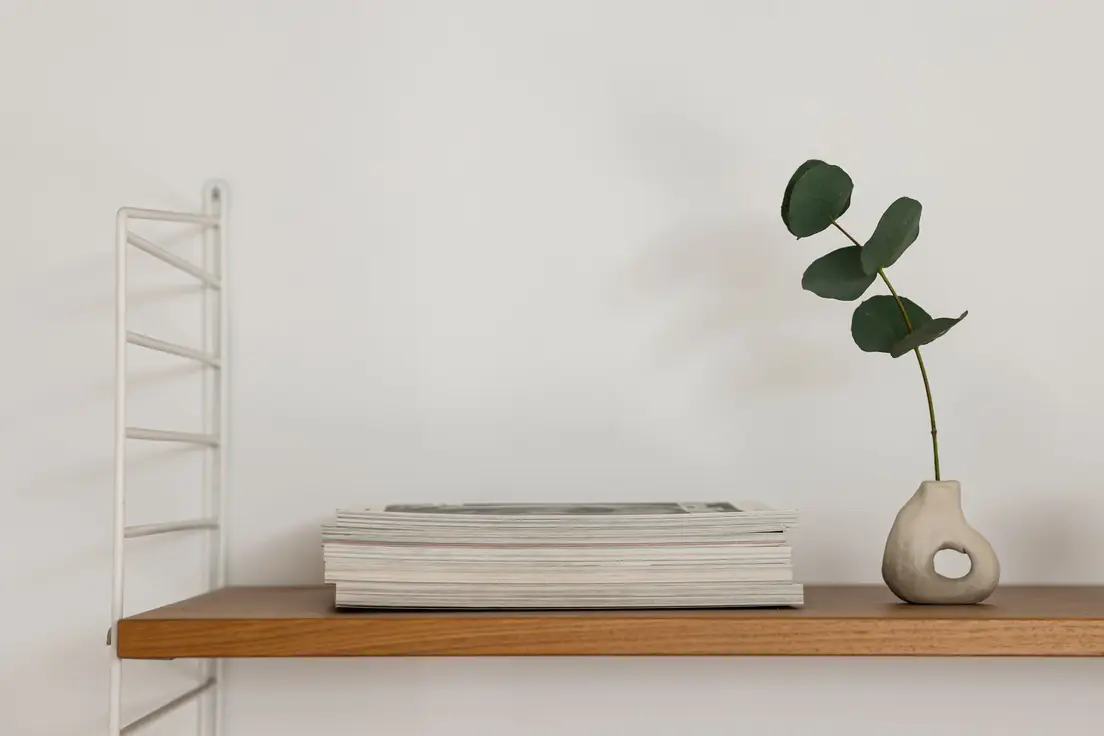
Photo by Cup of Couple on Pexels
Bring In Plants and Natural Light
Plants are the living material in an organic modern home, and one large one beats six small ones. An olive tree, a fiddle-leaf fig, or a rubber plant in a 10-inch terracotta or stoneware pot runs $40–90. Keep window treatments light so the room gets real daylight.
If the room has no real window, buy a good faux plant and don’t apologize. A fiddle-leaf fig in a windowless corner isn’t decor, it’s a houseplant on a countdown timer. A $60 faux olive tree looks better than a real fiddle-leaf dying slowly all winter. Dried stems — pampas, eucalyptus, bunny tail grass — are another option for $15–25 and last a year with zero watering.
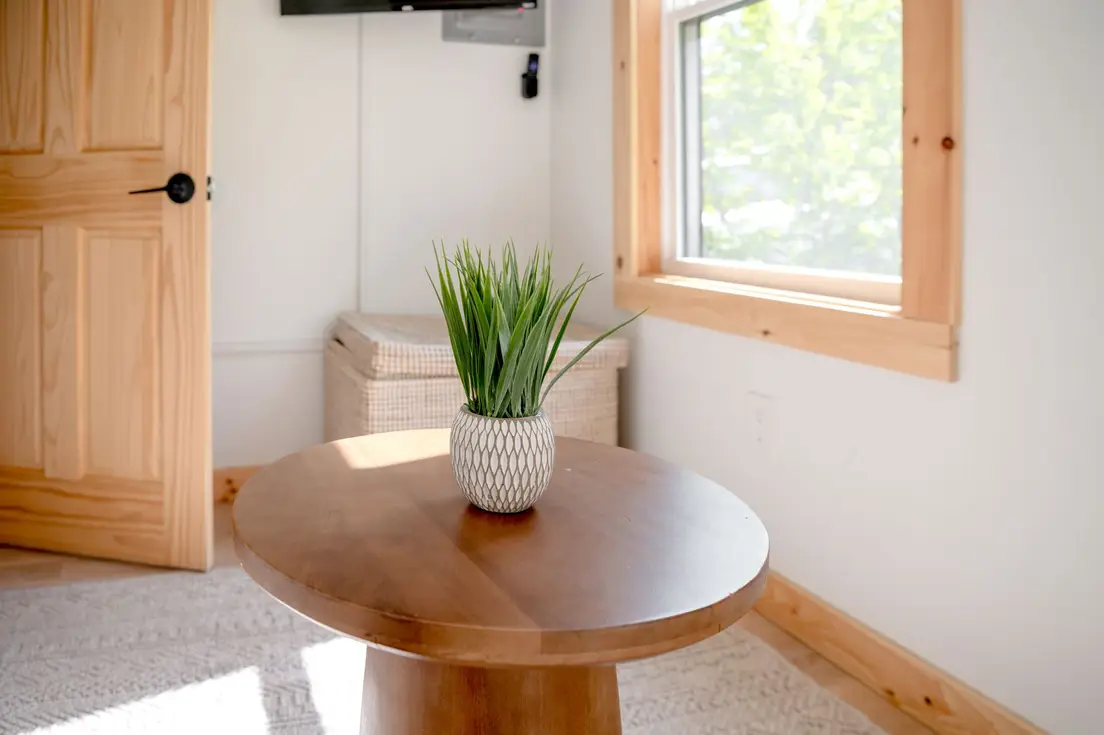
Photo by Andrea Davis on Pexels
Organic Modern Design in the Living Room, Bedroom, and Kitchen
The same rules work in every room. Only the anchor piece changes.
Living room
The sofa and the rug do the heavy lifting: a linen or boucle couch, a round coffee table, and a jute or wool rug. Our organic modern living room decor ideas go room-specific, with eleven ideas and real prices.
Bedroom
The bed is the anchor. A wood or upholstered bed frame, linen bedding in two neutrals, and a natural-wood headboard cover most of it. Bedroom furniture with rounded edges — a pill-shaped nightstand, an arched mirror — keeps the bedroom soft. For a lower, darker variation, see our japandi bedroom ideas.
Kitchen
You don’t need new cabinets. Swap the hardware to aged brass, add a wood cutting board and stoneware on open shelves, and use a warm-white paint. Our apartment kitchen ideas cover the renter-friendly swaps.
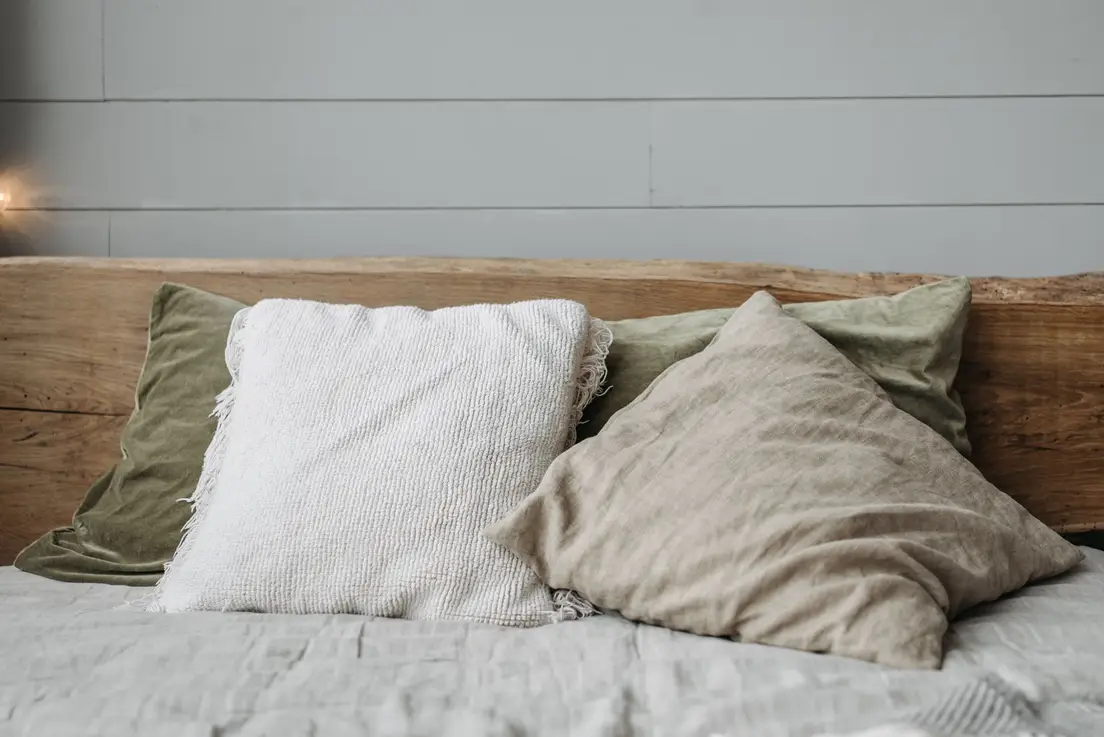
Photo by Pavel Danilyuk on Pexels
The Organic Modern Shopping Guide: Buy First, Buy Later, Skip
Buy in order of impact per dollar. Paint and lighting solve more of this style than new furniture does, so they go first, even though they’re the least fun to purchase. Here’s the honest math for one living room.
Buy first: about $350–600
Two gallons of warm neutral paint ($80–160), 2700K bulbs for every fixture ($25), a paper or rattan pendant ($25–60), an 8×10 jute rug ($150–350), and linen pillow covers ($60–90). This is most of the look, and you already own the furniture it’s sitting on.
Buy later: about $800–2,500
One round or pedestal coffee table, one handmade statement piece, one large plant, and — only if the current sofa genuinely has to go — a linen or boucle sofa with a solid wood frame. Live with the first round for a week before buying anything here.
Skip, or buy last
The $1,500 live-edge coffee table. It’s the most-photographed organic modern product and the least necessary. A $200 round solid-wood table does 90% of the job. Also skip anything sold as an “organic modern collection” with a matching set — the style is meant to look gathered over time, not bought in one order.
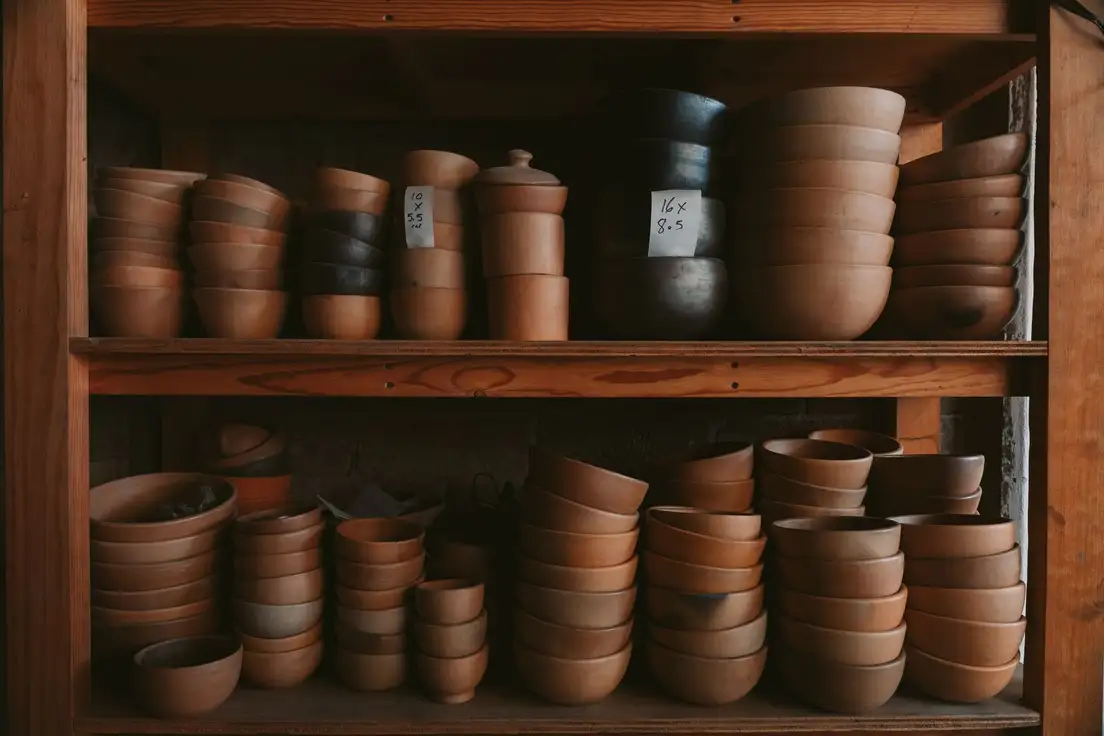
Photo by Miguel González on Pexels
Start with the bulbs and the paint. The live-edge table can wait until the room has earned it.
Frequently asked questions
What is the difference between modern and organic modern?
Modern design leans on clean lines, smooth manufactured surfaces like glass, chrome, and lacquer, and a cool palette. Organic modern keeps the clean lines and the restraint but swaps those finishes for natural materials — wood, stone, linen, clay — and adds rounded shapes and a warm neutral palette, so the room feels softer and lived-in.
Is organic modern still in style?
Yes. Organic modern has been a mainstream interior design style for several years, and it has held up because it is built on materials rather than a single trendy color. The current version is drifting warmer and slightly darker — more olive, clay, and walnut, less all-cream — but the core of natural materials and clean lines is unchanged.
What is organic modern art?
Organic modern art usually means abstract work built on natural forms and textures: plaster or textured canvas pieces, earth-toned abstract paintings, line drawings of vessels or plants, and sculptural ceramics. It favors one large, quiet piece over a gallery wall of small prints, and it stays inside the room's neutral and earthy palette.
What colors and materials work best for organic modern interiors?
Start with warm neutrals — cream, sand, oatmeal, warm white — and add one muted accent such as sage green, olive, or clay. For materials, combine light or mid-tone wood, linen or cotton textiles, a wool or jute rug, and one stone or ceramic element. Keep glossy plastic, chrome, and cool gray to a minimum.
Can you mix organic modern with other design styles?
Yes, and most real rooms do. Organic modern pairs easily with japandi, which shares its natural materials, with warm minimalism, which shares its restraint, and with mid-century modern furniture, which shares its history. The rule of thumb is to keep the neutral palette and natural materials consistent and let one borrowed piece carry the other style.